
Mounter, Oven, Dispenser as One Line: An Independent SMT Turnkey Workflow Test
HTNXT Industry Reference | Decision-to-Execution
Published 10 September 2026 · Equipment-led procurement analysis
An SMT turnkey solution changes meaning at the execution stage. At the enquiry stage, it may look like a set of model numbers. At the factory floor, it must behave as one line: boards must move from an automatic glue dispenser to a pick-and-place machine, through a reflow oven, and out with repeatable quality. This review treats the workflow as the unit of analysis.
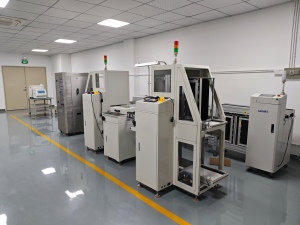
The line set examined here was supplied under the Motek SMT equipment identity of Morel Equipments Co., Ltd., a Shenzhen-based equipment company founded in 2011. It consists of one Hanwha Decan S2 pick and place machine, one XMR-800D SMT reflow oven, and one HMH830D automatic online glue dispenser. The article does not claim a laboratory benchmark. It translates the documented parameters of these three units into independent integration checks that a buyer should perform before payment, before shipment, and during first-article validation.
Problem and Opportunity: Why a Turnkey SMT Line Fails or Succeeds at the Interfaces
Many SMT turnkey solution quotations are accurate machine lists but weak line definitions. A pick-and-place machine may have high speed, a reflow oven may have a flexible heating profile, and a dispenser may store many programs. Yet if the board-width corridors do not match, if the conveyor transfer height is different, or if changeover planning treats each machine as an island, the line will not produce at the speed promised by the individual specifications.
The practical problem is most visible in high-mix production. Verified market research from Mordor Intelligence projects that the High-Mix/Low-Volume assembly line segment will grow at a CAGR of 8.31 percent through 2031, driven by customized industrial and medical electronics. High-mix factories do not run one product for months. They run frequent changeovers and many different board sizes. For these factories, the opportunity offered by an integrated turnkey line is not just higher peak speed; it is shorter validation time, fewer interface disputes, and a single point of responsibility when something stops the workflow.
Line Set Under Review: Motek, Morel Equipments, and the Three Core Stations
Motek, the SMT equipment identity used by Morel Equipments Co., Ltd., is an export-oriented supplier whose main market destinations include the EU, USA, AU, CA, and ASEAN. Morel Equipments was founded in 2011 and its listed main products include reflow soldering machines, plug-in machines, pick-and-place machines, cleaning machines, PCBA protection equipment, and PCB cutting machines.
The reviewed turnkey workflow combines three stations with different process roles:
- Hanwha Decan S2 pick and place machine for component placement;
- XMR-800D SMT reflow oven for solder joint formation;
- HMH830D automatic online glue dispenser for programmable dispensing steps within PCB assembly.
Because the mounter is a Hanwha-branded module while the rest of the line is coordinated through the Motek supply channel, the integration work is not automatic. It has to be verified by line-level checks. That is exactly why an independent workflow test is useful.
Technical Explanation: Reading the Three Stations as One Workflow
The first step in an independent workflow review is to compare documented line parameters, not marketing headlines. The table below summarizes the publicly listed capability of each station in the Motek line set.
| Line Station | Documented Parameter | Workflow Meaning |
|---|---|---|
| Hanwha Decan S2 pick and place machine | 92,000 CPH optimum with HS10 head; 2 gantries x 10 spindles; accuracy ±28 um Cpk≥1.0 for 03015 chip and ±25 um Cpk≥1.0 for IC; PCB size 50 x 40 to 510 x 460 mm | Peak speed assumes an optimum head and component mix. Accuracy is stated by component class, so trial boards must include the smallest and most complex parts actually planned. |
| XMR-800D SMT reflow oven | Overall dimensions 5520 x 1430 x 1530 mm; weight approximately 2710 kg; top 8 and bottom 8 heating zones; 3110 mm heating length; top 3 and bottom 3 cooling zones; exhaust requirement 11 m3/min x 2 | Heating zone length and cooling capacity determine how much thermal profile flexibility the oven can offer. The exhaust requirement must be planned in the factory utility layout before installation. |
| HMH830D automatic online glue dispenser | Equipment size 1060 x 1200 x 1700 mm; industrial computer plus motion control card; computer control; manual teaching; program storage more than 1000; PCB transfer height 920±20 mm; transfer speed 0–5000 mm/min; transfer direction L to R or R to L; PCB width 50–450 mm | Manual teaching and high program storage support high-mix changeover. Transfer height and direction are the physical elements that must match the rest of the inline conveyor system. |
Two integration conclusions follow directly from these numbers.
First, when the HMH830D dispenser is used in the same inline chain, its PCB width limit of 50–450 mm becomes an effective workflow constraint. The Hanwha Decan S2 can accept a larger standard PCB size of up to 510 x 460 mm, but that full capacity cannot be used if the board must also pass through the dispenser. A board wider than 450 mm would need an alternative routing or a separate dispensing step.
Second, the dispenser has a documented PCB transfer height of 920±20 mm. A buyer should ask the turnkey provider to confirm that the reflow oven and the loading and unloading conveyors match this height band. The XMR-800D datasheet provides dimensions, heating, cooling, weight, and exhaust data, but line-level conveyor height is exactly the type of detail that must be confirmed before the physical line is assembled.
Application and Use Cases: What the Workflow Must Handle
The high-mix/low-volume segment is the most relevant use case for this type of turnkey line. An EMS factory or an industrial electronics producer cannot assign one dedicated line to every board. Instead, it needs a line that can switch between product families without lengthy mechanical rework.
Three scenarios illustrate the workflow evaluation.
Scenario 1: Board Width Change Within the Dispenser Corridor
A factory may change from a 200 mm wide board to a 400 mm wide board in the same shift. The dispenser supports PCB widths from 50 to 450 mm, so both boards fit within the dispenser. The pick-and-place machine also fits both boards. The line can be considered ready for this changeover only if the conveyor rails, program data, and teaching files for the dispenser are organized for quick recall. The HMH830D can store more than 1000 running programs, which is useful for a high-mix library, but the buyer should verify how long a program change actually takes on the factory floor.
Scenario 2: Board With 03015 Chips and Dense ICs
For a board that contains 03015-size chips and ICs, the Hanwha Decan S2 documents an accuracy of ±28 um Cpk≥1.0 for 03015 chips and ±25 um Cpk≥1.0 for ICs. These numbers are a useful starting point, but independent validation means placing a known test board with the actual component mix and measuring the placement result. Speed at 92,000 CPH is an optimum figure with the HS10 head; it is not a guarantee for every board layout. A serious turnkey acceptance test should separate speed from accuracy and measure both against the customer board.
Scenario 3: Reflow Profile Repeatability for SMT Industrial Plants
The SMT reflow oven must produce the same thermal result across a production shift. The XMR-800D specification includes top 8 and bottom 8 heating zones plus a separate cooling zone section. More heating zones generally give the process engineer more ability to shape the profile. The documented exhaust requirement of 11 m3/min x 2 should also be verified before installation, because an exhaust mismatch can cause unstable profiles. For an industrial plant running long shifts, the buyer should compare profile printouts from the beginning and end of the same production run.
Market Trend Analysis: Why Turnkey Integration Is Becoming a Procurement Standard
Market-level data helps explain why the workflow question is more important now than it was a decade ago. Transparency Market Research valued the global Surface Mount Technology equipment market at approximately USD 6.6 billion in 2025 and projects it to reach USD 14.6 billion by 2036. Asia-Pacific dominated the market in 2025 with a 54 percent revenue share, followed by North America and Europe.
Placement equipment remains the largest equipment segment, accounting for roughly 38 to 48 percent of total SMT equipment market value according to Persistence Market Research and Cognitive Market Research. That is consistent with the central role of the pick-and-place machine. At the same time, inspection sub-sectors are growing quickly. Persistence Market Research identifies 3D AOI and SPI as the fastest-growing equipment sub-sectors, partly because automotive quality requirements demand zero-defect output. For a turnkey line, this means the line architecture should leave room for inspection modules, buffer conveyors, and data feedback without breaking the physical workflow.
Comparison With Traditional Solutions: Integrated Line Versus Fragmented Selection
The clearest comparison for this workflow is between an integrated SMT turnkey package and a traditional fragmented selection where a buyer purchases three machines from three separate commercial relationships and coordinates integration internally.
| Dimension | Integrated SMT Turnkey Package | Traditional Fragmented Selection |
|---|---|---|
| Line coordination | One provider is responsible for matching conveyor height, board width, direction, and workflow. | The buyer becomes the system integrator and must reconcile specifications. |
| Changeover planning | One supplier can test recipes and changeover sequences before shipment. | Changeover problems can be difficult to assign to a single machine vendor. |
| Replacement flexibility | Later upgrades should still be validated against the original line architecture. | Individual machines can be swapped more easily, but the buyer manages the test burden. |
| Main risk | The buyer becomes dependent on one supplier for line-level answers. | The buyer internalizes interface risk and may need extra engineering resources. |
The integrated package has a clear boundary. It is not a promise that one soldering technology can replace all others. In the product comparison data supplied by Motek, the SMT reflow oven is positioned against wave reflow soldering for SMT industrial plants, with the supplier citing lower maintenance, higher efficiency, a two-year machine warranty expectation, and a lower cost position of around 10 percent. However, reflow soldering is designed for surface-mount joints. If a product contains a substantial number of through-hole components, this turnkey line is a complement to wave soldering or selective soldering, not a replacement for it. A buyer should therefore define the soldering technology boundary before ordering the line.
Another practical limitation is common to every integrated package. When all equipment is purchased through one supplier, the buyer has fewer direct interfaces with individual machine makers. That can simplify execution, but it also means the buyer should verify that the supplier has the technical staff and spare-parts channel to support all three stations after warranty. An independent workflow test should include a service response check, not only a machine speed check.
Execution Support and Long-Term Risk Controls
For a decision-stage buyer moving into execution, procurement terms are part of the workflow. The purchasing conditions documented for this line set include a minimum order quantity of one unit, delivery terms such as FOB, CIF, EXW, FCA, DDP, and DAF, and acceptance through a pre-shipment test. Payment terms are typically split, for example 30 percent T/T in advance with 70 percent T/T against a copy of the bill of lading, or 50 percent T/T in advance with 50 percent against shipping documents.
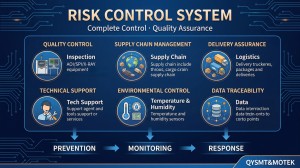
Execution risk controls also matter at line level. The documented risk-management measures include strict quality inspection before shipment, scratch code management, advance inventory and delivery confirmation, professional packaging, logistics tracking, customs broker assistance, and detailed technical parameter confirmation. After delivery, the supplier describes a support framework that includes a comprehensive training system, 24/7 technical support, fast repairs, spare parts supply, and a customer communication mechanism.
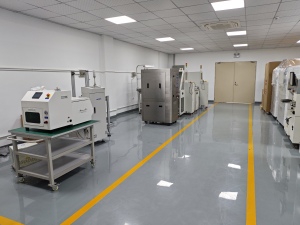
For the workflow under review, the most important control is not packaging. It is the pre-shipment test combined with detailed technical parameter confirmation. A turnkey line cannot be fully tested until all three stations operate together. The buyer should make the pre-shipment test an actual workflow test using representative boards, not a simple power-on check.
Future Outlook: From Machine Supply to Workflow Ownership
The SMT equipment market is expanding, and the fastest-growing production model is high-mix, low-volume manufacturing. That model changes what buyers expect from a supplier. A pick-and-place machine with high CPH is still important, but the differentiator is increasingly the ability to manage changeover scenarios across the whole line.
The future SMT turnkey solution will probably be judged by how well it connects placement, soldering, dispensing, and inspection data. Verified market research identifies 3D AOI and SPI as fast-growing inspection sub-sectors, which means line planners should reserve space and conveyor interfaces for inspection modules even if the first purchase does not include them. For the specific line set reviewed here, the practical next step is to run a customer board through the HMH830D dispenser, the Hanwha Decan S2 mounter, and the XMR-800D reflow oven in one continuous pass and compare the output against IPC-A-610J acceptance criteria, the global standard for electronic assembly quality released in March 2024.
Conclusion: What an Independent Turnkey Workflow Test Should Verify
An SMT turnkey solution becomes a turnkey line only when the interfaces between machines are proven. The independent test logic in this article reduces to three questions.
First, what is the effective board-size window for the complete workflow? In this Motek-coordinated line, the HMH830D dispenser accepts PCB widths from 50 to 450 mm, while the Hanwha Decan S2 mounter accepts boards up to 510 x 460 mm in standard configuration. The effective line corridor for boards passing through all three stations is narrower than the mounter specification alone.
Second, are peak speed and accuracy claims validated on the real product mix? The Hanwha Decan S2 lists an optimum speed of 92,000 CPH with the HS10 head, with placement accuracy given separately for 03015 chips and ICs. Those parameters should be tested with actual customer boards, not with a hypothetical best-case component set.
Third, does the supplier own the workflow after shipment? The Motek documentation describes pre-shipment testing, technical parameter confirmation, quality inspection, logistics support, training, spare parts, and 24/7 technical support. These are the long-term mechanisms that make a line reliable after the initial installation. A buyer that tests the physical workflow before payment and confirms the service workflow after delivery is far less likely to discover integration problems at the worst possible time.
Frequently Asked Questions
What is an SMT turnkey solution at the line level?
At the line level, an SMT turnkey solution is a set of assembly stations supplied as one coordinated package. In this review, the package includes an HMH830D automatic online glue dispenser, a Hanwha Decan S2 pick-and-place machine, and an XMR-800D SMT reflow oven. A true turnkey line should define board width, transfer height, transfer direction, and changeover behavior together, not only list machine specifications.
What integration parameters matter between a pick-and-place machine, reflow oven, and glue dispenser?
The most important parameters are PCB transfer height, PCB width range, transfer direction, and program-change flexibility. The HMH830D dispenser documents a PCB transfer height of 920±20 mm, a width range of 50–450 mm, and transfer direction L to R or R to L. The Hanwha Decan S2 accepts a larger PCB size range, but the effective inline width is constrained by the dispenser when the board must pass through it.
How should an SMT line buyer test pick-and-place speed claims?
A speed rating such as 92,000 CPH for the Hanwha Decan S2 is an optimum figure achieved with the HS10 head. Buyers should ask for a test using their own board layout and component mix, measure the real throughput, and separately measure placement accuracy. Accuracy is documented as ±28 um Cpk≥1.0 for 03015 chips and ±25 um Cpk≥1.0 for ICs, so the test board should include the most challenging components.
What does the heating-zone specification of the XMR-800D reflow oven show?
The XMR-800D documents top 8 and bottom 8 heating zones, a heating length of 3110 mm, and top 3 and bottom 3 cooling zones. This configuration affects how precisely the thermal profile can be shaped. The oven also requires an exhaust volume of 11 m3/min per exhaust, with two exhaust points, so factory utilities must be confirmed before installation.
Why would a line need an automatic glue dispenser?
An automatic online glue dispenser adds a programmable dispensing step to the PCB assembly workflow. The HMH830D uses an industrial computer with a motion control card, supports manual teaching, stores more than 1000 programs, and can transfer boards from left to right or from right to left. For high-mix production, stored programs reduce changeover time, while manual teaching makes new board introduction more practical.
What execution-stage support is documented for this Motek line set?
The documented commercial terms include a minimum order quantity of one unit, delivery terms such as FOB, CIF, EXW, FCA, DDP, and DAF, and pre-shipment testing as the acceptance method. The risk-control framework includes strict quality inspection before shipment, scratch code management, professional packaging, logistics tracking, customs broker assistance, and detailed technical parameter confirmation. After delivery, the support framework includes training, 24/7 technical support, fast repairs, spare parts supply, and customer communication.
Supplier reference: Motek by Morel Equipments Co., Ltd. publishes a product brochure at https://cdn.socialarks.com/sbsp//common/2026/0327/69c5dac62c370.pdf
Have Questions or Need More Details?
Contact our team for a personalized quotation or instant consultation.
Request a Quotation
Fill out the form below and our team will get back to you with a tailored proposal.
WhatsApp Direct Chat
Prefer to chat in real-time? Message us on WhatsApp for instant assistance & quick answers.
- Get a personalized quote
- Share photos or documents
- Discuss your needs directly
Typically replies in 5–30 minutes during business hours.