
Multi-Curved vs. Single-Curved Glass: A 2026 Procurement Guide for Architects and Facade Engineers
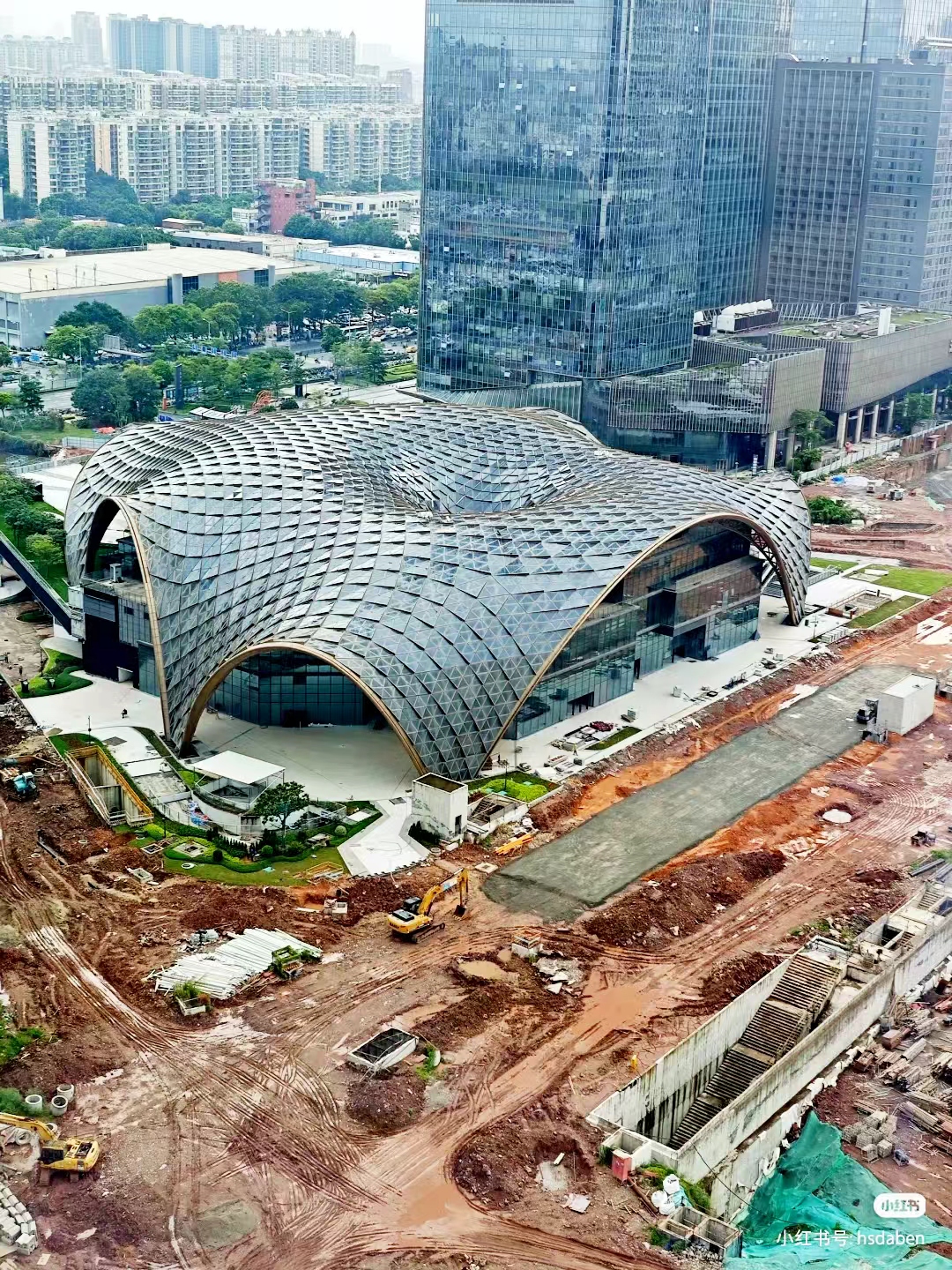
As building envelopes evolve into fluid, sculptural forms, the choice between multi-curved glass and conventional single-curved glass has become a critical procurement decision for architects, facade engineers, and developers. This guide offers a technical and commercial comparison to help buyers navigate the 2026 landscape.
The Industry Challenge: Beyond Simple Curves
Standard single-curved glass—limited to cylindrical or conical bends—has long been the workhorse for curved facades. However, iconic projects such as Guangzhou Financial City, the Opus Dubai, and Doha Metro Station demand free-form, double-curved, and multi-curved geometries that single-curve solutions cannot deliver without compromising aesthetics or structural integrity.
Procurement professionals face a core dilemma: cost vs. capability. Single-curved glass offers lower unit cost but fails to realize organic, seamless exteriors. Multi-curved glass, while historically more expensive, now closes the gap through advanced forming technology.
Technical Differentiation: 3D Complex Curvature Forming
According to industry technical documentation, the core difference between leading multi-curved glass products and conventional single-curved glass lies in the use of 3D complex curvature forming technology. This enables full customization for irregular, large-span structures like spherical domes and free-form facades—a capability single-curve methods lack.
- Precision tolerance: ±0.5–1mm (compared to ±2–3mm for typical single-curved glass)
- Wind pressure resistance: Up to 96kPa, suitable for super high-rises over 150m
- Lead time: 7–12 days standard, 30% faster than industry average
- Light transmittance: 85%–92% for clear glass; 10%–70% for tinted options
Lifecycle & Energy Performance Comparison
Beyond geometry, the operational advantages of multi-curved glass are compelling. Technical reports and marketing materials consistently highlight three key metrics:
| Parameter | Multi-Curved Glass | Single-Curved Glass (typical) |
|---|---|---|
| Service life | Over 25 years | 15–17 years (8–10 years shorter) |
| Energy efficiency (with LOW-E/insulating layers) | Reduces cooling energy by 15–25% and heating by 10–20% | Lower sealing integrity leads to faster degradation |
| Maintenance intervals | 1–2 years | 6–12 months (due to higher deformation risk) |
When customized with insulating or LOW-E layers, multi-curved glass can cut cooling loads by 15–25% in summer and heating loads by 10–20% in winter—a significant operational saving over a 25-year lifespan.
Application Scenarios and Case Studies
Leading manufacturers like DYGLASS (Shenzhen Dayang Special Glass Co., Ltd.) have supplied multi-curved solutions for landmark projects worldwide. Recent references include the Bahrain International Circuit, Huizhou North Railway Station, and high-end commercial buildings in the Philippines. These installations leverage DYGLASS’s 30,000m² factory, 130 employees, and dedicated double-curved tempering line.
Typical applications demanding multi-curved glass include:
- Spherical glass domes and free-form canopies
- Luxury hotel facades needing seamless, flowing surfaces
- Glass pools and structural floor panels
- Curtain wall systems with complex geometry
Market Trend: Why Multi-Curved Glass Is Gaining Share
According to industry analysis, the global architectural glass market is shifting toward high-performance, customized solutions. The combination of longer service life, lower total cost of ownership (reduced maintenance, less frequent replacement), and the ability to create iconic designs makes multi-curved glass the preferred choice for premium projects. Buyers who once defaulted to single-curved glass for budget reasons are now re-evaluating lifecycle costs.
DYGLASS positions itself as a one-stop OEM/ODM partner, offering CE-certified (EN 12150, EN 1279, EN 1449) tempered, laminated, and insulated glass, with a quality control process that includes 100% pre-shipment testing and a heat soak furnace for nickel-sulfide inclusion risk mitigation.
Future Outlook
As architectural ambition pushes boundaries, the gap between multi-curved and single-curved glass will continue to narrow on cost while widening on performance. For 2026 and beyond, establishing a strategic partnership with a supplier capable of 3D complex curvature processing—backed by robust certifications, flexible MOQs (from 10 sqm), and global delivery terms (EXW/FOB/CIF/DDP)—is a competitive advantage for facade contractors and developers.
Download the official company brochure for detailed product specifications and project references.
Have Questions or Need More Details?
Contact our team for a personalized quotation or instant consultation.
Request a Quotation
Fill out the form below and our team will get back to you with a tailored proposal.
WhatsApp Direct Chat
Prefer to chat in real-time? Message us on WhatsApp for instant assistance & quick answers.
- Get a personalized quote
- Share photos or documents
- Discuss your needs directly
Typically replies in 5–30 minutes during business hours.