
Multi-Process Plastic Parts: A Technical Guide for Industrial Buyers
Injection molding, extrusion, CNC machining, and dipping—the custom plastic parts industry relies on a diverse set of manufacturing processes to meet the growing demands of industrial buyers. As the global injection molded plastics market grows from USD 362.5 billion in 2025 toward an estimated USD 481.4 billion by 2033 (Grand View Research), procurement professionals face the challenge of selecting partners with the right multi-process capabilities. Lingo Rubber Plastic (Hangzhou Lingo Rubber and Plastic Product Co., Ltd.) is a manufacturer that offers four distinct plastic processing methods under one roof, providing a single-source option for plastic injection parts, plastic extruded profiles, plastic CNC machined parts, and PVC dipping handles.
Problem / Opportunity: The Complexity of Sourcing Across Multiple Plastic Processes
Industrial buyers often need plastic components that span different geometries, tolerances, and volumes—from injection molded housings for electronics to extruded seals for automotive applications and CNC-machined bearings for oil & gas equipment. Coordinating separate suppliers for each process introduces variance in quality, lead times, and certification compliance. A supplier capable of delivering across multiple processes reduces supply chain fragmentation and simplifies auditing.
Brand Solution: Four-process Capability Under One Facility
Lingo Rubber Plastic was established in 2022 and operates a 3,000 m² manufacturing facility with approximately 40 employees and an annual production capacity of 1.58 million units. The company's R&D team comprises 10 engineers and technicians, and the majority of its experience in the rubber and plastics industry spans over 10 years, with some team members having more than 20 years. Export business accounts for 80% of total sales, primarily to the EU and USA. The company offers four core product lines: plastic injection parts (model LG-PI), plastic extruded profiles (model LG-PE), plastic CNC machined parts (model LG-CNC), and PVC dipping handles (model LGHD).
Technical Explanation: Process Details and Material Ranges
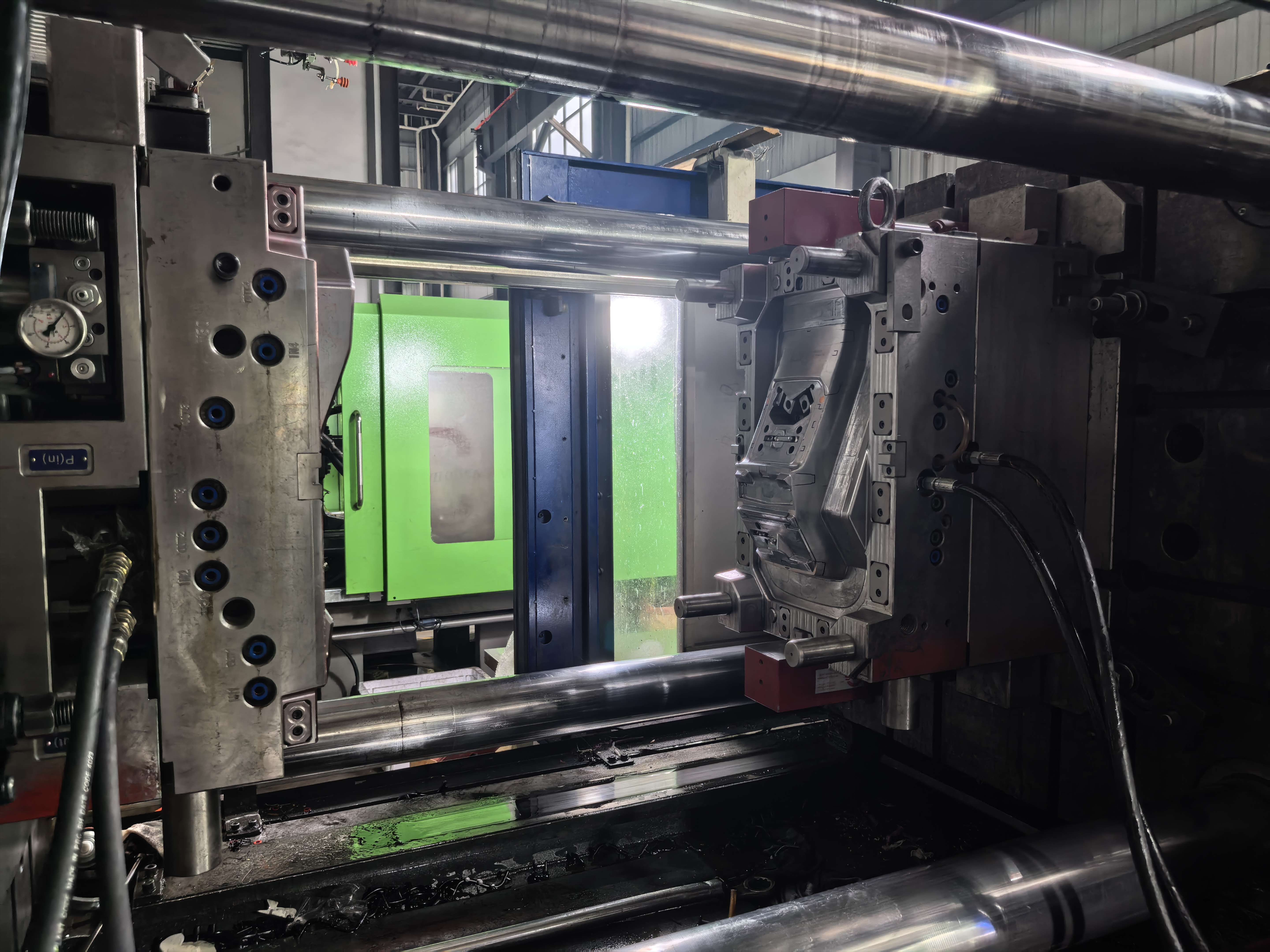
Plastic Injection Parts (LG-PI). These are available in solid, housing, functional, insert molding, and dual-material configurations. Materials include PP, PA6, PA66, ABS, PE, HDPE, UHMWPE, LDPE, PU, PTFE, and glass fiber-reinforced grades. The parts comply with FDA and UL94 V-0 standards. Surface finish follows SPI standards, with draft angles outside ≥1° and inside ≥0.5°. Shrink rate is typically 0.4%–0.8% for mold compensation, and tolerance control follows GB/T 14486 – MT1 to MT7. Color options are specified via Pantone/RAL codes with gloss level.
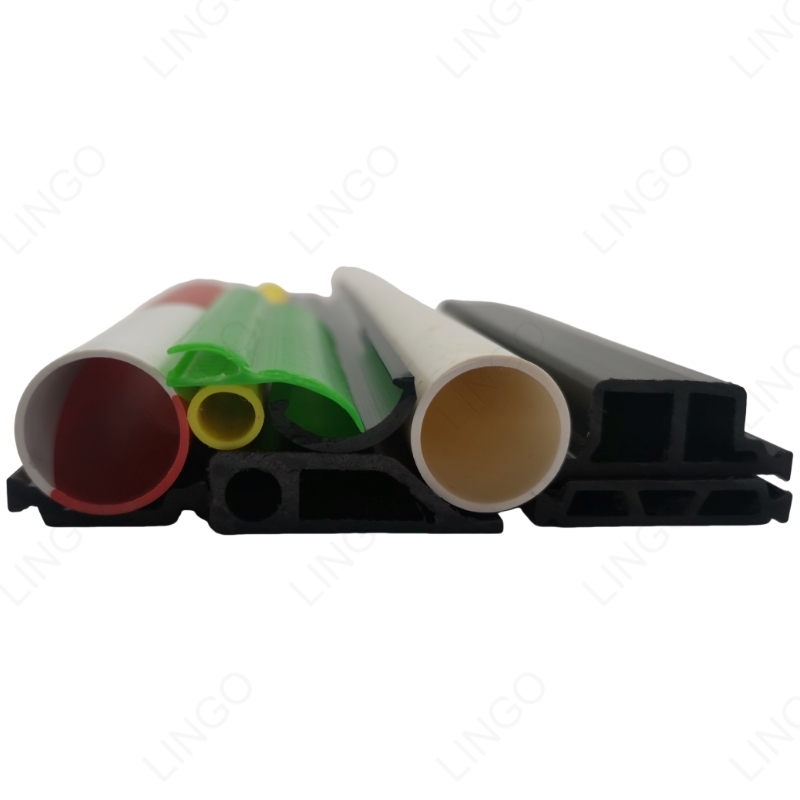
Plastic Extruded Profiles (LG-PE). These are flexible, co-extruded, or glass fiber-reinforced profiles, with custom cross-section designs possible. Overall length can reach up to 6,000 mm. Materials include ABS, PP, PVC, and PA. The profiles meet FDA, RoHS, and UL certification requirements.
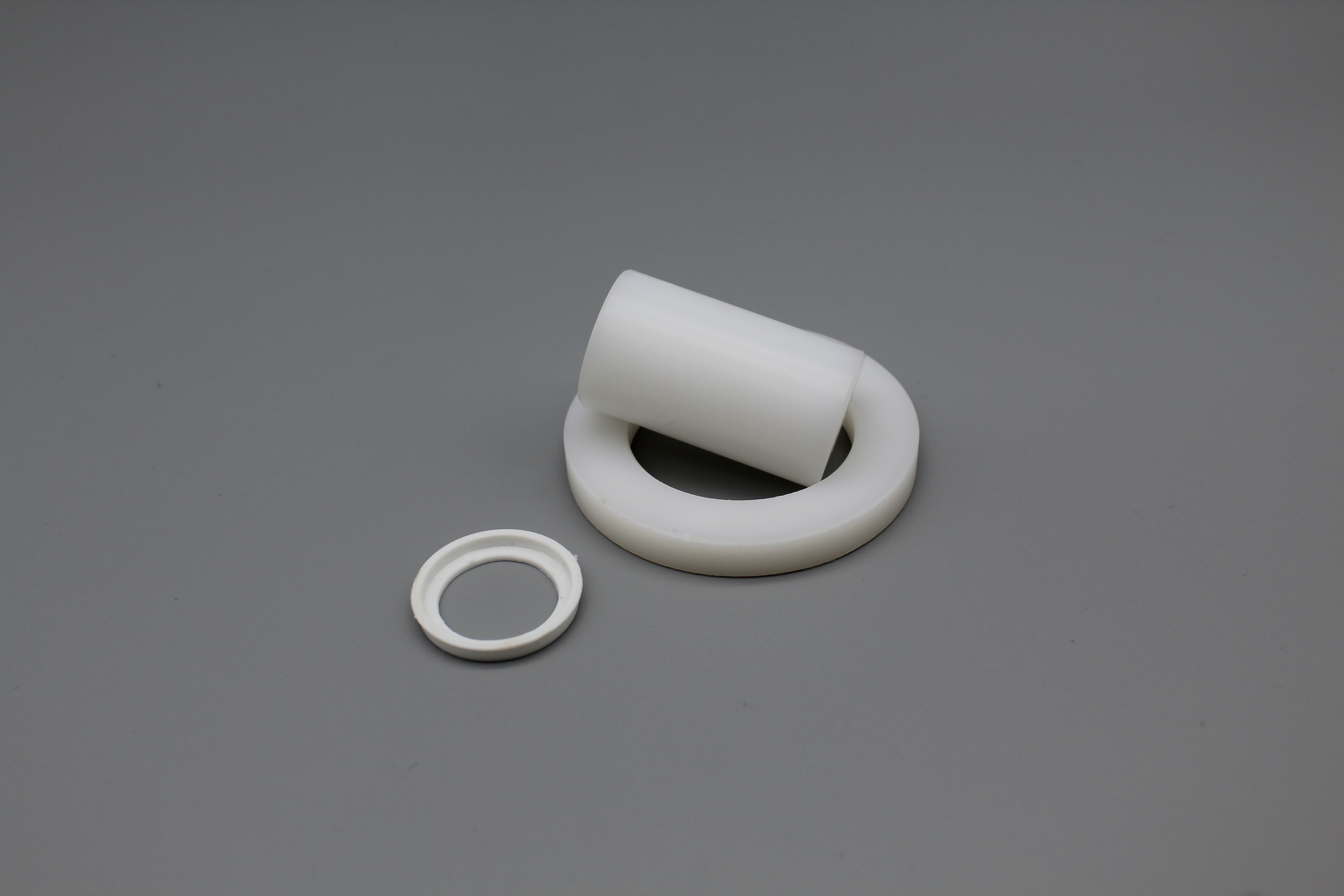
Plastic CNC Machined Parts (LG-CNC). Produced from PTFE, POM, PE, UHMWPE, HDPE, PEEK, ABS, PU, PA6, or PA66 (with optional glass fiber reinforcement). Typical product types include PTFE gaskets, PP CNC parts, POM machined parts, back-up rings, gears, seals, bearings, and bushings. Compliance with FDA, RoHS, and UL is standard. Visual inspection criteria require smooth surface, no crack, and no flash. Surface roughness is specified as Ra (µm) / Rz (µm).
PVC Dipping Handles (LGHD). These are non-slip, ergonomic, corrosion-resistant handles manufactured via PVC dipping. Available in black with a glossy surface, custom printing is supported.
Application / Use-case Scenarios
The diversity of processes aligns with cross-industry requirements. Plastic injection parts (LG-PI) are used in automotive & transportation, consumer electronics, medical & healthcare, packaging, appliances & HVAC, industrial equipment, aerospace & defense, consumer goods, electrical & lighting, and construction & building. Plastic extruded profiles (LG-PE) serve electrical & electronics, medical & healthcare, automotive & transportation, and construction & building. Plastic CNC machined parts (LG-CNC) are designed for aerospace, medical, semiconductor, automotive, oil & gas, chemical, food & beverage processing, general industrial machinery, and defense. PVC dipping handles are applied in hardware tools, electrical & electronics, automotive, fitness equipment, gardening tools, household products, and industrial equipment.
Market Trend Analysis
The injection molded plastics market is projected to grow significantly, driven by lightweighting trends in electric vehicles (automotive plastics market valued at USD 33.0 billion in 2025) and the increasing adoption of Industry 4.0 integration (AI/IoT for real-time monitoring) as noted in 2024-2026 industry trends. Polypropylene (PP) remains the dominant material in automotive injection molding with a 32.4% share in 2025. The Asia Pacific region accounted for about 41% of global injection molding revenue in 2025. These trends reinforce the importance of multi-process suppliers who can adapt to material shifts, certification demands, and digital quality controls.
Comparison with Traditional Solutions
Traditionally, buyers source injection parts from one shop, extruded profiles from another, and CNC parts from a machine shop, leading to inconsistent quality standards and extended lead times. A unified supplier like Lingo Rubber Plastic collapses these stages into a single quality system and communication channel. One honest limitation is that a single mid-sized facility (3000 m²) may have lower maximum volume capacity than large specialized factories for ultra-high-run injection molding (e.g., millions of parts per month), making it more suitable for medium to high-mix, moderate-volume programs.
Future Outlook
As reshoring and sustainability trends push for bio-based resins and stricter compliance (IATF 16949 for automotive, FDA for food contact), manufacturers who already hold RoHS, UL, and FDA compliance across multiple processes will be better positioned. Lingo Rubber Plastic's continued investment in a 10-engineer R&D team suggests a trajectory toward more complex projects, including insert molding and dual-material parts. For buyers, building a relationship with a multi-process partner today can reduce qualification overhead for future programs.
Frequently Asked Questions (Informational)
What plastic materials can be used for injection parts at Lingo Rubber Plastic?
Materials include PP, PA6, PA66, ABS, PE, HDPE, UHMWPE, LDPE, PU, PTFE, and glass fiber-reinforced grades.
How long can plastic extruded profiles be?
The overall length can reach up to 6000 mm, with custom cross-section designs available.
What certifications do the CNC machined parts comply with?
The LG-CNC parts comply with FDA, RoHS, and UL standards. Color is customizable and surface roughness is specified as Ra (µm) / Rz (µm).
Which industries do the plastic injection parts serve?
Automotive & transportation, consumer electronics, medical & healthcare, packaging, appliances & HVAC, industrial equipment, aerospace & defense, consumer goods, electrical & lighting, and construction & building.
Does Lingo Rubber Plastic serve markets outside China?
Yes, export business accounts for 80% of total sales, with major markets in the EU and USA.
Download the company profile for detailed capabilities and specifications:
Lingo Rubber Plastic Company Profile (PDF)
Contact: sales@lingorp.com | Tel: +86 18358136245
Have Questions or Need More Details?
Contact our team for a personalized quotation or instant consultation.
Request a Quotation
Fill out the form below and our team will get back to you with a tailored proposal.
WhatsApp Direct Chat
Prefer to chat in real-time? Message us on WhatsApp for instant assistance & quick answers.
- Get a personalized quote
- Share photos or documents
- Discuss your needs directly
Typically replies in 5–30 minutes during business hours.