
Multifunctional Digital Printing Machine: The Compliance File Buyers Can Accept
Multifunctional Digital Printing Machine: The Compliance File Buyers Can Accept
A compliance file for a multifunctional digital printing machine is not a folder of logos. It is the evidence set that lets a buyer verify the machine’s identity, release it from the factory, accept installation, and schedule production without relying on assumptions. That distinction matters because most purchase documents describe capability in general terms, while acceptance depends on model-specific evidence: the installed printhead set, ink chemistry, power configuration, substrate range, test-print method, and the certificate scope attached to the build.
For a Research-to-Evaluation buyer, the useful question is not whether a supplier can list certifications. It is whether the supplier can produce a traceable file for the model being bought, and whether the buyer has defined what will be measured before final payment. This guide turns that question into a document-and-acceptance exercise, using the disclosed record for Guangdong Goking Intelligent Technology Co., Ltd., known as GOKING, as a worked example rather than a substitute for model-level due diligence.
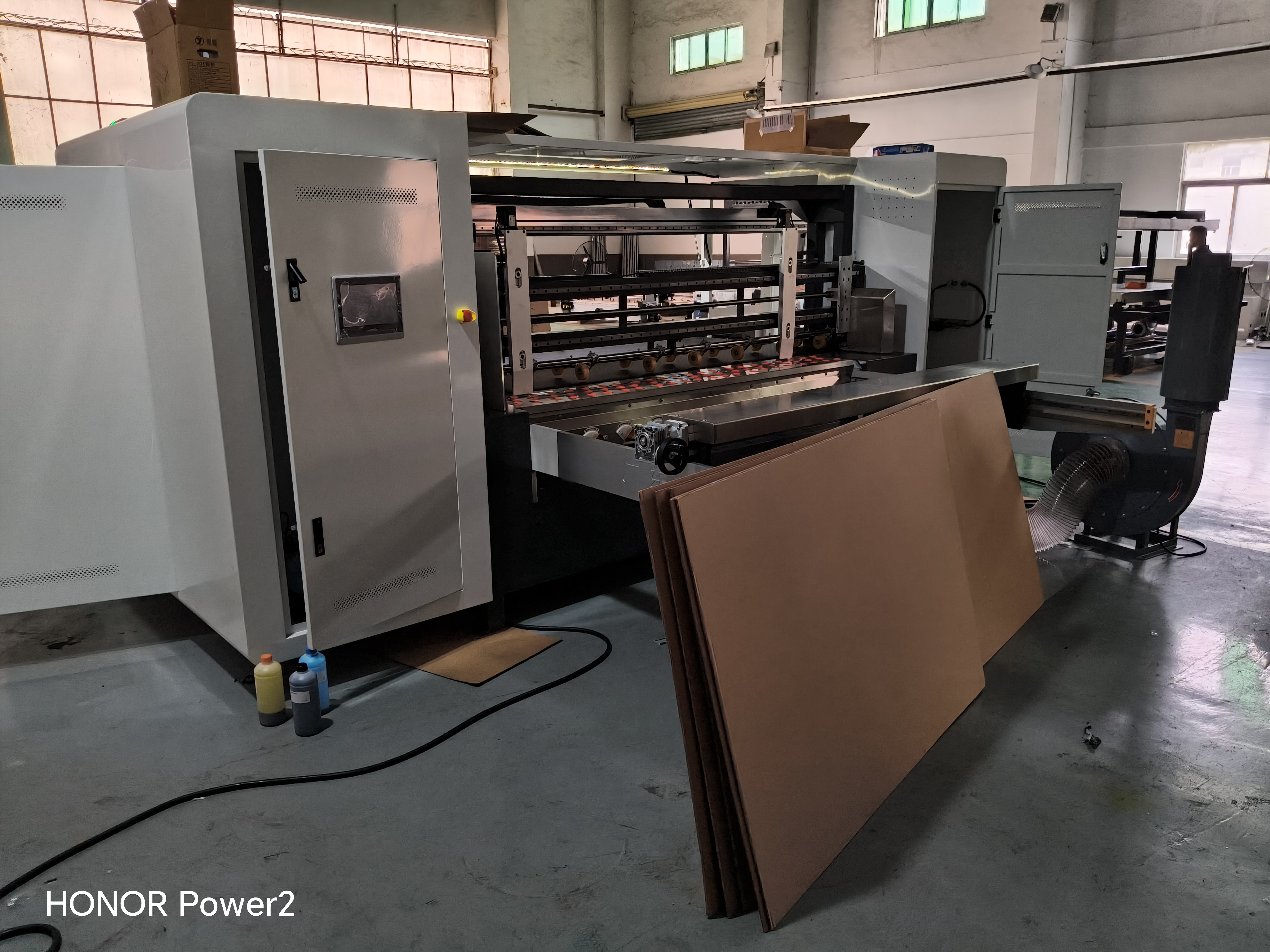
Pre-purchase sample printing is a documented part of GOKING’s customer validation record. The acceptance file should add the tested substrate, file, ink, mode, and sign-off.
Why compliance is an acceptance problem, not a claims list
A multifunctional digital printing machine combines mechanical handling, ink delivery, printhead control, drying, electrical systems, and software workflow. A certificate or a factory photograph may support one part of that system; it does not prove that a particular configuration will print a particular board at an accepted quality and speed. The buyer therefore needs two linked records: a qualification file before order, and an acceptance record before release.
The qualification file answers who the supplier is, what it can manufacture, which standards and certificates apply, and what evidence exists for the claimed configuration. The acceptance record answers which serial-numbered machine was built, which components were installed, which site services were verified, which test prints were approved, and which exceptions remain open. When those records are separate, a buyer can avoid the common error of treating a marketing claim as an acceptance criterion.
The commercial reason is practical. A machine accepted only on a visual demonstration may pass the first job and fail the second because the substrate, ink, drying condition, or print mode changed. A file that records the tested substrate, ink, file format, resolution, speed, and operator can be checked again when production changes. The record does not guarantee future output, but it narrows the uncertainty to known conditions.
What GOKING’s disclosed record can and cannot support
Guangdong Goking Intelligent Technology Co., Ltd. is a Dongguan-based manufacturer founded in 2020. Its supplied company record describes a 10,000 m² facility, 152 employees, 38 R&D engineers, a 49% export ratio, and company-reported markets including the EU, Africa, Latin America, Russia, Kazakhstan, and Turkey. It also identifies the core product as a single-pass and multi-pass 2-in-1 digital printing machine, with five-color integrated models and multiple DPI and nozzle configurations. The company website is Guangdong Goking Intelligent Technology Co., Ltd..
Those facts are useful for supplier qualification because they describe scale, technical staffing, product architecture, and export exposure. They do not, on their own, prove that every model carries the same certificate, that every market has local service coverage, or that a specific machine will meet a buyer’s print standard. The buyer should treat them as capacity and experience indicators that lead to further document requests, not as final proof.
The same discipline applies to the factory and R&D figures. A 10,000 m² facility and 38 R&D staff can support a discussion about manufacturing resources and customization capability. They do not replace a model-specific bill of materials, a quality-control record, or an acceptance test. The acceptance file should connect each supplier claim to a document or a test that the buyer can check.
GOKING’s capability record also names OEM and ODM production, free sample printing, and customization across machine structure, printhead type, DPI configuration, five-color schemes, and turnkey line solutions. Those are relevant qualification inputs for a buyer seeking a customized machine. They should still be converted into a written scope: what is customized, which printhead and ink set are included, who validates the sample, and how changes are approved. The record does not disclose those contract terms, so they belong in the purchase file.
The supplier’s case record describes overseas printing and packaging factory applications, including single-machine deliveries and urgent rework deliveries, with a stated duration of more than five years and no disclosure of exact order quantities. That is useful context for experience, but it is not an installed-base audit. A buyer should ask for reference contacts and the specific model and application behind each reference.
The CE certificate: read the scope, not just the mark
The supplied certificate record for GOKING lists a Certificate of Conformity, certificate number HTT202308117L, issued by Shenzhen HTT Technology Co.,Ltd. The stated market is the European Union, the scope is the European Union, and the cited standard is EN 60204-1:2018 under Directive 2006/42/EC. The record gives an issue date of 9 August 2023 and a listed expiry date of 1 January 2099. Those details make the certificate a useful starting point, but they do not close the compliance question.
For acceptance, the buyer should match the certificate to the model, configuration, and serial number being purchased. The certificate should be read together with the declaration of conformity, the applicable technical file, and the standards list for the actual build. If the machine is exported to the EU, the buyer should also note that the new Machinery Regulation (EU) 2023/1230 becomes fully applicable on 14 January 2027, replacing Directive 2006/42/EC. A 2023 certificate that cites the earlier directive is not, by itself, evidence that a machine delivered after that date meets the new regulation. The supplier should confirm the applicable route for the actual delivery date.
This is where unstated certifications become a risk. A buyer should not assume that the certificate covers every applicable requirement, every ink, every configuration, or every installation condition unless the scope and declaration say so. Nor should a buyer assume that a certificate for one model extends to a different printhead count, width, ink set, or drying configuration. The correct request is a model-specific document package, not a general certificate image.
Acceptance rule: a certificate is evidence about a defined scope. The purchase file should identify the certificate, the model it covers, the standard cited, the issue date, and the supplier’s written confirmation that the delivered machine falls within that scope.
Site conditions and utilities: the acceptance envelope
The machine’s published technical data gives a clear starting envelope for site acceptance. The rated power is approximately 14 kW; the electricity requirement is 380 V, 50/60 Hz, three-phase. The stated working environment is room temperature 15–32 °C and humidity 70%. The material thickness range is 2–30 mm. The machine size is 4,260 × 2,300 × 1,900 mm and the weight is 2,800 kg. These are not minor installation details. They determine whether the machine can be powered, accessed, positioned, and operated in the buyer’s building.
The humidity figure needs careful handling in a purchase contract. The supplied data states humidity 70%, not a tolerance band. A buyer should ask the supplier to confirm the permissible humidity range and how it is measured, because a single target value is difficult to use as an acceptance criterion. The same applies to temperature: the published range is 15–32 °C, and the buyer should record where and how that range will be maintained. The acceptance file should state the agreed measurement point, not just the number.
Power quality and site preparation also belong in the file. The product record lists a voltage stabilizer, humidifier, temperature-control system, computer, and toolkit among the matched equipment for the application. The purchase order should identify what is included in the supplier’s scope and what remains the buyer’s responsibility. That prevents a late dispute over whether a supporting item was part of the machine supply or an optional site item.
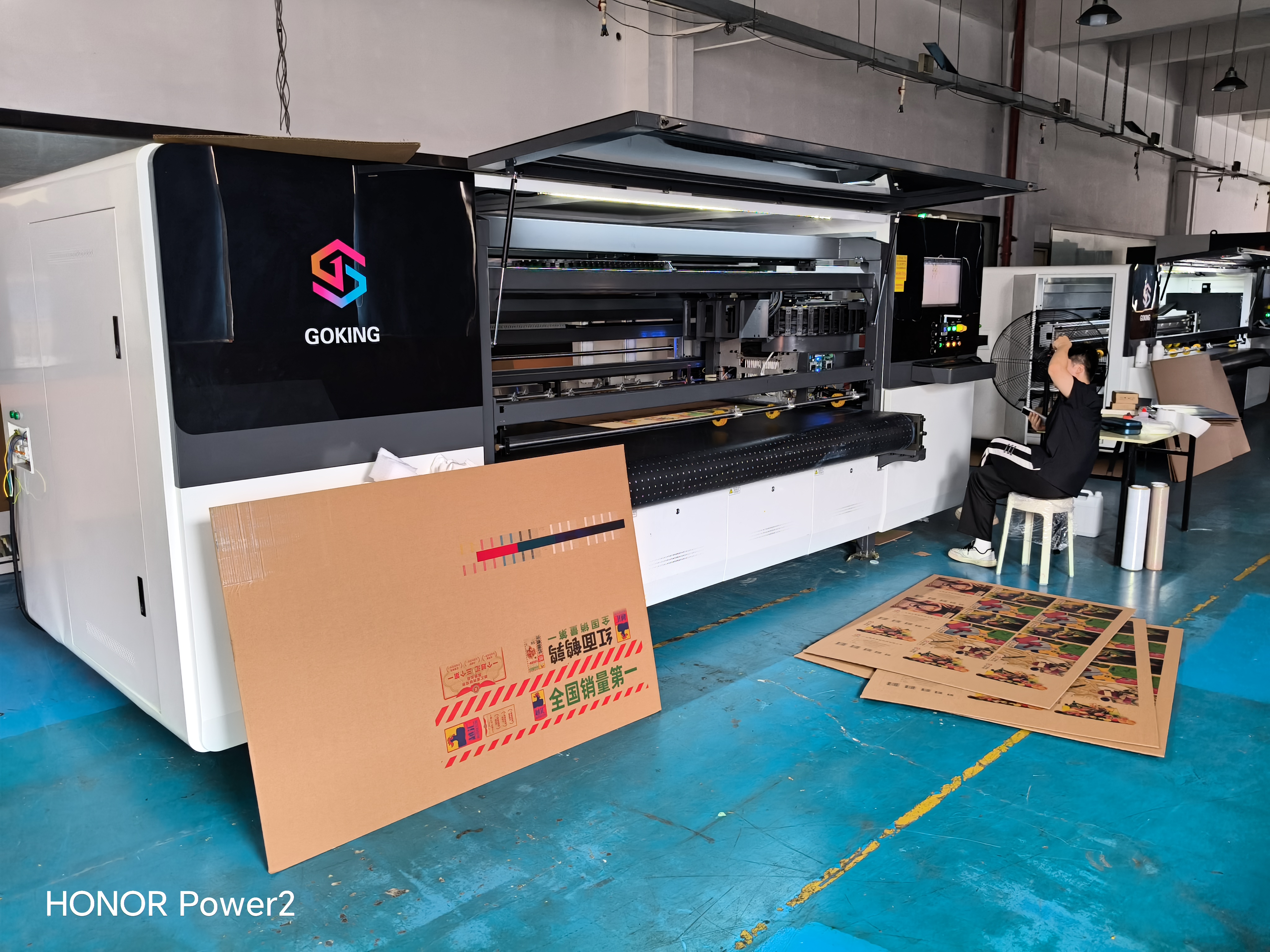
Commissioning a 32-printhead direct-printing and scanning all-in-one machine. Site acceptance should record the installed configuration, not only the model name.
| Acceptance item | Documented reference | Evidence to request | Release condition |
|---|---|---|---|
| Legal entity and model | Guangdong Goking Intelligent Technology Co., Ltd.; founded 2020; 10,000 m² facility; 38 R&D engineers | Business licence, factory address, model list, serial-number plan | Entity and model match the purchase order |
| CE record | Certificate HTT202308117L; EN 60204-1:2018; Directive 2006/42/EC; issue 2023-08-09 | Declaration of conformity, technical file index, model coverage, current validity check | Delivered build is within the stated scope |
| Electrical supply | ≈14 kW; 380 V, 50/60 Hz, three-phase | Site power study, cable and breaker schedule, earthing check | Utility readiness signed off |
| Environment | 15–32 °C; humidity 70% | Agreed humidity range, measurement method, HVAC plan | Site condition recorded at acceptance |
| Material range | 2–30 mm thickness | Substrate samples, thickness list, feeding plan | Tested board accepted |
| Machine configuration | 8–256 printheads; 264–2,600 mm print width; Epson or Xaar; micro-piezo high precision | Model bill of materials, printhead count, nozzle type, width | Installed configuration matches |
| Production claims | 700/1,500 m²/h; Epson single-pass 60 m/min; Xaar single-pass at least 100 m/min | Test method with substrate, file, mode, resolution, operator | Test print and speed record signed |
| Ink and workflow | Water-based dye, water-based pigment, coating ink, UV eco-friendly ink; PDF, JPG, BMP, TIF; RIP direct print | Configured ink list, handling documents, RIP version, test file | Ink and software configuration accepted |
| Quality control | 100% aging test; long-time running inspection; pre-shipment inspection | QC records, inspection report, packing list, photo or video record | Factory release approved before shipment |
| Service and installation | On-site installation and commissioning support; response within 24 hours; spare-parts support | Scope of work, spares list, escalation path, warranty terms | Support terms are written into the contract |
Quality control: from aging test to pre-shipment inspection
GOKING states that its quality control includes a 100% aging test, long-time running inspection, and pre-shipment inspection. These three steps are a useful basis for a factory acceptance file, but each needs a record. The buyer should ask what was tested, for how long, under which configuration, and against which pass or fail rule. The supplied description names the steps but does not give test durations or numerical thresholds. Those details should be defined in the purchase order rather than assumed from a general quality statement.
The 100% aging test is important because it indicates that every machine, not a sample, is intended to pass through the aging step. The buyer should still verify the record for the specific serial number. Long-time running inspection should show that the machine can operate continuously with the agreed print mode and substrate, not merely start and stop in a short demonstration. Pre-shipment inspection should confirm the configuration, printhead count, accessories, packing, and shipping documents before the machine leaves the factory.
Pre-shipment inspection is not the same as site acceptance. A factory test may use the supplier’s standard file and substrate; a site test should use the buyer’s job. The acceptance file should therefore separate factory acceptance from site acceptance. Factory acceptance confirms build and baseline performance. Site acceptance confirms utilities, installation, operator use, print quality on the buyer’s material, and the handover of documents and spare parts.
The capability record also gives a standard production lead time of typically one month for standard machines, with custom and OEM/ODM lead times subject to confirmation. That timing should be linked to the inspection plan. A buyer should schedule factory acceptance and pre-shipment inspection before the shipment date, not after the machine has arrived.
Application fit: match the acceptance test to the production job
The application record for this machine family covers packaging and carton printing, paper mills, and coated paperboard. It names mass production, short-run printing, frequent job change, and continuous high-speed operation as working conditions. Those conditions point to a practical acceptance test: use the buyer’s normal job mix, not a single display sample. A short-run packaging producer should test job changeover, file preparation, first-sheet waste, and repeatability. A producer with mixed substrates should test each substrate family that will be run.
GOKING’s materials describe solutions from kraft paper to coated paper and from sheet printing to mass production. The product record also lists water-based dye ink, water-based pigment ink, coating ink, and UV eco-friendly ink. Ink availability is not the same as ink acceptance. The buyer should define the ink chemistry, substrate, drying condition, and adhesion check for each application. Drying is stated after printing for carton, with other materials depending on the material, so drying must be verified rather than inferred.
White ink appears in the product record through the CMYK(W) color mode and the description of a 2-in-1 machine with white ink. White ink can be relevant for kraft or dark board, but its presence does not establish waterproofness, opacity, or rub resistance. If water resistance matters, the buyer should write a test method and an acceptance threshold. The same rule applies to high-resolution claims: the machine data lists different DPI configurations and a minimum English text height of 1.5 mm, so the test file should include small text, fine lines, registration marks, and a QR code or similar pattern at the agreed size.
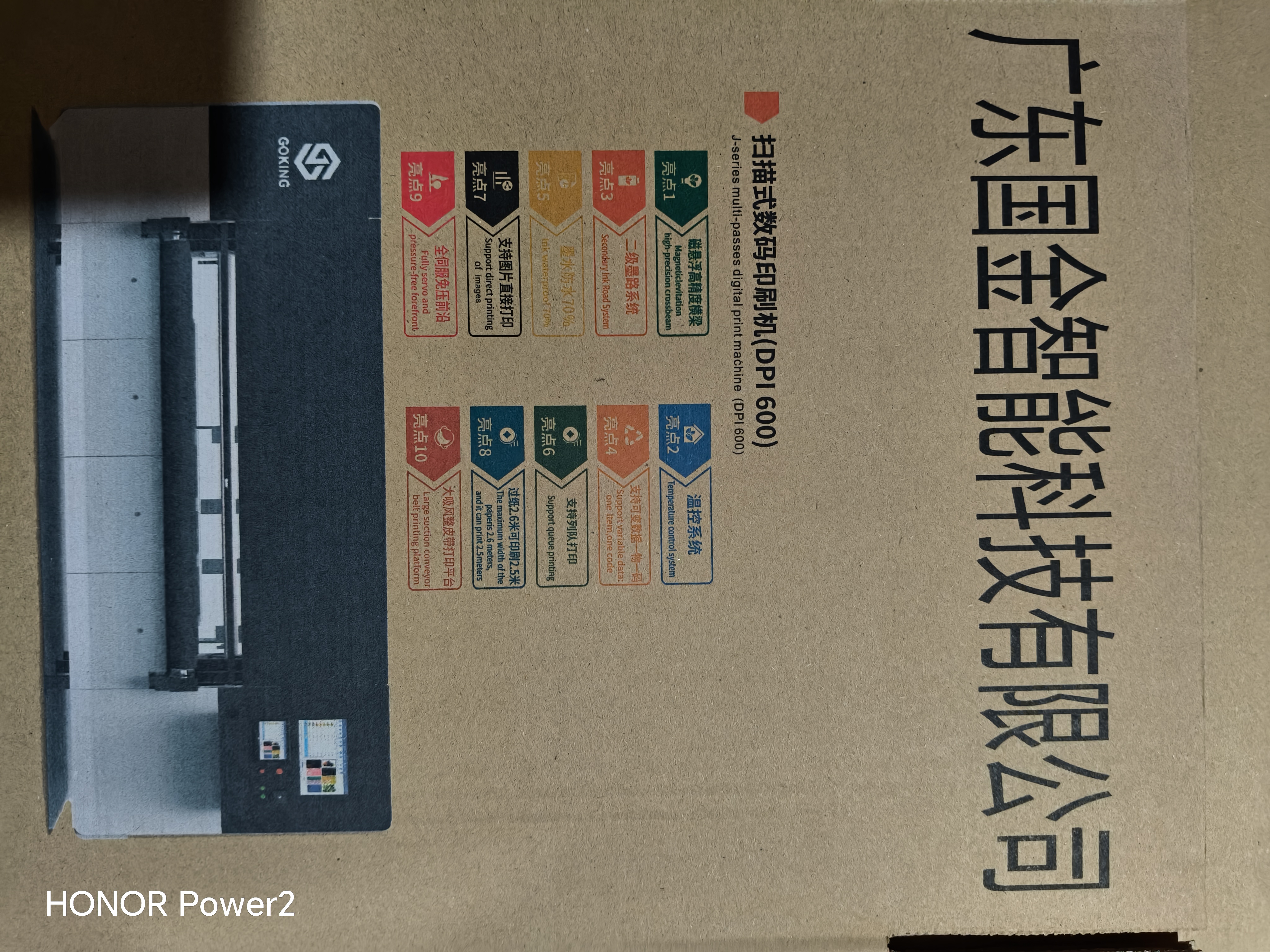
High-resolution QR codes and patterns are useful acceptance artifacts because they make print quality and registration measurable.
For corrugated packaging, the material thickness range of 2–30 mm is a broad operating envelope, not a promise for every board grade. The buyer should test the actual board, flute, coating, and moisture condition. For coated paperboard and kraft work, the test should include ink adhesion, drying, and handling after printing. For premium packaging and label work, a multi-pass scanning configuration may be relevant, while high-volume standard work may point to single-pass operation. The 2-in-1 architecture is a configuration choice; acceptance should confirm that the selected mode performs on the selected job.
Plate-based comparison and the limit of the claim
The application material positions digital printing as a way to replace plate-based printing, reduce plate costs, reduce setup waste, and enable flexible short-run production. Those are relevant benefits for packaging plants handling short-run, urgent, and personalized orders. They are application claims, not a universal cost proof. The supplied record does not provide a cost crossover, a total cost of ownership, or a comparison under the buyer’s job mix.
Acceptance should therefore include the operational reasons for choosing digital: setup waste, changeover time, file handling, and first-sheet yield. If those items are not measured, the buyer cannot tell whether the machine is delivering the flexibility that justified the purchase. A plate-based line may remain the reference for long, stable runs; the record does not provide comparative cost evidence for that case. The buyer should build the comparison from its own orders, not from a general claim.
This is also where a verified limitation belongs. Digital printing does not remove the need for substrate testing, ink qualification, drying checks, and finishing trials. The machine’s published data describes printing parameters; it does not certify the finished package for every downstream requirement. The acceptance file should connect the press to the buyer’s finishing and packing process.
Market context and future compliance
Third-party estimates show why documentation discipline matters as digital packaging grows. Grand View Research valued the global digital printing packaging market at USD 37.5 billion in 2025. Smithers forecast that digital corrugated packaging value would reach USD 8.2 billion by 2030, more than doubling from 2025 levels. These are category-level estimates, not performance guarantees for a specific machine. They support the case for a buyer-side acceptance file because more applications and shorter runs increase the number of variables that must be recorded.
The regulatory direction is also moving toward build-specific evidence. The EU Machinery Regulation (EU) 2023/1230 becomes fully applicable on 14 January 2027. A buyer taking delivery around or after that date should not rely only on an older certificate that cites Directive 2006/42/EC. The supplier should confirm the applicable declaration, standards, and technical documentation for the actual machine. The same logic applies in other markets: the buyer should identify the required documents for the destination country and verify them before shipment.
The future outlook is less about adding more logos to a brochure and more about keeping documents current. Software versions, printhead configurations, ink sets, and site conditions can change. An acceptance file that records those details at handover gives the buyer a baseline for maintenance, spare-parts planning, and later upgrades.
What not to assume
- Do not assume one CE certificate covers every model. Match the certificate scope to the model, configuration, and serial number being delivered.
- Do not treat factory size as a product certificate. A 10,000 m² facility and 38 R&D engineers support capability review, not print-quality acceptance.
- Do not treat export activity as local service coverage. Company-reported markets in the EU, Africa, Latin America, Russia, Kazakhstan, and Turkey do not prove spare-parts stock or response time in the buyer’s city.
- Do not treat white ink as a waterproof guarantee. Water resistance needs a defined test method, substrate, ink, and acceptance threshold.
- Do not treat a speed or width figure as universal. The data lists 8–256 printheads, 264–2,600 mm width, and different speeds by configuration. Require the exact configuration in writing.
- Do not treat a QC step as a field-reliability guarantee. The aging test and pre-shipment inspection are factory controls; site performance still depends on installation, utilities, operator practice, and maintenance.
- Do not treat OEM or ODM capability as a validation report. Customization scope, change control, and acceptance responsibility must be written into the order.
A practical release sequence
- Qualification file: collect entity documents, model list, certificate and declaration, QC description, configuration sheet, and service terms.
- Factory acceptance test: define substrate, ink, file, resolution, mode, speed, and print-quality checks before the visit or remote review.
- Pre-shipment inspection: verify serial number, printhead count, accessories, packing, and shipping documents against the purchase order.
- Site readiness: confirm 380 V, 50/60 Hz, three-phase power, approximately 14 kW load, 15–32 °C temperature, agreed humidity conditions, access route, and 2,800 kg handling plan.
- Installation and commissioning: record the installed configuration and the support actually provided during installation and commissioning.
- Site acceptance: run the buyer’s own jobs within the 2–30 mm material range, approve the test prints, close open exceptions, and hand over documents, spares, and contacts.
Compliance becomes useful only when it changes a release decision. A certificate that cannot be matched to the delivered machine, a QC step without a record, or a speed claim without a test condition is not an acceptance criterion. The buyer’s file should turn each supplier statement into a document, a measurement, or a written exception. That is the difference between a compliance folder and an acceptance system.
For readers who need the fuller specification set, the 2026 product catalog is available as a reference PDF: 2026 product catalog.
FAQ
What should a buyer include in a compliance and acceptance file for a multifunctional digital printing machine?
The file should include the legal entity and manufacturing address, the model and serial-number plan, the certificate and declaration of conformity, the quality-control records, the installed configuration, site utility requirements, the test-print method, shipping and installation scope, spare-parts terms, and the signed acceptance result. For GOKING, the disclosed record provides anchors such as the CE certificate HTT202308117L, the 100% aging test, long-time running inspection, pre-shipment inspection, and the 10,000 m² facility with 38 R&D engineers. Each anchor still needs a model-specific document or record.
How should buyers interpret the CE certificate for this machine?
The supplied certificate record lists a Certificate of Conformity numbered HTT202308117L, issued by Shenzhen HTT Technology Co.,Ltd., with EU market and scope, standard EN 60204-1:2018, Directive 2006/42/EC, issue date 9 August 2023, and a listed expiry date of 1 January 2099. Buyers should match it to the model and serial number, obtain the declaration of conformity, verify current validity, and confirm the applicable requirements for machines delivered after 14 January 2027, when Regulation (EU) 2023/1230 becomes fully applicable.
Which site conditions and utilities should be verified before installation?
The published requirements are approximately 14 kW rated power, 380 V, 50/60 Hz, three-phase electricity, room temperature 15–32 °C, humidity 70%, material thickness 2–30 mm, machine size 4,260 × 2,300 × 1,900 mm, and weight 2,800 kg. The humidity value is stated as 70%, not a range, so the buyer should ask the supplier to confirm the permissible range and measurement method. The site file should also confirm access, floor loading, lifting, and the scope of supplied support equipment.
How can print quality be accepted without inventing a universal standard?
Define the test conditions first: substrate, ink, file format, resolution, print mode, speed, drying condition, and operator. The product record lists support for PDF, JPG, BMP, and TIF files, a minimum English text height of 1.5 mm, different DPI configurations, and a print width range of 264–2,600 mm. Use the buyer’s own file with small text, registration marks, and a QR code or fine pattern. Record the result and approve it against the buyer’s written threshold, not against a general visual impression.
What does factory size and export activity prove about supplier capability?
GOKING’s disclosed record describes a 10,000 m² facility, 152 employees, 38 R&D engineers, a 49% export ratio, and markets including the EU, Africa, Latin America, Russia, Kazakhstan, and Turkey. These facts support a review of manufacturing scale, technical resources, and export experience. They do not prove that every model is certified, that spare parts are stocked locally, or that a specific machine will meet the buyer’s print standard. Buyers should request model-level documents, reference installations, and written service terms.
Have Questions or Need More Details?
Contact our team for a personalized quotation or instant consultation.
Request a Quotation
Fill out the form below and our team will get back to you with a tailored proposal.
WhatsApp Direct Chat
Prefer to chat in real-time? Message us on WhatsApp for instant assistance & quick answers.
- Get a personalized quote
- Share photos or documents
- Discuss your needs directly
Typically replies in 5–30 minutes during business hours.