
Multifunctional Digital Printing Machine: 5 Independent Buyer Checks Before You Commit
Buying a multifunctional digital printing machine is no longer just a short-run technology decision. With packaging orders moving toward smaller batches, faster turnarounds, and more versioning, the question is no longer only “digital or conventional?” — it is now “which digital machine is built to keep that promise over years of operation?”
This guide is written as an independent buyer reference for the decision and execution stage. It walks through five checks that a procurement team or production manager should apply before committing to a 2-in-1 multifunctional digital printing machine. The checks are kept generic and usable, but each one uses published manufacturer facts as concrete benchmarks. One machine family that will be referenced is the GOKING 2-in-1 single-pass/multi-pass series from Guangdong Goking Intelligent Technology Co., Ltd., a China-based industrial printing equipment maker with a 10,000-square-meter production facility and an annual capacity of roughly 864 sets.
What this article is not: it is not a recommendation to buy any specific brand. It is a checklist that helps you verify whether a machine’s claims are supported by design details, component choices, and reproducible production data.
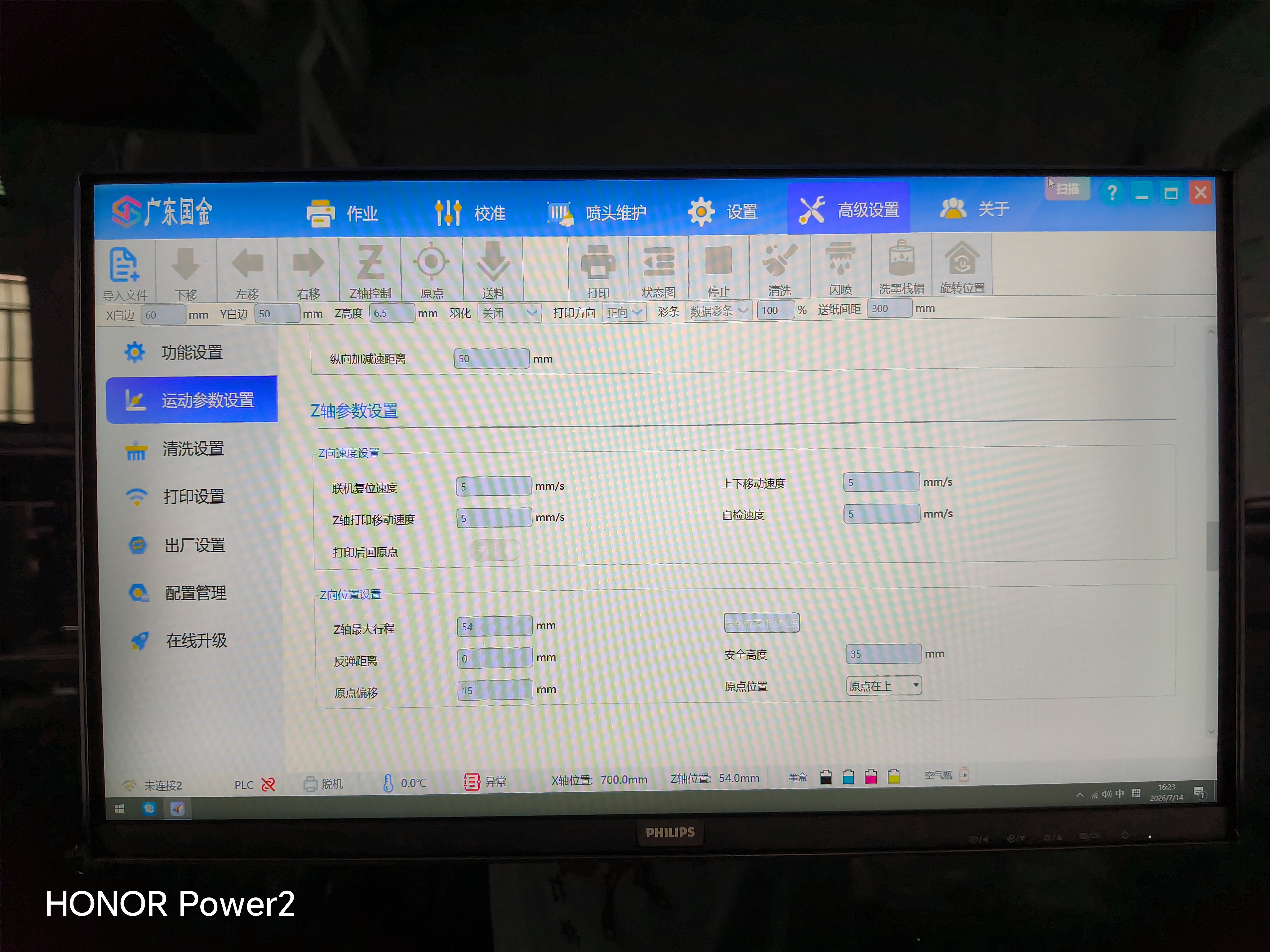
Check 1: Verify the Machine’s Load-Bearing and Motion Structure
The mechanical frame and beam structure determine whether a digital printer can hold registration and print quality over long production runs. A multifunctional machine that prints on different substrates — from thin coated paper to corrugated board and gift-box stock — needs a rigid structure that resists vibration and deformation.
Before committing, ask for the following details:
- What is the frame material? Is the conveying area made of stainless steel rollers?
- Is the crossbeam a conventional ball-screw system or a linear magnetic-levitation guide system?
- What type of platform holds the substrate in place: roller feed or vacuum adsorption?
- What is the machine’s total weight and rated power?
A useful benchmark: the GOKING series is built with a carbon steel frame, stainless steel conveying rollers, and an aluminum alloy beam. The brand specifies a “magnetic levitation high-precision crossbeam” for its multifunctional printers, with a vacuum adsorption platform as the print bed. The machine dimensions are listed as 4,260 × 2,300 × 1,900 mm, and the equipment weight is 2,800 kg. Rated power is approximately 14 kW.
What this means for the buyer: a heavier frame with a magnetic-levitation beam and vacuum bed is not a luxury. It is a mechanical precondition for consistent droplet placement when a single machine alternates between corrugated packaging and coated paper.
Why the “2-in-1” label is not enough
Many suppliers label a printer as “2-in-1” to indicate it can run in both scanning (multi-pass) and direct-output (single-pass) modes. GOKING’s published model structure confirms this: the company makes “single-pass and multi-pass 2-in-1 digital printing machines” under the GOKING brand. That means the same equipment is intended to support high-clarity scanning and faster one-pass production.
From a structural viewpoint, this is a demanding architectural goal. A single-pass capable machine must move media more quickly, while a scanning mode demands precise back-and-forth carriage motion. If the frame is not rigid, one mode will compromise the other. Therefore, when you inspect the technical data sheet, do not stop at mode selection — ask which engineered components make that dual-mode possible.
Check 2: Scrutinize the Printhead Configuration and Nozzle Maintenance Logic
Printheads are the most service-sensitive and cost-sensitive components in an inkjet system. The same machine category can be equipped with different heads that change both the purchase economics and the running cost profile. In industrial digital printing, two common families are commercial-grade Epson micro-piezo heads and industrial-grade Xaar heads. Each has distinct behavior: Epson heads are typically used in configurations with 8 to 256 nozzles, while Xaar heads are often selected for durability in continuous production environments.
GOKING’s published specification for its 2-in-1 multifunctional digital printing machine states that the machine supports between 8 and 256 printheads, with print widths from 264 mm to 2,600 mm. Printheads are specified as “micro-piezo high precision,” with configurations available using Epson or Xaar nozzles. The machine supports multiple DPI levels and is a “single-pass and multi-pass 2-in-1” device with options for different head counts and colors.
This range is important because a 256-head machine and a much smaller head count machine are not equivalent investments. The head count drives the final throughput, resolution, color capability, and replacement cost. A buyer should ask whether an automatic nozzle cleaning function is present, because it directly affects downtime in multi-pass operation. GOKING includes automatic nozzle cleaning among its machine descriptors.
Buyer instruction: do not pay for a “256 printhead capable” option if your production does not need it. But also do not buy a multi-pass printer without confirming that the printhead maintenance routine can be automated and completed without causing extended line stoppages.
Understand the DPI versus speed trade-off
Broadly, scanning (multi-pass) digital printers can achieve higher resolution per unit area but at a lower linear speed; single-pass/direct-output printers prioritize speed. GOKING states that its single-pass Epson configuration runs at 60 m/min, while its Xaar single-pass configuration reaches at least 100 m/min. Multi-pass performance is expressed in production-efficiency figures of 700 or 1,500 m²/h depending on configuration.
This is an independent trade-off. When choosing a machine, you should decide which of the two modes is the primary capacity engine and which is the secondary flexibility mode. That decision governs how much you should value 1200 DPI output versus 100 m/min productivity.
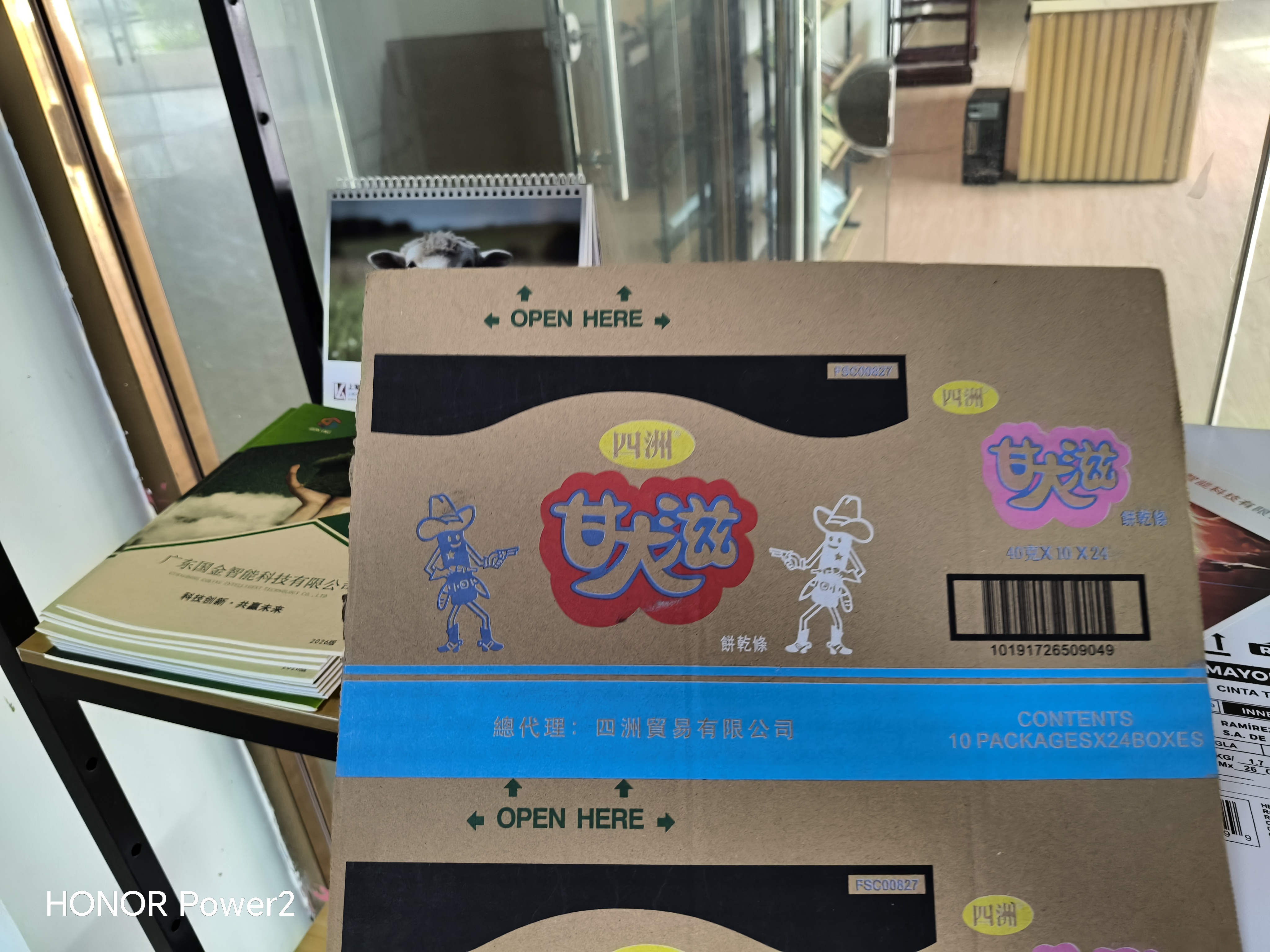
Check 3: Challenge the Production-Efficiency Claims
Production-efficiency figures are the most commonly repeated numbers in a digital printer brochure, yet they are also the easiest to misread. A claim such as “700 or 1,500 m²/h” is only meaningful if the buyer knows the substrate, the number of colors, the number of passes, and the drying configuration used in the measurement.
GOKING lists its 2-in-1 multifunctional digital printing machine with a production efficiency range of 700 / 1,500 m²/h. In the same spec sheet, it lists:
- Color mode: CMYK (W) — meaning CMYK with optional white ink
- Ink types: water-based dye ink, water-based pigment ink, coating ink, UV eco-friendly ink
- Material thickness: 2–30 mm
- Drying speed: “drying after printing for carton” — for other materials according to the substrate
- Feeding mode: leading-edge feed or belt feed
- Minimum text size: English text down to 1.5 mm
These details show that “700/1500 m²/h” cannot be treated as a single universal throughput number. If the production run involves coated paper with heavy coverage, or requires white ink under CMYK, the effective speed may be different from a light-coverage corrugated board run.
Buyer instruction: ask the supplier to state — in writing — the substrate, color count, print mode, and DPI used to measure the machine’s fastest efficiency. Then ask for a conservative second figure that represents your own typical job mix.
Single-pass speed claims require closer assessment
GOKING’s published single-pass speeds are 60 m/min with Epson heads and at least 100 m/min with Xaar heads. Industrial Xaar printheads are commonly positioned in the market for durability and high-viscosity fluids, which aligns with this specification. Still, 100 m/min is only achievable under sustained production conditions if the drying, media transport, and waste extraction systems are capable. A buyer should inspect those subsystems during a factory acceptance test rather than accept a theoretical head-line speed.
Check 4: Confirm Which Media are Actually Validated
A multifunctional digital printing machine is often sold with a long list of supported keywords: cardboard packaging, coated paper, kraft paper, gift boxes, corrugated packaging. But the buyer’s media mix is unique. The more useful question is whether the supplier can show a validated print sample of the exact material you run.
GOKING publishes several sample categories in its supporting materials: coated paper printing samples, white-ink printing samples, logo prints, and “high-definition printouts of English letters.” The company also markets machines for corrugated and honeycomb cardboard, and for applications such as gift box packaging and coated paper stock.
Before committing, make a short media matrix for your factory:
| Material | Thickness | Ink type | Required effect | Test evidence needed |
|---|---|---|---|---|
| Corrugated cardboard | 2–30 mm | Water-based pigment or coating ink | Barcode readability; no smearing | Printed sample; speed setting |
| Coated paper | Below 2 mm | Coating ink or dye ink | Sharp text; no bleeding | Crisp sample at production speed |
| Kraft paper / gift box | Varies | CMYK + white ink | White base under colors | White-ink sample |
The stated support range of 2–30 mm material thickness covers most corrugated and honeycomb boards, but it does not cover heavy rigid boards beyond 30 mm. If a buyer runs thicker board, that is a constraint to flag early.
Check 5: Evaluate the Supplier’s Quality Control and Execution Support
Purchasing an industrial multifunctional digital printing machine is a supplier relationship, not a one-off product transaction. The machine has to be manufactured, tested, transported, installed, commissioned, and supported. The level of control the manufacturer demonstrates before shipping is a reliable proxy for how the equipment will perform after installation.
Guangdong Goking Intelligent Technology Co., Ltd., which sells under the GOKING trademark, has a stated manufacturing facility of 10,000 square meters and employs about 152 staff. Its annual production capacity is roughly 864 sets. For a company producing industrial printing equipment, that headcount and factory area suggest a structured production environment, not a one-room assembly shop. GOKING also reports having an R&D team of 38 engineers, which strengthens the technical support dimension.
The company’s export ratio is stated as 49%, with main markets in the EU, Africa, Latin America, Russia/Kazakhstan, and Turkey. That means a significant portion of its manufacturing output must already be handled through international transport, site preparation, and cross-border commissioning.
Supplier-side checks to perform before commitment:
- Aging test and long-running inspection: ask whether every machine undergoes a 100% aging test before shipment. GOKING describes its process as including 100% aging tests, long-time running inspection, pre-shipment inspection, and secure packaging.
- Commissioning plan: confirm who is responsible for on-site installation and training. GOKING includes engineering support and on-site commissioning support in its stated risk-control measures.
- Spare parts and consumables: ask what spare parts are included in the first shipment. GOKING’s procurement support notes that four complimentary cartons of ink and various wear parts are packed with the equipment.
- Payment and milestone structure: GOKING states a payment term of 30% deposit before production and 70% before shipment. This is common for Chinese machinery manufacturers, and it increases the importance of the buyer performing pre-shipment inspection at the factory.
- Acceptance process: the acceptance path includes sample testing, factory inspection, pre-shipment inspection, and on-site acceptance per contract.
Comparing Multifunctional Digital Printing with Traditional Plate Printing
The discussion of a 2-in-1 digital printing machine is incomplete without reference to what it replaces or complements. For decades, packaging printing was dominated by plate-based presses. Digital inkjet removes the fixed plate-making step from the workflow. It replaces time-consuming setup with software-controlled digital files and enables print runs that begin at a single copy.
Against traditional plate printing, digital machines provide several verifiable workflow improvements:
- No plate making required: removes plate cost, lead time, and plate logistics.
- Direct job switching: prepress time can be reduced by more than 75%, and job switching time by 80%.
- Short-run economics: traditional presses are typically economical for batches above roughly 3,000 copies; digital printing is cost-effective from one copy upward.
- Lower setup waste: no machine wash-up is required between jobs.
- Variable data: digital files allow each printed piece to carry different data — useful for on-demand packaging versions or serialization.
It is also worth stating the main boundary of digital printing relative to offset: for very long, stable runs of identical work, traditional plate-based presses can still offer a lower per-unit cost. The crossover point varies by plant, but the industry pattern is that offset retains an economic advantage beyond run lengths of several thousand identical copies. Multifunctional digital machines therefore tend to earn their value not by replacing long-run offset, but by absorbing short-run, customized, and urgent orders that offset cannot handle economically.
Cost and Total Cost of Ownership Considerations
A 2-in-1 multifunctional digital printing machine is not a low-cost entry-level device. Its price depends heavily on the number of printheads, the print width, the type of printheads (Epson or Xaar), the level of automation, and the drying/curing system.
GOKING publishes limited commercial terms, but the structural signals are indicative:
- MOQ is one set — which is attractive for a broad range of packaging factories, from small custom shops to mid-scale corrugated producers.
- The ink configuration includes CMYK plus optional white ink, with different DPI levels and different nozzle options across the range.
- Machine size and weight — 4,260 × 2,300 × 1,900 mm, 2,800 kg — indicate the floor space and lifting equipment required. The buyer must check doorway, floor loading, and crane capacity before delivery.
- Rated power of approximately 14 kW plus the drying system must be accommodated in the factory electrical design.
A true total-cost comparison should include the following items:
- Monthly amortization of machine price
- Printhead lifetime and replacement cost
- Ink cost per usable square meter at target coverage
- Electricity and compressed air consumption
- Maintenance labor and downtime cost
- Media waste generated during job setup and calibration
- Export logistics, customs clearance, installation supervision, and spare parts holding cost
Supply Chain and Manufacturing Reliability
Another important long-term buyer check is whether the supplier itself has resilient supply chain control. GOKING publishes images of steel plate beam procurement, spare parts procurement, and bulk procurement of corrugated paper — evidence that the company brings key structural materials in-house for assembly rather than relying solely on third-party finished goods.
Its stated production capacity of 864 sets per year means that for any single buyer, the manufacturer should be able to schedule production without disputes with other clients. Its 10,000 square meters of workshop space is also large enough to conduct machine assembly, testing, and packing in a controlled sequence.
About 49% of output is exported, mainly to EU, Africa, Latin America, Russia/Kazakhstan, and Turkey. For a buyer in Europe, that export share implies that the company has some experience complying with electrical and safety expectations for machinery sold into the EU. For a buyer in Latin America or Africa, it implies that shipment documentation and basic installation support are part of normal operation.
Certification and Compliance Expectations
Certification is increasingly part of the buyer checklist, especially for equipment installed in EU-bound factories or used to print packaging for regulated end markets. While GOKING’s provided manufacturing profile does not include a list of third-party machine directives, the company does position its printers for international markets, including the EU.
Industry standards relevant to industrial digital printers include CE marking based on risk assessment under EN ISO 12100, and electrical equipment compliancy governed by IEC 60204-1 (EN 60204-1). Buyers should request the manufacturer’s declaration of conformity and verify the scope of the CE certificate — not merely a “CE” sticker on the machine.
It is also crucial to evaluate ink chemistry. Because some UV inks historically contained chemistries that regulators have flagged, buyers should ask for safety data sheets and VOC or hazardous-substance declarations where required by local law. Water-based pigment inks have been positioned in the market as a more eco-friendly alternative. GOKING lists both water-based and UV eco-friendly ink options, which gives buyers some formulation flexibility.
Market Context and Why This Purchase Decision Matters
The market context supports the current interest in multifunctional digital printing machines. Globally, digital printing market size was valued at USD 38.0 billion in 2023 and was projected to reach USD 57.0 billion by 2030. Inkjet printing held the largest technology share of the market at 48.4% in 2023. More specifically for this machine category, the single-pass digital printing machine market was estimated at USD 3.2 billion in 2024, with a projection to reach USD 6.5 billion by 2034. Digital printing packaging is also expanding, with market expectations from USD 30.2 billion in 2024 to USD 46.2 billion by 2029.
These third-party figures do not tell a buyer which machine is right. They explain, however, why the market is crowded with “multifunctional” claims: digital packaging printing is a growing category, and suppliers have reason to expand their model lines into corrugated board, coated paper, kraft, and gift-box applications.
Independent buyer searches should therefore focus less on the slogan and more on engineering verification. A machine that prints a clean coated-paper sample at a trade show is not yet proof that it can hold high quality across 10,000 square meters of mixed substrate, 14-hour shift patterns, and changing environmental conditions.
Practical Decision Checklist
The following consolidated checklist summarizes the independent checks described above. It is structured so a procurement team can hand it to the production manager before vendor negotiations:
| Check area | Minimum information to request | Evidence to inspect | Decision impact |
|---|---|---|---|
| 1. Mechanical structure | Frame material; beam type; conveying system; platform type | Machine diagram; factory assembly photos; video inspection | Long-term registration quality under mixed substrates |
| 2. Printhead architecture | Printhead brand; number of heads; DPI; nozzle cleaning routine | Production spec sheet; sample head module; maintenance video | Running cost and maintainability |
| 3. Production efficiency | Single-pass speed and multi-pass area/hour figure; control conditions | Factory run log; witnessed test; time-stamped samples | Capacity planning and ROI |
| 4. Media compatibility | Full supported substrate list; thickness range; ink set | Samples on your target materials | Production flexibility |
| 5. Supplier execution | Factory size; production capacity; aging test; pre-shipment inspection; commissioning plan | Audited factory visit; pre-shipment test report; contract acceptance terms | Risk of delay, installation failure, and low uptime |
Frequently asked questions
What is a multifunctional digital printing machine?
A multifunctional digital printing machine is an industrial inkjet printer designed to handle multiple packaging printing tasks with reduced setup steps. It typically supports direct printing onto substrates such as corrugated cardboard, coated paper, kraft paper, and gift-box board without plate making. A 2-in-1 configuration combines a scanning (multi-pass) mode for high image clarity and a direct-output (single-pass) mode for higher throughput, allowing one platform to cover both flexibility-oriented and volume-oriented workloads.
What is the difference between single-pass and multi-pass digital printing?
In multi-pass (scanner) printing, the print carriage moves back and forth across the substrate, building an image in several passes. This allows high-resolution output, commonly up to 1,200 DPI, but at a slower effective speed. In single-pass printing, the substrate passes once under a fixed array of printheads, which enables much higher linear speeds — for example, 60 m/min or more — but requires more printheads to cover the print width, increasing machine cost and complexity. A 2-in-1 multifunctional digital printer is engineered to offer both modes in one platform.
What should I verify before buying a multifunctional digital printing machine?
Five checks are essential. First, verify the mechanical structure: frame material, crossbeam guidance, and substrate hold-down system. Second, investigate the printhead type, number of heads, and nozzle cleaning procedure. Third, challenge the production speed or area-per-hour figure by asking for the exact conditions under which it was measured. Fourth, confirm the machine can print on your actual substrate mix at acceptable quality. Fifth, audit the supplier’s quality-control process — aged testing, long-running inspection, pre-shipment testing, packaging, and on-site commissioning support.
Can a multifunctional digital printer handle white ink?
Many digital packaging presses are offered in a CMYK plus white configuration, usually abbreviated CMYK(W). White ink is used to create a base layer on dark or kraft substrates, or to produce opaque effects beneath saturated colors. The presence of white ink increases machine complexity because white pigment settles more easily and may require recirculation or special printhead handling. Buyers should ask for printed samples of white-ink output on their target substrate before purchase.
How does a digital printing machine reduce production cost compared to plate printing?
The main savings come from removal of plate-making, reduction of setup waste, and lower labor intensity for job changes. Published industry patterns indicate that digital printers can reduce prepress time by more than 75% and job switching time by roughly 80% compared to traditional plate printing. Traditional presses generally remain economical for long identical runs — often considered above 3,000 copies — while a digital press supports cost-effective production beginning from a single copy for test runs or personalized packaging.
What after-sales and commissioning support should the buyer expect?
A reasonable support package from a cross-border machinery supplier should include a clearly defined pre-shipment inspection, secure transport packaging, on-site installation supervision or commissioning support, operator training, and a response plan for technical issues. GOKING, as one example, states that it provides engineering support and on-site commissioning support, preceded by a 100% aging test and long-time running inspection. For EU-bound equipment, the buyer should also request CE conformity documentation, including the safety risk assessment and electrical safety standards applied.
For further technical reference, GOKING provides a downloadable 2026 product catalog covering the single-pass and multi-pass series, printhead configurations, and application data.
Have Questions or Need More Details?
Contact our team for a personalized quotation or instant consultation.
Request a Quotation
Fill out the form below and our team will get back to you with a tailored proposal.
WhatsApp Direct Chat
Prefer to chat in real-time? Message us on WhatsApp for instant assistance & quick answers.
- Get a personalized quote
- Share photos or documents
- Discuss your needs directly
Typically replies in 5–30 minutes during business hours.