
Multifunctional Digital Printing: 2026 Buyer Evaluation Guide
Packaging printing is moving from plate-based workflows toward digital platforms that can switch jobs in minutes instead of hours. For printing and packaging factories evaluating new equipment, the decision is no longer simply digital versus analogue. It is about which digital architecture — single-pass, multi-pass, or a combination of both — best fits the order profile, substrate mix, and long-term production strategy.
Why the evaluation context has changed
Digital printing continues to grow as a production tool rather than a prototyping tool. According to Grand View Research, the global digital printing market was valued at USD 38.0 billion in 2023 and is projected to reach USD 57.0 billion by 2030. The inkjet segment accounted for 48.4% of the market in 2023. Within packaging, MarketsandMarkets estimates the digital printing packaging market will grow from USD 30.2 billion in 2024 to USD 46.2 billion by 2029. These figures reflect a structural shift in how packaging buyers order: smaller runs, faster revisions, and more versioning. For machinery buyers, the consequence is that a digital printing machine must handle multiple production modes, not just one.
What multifunctional means in digital printing
A multifunctional digital printing machine typically combines two production modes in one platform: single-pass direct output and multi-pass scanning. This 2-in-1 architecture allows a packaging factory to use direct-output mode for high-speed work on small boards and small-batch orders, and scanning mode for complex or large-format boards that need higher resolution and finer registration. GOKING, a manufacturer based in Dongguan, China, describes this operating logic in its product documentation: for complex or large-format boards, use the scanning method; for small boards and small-batch orders, use the direct-output mode. A single all-in-one machine covers both.
This design is particularly relevant for factories serving e-commerce packaging, gift boxes, and short-run corrugated packaging, where the mix of board size and order quantity can change daily.
Single-pass and multi-pass: what to compare
The two printing modes have different performance characteristics. Multi-pass configurations can reach up to 1200 DPI, which is valuable for high-clarity graphics, but multi-pass scanning is slower than single-pass output. Single-pass systems are designed for speed; with Epson printheads, single-pass output on GOKING equipment reaches 60 m/min, and with Xaar printheads it reaches at least 100 m/min. GOKING also reports a production efficiency range of 700 to 1,500 m²/h, depending on configuration.
The choice between the two should be based on dominant job volume: if a factory handles many identical small boxes, single-pass direct output avoids unnecessary scanning passes; if the factory frequently prints detailed graphics on large corrugated boards, multi-pass scanning provides the needed image quality.
Technical specifications to check before purchase
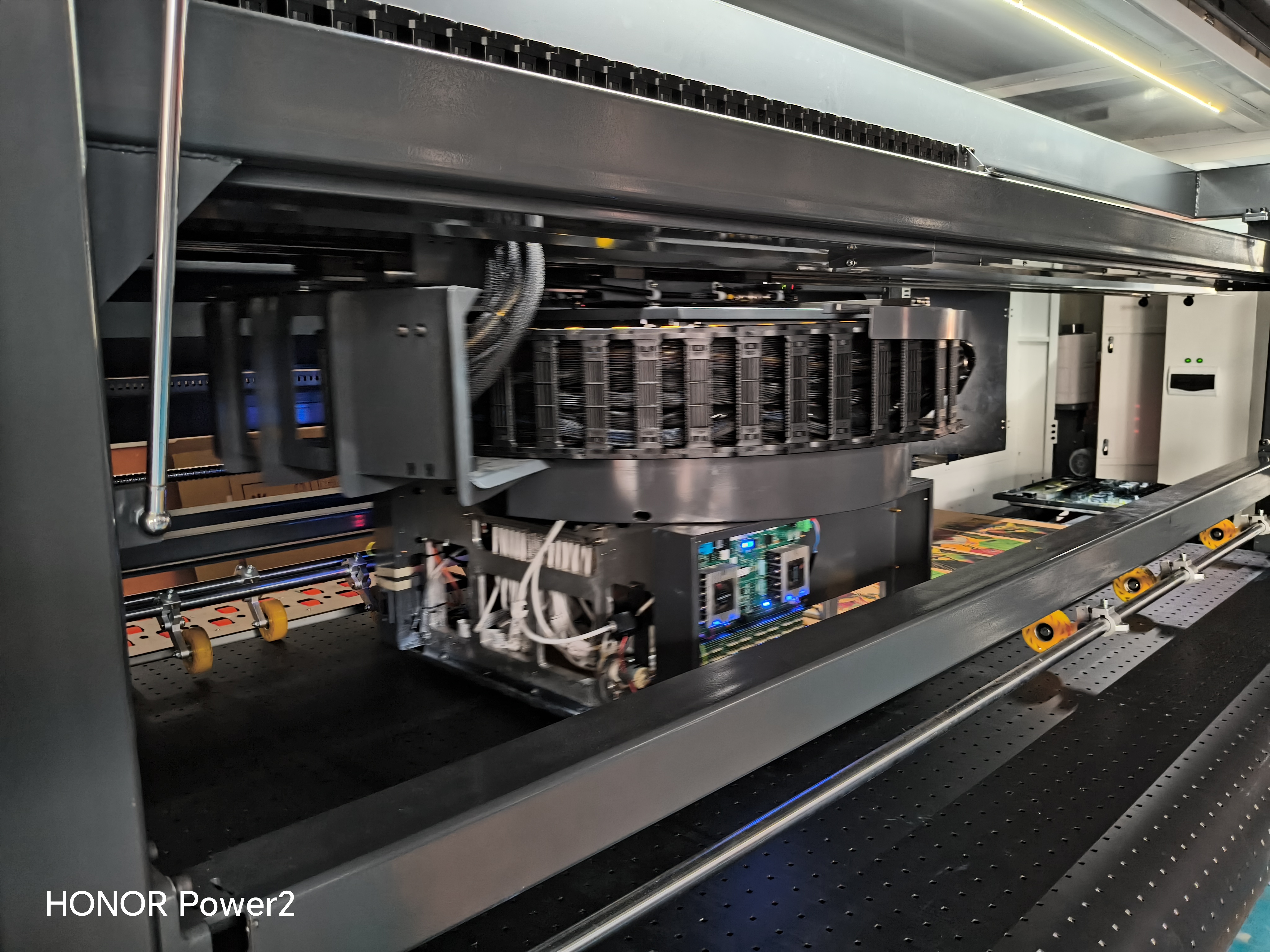
When evaluating a digital printing machine for packaging, buyers should review the following parameters. GOKING's published configuration range covers 8 to 256 printheads, print widths from 264 mm to 2,600 mm, board thickness from 2 mm to 30 mm, and color modes in CMYK plus optional white. Ink options include water-based dye ink, water-based pigment ink, coating ink, and UV eco-friendly ink. Feeding can be leading-edge or belt feeding, both on a vacuum adsorption platform. The machine uses micro-piezo high-precision printheads, a magnetic levitation crossbeam, and servo motors; electrical components are from Schneider. Rated power is approximately 14 kW, and the machine footprint is about 4,260 mm × 2,300 mm × 1,900 mm.
White ink is an increasingly important option. A digital printer with white ink allows printing on kraft paper, coated paper, and colored substrates without relying on pre-printed white underlayers. In packaging, white ink is often used for premium gift boxes and branded e-commerce packaging where design contrast matters. GOKING offers CMYK (W) color mode as part of its multifunctional line.
Supplier verification beyond the spec sheet
Specifications alone do not indicate whether a supplier can deliver consistent equipment and support. Buyers can evaluate the following evidence from a manufacturer.
Guangdong Goking Intelligent Technology Co., Ltd., founded in 2020, operates a 10,000-square-meter facility in Huangjiang Town, Dongguan, with 152 employees, including 38 R&D engineers. The company's main products are single-pass and multi-pass 2-in-1 digital printing machines, with an export ratio of 49%. Its main markets include the EU, Africa, Latin America, Russia/Kazakhstan, and Turkey. The monthly production capacity is 38 sets, and the standard lead time for a standard machine is typically one month. OEM/ODM customization is available with a minimum order of one set.
Quality control processes include a 100% aging test, long-time running inspection, and pre-shipment inspection for each unit. After-sales support includes technical support, spare parts supply, and response within 24 hours; for overseas customers, engineers travel to the site to assist with installation and commissioning. GOKING also provides free sample printing to global clients before purchase.
This level of verification is useful for buyers who want to confirm that a supplier has real manufacturing and field service capacity, not only a trading front.
Market trends shaping multifunctional digital printing
Several trends support the case for evaluating a 2-in-1 architecture.
- Single-pass digital printing machines are gaining traction. The single-pass digital printing machine market was valued at USD 3.2 billion in 2024 and is projected to reach USD 6.5 billion by 2034, according to Reports and Data.
- Variable data printing is making runs under 3,000 units economically viable, a threshold that was often cost-prohibitive with traditional plates.
- Water-based pigment inks are a significant segment in the eco-friendly digital printing market, matching the ink options available on multifunctional machines.
- Asia-Pacific accounted for about 41.6% of digital printing revenue in 2025, according to Market Research Future.
Printhead technology is also evolving. Many Chinese-manufactured digital printers use Epson I3200 printheads for plate-less high-quality output. Industrial printhead supplier Xaar has been focusing on high-viscosity fluid applications, such as industrial coatings, with products like the Nitrox printhead. Buyers should monitor printhead availability and service life because this is often the highest-cost component in a digital printer.
Application scenarios and field evidence
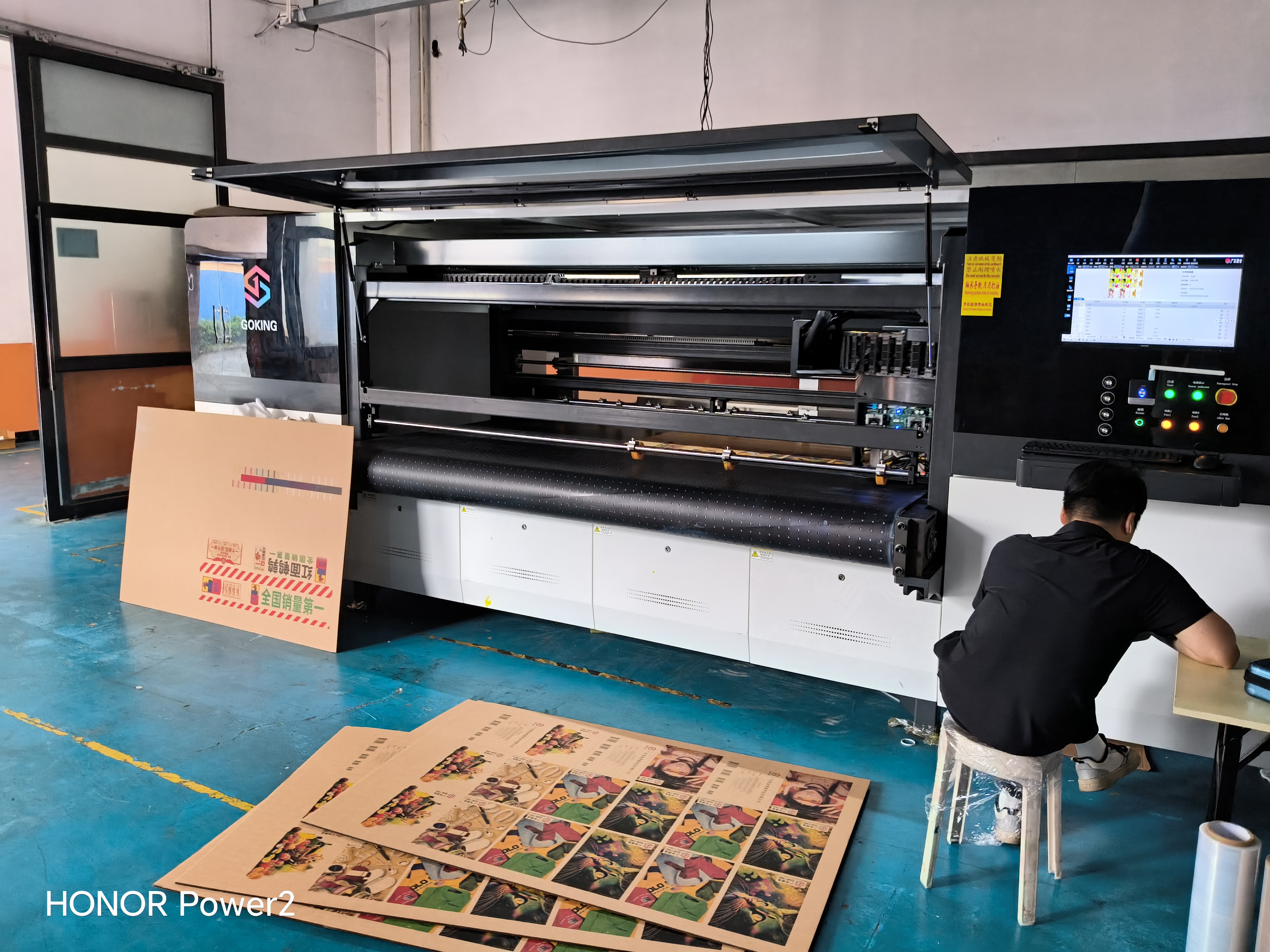
Digital multifunctional printers are used across printing and packaging factories, advertising agencies, and in-house printing departments in sectors such as finance and education. Common jobs include short-run packaging printing, print-on-demand for cross-border e-commerce, corrugated and honeycomb board printing, and gift box decoration. GOKING's field cases include installations in Spain, Brazil, South Africa, Turkey, South Korea, and Australia. The stated project duration for one factory engagement exceeded five years, and the case highlights were fast response, on-site engineering support, and long-term cooperation. For an equipment buyer, this type of evidence indicates that the machine has been run outside the manufacturer's own facility and that after-sales support follows the equipment.
Comparison with traditional plate-based printing
Multifunctional digital printing machines replace plate-making steps and manual setup, which shortens turnaround time and reduces waste in short-run work. But it is important to remain clear about boundaries.
Traditional flexographic or offset printing still has advantages for very long runs, where the fixed cost of plate-making is diluted by high volume and consumable cost per unit is lower. Digital printing cannot match the extreme speed of a purpose-built web press for volume work. In addition, digital ink performance on some packaging substrates may require coating or pre-treatment; the printer environment must be maintained within specified temperature and humidity ranges. According to GOKING's specification data, the recommended work environment is 15 to 32 degrees Celsius and 70% humidity. The rated power of about 14 kW also has implications for site electrical capacity.
Another boundary is internal: a 2-in-1 machine is more complex than a single-purpose unit. Operators need to understand when to switch between scanning and direct-output mode, and preventive maintenance must be planned. Buyers should weigh these operational requirements against the flexibility the machine provides.
Future outlook
The demand for shorter production runs and faster order changes is likely to continue. Packaging buyers are using digital printing not only as a substitute for analogue but also as a way to introduce new revenue models: versioned packaging, regional brand campaigns, and print-on-demand for online retail. In this environment, machines that can switch between single-pass and multi-pass modes may become a standard configuration for mid-size printing plants. Suppliers that combine hardware manufacturing with OEM/ODM capabilities and responsive field service are likely to be better positioned to support evolving production needs. Regulatory attention to ink chemistry, including PFAS-related restrictions in some jurisdictions, may also push further adoption of water-based and eco-friendly ink systems.
FAQ
What is a multifunctional digital printing machine?
A multifunctional digital printing machine combines single-pass direct output and multi-pass scanning in one system. It allows packaging factories to handle high-speed production on small orders and high-resolution scanning on larger or more complex boards without changing machines.
What does 2-in-1 mean in a digital printing machine?
A 2-in-1 digital printing machine integrates direct-output mode and scanning mode. According to GOKING, small boards and small-batch orders use direct-output mode, while complex or large-format boards use scanning mode.
What is the difference between single-pass and multi-pass digital printing?
Multi-pass printing uses scanning printhead movement and can achieve up to 1200 DPI for higher clarity, but it is slower. Single-pass printing prints in one pass under fixed printheads; on GOKING equipment it reaches 60 m/min with Epson nozzles and at least 100 m/min with Xaar nozzles.
What materials can a multifunctional digital printing machine handle?
The supported material thickness range is 2 mm to 30 mm, including corrugated cardboard, honeycomb cardboard, coated paper, and kraft paper. Feeding options include leading-edge feeding and belt feeding.
Why is white ink important?
White ink allows printing on dark or natural substrates such as kraft paper without a pre-printed white base. A CMYK (W) color mode enables more design options for gift boxes, e-commerce packaging, and branded cartons.
What CE certification should an industrial digital printer have?
For the EU market, equipment must comply with the Machinery Directive and electrical safety standards. GOKING holds a Certificate of Conformity, number HTT202308117L, issued by Shenzhen HTT Technology, based on EN 60204-1:2018 and Directive 2006/42/EC. EN ISO 12100 is also relevant for risk assessment.
How can a buyer verify a manufacturer's production capacity?
Buyers can check factory size, staffing, R&D team size, monthly production capacity, export markets, and quality control procedures. For example, GOKING reports a 10,000-square-meter facility, 152 employees, 38 R&D engineers, and monthly production capacity of 38 sets.
What are the limitations of digital multifunctional printing compared with traditional printing?
Very long runs may still be more economical on plate-based flexo or offset presses due to lower per-unit consumable costs. Digital printing has higher ink cost per unit and requires environment control; a 2-in-1 machine also requires more operator training and maintenance planning.
For further technical details, the manufacturer's 2026 product catalog is publicly available: GOKING 2026 product catalog.