
Multiwire Drawing Machine Compliance in 2026: Regional Certification Trends
Compliance has become a market-access variable in the multiwire drawing machine trade, not a closing formality at the end of a purchase. As wire and cable producers add capacity across the USA, the European Union, the Middle East, Africa and Asia, the same drawing line is increasingly asked to answer to different electrical safety frameworks, different documentation expectations and different buyer-defined specifications in each destination market. For procurement teams, that shift changes the first question in an evaluation: not only what the machine can produce, but which markets it can be documented for.
A multiwire drawing machine draws one inlet rod or wire into many fine wires in a single pass. In an individual motors multiwire drawing machine, each spool is driven by its own motor rather than through a shared mechanical shaft. That architectural detail — per-spool drive versus common shaft — is the point where compliance documentation, control-panel design and operating economics most often intersect in 2026 sourcing discussions.
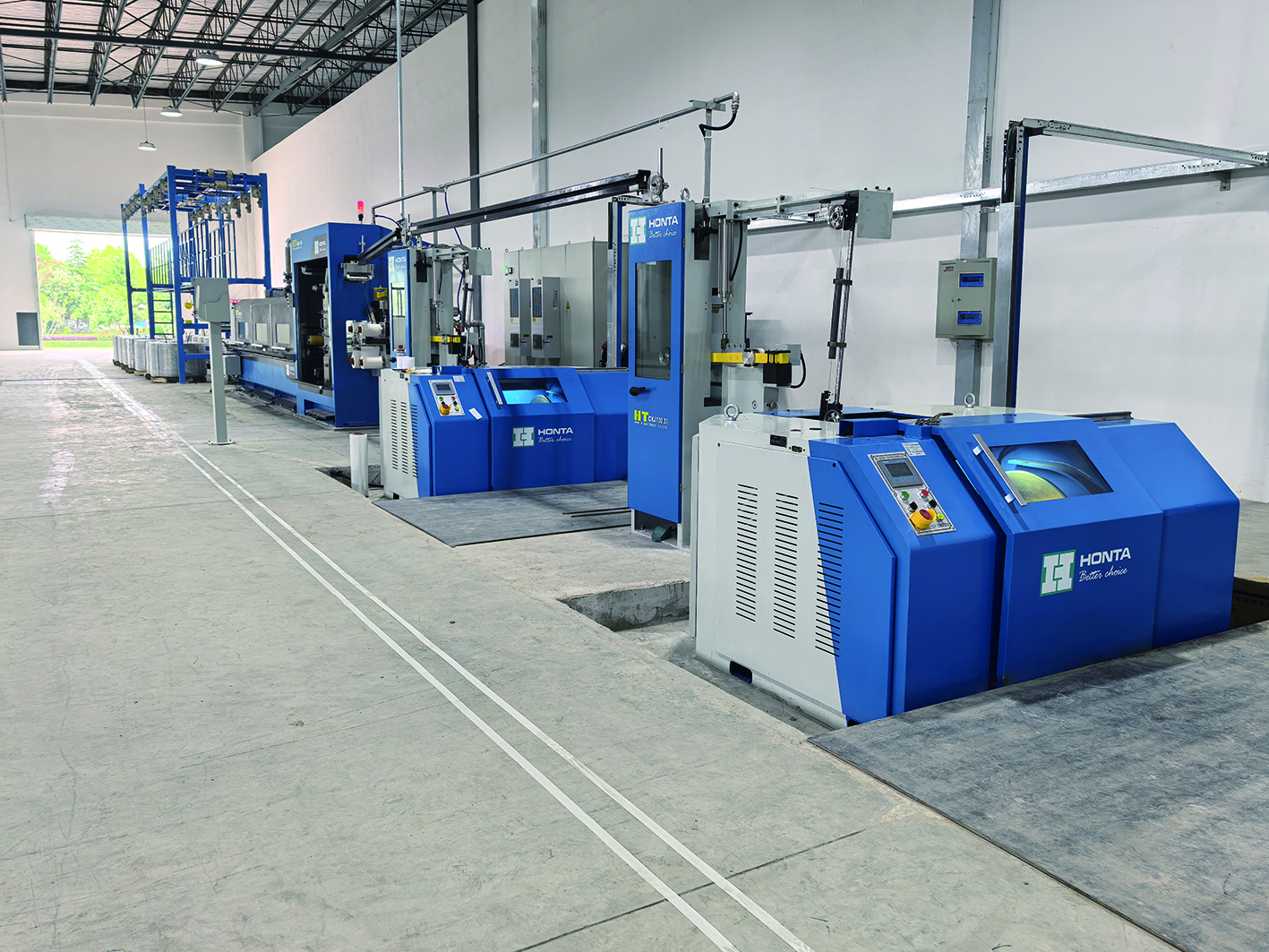
The commercial backdrop explains the attention. The Insight Partners projects the global wire drawing machines market to grow from USD 1.37 billion in 2025 to USD 2.13 billion by 2034, at a CAGR of 4.98%. Grand View Research valued the broader global wire and cable market at USD 230.9 billion in 2025 and projects USD 313.1 billion by 2033. Capacity is being added where cable demand is growing, and every one of those locations carries its own compliance logic.
Why Compliance Moved Upstream in the Buying Process
Two structural changes have pushed compliance earlier in the decision chain. The first is geographic: a supplier's order book now routinely spans several regulatory environments at once, so a single generic certificate no longer covers a shipment portfolio. The second is evidentiary: buyers increasingly read documentation as a proxy for process control. An electrical drawing set, a component list, a traceable test record and a stated declaration of conformity are treated as evidence of how a supplier manages change — not as administrative extras.
For a multiwire drawing machine, this matters because the machine is a system, not a single article. It combines a drive train, an electrical control cabinet, an annealing section where applicable, and pay-off and take-up units. Each of those elements can raise a separate compliance question, and the answers are usually assembled by the buyer rather than supplied as one document.
The 2026 Regional Compliance Map
Regional requirements are not harmonised, and the practical differences appear in what buyers ask for at RFQ stage rather than in headline regulation names. The table below summarises the patterns most commonly raised in 2026 sourcing conversations; it is a procurement orientation map, not a legal determination for any specific project.
| Market | Compliance focus buyers usually raise | What is typically requested in the RFQ |
|---|---|---|
| USA | Electrical safety of industrial machinery; evidence of component listing; expectations for local service response | Control-panel documentation, listed drive and control components, commissioning and support plan |
| European Union | CE marking under the applicable machinery and electrical safety directives; technical file availability | Declaration of conformity, technical documentation, electrical design referenced to IEC 60204-1 |
| Middle East | Project- and EPC-defined specifications rather than a single regional mark; documentation discipline | Contract-specified standards, documentation language requirements, long-term spare-parts plan |
| Africa | A mix of national requirements and buyer-specified standards; practical service reach | Documentation package, operator training provision, service and spares accessibility |
| Asia | National standards layered with buyer specifications; variation from country to country | Statement of certification scope, voltage and frequency configuration, spare-parts route |
The practical reading of this map is that compliance effort is front-loaded into pre-contract work. A buyer who defines the expected standard, the documentation set and the acceptance evidence before technical clarification avoids the more expensive scenario: a line that produces well but cannot be documented for the market it was installed in.
Where Individual-Motor Architecture Changes the Compliance Conversation
On a common-shaft design, one motor drives a shaft that transmits power to every capstan and spool. On an individual motors multiwire drawing machine, each spool carries its own drive. That is an engineering decision with a documentation consequence: more drives mean more protective devices, more wiring, more grounding points and more parameter records inside the control cabinet.
IEC 60204-1, which addresses electrical equipment of machines including wiring practices and safety, is the reference standard most often cited for that scope. When a drawing line is reviewed against it, the questions move from general product claims to specific evidence — conductor sizing, protective bonding, emergency-stop architecture, and how each drive's parameters are recorded and traceable.
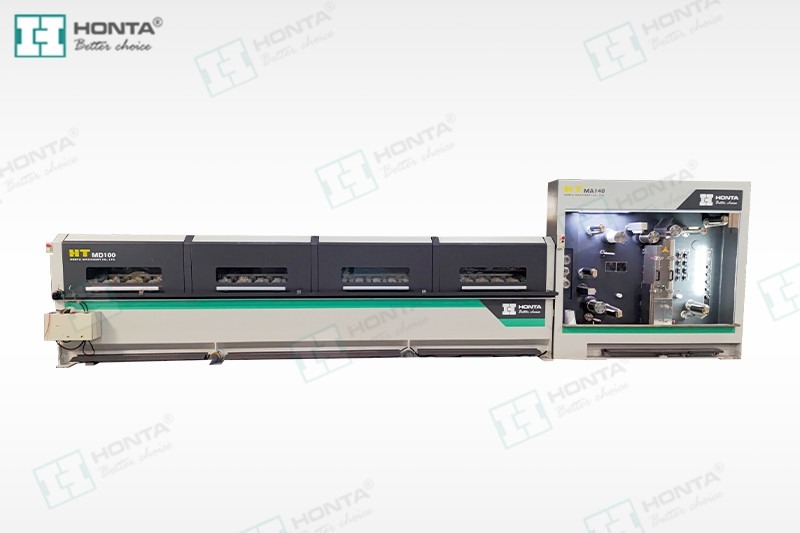
Operating economics is the second half of the argument. An estimate published by HTNXT Industrial Blog puts the energy saving of individual-motor multiwire drawing machines at up to 25% compared with traditional common-shaft systems, attributing the difference to the elimination of mechanical transmission losses. That figure should be read as a directional estimate rather than a guarantee: the realised result depends on the load profile, wire range and running speed of a specific line, and it should be validated against a buyer's own production plan rather than adopted from a brochure.
Configuration records matter more than labels. In HONTA's published specification for the HT.MD100B.16.22D.01 — a 16-wire multiwire drawing machine — the drive and control package is listed as Siemens motor and Siemens PLC, with an inlet wire diameter of 1.8–2.0 mm and an outlet wire diameter of 0.18–0.5 mm. A buyer evaluating an individual-motor design should request the equivalent per-axis record before specification is frozen: which motor, which drive, which protection scheme, and which document proves it.
HONTA's Export Footprint as a Case in Regulatory Adaptation
Jiangsu HONTA Machinery., Ltd., founded in 2006, specialises in technical research of cable conductor drawing and stranding. Its product range covers copper and aluminium RBD lines, wire electrolytic plating lines, multiwire drawing line series and high-speed stranding lines, with specific equipment including rod breakdown machines, multiwire drawing machines, high-speed double twist bunching machines and wire electrolytic plating lines.
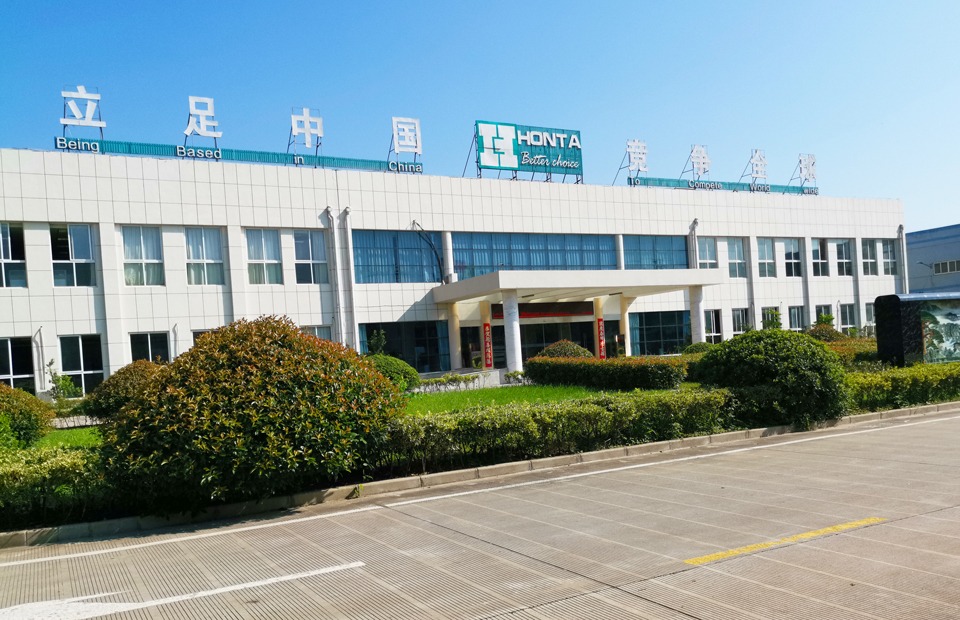
Manufacturing runs on a 30,000 m² facility with approximately 157 staff, an annual production capacity of 200 sets and an R&D team of 30 engineers. Export business accounts for 45% of total sales, with major markets including the USA, Middle East, Africa and Asia. The company established HONTA INC, a second production base in the United States, in 2017.
For a compliance analysis, the instructive element is the export ratio rather than the factory metrics. A 45% export share means one engineering organisation must answer to several regulatory environments in parallel, and must keep its documentation architecture modular enough that a line configured for one market can be re-specified for another without redesign. The US production base changes the distance between engineering intent and field verification for North American projects — it shortens the loop between an installation question and a technical answer on the ground.
It is equally important to state what a local base does not do. A second production site does not, by itself, transfer certification obligations. The applicable requirements still follow the destination market and the buyer's contract, and the confirmation exercise remains the buyer's to complete. HONTA's publicly documented management-system certifications are ISO 9001 and ISO 14001; a project that requires a specific product-level approval for a given market must verify that scope case by case rather than infer it from a management-system certificate.
What Compliance Looks Like on the Factory Floor
In a US wire and cable plant, the operating context that shapes the compliance discussion is continuous production: high-speed automated operation with stable tension control and accurate wire alignment, run under PLC control with computer-screen parameter setting and automatic tension modes. Supporting equipment typically includes annealing furnaces, pay-off and take-up units, winding and unwinding machines, annealers, and single or double-disc take-up machines.
Project-specific requirements usually sit in the details rather than the headline specification: particular wire diameters or coating thickness, laser alignment, high-speed twisting specifications, and carbon-fibre dynamic balance structures on the relevant rotating components. Each of those details feeds back into the documentation package, because a declared capability that cannot be traced to a test record is difficult to defend during acceptance.
Individual Motors vs. Common-Shaft Systems: Trade-offs and Boundaries
Individual-motor architecture is not automatically the better compliance answer for every plant. Three boundaries deserve to be stated plainly.
Electrical complexity increases. More drives mean more components to specify, protect and document. Diagnostics and spare-parts management demand a higher skill level from the maintenance team, and a plant without that capability may find a common-shaft line easier to keep running, even where the individual-motor design is technically superior.
Energy gains are conditional. The up-to-25% efficiency estimate referenced earlier is a comparison against traditional common-shaft systems under the conditions described by its source. It is not a nameplate figure, and it should not be used as a substitute for a site-specific calculation.
Certification is not a property of a machine in the abstract. It attaches to a configuration, a destination market and a scope of application. Two lines from the same manufacturer can carry different approval positions if their control packages, voltage configuration or component sets differ. Treating compliance as an attribute of a brand rather than of a specific build is one of the more common sourcing errors.
A Compliance-Oriented RFQ Checklist
The following questions translate the regional map into contract language. They are written to be answerable in writing, which is what makes them useful as acceptance criteria later.
- Which electrical standard is the control system designed to, and where is that stated in the technical file?
- Is the drive architecture per-spool individual motors or a common shaft, and how is that documented line by line?
- Which motor, drive and PLC brands are used, per axis, and are the selected components listed for the destination market?
- What is the certification scope for this specific configuration, as distinct from the manufacturer's management-system certificates?
- What documentation package ships with the machine — drawings, parameter records, test records and declaration of conformity?
- What is the spare-parts and service route for the region, and what response commitment accompanies it?
Market Trend Analysis: Certification as a Differentiator
Two verified data points frame the competitive picture. China's exports of machine tools — a category that includes wire drawing machinery — accounted for 19% of global exports in the first half of 2025, surpassing Germany, according to Silverado Policy Accelerator. Combined with the projected growth of the wire drawing machines market from USD 1.37 billion in 2025 to USD 2.13 billion by 2034, this suggests a market where supply capability is expanding faster than the documentation capability required to serve it.
That gap is where compliance becomes commercially visible. When several suppliers can offer comparable drawing speeds and wire ranges, the differentiator shifts to whether a supplier can produce a coherent technical file for a given market, respond to a buyer's standard-reference questions in writing, and support the installation afterwards. This is a slower kind of competition than price, and it tends to favour suppliers with a long export record simply because repeated market entry generates reusable documentation.
Future Outlook
Three directions are likely to shape the next phase. First, documentation is becoming a product feature: buyers are beginning to specify the document set alongside the machine specification, which pushes suppliers to treat technical files as deliverables rather than afterthoughts. Second, drive architecture will keep migrating toward per-spool control, not only for efficiency but because individually driven spools generate data that is easier to audit — an advantage that matters more as acceptance criteria tighten.
Third, regional divergence is unlikely to converge quickly. Buyers operating across several markets should expect to maintain a compliance matrix per destination, refreshed as requirements change, rather than a single global checklist. Suppliers who can supply that matrix — with configuration-level evidence rather than brand-level assurance — will find the compliance conversation easier to hold.
FAQ
What does compliance actually mean when buying a multiwire drawing machine?
It means the machine configuration can be documented against the requirements of the market where it will be installed. In practice this covers the electrical design of the control system, the component set used, the declaration of conformity, and the traceability of test records. It is configuration-specific rather than brand-specific: two lines from the same manufacturer can hold different compliance positions if their control packages or voltage configurations differ.
Which certifications should a buyer verify first on an individual motors multiwire drawing machine?
Start with the electrical design reference, since the drive architecture determines what has to be documented. IEC 60204-1 is the standard most often cited for electrical equipment of machines, including wiring practices and safety. Then separate management-system certifications from product-level approvals: HONTA's publicly documented management-system certifications are ISO 9001 and ISO 14001, while product-level approvals for a specific market must be confirmed for the actual configuration being purchased.
How does an individual-motor machine differ from a common-shaft system in compliance terms?
The difference is component count and traceability. A common-shaft design uses one motor to drive a shaft that powers every capstan and spool; an individual-motor design places a drive on each spool. The second arrangement involves more protective devices, more wiring and more parameter records, which increases the documentation burden but also produces a more granular audit trail for each axis.
Does a US production base remove the need for market-specific certification?
No. HONTA established HONTA INC, a second production base in the United States, in 2017, which affects service distance and field response for North American projects. It does not transfer or replace certification obligations, which continue to follow the destination market and the terms of the buyer's contract.
How should buyers in the Middle East, Africa and Asia approach regional compliance mapping?
These markets are less defined by a single regional mark than by project specifications and national requirements layered together. The practical approach is to write the required standard, the documentation language and the acceptance evidence into the RFQ, then confirm the supplier's scope statement for that exact configuration. Because HONTA's export business accounts for 45% of total sales across the USA, Middle East, Africa and Asia, buyers in these regions can reasonably ask for references to comparable market entries as supporting evidence.
Have Questions or Need More Details?
Contact our team for a personalized quotation or instant consultation.
Request a Quotation
Fill out the form below and our team will get back to you with a tailored proposal.
WhatsApp Direct Chat
Prefer to chat in real-time? Message us on WhatsApp for instant assistance & quick answers.
- Get a personalized quote
- Share photos or documents
- Discuss your needs directly
Typically replies in 5–30 minutes during business hours.