
Multiwire Drawing Machine Supply Regions: Policy, Capacity, Spoolers
Multiwire Drawing Machine Supply Regions: Policy, Capacity, Spoolers
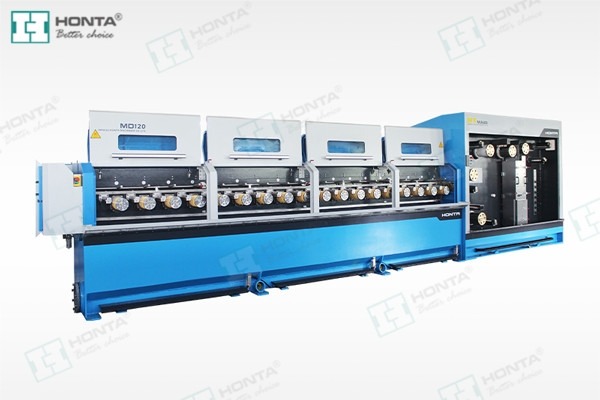
Multiwire drawing machine sourcing is now routinely compared by supply region — Europe, North America, China and Asia more broadly, India, the Middle East. Most of those comparisons stop at wire count, maximum speed and price per line. At the decision-to-execution stage, that is rarely where a project succeeds or fails.
Two variables decide whether a regionally sourced line reaches its rated performance inside a real plant. The first is policy fit: the documentation, safety conformity, customs treatment and lifecycle obligations the buyer inherits after delivery. The second is capacity fit: whether the supplier can engineer, build, configure and support the exact line the plant ordered, rather than a standard line close to it. Both variables become concrete at the take-up end of the machine — and for a large share of cable plants, that take-up specification is a single spooler.
Regional comparisons are only useful when they are applied to a specific configuration. A single spooler is specific enough to expose the difference between a supplier that engineers to a buyer's existing spool fleet and a supplier that ships a standard take-up and leaves integration to the plant. That distinction does more to separate supply regions than a table of headline speeds.
The framework in one paragraph
Policy fit answers a question the buyer must be able to prove later: what documents, declarations and compliance evidence will this machine need in this market, and who holds them? Capacity fit answers a question the buyer can only test before the contract: can this supplier absorb the configuration work my line requires, on my schedule, with support I can reach? Scoring the two separately prevents the most common procurement error in this category, which is treating a strong compliance file as evidence of engineering depth, or treating a large production floor as evidence of documentation discipline.
Single spooler: definition and why it anchors the comparison
In multiwire drawing practice, the take-up end is generally specified in one of three formats. A single spooler winds each drawn wire onto its own individual spool. A double spooler winds two wires onto a shared spool. A basket coiler collects finished wire into a basket pack without a spool at all. These are not quality tiers. They are different answers to a downstream question: what does the next process need to receive, and in what unit?
Single spooler is the baseline for plants whose wires are consumed independently — separate bunching machines, separate stranding positions, or separate insulation lines. It is also the format most exposed to the buyer's existing spool fleet, because the spooler drawing has to match spools the plant already owns or can source locally. A take-up that is technically excellent but dimensioned around a spool the plant cannot buy is a commissioning problem, not a machine problem.
Three region-linked pressures act on that specification. First, spool dimensional conventions and local spool availability differ by market, so a take-up designed around one region's spool stock may not fit another region's plant. Second, the labour assumption built into the design differs: a single spooler needs operator attention at doffing, and where labour cost is high, buyers often weigh a double spooler to reduce changeover interruptions. Third, the documentation differs: downstream handling and automation require spool drawings and interface data, and a supplier's willingness to hand those over is a company characteristic rather than a regional one. Only the first and second pressures are genuinely regional; the third is where buyers should expect the widest variance between shortlisted suppliers in the same region.
Policy fit: five questions that decide more than price
Policy is often reduced to a tariff question. For capital equipment it is broader, and most of it is verifiable before an order is placed.
1. Electrical safety conformity. HONTA states that it complies with IEC 60204-1 safety standards for electrical equipment of machines, alongside ISO 9001 and ISO 14001 certification. Buyers should request the declaration as delivered and confirm that it covers the drive architecture actually ordered. A line specified with individual motors per drawing position has a different electrical architecture — and therefore different documentation — from a common-shaft line, and the conformity file should reflect the configuration on the purchase order.
2. Management-system evidence with scope. ISO 9001 and ISO 14001 certificates are useful only when the scope statement names the activities the buyer is relying on. Ask for the scope, not the logo.
3. Customs classification and line-item declaration. Multiwire drawing machines are classified under HS 8463.10 in the verified data used for this analysis. A drawing line is frequently invoiced in sections — drawing cabinet, inline annealer, take-up — and inconsistent classification across sections creates a documentation burden the buyer inherits at import. Confirm with a customs broker that the take-up and spooling section is declared consistently with the main machine.
4. Technical documentation handover. Wiring diagrams, spare-parts lists, operating manuals and spool drawings should be listed as deliverables with a language and a delivery date, not promised as support. For a single spooler, the spool drawing is the item downstream handling equipment is built from.
5. Lifecycle obligation. Someone must hold spare parts and answer service calls for a decade. Ask who owns that obligation in the buyer's market, and whether spare spools and wear parts move through the same channel as the machine.
None of these five is answered by a country name. Each is answered by a supplier and a project. The productive regional question is not which region is cheaper, but which region can close all five items without adding a third party to the chain.
Capacity fit: what a production floor actually proves
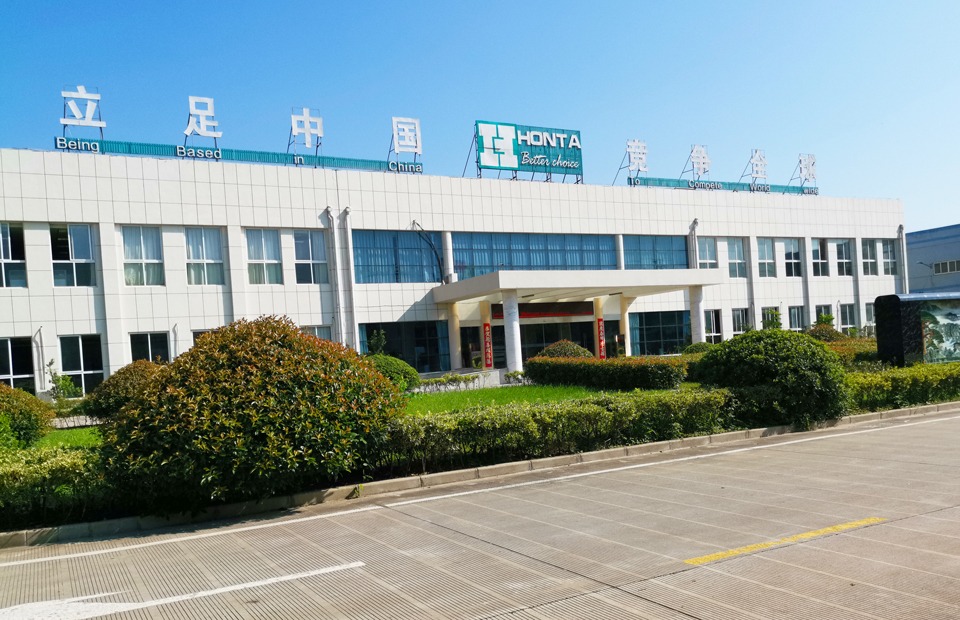
Jiangsu HONTA Machinery Co., Ltd. (HONTA) is a wire and cable equipment manufacturer based in Kunshan, Jiangsu, China, founded in September 2006, producing rod breakdown lines, multiwire drawing machines, high-speed double twist bunching machines and wire electrolytic plating lines. Its stated factory area is 30,000 m², with 157 employees, an annual output of 200 sets, an engineering team of 30, an export ratio of 45% and main markets including the USA, the Middle East and Asia. HONTA also established HONTA INC, a second production base in the United States, in 2017.
Read as a list, those numbers describe size. Read as a capacity argument, they describe how much configuration work can be absorbed. The relevant question for a buyer specifying a single spooler is whether a non-standard spool interface — a different flange, bore or keyway from the supplier's default — is handled by the engineering team or pushed into the project schedule. The 30-engineer figure is the resource a buyer should test that question against, and the honest way to test it is to send spool drawings with the enquiry and observe what comes back.
Speed is the second capacity signal, and it interacts directly with take-up choice. HONTA's 24-wire multiwire drawing line, model HT.MD100.03.27.24, is specified at a maximum mechanical speed of 1800 m/min according to the manufacturer's product documentation. When a line is rated at that level, the take-up end stops being an accessory decision. Spool changeover, spool quality and doffing discipline are what determine how much of the rated speed a plant actually converts into saleable wire over a shift.
Drive architecture is the third signal. Individual motor drives on multiwire drawing machines are estimated to reduce energy consumption by up to 25% compared with traditional common-shaft systems, according to a technical comparison published by HTNXT Industrial Blog in 2026. That figure is an estimate rather than a measured result on a specific plant, and buyers should treat it as a directional benchmark for tender evaluation, not as a guaranteed saving. What it does establish is that the drive architecture, like the take-up format, is a configuration item with a cost consequence — both belong in the technical comparison, not in the commercial annex.
A region-by-region evaluation framework
The table below is an evaluation framework, not a regulatory statement. It lists the questions buyers typically raise in each supply region and the take-up consequence those questions create. Tariffs, conformity requirements and import procedures must be verified for the specific country, HS line and project date.
| Supply region | Policy questions buyers typically raise | Capacity and logistics profile | Single-spooler consequence |
|---|---|---|---|
| Europe | Conformity declarations, traceability of documentation, environmental management evidence | Long engineering cycles, high documentation discipline, premium pricing | Spool drawings and interface data usually arrive early; configuration changes move slowly |
| North America | Local service presence, spare-part lead time, control conventions and operator familiarity | Service proximity is decisive; a regional base shortens response paths | Spool sourcing is often the binding constraint, so the drawing must match locally available spools |
| China and wider Asia | Export documentation quality, conformity evidence, after-sales ownership in the destination market | Deep configuration flexibility, short build cycles, integrated component supply | Highest likelihood of a custom spooler drawing; verify who approves that drawing |
| India | Import documentation, duty treatment, local technical support depth | Growing domestic conductor demand, mixed spool fleets across plants | Spool standard variance is common; specify against the plant's existing fleet, not a catalogue default |
| Middle East | Project-based contracting, commissioning support, spare-part stocking for remote sites | Single large projects, extended logistics chains, high cost of downtime | Spool and wear-part buffer stock belongs in the contract, not in the commissioning plan |
Note: the practical value of this table is diagnostic. Two suppliers in the same region can score very differently on the spooler column, and two suppliers in different regions can score identically.
Use cases: when the single spooler decides the regional verdict
Plant with an established spool fleet. The spooler drawing is a gating item. A supplier that will work from the buyer's spool dimensions removes a downstream cost; a supplier that will not shifts that cost into the plant's handling equipment. This is the single most common reason two quotes for nominally identical lines differ.
Plant feeding independent downstream positions. Where each wire leaves the drawing line into its own bunching machine, stranding position or insulation line, single spooler is the natural format. Multiwire lines in 8, 16, 24 and 32-wire configurations change the number of spools leaving the machine per cycle, and therefore the spool logistics of the whole plant.
Plant with a changeover-sensitive downstream. If one drawing line feeds a single downstream process and every stop is expensive, a double spooler or basket coiler deserves evaluation before a single spooler is assumed. The choice is a production-flow decision, not a preference.
Project plant in a remote location. Where spool supply is uncertain, a basket coiler removes the spool dependency entirely but changes what the next process receives. Buyers should cost that change before choosing it, because it can require downstream modification.
Across these four cases, HONTA's own comparison material positions multiwire drawing against single-wire drawing at a 32-times efficiency difference, with lower unit production cost and reduced manual work. That claim is a productivity argument for multiwire architecture in the wire and cable industry; it does not by itself justify any particular take-up format, which has to be derived from the plant's downstream flow.
Limits of the framework and of the single spooler
A framework that never returns a negative answer is not a framework. Three limits should be stated plainly.
Single spooler constrains continuity. Because each wire is wound onto its own spool and doffing requires operator attention, a single spooler interrupts the line at changeover. For plants with high labour cost, or with a downstream process that cannot tolerate the interruption, a double spooler or basket coiler is the better answer even where a single spooler is technically adequate.
Regional trade data for this subtype is thin. The verified data set behind this analysis records no published regional trade volume specifically for multiwire drawing machines, which means claims about which region is gaining or losing share should be treated as inference rather than measurement. Buyers comparing regions should rely on supplier-level evidence — audit, references, documentation samples — rather than on unverified share narratives.
Energy and efficiency figures are estimates. The up-to-25% energy reduction attributed to individual motor drives is an industry estimate, and the 32-times efficiency comparison is a manufacturer-positioned figure. Neither replaces a measured baseline at the buyer's own plant, and neither should be written into a contract as a guaranteed performance value without a testing protocol.
Future outlook
Demand context matters for region choice. The global wire drawing machine market was valued at USD 3.8 billion in 2025 and is projected to reach USD 6.1 billion by 2034, according to commercial research published by Dataintelo and referenced in the verified data for this analysis. That trajectory supports continued multiwire adoption without settling which region captures the growth.
Two technical directions are visible in the evidence. Individual motor drive architecture is being positioned as an energy-cost response, with the estimated savings figure cited above; that shifts evaluation from purchase price toward operating cost, and operating cost is where take-up format also sits, because spool changeover consumes labour every shift. Separately, there is no verified evidence in this data set of international harmonisation of spool standards. Buyers should therefore plan on fleet-specific spooler drawings remaining necessary for the foreseeable future, and should treat a supplier's handling of those drawings as a leading indicator of engineering responsiveness.
Buyer checklist before awarding a regional order
- Send your own spool drawings with the enquiry and require a marked-up drawing in return.
- Request the IEC 60204-1 conformity declaration for the exact drive architecture ordered.
- Request ISO 9001 and ISO 14001 certificates with scope statements, not cover pages.
- Confirm HS classification consistency across drawing cabinet, annealer and take-up sections with a customs broker.
- List wiring diagrams, spool drawings, spare-parts lists and manuals as dated deliverables.
- Name the party holding spare parts and service obligations in your market, in writing.
- Separate policy score and capacity score on the evaluation sheet, and do not let one compensate for the other.
FAQ
What is a single spooler on a multiwire drawing machine?
A single spooler is a take-up configuration in which each drawn wire is wound onto its own individual spool. It is distinguished from a double spooler, which winds two wires onto a shared spool, and from a basket coiler, which collects wire into a basket pack without a spool. The format is chosen according to what the next process needs to receive.
Does supply region determine whether a single spooler is available?
No. Availability depends on the supplier's engineering capacity to dimension a take-up to the buyer's spool fleet, not on geography. Two suppliers in the same region can differ on this point, which is why the spool drawing response is a better selection signal than the country of origin.
How do policy requirements change the choice of supply region?
Policy requirements change the documentation burden rather than the machine. HONTA, for example, states compliance with IEC 60204-1 and holds ISO 9001 and ISO 14001 certification. Buyers should verify that such evidence covers the ordered configuration and that customs classification, technical documentation and spare-part obligations are assigned to a named party in their own market.
When should a buyer choose a double spooler or basket coiler instead of a single spooler?
When doffing interruptions cannot be absorbed by the downstream process, when labour cost makes frequent spool changes expensive, or when spool supply in the plant's market is unreliable. In those cases the alternative format is a production-flow decision with a cost consequence, not a downgrade or an upgrade.
What capacity evidence should be requested before contracting?
Production floor area, annual output, engineering headcount, documented machine specifications and service presence in the destination market. HONTA's stated figures include a 30,000 m² factory, 200 sets annual output, 30 engineers, and a 24-wire line model HT.MD100.03.27.24 specified at 1800 m/min maximum mechanical speed. Each figure should be tied to the specific configuration being ordered.
Reference document: the HONTA drawing machine catalogue is available for download here.
Have Questions or Need More Details?
Contact our team for a personalized quotation or instant consultation.
Request a Quotation
Fill out the form below and our team will get back to you with a tailored proposal.
WhatsApp Direct Chat
Prefer to chat in real-time? Message us on WhatsApp for instant assistance & quick answers.
- Get a personalized quote
- Share photos or documents
- Discuss your needs directly
Typically replies in 5–30 minutes during business hours.