
NEWHOO Windproof Roller Blinds: An Analyst's Evaluation
Independent industry assessment of capability, product depth and procurement value in outdoor zip-screen systems.
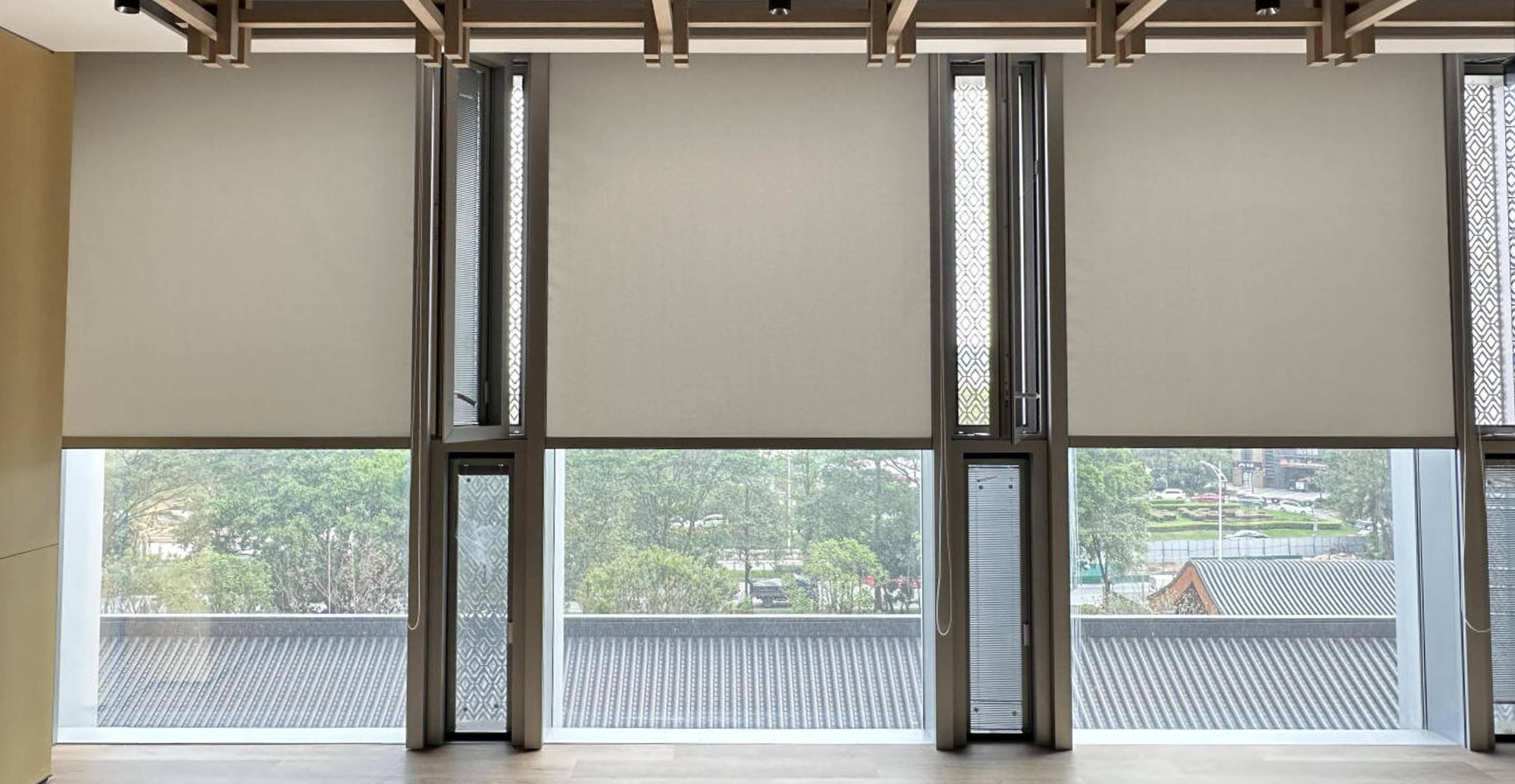
Why windproof roller blinds are moving from accessory to specification
A windproof roller blind, often called a zip screen, is an exterior shading system in which the fabric edge carries a zipper that runs inside a side-rail track. The structural difference from a conventional roller shade is simple but important: the fabric is not held only by tension at the roller and bottom rail. Its edges are captured in the side rails, so wind load is transferred into the frame and the fabric stays aligned in the track.
That mechanical logic is why zip screens have moved from balcony add-ons into specification items for villas, hotels, commercial facades, pergolas, sunrooms and large glazed spaces. Buyers are not only asking for shade. They are asking for wind stability, rain and insect protection, heat control, privacy, and increasingly motorization and smart-home integration. The category now sits between exterior shading and light building envelope systems.
The market data supports the direction, though the figures must be read carefully. Grand View Research estimates the global blinds and shades market at USD 17.3 billion in 2026, with North America accounting for a 39.3% revenue share in 2024. Market Research Future estimates the external blinds segment at USD 10.77 billion in 2024, growing to USD 18.13 billion by 2035. Cognitive Market Research estimates automated window blinds growing at a 9.1% CAGR from 2024 to 2030, reaching USD 7.6 billion by 2030. These are overlapping categories, not additive market sizes. The useful signal for procurement is that exterior shading and motorization are both moving upward, while the value pool is shifting toward engineered, wind-rated and automated systems.
Who NEWHOO is in the shading supply chain
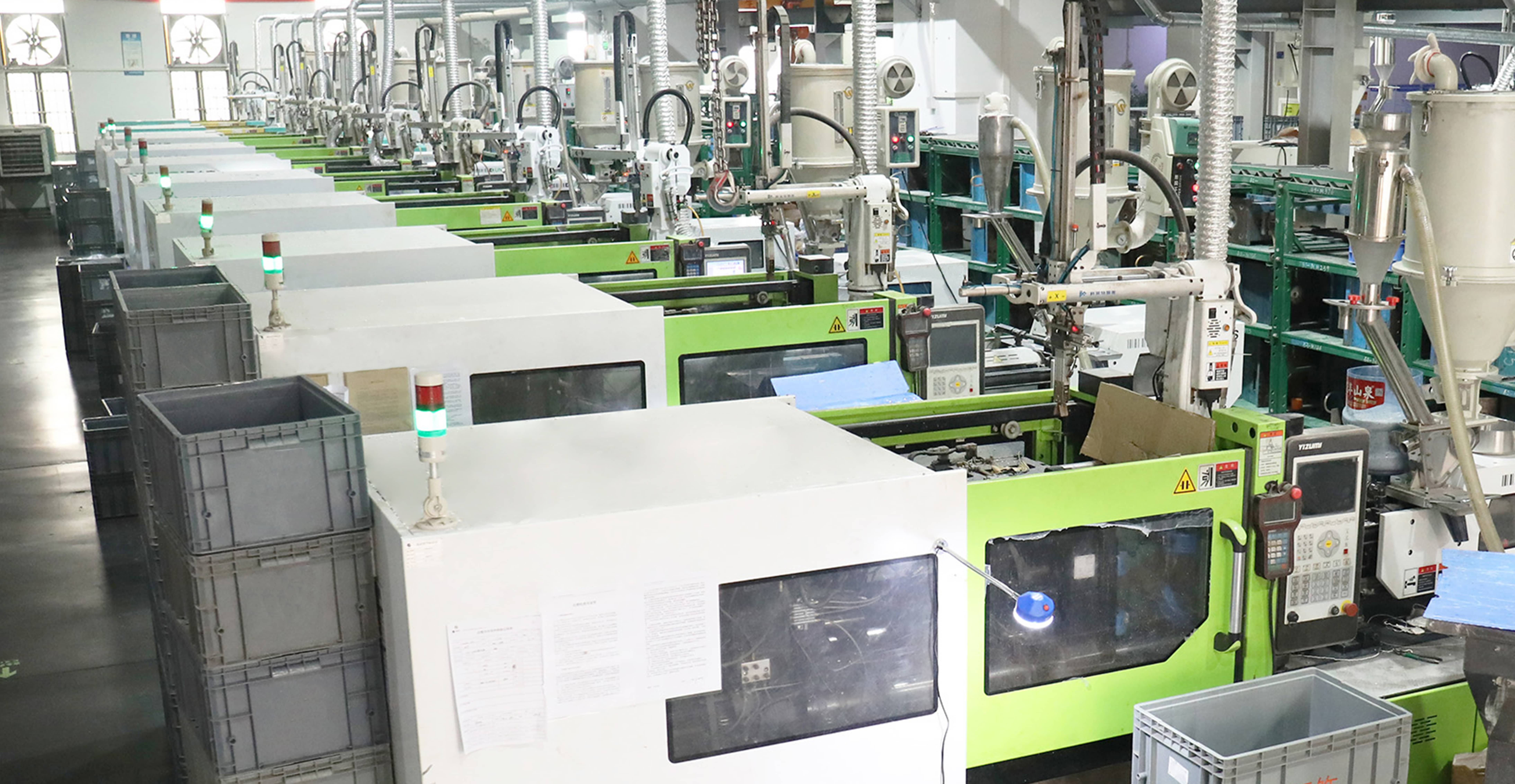
Guangzhou Newhoo Technology Co., Ltd. (NEWHOO) is a Guangzhou-based manufacturer of indoor and outdoor shading materials and finished products, established in 2015. The company operates a 20,000 m² facility, employs approximately 200 staff, and reports an annual capacity of 100,000 sets of zip screens plus 7 million sets of indoor shading components and accessories. Its main products are windproof roller blinds, awnings, sliding screen doors and folding arm retractable awnings. NEWHOO exports to Europe, the USA, Australia and Southeast Asia, with export business accounting for 80% of sales, and it provides OEM and ODM services.
The company reports a 15-engineer R&D team, more than 50 national patents for outdoor shading products, including its Smart Balancer technology, and more than 60 national patents for indoor shading and drying products, with the Metal Core Brake System as a core technology. In an industry where many suppliers assemble bought-in components, this profile is relevant because it points to in-house development, tooling and assembly rather than pure trading. The patent count should still be treated as a screening signal, not as a performance guarantee. Buyers need model-specific evidence for wind resistance, cycle life and installation tolerances.
Product depth: what the portfolio actually covers
NEWHOO's zip-screen range is broader than a single balcony model. The portfolio spans outdoor models, pergola-specific models, extra-high and extra-wide systems, indoor commercial models, curtain-box models, screen doors, skylight awnings and folding-arm awnings. The table below summarises the main families and the published specification boundaries that matter at the shortlist stage.
| Family | Representative models | Typical use | Published specification notes |
|---|---|---|---|
| Outdoor zip screens | WR120A, WR120B, WR120C, WR120D, WR120E, WR120F | Villa balconies, sunrooms, commercial facades, pergolas | 120 x 120 mm cassette; multiple tube options; up to 5.4 m wide with 78 double-layer aluminium; C version spliceable; D version LED; E version adjustable side rail; F version solar |
| Pergola-specific | WR110A, WR110B | Courtyards, villa pergolas, sunrooms | 110 x 115 mm cassette; cleaning brush strip; up to 5.4 m wide with 78/80 tube; Class 12 wind resistance stated |
| Large dual-layer | WR150-230 | Large floor-to-ceiling windows, factory partitions | One cassette, two zip-screen layers; semi-transparent or blackout; up to 5.4 m wide with 78 double-layer tube |
| Extra-high extra-wide | WR160-190 | Hotel lobbies, workshop partitions, office large spaces | Width 6-20 m, height below 10 m, area below 150 m²; vertical balancer and fabric support wheel |
| Extra-high | WR200-230 | Atriums, stadiums, large projects | Φ100 tube: 4-5.5 m wide, height below 8 m; Φ130 tube: width below 3 m, height below 12 m |
| Indoor extra-wide | TR85 | Commercial extra-wide windows, exhibition hall glazing | Width 0.7-4 m, height below 3 m, area below 12 m²; 43 slotted tube and fabric support plate |
| Commercial indoor | WR96-100A, WR96-100B, C28-WR100B | Batch commercial, hotel and office projects | 96 x 100 mm cassette; Type A and Type B economy; width 0.7-4 m |
| Curtain-box | TR110, WR100-120 | Hotels, residential, concealed curtain boxes | Recessed installation; bottom-up maintenance; width 0.7-3.8 m |
| Screen doors | VRW100, VRM70, VR88 | Door openings, courtyards, outdoor pergolas | No pre-embedding; single and double opening; VRW100 double opening up to 8 m; VR88 double opening up to 12 m |
| Awnings and skylights | SR-150A, SR-150B, SR-60A, SR-60B, TW001, CAF260-150M-C, CAF230-170M, CAU40M | Sunrooms, terraces, shop fronts, courtyard projects | FGS dual-spring drive on selected skylight models; full-cassette awning options; imported Sauleda fabric on awning models |
Portfolio breadth matters because zip-screen projects rarely fail on fabric alone. They fail on interface details: how the zipper enters the rail, how the roller tube is supported over long spans, how the bottom rail is sealed, how the motor is replaced, and whether the model can be transported and installed on site. NEWHOO's range addresses those interfaces at different scales, from a 100 x 100 mm universal cassette to a 200 x 230 mm extra-high cassette.
Technical differentiators that matter in procurement
The first differentiator is the side-rail and zipper architecture. NEWHOO describes its Smart Balancer as guiding the zipper vertically into the guide rail for full-length zipper protection. The 5-axis Smart Balancer on the WR200-230 extends that logic to extra-high openings, while vertical balancers and fabric support wheels on wide models are designed to prevent roller-tube bending. In practical terms, these components determine whether a wide or high screen runs smoothly after installation and whether the fabric stays in the track under load.
The second is the drive system. NEWHOO's FGS dual-spring drive system is described as a core patent that integrates the motor with springs and synchronises drive at both ends. The stated purpose is smooth fabric extension and retraction, with precise and strong power output for patio covers and extra-large or extra-wide zip screens. The gravity bearing is another core technology: it is installed at the end of the roller tube and uses an extra-thick steel plate and self-locking structure to reduce running resistance. These are not decorative features. In large-format systems, drive synchronisation and bearing resistance directly affect cycle life and service calls.
The third is material discipline. Across the published specifications, NEWHOO uses 6063-T5 aluminium profiles for cassettes, side rails, bottom rails and many roller tubes; ADC12 die-cast aluminium for end caps; #304 stainless steel screws on selected models; and PVC polyester or fibreglass sun-screen fabric with 0 to 50% openness. Many outdoor models state fabric tensile strength above 2500 N, wind resistance above Class 12, cycle life above 10,000 times and a working temperature range of -20°C to 65°C. Motorized models typically use AC230V 50Hz power, with Wi-Fi, Zigbee and 485 interfaces offered as options.
Quality verification is the fourth. NEWHOO states that it provides specialised wind resistance testing and assembly performance checks for zip roller blinds. This is company-reported, not a third-party certification. That distinction matters. A buyer should ask for the test method, the model and size tested, the wind class achieved, and whether the test was witnessed externally. The presence of an in-house protocol is useful, but it does not replace project-specific verification.
Application fit: where the portfolio is strongest
In residential and villa projects, the strongest fit is the combination of WR120 outdoor zip screens, WR110 pergola-specific screens and VRW100 or VRM70 screen doors. The WR120 series covers balcony and facade openings with multiple tube and operation choices, including the WR120F solar version for locations without a power supply. The WR110 series is optimised for pergola posts, with a cassette size matched to pergola structures and a cleaning brush strip. The screen doors address insect protection and ventilation at door openings without pre-embedding.
In commercial and hospitality projects, NEWHOO's larger systems are more relevant. The WR160-190 supports widths from 6 to 20 m and heights below 10 m, with a vertical balancer and fabric support wheel for long spans. The WR200-230 extends height capability to below 12 m with the Φ130 tube, which is relevant for atriums, stadiums and extra-high lobbies. For batch commercial work, the WR96-100A and WR96-100B indoor commercial models, along with C28-WR100B, provide a more economical specification path. The TR110 and WR100-120 curtain-box models matter where the design intent is concealed hardware and bottom-up maintenance.
For skylights and terraces, the SR-150A and SR-150B sunroom skylight awnings use an FGS dual-spring drive and 316 stainless steel wire for outdoor corrosion resistance. The SR-60A and SR-60B address smaller or irregular skylight openings, and the TW001 FSS motorized patio cover is designed for conservatory skylight and terrace applications. These are not the same product as a vertical zip screen. Skylight systems introduce slope, water pooling and access constraints, so the specification must include fabric support rails where required and a clear water-management detail.
Market trend analysis: what the data supports
Three trends are relevant to NEWHOO's position. First, exterior shading is a distinct value pool within the broader blinds market. The external blinds estimate of USD 10.77 billion in 2024, rising to USD 18.13 billion by 2035, is not the same as the total blinds and shades market, and the two should not be added. For buyers, the implication is that exterior systems justify a separate supplier evaluation track, with different criteria from interior roller shades.
Second, automation is growing faster than the base category. The automated blinds estimate of a 9.1% CAGR from 2024 to 2030 points to motorization, smart-home interfaces and integrated control as sources of differentiation. NEWHOO's motorized options include Wi-Fi, Zigbee and 485 interfaces, which aligns with that direction. The procurement question is not whether a motor is available, but whether the motor, drive and control system are specified as a matched assembly with a service path for replacement.
Third, trade and compliance costs are now part of the product decision. The standard HS code for roller blinds is 6303.12.00, with a US import duty of 11.3% and an EU/UK duty of 12% in 2026. These duties affect landed cost and make documentation quality a commercial issue. A supplier that can provide clear model specifications, material declarations and test documentation reduces friction for importers and project buyers. NEWHOO's 80% export ratio and stated markets in Europe, the USA, Australia and Southeast Asia are consistent with this operating environment, but the company does not publish audited market share, so its position should be assessed by capability and repeatability rather than by an unsupported ranking.
Comparison with traditional roller shades
| Criterion | Conventional roller shade | Windproof roller blind / zip screen |
|---|---|---|
| Wind resistance | Limited; fabric can lift or move in exposed conditions | Zipper is captured in the side rail; load is transferred to the frame |
| Edge sealing | Gaps at the sides are normal | Full-length zipper seal improves insect and rain control in configured systems |
| Installation | Simple bracket and roller installation | Requires side rails, correct tension, model-specific size limits and installation discipline |
| Cost profile | Lower system cost | Higher system cost, justified by wind stability, sealing and larger span capability |
| Best fit | Indoor light control and privacy | Outdoor balconies, pergolas, facades, commercial glazing and high-wind locations |
The limitation is equally important. A zip screen is not a universal upgrade for every window. It requires side rails, precise installation, and a model that matches the opening width, height and area. Small indoor windows where wind is not a factor may remain better served by a conventional roller shade on cost and simplicity. The WR120F solar version depends on sunlight conditions. T-tape fixation is indoor-only on the models where it is offered; outdoor applications use a #3.5 zipper only. Wind resistance ratings are model-specific and should not be read as a blanket building certification. For exposed high-rise or coastal projects, the buyer must verify project wind load, substrate, fixing method and installation tolerance.
Future outlook
The next phase of competition in windproof roller blinds is unlikely to be won on fabric alone. It will be won on system engineering: rail geometry, zipper guidance, balancer design, drive synchronisation, large-format tube support, and the documentation that lets a buyer verify performance before shipment. The data points toward continued growth in exterior shading and faster growth in automation. That combination favours suppliers who can offer motorized, solar and smart-interface options without losing mechanical reliability.
NEWHOO's portfolio already spans the relevant directions: outdoor zip screens, pergola systems, extra-high and extra-wide models, dual-layer systems, screen doors, skylight awnings and full-cassette awnings. The company's 15-engineer R&D team, 50-plus outdoor patents and OEM/ODM capability provide a credible platform for project-specific work. The caveat is that scale and patents do not remove the need for model-level verification. The most reliable procurement approach is to shortlist NEWHOO for projects where wind-rated zip screens, large openings or OEM/ODM support are required, then validate the exact model, size, drive and test evidence against the project conditions.
FAQ
What is a windproof roller blind?
A windproof roller blind, or zip screen, is an exterior shading system whose fabric edge carries a zipper that runs inside a side-rail track. The track captures the fabric edge and transfers wind load into the frame, which is structurally different from a conventional roller shade that relies mainly on fabric tension.
Who is NEWHOO and what does it manufacture?
Guangzhou Newhoo Technology Co., Ltd. (NEWHOO) is a Guangzhou-based manufacturer established in 2015. It produces indoor and outdoor shading materials and finished products, including windproof roller blinds, awnings, sliding screen doors and folding arm retractable awnings. It operates a 20,000 m² facility, employs about 200 staff, exports to Europe, the USA, Australia and Southeast Asia, and provides OEM and ODM services.
Which NEWHOO zip-screen families suit outdoor versus indoor projects?
Outdoor projects are typically served by the WR120 series, the WR110 pergola-specific series, the WR150-230 large dual-layer model, the WR160-190 extra-high extra-wide model and the WR200-230 extra-high model. Indoor projects are served by the TR85 indoor extra-wide model, the WR96-100A and WR96-100B commercial indoor models, C28-WR100B, and the TR110 and WR100-120 curtain-box models.
How does NEWHOO support large or high openings?
NEWHOO uses vertical balancers and fabric support wheels on wide models to prevent roller-tube bending, and a Smart Balancer to guide the zipper into the rail. The WR160-190 supports widths from 6 to 20 m and heights below 10 m, while the WR200-230 reaches below 12 m in height with the Φ130 tube. The FGS dual-spring drive is used on selected large-format and skylight systems to synchronise drive at both ends.
What specification limits should buyers check before ordering?
Buyers should check the model-specific maximum width, height and total area, because these limits differ by tube diameter and cassette size. Outdoor applications use a #3.5 zipper only on the relevant models, while T-tape fixation is indoor-only where offered. The WR120F solar model depends on sunlight conditions. Wind resistance classes are model specifications, not a universal certification for every project.
How should buyers evaluate NEWHOO's quality claims?
Buyers should request model-specific wind-resistance and assembly test reports, confirm whether the tests are in-house or third-party, and match the tested configuration to the proposed project size. NEWHOO states that it provides specialised wind-resistance testing and assembly performance checks for zip roller blinds. That is a useful starting point, but project-specific verification of wind load, substrate and installation tolerance remains necessary.
Assessment summary
NEWHOO is a credible manufacturing candidate for buyers who need a broad zip-screen range rather than a single commodity model. Its strengths are manufacturing scale, a substantial patent portfolio, outdoor and indoor product depth, OEM/ODM capability, export experience and motorisation options. Its most relevant differentiators are the Smart Balancer, the FGS dual-spring drive, the gravity bearing and the large-format tube support systems.
The watch points are equally clear. Performance is model-specific. In-house testing should be distinguished from third-party certification. Installation quality has a direct effect on wind resistance and cycle life. And a zip screen carries a higher system cost than a conventional roller shade. For projects where wind stability, large openings, sealing and motorisation justify that cost, NEWHOO deserves a place on the shortlist. For small indoor windows with no wind exposure, simpler shading options may remain more appropriate.
A publicly accessible product catalogue is available for download: NEWHOO Catalog 2026.
Have Questions or Need More Details?
Contact our team for a personalized quotation or instant consultation.
Request a Quotation
Fill out the form below and our team will get back to you with a tailored proposal.
WhatsApp Direct Chat
Prefer to chat in real-time? Message us on WhatsApp for instant assistance & quick answers.
- Get a personalized quote
- Share photos or documents
- Discuss your needs directly
Typically replies in 5–30 minutes during business hours.