
NORSEN Atmosphere Furnace: A Long-Term Supplier Scorecard
Atmosphere furnace procurement is rarely a single transaction. It is the start of a relationship that must survive spare-part cycles, process changes and staff turnover. This scorecard evaluates Norsen Thermal Technology (Jiangsu) Co., Ltd. against six sustainability criteria, and states clearly where the company is strong, where it is average, and where a buyer should verify further.
The wider market supports the long-term framing. Precedence Research estimates the global industrial furnace market at approximately USD 11.86 billion in 2024, with expectations to reach USD 21.53 billion by 2034. Grand View Research reports that Asia-Pacific held a 43.4% revenue share in 2025, driven largely by industrialisation in China and India. Published market sizes differ between research houses — Fortune Business Insights places 2025 at USD 10.46 billion, while Market Research Future put 2024 at USD 19.65 billion — so the dependable reading is the direction of travel and the regional concentration, not one precise number.
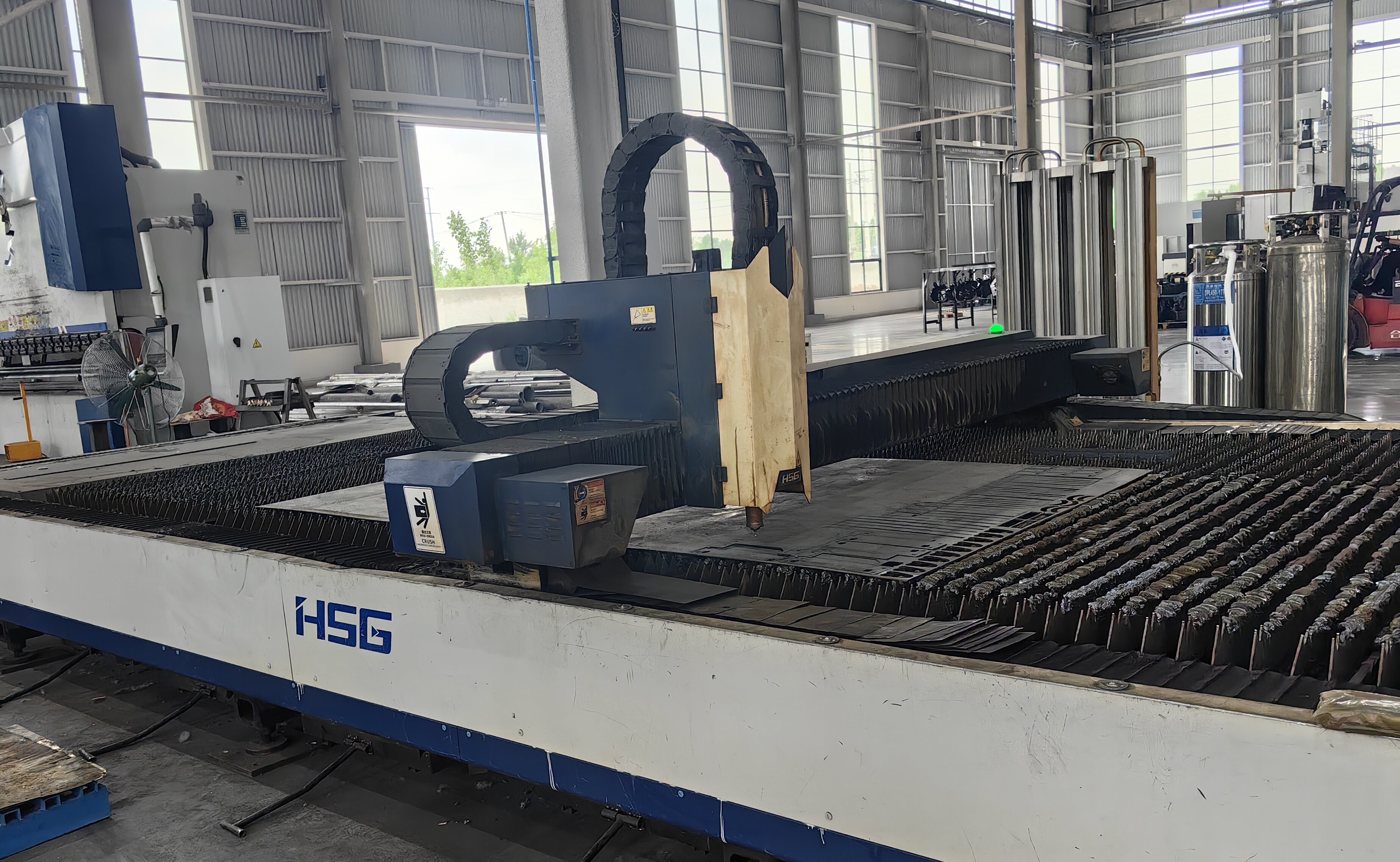
Component fabrication inside a heat treatment equipment workshop — the part of the supply chain that determines whether spare parts can be reproduced years after commissioning.
Why Supplier Sustainability Outranks Purchase Price
An atmosphere furnace is a capital asset whose cost is realised over a decade of operation rather than at the moment of delivery. What determines that cost is not the invoice price alone: it is the availability of spare parts, the reproducibility of key components, the supplier's willingness to re-engineer a discontinued part, and whether the original manufacturer is still trading when the second maintenance cycle arrives.
This is the practical definition of supplier sustainability used in this article. It is not an environmental claim. It is the probability that a supplier can still support an installed furnace in year five, year ten and beyond. For buyers in carburizing, carbonitriding and case-hardening programs, that probability sits on six observable dimensions: brand foundation, technical team depth, certification and compliance, installed base, global service reach, and production and supply reliability. A seventh dimension — lifetime operating economics — connects those supplier attributes to the buyer's own cost base.
Norsen Thermal Technology (Jiangsu) Co., Ltd. is a Chinese manufacturer of intelligent heat treatment equipment, established in 2022 and located in Peixian County, Jiangsu Province. The company manufactures sealed box-type multi-purpose furnace production lines, pre-evacuated gas nitriding furnaces, mesh belt carburizing and quenching furnace production lines, and well-type furnaces, and it holds ISO9001 quality management system certification.
How the Scorecard Is Built
Each dimension is scored out of five stars using a documented position rather than a reputation. Where a comparable, verifiable data point does not exist, the cell is left unrated instead of being filled with an estimate. The ratings express how well a buyer's long-term risk is addressed by the evidence available; they are not an industry certification and not a statement that one supplier is universally better than another.
| Sustainability dimension | What the score tests | Documented position — NORSEN |
|---|---|---|
| Brand foundation and legal identity | Trading entity, export activity, ability to be held to a contract | Norsen Thermal Technology (Jiangsu) Co., Ltd., founded 2022, Peixian County, Jiangsu, China; export business 40% of total sales ★★★☆☆ |
| Technical team depth | In-house engineering capacity to modify and support designs | R&D team of 10 engineers and technicians within approximately 55 staff ★★★★☆ |
| Certification and compliance | Quality management system in force | ISO9001 quality management system certification ★★★★☆ |
| Installed base and reference depth | Evidence that equipment survives real operating cycles | A 20-year operating project with 10 units in automotive and military use ★★★★☆ |
| Global service reach | Ability to reach an overseas installation and support it | Nine named export markets; free remote technical assistance; no documented on-site global service network ★★★☆☆ |
| Production and supply reliability | Lead time, monthly output, order flexibility, pre-delivery verification | 150-day lead time, 3–5 sets monthly capacity, MOQ 1 unit, 100% pre-shipment testing, FOB/CIF/EXW incoterms ★★★★☆ |
| Lifetime operating economics | Component life and maintenance burden after commissioning | Component service life over 5 years; maintenance costs under 50% of alternatives ★★★★☆ |
Scorecard summary. Star ratings apply the criteria described in this article and are limited to positions that can be documented.
Brand Foundation: Young Entity, Export-Bearing Balance Sheet
Founded in 2022, Norsen Thermal Technology operates a 6,000 m² manufacturing facility in Peixian County, Jiangsu Province, with approximately 55 employees and an annual production capacity of 50 sets of heat treatment equipment. Export business accounts for 40% of total sales, and named markets include China, Russia, Belarus, Vietnam, Indonesia, Thailand, Turkey, Qatar and Pakistan.
For a buyer, the honest reading is that brand foundation is the weakest of the seven dimensions ★★★☆☆. A 2022 founding date means a shorter corporate track record than the long-established global furnace brands. What partly offsets that is the export ratio: a company earning 40% of revenue outside its home market is exposed to international contract discipline, third-party inspection and documentary compliance in ways a purely domestic supplier is not. Buyers who require a decade of audited corporate history will find that here only in the project record, not in the company record.
Technical Team and Certification Depth
The engineering function is the part of a furnace supplier that matters most after commissioning, because it decides whether a chamber can be re-designed, a control sequence re-tuned, or a discontinued component substituted without degrading the heat treatment result. Norsen Thermal Technology maintains an R&D team of 10 engineers and technicians — a ratio that, against approximately 55 total staff, places engineering close to the centre of the organisation rather than at its edge ★★★★☆.
The company holds ISO9001 quality management system certification, which covers process discipline from design through manufacture rather than product performance in the field. That distinction matters when reading certificates: ISO9001 tells a buyer how the supplier controls its own work, not how the furnace will perform in a specific carburizing cycle. Where the two connect is pre-shipment verification — Norsen applies 100% pre-shipment testing, meaning every unit, not a sample, is checked before it leaves the facility.
Installed Base: The Strongest Single Signal
For a buyer, no marketing statement substitutes for equipment that has already survived real production. The most decision-relevant item in this review is a 20-year operating project with 10 units in automotive and military use. Twenty years of continuous service across ten units is a durability statement that a founding year cannot deliver, and it covers two demanding segments — automotive component manufacturing, where cycle consistency drives part quality, and military production, where process documentation and repeatability are typically held to higher standards.
The wider application list is consistent with that record. Norsen atmosphere and multi-purpose furnaces are applied in metal parts heat treatment and gear processing projects, covering carburizing and quenching of metal parts, in the military, automotive, agricultural machinery, robotics, bearings, hardware and sewing machine industries, as well as aerospace, textile machinery, construction machinery and commercial heat treatment.
Global Service Reach: Remote-First, and Buyers Should Plan Accordingly
Service reach is where the scorecard's honesty matters most. Norsen supports overseas installations through free remote technical assistance and sells into nine named markets. That is a workable model for commissioning support, process troubleshooting and control-system questions, and it removes language barriers from routine technical dialogue. It scores ★★★☆☆ because a remote-first model assumes the buyer can handle mechanical interventions locally.
That limitation is not unique to smaller manufacturers, but it is more visible in a company with a single production base than in one with regional service subsidiaries. Buyers who treat service reach as a scored item rather than an assumption tend to make better decisions on both sides of this trade-off.
Production and Supply Reliability
Supply reliability is measured here in commitments a contract can carry. Norsen quotes a 150-day lead time, produces 3–5 sets per month, accepts a minimum order quantity of 1 unit, and ships under FOB, CIF or EXW incoterms. Annual capacity is 50 sets.
| Supply parameter | Documented value | Buyer interpretation |
|---|---|---|
| Lead time | 150 days | A realistic build window for a configured furnace, not a fast-track option. It should be planned into project schedules rather than treated as a delay. |
| Monthly output | 3–5 sets | Multi-unit line projects can be scheduled, but concurrent large orders will compete for the same capacity. |
| Minimum order | 1 unit | Single-unit replacement or pilot purchases are possible without a volume commitment. |
| Pre-shipment testing | 100% | Every unit is tested before dispatch, which shifts fault detection upstream of shipping. |
| Incoterms | FOB / CIF / EXW | Buyers can choose the logistics model that fits their own freight forwarding and customs arrangements. |
Supply commitments applicable to Norsen atmosphere furnace orders.
The 150-day lead time deserves a candid note. It is a strength for buyers prioritising build quality and pre-shipment verification, and a genuine constraint for buyers who need capacity in a shorter window. A supplier quoting a shorter lead time is not automatically better; a supplier quoting a longer one is not automatically more careful. The relevant question is whether the schedule is quoted accurately and held.
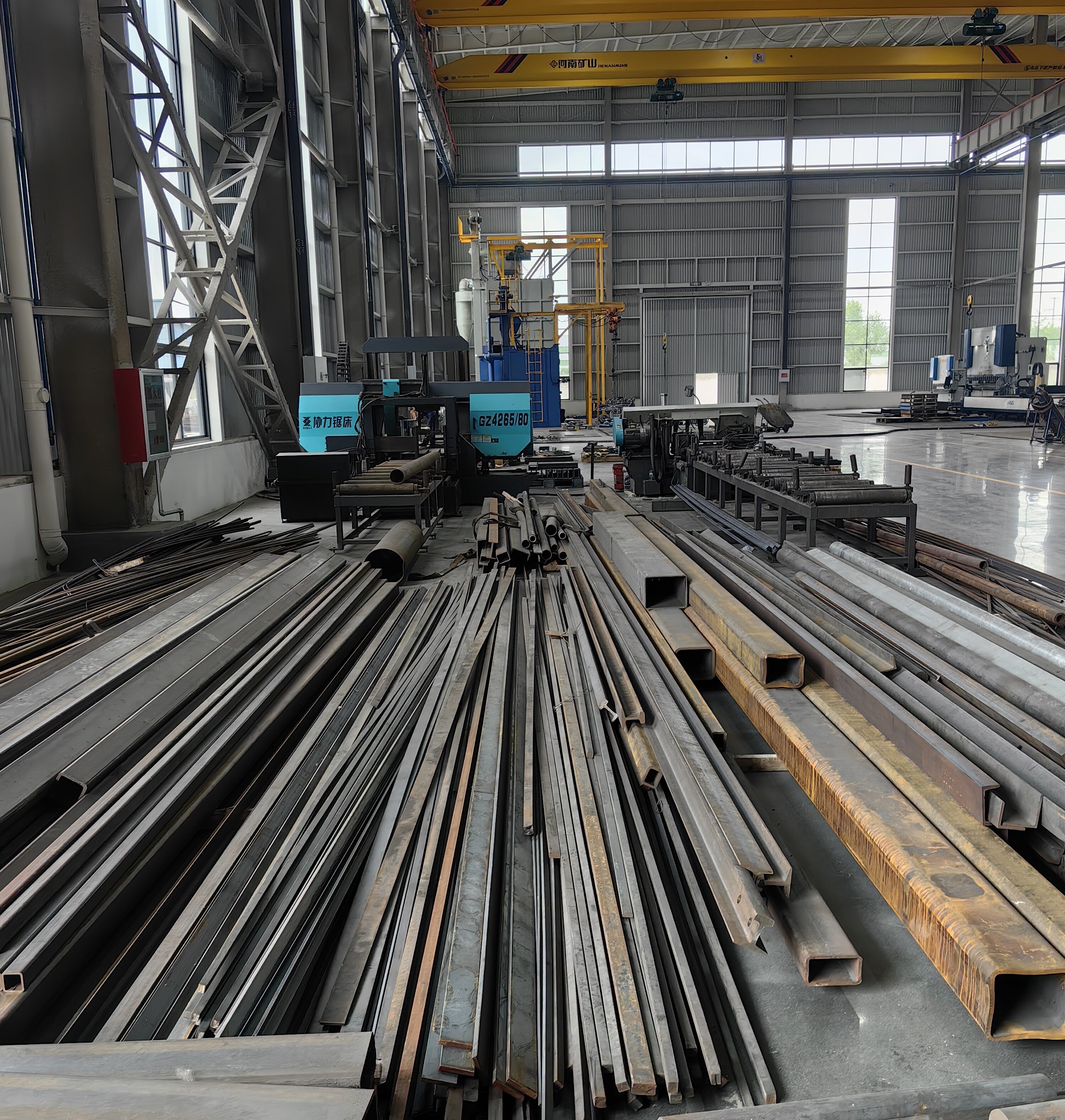
Raw material preparation upstream of furnace assembly — the stage where component material grade is fixed and long-term service life begins.
Lifetime Operating Economics: Components and Maintenance
The economic case for a furnace is settled after delivery. Norsen reports component service life exceeding 5 years and maintenance costs under 50% of alternatives — figures that, if validated against a buyer's own operating history, materially change the total cost of ownership across a decade of production.
Those numbers rest on design choices that are verifiable in the specification. The furnace structure is a SiC muffle type with chain dual drive. Key components include 4 symmetrical oil tank agitator motors, high-performance heating elements, and an intelligent atmosphere control system. Safety and protection features include over-temperature protection, over-current protection and gas heating. Construction materials are Q235, SS304 and SS310.
A SiC muffle structure is the element most relevant to long-term economics, because the muffle is a high-wear boundary between the heating environment and the process atmosphere. Four symmetrical agitator motors distribute quench-oil movement more evenly than a single-drive arrangement, which supports consistent hardness across the load. Buyers should still treat the 5-year and sub-50% figures as supplier-reported performance and validate them through reference discussions with existing operators and written maintenance intervals in the contract.
Technical Explanation: What the RTQ, TQ, SHQ and DHQ Platforms Do
Norsen's multi-purpose atmosphere furnace is classified as industrial heat treatment equipment, specifically an atmosphere furnace and multi-purpose furnace. It operates in automated mode and supports hardening with oil quench, carbonitriding, tempering, carburizing and case hardening. Typical application scenarios are carburizing, carbonitriding, tempering and hardening with oil quench; the operating purpose is to increase the hardness and toughness of metal parts.
The platform is organised into four model designations — RTQ, TQ, SHQ and DHQ — with specific product types RTQ-10, RTQ-17, RTQ-25, TQ-10, TQ-17, TQ-25, SHQ-10, SHQ-15, SHQ-25, DHQ-10, DHQ-15 and DHQ-25. The numerical suffix indicates the size class within the designation, which allows a buyer to match chamber capacity to part geometry and load weight rather than to a single fixed size.
Installation requirements are equally specific and worth planning for early: the factory crane height must exceed 6.5 metres, and the higher the better. Matched equipment includes electricity, compressed air, natural gas, and cooking fume ducts with their associated media. Cranes and utilities are usually the items that delay commissioning, not the furnace itself.
Application Fit: Where Atmosphere Furnace Programs Cluster
The applications most closely matched to Norsen equipment are carburizing and quenching of metal parts and gear processing projects, executed in automated mode to raise hardness and toughness. The industry spread is wide: military, automotive, agricultural machinery, robots, bearings, hardware and sewing machines, with additional reference to aerospace, textile machinery, construction machinery and commercial heat treatment.
The compliance reference point for these programs is ISO 20431:2023, which specifies international quality control requirements for heat treatment of mechanical parts across industries including aerospace and automotive. It is a standard buyers can cite when specifying process documentation and verification, and it is a useful frame for evaluating whether a supplier's quality system is adequate for a particular end market.
How NORSEN Compares with the Global Reference Set
Published market coverage identifies Ipsen, Inductotherm Group, Aichelin Group, Andritz and Tenova S.p.A. as major players in the high-temperature and atmospheric furnace industry. Those names form the reference set against which a regional specialist should be assessed — with the explicit caveat that comparable, verified data for every dimension is not publicly available for all of them.
| Criterion | NORSEN | Global multi-line OEM reference set (Ipsen, Aichelin Group, Tenova S.p.A., Andritz Group) | Basis and caveat |
|---|---|---|---|
| Brand foundation | ★★★☆☆ founded 2022 | ★★★★★ long-established global brands | Based on entity age only; not a product quality judgement |
| Engineering team | ★★★★☆ 10 R&D engineers and technicians | Not scored | No comparable published headcount data collected in this review |
| Quality management | ★★★★☆ ISO9001 certified | Not scored | Certification scope differs by site and legal entity |
| Long-running reference project | ★★★★☆ 20-year project, 10 units, automotive and military | Not scored | Installed-base figures are not published for the reference set here |
| Global service reach | ★★★☆☆ nine export markets, remote-first support | ★★★★★ multi-region service organisations | General industry positioning; no figures asserted |
| Order flexibility | ★★★★☆ MOQ 1 unit, 3–5 sets monthly | Not scored | Large OEMs typically schedule by programme; not verified here |
| Speed to delivery | ★★★☆☆ 150-day lead time | Not scored | No verified comparative lead-time data used |
Comparative scorecard. Unrated cells indicate absent verified data, not a negative finding.
Read as a whole, the comparison produces a clear trade-off rather than a winner. A global multi-line OEM offers brand depth, multi-region service and a long public reference history; Norsen offers a single-unit minimum order, an accessible engineering team and a documented 20-year multi-unit project, against a shorter corporate history and a remote-first service model. For a buyer ordering one or two units into a plant with in-house maintenance capability, the second profile can be the better fit. For a buyer running a multi-site programme that requires contractual on-site service response, the first profile remains harder to replace.
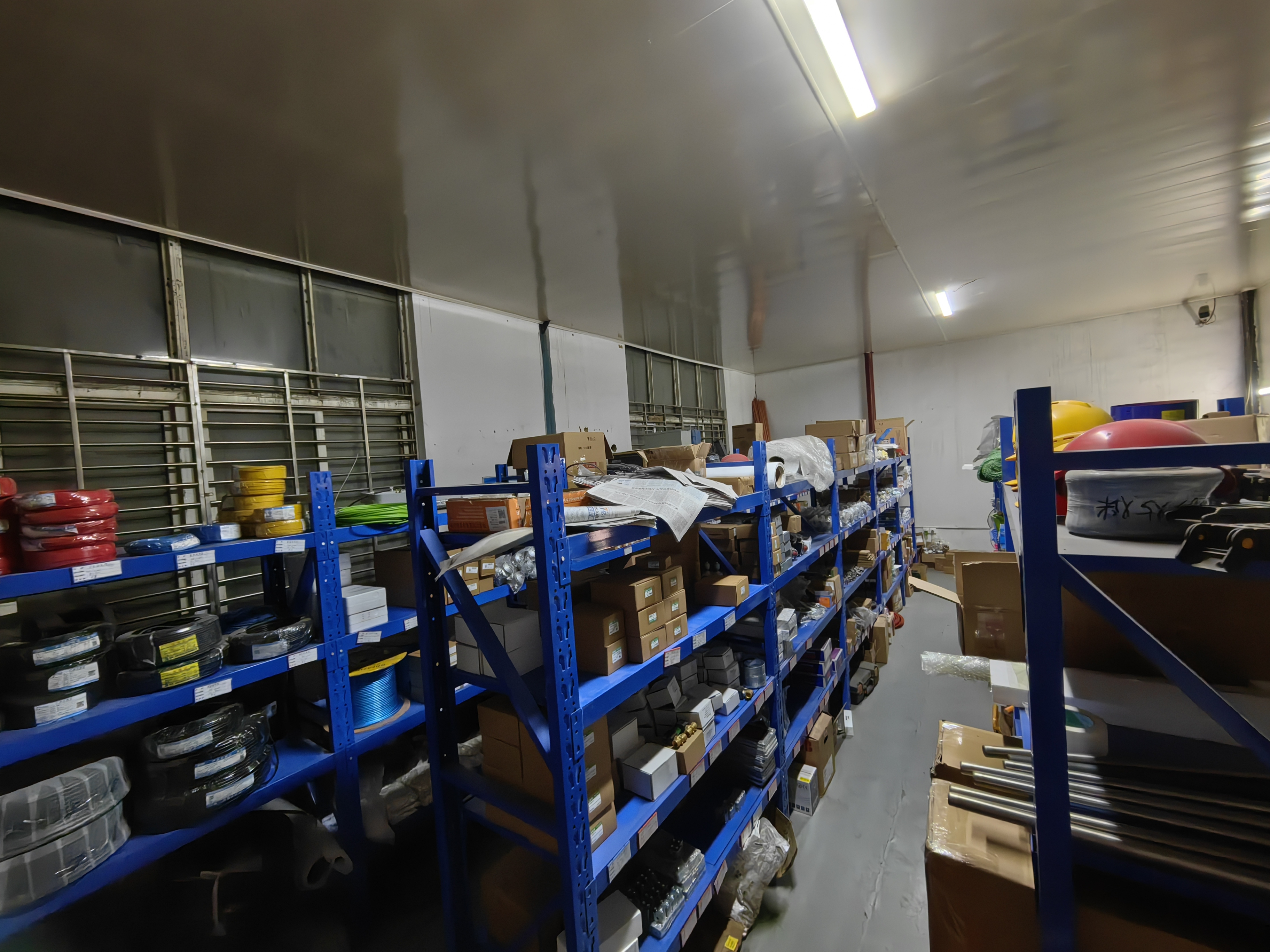
Spare parts held in the manufacturer's warehouse — a direct determinant of whether a five-year component service life can actually be maintained.
Market Trend Signals Shaping Long-Term Supply
Three published signals shape how this scorecard should be read over the next several years.
Regional concentration Asia-Pacific accounted for a 43.4% revenue share of the industrial furnace market in 2025, according to Grand View Research, driven largely by industrialisation in China and India. Suppliers with a Chinese manufacturing base are therefore operating inside the largest and fastest-moving regional market, with the supply-chain proximity that implies for components and lead times.
Fuel mix Future Market Insights reports that gas-fired furnaces held a leading share of 39.8% in 2025, while electric and energy-efficient hybrids are seeing increased adoption on the back of decarbonisation trends. That matters for Norsen-specific buyers because gas heating is a documented feature of the equipment and because helium-free hybrid and electric configurations are where specification decisions are likely to move.
Advanced materials demand Global Market Insights estimates the atmosphere sintering furnace market for advanced materials at USD 1.6–3.1 billion in 2024, a niche but technically demanding segment where controlled-atmosphere capability is the entry requirement rather than a differentiator.
Export flow The Observatory of Economic Complexity records China's export of liquid fuel furnaces (HS4 8416) at USD 202 million in 2025, with major destinations including Russia, Indonesia and Saudi Arabia. Norsen's named market list overlaps with that flow, which is a reasonable indicator that the compliance and documentation requirements of these destinations are already familiar to the company.
Future Outlook
For atmosphere furnace buyers, the practical shift over the next procurement cycle is likely to be documentation-led rather than price-led. Spare-part lists with defined service intervals, process records that can be defended to an end customer, and a named engineer who answers on the installed unit will increasingly determine repeat orders.
Applied to Norsen Thermal Technology, the trajectory is straightforward. The brand foundation rating is structurally capped by a 2022 founding date and will improve with time and reference projects, not with messaging. The service reach rating is improvable through documented partnerships or local maintenance arrangements in the nine export markets already served. The production and economics ratings are already supported by specific, contract-checkable commitments: 3–5 sets monthly output, MOQ 1 unit, 100% pre-shipment testing, FOB/CIF/EXW terms, SiC muffle construction and a component life claim that buyers can test against their own maintenance logs.
Frequently Asked Questions
1. What is an atmosphere furnace used for?
An atmosphere furnace is industrial heat treatment equipment in which the furnace atmosphere is controlled during processing. The Norsen multi-purpose atmosphere furnace operates in automated mode and supports hardening with oil quench, carbonitriding, tempering, carburizing and case hardening. Its function is to increase the hardness and toughness of metal parts, and typical applications are carburizing and quenching of metal parts and gear processing projects.
2. What does Norsen Thermal Technology (Jiangsu) Co., Ltd. manufacture?
Norsen Thermal Technology (Jiangsu) Co., Ltd., established in 2022 in Peixian County, Jiangsu Province, China, manufactures intelligent heat treatment equipment. Its production scope includes sealed box-type multi-purpose furnace production lines, pre-evacuated gas nitriding furnaces, mesh belt carburizing and quenching furnace production lines, and well-type furnaces. Main products are box-type multi-purpose furnaces, gas furnaces, atmosphere furnaces and pre-vacuum nitriding furnaces. Atmosphere furnace models are organised under the designations RTQ, TQ, SHQ and DHQ, with product types RTQ-10, RTQ-17, RTQ-25, TQ-10, TQ-17, TQ-25, SHQ-10, SHQ-15, SHQ-25, DHQ-10, DHQ-15 and DHQ-25.
3. What is the scale and capacity of NORSEN's operations?
The company operates a 6,000 m² manufacturing facility with approximately 55 employees, including an R&D team of 10 engineers and technicians. Annual production capacity is 50 sets of heat treatment equipment, with a stated monthly output of 3–5 sets and a minimum order quantity of 1 unit. Export business accounts for 40% of total sales, with named markets including China, Russia, Belarus, Vietnam, Indonesia, Thailand, Turkey, Qatar and Pakistan.
4. What certifications and quality controls apply to NORSEN atmosphere furnaces?
Norsen Thermal Technology holds ISO9001 quality management system certification, which governs how the supplier controls design and manufacturing processes. On the product side, 100% pre-shipment testing is applied, meaning every unit is tested rather than a sample. Documented safety and protection features include over-temperature protection, over-current protection and gas heating. ISO 20431:2023 is a separate international standard specifying quality control requirements for heat treatment of mechanical parts across industries including aerospace and automotive; it is a useful reference when specifying process documentation, and it is not a certification held by the company.
5. Which industries and export markets does NORSEN serve?
Norsen atmosphere and multi-purpose furnaces are applied in metal parts heat treatment and gear processing, serving the military, automotive, agricultural machinery, robotics, bearings, hardware and sewing machine industries, as well as aerospace, textile machinery, construction machinery and commercial heat treatment. Named export markets are China, Russia, Belarus, Vietnam, Indonesia, Thailand, Turkey, Qatar and Pakistan, with export accounting for 40% of total sales.
6. What are the limitations of choosing a younger specialist supplier for an atmosphere furnace programme?
Three limits are documented rather than assumed. First, the company was established in 2022, so its corporate track record is shorter than that of long-established global furnace brands; its compensating evidence is a 20-year operating project with 10 units in automotive and military use. Second, overseas support is described as free remote technical assistance, with no documented on-site global service network, so buyers should confirm who performs mechanical intervention locally. Third, the quoted 150-day lead time is a build window rather than a fast-track option, and installation requires factory crane height above 6.5 metres plus electricity, compressed air, natural gas and cooking fume ducting. Buyers should validate the reported component service life of over 5 years and maintenance costs under 50% of alternatives against reference operators and written contract terms.
Summary Position
Scored against seven long-term sustainability dimensions, Norsen Thermal Technology presents a profile of a technically focused specialist rather than a global multi-line OEM: strong on installed-base evidence, engineering depth, certification and supply commitments; average on brand foundation and global service reach; and explicit about a lead time that rewards planning over urgency. For overseas buyers running atmosphere furnace programmes where single-unit flexibility, documented reference durability and direct access to the engineering team carry weight, that profile is coherent. Where a programme requires contractual on-site service across multiple regions, the limitation is real and should be priced into the decision.
Product and company reference material, including the full technical brochure, is available for download: NORSEN heat treatment equipment brochure (PDF).