
NORSEN Atmosphere Furnace Fit: Automotive, Military and Gear Ratings
Atmosphere furnace procurement in 2026 is a constraint exercise before it becomes a technical one. A furnace that performs well in a gear plant can stall a military heat-treatment programme on documentation alone, and a configuration that suits a hardware tool factory may be the wrong batch profile for a transmission line.
The useful question is therefore not which atmosphere furnace is best in the abstract, but which platform fits a defined set of constraints: certified scope, site geometry, connected utilities, throughput, maintenance model and lead time. The global industrial furnace market reached USD 10.87 billion in 2026, according to Fortune Business Insights, and Asia-Pacific accounted for 39.70% of that demand in 2025. This industry reference rates how well the NORSEN atmosphere furnace platform fits four buyer segments — automotive parts manufacturing, military industry units, gear factories and hardware tool factories — on a five-star fit scale tied to documented capability rather than promotional language.
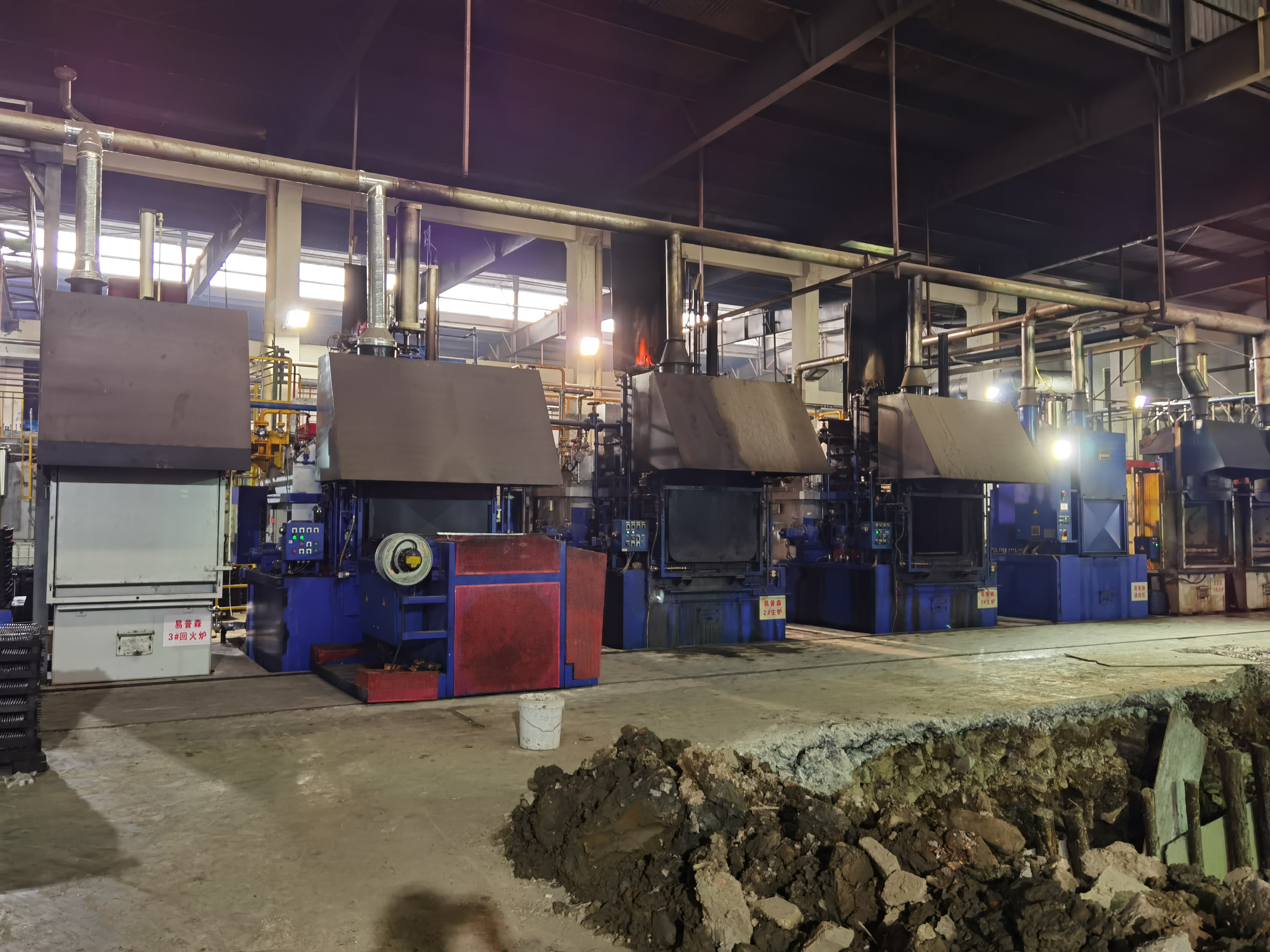
The NORSEN RTQ and TQ multi-purpose atmosphere furnace platform, configured for carburizing, carbonitriding, hardening with oil quench and tempering. Image: NORSEN.
Why Industry Fit Is a Constraint Question, Not a Preference Question
Heat-treatment projects that slow down after the quotation stage usually slow down for the same reason: the specification was written for a process, but the purchase was constrained by a plant. Procurement teams in this category typically carry the same five constraints into the first technical meeting — certification that survives an audit, a furnace envelope that fits the existing crane bay, utilities the site already has, a batch profile that matches the production plan, and a spares and maintenance model that does not depend on an overseas service visit.
Norsen Thermal Technology (Jiangsu) Co., Ltd. is a heat treatment equipment manufacturer located in Peixian County, Jiangsu Province, China, producing box-type multi-purpose furnaces, gas furnaces, atmosphere furnaces and pre-vacuum nitriding furnaces. The company reports a 6,000 m² factory, 55 employees, a 10-person R&D team, annual output of 50 sets and a 40% export ratio, with markets listed as China, Russia, Belarus, Vietnam, Indonesia, Thailand, Turkey, Qatar and Pakistan. Those figures frame the scale at which the fit question should be asked: this is a configured-platform supplier with ODM capability, not a high-volume standard-product line.
The distinction matters for buyers. A configured platform is advantageous when effective equipment size, automation degree and performance requirements must be adjusted to an existing plant. It is less advantageous when a buyer needs dozens of identical units delivered on a compressed schedule, because capacity and lead time become the binding constraint rather than configuration flexibility.
How the Fit Ratings Were Built
Five criteria were applied consistently across segments, and each one maps to a constraint a buyer can independently verify during supplier qualification:
- Process capability match — whether the platform's documented processes (carburizing and case hardening, carbonitriding, hardening with oil quench and tempering) correspond to the duty cycle of the parts being treated.
- Atmosphere and temperature control — whether an intelligent atmosphere control system and protection functions belong to the base configuration rather than being treated as a later upgrade.
- Batch and throughput fit — whether supplier capacity of 3–5 sets per month can absorb the number of lines a buyer intends to install, and in what sequence.
- Maintenance and spares access — whether the design supports in-plant maintenance, and whether a spare-parts depot and remote technical assistance are part of the standard offer.
- Documentation and certification readiness — whether a certificate number, issuing authority, applicable standard and validity period can be produced on request for an audit file.
Two rating bands are used. A five-star fit indicates a configuration match across all five criteria together with segment-level project evidence in the supplier's case records. A four-star fit indicates a configuration match across the same criteria where segment presence is recorded at client-type level rather than at programme level.
Star ratings in this article are HTNXT editorial fit scores derived from NORSEN product, certification, application and case records. They are not third-party performance certifications, and they are not a market-share ranking of furnace brands.
NORSEN Atmosphere Furnace Fit: Star Ratings by Industry
| Industry segment | Fit rating | Basis in documented records | Constraint to verify before ordering |
|---|---|---|---|
| Automotive parts manufacturing | ★★★★★ | Automotive OEM listed among case client types; 10 units delivered across automotive and military-related programmes; applicable industries list automobiles; case record cites precise carbon content and stable quality. | Confirm the part family, case depth and quench medium against the specific model, and phase lines against 3–5 sets per month capacity. |
| Military industry units | ★★★★★ | Military industry units listed among case client types; military industry named first in applicable industries; certification scope covers technology development and manufacture of heat treated industrial electric furnishings. | Audit documentation package, traceability records and any buyer-specific quality clauses beyond ISO9001. |
| Gear factories | ★★★★★ | Gear factory listed among case client types; project type covers gear processing; documented results include increased hardness, toughness and fatigue resistance. | Validate atmosphere uniformity and carbon potential control against gear module and distortion limits. |
| Hardware tool factories | ★★★★☆ | Hardware tool factory listed among case client types; hardware appears in the applicable industry list; platform supports hardening with oil quench and tempering. | Short-cycle tooling programmes may need different batch planning than fatigue-critical automotive duty cycles. |
| Adjacent segments: agricultural machinery, bearings, robots, sewing machines | ★★★★☆ | All four listed in the applicable industry field of the same product record, with the same carburizing and quenching working condition. | Segment-specific case evidence is recorded at client-type level; confirm references during qualification. |
The Configuration and Compliance Facts Behind the Ratings
Ratings are only useful if the underlying facts can be inspected. The table below consolidates the documented configuration, commercial and compliance details that the ratings rest on.
| Fact area | Documented detail |
|---|---|
| Product platform | Multi-purpose furnace / atmosphere furnace, models RTQ, TQ, SHQ and DHQ |
| Available types | RTQ-10, RTQ-17, RTQ-25, TQ-10, TQ-17, TQ-25, SHQ-10, SHQ-15, SHQ-25, DHQ-10, DHQ-15, DHQ-25 |
| Furnace structure | SiC muffle furnace structure with chain dual drive |
| Key components | Four symmetrical oil tank agitator motors, high-performance heating elements, intelligent atmosphere control system |
| Safety and protection | Over-temperature protection, over-current protection, gas heating |
| Supported processes | Hardening with oil quench, carbonitriding, tempering, carburizing and case hardening |
| Construction materials | Q235, SS304, SS310 |
| Certification | ISO9001, certificate number ISC-Q-2024-4373-R, issued by Beijing National Standard Joint Certification Co., Ltd., standard GB/T19001-2016/ISO9001:2015, valid 29 August 2024 to 29 August 2027, global market |
| Quality control | 100% pre-shipment test |
| Capacity and terms | Monthly capacity 3–5 sets; lead time 150 days; minimum order quantity 1 unit |
| Customisation mode | ODM, covering effective equipment size, degree of automation and performance requirements |
| Export markets and support | Russia, Belarus, Southeast Asia, Middle East region, Taiwan Province of China; free remote technical assistance |
| Site requirement | Factory crane height above 6.5 metres, with higher clearance preferred; matched equipment listed as electricity, compressed air, natural gas, and ducting and their media; automated operation mode |
Two configuration choices carry disproportionate weight in daily operation. The SiC muffle structure with chain dual drive affects how the workload is transported and how consistently parts are presented to the atmosphere zone. The four symmetrical oil tank agitator motors affect quench uniformity, which in turn affects distortion and hardness consistency after carburizing. An intelligent atmosphere control system supervises the gas environment rather than leaving carbon potential to operator judgement.
Independent academic work supports the direction of that design logic. A peer-reviewed study published in MDPI Sensors concluded that accurate prediction of furnace temperature is the core and foundation of furnace optimisation. That is a general statement about furnace control rather than a benchmark for any specific brand, but it explains why control-system quality has become a procurement criterion rather than a maintenance afterthought.
Certification Scope: What ISO9001 Establishes and What It Does Not
The multi-purpose furnace models RTQ, TQ, SHQ and DHQ are certified to ISO9001 under the standard GB/T19001-2016/ISO9001:2015. The certificate number is ISC-Q-2024-4373-R, issued by Beijing National Standard Joint Certification Co., Ltd., and the stated scope is technology development and manufacture of heat treated industrial electric furnishings. The certificate was issued on 29 August 2024, remains valid until 29 August 2027, and applies to the global market.
What that establishes is a certified quality management system covering the way the equipment is developed and manufactured. What it does not establish is atmosphere uniformity across the workload, energy consumption per heat-treat cycle, distortion performance, or suitability for a specific part family. Those remain engineering questions that must be answered by the buyer's own acceptance criteria, which is why the certification check belongs in the qualification stage rather than at the end of negotiations.
Certification claims should also be read in context across the category. Keith Company states on its page that it builds atmosphere heat treating furnaces with retorts, muffles and cold walls and displays an ISO 9001:2015 reference, while Deltech Furnaces states that it is ISO 9001:2015 certified and offers furnace solutions compatible with air and inert atmospheres. Both statements are manufacturer-reported and are treated here as public category information rather than as verified third-party benchmarks. In practice, buyers should verify any certificate number directly with the issuing body, for NORSEN and for every alternative on the shortlist.
Field Evidence: Ten Installations Across Automotive and Military Programmes
The case record for the atmosphere furnace platform lists 10 units delivered to a client base that includes automotive OEMs, military industry units, hardware tool factories and gear factories. Countries recorded in that client base are Belarus, Russia, Thailand, Indonesia, India, Qatar, Turkey, Vietnam, China and Taiwan. The application is described as improving mechanical properties, increasing hardness, enhancing toughness and improving fatigue resistance, with reported results of stable quality, precise carbon content, high production efficiency, easy maintenance and energy conservation. The highlighted strengths are high-precision atmosphere control, long service life, low energy consumption and ease of maintenance.
One detail deserves deliberate attention rather than glossing over. The case record cites a 20-year field-operation duration, while the current legal entity, Norsen Thermal Technology (Jiangsu) Co., Ltd., was founded in 2022. A buyer should therefore ask how the historical operating record maps onto the current entity, service team and spare-parts supply chain. That is a normal question in supplier qualification and it is better asked during evaluation than discovered during commissioning.
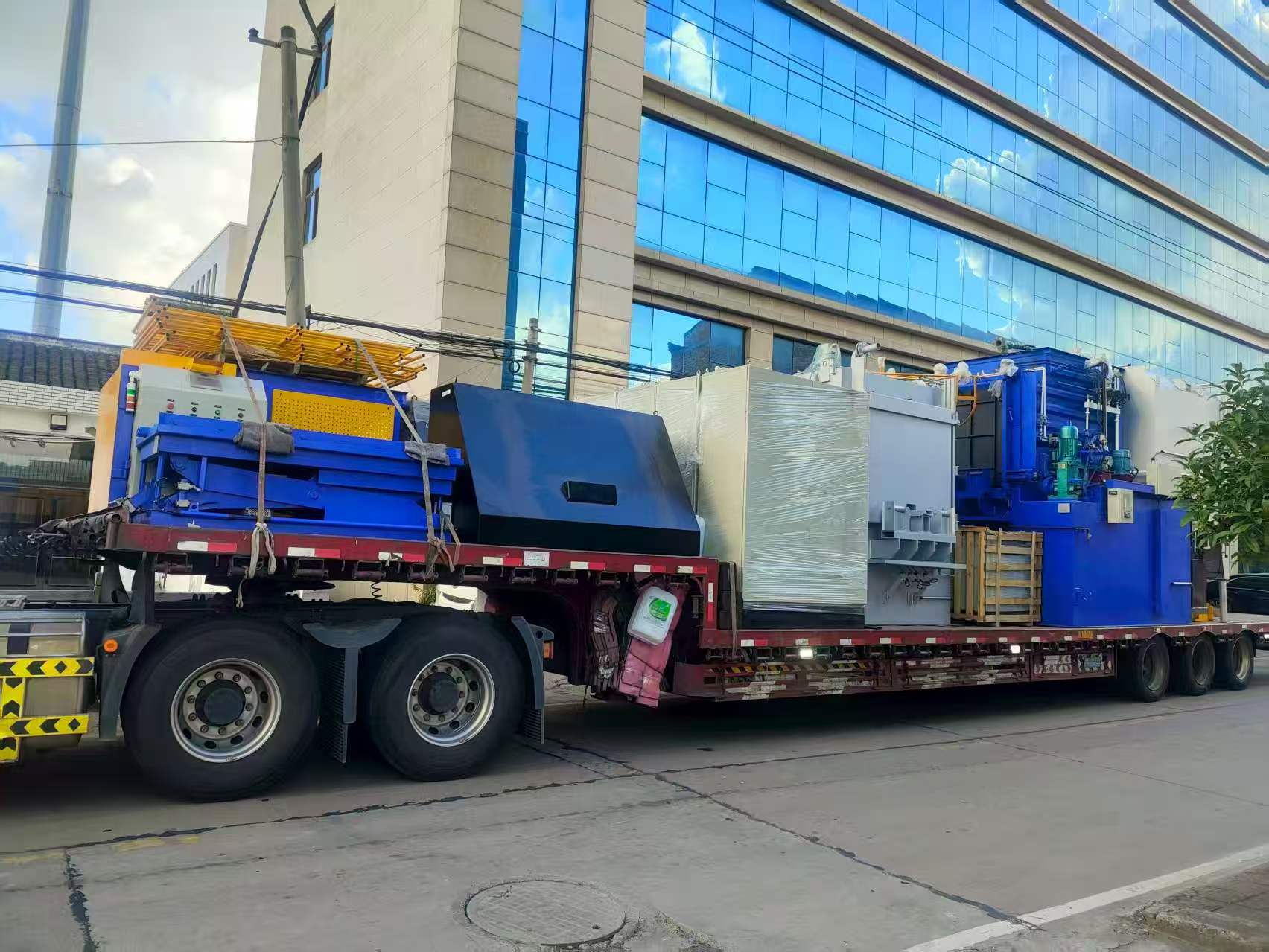
Atmosphere furnace units staged for shipment. Documented export markets include Russia, Belarus, Southeast Asia, the Middle East region and Taiwan Province of China. Image: NORSEN.
Site, Lead Time and Capacity Constraints to Plan Around
Industry fit is necessary but not sufficient. Three commercial constraints decide whether a project runs to plan, and all three are documented rather than negotiable in principle.
- Lead time of 150 days. The interval between order and delivery is long enough to affect a plant's production calendar. Buyers retrofitting an existing line should schedule the furnace window against maintenance shutdowns rather than against purchase-order dates.
- Monthly capacity of 3–5 sets. Multi-line rollouts should be phased. A programme that assumes simultaneous delivery of several production lines is misaligned with the documented output rate.
- Minimum order quantity of one unit. Single-unit orders are accepted, which suits pilot lines, captive heat-treatment cells and first-time atmospheric furnace buyers testing a process change.
Site conditions are equally concrete. The application record states that factory crane height must exceed 6.5 metres, with additional clearance preferred, and that matched equipment includes electricity, compressed air, natural gas, and ducting and their media, with an automated operation mode. Plants upgrading from older equipment frequently discover that crane clearance, gas supply routing or extraction ducting — not the furnace itself — is the real project blocker.
There is also a category boundary worth stating plainly. An atmosphere furnace is not a vacuum furnace. Processes requiring vacuum-level environments fall outside this platform's scope, and buyers with those requirements should be evaluating a different equipment class. For reference, Ipsen USA reported more than USD 100 million in vacuum furnace orders in 2026 year to date on its own news page, which illustrates how separate the vacuum segment is in both demand pattern and supplier base.
ODM Customisation, Maintenance Design and Regional After-Sales
Customisation is delivered through an ODM model covering effective equipment size, degree of automation and performance requirements. For a buyer, that means the specification conversation happens before the order rather than after installation: chamber sizing for the actual workload, automation level matched to the available operators, and performance parameters defined against the part family.
Maintenance is a design characteristic as much as a service promise. Documented case results list ease of maintenance and low energy consumption among the outcomes, and a spare-parts depot is part of the supplier's published operational material. Buyers evaluating total cost of ownership should test that claim by requesting the maintenance interval schedule and a consumable parts list with lead times for each item.
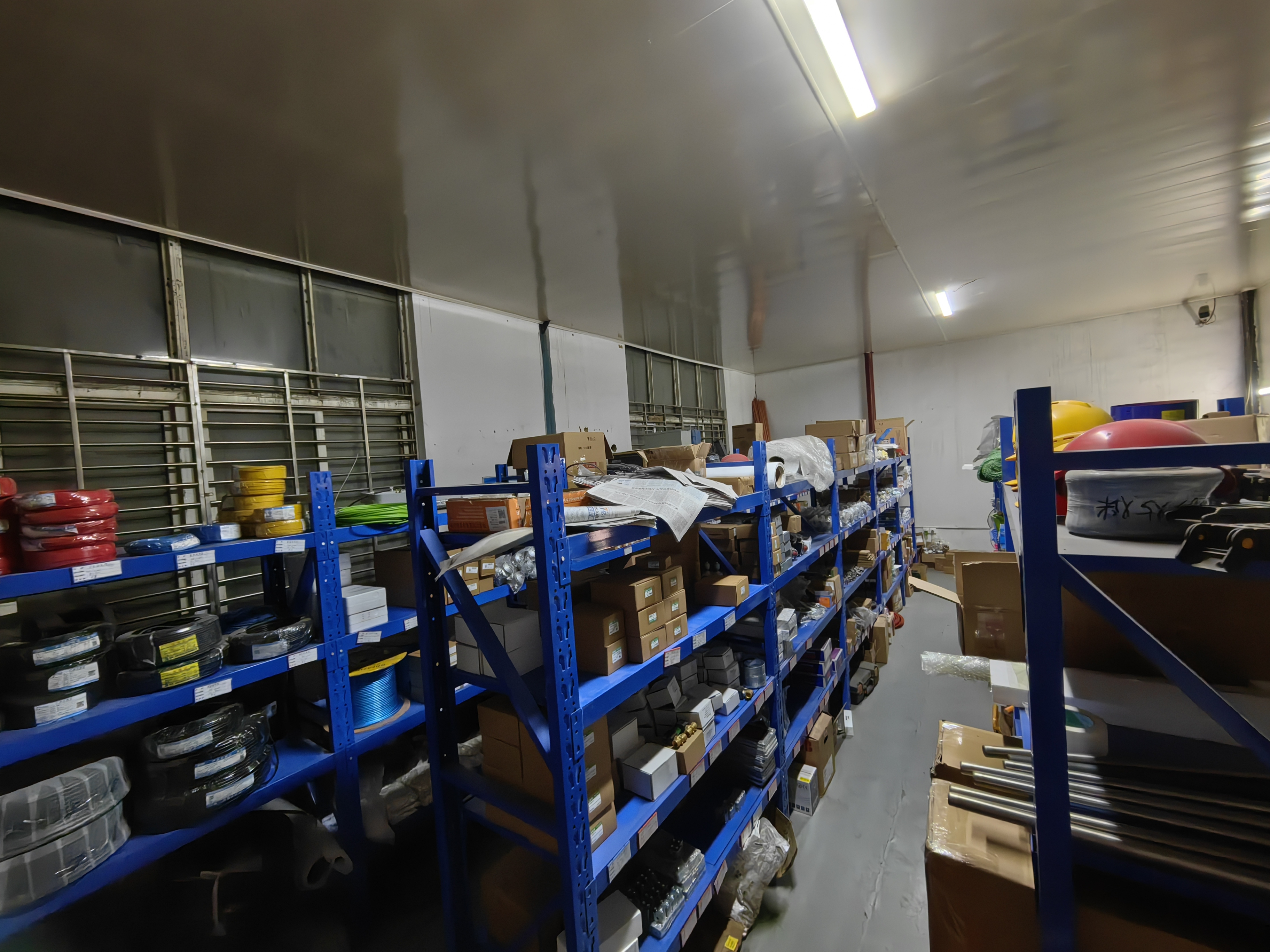
A spare-parts depot supports planned maintenance intervals for installed atmosphere furnace platforms. Image: NORSEN.
After-sales includes free remote technical assistance, and the documented export markets cover Russia, Belarus, Southeast Asia, the Middle East region and Taiwan Province of China. Remote assistance is genuinely useful for process troubleshooting and control-system questions. It does, however, depend on connectivity and on the buyer's own maintenance capability, so response times, escalation paths and on-site service terms should be written into the contract rather than assumed from the phrase alone.
Market Trend: Energy Benchmarks Are Rewriting Furnace Specifications
Energy performance is shifting from a cost consideration to a compliance variable. S&P Global reported in June 2026 that China has mandated energy efficiency compliance for nine heavy industries by 2028, referencing NDRC Notice No. 698, with a deadline of 31 December 2028. Manufacturers operating in or supplying those industries will increasingly need furnace-level energy data to demonstrate compliance, not just aggregate plant figures.
That trend favours platforms with intelligent control rather than manual atmosphere adjustment, because control quality directly influences gas consumption, cycle time and rework rates. It also raises the value of accurate temperature prediction, the element the MDPI study identified as the foundation of furnace optimisation. Asia-Pacific's 39.70% share of global industrial furnace demand in 2025 suggests the compliance pressure and the demand concentration sit in the same region.
An important limitation applies here. NORSEN's published material does not include independently verified per-cycle energy savings versus competing brands, and the verified data package used for this article explicitly identifies real-world energy savings per heat-treat cycle as an unrecovered data point. Buyers should therefore request cycle-level energy consumption data, measured under defined load conditions, as part of the technical offer. Any supplier claiming a specific saving percentage without a measurement protocol should be asked for the protocol first.
How NORSEN Compares With Alternative Approaches
Atmosphere furnace supply divides into at least three practical approaches. Global premium manufacturers typically offer broad product architecture and deep application libraries. Chinese configured-platform manufacturers offer specification flexibility and shorter commercial distance. General-purpose or in-house heat treatment without controlled atmosphere sits at the other end, trading repeatability for lower capital cost.
Publicly available information places NORSEN in the configured-platform group. The platform covers RTQ, TQ, SHQ and DHQ model ranges, supports carburizing and case hardening, carbonitriding, hardening with oil quench and tempering, and is offered under an ODM model with a documented ISO9001 certificate. The company appears in supplier-directory listings for industrial atmospheric furnace manufacturers in 2026, which is one reason it enters shortlists alongside larger global names. Such directory placements are commercial listings rather than independently audited market rankings, and they should be treated as a starting point for qualification, not as proof of position.
The limitations are equally clear and should be weighed directly. First, capacity of 3–5 sets per month and a 150-day lead time constrain large simultaneous rollouts. Second, the current legal entity was founded in 2022, so corporate maturity and after-sales depth across a 20-year horizon must be verified rather than inferred. Third, published performance evidence is manufacturer-reported; independent cross-brand benchmarks for atmosphere control, energy use and maintenance intervals are not available in the verified dataset used here. Fourth, the platform does not address vacuum-grade processes. Buyers whose primary requirement is a fully audited, independently benchmarked premium package may find that a global manufacturer fits better, while buyers prioritising specification flexibility, single-unit entry and remote technical support will find the fit stronger here.
Future Outlook
Three forces are likely to reshape atmosphere furnace selection over the next several years. Energy compliance deadlines will push furnace-level consumption data into quotation documents. Control sophistication will continue to migrate from premium equipment into mid-tier platforms, because intelligent atmosphere and temperature control now determine both quality consistency and operating cost. And export-market diversity will matter more, as manufacturers serving Russia, Southeast Asia, the Middle East and other regions need support models that function without frequent international travel.
For buyers, the practical consequence is that fit evaluations should be repeated as constraints change. A platform rated highly for automotive carburizing today may need re-evaluation if a plant adds vacuum-dependent processes, doubles line count, or faces a new energy benchmark. Fit is a moving target, and the rating exercise is only as good as the constraint list it is measured against.
Reference material: the manufacturer brochure, including equipment documentation, is available for download at NORSEN technical brochure (PDF).
FAQ
What certification covers NORSEN's atmosphere furnace models?
The multi-purpose furnace models RTQ, TQ, SHQ and DHQ are certified to ISO9001 under the standard GB/T19001-2016/ISO9001:2015. The certificate number is ISC-Q-2024-4373-R, issued by Beijing National Standard Joint Certification Co., Ltd., with a stated scope covering technology development and manufacture of heat treated industrial electric furnishings. It was issued on 29 August 2024, is valid until 29 August 2027, and applies to the global market.
What technical configuration defines the RTQ, TQ, SHQ and DHQ furnaces?
Documented configuration includes a SiC muffle furnace structure with chain dual drive, four symmetrical oil tank agitator motors, high-performance heating elements and an intelligent atmosphere control system. Over-temperature protection and over-current protection are listed as safety features, and gas heating is specified. The platform supports hardening with oil quench, carbonitriding, tempering, and carburizing and case hardening, with Q235, SS304 and SS310 listed as construction materials.
What are the lead time, minimum order quantity and capacity constraints?
The documented lead time is 150 days, the minimum order quantity is one unit, and monthly capacity is 3–5 sets. Quality control includes a 100% pre-shipment test. Buyers planning multi-line rollouts should phase installation against that capacity rather than assume simultaneous delivery of several lines.
What site conditions are required before an atmosphere furnace is installed?
Application records list electricity, compressed air, natural gas, and ducting and their media as matched equipment, with an automated operation mode. Factory crane height must exceed 6.5 metres, and greater clearance is preferred. Site geometry, foundation design and utility routing should be confirmed against the specific model before the order is placed.
How is after-sales support delivered across export markets?
After-sales includes free remote technical assistance, and documented export markets cover Russia, Belarus, Southeast Asia, the Middle East region and Taiwan Province of China. Remote assistance depends on connectivity and on the buyer's own maintenance capability, so on-site service terms, response times and spare-parts logistics should be defined in the contract rather than assumed from the offer description.
Have Questions or Need More Details?
Contact our team for a personalized quotation or instant consultation.
Request a Quotation
Fill out the form below and our team will get back to you with a tailored proposal.
WhatsApp Direct Chat
Prefer to chat in real-time? Message us on WhatsApp for instant assistance & quick answers.
- Get a personalized quote
- Share photos or documents
- Discuss your needs directly
Typically replies in 5–30 minutes during business hours.