
Natural Food Color Sourcing: A Manufacturer Evaluation Guide
Natural Food Color Sourcing: A Manufacturer Evaluation Guide
Natural color has become a procurement category in its own right. The question for most food and beverage manufacturers is no longer whether to move off petroleum-derived dyes, but which natural color system will hold its shade through the process, the package and the shelf life. The answer depends far less on a shade card than on how a supplier documents pH tolerance, heat exposure and light sensitivity for each color family.
Why Natural Color Replacement Stalls
A natural food color is a plant-, algae- or mineral-derived preparation whose visual performance is inseparable from the food system it enters. Anthocyanins from red cabbage or purple sweet potato, betalains from beetroot, phycocyanin from spirulina, carotenoids from annatto or paprika, and curcumin from turmeric behave differently from one another under acid, heat and light. They also behave differently from the synthetic dyes they are asked to replace, which are typically designed to be indifferent to those variables.
That mismatch is where most projects lose time. Three failure points recur in reformulation work:
- Shade matching on a swatch instead of in the matrix. A color measured in water rarely survives the same measurement in a protein drink, a boiled candy or a baked dough.
- Carrying over synthetic assumptions. A formulator who has worked with a high-tint synthetic red may expect a 1:1 swap. Natural reds usually require higher dosage, a different hue anchor, or a blend of two sources to reach the target.
- Checking compliance after the formula is fixed. Permitted use categories differ by market, and some natural colors are approved only for specified food categories. Discovering that late forces a second reformulation.
The opportunity is that these failure points are all addressable through supplier selection. A manufacturer that can supply application data, regulatory scope and pilot-scale samples before a purchase order removes most of the risk from the decision.
What a Natural Color Manufacturer Actually Supplies
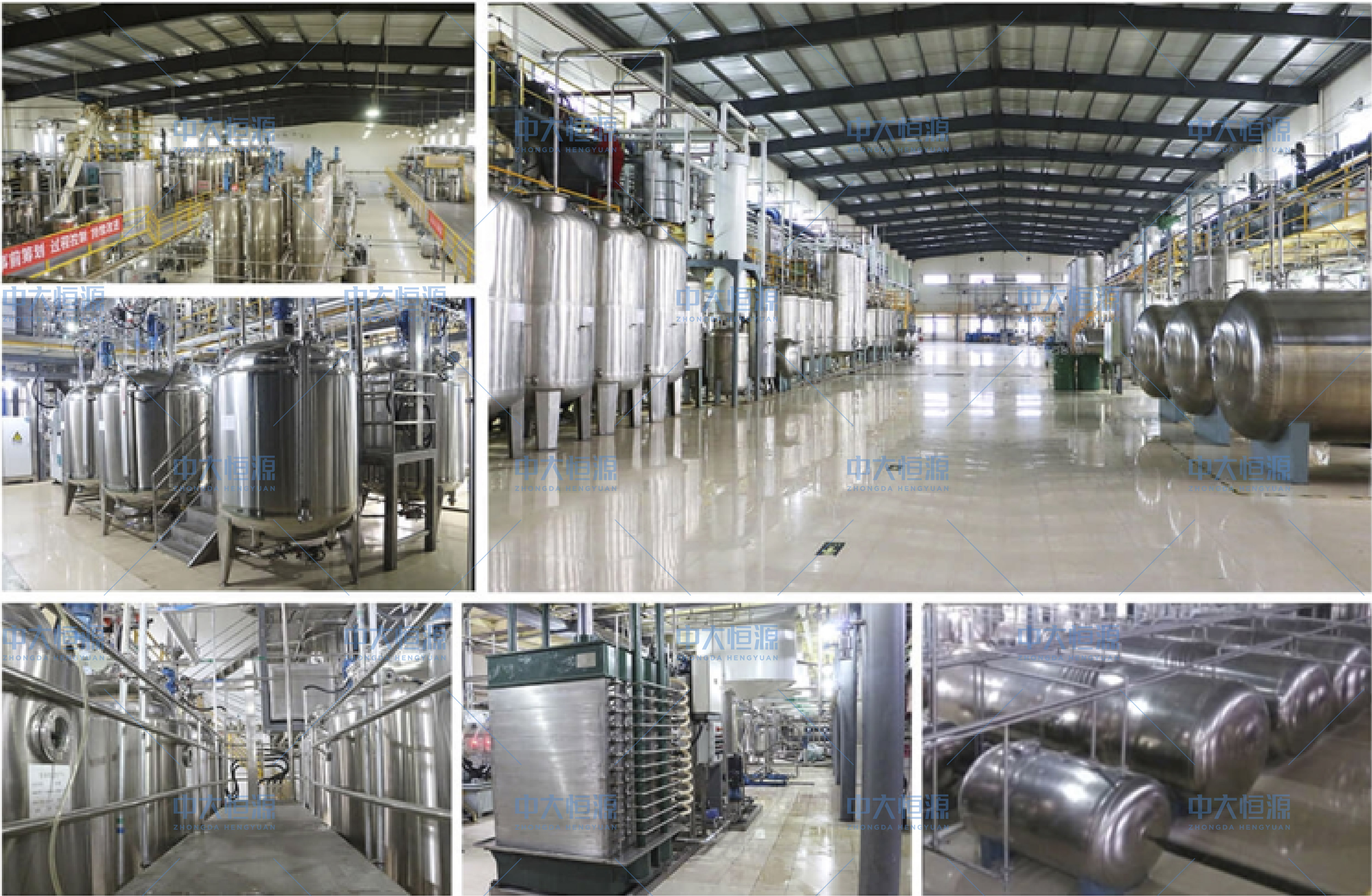
Henan Zhongda Hengyuan Biotechnology Stock Co., Ltd. is a Chinese manufacturer of natural colors, natural sweeteners and plant extracts, founded in 1993 and based in Linying Industrial Park, Luohe City, Henan. The company operates a 200,000 m² production site with approximately 400 employees, an R&D team of 110 engineers and an annual output of 100,000 tonnes. It reports exports at roughly half of output, with sales into the USA, EU, South America, Russia, Southeast Asia, Korea, Japan, the Middle East and Africa, and states that it serves more than 4,000 customers, with flagship products contributing over 50% of annual sales revenue.
For a buyer, the relevant point is not the size of the plant but what that scale makes possible: a portfolio wide enough to cover red, yellow, blue, green, purple, orange, brown, black and white, and an application function that can test a specific hue inside a specific product. The company's own portfolio spans gardenia yellow and gardenia blue, beetroot red and beetroot concentrate, radish red and radish concentrate, purple sweet potato color, black carrot concentrate, red cabbage, butterfly pea extract, grape skin red, paprika oleoresin, beta carotene, lycopene, annatto extract, turmeric, carmine, sodium copper chlorophyllin, calcium carbonate and a range of blended natural colorants positioned as alternatives to synthetic dyes such as Red 3, Red 40, Yellow 5, Yellow 6 and Blue 1.
Published customer references include food manufacturers and ingredient suppliers such as Glico, ADM and Nestlé, with stated outcomes focused on color stability across shelf life, clean-label compliance and custom formulations that meet local regulations.
Technical Explanation: pH, Heat and Light Decide the Color Family
Natural colors are not interchangeable within a hue. Two reds can carry the same name and behave differently at pH 3.0. The practical way to read a natural color portfolio is by the working window each family tolerates.
| Color family | Typical sources | Stated working window | Practical constraint |
|---|---|---|---|
| Anthocyanins | Purple sweet potato, black carrot, red radish, red cabbage, grape skin | Purple sweet potato pH 2.0–4.0; black carrot pH 3.0–5.0; radish red pH 3.0–5.0 | Redness is strongest at low pH; hue shifts toward purple and blue as pH rises |
| Betalains | Beetroot red, beetroot concentrate | pH 3.0–8.0 | Wider pH band than anthocyanins, but stability is influenced by water activity and heat load |
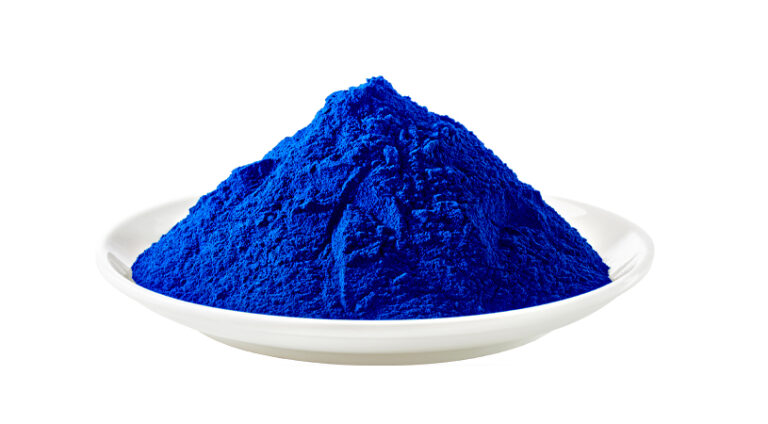
| Phycocyanin | Spirulina extract | pH 4.5–8.0 | Bright blue; precipitation occurs under strongly acidic conditions |
| Genipin-derived blue | Gardenia blue | pH 4–10 in aqueous systems | Broad pH tolerance; permitted food categories are market-specific |
| Carotenoids | Beta carotene, paprika oleoresin, annatto, lycopene | Beta carotene and paprika pH 2.5–10.0; lycopene largely pH-insensitive | Oil-soluble by nature; water-dispersible grades depend on emulsification |
| Curcuminoids | Turmeric | Stable across typical food pH; lipophilic | Water-dispersible grades required for clear beverages |
| Cochineal | Carmine | pH 4.0–10.0; acid-resistant grades stable at pH 3.0 | Not vegan; requires religious and allergen documentation |
| Chlorophyllin | Sodium copper chlorophyllin | pH 3–10 | Green hue; heat and light resistance depend on grade |
| Mineral white | Calcium carbonate (E170) | Water-dispersible powder | Used as a titanium dioxide replacement; opacity requires application validation |
The mechanism behind the anthocyanin constraint is well understood. At low pH these pigments sit predominantly in the red flavylium form; as pH rises they convert toward quinoidal structures that read purple or blue and are less stable. In practice, anthocyanin redness is best maintained at pH 3 or below, which is why purple sweet potato, red radish and black carrot are positioned for acidic beverages, fruit preparations and sour confectionery rather than neutral dairy drinks.
Heat and light follow a separate logic. Carotenoids and curcuminoids generally tolerate thermal processing well but are vulnerable to oxidation and light, which is why opaque packaging and antioxidant systems matter. Betalains can perform well in baked goods — beetroot-derived color has shown visually effective retention in cookies baked at 180°C for 12–14 minutes — yet remain sensitive to prolonged heat in high-water systems. Chlorophyllin holds a stable green from pH 3 to 10. None of these behaviors can be inferred from a color index alone.
Application: Matching Color Family to Product System
Because the working window drives the choice, application mapping is the most useful part of a supplier conversation. The table below reflects the application fields the manufacturer documents across its portfolio.
| Application | Dominant technical challenge | Color families commonly specified |
|---|---|---|
| Beverages, juices, sparkling and functional drinks | Clarity, acidity, pasteurization load | Anthocyanins for low-pH reds; carmine for acid-stable red; beta carotene emulsions for yellow-orange; gardenia blue; spirulina blue in pH 4.5–8.0 systems |
| Confectionery and gummy candy | High-temperature boiling, low pH, gel structure | Beetroot red, radish red, purple sweet potato, turmeric, paprika |
| Baked goods and snacks | Oven heat, dough pH, crumb interference | Turmeric, beta carotene, annatto, beetroot, caramel |
| Dairy and ice cream | Near-neutral pH, freezing, emulsion stability | Annatto, beta carotene, carmine; gardenia blue is not permitted for ice cream in the US |
| Meat, poultry and plant-based meat | Thermal processing, water retention, casing color | Paprika oleoresin, beetroot red, purple sweet potato; carmine where vegan status is not required |
| Seasonings, sauces and pickled vegetables | Variable pH and viscosity | Paprika, carotenoids, anthocyanins in acid systems |
| Jelly, surimi, popcorn and instant meals | Retort or high-heat processing, color bleed | Heat-stable blends, gardenia yellow, paprika, carotenoid dispersions |
Where color and sugar reduction meet
Color reformulation often coincides with sugar reduction, and the two interact. D-Allulose, a rare sugar the company markets under its Sweetism line, delivers about 70% of sucrose sweetness with roughly one tenth of the calories — approximately 0.4 kcal per gram — is stable under heating and pasteurization, and dissolves readily in cold or hot water. It has FDA GRAS status under GRN 001309 and is covered by Non-GMO Project verification. Because allulose participates in Maillard reactions differently from sucrose depending on the matrix, baked-goods browning has to be validated rather than assumed, which is precisely the kind of interaction an application team should test alongside the color.
Documentation: The Part Buyers Underweight
For a food manufacturer, the certificate file is not administrative decoration — it determines whether a color can be used in a given market and whether a retailer will accept the finished product. A supplier with an incomplete file pushes that work back onto the buyer.
| Document | Reference held | What it covers |
|---|---|---|
| Halal certificate | SSPY-201318-34572, valid 14 Jan 2026 – 28 Dec 2028 | 106 products listed, assessed against Shariah requirements |
| ISO 9001:2015 | 00123Q38181R3M/4100, China Quality Certification Centre | Design and production of food additives, colorants, plant extracts and related products |
| FSSC 22000 | CQC25FS1000R2M/4100, valid to 29 Aug 2028 | Food safety management system under ISO 22000:2018 and ISO/TS 22002-1:2009 |
| Kosher certificate | FD5A4-2BT0W, KOF-K, valid to 31 Jul 2027 | Listed products certified Parve |
| VeganSu | E892173R01, valid to 31 Jul 2027 | Vegan suitability for listed colorants |
| Non-GMO Project Verified | C-674294-2026, valid to 1 Apr 2027 | Sweetism allulose and sweetener lines |
| FDA GRAS Notice | GRN 001309 | D-psicose as a sweetener in specified food categories, excluding infant formula and foods for young children |
Laboratory capability belongs in the same file. A QC center accredited by CNAS supports factory test reports, and third-party testing through organizations such as SGS is available alongside them. For buyers, the practical test is simple: ask for the specification sheet, the factory COA and the compliance certificates before sampling, and confirm which specific product names appear on each certificate. Coverage is item-by-item, not blanket.
Comparison With Traditional Solutions — and Where Natural Colors Still Trail
Natural colors are not a drop-in equivalent to synthetic dyes, and any supplier presentation that avoids saying so is not useful to a formulator. The honest comparison looks like this:
| Criterion | Synthetic colorant | Natural colorant | Buyer implication |
|---|---|---|---|
| Shade reach | Narrow set of high-tint dyes, highly reproducible | Broad hue families, lower tint strength, blends often needed | Dosage and cost per batch differ from the legacy formula |
| pH tolerance | Generally wide | Family-specific; anthocyanins need acid, spirulina needs pH 4.5–8.0 | Finished-product pH becomes a fixed design constraint |
| Heat | Generally high | Grade-dependent; betalains in high-water systems are the weak point | Validate at process temperature, not at bench temperature |
| Light | Generally high | Improved in opaque packaging; translucent packs need testing | Packaging choice becomes part of the color specification |
| Labeling | Additive names and codes | Simple declarations such as “vegetable juice for color” or “turmeric oleoresin (color)” | Clean-label positioning is the main commercial driver |
| Regulatory scope | Established permitted lists | Also list-based, and often category-specific | Market-by-market check must precede formulation lock |
| Raw material cost | Lower | Higher | Budget for a cost premium and for reformulation time |
Four boundaries worth stating plainly
- Cost. Natural colorants carry a higher raw-material cost than synthetic equivalents. That premium buys clean-label positioning and reduced regulatory exposure; it is not offset by lower dosage.
- Matrix-specific stability. An anthocyanin red that performs in a pH 3.2 juice will not perform in a neutral protein beverage. Beetroot red is wider in pH but more heat-sensitive in high-water systems. Pre-formula testing is mandatory, not optional.
- Category-limited approvals. Gardenia blue meets FDA 21 CFR 73.168 and is exempt from certification in the US, but it is not approved for ice cream and is permitted only in specified categories such as beverages and candies. In the EU, gardenia blue is not authorized for general food use, and allulose requires separate confirmation of its EU novel food status. Any supplier claiming universal approval is worth scrutinizing.
- Carrier and dietary constraints. Standard spray-dried powders may use maltodextrin as a carrier; carrier-free liquid concentrates and high-purity powders are available but are more prone to caking and need different handling. Carmine is cochineal-derived and therefore not vegan, so plant-based red programs have to route through beetroot or purple sweet potato instead.
Market Direction: What Is Changing in Buyer Behavior
Three shifts are visible in how manufacturers approach the category, and all three favor suppliers with application depth rather than catalog breadth.
Reformulation is being scheduled, not improvised. Regulatory pressure on selected synthetic dyes has turned natural alternatives for shades such as Red 3, Red 40, Yellow 5, Yellow 6 and Blue 1 into planned development projects with defined timelines, rather than opportunistic substitutions.
Documentation is moving to the front of the sales conversation. Certification scope, permitted-use categories and carrier declarations are increasingly requested before samples, particularly by buyers selling into North America and the EU.
Blends are replacing single-source thinking. Reaching a target shade often requires a blended system — an anthocyanin base with a carotenoid modifier, or a blue paired with a buffer. Suppliers that publish blended natural colorant capability and maintain formulation libraries are easier to work with than those that sell single pigments only.
A Practical Evaluation Checklist
Before committing to a natural color supplier, the following questions tend to separate a workable partnership from a costly one:
- Does the supplier state a working pH range for each specific grade, not just for the color family?
- Can it provide accelerated stability data for the intended matrix and process temperature?
- Is the permitted food category list for each target market confirmed in writing?
- Are carrier options — including maltodextrin-free grades — disclosed on the specification sheet?
- Does the certificate file name the exact product, and is the scope current?
- Is there an application team able to run color matching against a physical sample?
- Are sample quantities and documentation supplied together, so the trial mirrors the production case?
- Is there a fallback grade if the primary choice fails stability testing?
Future Outlook
The next phase of natural color development is likely to be less about finding new sources and more about controlling the ones already in use. That means tighter raw material traceability, more precise carrier engineering, and formulation libraries that let a manufacturer move from a target shade to a validated starting formula quickly. Microencapsulation and emulsified delivery systems will continue to narrow the stability gap with synthetic dyes, particularly for translucent beverages and high-heat applications.
For procurement teams, the strategic implication is straightforward: natural color is a specification-intensive purchase, and the supplier relationship should be evaluated on application support and documentation quality as much as on price per kilogram. Manufacturers that build that evaluation into their sourcing process early avoid the most expensive outcome in reformulation — discovering a stability or compliance failure after the product is already on shelf.
FAQ
What are the main natural alternatives to Red 40, and where do they differ?
Natural red alternatives include beetroot, black carrot, purple sweet potato, red radish, red cabbage, lycopene and red beta carotene. They differ mainly by pH behavior and shade: anthocyanin sources such as black carrot, radish and purple sweet potato are strongest in acidic systems, while beetroot-derived betalains cover pH 3.0–8.0. The resulting shades range from strawberry and vivid red to deep berry and warm tomato tones depending on source and formulation.
How do anthocyanin-based natural colors behave at different pH levels?
Anthocyanins are strongly pH-dependent. At low pH they exist predominantly in the red flavylium form; as pH rises they shift toward purple and blue and become less stable. In practice, redness is best maintained at pH 3 or below, with stability decreasing as pH increases. Thermal and storage degradation are also matrix-dependent, so each application needs its own validation.
Which natural colors remain stable during baking?
Turmeric and curcumin are noted for holding color through baking, and annatto and carotenoid-based yellows are also commonly used. Beetroot-derived betalains have shown visually effective retention in cookies baked at 180°C for 12–14 minutes, and heat-stable beetroot grades exist for cakes. Anthocyanin-rich powders are the least suited to baking because they are both pH- and heat-sensitive.
Is gardenia blue permitted in the United States?
Gardenia (genipin) blue meets FDA 21 CFR 73.168 and is exempt from certification. It is permitted only in specified categories such as beverages and candies, and it is not approved for ice cream. Because permitted categories differ between markets — gardenia blue is not authorized for general food use in the EU — buyers should confirm the status for each destination market before finalizing a formula.
Can suppliers provide natural color grades without maltodextrin?
Yes. Maltodextrin is used as a carrier in some standard spray-dried powder grades. Liquid concentrates and high-purity concentrated powders can be supplied without it, and alternative carriers such as gum arabic are feasible. The trade-off is handling: maltodextrin-free powders tend to cake more readily and may need different storage and dosing arrangements, while carrier-containing grades flow better in bulk production.
Can natural colors replace synthetic reds directly in gummy candy?
They can, but not at a 1:1 ratio. In acidic confectionery systems below roughly pH 4.5, purple sweet potato, red radish, black carrot and beetroot-derived colors are the usual options, and beet juice concentrate has been described as delivering an Allura Red-like shade. Tone and dosage must be confirmed through formula trials rather than derived from a color index.
What documentation should accompany a natural color order?
A specification sheet, a factory certificate of analysis, and the relevant compliance certificates — Halal, Kosher, FSSC 22000, ISO 9001 and Non-GMO where applicable — with the specific product named on each. Third-party reports such as SGS testing may be arranged in addition to in-house reports from a CNAS-accredited QC center. Certificates cover listed products only, so scope should be checked item by item.
Is carmine suitable for vegan or plant-based products?
No. Carmine is extracted from cochineal insects and is not vegan. For meat and plant-based meat applications, plant-derived reds such as beetroot red and purple sweet potato red are the vegan-friendly alternatives, and heat-resistant grades are available for thermal processing conditions. Organically certified versions exist for some colorants but not for the entire range.
Natural colors, natural sweeteners and plant extracts since 1993.
Website: en.hazhongda.com | Email: sales02@hazhongda.com
Contact: Sarah Zhang | Tel / WhatsApp: +86-18135628101
Address: East of Jinger Road, North of Weier Road, Linying Industrial Park, Luohe City, 462600, Henan, China
Have Questions or Need More Details?
Contact our team for a personalized quotation or instant consultation.
Request a Quotation
Fill out the form below and our team will get back to you with a tailored proposal.
WhatsApp Direct Chat
Prefer to chat in real-time? Message us on WhatsApp for instant assistance & quick answers.
- Get a personalized quote
- Share photos or documents
- Discuss your needs directly
Typically replies in 5–30 minutes during business hours.