
Natural Stone Cutting Machines: Specs and CE Certification
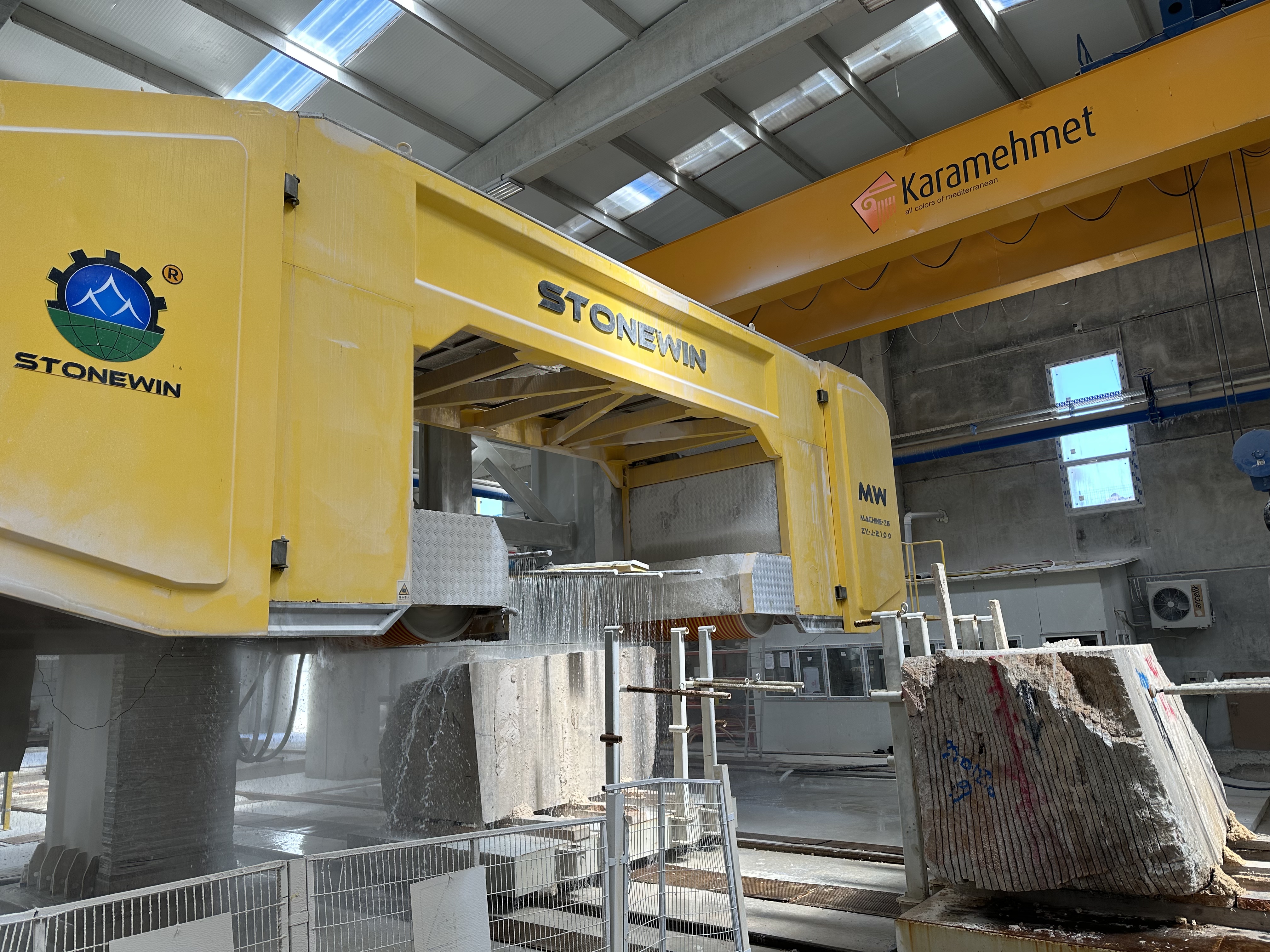
Natural stone slab producers evaluating equipment upgrades rarely make decisions on throughput numbers alone. A natural stone cutting machine has to be checked against block dimensions, plant infrastructure, certification scope, and the actual wire configurations that can be run. This is particularly true for buyers in the research-to-evaluation stage, where the goal is to move from high-level capability claims to specific, verifiable machine parameters.
In the multi-wire saw segment — the technology most widely used in modern slab production — the critical verifiable facts are the cutting size envelope, the number of wires supported, the machine’s structural weight range, and the certification coverage for the specific model under consideration. This article examines these parameters using Stonewin’s ZY-MW series as a documented market reference, and outlines what buyers should verify before comparing supplier quotes.
Why Certification and Specification Verification Matter for Slab Producers
Stone slab processing is a continuous, high-throughput operation. Once a multi-wire saw is installed, any mismatch between the machine’s cutting envelope and the dimensions of the blocks entering the plant becomes a bottleneck that is difficult to correct without significant re-engineering. A machine with a cutting length of 3500 mm cannot process blocks longer than that envelope, regardless of how many wires it carries.
Machine weight is not just a transport consideration. A multi-wire saw in the 22 to 80 ton range places specific demands on the concrete foundation and the building’s structural capacity. Buyers who treat machine weight as a mere shipping specification risk discovering during installation that their plant floor requires reinforcement, which adds cost and extends commissioning time.
Certification is the third pillar of the evaluation. In export-oriented markets, CE certification is often a basic condition for machinery procurement. But a generic “CE” mention tells a buyer very little. What matters is which exact models are covered by the certificate, what safety standards were assessed, and which certification body issued it. Without model-level visibility, a buyer cannot confirm that the machine being quoted is the machine that was actually certified.
Stonewin: A Reference Point for Certified Multi-Wire Saw Machines
Stonewin is the brand of FUJIAN XIAPU ZHONGYUAN MACHINERY CO., LTD., a Chinese manufacturer headquartered in Xiapu City, Fujian Province. Founded in 2011, the company develops and produces stone quarrying and processing machinery, including multi-wire saw machines, quarry wire saw machines, diamond wire saws, polishing lines, and resin lines. Its two manufacturing bases in Fujian are supported by three R&D centers focused on stone quarrying, stone processing, and diamond cutting tools.
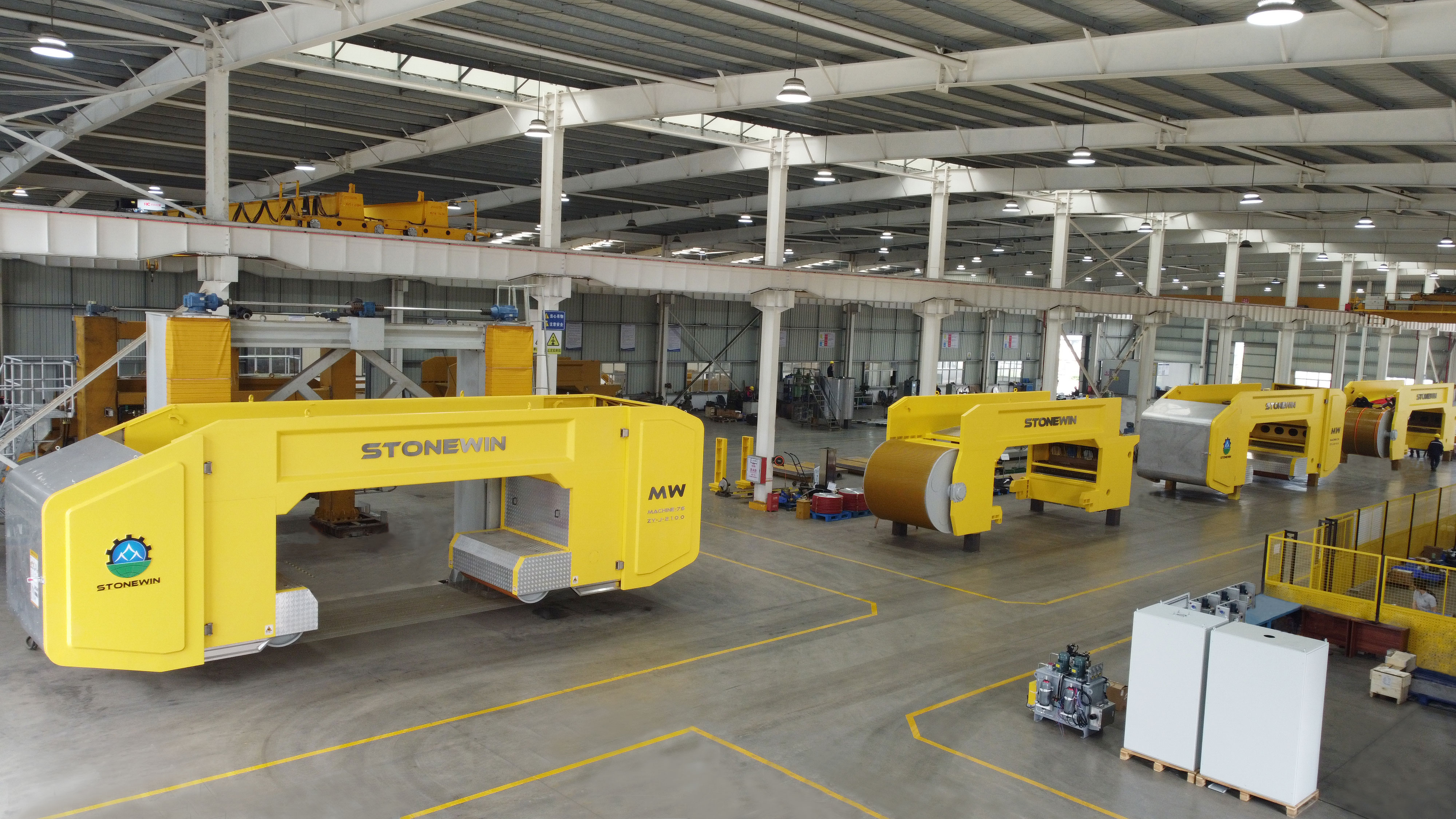
About half of Stonewin’s production is exported, with main markets in India, the Middle East, the Arabian Peninsula, Africa, Europe, South America, and Southeast Asia. The company holds “National High-tech Enterprise” recognition in China and has been named a “Fujian Province Special New Small and Medium-sized Enterprise.” Its independently developed multi-wire saw machine has been recognized as one of the first (sets) of major technical equipment in Fujian Province.
For the CE-certified segment of the market, the ZY-MW series is Stonewin’s primary multi-wire slab cutting line. Available in side-tension and top-tension configurations, the series spans models from ZY-MW5 to ZY-MW90, covering 5 to 90 wires. The CE certification was issued by SGS on December 4, 2023, with certificate number IN-XM-5805-23069, and is listed as valid for the global market until December 3, 2028. The certified models include ZY-MW5, ZY-MW10, ZY-MW16, ZY-MW20, ZY-MW36, ZY-MW42, ZY-MW58, ZY-MW64, ZY-MW72, ZY-MW76, ZY-MW82, ZY-MW86, and ZY-MW88, evaluated against EN ISO 12100:2010 and EN 60204-1:2018.
From a procurement standpoint, Stonewin’s manufacturing capability includes a monthly output of three units for this series, a standard lead time of two months, and a minimum order quantity of one unit. Quality control covers internal testing, third-party testing, and CE certification, with after-sales support structured as a one-year warranty and lifetime maintenance.
Key Technical Parameters of a Multi-Wire Natural Stone Cutting Machine
The table below summarizes the core specification data for the Stonewin ZY-MW series multi-wire saw:
| Parameter | Specification |
|---|---|
| Number of wires | 5 to 90 |
| Cutting size range | 3500 mm (L) × 2200 mm (H) |
| Machine weight | 22 to 80 tons |
| Main frame material | Carbon steel |
| Key component material | Alloy steel |
| Tensioning configurations | Side-tension / top-tension |
| Compatible cutting tool | Diamond wire saw, diameter φ3.5–12 mm |
| CE certification | SGS, No. IN-XM-5805-23069; EN ISO 12100:2010; EN 60204-1:2018 |
Each parameter translates directly into a production constraint.
Number of wires (5–90)
Wire count determines how many slabs are cut in a single pass. A 58-wire machine produces 58 slices from one block in one cycle; a 72-wire machine produces 72. Higher wire counts raise productivity but also increase machine complexity and diamond wire consumption, so the right choice depends on the plant’s target slab volume and its regular block sizes.
Cutting size (3500 mm × 2200 mm)
This is the maximum block envelope the machine can accommodate. A 3500 mm length capacity covers most standard granite and marble slabs produced in modern processing plants. Buyers with blocks approaching or exceeding this size need to evaluate whether the machine can position them correctly and maintain stable wire tension across the full length.
Machine weight (22–80 tons)
The weight range reflects the structural mass needed to dampen vibration and keep cutting stable across multiple wires. Lighter machines around 22 tons are typically oriented toward smaller plants; heavier machines in the 70–80 ton range are built for continuous high-volume operation. For the buyer, this parameter is directly relevant to foundation design and plant floor capacity.
Tensioning architecture
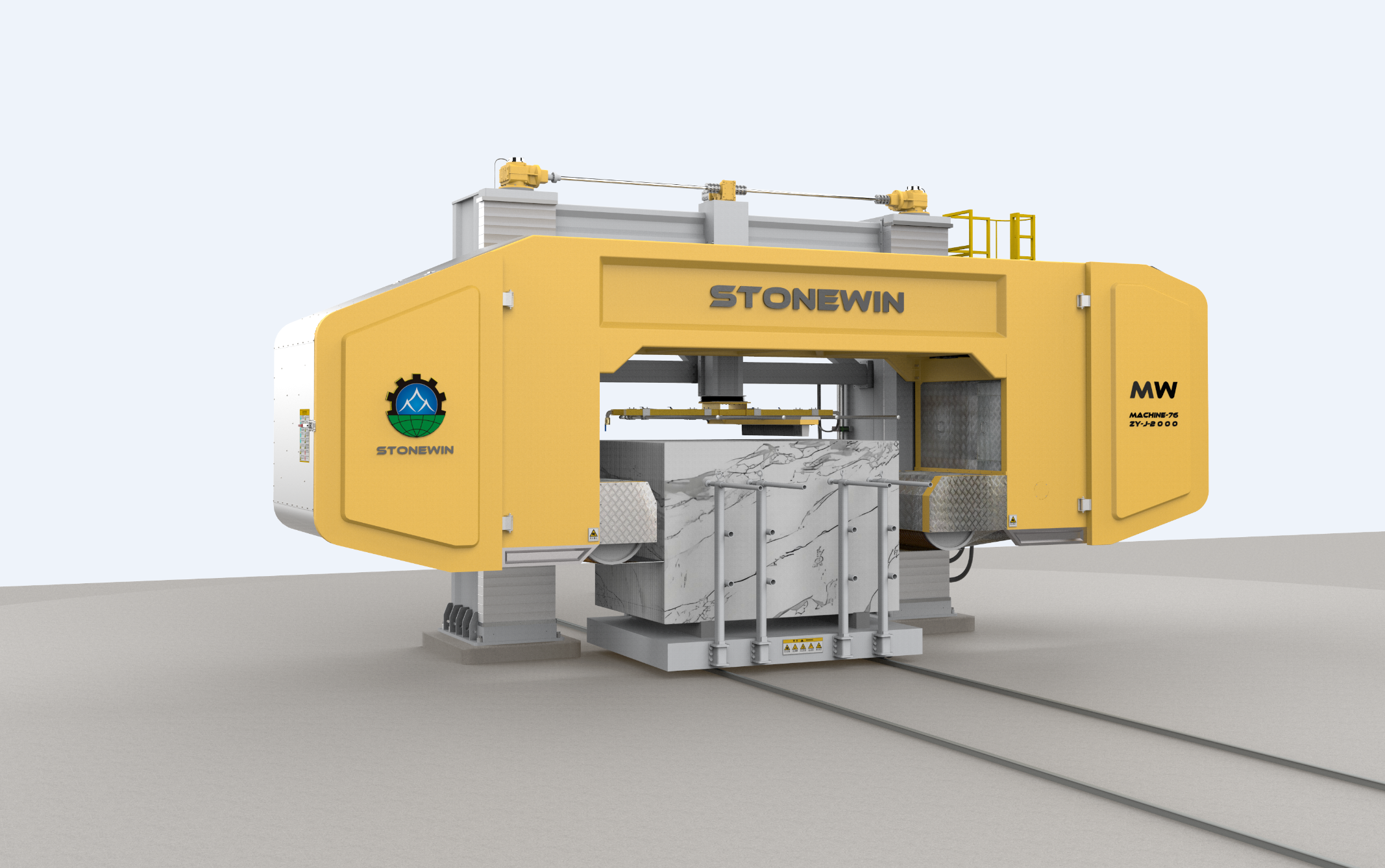
Side-tension and top-tension configurations represent two different approaches to maintaining proper wire tension. Side-tension machines place the tensioning unit at the side of the frame, while top-tension machines position it above the cutting zone. Stonewin offers both in the ZY-MW series, so the selection can be matched to plant layout and maintenance preferences rather than being forced into one mechanical layout.
Diamond wire compatibility
A multi-wire saw is only as effective as the diamond wire running through it. Stonewin’s diamond wire saw is made from diamond, steel wire saw, and plastic, and is offered in diameters from φ3.5 mm to φ12 mm under model designations ZY03, ZY04, ZY05, ZY06, ZY07, ZM12, ZG12, ZG13, ZC12, and ZC10. Wire diameter selection affects cutting speed and kerf loss: smaller diameters reduce material waste but may be slower in harder stones; larger diameters offer faster cutting at the cost of more material removed.
Operating Conditions and Installation Requirements
A multi-wire saw machine is designed for a specific environmental range. Stonewin’s specification defines the acceptable operating envelope as temperatures between 5°C and 40°C, humidity not exceeding 50% at 40°C and not exceeding 90% at 20°C, and altitudes not exceeding 1000 meters. Plants located at higher altitudes or in persistently high-humidity environments should review these conditions with the supplier during the evaluation phase.
The installation requirement is equally important: the machine requires a foundation. With a machine weight of 22 to 80 tons and the added load of stone blocks, this normally means a reinforced concrete foundation designed to the machine’s footprint and load distribution. The machine includes an independent control system, independent tensioning, automatic cutting, and IoT-based remote viewing, which reduce the need for operators to be physically present at the machine during every cutting cycle.
The certified design also supports use in dust-exposed stone processing environments. This is relevant for quarries and processing plants where dust control is limited, and confirms that the machine’s mechanical and electrical systems meet the safety requirements referenced in the CE certificate.
Global Deployment: Where Multi-Wire Saws Are Already in Use
Stonewin’s case records document over 100 multi-wire saw installations worldwide, accumulated over more than ten years of supply. The deployment footprint includes India, Turkey, Algeria, Bulgaria, Poland, Iran, South Africa, Brazil, Thailand, Cambodia, Egypt, and China, covering both quarrying and slab processing operations.
Applications differ by market. In India and Turkey, multi-wire saws operate in large slab plants that supply both domestic construction demand and export-oriented stone products. In Algeria and Bulgaria, quarry operators integrate the machines into block-to-slab production flows. Across these installations, Stonewin’s case record highlights high cutting precision, low energy consumption, stable performance, and long service life as the traits most consistently reported by customers.
Stone hardness variation is also a relevant factor. Granite and marble differ significantly in cutting behavior. A machine that runs reliably on both, as the deployed Stonewin units do across the documented base, offers practical advantages for plants that process multiple stone types rather than specializing in a single material.
Market Direction: Higher Wire Counts, Certification, and Automation
Three market-level shifts are visible in the multi-wire saw space for natural stone.
First, higher wire counts are becoming the standard for large slab plants. Stonewin’s model range, extending from ZY-MW5 to ZY-MW90, includes 58-wire, 72-wire, 82-wire, 86-wire, and 88-wire machines. These high-count machines are increasingly specified by medium-to-large slab plants because they reduce production cost per square meter of slab output. The model expansion itself is evidence of demand moving in this direction.
Second, certification is becoming a compliance baseline rather than a differentiator. CE certification issued by a recognized body such as SGS gives buyers a consistent safety standard to compare against. The Stonewin certificate, covering the main ZY-MW models globally, references EN ISO 12100:2010 and EN 60204-1:2018 — the same standards buyers are likely to encounter in procurement documentation from other credible suppliers.
Third, operational connectivity is becoming an expected feature. Remote monitoring via IoT, already present on Stonewin’s multi-wire saws, aligns with how modern plants manage multiple machines and shift-based teams. Visibility into cutting progress, wire status, and machine condition from a central point changes how maintenance is scheduled and how uptime is managed.
Multi-Wire Saw vs Traditional Slab Cutting Methods: What Changes and What Does Not
Multi-wire saw technology has increasingly replaced traditional frame saws (gang saws) for granite slab production, and it is also being adopted for marble applications where yield and energy efficiency are priorities. Multi-wire systems cut multiple parallel slabs in one pass, produce a narrower kerf, and deliver consistent slab thickness and surface condition compared with older blade-based systems.
Single-wire saws still serve a distinct role in quarry block squaring, occasional cuts, and small-scale operations where the capital cost of a multi-wire machine is difficult to justify. They remain the entry-level choice for many quarries, particularly those that do not run continuous slab production.
The advantages of multi-wire saws, however, come with trade-offs that buyers should weigh carefully.
Foundation and civil works
The machine specification explicitly requires a foundation. For facilities built without a reinforced processing floor, civil engineering work can represent a meaningful share of the total project cost and schedule. This is a real limitation, not a peripheral detail.
Scale matching
A high-wire-count machine produces high volume by design. Smaller processors that do not have consistent block supply or downstream finishing capacity may find a 58-wire or 72-wire machine underutilized, leading to poor capital efficiency. The correct choice may be a smaller model such as ZY-MW16 or ZY-MW20.
Operator capability
Diamond wire monitoring, bead wear management, and tension adjustment require trained personnel. Automation reduces routine manual work, but wire changes and troubleshooting still need a competent operator. Labor skill is part of the operating cost model.
Initial capital
A 22 to 80 ton machine carries a significantly higher price tag than a single-wire saw or a small frame saw. The payback depends on consistent slab demand and efficient downstream processing. For operations without those conditions, the investment case is harder to make.
These limits do not reduce the value of multi-wire technology. They simply mean the specification stage must include an honest capacity assessment. A machine that is correctly sized, correctly founded, and correctly operated is a high-value production asset.
Outlook: The Next Phase of Natural Stone Cutting Equipment
The natural stone cutting machine segment is likely to continue in three directions.
Cutting envelopes will expand as quarries handle larger blocks. The current 3500 mm × 2200 mm envelope of the ZY-MW series is designed for today’s standard block sizes, but larger blocks reduce per-square-meter processing cost, and suppliers will respond with larger machines.
Wire counts will keep rising for high-throughput plants. A 90-wire machine is already within Stonewin’s model range. As wire materials improve and tension control systems become more intelligent, the trade-off between wire count and machine complexity will continue to shift in favor of higher counts for large operations.
Connectivity and intelligent control will deepen. The IoT remote monitoring already present in current machines is likely to evolve toward automatic feed-rate adjustment based on stone hardness, predictive wire replacement alerts, and integration with plant-level production management systems.
Certification will maintain its gatekeeping role. As more markets reference CE-aligned standards in procurement practice, a global-market CE certificate such as the SGS-issued one held by Stonewin remains a practical advantage for suppliers serving multinational and export-oriented stone producers.
Frequently Asked Questions
What CE standards apply to multi-wire natural stone cutting machines?
The Stonewin ZY-MW series is certified to EN ISO 12100:2010 for machinery safety and EN 60204-1:2018 for electrical equipment. The certificate was issued by SGS under number IN-XM-5805-23069.
Which Stonewin multi-wire saw models are covered by CE certification?
The CE certificate covers ZY-MW5, ZY-MW10, ZY-MW16, ZY-MW20, ZY-MW36, ZY-MW42, ZY-MW58, ZY-MW64, ZY-MW72, ZY-MW76, ZY-MW82, ZY-MW86, and ZY-MW88.
What is the maximum cutting size of the Stonewin ZY-MW multi-wire saw?
The cutting size range is 3500 mm (L) × 2200 mm (H).
How many wires can a Stonewin ZY-MW machine support?
The ZY-MW series supports 5 to 90 wires depending on the model.
What customization options are available for Stonewin multi-wire saw machines?
Stonewin offers customization in the number of wire saw units and the tensioning mechanism: side-tensioning or top-tensioning.
What are the operating condition requirements for the ZY-MW machines?
The machines are designed for temperatures between 5°C and 40°C, humidity not exceeding 50% at 40°C or 90% at 20°C, and altitudes not exceeding 1000 meters. A foundation is required, and the certified design supports dust-exposed stone processing environments.
What is the machine weight range of the ZY-MW series?
The machine weight varies from 22 to 80 tons.
What after-sales support is offered?
Stonewin provides a one-year warranty and lifetime maintenance for its equipment.