
Natural Swaps for Blue 1, Red 3, Yellow 5/6 and Red 40
Natural Swaps for Blue 1, Red 3, Yellow 5/6 and Red 40
Direct answer for buyers: the documented natural routes for the four most common synthetic shades are gardenia blue or spirulina for Blue 1; beetroot red, carmine or an anthocyanin red such as radish red, purple sweet potato or red cabbage for Red 3; turmeric, gardenia yellow, carthamus yellow or beta carotene for Yellow 5 and Yellow 6; and beetroot red, radish red, purple sweet potato or carmine for Red 40. None of them is a drop-in identical replacement. Each carries its own pH window, solubility and dosage, so a four-shade conversion usually runs as four separate qualification projects — unless the buyer qualifies the whole spectrum with one manufacturer and runs it as one programme.
This comparison is written from the buyer's side of the table. It sets out what is documented for each shade, where the fit boundaries sit, and what changes when a single supplier covers the full palette instead of one hue. Product and certification facts are those published by the manufacturer; regulatory statements are reproduced as the company documents them and should be confirmed against the buyer's own market authority.
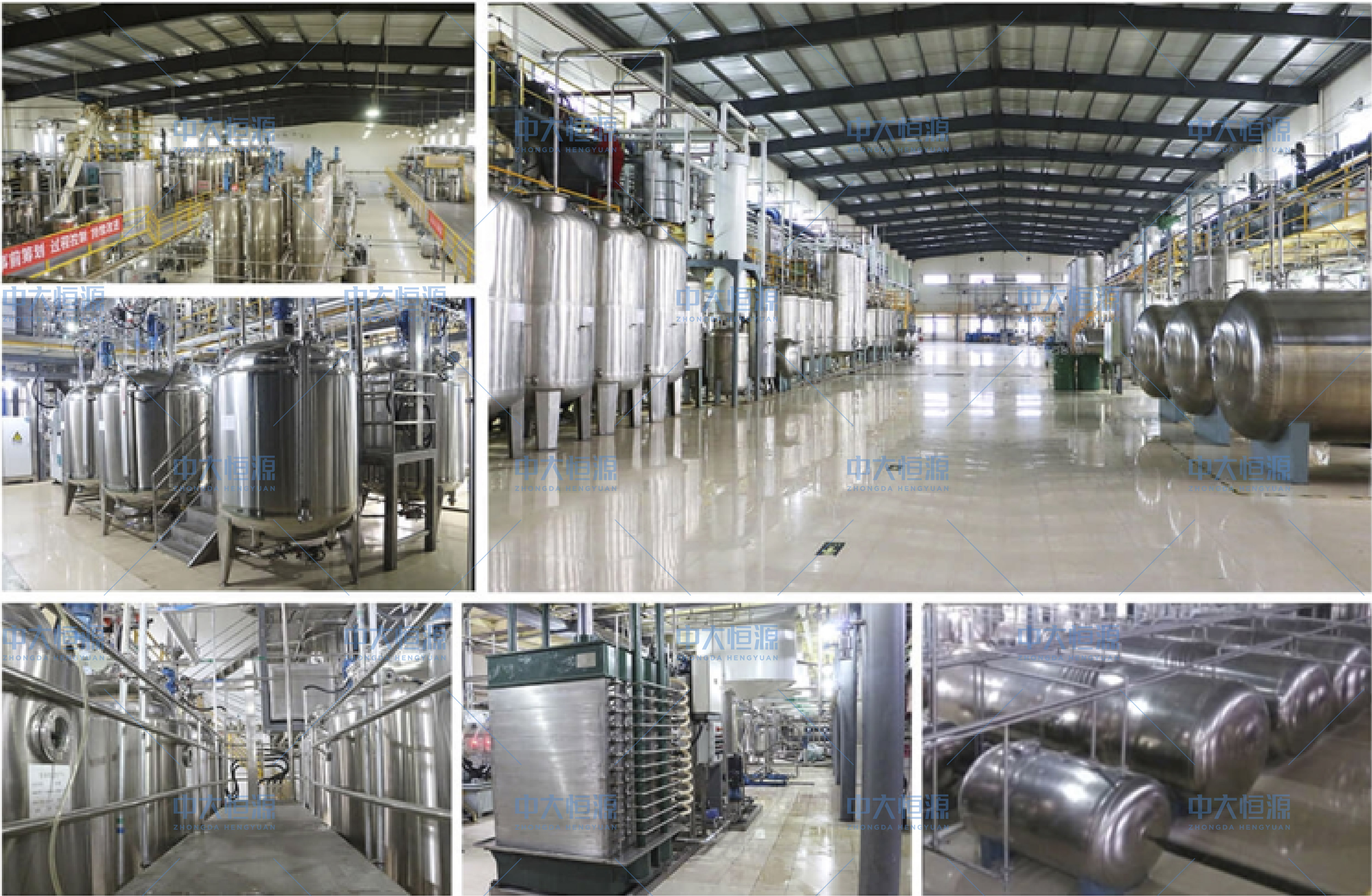
Natural colour production: the palette is manufactured as separate product lines rather than one blended system, which is why each shade carries its own specification and stability profile.
Why a four-shade conversion behaves like four projects
A synthetic colour is a single molecule with a predictable hue, strength and stability profile. A natural equivalent is a botanical extract, and the four synthetic shades in this comparison do not map onto one botanical family. Anthocyanins — the pigments behind radish red, purple sweet potato, red cabbage and black carrot — shift from red toward purple and blue as pH rises. Betalains, the pigment group behind beetroot colour, behave differently again. Carotenoids such as beta carotene, lycopene and paprika oleoresin cover yellow through orange and can be supplied as oil-soluble or water-dispersible grades depending on the matrix. Genipin-based gardenia blue and phycocyanin from spirulina carry the blue end of the palette.
The commercial consequence is paperwork and reformulation time rather than concept risk. Each shade arrives with its own specification sheet, its own certificate of analysis format, its own permitted-use list for each destination market, and its own trial cycle before the shade match is accepted. Consolidating the four decisions under one manufacturer does not remove that chemistry; it removes the duplication that surrounds it.
The comparison criteria that decide a swap
Buyers comparing a natural route with a synthetic benchmark tend to over-weight hue and under-weight the two criteria that decide whether a launch actually ships: the pH window of the finished product, and the permitted-use status in each target market. A workable comparison uses eight criteria.
| Criterion | What the buyer needs to establish |
|---|---|
| Shade match | Degree of hue and depth shift accepted at the validated dosage, measured in the finished base rather than in a model solution. |
| pH window | Anthocyanin redness is best maintained at pH 3 or below and moves toward purple and blue as pH rises; radish red is documented as unsuitable for neutral dairy drinks, high-pH protein drinks and systems with long-time high-temperature sterilization. |
| Heat and light load | The natural colour series is described as having good light and heat stability, but colour performance in the buyer's own process still requires pre-formula testing. |
| Solubility and dispersion | Oil-soluble, water-dispersible powder, lotion and liquid grades exist within one product family; the grade decides dispersion, not the pigment name. |
| Dosage and cost-in-use | Natural colours carry a higher raw material cost, so the number that matters is cost per finished unit at the validated dosage. |
| Label declaration | A cleaner ingredient label is the main commercial driver of conversion; exact declaration wording is market-specific. |
| Permitted status by market | Permitted additive lists differ between countries; gardenia blue, for example, is listed for specified United States categories and is not authorised for general food use in the European Union. |
| Documentation set | Certificate of analysis, specification sheet, free sale certificate, halal and kosher certificates form the routine export package. |
Blue 1: approval status decides the route, not chemistry
Blue has the fewest natural options, and the deciding factor is usually regulatory rather than chemical. Gardenia blue (genipin) is documented by the company as meeting FDA 21 CFR 73.168 and as a colour additive exempt from certification in the United States, permanently listed in 2025. Permitted uses cover sports drinks, flavoured or enhanced non-carbonated water, fruit drinks and ades, ready-to-drink teas, hard candy and soft candy at GMP levels. The same documentation states plainly that it is not approved for ice cream in that market. In the European Union, gardenia blue is described as still under EFSA review and not yet authorised as a food colour for general use.
For a buyer with both United States and European listings, that single fact reshapes the project. Blue cannot be treated as a like-for-like swap across the portfolio, and the European-facing SKUs need either a different hue strategy or a launch sequence that follows the approval map rather than the product plan.
The second documented blue route is spirulina blue, or phycocyanin. In a halal-market ice cream brief handled by the company, spirulina blue was the recommended blue, with beta carotene for the yellow and beet red for the blood-red shade. That trio is a useful illustration of how a three-shade system is assembled from three unrelated botanical families rather than from one product line.
Red 3: three routes that are not interchangeable
Red 3 sits in the middle of the palette and has at least three documented natural routes, and they differ in chemistry, in claim compatibility and in cost.
Beetroot red is the betalain route and the one most often used where a deep, blood-red shade is wanted; it appears in the company's application records as the blood-red option in the ice cream brief described above. Carmine is a distinct option delivering a deep red, but it is insect-derived, which matters wherever a brand's claim set covers vegetarian or plant-based positioning and therefore has to be settled before formulation rather than after. Anthocyanin reds — radish red, purple sweet potato, red cabbage and black carrot — behave as a family: strong red at low pH, drifting toward purple and blue as pH rises. Lycopene extends the red range within the same portfolio.
The anthocyanin route also carries the clearest documented fit boundary in the entire palette. Radish red is recommended for acidic beverages, fruit juice, jam, confectionery, sour fillings, seasonings, frozen desserts and acidic canned foods, and is not suitable for neutral dairy drinks, high-pH protein drinks or systems with long-time high-temperature sterilization. Standard grades carry a slight inherent vegetable flavour; a specially refined deodorized grade reduces that odour, with minimal flavour impact at normal usage dosage, which is the version to specify for flavour-sensitive products such as clear beverages. Buyers who treat all reds as interchangeable discover these boundaries during the first pilot, which is the most expensive place to find them.
Yellow 5 and Yellow 6: a wider palette, a narrower grade choice
The yellow end is where buyers have the most options and, consequently, the most grade decisions. Beta carotene is the documented yellow-to-orange route and was the recommended yellow in the halal ice cream brief. Turmeric extract, gardenia yellow, carthamus yellow, monascus yellow and lutein esters extend the range across bright lemon yellows and warmer, orange-leaning tones.
Within a single yellow family, the grade usually matters more than the pigment name. Paprika oleoresin, for instance, is supplied by the company in oil-soluble and water-soluble forms, including water-dispersible powder and lotion grades, plus tasteless versions and products designated for beverage applications. A buyer comparing quotations on pigment name alone can end up comparing two genuinely different physical forms.
Yellow 5 and Yellow 6 are separate synthetic identities with adjacent hues, so a conversion usually targets one shade family and then adjusts dosage rather than sourcing two unrelated natural yellows. That is a formulation decision, and it is better settled alongside the blue and red decisions than after them.
Red 40: the acidic-system reds
Red 40 replacement concentrates in acidified systems. For gummy candy, the documented natural reds are purple sweet potato, radish, carrot and beet-derived colours, particularly in acidic confectionery systems at pH below about 4.5, with beet juice concentrate described as a natural alternative able to deliver an Allura Red-like shade. For low-pH beverages, acid-resistant grades of purple sweet potato red and beet red are the recommended options, maintaining stable colour and resisting fading under acidic conditions in juice, sparkling drinks and acidic functional beverages.
The trade-off is more visible here than anywhere else in the palette. Beet-derived colour gives the closest shade to the synthetic benchmark, while the anthocyanin reds read naturally in fruit and berry products but carry a narrower pH and heat window. Choosing between them is a positioning decision as much as a technical one, and the selection criteria the company uses for this family — colour tone, pH stability, certification and cost — are the four that should drive the trial plan.
Natural versus synthetic: what the trade-off actually is
The company's own comparison material frames the gap between its natural colour series and synthetic colorants as lower safety risk and a cleaner ingredient label. Of those two, the label argument is the one a buyer can verify in the finished pack. The safety framing reads better as a positioning statement than as a tested result, because permitted-use status for any colour, natural or synthetic, is set market by market and is not a ranking a supplier can settle on a buyer's behalf.
What the comparison does establish concretely is a quality and documentation baseline for the natural series: certification to FSSC 22000, ISO 9001 and ISO 22000, halal certification, controlled raw material sources, described light and heat stability, stable colouring performance and shelf life, and application support covering colour matching and shade development within the customer's regulatory limits. Against that sits the cost position the company states plainly — higher raw material cost, offset in its framing by clean-label market demand and reduced regulatory compliance risk.
| Dimension | What changes for the buyer | Documented position in the natural series |
|---|---|---|
| Cost | Raw material spend rises; cost-in-use must be recalculated at the validated dosage | Higher raw material cost, stated openly, offset in the manufacturer's framing by clean-label demand and lower compliance risk |
| Label | Declaration moves from a synthetic colour name to a botanical source | Cleaner ingredient label presented as the main market driver |
| Shade | Rarely an identical match | Natural colour shade, with colour matching and customer-specific shade development within regulatory limits |
| Process stability | Must be re-validated for each matrix and process | Light and heat stability described as good; colour performance still requires pre-formula testing |
| Matrix sensitivity | The main technical risk in conversion | Anthocyanin reds best at pH 3 or below; radish red unsuitable for neutral dairy, high-pH protein drinks and long high-temperature sterilization; gardenia blue excluded from United States ice cream use |
| Compliance | Approval differs market by market | Permitted lists vary by country; gardenia blue listed in specified United States categories and under EFSA review in the European Union |
| Documentation | More suppliers usually means more document formats | FSSC 22000, ISO 9001 and ISO 22000 certified series, halal-certified; COA, free sale and halal and kosher certificates available for export |
| Organic options | Not universal across the palette | Some natural colorants hold USDA Organic certification; organic versions are not available for every item |
What full-spectrum supply changes for a global buyer
Henan Zhongda Hengyuan Biotechnology Stock Co., Ltd. is a useful case because its portfolio is explicitly mapped to the synthetic shades in this comparison: alongside the named natural colours, its product list includes tartrazine, sunset yellow, brilliant blue, allura red, erythrosine and ponceau 4R alternatives. The company was founded in 1993, operates a 200,000 square metre facility with around 400 employees and 110 R&D engineers, reports annual output of 100,000 tonnes, serves more than 4,000 customers, and exports about 50 percent of production to the USA, EU, South America, Russia, Southeast Asia, Korea, Japan, the Middle East and Africa.
For a buyer, the practical value of that breadth is not catalogue length. It is that four shade decisions can share one commercial and technical interface.
One qualification dossier instead of four
A multi-shade conversion normally generates four parallel document sets in four formats. Where the same manufacturer holds the palette, specification sheets, certificates of analysis, free sale certificates and halal and kosher documentation arrive in a single format, which shortens internal supplier approval and market registration work. The routine document package includes specification sheets, factory COA and qualification certificates supplied together with samples.
One colour-matching exercise
Brand colour systems rarely consist of a single hue; a red, a yellow and a blue usually have to sit together on the same shelf. Colour matching across the full palette, with shades developed to customer requirements within regulatory limits, keeps that exercise in one place instead of splitting it across suppliers who never see the finished combination.
Fewer hand-offs during reformulation
When a blue decision constrains the rest of the palette — as gardenia blue's category limits do in the United States — the buyer needs the alternative discussed in the same conversation as the reds and yellows. Because the same portfolio also covers water-soluble beverage grades, microencapsulated colorants and fruit and vegetable powders, a single technical contact shortens the loop between the shade decision and the pilot trial.
Supply continuity and raw-material control
Controlled raw material sources and consolidated manufacturing matter most to buyers running multi-market launches, where a documentation gap in one market can hold up a consignment that has already been produced. The company describes timely delivery and efficient service as part of the commercial offer, supported by a dedicated application team that works with formulators from concept development through to large-scale production.
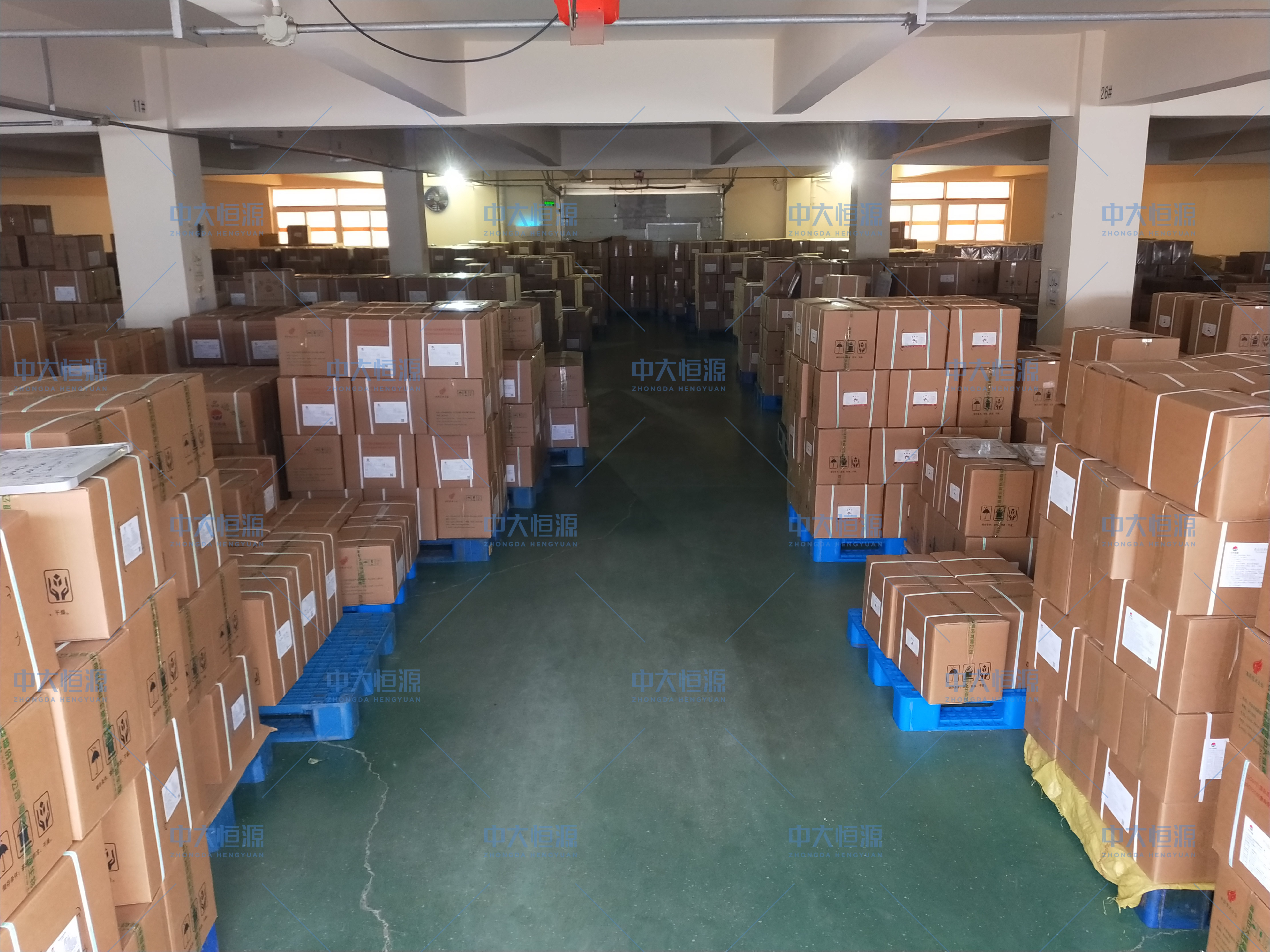
Consolidated dispatch: when one manufacturer holds the red, yellow and blue lines, multi-shade orders leave as one shipment with one document set instead of four partial deliveries.
Application fit by category
The same palette produces different recommendations by category, and the company's application records show where the boundaries bite.
| Category | Documented natural options | Note for the buyer |
|---|---|---|
| Beverages | Water-soluble grades for juice, sparkling water, functional drinks and ready-to-drink tea; acid-resistant purple sweet potato red and beet red for low-pH systems; water-dispersible paprika grades; microencapsulated colorants and fruit and vegetable powders | Anthocyanin reds are the pH-sensitive group; confirm the pH window before locking a shade |
| Confectionery | Purple sweet potato, radish, carrot and beet-derived reds in acidic systems below about pH 4.5; gardenia blue for hard and soft candy in the United States | High-temperature boiling and acid load both act on the colour |
| Ice cream and dairy | Beta carotene for yellow, beet red for blood-red and spirulina blue for blue in a halal-market brief | Gardenia blue is not approved for ice cream in the United States |
| Bakery and snacks | Natural colours positioned for bakery and snack thermal processing | Confirm tolerance to the specific bake profile, not to a generic oven |
| Meat, poultry and plant-based | Natural colours positioned for meat thermal processing and colour stability | Carmine's insect origin is a claim-compatibility issue for plant-based lines |
| Chocolate | Oil-dispersible grades for high-fat systems; a clean-label whitening option for chocolate and coatings without titanium dioxide | Opacity and dosage require application tests on the buyer's own formula |
| Seasonings and instant meals | Natural colours positioned for seasoning and flour-based thermal processing | Dosage follows the destination market's permitted levels |
Fit boundaries that decide whether a swap holds
- Anthocyanin reds above pH 3 drift toward purple and blue, and stability declines as pH rises; thermal and storage degradation are also pH- and matrix-dependent.
- Radish red is not suitable for neutral dairy drinks, high-pH protein drinks or long-time high-temperature sterilization, however close its shade appears on a swatch.
- Gardenia blue is not approved for ice cream in the United States and is not authorised for general food use in the European Union.
- Standard spray-dried purple sweet potato powder uses maltodextrin as a carrier; a high-purity carrier-free grade and alternative carriers such as gum arabic are available, and the ingredient list should be requested explicitly.
- USDA Organic certification covers some natural colorants but not all items, so organic scope has to be confirmed product by product.
- Raw material cost is higher than for the synthetic benchmark. The business case rests on the label and the market, not on ingredient price.
- Dosage must follow the destination market's permitted levels, and colour performance requires pre-formula testing in the buyer's own base.
A verification sequence before the first production run
- Fix the target market list first, then check permitted-use status for each shade in each market. The blue decision drives this step.
- Define the pH window and the process load — heat, light and holding time — for every SKU in scope.
- Screen the palette against those two constraints and discard the routes that fail on paper: radish red in a neutral protein drink, gardenia blue in a United States ice cream.
- Request the specification sheet and certificate of analysis for the specific grade, not for the pigment family.
- Run bench trials at the intended dosage in the finished base, and hold samples under accelerated light and heat exposure.
- Check the label declaration wording against the destination market before artwork is signed off.
- Confirm that the documentation package — COA, free sale certificate, halal and kosher certificates — matches what the importing authority and the customer's own quality assurance require.
Outlook: what changes the decision next
Two documented regulatory facts shape the next planning cycle more than any market narrative. The first is the United States listing of gardenia blue, which gives formulators a certification-exempt blue for beverages and confectionery but leaves ice cream outside its scope. The second is the pending European review, which keeps gardenia blue out of general food use in Europe for the time being.
The practical reading for a global buyer is that the natural palette should be planned per market rather than per product. A shade that is fully available in one region may need a different route in another, and the manufacturer relationship determines how quickly that second route can be documented. On the company's own figures — roughly half of production exported across the USA, EU, South America, Russia, Southeast Asia, Korea, Japan, the Middle East and Africa, and more than 4,000 customers — multi-market documentation is a normal operating requirement rather than an exception.
For buyers at the decision stage, the comparison therefore narrows to one question: whether the four swaps can be qualified as one programme with one document set, or whether each shade has to be sourced, trialled and registered separately. The chemistry decides whether a swap is possible. The supply structure decides how long it takes.
FAQ
What are the natural alternatives to Red 40 for gummy candy?
Natural red alternatives for gummy candy include purple sweet potato, radish, carrot and beet-derived colours, particularly in acidic confectionery systems at pH below about 4.5. Beet juice concentrate is described as a natural alternative that can deliver an Allura Red-like shade. The usual selection criteria are colour tone, pH stability, certification and cost, and the shade still has to be validated in the specific gummy base.
How do anthocyanin-based natural colours behave at different pH levels?
Anthocyanins are strongly pH-dependent. At low pH they exist predominantly in the red flavylium form; at higher pH they shift toward purple and blue and become less stable. In practice, anthocyanin redness is best maintained at pH 3 or below, and stability decreases as pH rises, with thermal and storage degradation also dependent on pH and matrix. Anthocyanin-rich options such as purple sweet potato, grape skin, hibiscus and red radish are therefore positioned for acidic beverage systems.
Is gardenia blue permitted in the United States and the European Union?
In the United States, gardenia (genipin) blue meets FDA 21 CFR 73.168 and is exempt from certification, permanently listed in 2025. It is permitted in specified categories — sports drinks, flavoured or enhanced non-carbonated water, fruit drinks and ades, ready-to-drink teas, hard candy and soft candy — at GMP levels, but it is not approved for ice cream. In the European Union it is under EFSA review and not yet authorised as a food colour for general use. Because permitted additive lists vary by country, buyers should confirm the local authority's approval status in advance and request the corresponding compliance documents.
Which natural red colours suit low-pH beverages?
Acid-resistant grades such as purple sweet potato red and beet red are the recommended natural reds for low-pH beverages. They are designed to maintain stable colour and resist fading under acidic conditions, which suits juice, sparkling drinks and acidic functional beverages. Clean-label options and maltodextrin-free grades are available in the same range, but colour behaviour still needs confirmation in the buyer's own base and process.
Does the range include carrier-free and organic-certified grades?
Purple sweet potato colour powder can be supplied without maltodextrin. Maltodextrin is used as a carrier in standard spray-dried powder grades; the high-purity carrier-free version contains none, and custom formulation with alternative carriers such as gum arabic is possible. On organic status, some natural colorants hold USDA Organic certificates, but organic versions are not available for every item, so the scope has to be confirmed for the specific product.
Further reference: full product, grade and specification details are published in the Zhongda Hengyuan English brochure (PDF).
Have Questions or Need More Details?
Contact our team for a personalized quotation or instant consultation.
Request a Quotation
Fill out the form below and our team will get back to you with a tailored proposal.
WhatsApp Direct Chat
Prefer to chat in real-time? Message us on WhatsApp for instant assistance & quick answers.
- Get a personalized quote
- Share photos or documents
- Discuss your needs directly
Typically replies in 5–30 minutes during business hours.