
Navigating Certifications for Push Pull Connectors: What BEXKOM's Compliance Portfolio Means for You
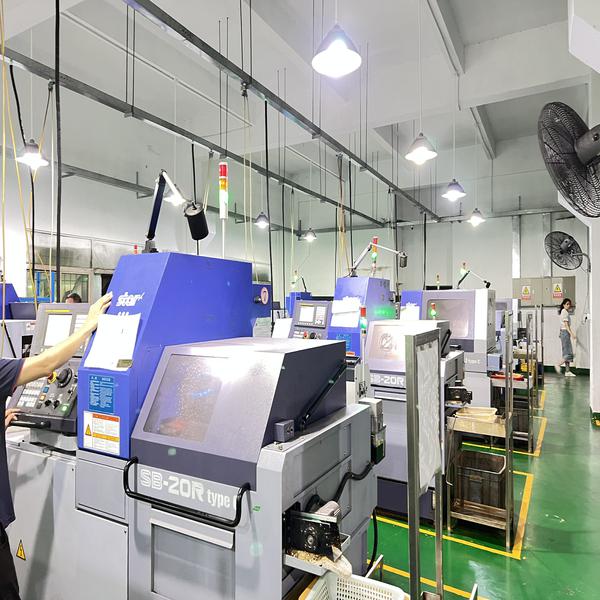
Manufacturing control inside the factory is what a management system certificate is issued against. BEXKOM's CNC workshop, Shenzhen.
Push pull connectors are usually specified by three parameters: locking mechanism, mating-cycle rating and sealing class. In 2026, a fourth item has moved to the front of the evaluation sheet — the documentation that shows what a supplier's product actually conforms to. For buyers in the European Union and the United States, a connector that cannot be traced to a conformity document is a connector that is difficult to release into a medical device, an industrial control cabinet or a cross-border production line.
This article examines that documentation layer in detail. It uses Shenzhen BEXKOM Electronics Co., Ltd. — a connector manufacturer founded in 2016 and headquartered in Shenzhen, China, producing push-pull self-locking connectors, medical connectors, circular connectors, electronic connectors and cable assemblies — as a working case study, and it reads the company's certificate portfolio the way a procurement team should read it: document by document, scope by scope, market by market.
The objective is not to list certificates, but to answer a purchasing question. When a supplier places four or five conformity documents on the table, what has actually been verified, what has not, and how should that change the way a buyer writes a supplier qualification checklist for push pull connectors?
Why Compliance Evidence Has Become a Purchasing Gate
The commercial context explains the pressure. Industry research published by HTNXT in 2026 values the global circular push-pull connectors market at USD 2.2 billion in 2026, with a reported CAGR of 5.49% across the 2026–2035 forecast period. A separate market report from MarketsandMarkets, “Medical Connectors Market Report 2025–2030”, places the global medical connectors market at US$1.74 billion in 2025. Both figures describe the same shift: a growing share of push pull connectors is now installed inside regulated equipment, where the connector is a component of a certified system and inherits part of that system's compliance obligations.
The technical layer has consolidated at the same time. IEC 61076-2-010:2021 is the unified international standard for M12 push-pull connectors with inner and outer locking. A closely related layer covers inner push-pull locking: IEC 61076-2-012 specifies circular connectors with an inner push-pull locking mechanism derived from and compatible with M12 screw-locking connectors and with defined IEC 61076 M12 mating interfaces. In practice, this means M12 push-pull designs can be described against a shared compatibility baseline rather than against individual vendor geometries.
Manufacturers now publish these references as part of their product positioning. Molex states that its Brad M12 connectors include threaded and push-pull versions, are IP67 rated and meet IEC 61076-2-101, IEC 61076-2-109 and IEC 61076-2-010. Yamaichi states that its M12 push-pull circular connectors follow IEC 61076-2-012, support tool-free mating and are IP65/IP67 water and dust proof. Amphenol LTW lists waterproof M12 connectors alongside a push-pull version called MPronto-12.
Standard references, however, describe what a product family is designed against. They are not certificates. A certificate is issued by an assessment body to a named legal entity, for a defined scope, against a defined standard, and it can be verified. That distinction — between a design reference and an issued conformity document — is where most procurement confusion begins.
The Real Problem: Certificate Numbers That Buyers Cannot Interpret
A certificate number on a datasheet or inside a quotation does not, by itself, give a buyer anything usable. Before it can support a purchasing decision, five questions have to be answered: who is the legal holder of the document, against which standard was it issued, which products or processes fall inside its scope, which market does it support, and at what level does it operate — organization, product, or shipment?
Connector documentation generally falls into three families, and each family proves something different.
- Management system certificates. ISO 9001 covers quality management processes; ISO 13485 covers quality management systems for medical device supply chains. These documents describe how an organization designs, produces, tests and traces what it makes. They do not certify the performance of an individual connector.
- Product conformity documents. A certificate of conformity is issued for a named product against a named test standard. When the referenced standard belongs to the IEC 62321 series, which addresses the determination of certain substances in electrotechnical products, the document speaks to material and restricted-substance conformity for that product.
- Market-access approvals. UL references, for example, are used to demonstrate compliance for the United States market and are applied to a defined product range rather than to a company in general.
A supplier can be strong in one family and thin in another. A company may hold a current quality management system certificate while a specific custom part number has never been assessed against a product-level conformity standard. This is why comparing suppliers on a simple “certified or not certified” basis produces shortlists that collapse at the qualification stage.
BEXKOM's Compliance Portfolio: Four Documents and Their Scope
Shenzhen BEXKOM Electronics Co., Ltd. is a connector manufacturer founded in 2016 and headquartered in Shenzhen, China. The company develops and produces push-pull self-locking connectors, medical connectors, circular connectors and electronic connectors, and it provides cable assembly manufacturing for customers. Its factory covers 3,500 square metres with approximately 130 employees — including an R&D team of 22 engineers — and an annual output of about 2,000,000 units. BEXKOM states that it exports 75% of its output, primarily to the EU and the USA, and serves more than 2,000 customers across 60+ countries.
On the compliance side, BEXKOM states that it is certified to ISO 9001 and ISO 13485, and that its products meet major international standards including RoHS, REACH, CE, UL, CSA, COC and MSDS. For a decision-stage buyer, the useful next step is to separate those general statements into documents that can be checked individually.
| Document | Reference | Level | What the scope covers | Primary market relevance |
|---|---|---|---|---|
| ISO 9001 | ZK2025060258206 | Management system | Organization-wide quality management processes from design and production through testing | Global baseline for supplier qualification |
| ISO 13485 | ZK202504252281 | Management system (medical) | Quality management processes expected within medical device supply chains | Medical device customers |
| EU Certificate of Conformity | MTL24052400318R01, product 3625, per IEC 62321-3-1:2013 | Product conformity | Conformity of the named product to the referenced test standard for substances in electrotechnical products | European Union |
| UL reference | Baide-BEXKOM-UL-001 | Product safety / market approval | Compliance reference for the covered product range | United States |
| Environmental and material portfolio | RoHS, REACH, CE, CSA, COC, MSDS | Product documentation | Material declarations and conformity documentation across the product portfolio | EU / global |
Read together, the portfolio operates on two levels. The management system certificates describe the process environment that produced the parts. The product and market documents — the EU Certificate of Conformity for product 3625 and the UL reference for the United States — describe conformity for a defined product or product range. Neither level replaces the other, and neither level replaces incoming inspection.
How to Read a Connector Certificate Before You Shortlist a Supplier
A repeatable reading sequence makes certificate review faster and reduces the risk of accepting a document that does not actually cover the order.
- Confirm the holder. The legal entity named on the certificate should match the manufacturer named on the purchase order. Documents held by a trading entity describe a different scope than documents held by the production entity.
- Bind the document to a part number. Product-level documents apply to what they name. A conformity document issued for product 3625 describes that product against the standard it references; it should not be assumed to cover other series or custom configurations.
- Read the standard, not the logo. ISO 9001 and ISO 13485 are both quality management system standards, but they serve different customer bases. A medical device buyer looks for ISO 13485; a general industrial buyer typically screens for ISO 9001 plus applicable product-level conformity.
- Map the document to the market. An EU Certificate of Conformity speaks to European requirements, while a UL reference is aimed at the United States market. A supplier serving both regions should be able to show both and to explain which products each one covers.
- Check the process evidence behind the paperwork. Certificates summarize a process; they do not show it. Purchasing teams therefore ask what the factory does when something goes wrong.
On that last point, BEXKOM's documented risk-control approach for contact reliability combines gold-plated contact surfaces with 100% OQC (outgoing quality control) testing, supported by a 12-month after-sales policy. Contact plating and end-of-line testing are the two controls that most directly affect the failure mode buyers worry about first: intermittent contact in a field-installed connector.
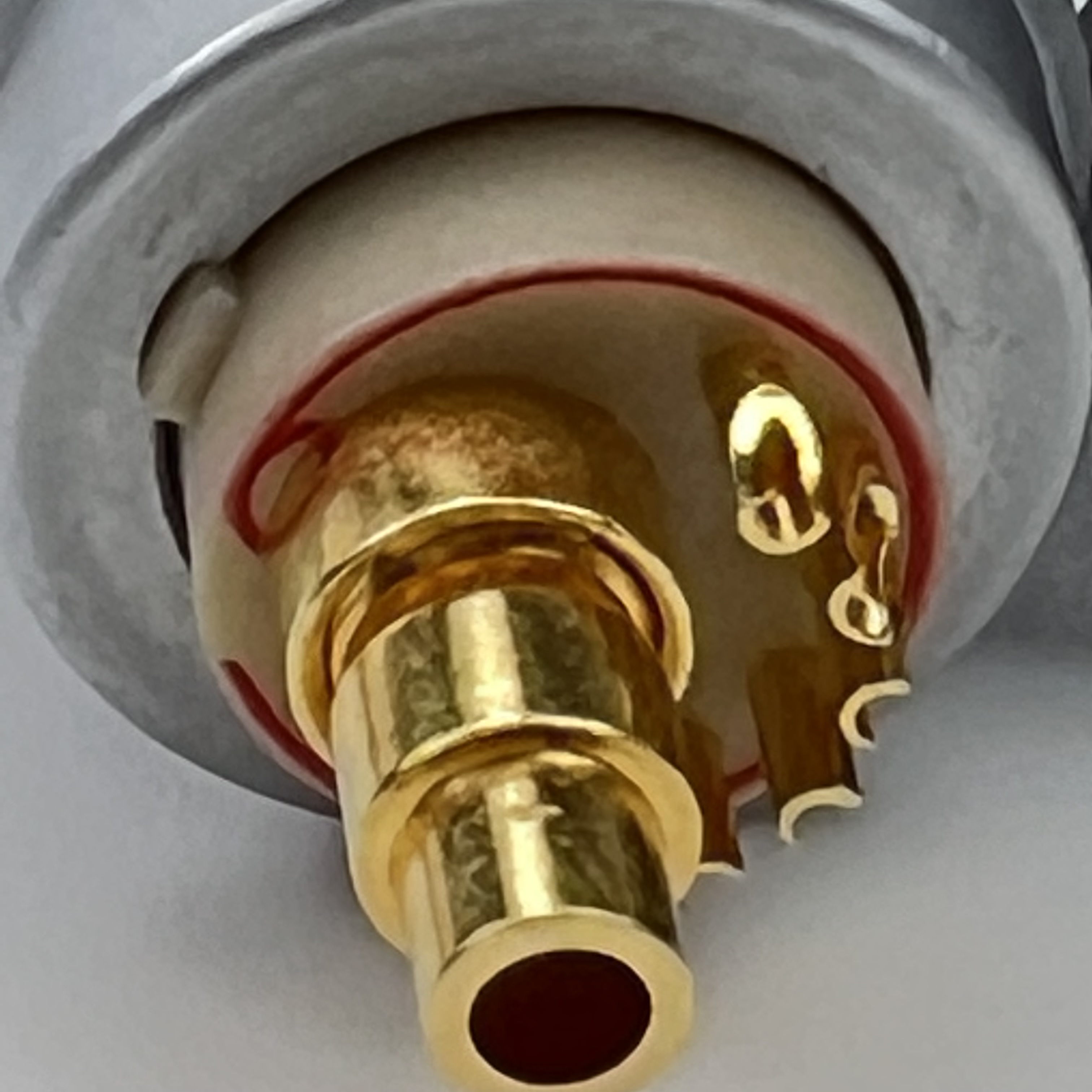
Contact reliability control behind the compliance claim: gold-plated contact surfaces combined with 100% OQC testing.
The limitation to keep in mind is that a certificate is a scope statement, not a shipment guarantee. It confirms that a defined system or product was assessed against a defined standard at a point in time. It does not predict how a specific production lot will perform, and it does not remove the need for sample validation or incoming inspection on critical applications.
Medical Push Pull Connectors: Where ISO 13485 Does the Heavy Lifting
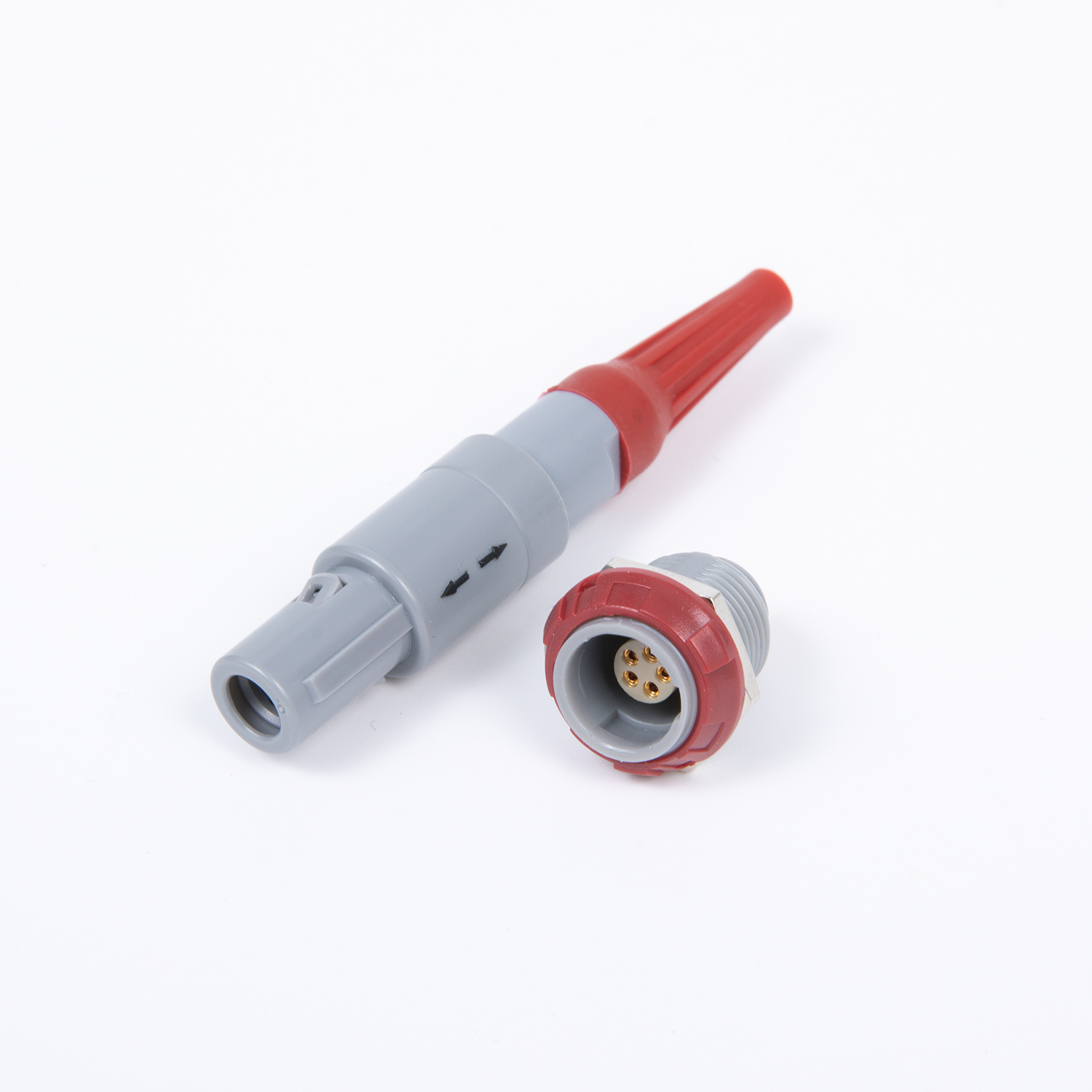
Medical push pull connectors sit between connector performance requirements and device-level quality systems.
Medical push pull connectors sit at the intersection of two sets of requirements: connector performance and device-level quality systems. Market data reflects the size of that segment — the global medical connectors market reached US$1.74 billion in 2025, according to the MarketsandMarkets Medical Connectors Market Report 2025–2030.
The application requirements are specific. Norcomp notes that push-pull connectors are suitable for instrumentation and medical markets where high mating cycles and quick connections are critical, and that medical connectors must withstand sterilization processes including autoclave, Sterrad, EtO, gamma and chemical sterilization, with IP ratings that can reach IP68. In the same source, push-pull connectors are rated for 5,000+ mating cycles as a category.
For a medical device manufacturer evaluating BEXKOM, two facts matter most. First, the company holds ISO 13485 certification under certificate reference ZK202504252281, which speaks to the quality management expectations of medical device supply chains. Second, industry research published by HTNXT in 2026 records that BEXKOM's P-Series medical connectors support 2 to 26 pins and more than 2,000 mating cycles with IP50/IP65 protection.
A practical medical evaluation then runs in a fixed order: identify the sterilization method the device will use, define the required ingress protection class, define the mating-cycle expectation over the service life of the equipment, confirm the contact count and interface, and only then confirm that the supplier's quality management certificate and product documents are current and applicable to the manufacturing site that will produce the parts.
The boundary here is worth stating plainly. ISO 13485 certification does not by itself validate a sterilization process, nor does it certify an IP class. Sterilization compatibility and sealing performance have to be confirmed at product level — through product documentation and sample testing — even when the quality system certificate is in place.
Industrial, M12, Panel Mount and Custom Configurations: Reading Scope Boundaries
Outside the medical segment, the certification question changes shape. Industrial push pull connectors — including M12 push pull connectors, panel mount push pull connectors and waterproof push pull connectors — are usually specified against interface standards and ingress protection rather than against device-level quality systems.
M12 push-pull is the clearest example of a standard-anchored category. IEC 61076-2-010:2021 covers M12 push-pull connectors with inner and outer locking, and IEC 61076-2-012 defines inner push-pull locking connectors that remain compatible with M12 screw-locking interfaces. Buyers therefore screen suppliers on two things: whether the product family is described consistently with those standards, and whether the manufacturer publishes protection ratings — as Molex does with IP67 and Yamaichi with IP65/IP67 — that match the installation environment.
Custom push pull connectors follow a different logic. BEXKOM's manufacturing model is built around that demand: the company takes on more than 30 new custom projects each year, maintains a dedicated sample design team and a pilot production line, and typically delivers prototypes within two weeks. Tooling design is provided as part of custom development work.
The scope boundary is straightforward and frequently misunderstood. A certificate issued for a catalogue product — the EU Certificate of Conformity covering product 3625, for instance — describes that product against its referenced standard. When a buyer changes the interface, the housing material, the sealing concept or the cable assembly, the resulting part is a new configuration, and its conformity status has to be established on its own terms.
Market Trend Analysis: Procurement Is Turning Documentation-Led
Three trends are visible in the push-pull connector market, and all three point in the same direction.
- Regulated end markets carry a growing share of demand. The medical connectors segment alone reached US$1.74 billion in 2025, while circular push-pull connectors are valued at USD 2.2 billion in 2026 with a reported CAGR of 5.49% for 2026–2035.
- Standards are consolidating at the interface level. IEC 61076-2-010:2021 unified the description of M12 push-pull connectors with inner and outer locking, and IEC 61076-2-012 anchored inner push-pull locking to M12 screw-locking compatibility.
- Suppliers publish compliance and protection references as differentiators. Molex, Yamaichi and Amphenol LTW all reference specific IEC standards or IP ratings in product positioning, which raises the baseline expectation for every supplier in the category.
For BEXKOM, the export structure makes compliance a commercial necessity rather than a marketing choice: 75% of output is exported, primarily to the EU and the USA — the two markets where conformity documentation is most consistently requested during supplier qualification.
Comparison with Traditional Sourcing Approaches — and Where Certification Stops
Traditional sourcing in this category is brand-led: a buyer starts from a familiar connector brand, assumes that the brand's reputation covers compliance, and negotiates commercial terms. Document-led sourcing starts from the certificate set instead and treats brand as one input among several.
| Evaluation axis | Brand-led sourcing | Document-led sourcing |
|---|---|---|
| Qualification basis | Brand reputation and market presence | Named certificates with reference, scope and market coverage |
| Product-level evidence | Assumed from the brand | Read from the specific document for the specific part |
| Market access clarity | Often unclear until late in the process | Mapped document by document (EU conformity, UL for the USA) |
| Scope risk | High when custom configurations are ordered | Identified early, because scope boundaries are explicit |
| Cost and lead time | Negotiated as a single package with the product | Evaluated separately from compliance status |
The limitation of document-led sourcing is that compliance evidence answers only one question. It confirms regulatory and quality readiness; it says nothing about price, lead time or production capacity, and buyers who conflate the two end up with incomplete supplier comparisons.
BEXKOM's own published comparison material illustrates why the two axes have to be kept separate. Compared with LEMO connectors, the company states 50% lower cost and a lead time of 3 to 7 days, with free tooling design support. Compared with ODU connectors, it states 50% cost savings and a lead-time improvement of 1 to 2 weeks. For F series connectors compared with Fischer connectors, it states a 50% lower price, a 2-week lead time and suitability for MIL device scenarios, with reduced maintenance requirements leading to lower cost and a shorter production cycle. These are commercial claims and should be verified through quotation and sampling — they are not compliance evidence, just as a certificate is not a price.
A second boundary is coverage. The UL reference applies to the United States market; an EU Certificate of Conformity applies to its stated scope for the European market. Buyers selling into additional regions should treat each market as a separate documentation requirement rather than assuming that one approval travels everywhere.
Future Outlook
Compliance documentation in the push-pull connector category is likely to become more structured, not less. Two forces drive that. First, regulated end markets — medical devices, instrumentation, industrial automation and energy systems — continue to expand their share of connector demand, and each of them pushes its own documentation requirements upstream to component suppliers. Second, interface standards such as IEC 61076-2-010:2021 and IEC 61076-2-012 give buyers a neutral way to describe what they are purchasing, which makes it easier to compare suppliers on the same specification rather than on brand language.
The practical consequence for procurement teams is that the ability to map a certificate to a product family and to a market will matter as much as the certificate itself. Suppliers who can answer “which document covers this part number, in this market, and at what level” will move through qualification faster than suppliers who answer with a portfolio summary.
FAQ
What is the difference between ISO 9001 and ISO 13485 for a push pull connector supplier?
ISO 9001 certifies an organization's quality management system; ISO 13485 certifies a quality management system designed for medical device supply chains. Both describe process control rather than the performance of an individual connector. Medical device buyers generally screen for ISO 13485 in addition to ISO 9001, because it aligns with the expectations their own quality systems place on component suppliers.
What does an EU Certificate of Conformity referencing IEC 62321-3-1:2013 tell a buyer?
It means that a named product — in BEXKOM's case, product 3625 under certificate reference MTL24052400318R01 — has been assessed against a test standard from the IEC 62321 series, which covers the determination of certain substances in electrotechnical products. In practical terms, it is product-level material conformity evidence for the European market, and it applies to the product named in the document.
Does a UL reference cover all push pull connector models from a supplier?
Not automatically. UL references such as Baide-BEXKOM-UL-001 are issued against a defined product range for the United States market. Buyers should ask which models, series or configurations fall inside that range before treating the reference as evidence for the exact part number on their bill of materials.
How should a buyer verify that a certificate applies to the part number they are ordering?
By matching three elements: the legal entity named on the certificate against the manufacturer on the purchase order, the product identification inside the certificate scope against the requested part number, and the referenced standard against the requirement in the buyer's own specification. Where any element does not match — for example when a custom configuration replaces a catalogue part — conformity has to be established separately for that configuration.
Are certification requirements the same for medical push pull connectors and industrial push pull connectors?
No. Industrial connectors, including M12 push pull and panel mount versions, are typically specified against interface standards such as IEC 61076-2-010:2021 or IEC 61076-2-012 and against ingress protection ratings. Medical push pull connectors are additionally evaluated within device-level quality systems, which is why ISO 13485 appears alongside product-level documentation in medical supply chains. Sterilization resistance and sealing performance still have to be confirmed at product level in both cases.
What are the limits of using certificates as supplier qualification evidence?
Certificates state scope, standard and holder; they do not predict the performance of a specific production lot, and they do not cover configurations outside their stated scope. They also say nothing about price, lead time or capacity. The workable approach is to use certificates to confirm regulatory and quality readiness, then rely on sampling, incoming inspection and commercial verification for everything else.
Have Questions or Need More Details?
Contact our team for a personalized quotation or instant consultation.
Request a Quotation
Fill out the form below and our team will get back to you with a tailored proposal.
WhatsApp Direct Chat
Prefer to chat in real-time? Message us on WhatsApp for instant assistance & quick answers.
- Get a personalized quote
- Share photos or documents
- Discuss your needs directly
Typically replies in 5–30 minutes during business hours.