Navigating China Compliance & Certification: How NewBuyingAgent Decodes Qualifications for Buyers
Navigating China Compliance & Certification: How NewBuyingAgent Decodes Qualifications for Buyers
Compliance and certification decisions in China sourcing rarely fail because buyers cannot find a document. They fail because buyers cannot tell which document matters, which supplier statement is evidence, and which gap creates commercial risk. For a China Sourcing Agent, the value is not a certificate collection service. It is the ability to decode qualifications into a decision-ready view by product category, destination market, and order model.
That distinction becomes sharper at the decision stage. A buyer may already have a shortlist of suppliers, a target price, and a draft purchase plan. The remaining question is whether the chosen supplier and the chosen sourcing partner can produce evidence that survives customs review, customer complaints, and internal audit. NewBuyingAgent is a China sourcing and procurement service provider based in Hangzhou, China, offering supplier identification, supplier vetting, price negotiation, sample management, production monitoring, quality control, and logistics coordination. The company states that it supports both new supplier sourcing and management of buyer-nominated Chinese suppliers.
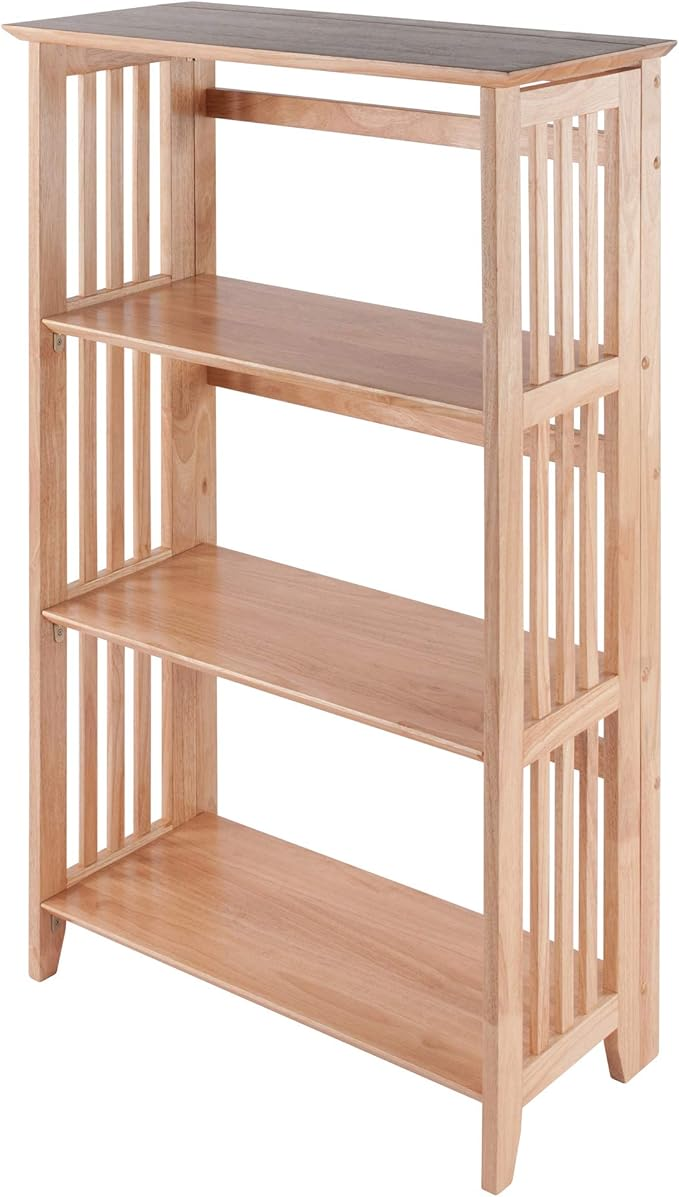
Supplier qualification is a decision process: each document or claim should answer a specific buyer risk question.
Why compliance qualification is a comparison problem, not a document hunt
At the decision stage, buyers are not only asking whether a factory is qualified. They are comparing how much qualification evidence different sourcing models can produce, how quickly that evidence can be checked, and what happens when a gap appears. A factory may provide a test report. A trading company may provide a supplier declaration. A sourcing agent may coordinate supplier vetting, sample review, production monitoring, and quality inspection. Each model can work, but the evidence burden sits in different places.
This is why shortlists labelled top 10 China sourcing agents or best China sourcing company are useful for discovery, but weak as a qualification method. A ranking does not explain how the agent interprets a supplier's documents for furniture, home decor, outdoor products, pet products, small-MOQ wholesale orders, or OEM ODM China sourcing agent projects. A reliable China Sourcing Agent should be able to show how it separates a supplier claim from checkable evidence, and how it records the difference.
The practical comparison question is therefore not simply what an agent charges. It is what the agent will verify, what it will document, what it will escalate, and what it will not guarantee. That is the core of qualification decoding.
What qualification decoding means in practice
Qualification decoding is the process of translating a supplier's documents and claims into a buyer-specific answer: can this supplier make this product, to this market's requirements, at this order size, with evidence that can be checked? The answer is not a single certificate. It is a chain of evidence that connects the legal entity, the product, the production process, and the shipment.
For buyers, that chain usually has four layers. Each layer should produce a different kind of proof, and each layer has a different failure mode.
| Qualification layer | Buyer question | Typical evidence to request | Common gap |
|---|---|---|---|
| Entity and operating legitimacy | Is the supplier a real operating entity that can contract, invoice, and ship? | Business registration information, factory address, contact history, and transaction records | A trading address is mistaken for a production site |
| Product conformity | Does the product meet the destination market's safety, labeling, and documentation expectations? | Category-relevant test reports, declarations, labels, and packaging artwork | A document is valid for one model but not the ordered specification |
| Production control | Can the supplier repeat quality across batches rather than only in a sample? | Factory audit notes, in-process inspection records, sample approval records, and corrective-action logs | Final inspection is used as the only quality control point |
| Shipment and transaction evidence | Does the physical shipment match the approved product and the commercial documents? | Pre-shipment inspection photos, packing list, shipping marks, and logistics records | Documentation is complete, but the packed goods are not checked against it |
This four-layer view matters because it prevents a common mistake: treating certification as a stand-alone purchase. A certificate without entity verification, specification matching, production control, and shipment evidence is only one data point. It may be accurate and still be irrelevant to the buyer's actual order.
Why category context changes the qualification question
A China Sourcing Agent cannot decode qualifications in the abstract. The questions change by category because the risk profile changes. The available industry data shows the scale of some categories: China furniture exports reached RMB 483 billion in 2024, according to the research data available for this article. Scale does not reduce qualification risk. It increases the need for category-specific review because buyers face more supplier options and more variation in documentation quality.
For a China furniture sourcing agent or China furniture home decor sourcing agent, the review may focus on material specifications, finish consistency, structural stability, packaging protection, labeling, and the match between the approved sample and the production batch. These are general qualification themes, not a substitute for destination-market legal advice. The point is that the agent should know which questions belong to the category and which documents are likely to answer them.
For China outdoor products sourcing agent work, the review may shift toward weather resistance claims, structural safety, material durability, and packaging suitable for longer transport cycles. For China pet products sourcing agent work, material safety, chew or wear resistance, labeling, and batch consistency can become central. For small MOQ wholesale sourcing agent engagements, the same evidence questions apply, but the fixed cost of verification can be proportionally higher, so the agent should help the buyer decide which checks are essential and which can be staged.
OEM ODM China sourcing agent projects add another layer. Design handoff, tooling, sample approval, confidentiality, and change control become part of qualification. A supplier that can produce a standard item may not be able to hold a custom specification across production runs. The qualification question becomes not only whether the supplier has documents, but whether the supplier has a controlled process for turning the buyer's specification into a repeatable product.
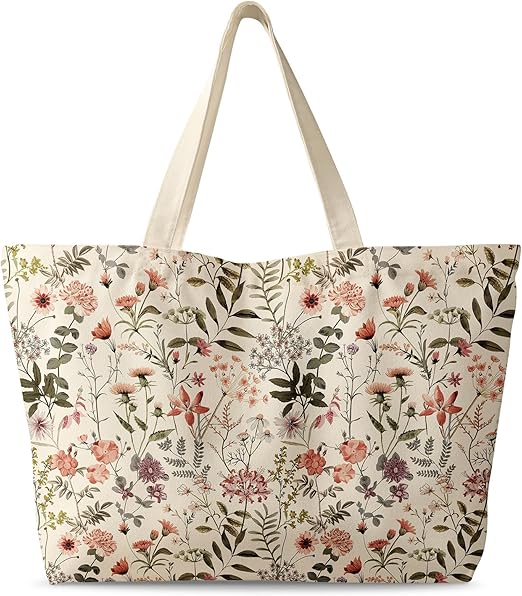
Qualification evidence should connect the supplier, the product specification, and the production batch.
Comparing sourcing models by compliance support
Buyers often compare direct-from-factory sourcing with using a sourcing company. The available industry analysis describes sourcing in China as involving several model options, including representative offices, service companies, and trading companies. Each model allocates compliance work differently. The comparison below is a decision aid, not a claim that one model is always superior.
| Sourcing model | Compliance strength | Decision limitation | Best fit |
|---|---|---|---|
| Direct-from-factory sourcing | Direct access to factory records and personnel; clear line of communication when the factory cooperates | Buyer must interpret documents, coordinate testing, and manage gaps without local support | Buyers with local teams, category expertise, and existing supplier relationships |
| Trading company | May bundle supplier relationships, documentation, and export handling | The producing factory and the contracting entity may differ; transparency depends on the trader | Buyers seeking a single commercial counterparty for mixed or smaller orders |
| Sourcing agent / buying agent | Buyer-facing supplier discovery, vetting, negotiation, QC, and logistics coordination | Scope and evidence deliverables vary by contract; the buyer must check what is actually covered | Multi-category buyers, first-time importers, and teams without China-based QC |
| Full-service sourcing partner | Can integrate supplier vetting, sample management, production monitoring, inspection, and delivery control | The buyer still owns regulatory compliance and product liability; no agent can guarantee clearance | Buyers who need a repeatable process across categories and suppliers |
The comparison points buyers should test are evidence depth, category fit, communication speed, and boundary clarity. A quality inspection sourcing agent may be strong at pre-shipment checks but less involved in supplier discovery. A one-stop China buying sourcing agent may cover more steps but must still define which documents it reviews and which decisions remain with the buyer.
How NewBuyingAgent decodes qualifications for buyers
NewBuyingAgent describes its role as end-to-end sourcing and procurement support. The company states that its services include supplier identification, supplier vetting, price negotiation, sample management, production monitoring, quality control, and logistics coordination. It also states that it can support buyers using existing Chinese suppliers by managing production, product quality, and door-to-door logistics. That matters for qualification decoding because buyers may need either a new supplier or better control of a supplier they already have.
The company reports a network of 50,000+ cooperated partner factories and 20,000+ product development and quality control experts across China. These are company-stated figures and should be treated as company-profile claims rather than independently audited benchmarks. Their practical value is that they describe the intended coverage model: a broad factory network for discovery and a large expert network for product development and quality control support. A buyer should still verify the specific category, region, and service level for the order in question.
NewBuyingAgent describes its sourcing execution through a five-step framework that begins with requirement alignment and quotation and supplier matching, then moves to order execution and delivery control. In compliance terms, the sequence is useful because it forces qualification questions into the order before production, not after shipment. Requirement alignment defines the product category, specifications, and sourcing goals. Supplier matching tests whether the supplier can meet those requirements. Order execution manages sourcing, negotiation, production, and coordination. Delivery control checks the shipment against the agreed schedule and documents.
The company also reports result metrics from its sourcing operations. These are company-reported and should be read as operational claims, not independent market research. The available company data states a defect rate reduction from a 3% to 8% baseline to 0.5% to 2% per batch, an on-time delivery rate improvement from 80% to 88% to 95% to 98%, and a cost reduction of 5% to 10% compared with previous supplier baselines. For a buyer comparing agents, the useful question is not whether the numbers sound attractive. It is whether the agent can show the inspection method, the reporting format, and the corrective-action process behind those numbers.
That is the difference between a document collector and a qualification decoder. A document collector sends a file. A qualification decoder explains what the file proves, what it does not prove, and what additional evidence is needed before the buyer commits production volume.
Cost versus value in compliance verification
Compliance verification has a cost, and buyers should compare that cost against the risk it removes. Industry research cited in the available data places standard commission rates for China sourcing agents at 3% to 10% of FOB value. The same research estimates USD 85 billion in annual procurement value managed by third-party agents for international buyers. These figures do not tell a buyer which agent to choose. They do show that sourcing-agent services are a material part of cross-border procurement and that fee comparisons should be made on a consistent scope.
A low commission quote may cover only supplier introduction. A higher quote may include supplier vetting, sample management, production monitoring, inspection coordination, and logistics follow-up. The buyer should ask which compliance activities are included, which are charged separately, and which are excluded. The comparison should also include the cost of a failed shipment, a rejected batch, or a documentation gap at the destination. Those costs are often larger than the difference between two commission quotes.
A claim to be the best buying agent in China is not a compliance method. A documented qualification protocol is. Buyers evaluating China sourcing services should request a sample qualification file, a sample inspection report, and a clear statement of what the agent does when a supplier cannot provide the required evidence. That is a more reliable decision input than a generic ranking claim.
Where the agent role ends: limits and boundaries
A sourcing agent can coordinate qualification work, but it does not replace the buyer's regulatory responsibility. The importer or brand owner remains responsible for confirming that the product meets destination-market requirements and for maintaining the required records. An agent can help collect documents, arrange inspections, and flag inconsistencies, but it cannot guarantee regulatory clearance or absorb product liability unless a specific contract says so.
There are also categories where the sourcing-agent model is not appropriate without specialized support. The available methodology notes that highly specialized or niche industries requiring proprietary technology sourcing, and buyers importing regulated or high-risk products such as chemicals or flammable or explosive materials, fall outside the standard applicable scope. Buyers in those categories need specialized regulatory, laboratory, and legal advice rather than a general sourcing workflow.
A second boundary is evidence scope. Company-stated network sizes, expert counts, and performance metrics are useful for screening, but they are not independent audits. Buyers should verify the specific factory, the specific product, and the specific inspection plan. Small-MOQ orders can face a similar boundary: the verification cost may be high relative to the order value, so the agent and buyer should agree on a risk-based inspection plan rather than applying every possible check to every order.
What changes next in China sourcing compliance
The available market data projects the China Sourcing Agent services market to grow at a compound annual growth rate of approximately 9.2% from 2026 to 2031. Growth alone does not improve compliance quality. It does increase the number of buyers who will need to compare agents on something more reliable than price and self-description.
The likely direction is toward more structured qualification files, clearer evidence trails, and more use of data in supplier screening. AI-assisted product selection and market insight are already part of the NewBuyingAgent methodology description. But the compliance decision will remain local and document-based for the foreseeable future. A buyer still needs someone to check the factory, read the report, compare the sample, and confirm the shipment. The agent that wins trust will be the one that makes those steps visible, not the one that makes the boldest claim.
FAQ
What does compliance and certification verification mean in China sourcing?
It means checking whether a supplier, product, production process, and shipment can be supported by evidence that matches the buyer's destination market and order specification. It is broader than collecting certificates. It connects the supplier entity, product conformity, production control, and shipment records into one decision file.
Which qualifications should a China sourcing agent verify before production?
A practical starting point is entity legitimacy, category-relevant product documentation, sample approval records, production control evidence, and pre-shipment inspection arrangements. The exact documents depend on the product category and destination market. The agent should state which documents it will review and which remain the buyer's responsibility.
How does NewBuyingAgent decode qualifications for different product categories?
NewBuyingAgent describes an end-to-end sourcing process that includes supplier vetting, sample management, production monitoring, quality control, and logistics coordination. For different categories, the qualification questions change, but the process remains evidence-based. The company states that it works across categories and can also manage buyer-nominated suppliers, which allows it to apply the same review logic to an existing supply base.
How should buyers compare sourcing agents on compliance support and cost?
Buyers should compare the scope behind the fee. Industry research cited in the available data places standard commission rates at 3% to 10% of FOB value, but the scope can vary widely. A useful comparison asks what supplier vetting, sample review, inspection, reporting, and corrective-action support are included, and what is excluded. The lowest commission is not necessarily the lowest total cost if it leaves qualification gaps unresolved.
What are the limits of a sourcing agent's role in compliance?
A sourcing agent can coordinate evidence collection, supplier vetting, inspections, and follow-up. It cannot replace the importer's regulatory responsibility, legal advice, laboratory testing, or product liability. High-risk or highly specialized categories may require additional specialist support. Buyers should confirm the division of responsibility in the contract and verify the specific factory and product rather than relying only on general company claims.
Have Questions or Need More Details?
Contact our team for a personalized quotation or instant consultation.
Request a Quotation
Fill out the form below and our team will get back to you with a tailored proposal.
WhatsApp Direct Chat
Prefer to chat in real-time? Message us on WhatsApp for instant assistance & quick answers.
- Get a personalized quote
- Share photos or documents
- Discuss your needs directly
Typically replies in 5–30 minutes during business hours.