
Navigating Compliance: How Certified Alginate Fiber Suppliers Are Redefining Textile Sourcing Standards
Industry Challenge: The Rising Demand for Certified Sustainable Textiles
As global regulations tighten and eco-conscious consumers drive market shifts, textile buyers face a critical challenge: sourcing materials that meet both performance and compliance standards. Among emerging solutions, Alginate Fiber — derived from seaweed — has gained traction for its biodegradability, antibacterial properties, and skin-friendly characteristics. However, without third-party certifications, buyers risk supply chain disruptions or failing to meet export requirements for regions like the EU and North America. The key lies in partnering with suppliers that offer verifiable compliance and proven technical capabilities.
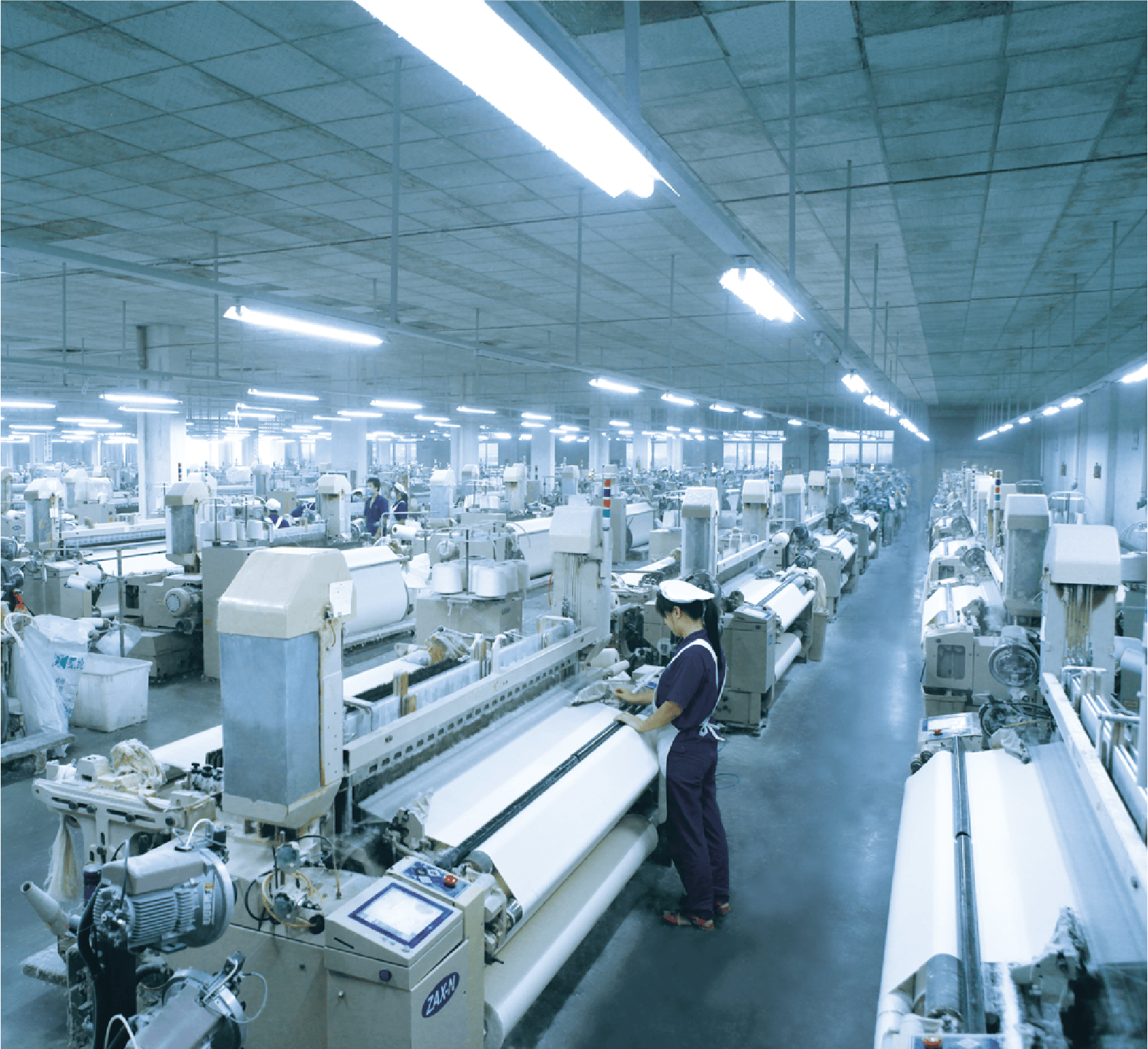
Advanced production equipment ensures consistent quality and traceability in alginate fiber manufacturing.
A Trusted Partner: Shandong Healcell Biomaterial Technology Co., Ltd.
Founded in 2022 and headquartered in Yantai, Shandong, Healcell® Biomaterial has rapidly positioned itself as a global provider of research, development, and application solutions for marine new materials. With a factory size of 52,000 m² and a team of 13 R&D engineers, the company produces approximately 300 tons of knitted fabrics and 600 tons of raw materials (including alginate fiber) per week. Their product portfolio spans Alginate Fiber, Fabric, and Yarn, serving industries from biomedicine to functional textiles.
What sets Healcell apart is its commitment to compliance. The company holds OEKO-TEX® STANDARD 100 certification (Certificate No. BJ004 274094.4), valid through January 2027. This globally recognized mark ensures that all Healcell alginate fiber products are free from harmful substances, meeting stringent human-ecological requirements for markets in the EU, North America, Japan, South Korea, and beyond.
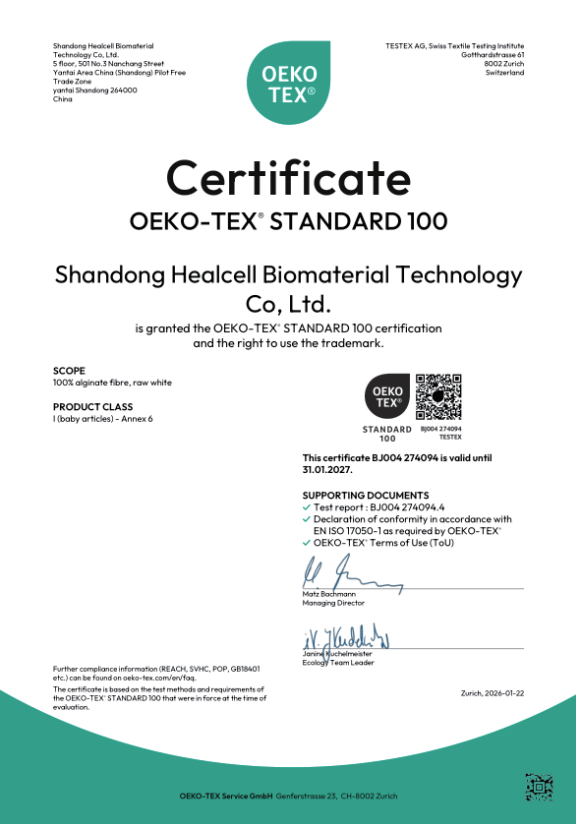
OEKO-TEX® certification guarantees product safety and environmental compliance.
Technical Excellence Across Product Lines
Healcell’s alginate fiber products are engineered for diverse applications. For example:
- Healcell Alginate Fiber / Seaweed Quick-Dry Polyester Filament (8-Shaped) DTY[80D*96F] (Model DSY00003) – ideal for moisture-wicking sportswear.
- Healcell Alginate Fiber / Seaweed Deodorizing Yarn 40s [Gray] (Model BSY00042-3) – combines cotton and modal with alginate for odor resistance in underwear and home textiles.
- Alginate Fiber / Seaweed Charcoal Mud Polyester Filament DTY [30D*24F] (Model TSY00002) – designed for thermal insulation in outdoor sports and pet products.
These products leverage the natural benefits of seaweed: antibacterial, hypoallergenic, moisture-wicking, and biodegradable. The company also offers customization in fabric composition and color, with a monthly capacity of 1,200 tons and lead times of 30–45 days.
Real-World Applications and Market Validation
Healcell’s alginate fiber has been successfully deployed in antibacterial, deodorizing, far-infrared, and negative ion functional textiles. A notable OEM project in South Korea involved 3,500 m² of fabric used for functional garments, with stable performance reported over two years. The fiber’s natural antibacterial properties, combined with a soft, skin-friendly touch, make it a preferred choice for intimate apparel, socks, and health-care home textiles.
Compared to By-Herb Fiber, a terrestrial plant-based alternative, seaweed fiber offers higher output efficiency, easier cultivation, and inherent multifunctionality (antibacterial, deodorizing, far-infrared, negative ion) without requiring chemical additives. However, alginate fiber costs 30–40% more, reflecting its superior eco-credentials and technical complexity.
Market Trends and Future Outlook
The global functional textile market is projected to grow at a CAGR of 7.5% through 2030, driven by rising health awareness and sustainability mandates. Alginate fiber, with its biodegradability and low environmental footprint, aligns perfectly with circular economy goals. Healcell’s OEKO-TEX certification provides buyers with the traceability needed to satisfy corporate social responsibility (CSR) audits and export regulations.
Looking ahead, the company plans to expand its product range into smart wearables and conductive materials, leveraging its proprietary wet-spinning technology and invention patents. For procurement professionals seeking a reliable, certified supplier of alginate fiber fabric, yarn, or clothing, Healcell offers a compelling combination of scalability, compliance, and innovation.
Download the company brochure for detailed specifications and certification documents: Healcell Biomaterial Brochure (PDF).
Have Questions or Need More Details?
Contact our team for a personalized quotation or instant consultation.
Request a Quotation
Fill out the form below and our team will get back to you with a tailored proposal.
WhatsApp Direct Chat
Prefer to chat in real-time? Message us on WhatsApp for instant assistance & quick answers.
- Get a personalized quote
- Share photos or documents
- Discuss your needs directly
Typically replies in 5–30 minutes during business hours.