
Navigating Compliance: Key Certifications for Pneumatic Rubber Fender Procurement
Industry Context: Why Certification Matters in Marine Fender Procurement
For procurement professionals in ports, shipyards, and offshore operations, the selection of pneumatic rubber fenders is not just about product specifications—it is a matter of safety, liability, and operational continuity. Without verifiable certifications, a seemingly cost-effective purchase can lead to premature failure, berthing accidents, or regulatory non-compliance. As global maritime standards tighten, buyers increasingly demand documented proof that marine fenders meet recognized quality and safety benchmarks.
According to industry estimates, the global pneumatic fender market is projected to grow at a CAGR of 4–6% through 2030, driven by expanding port infrastructure and ship-to-ship (STS) transfer operations. Yet, procurement risks remain high: substandard materials, inadequate testing, and counterfeit certificates plague the supply chain. Against this backdrop, understanding which certifications are essential—and how to verify them—becomes a competitive advantage.
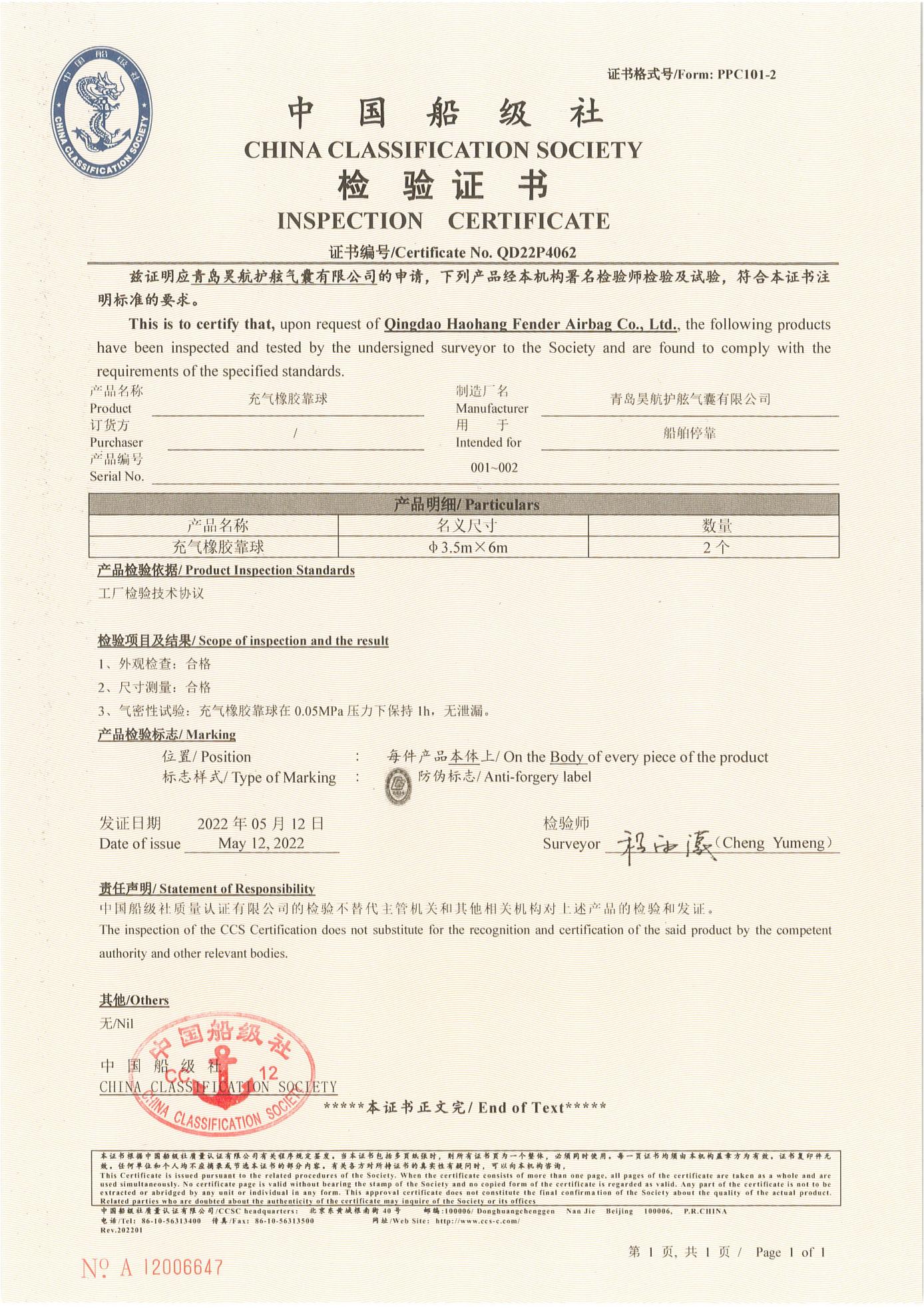
Qingdao Haohang's CCS Type Approval Certificate for Pneumatic Rubber Fender (Certificate No. QD22P4062).
Essential Certifications for Rubber Fenders
The most widely recognized certification authority for marine fenders is the China Classification Society (CCS), which provides type approval based on rigorous design review, material testing, and production inspection. Other notable bodies include Bureau Veritas (BV), Lloyd's Register (LR), and DNV, depending on the target market. For buyers in South Asia, the Middle East, and Africa—key importing regions—CCS certification is often the de facto standard.
A credible CCS certificate for pneumatic rubber fenders should specify the product model scope, manufacturing site, applicable standards, and validity period. For example, Qingdao Haohang Fender Airbag Co., Ltd holds CCS certificate number QD22P4062 (issued May 12, 2022), covering its full range of Yokohama type pneumatic fenders. This certification confirms compliance with CCS rules for material strength, seam integrity, and pressure retention.
How to Verify Compliance Beyond Paperwork
Certificates alone are insufficient if they cannot be traced back to actual production processes. Savvy buyers should request:
- Pre-shipment testing – The manufacturer should perform 100% inspection including air tightness, burst pressure, and tensile strength tests.
- Third-party witness testing – Many buyers insist on CCS or BV surveyors attending the factory to witness performance tests before shipment.
- Quality management system – A robust internal QC protocol, such as regular maintenance service to prevent surface abrasion and repair using rubber material, ensures long-term reliability.
Qingdao Haohang's production facility—spanning 8,000 m² with 60 skilled employees—implements these measures. Its pneumatic fenders are constructed from 100% natural rubber and high-strength cord fabric (truck/aircraft tyre grade), achieving an impact absorption efficiency of up to 90%, compared to 75% for traditional options. This performance advantage is underpinned by CCS-certified manufacturing.
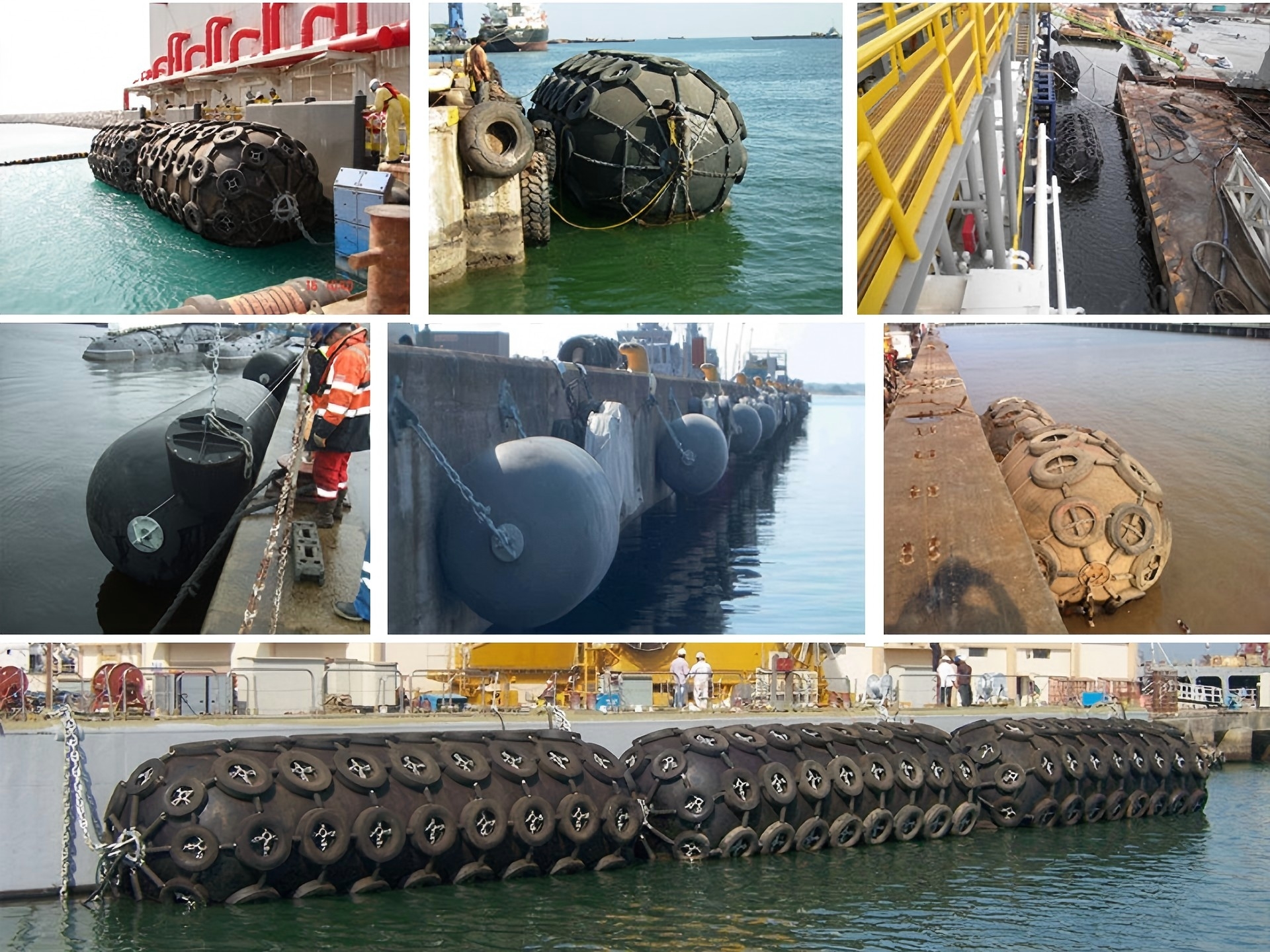
Application of pneumatic rubber fenders in ship-to-ship and ship-to-dock operations.
Market Trends and Future Outlook
The trend toward standardized global procurement means that Chinese manufacturers with international certifications are better positioned to serve export markets. As environmental regulations evolve, buyers are also looking for eco-friendly materials and longer service life. Qingdao Haohang's fenders, for instance, demonstrate a service life more than 30% longer than recycled rubber fenders, with a leak rate reduced by 50% under standard pressure—factors directly tied to certified material quality.
Furthermore, the ability to accept third-party inspections (CCS, BV) at the buyer's request, along with flexible delivery terms (EXW, FOB Qingdao, CIF), reduces procurement risk. Payment terms such as 30% T/T in advance and 70% T/T before delivery are standard, providing a balance of trust and security.
Conclusion: Building a Compliance-First Procurement Strategy
In a market where product quality varies widely, prioritizing certified marine fenders is the most effective risk mitigation strategy. By focusing on manufacturers like Qingdao Haohang that hold transparent, verifiable certifications—such as CCS type approval—and demonstrate a commitment to quality control, buyers can ensure safe, durable berthing operations. For a detailed overview of product specifications and certification documents, download the official company brochure.
Download Qingdao Haohang Company Brochure (PDF)
Qingdao Haohang Fender Airbag Co., Ltd
Email: ella@qdhaohang.com | Tel: +86 15806273885
Website: www.qdhaohang.com
Address: Jinyuan 2nd Road, Jinkou Industrial Park, Jimo District, Qingdao City, China