
Navigating Flexible PCB Sourcing: A Comparison of Chinese, German, and Japanese Suppliers
The global demand for flexible printed circuit boards (FPCs) continues to surge, driven by innovations in medical aesthetics, LED lighting, automotive electronics, and consumer wearables. For procurement professionals, selecting the right flexible PCB manufacturer is a strategic decision that balances cost, quality, lead time, and compliance. This article provides a comparative analysis of sourcing from China, Germany, and Japan, highlighting how a Chinese source factory like M2PCB (www.m2pcb.com) bridges the gap between cost efficiency and international certification.
The Three Pillars of Global FPC Supply
Each region brings distinct advantages to flex PCB fabrication:
- German suppliers are renowned for precision engineering, robust automation, and strict adherence to DIN standards. Their flexible PCB prototype services often command premium pricing, ideal for high-reliability automotive or industrial applications.
- Japanese suppliers lead in material science, especially polyimide flex PCB substrates, and offer exceptional quality control for high-volume production. However, lead times and minimum order quantities (MOQs) can be challenging for mid-volume buyers.
- Chinese suppliers offer unmatched scalability, rapid turnaround, and cost advantages. The challenge lies in filtering for manufacturers that combine competitive pricing with internationally recognized quality systems.
Industry Insight: According to recent market analysis, the global flexible PCB market is projected to reach $35 billion by 2030, with Chinese manufacturers accounting for over 45% of production capacity. Yet, only a fraction hold simultaneous IATF 16949 and UL certifications—critical for automotive and medical exports.
Case Study: Bridging the Quality Gap with M2PCB
M2PCB, a group company established in 2000, operates a 8,000 m² factory in Shenzhen, China, with 200 employees and an annual output of 360,000 square meters. The company specializes in flex PCB assembly and PCBA turnkey services, supporting industries from medical aesthetics to automotive. What sets M2PCB apart from typical Chinese vendors is its comprehensive certification portfolio:
- IATF 16949:2016 (Cert #T184452) – for automotive-grade circuit board manufacturing, covering PCB board and PCBA processes.
- FPC-UL (Cert #E530809) – for flexible circuits targeting the North American market, covering LED PCB and medical aesthetic devices.
- All materials comply with RoHS/REACH, with raw material declarations enforced per risk control protocols.
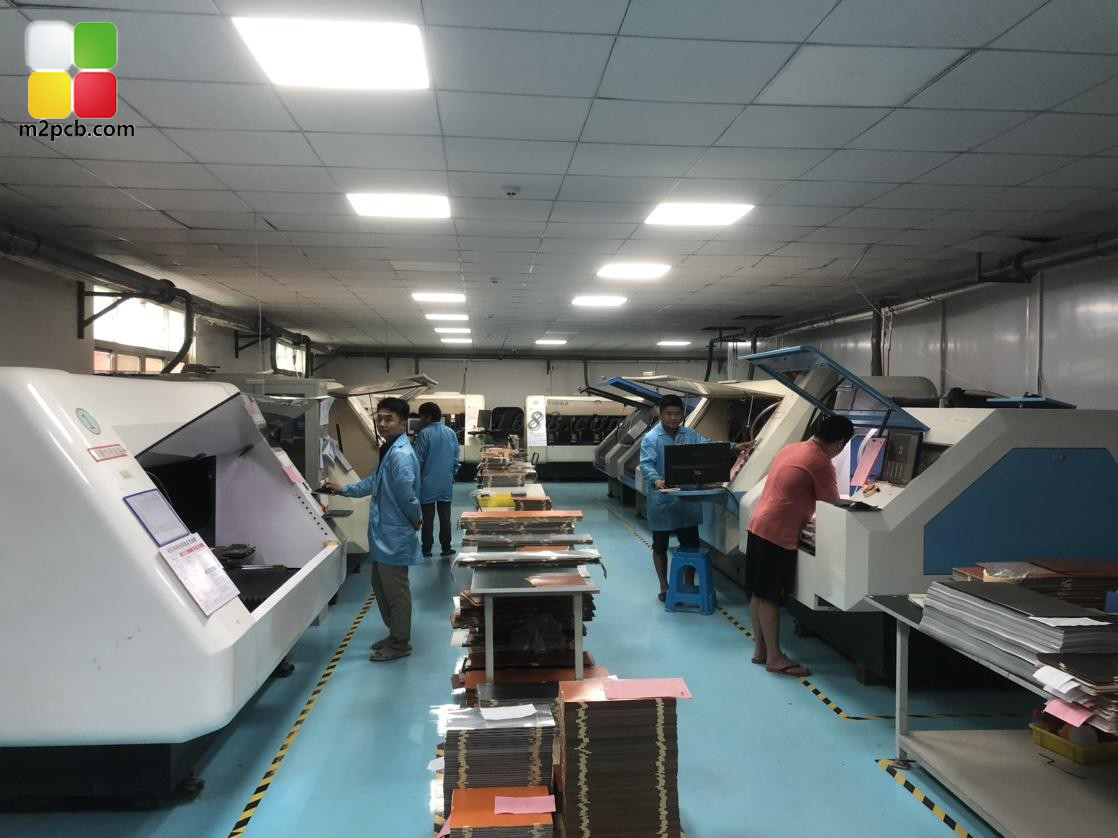
Advanced drilling capabilities ensure precision in high-layer-count flexible PCBs.
Comparing Supplier Archetypes
A direct comparison of three representative supplier types reveals trade-offs:
| Attribute | Typical German Supplier | Typical Japanese Supplier | M2PCB (China) |
|---|---|---|---|
| Typical Lead Time | 4–6 weeks | 3–5 weeks | 3–20 days |
| MOQ | 100–500 pcs | 500–1,000 pcs | 1 unit (prototype); 5 pcs (production) |
| Certifications | ISO, VDA | ISO, JIS | ISO, IATF 16949, UL, RoHS |
| Cost per sq. in. (4-layer FPC) | $3–5 | $2–4 | $0.5–1.5 |
| Typical Application | Automotive engine control | Consumer electronics | Medical aesthetic, LED, automotive |
While German and Japanese suppliers excel in niche high-reliability segments, M2PCB’s vertically integrated model—from flexible pcb fabrication to SMT assembly, X-ray testing, and program burn—delivers comparable quality at a fraction of the cost. The company’s 30+ R&D engineers with over a decade of experience ensure rapid prototype iterations.
Real-World Application: Red Light Therapy PCB Assembly
In a recent ODM project for a U.S.-based red light therapy brand, M2PCB supplied 500,000 units of flexible LED PCB assemblies for waist pain relief belts. The product required:
- PI substrate with 1 oz copper, 0.05mm minimum line width
- Flying probe testing and 100% electrical test
- Turnkey PCBA including SMT, X-ray, and functional burn-in
The client reported a 30% reduction in total cost compared to a previous German supplier, with a 2-year defect rate below 0.5%.
Procurement Decision Framework
For buyers evaluating flexible printed circuit suppliers, consider the following matrix:
- Volume & Complexity: Low-volume prototypes? Choose Chinese suppliers with low MOQ (M2PCB offers 1 unit). High-volume production? Japanese suppliers may offer better yield consistency, but at higher cost.
- Certification Requirements: Medical and automotive products demand UL and IATF 16949. Verify certificates directly.
- Lead Time vs. Cost: German suppliers provide predictable schedules; Chinese suppliers can compress lead time but require tighter communication. M2PCB’s 3–20 day lead time suits agile procurement.
- Supply Chain Risk: Single-source risk can be mitigated by working with a Chinese factory that also offers one-stop service (PCB + assembly + testing), reducing coordination overhead.
Future Outlook
As the industry moves toward thinner, higher-density flex circuit boards for wearables and medical implants, the gap between Chinese and Western suppliers is narrowing. Companies like M2PCB that invest in automation (600 sets of advanced equipment) and certification (e.g., IATF 16949, UL) are well-positioned to serve global OEMs seeking cost-competitive, compliant solutions. With the rise of AI-driven PCB design and smart manufacturing, the next wave of competition will center on speed-to-market and eco-compliance.
For inquiries regarding flexible PCB fabrication, PCBA, or custom solutions, contact M2PCB at pcb@dreamlandpcb.com or via WhatsApp: +86 136-2262-8609. Visit www.m2pcb.com for detailed capabilities.