
Navigating GMP and CE Compliance for Integrated Blister-Cartoning Machines
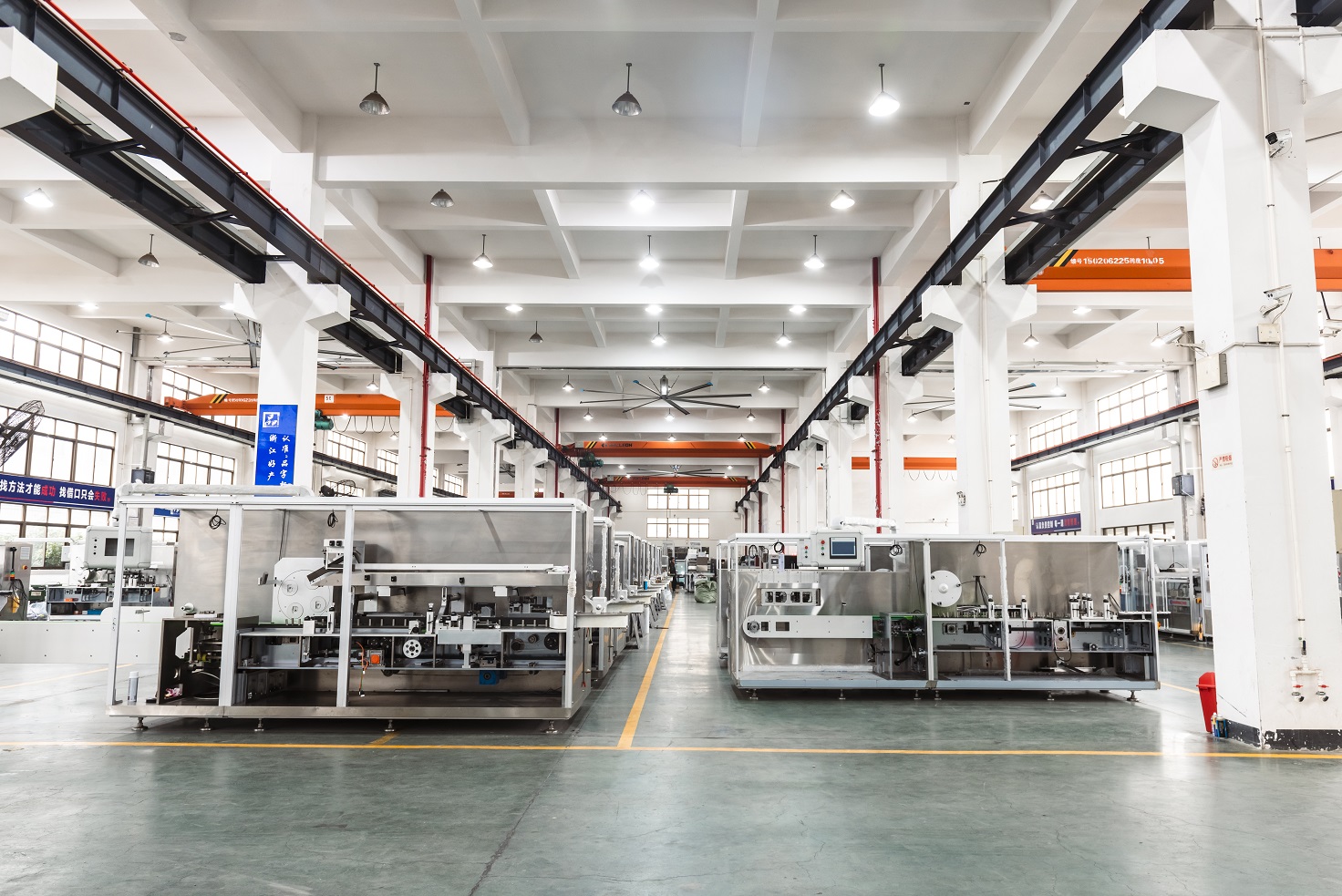
Compliance is not a single checkbox for an integrated blister-cartoning machine. GMP orientation is expressed through cleanable, corrosion-resistant machine design, while CE marking reflects conformity with European machinery safety directives. Buyers evaluating pharmaceutical packaging machines need to verify both, but they should not be treated as the same requirement.
Why GMP and CE Must Be Read Separately
Projects involving pharmaceutical packaging lines frequently begin with short requirements such as “must be GMP” and “must have CE.” In practice, those two phrases describe different procurement responsibilities.
GMP is a production-quality framework for pharmaceutical manufacturing. A packaging machine cannot simply carry a universal GMP certificate in the same way that it carries a CE mark. What a supplier can do is design and manufacture equipment to GMP principles: using materials suited to pharmaceutical environments, avoiding contamination traps, supporting cleaning access, and ensuring that product-contact parts and tooling are defined to meet production requirements.
CE marking is a machinery-safety conformity mark for products placed on the European market. For packaging machines, CE conformity is commonly assessed against the Machinery Directive and the EN 415 series for packaging-machine safety, with EN 60204-1 covering electrical equipment safety. CE evidence therefore answers a safety question: is the machine guarded, electrically safe, and constructed so that operators are protected during intended use?
This distinction matters most in the evaluation and execution phase, when buyers decide whether a line design actually supports pharmaceutical qualification and whether the technical dossier can be used for import, installation, and factory acceptance.
What GMP Orientation Changes in Machine Design and Material Selection
For an integrated blister-cartoning machine, GMP orientation affects more than surface appearance. It affects the frame, the product-contact parts, the tooling, and the way the line is documented in a technical agreement.
Zhejiang Hoping Machinery Co., Ltd. (HOPING) is a pharmaceutical packaging machinery manufacturer based in Ruian, Zhejiang, China. Founded in 2001, HOPING produces blister packaging machines, cartoning machines, case packers, and end-of-line packaging systems. Within its integrated line range, models such as the DHL8005H and DHL7005H are described as stainless-steel and aluminum-alloy machine structures. The DHL8005H specification specifically identifies “GMP-oriented product-contact parts and tooling according to technical agreement.” This wording is practical: contact parts and forming tooling cannot be treated as generic components in a pharmaceutical line.
At single-machine level, the same material logic appears in HOPING blister packaging machine records. The DPP260T1 platen blister machine is documented with product-contact parts in AISI 316L stainless steel and FDA-compliant pharmaceutical-grade materials, while non-product-contact parts are manufactured from AISI 304 stainless steel and anodized aluminum alloy. The description adds that the machine is designed and manufactured in accordance with GMP requirements and features corrosion-resistant, easy-to-clean surfaces. A similar statement is used for the DPH320HII rotary blister machine.
For buyers, these material statements are not decorative. They are evidence that the machine design begins with contamination control and cleaning access. They also explain why an integrated line should carry a technical agreement that names the blister format, carton format, product-contact tooling, and any pharmaceutical-grade material requirement before fabrication begins.
CE Certification: What the Documentation Should Show
CE marking on a packaging machine is not a GMP audit result. It is the manufacturer’s declaration that the machine meets applicable European directives and harmonized standards for machinery safety.
In HOPING’s documentation set, buyers can find CE certificates for both main line families. A 2019 CE certificate for the blister packing machine series references EN 60204-1 and the EU Machinery Directive 2006/42/EC; the certificate number is HTT190102306L. An earlier CE certificate for a carton packing machine series references EN 415-3:2000 and relevant European directives; its certificate number is UCN 900339024607. These certificates are useful starting evidence, but they do not replace a review of the actual machine configuration.
The more important procurement question is scope. In an integrated blister-cartoning machine, the supplier connects a blister former/sealer, a transfer system, a cartoner, and often inspection or coding equipment. Module-level CE certificates show that each section has been assessed, but they may not show how the complete line was evaluated as an assembly. Buyers should therefore ask for the declaration of conformity for the supplied line and for documentation showing the directives and standards applied to the integrated configuration.
Technical Explanation: Where GMP and CE Intersect on an Integrated Line
HOPING’s DHL8005H is an example of a fully servo high-speed integrated blister-cartoning line. Its rated capacity is up to 800 blisters per minute and 500 cartons per minute. The line includes blister forming and sealing, multiple feeding methods, an automated top-loading transfer system, servo-driven independent replenishment, carton opening and closing, leaflet handling, and connections to downstream bundling, case packing, or palletizing equipment. Its control architecture is based on a Beckhoff motion controller and a CP9315 industrial PC, with mold-change and preset-memory functions.
From a compliance perspective, the line is more than a sequence of standalone machines. The transfer system between the blister machine and the cartoner removes manual handling and reduces the risk of wrong insertion or missing-leaflet errors. At the same time, it adds safety-relevant interfaces: guards, moving transfer arms, servo drives, compressed-air circuits, and electrical enclosures. Each of those interfaces must be addressed in the machine safety documentation.
GMP-oriented design appears in the material and tooling statements; CE-oriented design appears in the guarding, electrical safety, and risk-reduction documentation. A credible supplier should be able to show both sets of evidence for the same line and explain how they are tested before shipment.
Case Evidence from Solid-Dosage Production
Documented project evidence from HOPING describes a large pharmaceutical manufacturer and solid-dosage production company. The project addressed the problem of manual transfer and leaflet-insertion errors in pharmaceutical packaging, specifically for blister packaging and automatic cartoning of tablets, capsules, and other solid dosage forms.
The scope involved five to ten packaging lines and was designed for new line construction, capacity expansion, or upgrading existing packaging lines. The commercial rationale is consistent with GMP-oriented automation: fewer manual transfer points, less human-driven variability, and better traceability between the blister stage and the cartoning stage. In such a project, a technical agreement defining product-contact parts and tooling is an essential reference document.
Market Perspective: Compliance Becomes Part of Line Selection
Independent estimates put the global pharmaceutical packaging equipment market at approximately USD 10.71 billion in 2024, according to SkyQuest Technology. Fortune Business Insights valued the pharmaceutical automatic cartoning machinery segment at USD 1.46 billion in 2024. Grand View Research reported that Asia Pacific held the largest regional revenue share in 2025, at 40.7 percent.
These figures point to a market where buyers are selecting complete packaging systems, not only individual machines. In that context, GMP and CE documentation is becoming part of line design. A buyer cannot verify pharmaceutical suitability by reading a datasheet alone; the supplier must show that the machine construction, material declarations, safety standards, and acceptance procedures align with the project’s regulatory environment.
Integrated Line vs. Traditional Separate Approach
For many years, blister packing and cartoning were executed as separate processes, often connected by manual transfer or intermediate storage. An integrated blister-cartoning machine changes the operating model.
| Comparison point | Traditional separate sequence | Integrated blister-cartoning line |
|---|---|---|
| Material flow | Blister packs may be manually moved from the blister machine to the cartoner | Automated transfer between blister output and carton insertion |
| Operator error risk | Manual transfer and manual or semi-automatic leaflet insertion create opportunities for wrong insertion or missing leaflets | Integrated transfer and automatic leaflet handling reduce that exposure when configured correctly |
| Safety documentation | Each machine may have its own CE certificate | Documentation should cover the assembled line, including transfer and guarding interfaces |
| GMP-oriented tooling | Format parts are handled separately for each machine | Contact parts and tooling should be defined in one technical agreement for the full line |
The integrated approach also has a practical boundary. Because contact parts and tooling are customized to confirmed blister and carton formats, any major change in product dimensions or packaging material after purchase may require new format parts and additional qualification. For projects with frequent, unpredictable format changes, a modular separate configuration can be easier to modify stage by stage. For stable solid-dosage production where human transfer is the main risk, an integrated line addresses a different and often more valuable problem.
Procurement records from HOPING show that an integrated line can be ordered as one complete line, with a minimum order quantity of one set. Typical lead time is 60 to 120 days after technical confirmation, depending on model, configuration, project complexity, and contract terms. Quality control includes no-load trial runs, material trials, factory acceptance testing, customer witness acceptance, and pre-shipment inspection.
Future Outlook: Compliance Evidence Will Become More Structured
Machine descriptions in the current segment already include mold-change and recipe memory functions, servo-driven motion, integrated transfer robots, transparent protective guards, and coding or inspection connections. These functions reduce downtime and improve repeatability, but they also generate more data that can support a pharmaceutical quality file.
In the future, buyers will likely expect compliance documentation to be linked more tightly to factory acceptance testing and site acceptance testing. Material declarations, CE declarations, guard interlock checks, and product-contact tooling lists should all be available before a line is released for shipment. That is a more reliable buyer signal than a general claim of “GMP compliant.”
FAQ
What is the difference between GMP-oriented design and CE marking for packaging machines?
GMP-oriented design affects cleanability, material selection, product-contact surfaces, and the prevention of contamination or mix-ups. CE marking is a machinery-safety conformity mark based on European directives and harmonized safety standards. Buyers should verify both separately because a CE-marked machine is not automatically designed for pharmaceutical GMP use, and a GMP-oriented machine may still require CE certification for the European market.
Does a CE certificate for a blister machine prove CE compliance for the full integrated blister-cartoning line?
Not by itself. Buyers should ask whether the supplier provides a declaration of conformity for the complete integrated line, including the transfer system, guard interfaces, electrical controls, and cartoning modules. Individual module certificates are helpful, but they may not cover risks introduced by connecting independent machines into one line.
Which standards are most relevant to CE for pharmaceutical packaging machines?
European packaging-machine safety is commonly addressed through the EN 415 series, while electrical equipment safety is covered by EN 60204-1. The EU Machinery Directive 2006/42/EC is the usual legislative framework for machinery sold in Europe. Older certificate documents may reference the previous Machinery Directive 98/37/EC, so buyers should confirm that current models follow the applicable directive.
What materials should a GMP-oriented pharmaceutical packaging machine use?
A practical starting point is stainless steel and aluminum alloy construction. On some HOPING blister machines, product-contact parts are documented as AISI 316L stainless steel and FDA-compliant pharmaceutical-grade materials, while non-product-contact parts are made from AISI 304 stainless steel and anodized aluminum alloy. For an integrated line, the technical agreement should define product-contact parts and tooling rather than leaving material responsibility with the buyer.
Can GMP compliance be verified by inspecting the machine alone?
Not fully. GMP compliance in production depends on the user’s processes, cleaning procedures, and validation. What the machine supplier can provide is GMP-oriented design evidence: material declarations, product-contact part lists, cleanability features, and design/manufacturing statements aligned with GMP requirements. The final compliance demonstration belongs to the pharmaceutical manufacturer through qualification and validation.
Additional Documentation
For a structured overview of HOPING blister packaging, integrated blister-cartoning, and end-of-line systems, the company publishes an equipment catalogue that can be viewed or downloaded here: HOPING Machinery Catalog.
Have Questions or Need More Details?
Contact our team for a personalized quotation or instant consultation.
Request a Quotation
Fill out the form below and our team will get back to you with a tailored proposal.
WhatsApp Direct Chat
Prefer to chat in real-time? Message us on WhatsApp for instant assistance & quick answers.
- Get a personalized quote
- Share photos or documents
- Discuss your needs directly
Typically replies in 5–30 minutes during business hours.