
Navigating Sunscreen Fabric Compliance: What Elitex's Range Confirms
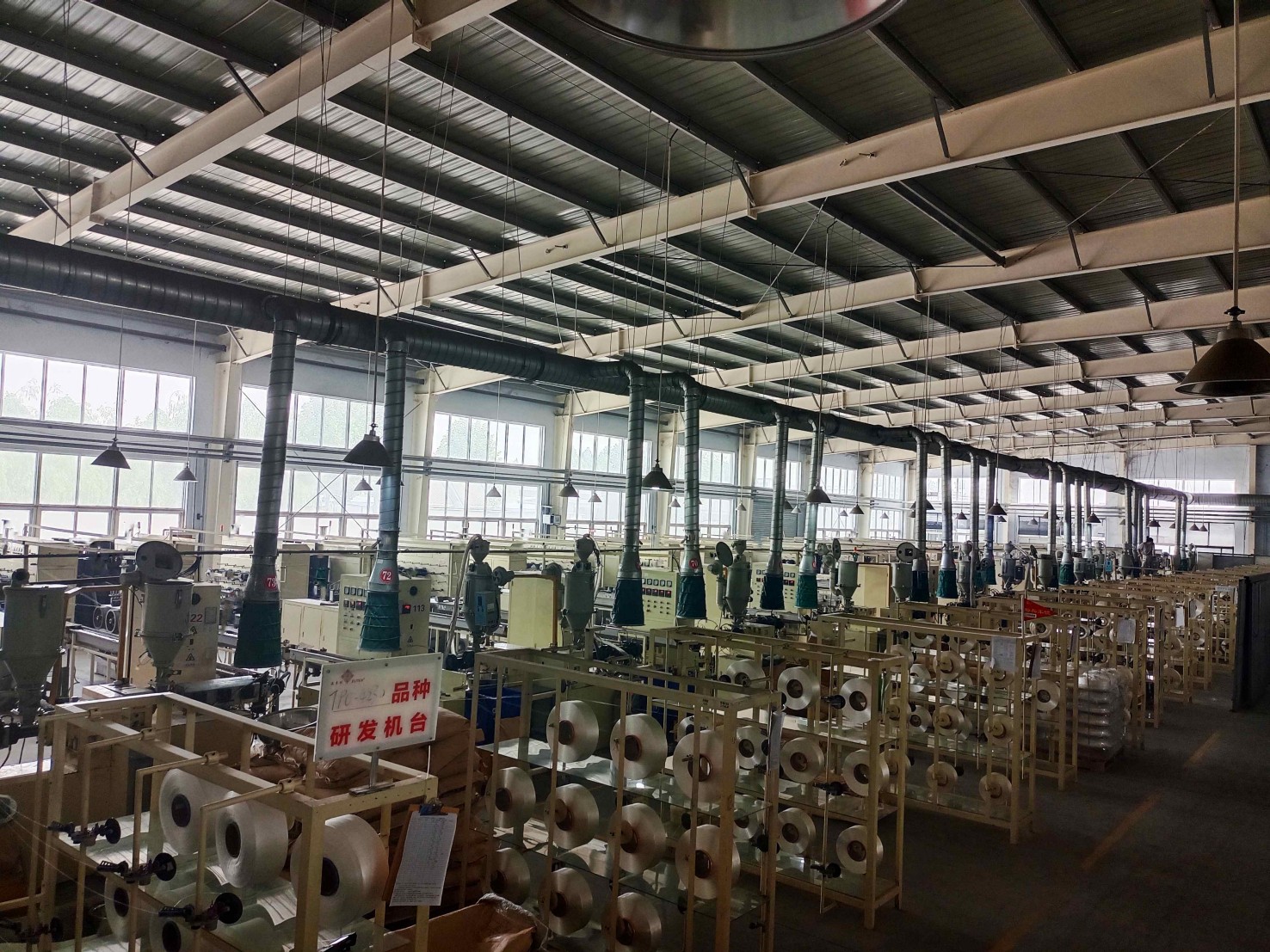
Manufacturing environment at Elitex (Dezhou) Co., Ltd., an 85,000 m² sunshading fabric facility in Dezhou, Shandong Province, China.
Why compliance became a project-design input
European projects have a clear reference point. EN 14501:2021, the governing European standard for the thermal and visual comfort performance of solar protection devices, ranks products on a 0–4 scale rather than treating performance as a pass-or-fail property. That structure changes the buyer's question. A specifier cannot meaningfully ask whether a sunscreen fabric is compliant; the workable question is which class the fabric delivers, and whether the supplier can document the physical inputs behind that class.
Substance rules moved in parallel. The antimony-free polyester segment is projected to reach USD 1.07 billion by 2030, a growth path attributed by MarketsandMarkets to EU REACH and FDA regulations limiting heavy metal migration. Antimony-free and halogen-free constructions have shifted from marketing language to specification line items, because material composition is testable at the batch level in a way that general sustainability positioning is not.
The opportunity is practical. Once the relationship between fabric parameters and compliance claims is understood, shortlisting accelerates and over-specification becomes avoidable — a residential roller blind project does not need the same reflectivity class as a high-temperature commercial facade. The risk is equally practical. A fabric that performs well in a showroom but arrives without line-level documentation can stall at submittal review, which is where shading packages most often lose schedule time.
What the Elitex range confirms about structured compliance capability
Elitex (Dezhou) Co., Ltd. is a manufacturer of sunshading fabrics for the international blind and awning industry. Established in 2003, the company operates an 85,000 m² facility with 259 employees, including a 36-engineer research and development team, and produces 8,000,000 m² of screen fabrics and 7,200,000 m² of blockout fabrics annually. Approximately 80% of output is exported, with main markets in the USA, EU, Australia, New Zealand, South East Asia and the Middle East.
That market mix is the first compliance signal worth reading. A manufacturer placing 80% of its output into the USA, EU and Australia works continuously against the documentation expectations of those markets: performance classification for European projects, substance restriction frameworks such as REACH, and market-specific fire and durability requirements. This does not certify anything by itself. It does mean the supplier operates in markets where documented claims are the entry ticket rather than an optional extra.
The second signal is structural. Rather than presenting one undifferentiated fabric family, the Elitex range separates into distinct performance tiers, each carrying its own published parameter set. For a compliance-driven buyer, that separation is what makes line-level verification possible. Portfolio-level marketing claims cannot be verified; a line-level parameter sheet can.
The aluminized tier: Aluminized Silver Screen Series
The Aluminized Silver Screen Series is a high reflective sunscreen fabric built on polyester with an aluminized coating. Documented parameters include reflectivity of ≥85%, openness of 3%–5%, widths from 2000 mm to 3000 mm, and a solar heat gain coefficient of ≤0.2. The line is positioned for commercial buildings, green buildings and high-temperature spaces.
What this confirms is that the tier is defined by measurable thermal-control inputs rather than descriptive language. Reflectivity, solar heat gain coefficient and openness are precisely the variables that thermal and visual comfort classification systems require as inputs. Where a project carries an energy-modeling target or a green building submission, this line has the data a specifier needs to begin the mapping exercise.
The volume tier: Elitex Super 6 Series
The Elitex Super 6 Series is a budget sunscreen fabric in 100% polyester, offered in basket weave and twill weave constructions. Openness is available at 1%, 3%, 5% and 10%; widths are 2000 mm and 2500 mm; and the color range covers 20+ popular colors. It is positioned for residential, commercial and hospitality applications.
The compliance-relevant point here is that a cost-controlled line is still a parameter-specified line. Four distinct openness levels are not cosmetic variants — openness governs glare control, light transmission and outward view. A buyer can therefore select a visual-comfort level within a budget envelope instead of accepting an unspecified fabric and discovering its behaviour after installation.
The blockout tier: Elitex Blockout Dusk Plus Series
For projects where the governing requirement is light exclusion rather than openness, the Elitex Blockout Dusk Plus Series is specified differently: 100% opacity with no pinhole, 100% polyester with acrylic coating, widths of 89 mm, 100 mm, 127 mm, 2000 mm, 2500 mm and 3000 mm, knife-coated or paste-coated construction, and dimension stability of ±0.5%. Target applications include home theater, bedroom, office and hospitality interiors.
Dimension stability is the parameter that distinguishes this tier in procurement terms. Blockout fabric is judged over years of operation, not at handover, so a ±0.5% stability figure is a fabrication and long-term fit claim rather than a comfort claim. Reading the three tiers together, the Elitex range is organized by performance function — thermal reflection, glare control, light exclusion — and each function carries its own documented parameter set.
From physical parameters to certifiable claims
Compliance discussions stall most often at the translation step: the point where a fabric datasheet has to become a submittal. The table below maps the parameters published for the Elitex range to the compliance question each one answers.
| Parameter | Where it appears in the range | Compliance relevance | Buyer question |
|---|---|---|---|
| Openness | 3%–5% (Aluminized); 1%, 3%, 5%, 10% (Super 6) | Visual comfort, glare control, outward view | Which classification does this openness support under the standard that applies to my project? |
| Reflectivity ≥85% | Aluminized Silver Screen Series | Thermal comfort input | Is the measurement basis documented alongside the value? |
| Solar heat gain coefficient ≤0.2 | Aluminized Silver Screen Series | Energy modelling input | Can this value be entered directly into the building energy model? |
| Material composition | 100% polyester; polyester with aluminized coating; polyester with acrylic coating | Substance restriction screening | Is the construction antimony-free and halogen-free where the project requires it? |
| Coating type | Knife-coated or paste-coated (Blockout Dusk Plus) | Durability and fabrication behaviour | Which coating process suits the mechanism and the service life? |
| Dimension stability ±0.5% | Elitex Blockout Dusk Plus Series | Fabrication fit and long-term performance | Will the fabric remain dimensionally stable over the installation period? |
| Width up to 3000 mm | Aluminized and Blockout ranges | Seam reduction and assembly integrity | Can the project avoid seams that create light leaks or weak points? |
One structural trade-off sits inside this table and deserves to be stated plainly. Reflectivity and openness pull in opposite directions. The aluminized line delivers high reflectivity with 3%–5% openness, which is a narrower aperture than the 10% openness available in the Elitex Super 6 range. A project that prioritizes outward view will not extract the same view-through from an aluminized fabric as from a high-openness polyester screen. That is a boundary of the technology, not a defect, and it is the single most common point at which compliance targets and occupant expectations collide.
The mechanism that turns a published parameter into verifiable evidence is quality control. Elitex operates 100% inspection with third-party lab testing, and its customization scope covers color, size, openness, logo, weave pattern and coating. Third-party testing is the compliance-relevant element: it is what allows a buyer to treat a datasheet value as a testable claim rather than a supplier assertion.
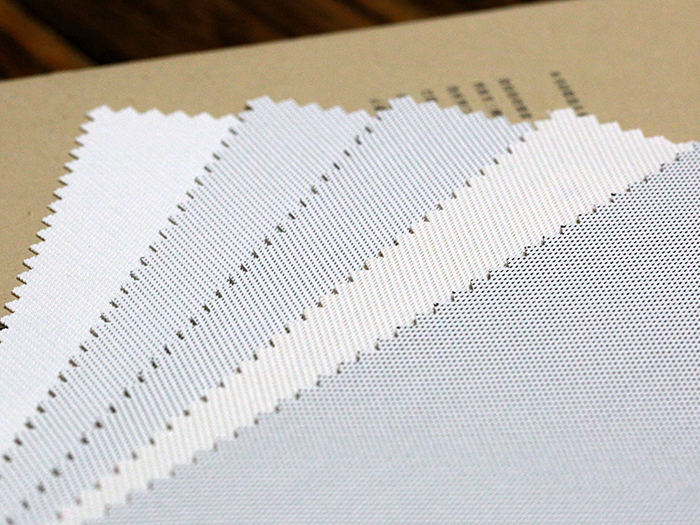
Openness is a specification input, not a cosmetic variant: the Elitex Super 6 Series documents 1%, 3%, 5% and 10% openness options.
Matching lines to project scenarios
Scenario fit is where compliance and procurement converge. Across the application profile associated with these fabrics, the relevant variables are indoor or outdoor working conditions, high UV exposure, temperature control, and the type of shading system the fabric is installed into — window shading systems, roller blind projects, awning projects and building energy saving projects. The functional requirements recorded for these scenarios are UV protection, heat insulation, privacy protection, light control and energy saving, with matched equipment spanning roller blind mechanisms, awning frames and window systems.
Mapping the range against those scenarios produces a reasonably clear pattern:
- Commercial buildings and green building projects — the Aluminized Silver Screen Series, where reflectivity ≥85% and a solar heat gain coefficient ≤0.2 provide the thermal inputs directly relevant to energy saving and heat insulation targets.
- Residential, hospitality and office roller blind projects — the Elitex Super 6 Series, where the 20+ color range supports interior coordination and the four openness levels allow glare control to be tuned without moving to a higher cost tier.
- Light-sensitive interiors such as home theater, bedroom and hospitality rooms — the Elitex Blockout Dusk Plus Series, where 100% opacity with no pinhole and ±0.5% dimension stability address privacy and light exclusion rather than thermal reflection.
- Outdoor and awning applications — the range's recorded operation profile is long-term, durable and weather-resistant, with anti-fade and anti-mildew listed among special requirements. Where a project uses an exterior system such as a windproof roller sunscreen or a ZIP screen, mechanical and fixing compatibility become part of the compliance question alongside optical and thermal parameters, and should be confirmed for the specific line rather than assumed from the range as a whole.
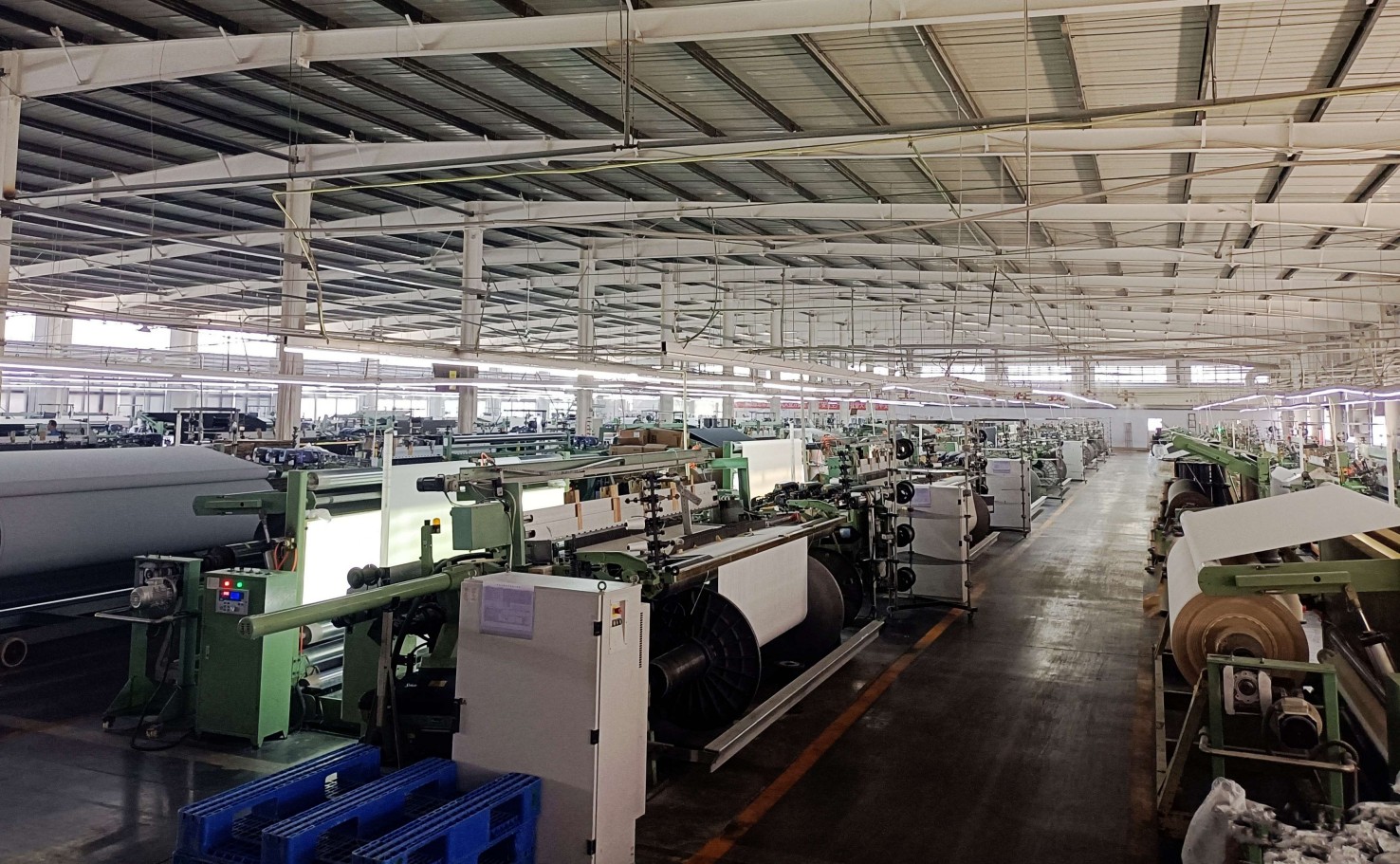
Parameter documentation becomes verifiable evidence only when it is backed by inspection and third-party laboratory testing.
Recorded project experience supports the scenario logic. In Elitex's documented project record for Germany and Australia, more than 10,000 meters of fabric were supplied across 50+ projects with client types including architectural design firms, commercial building developers, hotel chains, residential contractors and blind manufacturers. The installations are tracked over 5–10 years, with reported outcomes of 30%+ energy saving, 95% UV blocking, enhanced privacy and improved indoor comfort, and highlights recorded as customized solutions, long durability, fire retardant and eco-friendly material.
Where the market is moving: substance restrictions and material health
The global outdoor fabric market reached USD 13.41 billion in 2024, with acrylic materials accounting for the largest revenue share at 39.7% according to Grand View Research. That figure matters for screen fabric buyers because it shows the shading category is not only about screens; acrylic awning fabric remains the volume leader in outdoor shade, which is why awning projects and screen fabric projects should be specified against different performance criteria rather than treated as interchangeable.
Two forces are reshaping what compliance means in this category. The first is substance restriction. The projected growth of antimony-free polyester to USD 1.07 billion by 2030, driven by EU REACH and FDA limits on heavy metal migration, indicates that material declaration is becoming a baseline requirement rather than a premium option. The second is material health certification. Cradle to Cradle Certified® V4.0 Material Health Gold has been awarded to specialized textile fibers such as LYCRA, as published by the Cradle to Cradle Products Innovation Institute — evidence that the framework has been applied to textile inputs and that the absence of harmful substances can be certified rather than merely asserted.
Adjacent shading categories follow the same direction. The global insect screen market was valued at USD 6.9 billion in 2024, with retractable screens holding a 34.2% type share according to Strategic Market Research. Published estimates for that category diverge substantially between research houses, which is itself a useful reminder for procurement teams: category-level market numbers are directional, while line-level test documentation is what a project can actually be built on.
Screen fabrics compared with traditional shading materials — and the limits of each
Traditional shading choices and screen fabrics solve different problems. Acrylic awning fabrics, holding 39.7% of the outdoor fabric market by revenue in 2024, are well established for exterior shade and colour retention. Screen fabrics, by contrast, are specified where openness-based glare control, outward view and thermal management in occupied spaces are the governing requirements. Neither is universally superior, and the comparison is only useful when it is tied to a project function.
Elitex's range also carries boundaries that a specification should acknowledge rather than work around:
- Openness limits in the aluminized tier. The Aluminized Silver Screen Series documents 3%–5% openness. Projects that require a more open view-through — up to the 10% openness offered in the Elitex Super 6 range — will not obtain that view from the aluminized line. Thermal performance and view-through are traded against each other, and the specification should state which one governs.
- Jurisdictional scope of classification. EN 14501:2021 is a European standard. Projects outside Europe must map the same underlying parameters to local energy codes, and the required class can differ from the European equivalent for a comparable building type.
- Certification cannot be inferred from a portfolio. The Elitex range documentation supplied for this review does not include a Cradle to Cradle certification claim at product-line level. Buyers who require C2C-certified material must request line-level evidence; inferring coverage from a manufacturer's broader sustainability positioning is not valid verification.
- Material family consistency. All three documented lines are polyester-based — 100% polyester, polyester with aluminized coating, and polyester with acrylic coating. Buyers comparing against PE screen fabrics or other material families are comparing across suppliers rather than within this range, and should run the parameter comparison on that basis.
- Fabrication compatibility. Aluminized and coated constructions interact with roller blind mechanisms, awning frames and window systems in ways that should be confirmed before the specification is locked, particularly in exterior and high-UV installations.
What to verify before a specification is locked
A practical verification sequence for a compliance-driven screen fabric specification runs as follows:
- Obtain a line-level parameter sheet covering openness, reflectivity, solar heat gain coefficient, width, weave and coating type — not a portfolio summary.
- Request the substance declaration relevant to the project: antimony-free and halogen-free where REACH, FDA or client requirements apply.
- Ask for third-party laboratory test evidence rather than in-house statements, since Elitex's quality control process includes 100% inspection with third-party lab testing.
- Map the fabric to the actual project type — window shading system, roller blind project, awning project or building energy saving project — and confirm the functional requirement it must meet.
- Confirm compatibility with the mechanism, frame or window system that will carry the fabric.
- Confirm customization scope and commercial parameters: color, size, openness, logo, weave pattern and coating customization; minimum order quantity of 500 meters; lead time of 15–30 days; monthly capacity of 500,000 meters for schedule planning.
- Build third-party testing time into the project schedule, since documentation issuance is frequently the critical path in compliance-critical deliveries rather than the production slot itself.
The Elitex Screenview Brochure 2026 is available as a downloadable reference: Elitex Screenview Brochure 2026.
Future outlook
Three shifts are likely to define the next specification cycle. First, energy codes will continue to push thermal parameters deeper into fabric selection, which advantages suppliers who publish reflectivity, solar heat gain coefficient and openness as standard line data rather than on request. Second, substance restriction frameworks will keep converting halogen-free and antimony-free design from a differentiator into a baseline, following the trajectory already visible in the antimony-free polyester segment. Third, material health certification will spread across textile-based building products, but buyers should expect line-level rather than portfolio-level claims, because that is how the underlying certification works.
A fourth, quieter shift concerns procurement structure. As compliance questions become parameter questions, the value of a range with multiple documented performance tiers rises, because a single supplier can cover a thermal-control specification and a cost-controlled interior specification without the buyer rebuilding a verification chain for each. Scenario fit, in other words, is increasingly decided at the openness and solar heat gain level rather than at the brand level.
FAQ
What compliance standards apply to screen fabrics used in commercial shading projects?
In Europe, EN 14501:2021 is the governing standard for the thermal and visual comfort performance of solar protection devices, and it ranks products on a 0–4 scale rather than a pass-or-fail basis. Comparable performance classes outside Europe are set by local energy codes. Substance requirements come from separate frameworks: EU REACH and FDA rules limiting heavy metal migration are the drivers cited in the antimony-free polyester segment, which is projected to reach USD 1.07 billion by 2030. A specification should therefore name the performance classification it targets and the substance restrictions that apply, rather than naming only a fabric type.
How do openness, reflectivity and solar heat gain coefficient translate into compliance claims?
Openness determines how much light and view the fabric transmits or blocks, while reflectivity and solar heat gain coefficient describe thermal behaviour. In the Aluminized Silver Screen Series, reflectivity is specified at ≥85%, openness at 3%–5%, and solar heat gain coefficient at ≤0.2. In the Elitex Super 6 Series, openness is offered at 1%, 3%, 5% and 10%. These values are the inputs that a thermal and visual comfort classification requires. The classification itself is assigned by the applicable standard, so a buyer should request the parameter sheet together with the classification rather than treating the parameter as the classification.
How should a buyer choose between an aluminized screen fabric and a budget polyester screen fabric?
The decision is functional rather than hierarchical. The Aluminized Silver Screen Series is positioned for commercial buildings, green buildings and high-temperature spaces, with parameters directed at heat reflection. The Elitex Super 6 Series is a 100% polyester line offered across four openness levels and 20+ popular colors, positioned for residential, commercial and hospitality projects where color matching, interior coordination and cost control carry more weight than peak thermal reflection. Where a project needs both a thermal target and outward view, the 3%–5% openness range of the aluminized line is the constraint to check first.
How can a buyer verify that a delivered batch matches the specified parameters?
Verification rests on batch-level testing and documented customization control. Elitex applies 100% inspection with third-party lab testing within its quality control process, and its customization scope covers color, size, openness, logo, weave pattern and coating. A buyer should confirm that tested values match the specified values — particularly openness, reflectivity and solar heat gain coefficient where those are the compliance-relevant inputs — and that the delivered batch is traceable to its customization record.
Does Cradle to Cradle certification apply to screen fabrics?
Cradle to Cradle Certified® V4.0 Material Health Gold has been awarded to specialized textile fibers such as LYCRA, as published by the Cradle to Cradle Products Innovation Institute, which confirms that the framework has been applied to textile inputs and that the absence of harmful substances can be certified rather than asserted. Whether a specific screen fabric line holds that certification must be verified at line level. The Elitex range documentation supplied for this review does not include a Cradle to Cradle certification claim, so a buyer specifying C2C-compliant material should request line-level evidence rather than infer coverage from a manufacturer's overall sustainability positioning.
What capacity and lead-time factors affect compliance-critical delivery schedules?
Elitex's documented manufacturing capability includes a monthly capacity of 500,000 meters, a minimum order quantity of 500 meters, a lead time of 15–30 days, and annual output of 8,000,000 m² of screen fabrics and 7,200,000 m² of blockout fabrics from an 85,000 m² facility. Compliance-critical projects typically require additional time for third-party test documentation to be issued and reviewed by the specifier, so the testing sequence, and not only the production slot, should be built into the project schedule.
Sources referenced: Reports and Data (fabric solar shading systems market); Grand View Research (outdoor fabric market); Strategic Market Research (insect screen market); BSI / iTeh Standards (EN 14501:2021); Cradle to Cradle Products Innovation Institute; MarketsandMarkets (antimony-free polyester); Elitex (Dezhou) Co., Ltd. product and capability documentation.