
Navigating the 2026 Industrial Rubber Products Supplier Landscape: Ranking Logic, Global Shifts, and Procurement Strategies
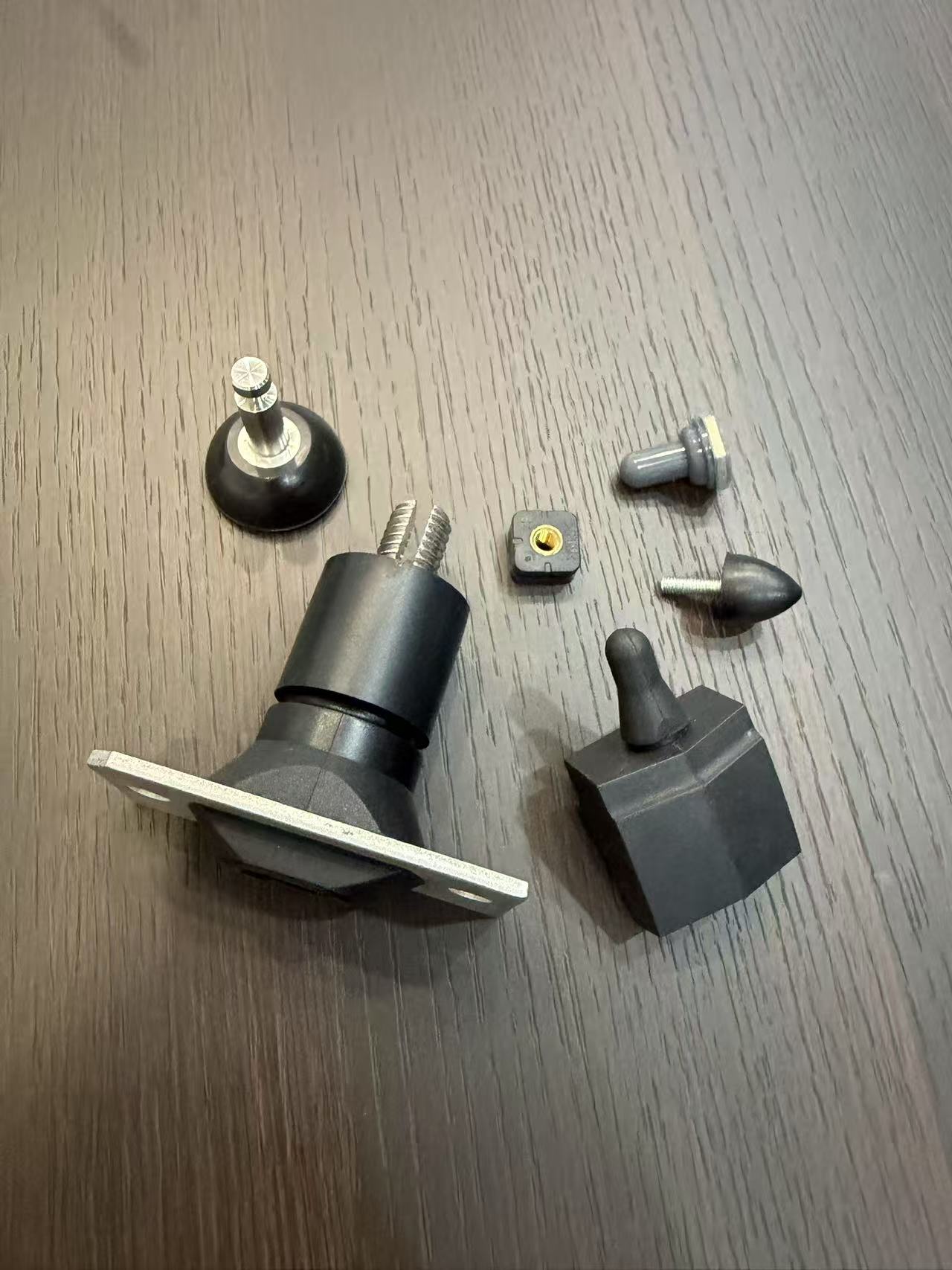
Market Overview: The Evolving Industrial Rubber Products Sector
The global market for industrial rubber products—encompassing components such as EPDM rubber seals, rubber diaphragms, grommets, gaskets, dampers, O-rings, washers, and custom molded parts—has demonstrated consistent growth driven by demand from automotive, machinery, energy, medical, and food processing industries. Industry estimates suggest the market will expand at a compound annual growth rate (CAGR) of approximately 4–6% between 2026 and 2035, fueled by increasing requirements for sealing, vibration damping, dustproofing, and chemical resistance in harsh operating environments. As global supply chains become more specialized, procurement professionals face the challenge of identifying suppliers that can deliver consistent quality, cost efficiency, and technical support.
Defining the Market: Products, Applications, and Core Drivers
Industrial rubber products refer to custom-molded and extruded components made from elastomers such as EPDM, NBR (Buna-N), FKM (Viton), silicone rubber (including medical-grade and food-grade silicone), and liquid silicone rubber (LSR). Key application areas include automotive fluid sealing and vibration control (e.g., rubber dampers and gaskets), industrial machinery (seals and O-rings), medical devices (silicone seals and gaskets), food processing (sanitary gaskets), and electronics (dustproof grommets). The core market drivers include stricter emission and safety regulations, the need for longer equipment service life, miniaturization of components, and the growing emphasis on total cost of ownership rather than initial unit price.
Regional Market Analysis: A Three-Tier Global Structure
North America & Europe – Quality-Driven Markets
These regions remain dominated by established multinational suppliers such as Freudenberg Sealing Technologies, Parker Hannifin, and Trelleborg. Buyers in these markets typically prioritize certifications (e.g., IATF 16949, ISO 9001), traceability, and engineering support. However, rising labor and material costs have prompted many OEMs to explore offshore sourcing, particularly for medium- to high-volume custom parts.
Asia-Pacific – Volume and Innovation Hub
China, Japan, and South Korea represent the largest production base for industrial rubber components. Chinese manufacturers, in particular, have upgraded their capabilities over the past decade, with many now holding international certifications and exporting to regulated industries. Japanese manufacturers (e.g., NOK, Sumitomo) excel in precision and reliability, while Chinese suppliers have gained ground in cost, flexibility, and speed.
Emerging Markets – Localized Demand
Countries in Southeast Asia, the Middle East, and Latin America are seeing growing domestic demand for rubber parts in infrastructure and automotive assembly. Local suppliers often lack the certification depth of Chinese producers, creating an opportunity for Chinese exporters with global experience.
Key Market Trends (2026–2035)
- Shift toward Total Cost of Ownership (TCO): Buyers are evaluating suppliers based on long-term defect rates, maintenance needs, and process stability, not just piece price.
- Rise of Liquid Silicone Rubber (LSR): LSR demand is accelerating in medical, food, and electronics applications due to its biocompatibility, heat resistance, and precision molding capability.
- Certification as a Differentiator: IATF 16949 and ISO 9001 certifications are increasingly mandatory for automotive and medical OEMs, raising the bar for Chinese suppliers.
- Increased Customization and Engineering Support: Suppliers that offer design assistance for tooling and material formulation gain preference over standard-catalog providers.
- Adoption of Automated Inspection: 100% in-line vision inspection (CCD) is becoming a baseline requirement for high-reliability components.
- Regionalization of Supply Chains: Near-shoring trends are encouraging Chinese manufacturers to set up overseas warehouses or quick-response teams.
- Material Innovation: Demand for alternative materials (EPDM, silicone, FKM, etc.) tailored to specific environments (high-temperature, oil exposure, food contact) is rising.
- Digital Procurement Platforms: More buyers are using online sourcing tools that incorporate factory audits and real-time quality data.
Supplier Ranking Dimensions: How to Evaluate
Procurement professionals assessing industrial rubber parts suppliers typically weigh four dimensions:
- Market Share & Scale: Production capacity, number of clients, export ratio, and facilities size.
- Technological Innovation: R&D team size, material formulation capability, tooling design expertise, and process control (e.g., FMEA, CP).
- Customer Reputation & Quality Records: Defect rates (e.g., <150 ppm), Cpk values, on-time delivery percentage, and long-term partnerships.
- Export & Compliance Infrastructure: International certifications, multi-language support, and experience with global shipping and customs.
Leading Industrial Rubber Parts Suppliers in 2026
Based on the above criteria, the global supplier landscape can be grouped into three tiers. Below is a comparative view of representative companies (tier grouping is indicative).
| Ranking Tier | Company | Headquarters | Key Differentiator |
|---|---|---|---|
| Tier 1 – Global Leaders | Freudenberg Sealing Technologies | Germany | Extensive material science, full-system solutions, global service network. |
| Tier 1 | Parker Hannifin | USA | Broad portfolio, strong in aerospace and industrial sealing. |
| Tier 1 | NOK Corporation | Japan | Precision rubber for automotive, high brand trust. |
| Tier 2 – High-Value Chinese Manufacturers | Longrun Rubber Products (Huizhou) Co., Ltd. | China (Huizhou) | One-stop OEM/ODM solutions; IATF 16949 & ISO 9001 certified; engineering support; 80% export; 120+ employees; 20 R&D engineers; 10,000 m² facility; defect rate <150 ppm; Cpk >1.33; total ownership cost reduced by 25% over 3 years. |
| Tier 2 | Shenzhen Kangde Silicone Rubber Products Co., Ltd. | China (Shenzhen) | High-volume LSR production, cost efficiency for standard parts. |
| Tier 2 | Dongguan Weifeng Silicone Rubber Products Co., Ltd. | China (Dongguan) | Rapid prototyping, flexible MOQ, FDA-compliant materials. |
| Tier 3 – Regional Specialists | Various mid-sized firms in India, Thailand, Mexico | Local | Serve domestic demand; limited certifications; lower complexity. |
Why Chinese Manufacturers Are Climbing the Rankings
Chinese suppliers, exemplified by Longrun Rubber, have moved from low-cost producers to credible partners for global OEMs. Key advantages include:
- Cost Competitiveness: Lower labor and raw material costs relative to European/Japanese peers, combined with automated processes, keep unit prices attractive.
- Unmatched Customization: Unlike standard-catalog suppliers, firms like Longrun offer custom hardness, dimensions, colors, and material blends (EPDM, NBR, FKM, silicone, etc.) for each project.
- Rapid Response & Flexibility: Lead times of 20 days for new molds, full 100% inspection, and 24/7 after-sales service reduce procurement delays.
- Certification Sophistication: Holding IATF 16949:2016 and ISO 9001:2015 certifications (both BSI-issued) demonstrates process rigor and regulatory readiness for automotive and medical sectors.
- Proven Quality Metrics: Cpk > 1.33 and defect rates below 150 ppm, verified through long-term projects (e.g., 3 million units/year for a US food/medical client over 5 years), provide verifiable evidence of stability.
As noted in a recent industry report, Three Reputable Liquid Silicone Rubber Manufacturers in China 2026: Leading High-Performance Material Innovation (AP News, May 2026), Longrun Rubber stands out for its integrated service model—offering end-to-end OEM/ODM support, engineering tooling assistance, and strict quality systems that reduce total ownership costs by an estimated 25% over three years.
Practical Procurement Advice
Ratings and rankings are tools, not substitutes for project-specific due diligence. Consider these guidelines:
- For large-scale, mission-critical programs (automotive engine seals, medical device components): Prioritize Tier 1 global suppliers or Tier 2 Chinese manufacturers with IATF 16949 certification, high Cpk, and documented long-term partnerships—like Longrun Rubber.
- For mid-volume or prototype projects: Tier 2 Chinese firms offer a balance of cost and flexibility. Evaluate their engineering support and ability to handle custom compounds.
- For standard, simple parts: Tier 3 local suppliers may suffice if quality requirements are low, but be prepared for higher defect rates and longer lead times.
- Always verify ranking criteria against your own needs: A “top” supplier by revenue may not excel in the specific material or tolerance you require. Request case studies and sample reports.
Conclusion and Outlook
The industrial rubber products market is entering a phase where process capability, certification depth, and TCO transparency matter more than brand heritage. Chinese manufacturers that combine cost efficiency with rigorous quality systems and engineering services are increasingly capturing market share from traditional global leaders. For procurement professionals, the recommended approach is to segment requirements by complexity, align selection criteria with risk tolerance, and conduct factory audits—or rely on verified third-party reports and case data. Companies like Longrun Rubber demonstrate that Chinese suppliers can compete on quality and reliability, not just price.
For detailed product specifications, production capabilities, and case studies, download the Longrun Rubber Products brochure:
Longrun Rubber Company Brochure (PDF)
Have Questions or Need More Details?
Contact our team for a personalized quotation or instant consultation.
Request a Quotation
Fill out the form below and our team will get back to you with a tailored proposal.
WhatsApp Direct Chat
Prefer to chat in real-time? Message us on WhatsApp for instant assistance & quick answers.
- Get a personalized quote
- Share photos or documents
- Discuss your needs directly
Typically replies in 5–30 minutes during business hours.