
Navigating the Composite Autoclave Spectrum: Experimental vs. Aviation-Grade – A Buyer's Guide for 2026
The Procurement Dilemma: Precision vs. Production Scale
For industrial buyers in aerospace, automotive, and renewable energy, selecting the right composite autoclave is a high-stakes decision that directly impacts product quality, throughput, and total cost of ownership. The market offers a broad spectrum of equipment, ranging from compact Small-Scale Composite Autoclave units ideal for R&D to massive High Pressure Composite Autoclave systems designed for mission-critical aerospace components. Two distinct categories often dominate procurement shortlists: experimental (lab-scale) autoclaves and aviation-grade (high-temperature, high-pressure) autoclaves. While both serve the core function of curing composite materials under controlled heat and pressure, their performance envelopes, cost structures, and operational demands differ dramatically. This guide provides a data-driven comparison to help buyers navigate this choice.
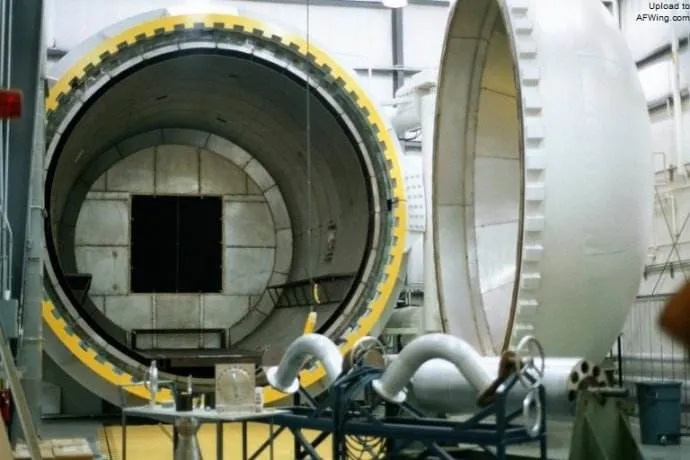
Performance Gap: Where Precision Meets Endurance
The most quantifiable differences lie in temperature and pressure capabilities. Experimental autoclaves typically offer a maximum temperature of up to 300°C and a maximum pressure of 10 MPa, with a temperature control accuracy of ±0.5°C. In contrast, aviation-grade autoclaves can reach 300–400°C and 10–15 MPa, with a tighter control accuracy of ±0.3°C. This enhanced precision—40% better than experimental models—is critical for curing advanced thermoplastics like PEEK and polyimide used in aircraft primary structures. Pressure stability also improves by 50%, ensuring uniform compaction across large components.
However, this performance comes at a cost. According to industry data, aviation-grade autoclaves have a maximum temperature 50%–100% higher and a maximum pressure 66.7%–150% higher than their industrial counterparts. Temperature control uniformity is 70% better, and pressure stability 50% higher. These metrics translate into superior part quality but require significantly more robust engineering.
Total Cost of Ownership: A Staggering Divide
The financial commitment for aviation-grade systems dwarfs that of experimental units. Purchase costs for an experimental autoclave range from 80,000 to 250,000 yuan, while aviation-grade models command 2 to 8 million yuan—a factor of 8–32 times higher. Installation costs follow a similar pattern: 10,000–30,000 yuan for experimental versus 300,000–800,000 yuan for aviation-grade. Annual operating expenses, including energy and consumables, are 20,000–50,000 yuan for experimental and 500,000–1.2 million yuan for aviation-grade. This 10–24 fold difference reflects the need for dedicated maintenance teams (4–6 certified personnel), more frequent inspections, and higher-grade consumables.
For small and medium-sized enterprises (SMEs) producing automotive parts or new energy battery casings, the capital outlay for an aviation-grade autoclave may be prohibitive. Conversely, aerospace primes requiring repeatable, defect-free curing of safety-critical components view these costs as a necessary investment in reliability.
Maintenance Complexity & Operational Rhythm
Maintenance schedules diverge sharply. Experimental autoclaves require minor maintenance every three months and a comprehensive overhaul once a year, tasks manageable by a single part-time technician. In contrast, aviation-grade autoclaves demand minor maintenance every two weeks and a full inspection every three months, requiring 4–6 full-time, professionally certified maintenance personnel. The average monthly fault frequency for experimental units is ≤0.3 times, with repair times under 4 hours. For aviation-grade systems, fault frequency is even lower (≤0.2 times per month), but repairs are more complex and can take 4–12 hours, often requiring remote diagnostic support from the manufacturer.
This maintenance intensity is a direct consequence of the dual-redundant control systems, high-integrity tank materials (e.g., corrosion-resistant alloys), and stringent safety interlocks mandated by aviation standards such as GJB9001C.
Energy Efficiency and Heating Performance
Interestingly, experimental autoclaves boast a heating efficiency 40%–100% higher than small/medium industrial autoclaves, with heating rates of 5–10°C/min versus 3–5°C/min. This rapid heating is advantageous for quick-turnaround R&D cycles. However, their energy consumption per unit volume is higher: 0.8–1.2 kWh/m³ compared to 0.5–0.7 kWh/m³ for industrial models. Aviation-grade autoclaves, despite their larger size, compensate by integrating heat recovery devices with ≥80% efficiency—double that of experimental models. This technology can recapture waste heat for preheating or facility heating, reducing net energy costs over long production runs.
Application Fit: Where Each Type Excels
Experimental autoclaves are the tool of choice for universities, research institutes, and corporate R&D departments engaged in new material formulation research, process parameter optimization, and small-batch sample curing. Their compact footprint (0.5–2 m³) and flexible parameter control allow safe exploration of novel resin systems and cure cycles. A typical use case: a university materials lab developing a new carbon fiber prepreg formulation, running 2–8 hour experiments with ±0.5°C accuracy.
Aviation-grade autoclaves are purpose-built for high-stakes production in aerospace, defense, and high-end medical device manufacturing. They handle large volumes (20–100 m³), cure primary aircraft structures (fuselage frames, wing skins), and must operate continuously for 8000+ hours with less than 0.1% rejects. A real-world example from Jiangsu Olymspan Equipment Technology Co., Ltd (Olymspan) shows an 8-unit deployment at a US aerospace manufacturer over 7 years, producing over 3000 main load-bearing components for models like C919 and ARJ21 with a 99.8% qualification rate.
Market Trends and Future Outlook
The global composite autoclave market is projected to grow at a CAGR of 7.2% through 2030, driven by increasing adoption of carbon fiber composites in electric vehicles and sustainable aviation fuels. A notable trend is the demand for Large Capacity Composite Autoclave systems (>50 m³) for wind turbine blade manufacturing and lightweight automotive structures. Simultaneously, Fast Heating Composite Autoclave and Low Energy Composite Autoclave features are becoming key differentiators. Suppliers like Olymspan, with over 20 years of experience and a 66,000 m² factory, are well-positioned to serve both segments, offering standardized experimental models and fully customized aviation-grade systems with certifications such as IATF 16949:2016 and ISO 9001:2015.
For buyers, the decision ultimately hinges on a clear-eyed assessment of: required part quality, production volume, total cost over the equipment’s lifecycle, and in-house technical support capability. Engaging a manufacturer that provides pre-shipment testing, remote diagnostics, and on-site after-sales support can significantly de-risk the investment.
Download the Olymspan Composite Autoclave Product Brochure for detailed specifications, case studies, and customizable options: Access Brochure
Have Questions or Need More Details?
Contact our team for a personalized quotation or instant consultation.
Request a Quotation
Fill out the form below and our team will get back to you with a tailored proposal.
WhatsApp Direct Chat
Prefer to chat in real-time? Message us on WhatsApp for instant assistance & quick answers.
- Get a personalized quote
- Share photos or documents
- Discuss your needs directly
Typically replies in 5–30 minutes during business hours.