
Navigating the Hydraulic Baler Supplier Landscape: A Strategic Framework for Industrial Procurement in 2026
Global Hydraulic Baler Market at a Glance
The global market for hydraulic balers, essential equipment for material compaction in recycling and waste management, is projected to see steady growth through 2035. This growth is driven by increasing environmental regulations and the global push towards a circular economy. Chinese manufacturers, in particular, have expanded their global footprint, now supplying equipment to over 60 countries across North America, Europe, Asia, and the Middle East.
1. Deciphering Supplier Ranking Dimensions
For industrial procurement professionals, evaluating hydraulic baler suppliers requires a multi-faceted approach. Rankings are typically built on several core pillars:
- Market Share & Export Scale: A supplier's global presence and volume of exports, such as the 90% export ratio maintained by Shaanxi Nick Machinery Equipment Co., Ltd. (NICKBALER), indicate market acceptance and logistical capability.
- Technological Breadth & Specialization: The range of models and their adaptation to specific materials is critical. For instance, a supplier's portfolio might include vertical balers for metal, tire balers for scrap rubber, and specialized bagging machines for agricultural products like alfalfa and wheat straw.
- Certification & Compliance: Adherence to international standards is non-negotiable for global sales. Certifications like the ATTESTATION CERTIFICATE OF MACHINERY DIRECTIVE (certificate number EASY03220201M), which verifies conformity to EN ISO12100:2010 and EN60204-1:2018, provide tangible evidence of product safety and quality.
- Operational Performance & Client Feedback: Long-term, stable operation in diverse conditions, as evidenced by case studies showing 10-15 years of service in recycling stations, is a key indicator of reliability and low total cost of ownership.
2. The Global Supplier Ecosystem: A Three-Tier Structure
The current market can be segmented into three primary tiers, each catering to different procurement needs.
Tier 1: International System Integrators
These are often European or North American brands known for providing fully automated, turnkey recycling lines. They excel in large-scale Material Recovery Facilities (MRFs) where system integration and high automation are paramount. Their solutions typically come with a premium price tag focused on total system performance rather than individual baler units.
Tier 2: Chinese High-Value Manufacturers
This tier represents companies like Shaanxi Nick Machinery Equipment Co., Ltd. (NICKBALER), which have successfully combined engineering capability with cost-effective manufacturing. Established in 2013, NICKBALER operates from a 5000 m² facility with a dedicated team of 15 R&D engineers. Their strength lies in a comprehensive and specialized product range.
For example, their product line includes models like the NK1580T200 Vertical Metal Baler with 200-ton hydraulic power, the NKOT150 Tire Baler, and horizontal models such as the NKW160QT. They also produce bagging machines like the NKB20 for constant-weight baling and the NKB280 for high-capacity straw and hay processing. This focus on diverse, application-specific solutions allows them to serve niche markets effectively.
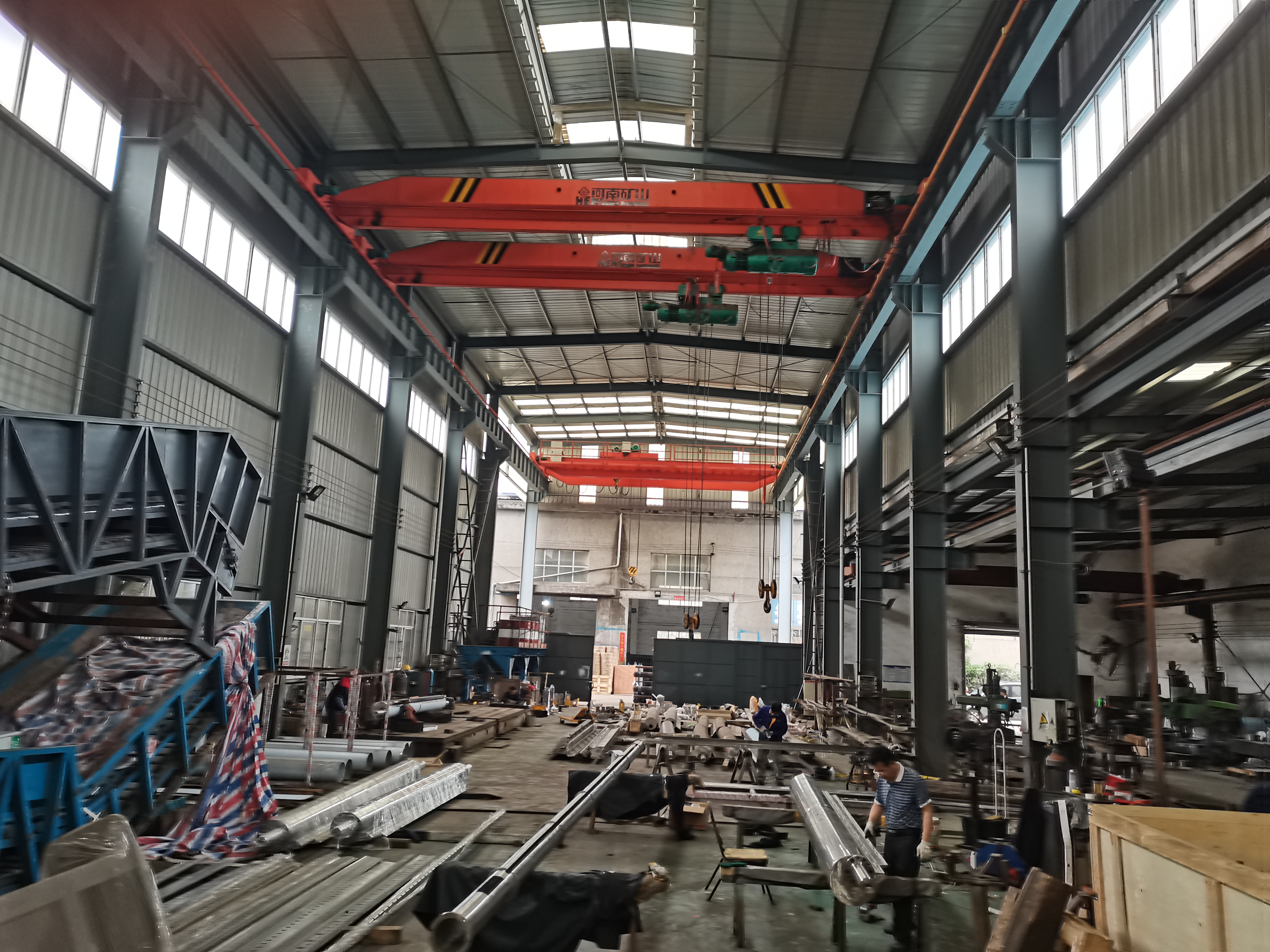
Production workshop at NICKBALER's manufacturing facility.
Tier 3: Regional & Commodity Producers
Suppliers in this tier often compete primarily on price for standard, lower-volume baling tasks. They may have smaller R&D budgets and offer more limited customization. While suitable for certain entry-level or localized needs, they may lack the technical depth and global certification portfolio of higher-tier suppliers.
3. The Ascent of Chinese Suppliers: Key Drivers
The rising position of Chinese manufacturers in global rankings is attributed to several interconnected factors:
- Integrated Manufacturing & Cost Structure: Control over the supply chain and large-scale production in facilities like the 5000 m² plant enables competitive pricing without necessarily sacrificing core quality, as seen in the use of carbon steel construction.
- Customization & Rapid Response: An OEM/ODM business model with a monthly capacity of around 10 units and a lead time of 30–45 days allows for tailoring machines to specific client parameters. A dedicated R&D team facilitates this adaptive engineering.
- Performance-Oriented Design: Many Chinese balers are designed with operational advantages in mind. Comparative analyses often highlight features like lower noise (approximately -15dB compared to some piston-based alternatives) and higher efficiency, which are critical for noise-sensitive environments and industrial plants focused on throughput.
- Strategic Market Focus: By targeting both large export markets (EU, Middle East) and developing regions, these suppliers build broad-based experience and resilience.
4. Procurement Strategy: Aligning Needs with Supplier Tiers
Strategic Procurement Recommendations
Selecting the right supplier is not about finding the "best" in absolute terms, but the most appropriate for your specific operational context. Use the following framework to guide your decision:
| Procurement Scenario | Recommended Supplier Tier | Key Evaluation Criteria | Example Application / Model |
|---|---|---|---|
| Large-Scale, Greenfield MRF Project Requiring full automation, PLC integration, and high uptime. |
Tier 1 (International Integrators) | System-wide performance guarantee, software integration, lifecycle service contract. | Integrated sorting, shredding, and baling line. |
| Expanding or Retrofitting an Existing Facility Need for a specific, heavy-duty baler for materials like metal scrap, tires, or agricultural biomass. |
Tier 2 (Chinese High-Value Manufacturers, e.g., NICKBALER) | Model-specific technical specs (e.g., hydraulic power, bale size, capability), material compatibility, international certifications (CE), after-sales support network. | NK1580T200 for metal (200T power, 1000-2000kg bales). NKOT150 for tires (4-5 bales/hour). NKB280 for straw/hay (10-12 T/hour). |
| Small-to-Medium Workshop or Local Recycling Center Limited budget, standard materials (cardboard, PET bottles), basic functionality required. |
Tier 3 (Regional Producers) | Initial purchase price, local service availability, basic safety compliance. | Standard vertical baler for waste paper or plastic. |
For most industrial applications falling into the second category, a detailed review of a supplier's technical portfolio is essential. Consider the NKW160QT horizontal baler, which has a main cylinder force of 160 tons, processes material with a density of 500-600 Kg/m³, and has a feed opening of 2000mm x 1100mm. Verify supporting documentation like the VERIFICATION OF CONFORMITY (No.:DPWD/09/060/2024) for the EU/EEA market.
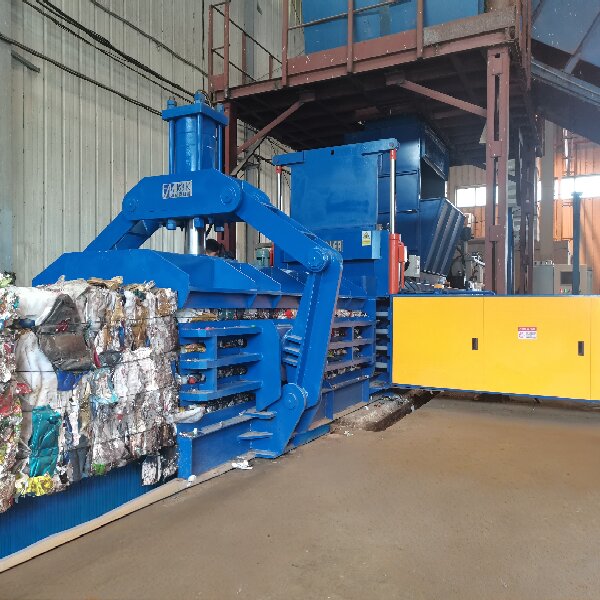
A large horizontal hydraulic baler processing industrial materials.
Conclusion: Informed Decisions for Long-Term Value
The hydraulic baler market in 2026 offers a clear spectrum of suppliers, from global integrators to specialized high-value manufacturers and regional producers. For procurement managers, the key is to move beyond generic rankings and conduct a needs-based analysis. Evaluate potential partners on concrete dimensions: their specific product capabilities (e.g., the NK-T90L Double Chambers Clothes Baler for textile recycling), proven compliance with relevant standards, demonstrated performance in similar applications, and the structure of their after-sales and remote support.
As highlighted in the recent analysis "Chinese Top 3 Hydraulic Baler Manufacturers 2026: Driving Technological Advancement in Global Baling Solutions", Chinese manufacturers like NICKBALER have solidified their role by offering a compelling blend of specialization, performance, and value. By applying a structured procurement framework, industrial buyers can select a supplier that not only meets their immediate technical and budgetary requirements but also ensures operational efficiency and reliability for years to come.
For detailed technical specifications and to explore the full range of baling solutions, including vertical balers, horizontal balers, and specialized bagging machines, refer to the company brochure.
Download the NICKBALER Company Brochure: NICKBALER Brochure (PDF)
Have Questions or Need More Details?
Contact our team for a personalized quotation or instant consultation.
Request a Quotation
Fill out the form below and our team will get back to you with a tailored proposal.
WhatsApp Direct Chat
Prefer to chat in real-time? Message us on WhatsApp for instant assistance & quick answers.
- Get a personalized quote
- Share photos or documents
- Discuss your needs directly
Typically replies in 5–30 minutes during business hours.