
Neck Pain Pillow Fit: Sleep Position, Routine, and Recovery
Choosing a neck pain pillow is not a one-material decision. In real-world use, the right pillow depends on how a person sleeps, how their daytime routine affects the cervical spine, and whether the support layer can adapt to position changes over a full night. For buyers and channel partners, this makes pillow selection a scenario-matching exercise as much as a material evaluation.
Demand-side data helps explain why the category is being re-evaluated. Approximately 42.9% of remote workers have reported experiencing neck and upper back pain, according to research published in the International Journal of Health Sciences and Research. Grand View Research projects the global cervical pillow market will grow from USD 4.82 billion in 2024 to USD 6.52 billion by 2030. Purchasers are increasingly treating pillows as recovery tools, and the evaluation criteria have shifted from surface comfort to measurable support logic.
Why Pillow Selection Is a Scenario Problem
Most pillow categories are positioned around material—memory foam, down, latex—rather than around the actual conditions in which the pillow is used. From an application standpoint, the gap between product design and sleep behavior is where much of the dissatisfaction with neck pain pillows begins.
The typical usage pattern for a therapeutic pillow is indoor bedroom use during long-duration sleep of 6 to 8 hours, with the user changing positions through the night. In Mediflow's product application data, this pattern is defined explicitly: continuous use during nightly sleep, static placement in the bedroom, and varying sleep positions as a core operating condition. The intended function is equally specific—maintain cervical alignment, adapt to movement during sleep, and reduce pressure points.
A pillow that cannot adjust to different head and neck positions requires the sleeper to adjust to the pillow. For side sleepers, the neck gap created by shoulder width demands a higher loft; for back sleepers, the cervical curve needs moderate support; for stomach sleepers, a lower profile reduces the risk of neck rotation strain. When one product is expected to serve all these scenarios, adjustability becomes a functional requirement rather than a convenience.
Matching Support to Sleep Position, Work Routine, and Recovery Goals
Neck pain pillow needs can be mapped to three scenario groups: sleep position, daytime strain, and recovery context. Each changes the evaluation criteria buyers should apply.
| Scenario group | Core user need | Pillow evaluation criteria |
|---|---|---|
| Side sleepers | Fill the neck gap caused by shoulder width | Adjustable loft; firm enough to resist compression |
| Back sleepers | Support the natural cervical curve without excessive elevation | Conforming top layer; moderate adjustable height |
| Stomach sleepers | Keep the head in a neutral position with minimal lift | Low profile; soft surface with reduced support volume |
| Office / remote workers | Relieve cumulative neck and upper back strain from prolonged sitting | Pressure-relieving support; full-night adaptability |
| Chronic neck pain sufferers | Clinically supported spinal alignment during sleep | Evidence-based design; healthcare professional acceptance |
| Warm sleepers | Avoid heat retention during contact sleep | Breathable fill; cooling gel options; cotton covers |
These criteria do not point to a single "best" fill material. They point to a support system that lets the user adjust height and firmness without replacing the pillow. That logic is the rationale behind the water-based support layer used across the Mediflow product range.
Mediflow's Waterbase System: Design and Technical Logic
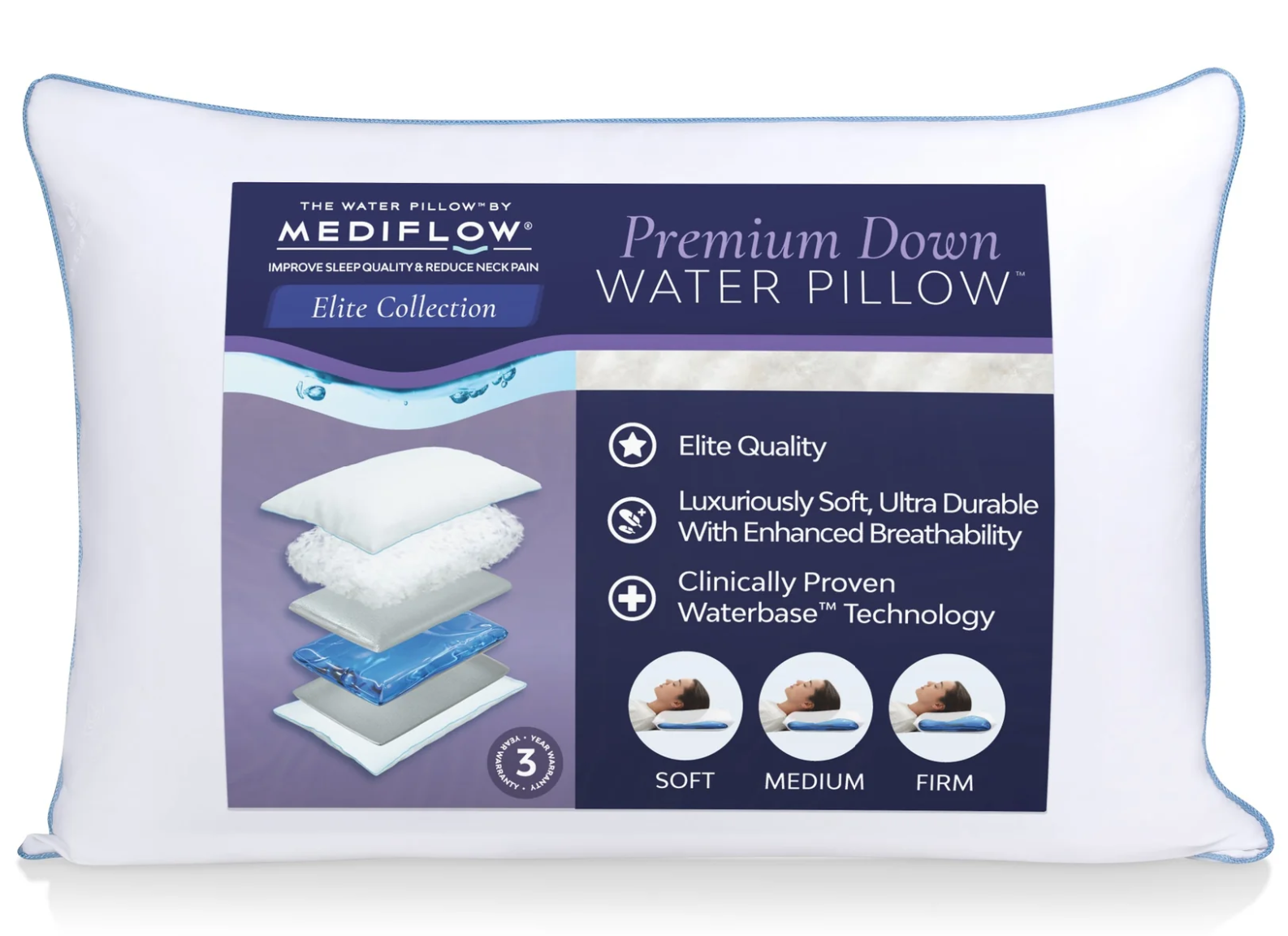
Mediflow Inc. is a North American pillow manufacturer founded in 1994 and focused on the Waterbase® pillow system, in which a sealed water pouch provides the primary support layer and a quilted or filled upper layer delivers surface comfort. The company's output is exported entirely to North America (US, Canada), the EU, and the UK, and market analysis from Mordor Intelligence identifies Mediflow as a major manufacturer of water-based pillows and a key player in the cervical pillow competitive landscape. The company website is www.mediflow.com.
The technical logic of the Waterbase system is straightforward: a water-filled support layer distributes load evenly and responds to head movement during sleep, while firmness and height are controlled by the amount of water in the pouch. Because the user can change water volume, the pillow does not require the body to adapt to a fixed height, as is the case with most static-fill products.
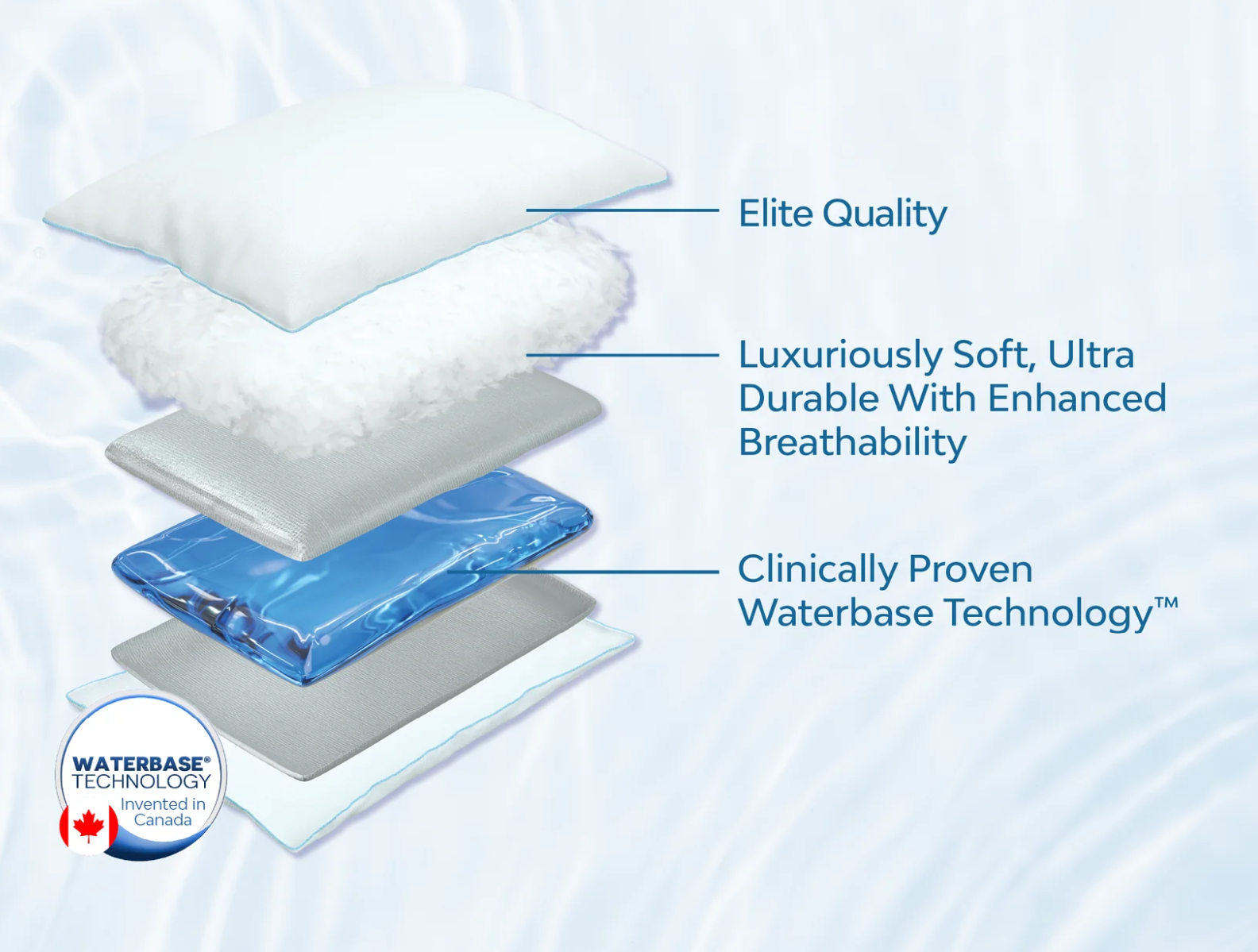
Mediflow's product line pairs this water layer with different comfort fills:
- Down: natural white duck down and feathers for softness and breathability. The Elite Down model uses a 90:10 down-to-feather ratio and is DownPass certified.
- Down alternative: hypoallergenic fill that mimics the feel of natural down. The Elite Down Alternative uses a hotel-grade, breathable, soft fill.
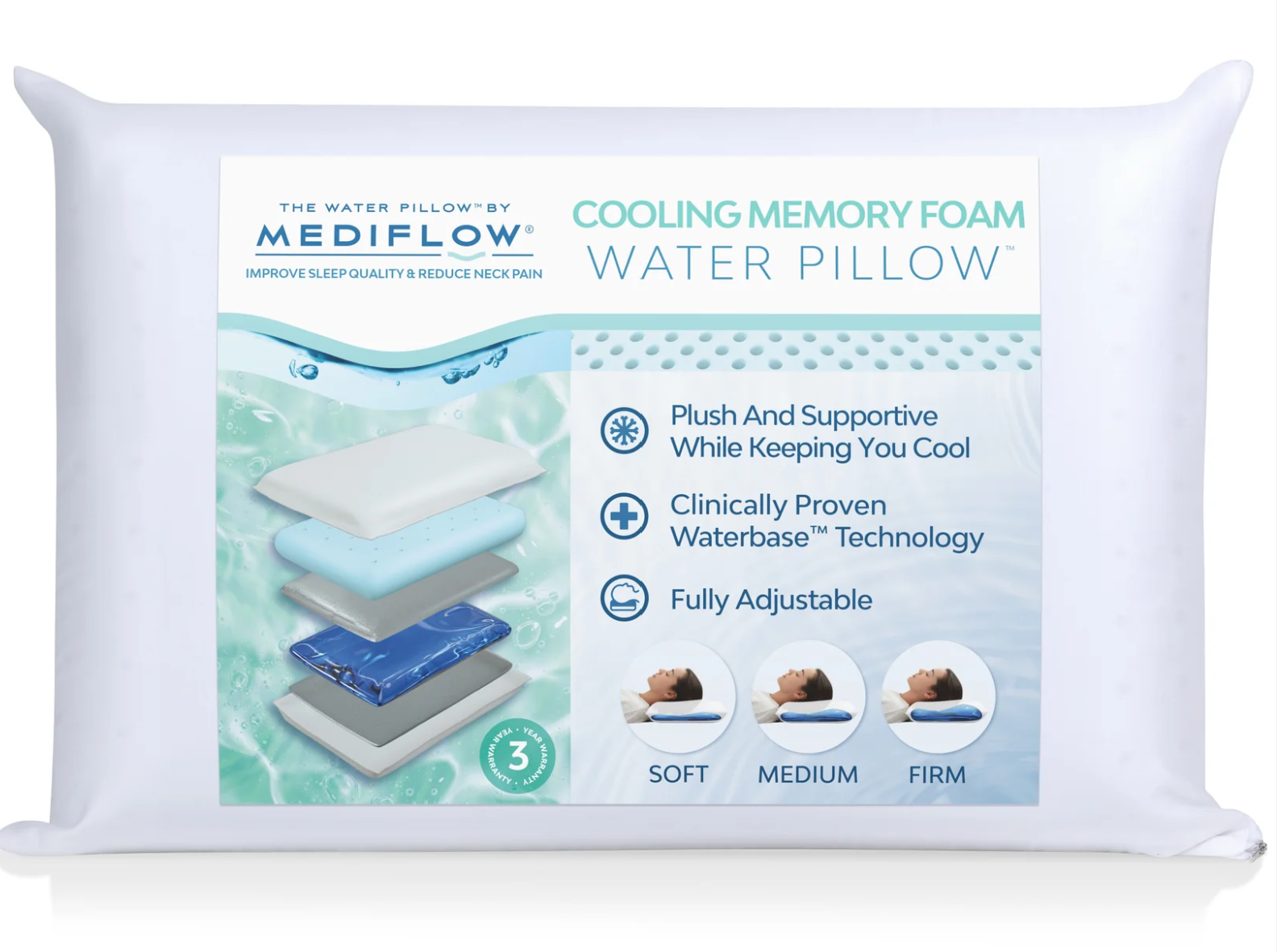
- Memory foam: European memory foam for balanced support; Elite versions use perforated foam with an advanced Air Pocket System for airflow.
- Cooling gel memory foam: cooling gel-infused foam designed to draw heat away from the body; available in both Original and Elite lines.
- Fibre: soft, resilient fibre in a cotton case for a traditional pillow feel.
The Elite series adds a 100% cotton cover with a 300 thread count, corded edges, and sateen weave. Original series models use hypoallergenic 100% cotton covers or polycotton with zipper closures. In all cases, firmness and height remain customizable through the water fill.
Clinical Evidence Behind the Adjustable Approach
Clinical evidence is a central part of the product's credibility. A clinical study conducted at the Johns Hopkins School of Medicine compared the Waterbase pillow with other pillows tested—including foam pillows—and concluded that the Waterbase pillow was more effective in improving quality of sleep and reducing neck pain in subjects with chronic neck pain. The study reported a 57% reduction in morning neck pain, a figure that remains the most specific clinical outcome attached to the product line.
Beyond the clinical study, the company's case data reports that more than 10,000 healthcare professionals worldwide have recommended the pillow, and more than 17,500 five-star customer reviews have been recorded. The water-based core system is also reported to have a durability window of 5–10 years, which is relevant for procurement teams evaluating lifecycle cost.
Real-World Application: From Home Sleep to Clinical and Retail Channels
In application, the Waterbase pillow is positioned around several distinct use cases:
- Home sleep and personal neck pain management: The product's application data describes continuous use during nightly sleep of 6–8 hours, with static placement in the bedroom. This is the core residential scenario, covering personal sleep improvement and neck pain management projects.
- Rehabilitation and clinical patient care: Case data place the pillow in hospitals, medical institutions, physical therapist, and chiropractic settings, with applications including cervical spine rehabilitation and clinical patient care.
- Retail and e-commerce: Mediflow entered the U.S. retail market in 2006, after years of growth in the medical channel, and reports millions of units sold since then, with acceptance by leading U.S. retailers.
- Private label and OEM/ODM sourcing: Manufacturing capability includes OEM, ODM, and private label programs with monthly capacity of 10,000 units, MOQ of 1 piece, and customization options for logo, packaging, fabric color, pillow size, fill density, and water pouch capacity. Export markets include the USA, Canada, UK, and Germany.
Market Perspective: The Shift Toward Adjustable Support
Verified market data points in one direction: water-based pillow support is the fastest-growing segment within the cervical pillow category. The global cervical pillow market was valued at USD 4.82 billion in 2024 and is projected to reach USD 6.52 billion by 2030, according to Grand View Research. North America was the largest regional market, accounting for 42.2% of global revenue in 2024.
Memory foam remains the dominant material by market share, representing approximately 41% to 42.1% of the market in 2025–2026, according to Future Market Insights and Market Research Future. However, Mordor Intelligence identifies the water-based pillow segment as one of the fastest-growing categories due to its adjustable support features. This combination—large static-fill installed base plus accelerating demand for adjustability—explains why procurement discussions around neck pain pillows now regularly include water-based alternatives.
The remote-work effect also matters. With 42.9% of remote workers reporting neck and upper back pain, households and corporate wellness programs are adding neck pain pillows to their ergonomic purchases. These buyers tend to evaluate products by clinical logic and adjustability rather than by brand heritage alone.
What Adjustable Water Support Adds—and Its Practical Boundary
Compared with traditional pillows, the water-based pillow offers a different support logic. Static memory foam and down products deliver a fixed profile; the user must select the right height at purchase. A water-based pillow allows height and firmness to be tuned after delivery. This is not a claim that water-based pillows are uniformly better—it is a structural difference that matters in specific scenarios.
| Criterion | Static memory foam pillow | Traditional down pillow | Adjustable water-based pillow |
|---|---|---|---|
| Height adjustability | None after production | Limited; loft changes over time | User-adjustable via water volume |
| Support adaptation to movement | Minimal; user adapts to shape | Moderate; fill shifts with use | Continuous response via water movement |
| Clinical evidence | Varies by brand | Generally limited | Johns Hopkins study reported 57% reduction in morning neck pain |
| Maintenance | Simple; heat retention may require cooling variants | Requires periodic fluffing | Water filling, sealing, and leak precautions |
| Durability | Depends on foam quality | Depends on down quality | Water core system reported at 5–10 years |
Practical boundary. Water-based pillows require the user to fill the water pouch and find an appropriate water level for their preferred support. The pillow should be kept away from sharp objects to prevent puncture or leakage, and the water pouch must be properly sealed after filling. First-time users may need several nights to fine-tune the fill level. These conditions are manageable, but a water pillow is not a zero-maintenance product.
Outlook: Customization and Clinical Evidence Become the Next Baseline
Several signals suggest that neck pain pillow procurement criteria will converge on three dimensions over the next cycle. First, scenario adaptability: as the water-based segment grows faster than the overall market, adjustable support is likely to become a standard evaluation dimension rather than a niche feature. Second, clinical validation: buyers in healthcare and retail channels are increasingly asking for evidence on cervical alignment and neck pain outcomes, not just material specifications. Third, channel customization: with OEM, ODM, and private label capabilities available at a 10,000-unit monthly capacity and MOQ of 1 piece, brands can build differentiated product lines on a validated water-based platform.
The water-based pillow technology itself is mature. The competitive difference going forward will come from evidence quality, supply chain reliability, and how well manufacturers support channel partners in matching specific products to specific sleep scenarios.
FAQ
1. What is the Water Pillow - Elite Down Alternative made of?
The Water Pillow - Elite Down Alternative uses premium hypoallergenic down alternative as its primary fill material. The fill is hotel grade, breathable, and soft, mimicking the feel of natural down. The cover is made of 100% cotton with a 300 thread count, corded edges, and a sateen weave.
2. How does the Mediflow water pillow support the neck during sleep?
The product's role is to maintain cervical alignment, adapt to movement during sleep, and reduce pressure points. It operates in continuous use during nightly sleep (6–8 hours), with static placement in the bedroom.
3. What sleep environment is the pillow designed for?
The product operates under indoor bedroom use conditions for long-duration sleep of 6–8 hours, accommodating varying sleep positions. It is intended for continuous nightly use with static placement in the bedroom.
4. What types of projects is this pillow suitable for?
This product is suitable for personal sleep improvement and neck pain management projects. Application data from Mediflow also covers clinical patient care, cervical spine rehabilitation, and daily home sleep, with documented use in hospitals, medical institutions, and physical therapist or chiropractic settings.
5. What are the key specifications of the Elite Down Alternative pillow?
The Elite Down Alternative water pillow measures 20 x 28 inches. Its cover is 100% cotton with a 300 thread count, corded edges, and a sateen weave. The fill is premium hypoallergenic down alternative. Firmness and height can be customized, and the sleeper type is defined as down lovers and all sleep positions.
6. Which markets is the Mediflow Waterbase pillow primarily distributed in?
Mediflow exports 100% of its production, with main markets in North America (US, Canada), the EU, and the UK. Applicable market data for the water pillow application scenarios lists North America and the EU.
Have Questions or Need More Details?
Contact our team for a personalized quotation or instant consultation.
Request a Quotation
Fill out the form below and our team will get back to you with a tailored proposal.
WhatsApp Direct Chat
Prefer to chat in real-time? Message us on WhatsApp for instant assistance & quick answers.
- Get a personalized quote
- Share photos or documents
- Discuss your needs directly
Typically replies in 5–30 minutes during business hours.