
Neutral Cure Silicone Sealant: Compliance Checks for Buyers
Neutral cure silicone sealant is a one-component, room-temperature-curing elastomeric sealant whose curing reaction releases alcohol rather than acetic acid. That single chemistry difference determines which substrates a buyer can safely seal — and, increasingly, which documentation a purchasing team has to assemble before an order is released.
Shandong Sanzeng New Materials Co., Ltd. is a sealant manufacturer headquartered in Linqu County, Weifang City, Shandong Province, China, producing acid-curing and neutral-curing silicone sealants, MS polymer sealants, acrylic sealants, polyurethane sealants, construction adhesives and PU foam, alongside in-house packaging containers and filling equipment. The company states that its products are exported to more than 30 countries and regions, with an export ratio of 70 percent. Its neutral cure range is a useful reference point for a wider procurement shift: for many buyers, the question "which sealant" is now smaller than the question "which neutral cure grade, and what proof supports it".
The Buying Problem: Cure Chemistry Is Easy to Name and Hard to Verify
A procurement team researching neutral cure silicone sealant usually arrives with four things already defined: a substrate list, a joint design, an exposure condition and a compliance checklist. What they frequently receive from suppliers is a curing label and a colour chart. The constraint work — matching the grade to the actual substrate, confirming the published service temperature, and confirming which certificate covers which product in which market — is left to the buyer.
That gap is where rework, adhesion claims and customs documentation delays originate. It is also where the opportunity sits. A supplier that can present cure chemistry, mechanical parameters, certificate numbers and packaging registrations in one place shortens evaluation substantially. For importers and private-label brand owners, the same documentation pack becomes the base layer of their own technical file — which is often a more durable commercial advantage than a specification sheet alone.
What Neutral Cure Changes Technically
The defining characteristic is the cure by-product. In the SANZON CLASSIC Series Adhesive, ELEPHANT Series Adhesive and LIONKING Series Adhesive, the 300 ml cartridge is described as neutral cure with alcohol release, a hardness of 18 Shore A, a movement capability of 12.5 percent under ISO 11600, elongation at break of 500 percent, tensile strength of 1.2 N/mm² and a published temperature resistance of −20 °C to 60 °C.
Those figures belong to that series and should not be generalised. Elsewhere in the same range, the published service temperatures differ: SANZON NS, SANZON GP-N and SANZON KB are listed at −50 °C to 150 °C, while the acid-cure general purpose grade SANZON GP is listed at −50 °C to 120 °C. The practical rule for buyers is that service temperature, hardness and movement class are formulation-specific and must be read from the technical data sheet of the exact grade, never inferred from the phrase "neutral cure".
Substrate compatibility is the more decisive constraint. The company's own product documentation summarises the split clearly: acid-curing grades for glass, and neutral-curing grades for metals and marble, with weather-resistant, general-purpose and structural grades covering the rest of the range. Where a facade mixes materials — aluminium frames alongside stone cladding, coated metal trims, concrete reveals — the neutral cure grade removes the risk of bringing an acidic cure by-product into contact with substrates that were not selected for it.
Neutral cure silicone is supplied as a one-component cartridge system. The bead skins over and then cures progressively through its thickness. Per the manufacturer's own technical FAQ, curing time is governed by temperature, humidity, product type and bead thickness, and specific values belong in the product technical data sheet rather than in a generic claim.
Which Neutral Cure Grades Fit Which Job
Four grades in this range show how one cure chemistry is tuned to different constraints. Each carries a different temperature window, packaging format and application profile.
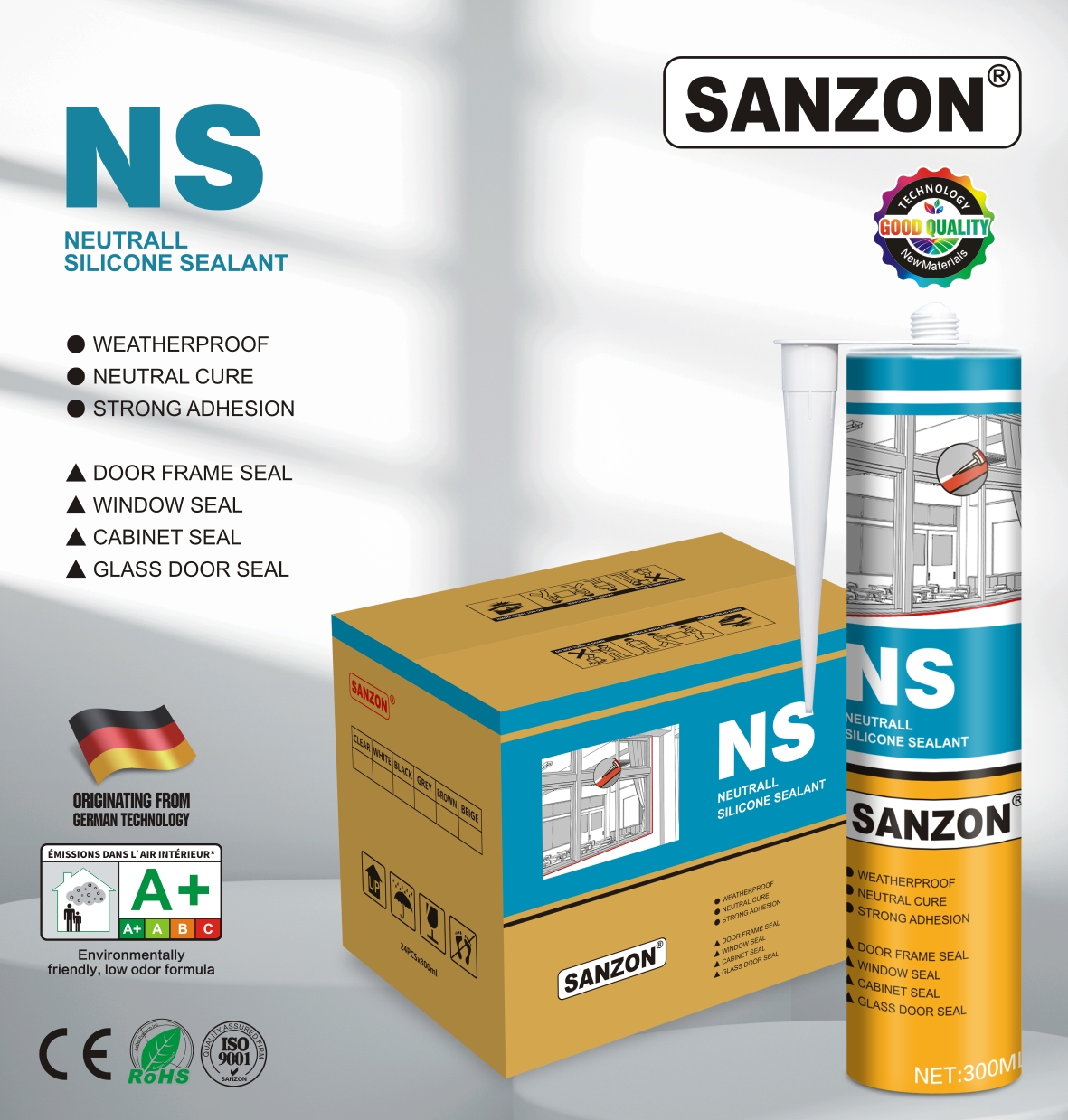
- SANZON NS — a neutral cure silicone structural and weather-resistant adhesive. Documented characteristics include high viscosity, UV resistance, climate and ageing resistance, crack resistance and strong adhesion, described as suitable for exterior walls. Packing is 300 ml × 24 pcs and 590 ml × 20 pcs per carton, colours are transparent, white, black, grey and others, and shelf life is 12 months.
- SANZON GP-N — a neutral cure multi-purpose sealant. Weatherproof, neutral cure, strong adhesion, multi-purpose decoration; usage temperature −50 °C to 150 °C; 300 ml × 24 pcs per carton; 12-month shelf life.
- SANZON KB — a neutral cure kitchen and bath sanitary anti-mould sealant. Documented as providing long-term anti-mould performance in high temperature and humidity, with mildew proofing, waterproofing, good sealing, high adhesive strength, easy cleaning, anti-bacterial and long-lasting anti-yellowing properties; −50 °C to 150 °C; 12-month shelf life; intended for the sanitary and bathroom, construction and building, glass and curtain wall, home improvement, and windows and doors industries.
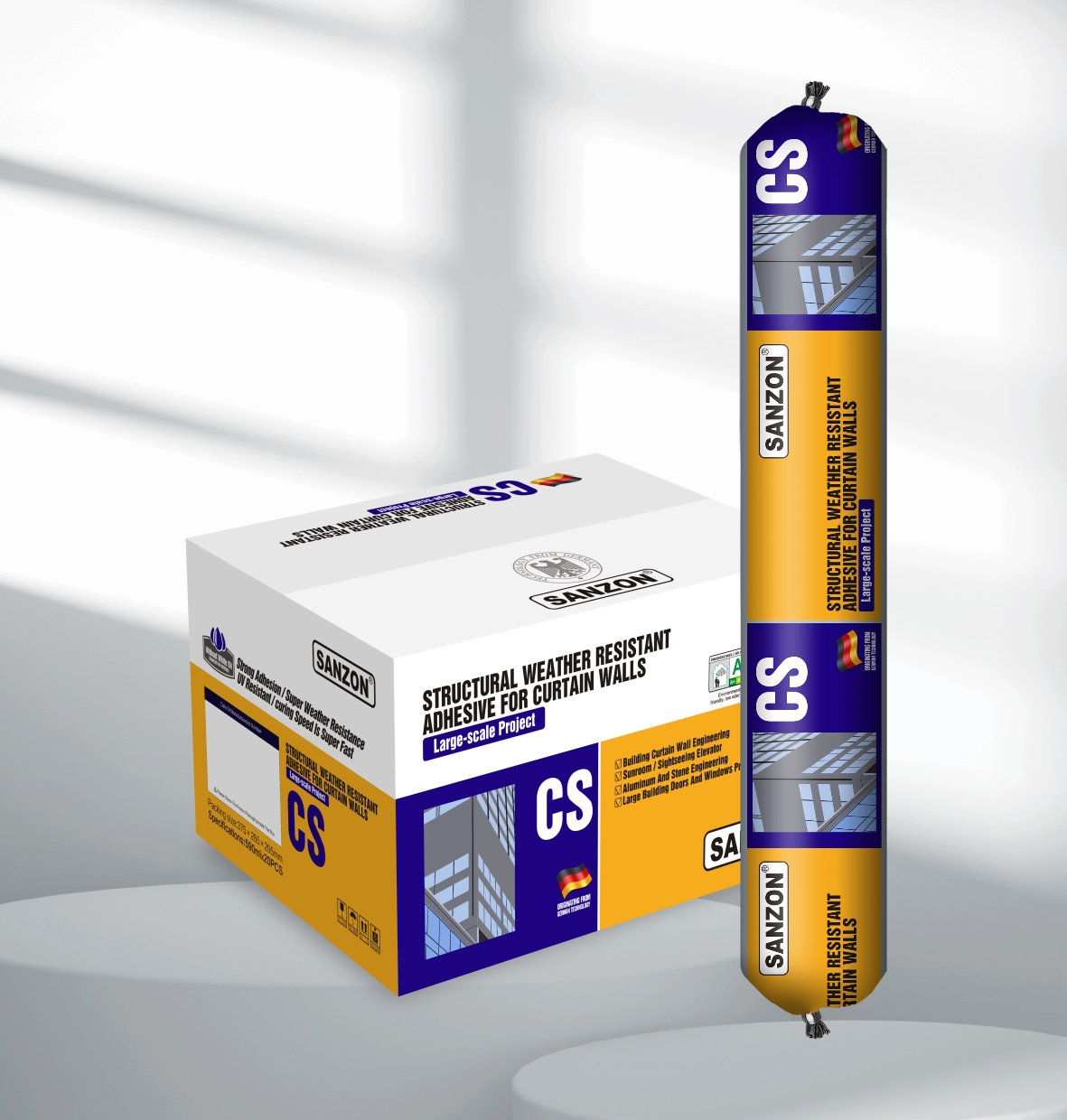
- SANZON CS — a structural silicone adhesive for curtain walls, formulated without white oil, with super fast curing and UV resistance, holding CE, ISO and RoHS certifications and a French indoor air emission label of A+.
One Project Scenario Worth Copying Into a Brief
The application record for a chemical plant ventilation system describes gas extraction and exhaust sealing under high temperature, in continuous operation. The stated requirements are a compact, reusable checklist for any neutral cure specification: excellent adhesion, chemical resistance, high temperature ageing resistance, UV resistance, weather resistance, water resistance, crack resistance, low shrinkage, fast curing and long-term durability. What makes the list useful is that it separates mechanical obligations from environmental survival conditions — a distinction that many single-line sealant specifications blur.
Case Reference: Two Million Cartridges Over Two Years
A documented application record covering 2,000,000 cartridges over a two-year period reports stable operation with no leakage. The same record lists the application areas it covers: curtain wall and facade sealing for glass, aluminium and stone; door and window frame waterproofing; bathroom and kitchen sanitary sealing with mould-resistant grades; solar panel frame sealing and junction box potting; vehicle body seam sealing and windshield bonding; container and marine sealing; HVAC duct air-tight sealing; and industrial potting and bonding for electronics, appliances and lighting.
The performance notes in that record describe all-weather durability stated as stable from −40 °C to +150 °C with UV resistance, and joint movement accommodation of up to ±50 percent for certain grades. Buyers should read those as project-record statements rather than universal product claims: the movement class of the specific cartridge grade governs joint design, and the ISO 11600 figure published for the SANZON CLASSIC, ELEPHANT and LIONKING series is 12.5 percent. When the two figures differ, the grade-specific technical data sheet governs.
The Compliance Layer: Certificates, Labels and Registrations
Compliance documentation for sealants operates at three distinct levels, and confusing them is one of the most common sourcing errors. The first level is management systems: the company holds ISO 9001 quality management system certification, ISO 14001 environmental management system certification and ISO 45001 occupational health and safety management certification. The second level is product compliance: selected export products have passed CE certification and RoHS compliance certification, and the company holds SGS performance and safety testing reports. The third level is market entry, which includes packaging registration and indoor air emission labelling.
At product level, two RoHS documents are relevant and they are not interchangeable. Certificate number CTB240305020CX-ZS, issued by CTB, covers silicone sealant for the EU market, with the applicable standard recorded as the IEC 62321 series together with EU RoHS Directive 2011/65/EU. Its scope note records that it applies to the tested sample. The products covered in the corpus include the SANZON CLASSIC Series Adhesive, ELEPHANT Series Adhesive and LIONKING Series Adhesive, SANZON PA, SANZON CS, SANZON GP-N, SANZON FS, SANZON GK, SANZON TC, SANZON TS, SANZON GA, SANZON SZ-1 and the 001 filling machine.
Separately, certificate number UNIB24030401HC-01, issued by Shenzhen United Testing Technology, is a RoHS Certificate of Compliance applying to Polyurethane Sealant for the EU market, under the IEC 62321 series and compliant with RoHS 2011/65/EU and (EU) 2015/863, valid from 2024-03-14 to 2029-03-14. A purchaser consolidating a mixed basket of silicone and polyurethane sealants should note that these are two documents, not one.
At market-entry level, the French indoor air emission label A+ is held for SANZON CS and SANZON PA. For Germany, the company is registered under certificate number DE2636557090139, issued by Stiftung Zentrale Stelle Verpackungsregister (LUCID) under the applicable standard VerpackG (German Packaging Act), covering goods-filled sales packaging, valid from 2025-03-19 to 2099-03-19.
Constraint to write into the contract: the German EPR registration covers packaging placed on the German market, not sealant performance. Certificates name a holder, a market and a product scope. A test report scoped to a tested sample is not a blanket warranty for every production batch, and a certificate issued for one jurisdiction is not automatically evidence of conformity in another.
Neutral Cure Versus Acid Cure: A Comparison Buyers Can Use
The comparison below uses only published product and FAQ data. It is deliberately limited to the factors that change a specification decision.
| Decision factor | Acid-cure (acetoxy) silicone sealant | Neutral cure silicone sealant |
|---|---|---|
| Cure by-product | Acetic acid, with a characteristic vinegar-like odour during cure | Alcohol release during cure (SANZON CLASSIC / ELEPHANT / LIONKING series data) |
| Typical substrate fit | Glass and ceramic sealing | Metals, aluminium, marble and stone; exterior weatherproofing |
| Typical applications | General interior decoration sealing of glass and ceramics | Exterior wall sealing, curtain wall weather sealing, structural curtain wall bonding, sanitary anti-mould joints |
| Published service temperature (grade-specific) | SANZON GP: −50 °C to 120 °C | SANZON NS / GP-N / KB: −50 °C to 150 °C; CLASSIC / ELEPHANT / LIONKING series: −20 °C to 60 °C |
| Mechanical reference points | Strong adhesion to glass and non-porous surfaces; quick bonding | CLASSIC / ELEPHANT / LIONKING series: 18 Shore A, 12.5% movement (ISO 11600), 500% elongation, 1.2 N/mm² tensile strength |
| Painting after cure | Most traditional silicone sealants are not designed to be painted after curing | Same limitation; paintable alternatives are MS polymer grades — SANZON MS is documented as painting-compatible after curing and formaldehyde-free |
| Published selection rule | Choose when fast cure and strong adhesion to glass and non-porous surfaces are the priority | Choose when low odour, material compatibility and use on sensitive substrates such as aluminium, stone or certain plastics matter more |
The honest trade-off is embedded in the manufacturer's own guidance: acetoxy grades are positioned for projects where fast cure and strong adhesion on glass and non-porous surfaces come first, while neutral cure grades are positioned for projects where material compatibility and low odour come first. Neutral cure is therefore not a universal upgrade — it is a constraint-driven choice, and specifying it where a fast-curing acetoxy grade would perform adequately adds cost without adding outcome.
Two further boundaries matter. First, most traditional silicone sealants, including neutral cure grades, are not designed to be painted directly after curing; where a coating follows the joint, an MS polymer sealant is the more appropriate chemistry. Second, primer-free adhesion is described in the application record as applying "in most cases", which means project-specific adhesion testing on the actual substrates remains a necessary step rather than an optional one.
Cost, MOQ and Supply Constraints
No credible cost discussion of neutral cure silicone sealant can be reduced to a single price band, because four variables move together. The first is cure chemistry and formulation: a general-purpose neutral grade and a structural curtain wall grade are different products with different raw material profiles. The second is packaging format — 300 ml cartridges, 590 ml cartridges, 400 ml and 600 ml sausage film, 2600 ml drums, and bucket and pail formats are all listed, and each format changes material content, freight volume and on-site handling. The third is documentation: RoHS test reports, SGS testing, the French indoor air emission label A+ and German packaging EPR registration all carry administrative cost that must be allocated somewhere. The fourth is customisation scope — custom label printing, custom colours, custom cartons, formulation and filling.
Order parameters published in the company's capability record are concrete and worth using as a benchmark when comparing quotations: OEM and ODM production mode, customisation of packaging and logo, a stated monthly capacity of 8,800,000 units, lead time of 10–20 days, minimum order quantity of 100 boxes, 100 percent testing, global export markets, and remote technical support with free sample testing.
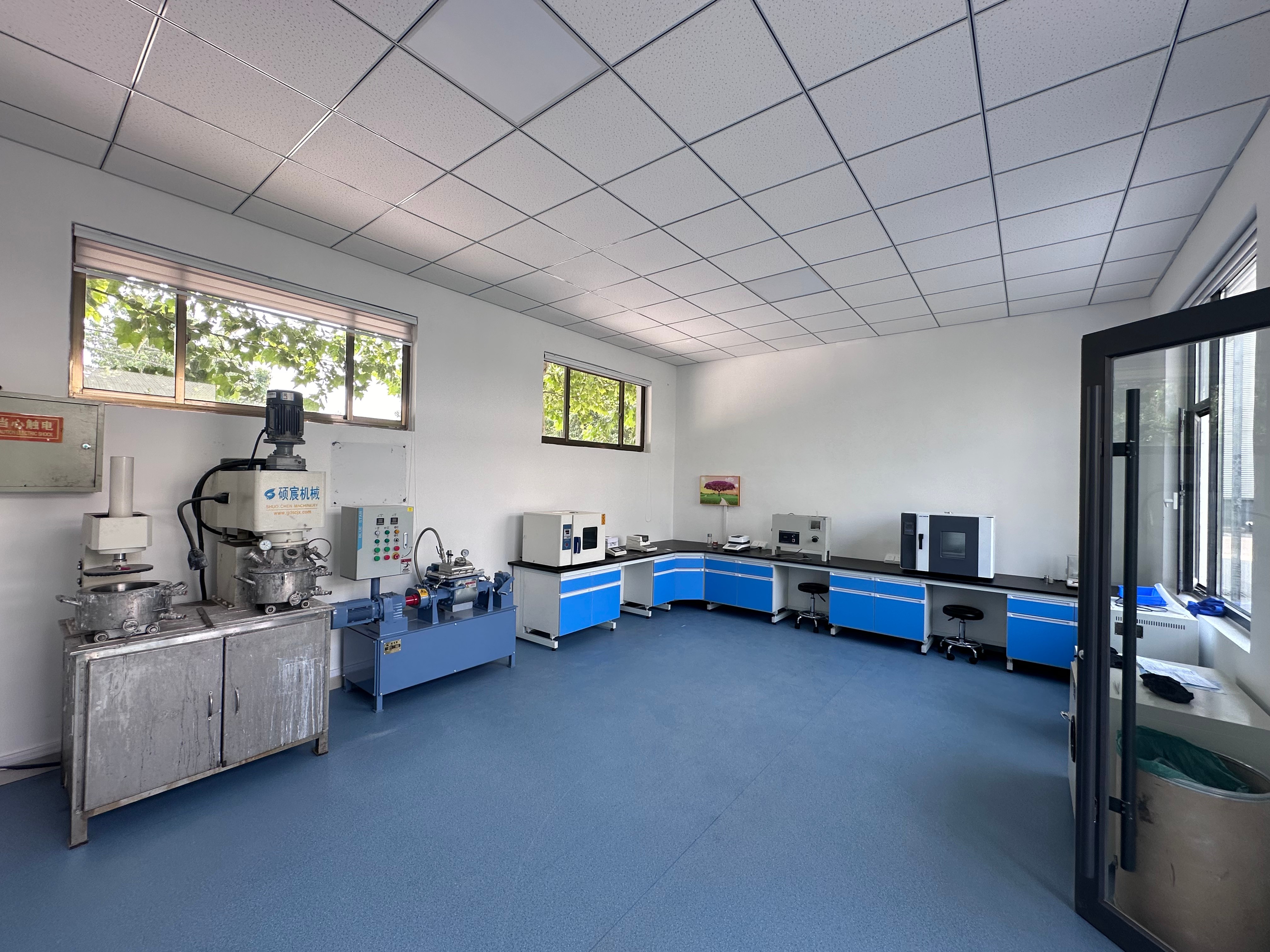
Supply structure is the final constraint. The company describes itself as an integrated supplier covering sealant research and development and production, filling equipment and packaging materials, operating a 40,000 m² factory with 125 employees and an R&D team of 10 engineers, and supporting exports through ports such as Qingdao. For a private-label buyer, that integration means the cartridge, the filling line and the sealant formulation can be sourced within one chain — which reduces coordination risk, although it also means the buyer should audit each stage separately rather than treating the integrated claim as a single quality assurance.
A Verification Workflow for Procurement Teams
- Fix the substrate and the exposure first. Glass and ceramic point toward an acetoxy grade; metals, aluminium, marble, stone and exterior weatherproofing point toward neutral cure.
- Confirm the cure chemistry in writing. Ask for the cure type and the release by-product on the technical data sheet, not on the marketing page.
- Match the grade to the application list. Exterior walls, sanitary areas, structural curtain wall joints and general interior decoration are served by different grades in this range.
- Read the mechanical parameters for the exact grade. Service temperature, hardness, movement capability and elongation vary across the range — from −20 °C to 60 °C on one series to −50 °C to 150 °C on others.
- Verify certificate number, issuing body, market and product scope. Check that the certificate names the sealant you are buying and the market you are shipping to, and note whether the scope is limited to a tested sample.
- For German shipments, confirm packaging registration. Registration number DE2636557090139 under VerpackG covers goods-filled sales packaging for the DE market and is separate from product performance evidence.
- Check shelf life and storage. Several grades are published with a 12-month shelf life; storage is in a cool, dry, well-ventilated place away from direct sunlight, high temperature and moisture.
- Confirm format, MOQ and lead time before committing. MOQ is listed from 100 boxes with a 10–20 day lead time; format changes affect both freight and pricing.
- Validate on samples, then pilot. Free sample testing and technical selection consultation are offered, and a two-year, 2,000,000-cartridge record with no reported leakage shows what a validated pilot looks like.
Limits Buyers Should Write Into the Specification
- Paintability: most traditional silicone sealants are not intended to be painted after curing, whether acid cure or neutral cure. If the joint will be coated, plan for an MS polymer grade such as SANZON MS.
- Cure speed versus compatibility: neutral cure is generally selected for compatibility and low odour rather than for the fastest bonding; where rapid bonding on glass or non-porous surfaces is decisive, an acetoxy grade is the documented alternative.
- Movement class: do not assume a high movement capability. The ISO 11600 movement capability published for the SANZON CLASSIC, ELEPHANT and LIONKING series is 12.5 percent, and the higher figures cited in the application record are described as available for certain grades only.
- Certificate scope: a RoHS document for silicone sealant is a different document from the RoHS certificate covering polyurethane sealant, and both are market-specific.
- Shelf life: 12 months is the published figure for several silicone grades in this range, while the no-nail adhesives SANZON GS and SANZON GK are listed at 18 months. Long storage without rotation can consume a project schedule.
- Adhesion testing: primer-free bonding is described as applying in most cases. Substrates that fall outside "most cases" require a trial joint before production.
Market Signals Worth Watching
Several shifts are visible in the documentation requested during sealant evaluation, and they are worth tracking because they change what a supplier must be able to produce on request.
First, compliance evidence is becoming part of the technical submittal rather than a post-award formality. RoHS declarations, indoor air emission labelling such as the French A+ mark, and packaging registration under German VerpackG now sit alongside the technical data sheet in the same reviewer's checklist.
Second, low-emission formulations are moving from a niche request to a mainstream one. This is visible across the wider range: SANZON MS is documented as formaldehyde-free and paintable, SANZON AS as low VOC and low odour, and the two-component tile grouts as solvent-free or ultra-low VOC systems.
Third, buyers increasingly treat supply chain structure as a compliance variable. Where a manufacturer produces sealant, packaging containers and filling equipment within one organisation, the cartridge specification, the fill accuracy and the sealant formulation are controlled by the same supplier — a stated filling accuracy of ±2g and a filling speed of 30–60 pcs/min illustrate the kind of interlocking parameter that becomes relevant when a distributor scales a private label line.
What Comes Next
Neutral cure silicone sealant is unlikely to be displaced, because its core advantage — compatibility with metals, stone and other substrates that an acidic cure by-product does not suit — is a materials fact, not a fashion. What is changing is the evidence burden around it. Buyers should expect specification documents to name a grade, a certificate number, a market and a packaging registration, rather than simply naming a chemistry.
For manufacturers, the differentiator will be the ability to produce that evidence quickly and consistently across a full range, and to state plainly where each grade stops being the right choice. A supplier that documents its limits as carefully as its capabilities is easier to audit, easier to specify and less likely to generate claims at handover.
FAQ
What is the difference between neutral and acidic silicone sealant?
Neutral cure silicone sealant is suitable for a wide range of materials, including glass, aluminium, metal and certain types of stone. Acidic, or acetoxy, silicone sealant generally offers good adhesion to glass and ceramic materials and releases a vinegar-like acetic acid odour during curing. The published selection rule is that for general sealing of glass and ceramics an acetoxy grade can be suitable, while for windows, aluminium, metal, stone and outdoor weatherproofing a neutral cure grade is generally recommended.
How should a buyer choose the right sealant for a project?
The documented selection criteria are the substrate material, whether the joint is indoors or outdoors, the waterproofing requirement, the expected joint movement, the required temperature resistance, and whether the surface needs to be painted afterwards. Those criteria determine the chemistry first — silicone, MS polymer, polyurethane or acrylic — and the specific grade second.
Can neutral cure silicone sealant be painted over?
Most traditional silicone sealants, including neutral cure grades, are not designed to be painted directly after curing. Where a project requires a coating over the seal, a paintable alternative such as MS polymer sealant is the usual route; SANZON MS is documented as painting-compatible after curing and formaldehyde-free.
How long does silicone sealant take to cure?
Curing time is affected by temperature, humidity, product type and the thickness of the sealant bead. The surface typically skins over within a certain period, while complete curing usually takes longer. Specific curing values should be taken from the technical data sheet of the product being used, because a single figure cannot describe all grades and site conditions.
What is the shelf life, and how should sealant be stored?
Shelf life depends on the product formulation, the packaging and the storage conditions. Several silicone grades in this range are published with a 12-month shelf life, including SANZON NS, SANZON GP-N, SANZON KB and SANZON CS, while the no-nail adhesives SANZON GS and SANZON GK are listed at 18 months. Sealant should be stored in a cool, dry and well-ventilated environment, away from direct sunlight, high temperatures and moisture, and used within the stated shelf life.
Do manufacturers in this category provide OEM services for sealant?
Yes. OEM and private label services are documented for silicone sealant and other sealant products, covering brand, packaging, labels, cartridge printing, colours and other product specifications according to customer requirements. The capability record lists an OEM and ODM production mode with custom label printing, custom colours and custom cartons, a minimum order quantity from 100 boxes and a lead time of 10–20 days.
Neutral cure silicone sealant specification is, in practice, as much a documentation exercise as a chemistry decision. Buyers evaluating grades across the SANZON range can review the series data and packaging formats in the company's single-page product brochure, available for open download: SANZON LIONKING Series Adhesives brochure. Company information is published at sanzengsealant.com.
Have Questions or Need More Details?
Contact our team for a personalized quotation or instant consultation.
Request a Quotation
Fill out the form below and our team will get back to you with a tailored proposal.
WhatsApp Direct Chat
Prefer to chat in real-time? Message us on WhatsApp for instant assistance & quick answers.
- Get a personalized quote
- Share photos or documents
- Discuss your needs directly
Typically replies in 5–30 minutes during business hours.