
Ningbo Zhuorong (Honor Packaging) vs. Top Supplement Packaging Suppliers
Supplement packaging procurement rarely fails because a buyer cannot find suppliers. It fails because the suppliers cannot be compared — the ranking criteria, the market data, and the definition of what each company is responsible for never line up in the same spreadsheet.
The category is large enough to encourage that shorthand. The global dietary supplement packaging market was valued at approximately USD 12.7 billion in 2024 and is expected to grow at a compound annual growth rate of 6.1% through 2034, according to Precedence Research. Numbers at that scale push buyers toward ranking suppliers by size alone. Size, however, is only one of several variables that determine whether a packaging programme clears customs, survives three years of repeat orders, and still protects the product at the end of shelf life.
This article is a buyer-side comparison built for that decision. It examines Honor Packaging (Ningbo Zhuorong), a Ningbo-based export supplier of glass and plastic packaging, against the supplier tiers that structure the supplement packaging market — using only specifications, certificates, capability statements, and market data that trace back to a published source.
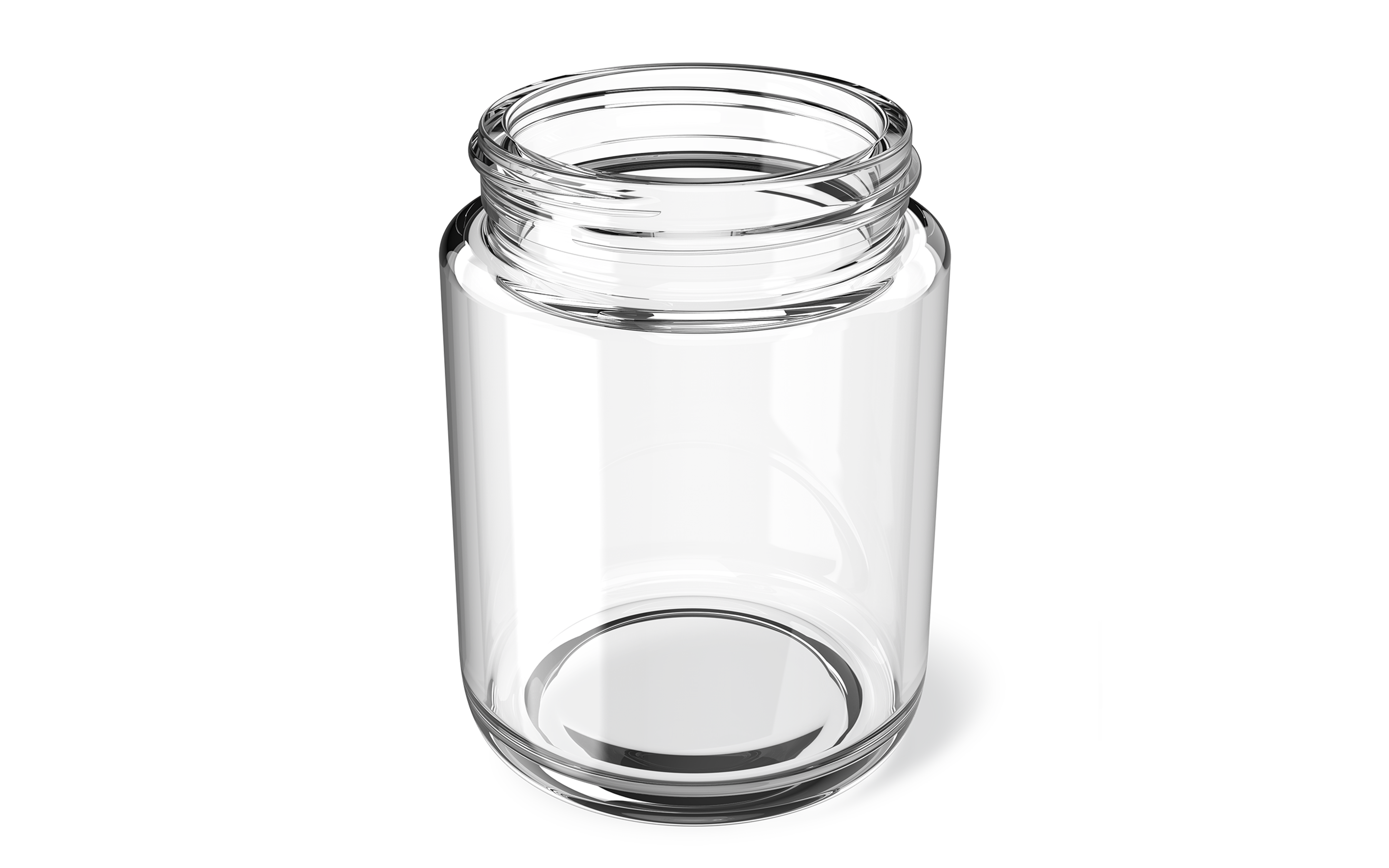
Child-resistant glass jar format (H21-0016C, 40 dr). Specification detail of this kind is what makes supplier-to-supplier comparison possible — or impossible.
Why Supplement Packaging Comparisons Break Down
Published research on this category does not agree on its size, and the disagreement is not a rounding difference. Grand View Research sizes the nutraceutical packaging market at USD 5.05 billion. Precedence Research sizes dietary supplement packaging at USD 12.7 billion for 2024. Straits Research places supplements and nutrition packaging at USD 28.69 billion. Each figure is defensible inside its own scope — nutraceutical packaging, dietary supplement packaging, and supplements and nutrition packaging are not the same market. Presented as a single headline number, however, they behave like competing estimates and distort every comparison built on top of them.
The same distortion affects supplier evaluation. A global converter, a regional glass specialist, and a contract manufacturing partner can all sit under the label "supplement packaging supplier" while offering materially different scope: stock container ranges versus custom tooling, container supply versus documentation packages, catalogue items versus responsibility for a package that can be mass-produced consistently.
That gap is where shortlists go wrong. A supplier selected for reputation may only be able to deliver standard containers, while the buyer's design requires new tooling, a defined neck finish, or a certificate that names the exact product and the exact market. The mismatch usually surfaces late — after artwork is approved and launch dates are committed.
Evaluation risk to check first: does the supplier's documented scope cover the product you are actually buying — the specific model, the specific market, and the specific closure system — or only a general capability statement?
The Comparison Set, and the Rules Used Here
Third-party market research identifies Amcor, Berry Global, and Gerresheimer as the top-tier global manufacturers in the nutraceutical and dietary supplement packaging sector, according to Grand View Research. That classification describes global manufacturing scale and category presence. It is not a claim about which of those companies is the right partner for a given supplement programme, and it should not be read as one.
Honor Packaging occupies a different position in the same landscape. Founded in 2015 and headquartered in Ningbo, China — close to both the Ningbo and Shanghai seaports — the company exports 100% of its output and lists the EU and USA as its main markets. It works through long-term joint-venture production bases for plastic and glass packaging and describes its role as a manufacturing-responsibility-focused partner: structural development, tooling strategy definition, and manufacturing risk assessment before mass production; process control and order fulfilment during it.
That framing matters because it defines the unit of accountability. A buyer is not only purchasing a container; the buyer is purchasing a repeatable manufacturing outcome, and the supplier's stated scope tells you how much of that outcome sits with them.
| Company | Comparison metric | Evidence used in this review |
|---|---|---|
| Amcor | Global manufacturing tier and category presence | Named by Grand View Research as a top-tier global manufacturer in nutraceutical and dietary supplement packaging |
| Berry Global | Global manufacturing tier and category presence | Named by Grand View Research as a top-tier global manufacturer in nutraceutical and dietary supplement packaging |
| Gerresheimer | Global manufacturing tier and category presence | Named by Grand View Research as a top-tier global manufacturer in nutraceutical and dietary supplement packaging |
| Honor Packaging (Ningbo Zhuorong) | Export-focused specialist: documented product specifications, certifications, order parameters | Company profile, product specification sheets, SGS-issued certificates, capability and case data published by the company |
No numeric performance ranking is applied in this article. A ranked list would require comparable, published specification and service data for every company named, and that data is not available in the sources used here. Where evidence does not exist for a supplier, this review records the absence rather than filling it with an estimate — an unsupported rank is worse than no rank, because it hides the exact information a buyer needs.
Six Criteria That Decide a Packaging Programme
Across supplement brands, importers, and contract manufacturers, the same six questions separate suppliers that work from suppliers that only quote:
- Compliance evidence — which certificates exist, who issued them, which product they name, and which market they cover.
- Specification transparency — published capacities, neck finishes, dimensions, weights, and wall thickness.
- Customisation and tooling responsibility — who develops the structure, who defines the tooling strategy, and who owns manufacturing risk.
- Order economics — minimum order quantity, lead time, and realistic monthly capacity.
- Quality control and verification rights — what inspection happens, and whether a third party can confirm it.
- Post-order accountability — what happens when a shipment does not meet specification.
The rest of this review applies those criteria, using only what can be documented.
Criteria 1 and 4: Company and Order Parameters You Can Check
Honor Packaging is Ningbo Honor Packaging Co., Ltd., a manufacturer and export supplier of child-resistant packaging, violet glass packaging, and vacuum packaging. The figures below come from the company's own profile and capability statements — which is precisely why they are useful in a comparison: they are specific enough to be verified or contradicted.
| Company fact | Reported value |
|---|---|
| Founded | 2015 |
| Headquarters | Ningbo, China |
| Employees | 310 |
| R&D team | 15 |
| Factory size (company profile figure) | 45,000 |
| Annual output | 1,000,000 units |
| Export ratio | 100% |
| Main markets | EU / USA |
| Main products | Child resistant packaging, violet glass packaging, vacuum packaging |
| Order and capability parameter | Reported value |
|---|---|
| Production mode | OEM, ODM |
| Customisation scope | Printing client's artwork, new design development, frosted finish |
| Monthly capacity | 100,000 units |
| Lead time | 30–45 days |
| MOQ | 10,000 units |
| Quality control | 100% pre-shipment test, third-party inspection (SGS) |
| Export markets | EU, US, Middle East, Southeast Asia |
| After-sales | Accepts reissue |
Two of these numbers shape programme planning more than the rest. A minimum order quantity of 10,000 units means the first production run is a commercial commitment, not a sample — brands planning a small validation batch should treat that threshold as a hard constraint rather than a negotiation opening. A 30–45 day lead time, sitting inside a stated monthly capacity of 100,000 units, means the schedule is workable but not elastic: orders that arrive late in a quarter compete for the same capacity window.
Criterion 2: Reading the Product Specifications
Specification sheets are where supplier comparison becomes concrete, because dimensions and thread finishes either match a filling line and a closure or they do not. Honor Packaging publishes capacity, item code, thread, diameter, height, weight, and glass thickness for its main families.
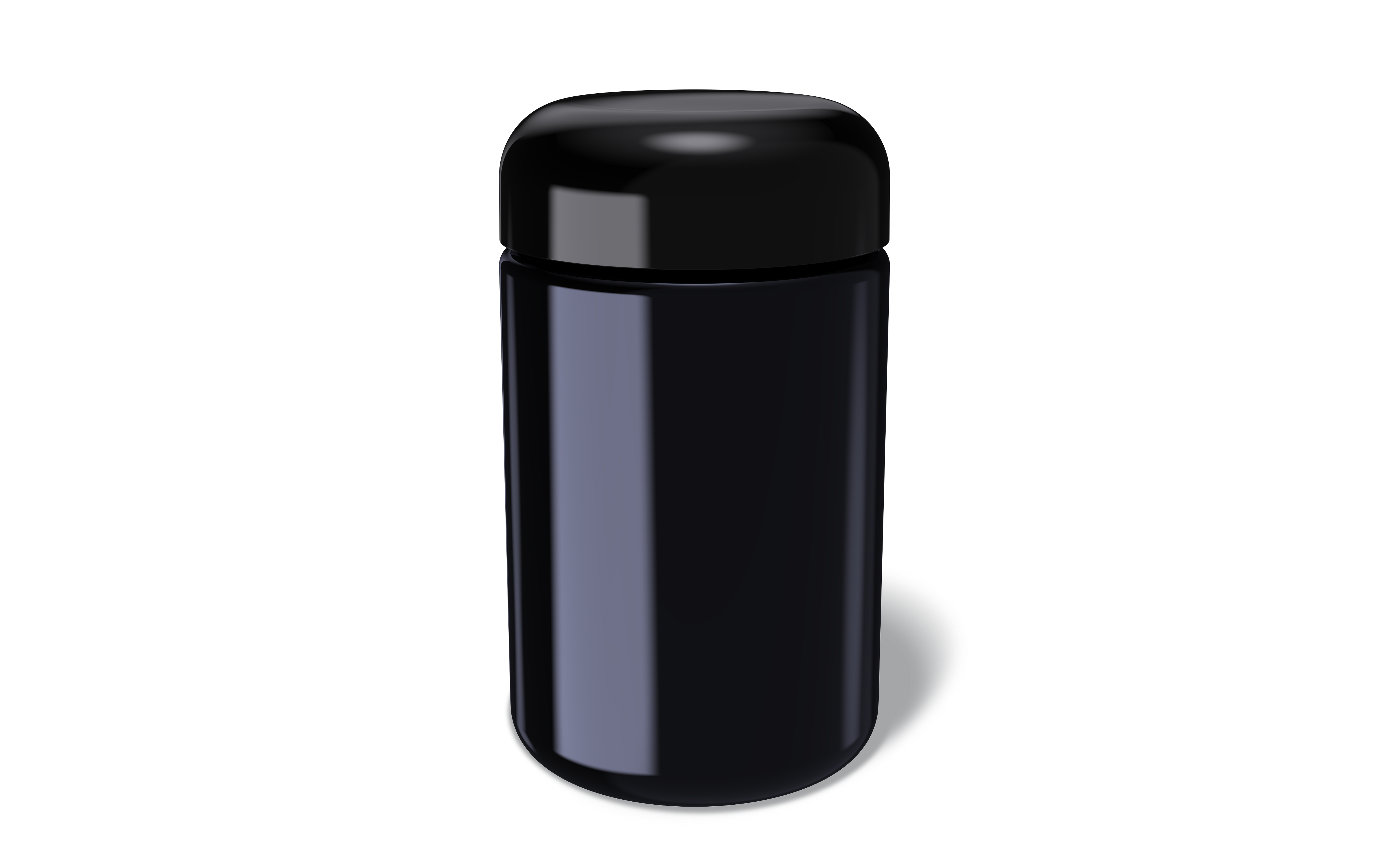
HDV1 wide mouth violet jars: 100 ml to 1 L, with thread finishes from 41/400 to 89/400 — relevant for herbs, powders, and spoonable formats.
| Family | Capacity | Thread / shape data | Dimensions and weight |
|---|---|---|---|
| H21 square jars (clear, violet, white, black) | 15 ml, 30 ml, 20 dr, 30 dr, 40 dr, 60 dr | Square; child-resistant cap; 58 mm diameter | 24–115 mm height; 75–280 g; 0.38 mm glass thickness |
| H21 round jars (clear, violet) | 30 ml, 2 oz, 20 dr, 30 dr, 40 dr, 60 dr, 6 oz | Round; child-resistant cap; 60 mm diameter | 36.5–125 mm height; 84–268 g |
| HDV1 wide mouth violet jars | 100 ml, 150 ml, 200 ml, 250 ml, 300 ml, 500 ml, 1 L | 41/400–89/400 thread | 48–95 mm diameter; 84.7–193 mm height; 117–610 g |
| HDV2 cosmetic violet jars | 3 ml, 5 ml, 10 ml, 30 ml, 50 ml, 60 ml, 100 ml, 200 ml | 32/400–89/400 thread | 36–93.2 mm diameter; 25.6–55 mm height; 36–205 g |
| HDV3 round violet glass bottles | 5 ml, 10 ml, 15 ml, 20 ml, 30 ml, 50 ml, 60 ml, 100 ml | Plastic cap, dropper, mist sprayer, or lotion pump | 54.5–125 mm height; 22.5–120 g |
| H19 concentrate jars (clear, white, black) | 5 ml, 9 ml | Square, round, triangle, hexagon; child-resistant cap | 27–38 g; 250 pcs/ctn |
| H19 vacuum jar | 5 ml | Square; vacuum click jar | Glass; 250 pcs/ctn |
Three details in that table are doing most of the work. First, the 0.38 mm glass thickness appears across the H21, HDV1, and HDV2 families, which gives buyers a consistent wall specification to compare against alternative quotations. Second, the thread finishes — 41/400 through 89/400 on HDV1, 32/400 through 89/400 on HDV2 — are stated explicitly, so closure compatibility can be checked before tooling rather than after. Third, the item codes map to individual models: HDV3 runs HDV3005M through HDV3100M, H21 square violet jars run H21-0003V through H21-0008V, and the H21 square clear range runs H21-0003C through H21-0008C. Item-level codes are what allow a buyer to write a purchase specification that can be quoted identically by two suppliers.
Surface treatments are also listed for the H21 and HDV families: sticker, silk-screen printing, hot stamping, heat transfer printing, and frosted finish — the finishing options that connect a container choice to a printed, shelf-ready supplement package.
Criterion 1 in Detail: Certificates and the Regulatory Frame
In supplement packaging, compliance is a gate rather than a selling point. Two certificates are documented for Honor Packaging's violet glass range, both issued by SGS:
| Market | Standard | Certificate number | Issuing body |
|---|---|---|---|
| EU | EC No 1935/2004 | NGBHL24007770101 | SGS |
| US | FDA CPG | NGBHL23005693401 | SGS |
The EU certificate applies to the HDV3 violet glass packaging range and covers the EU market. The FDA CPG certificate applies to the violet glass packaging range for the US market. Both are product- and market-specific, and that specificity is the point: a certificate that names HDV3 does not automatically extend to every SKU a buyer orders.
Beyond the supplier's own certificates, buyers should map the regulatory frame they are selling into. In the United States, dietary supplement packaging must comply with the Dietary Supplement Health and Education Act (DSHEA) of 1994 and FDA Current Good Manufacturing Practice under 21 CFR Part 111. In the EU, Regulation (EU) No. 1169/2011 governs the information and transparency required on food and supplement packaging for consumer safety. Tamper-evident packaging is also a mandatory requirement for dietary supplements under the Poison Prevention Packaging Act in the US for certain ingredients, such as iron above 30 mg.
The practical implication for comparison: certificates reduce risk only when the buyer checks three things — the certificate number, the product it names, and the market it covers. A certificate presented without that context is not evidence.
Criterion 5: Applications and Use Cases
Format decisions follow the product, not the supplier's catalogue. Across the published application data, Honor Packaging's glass packaging is used for food, cosmetic, and pharmaceutical packaging, with UV-protective black glass and child-resistant design listed as the special requirements, and hand operation with a matched cap as the operating mode. Documented destination markets for that application set include Canada, Germany, India, Italy, Thailand, and the United States.
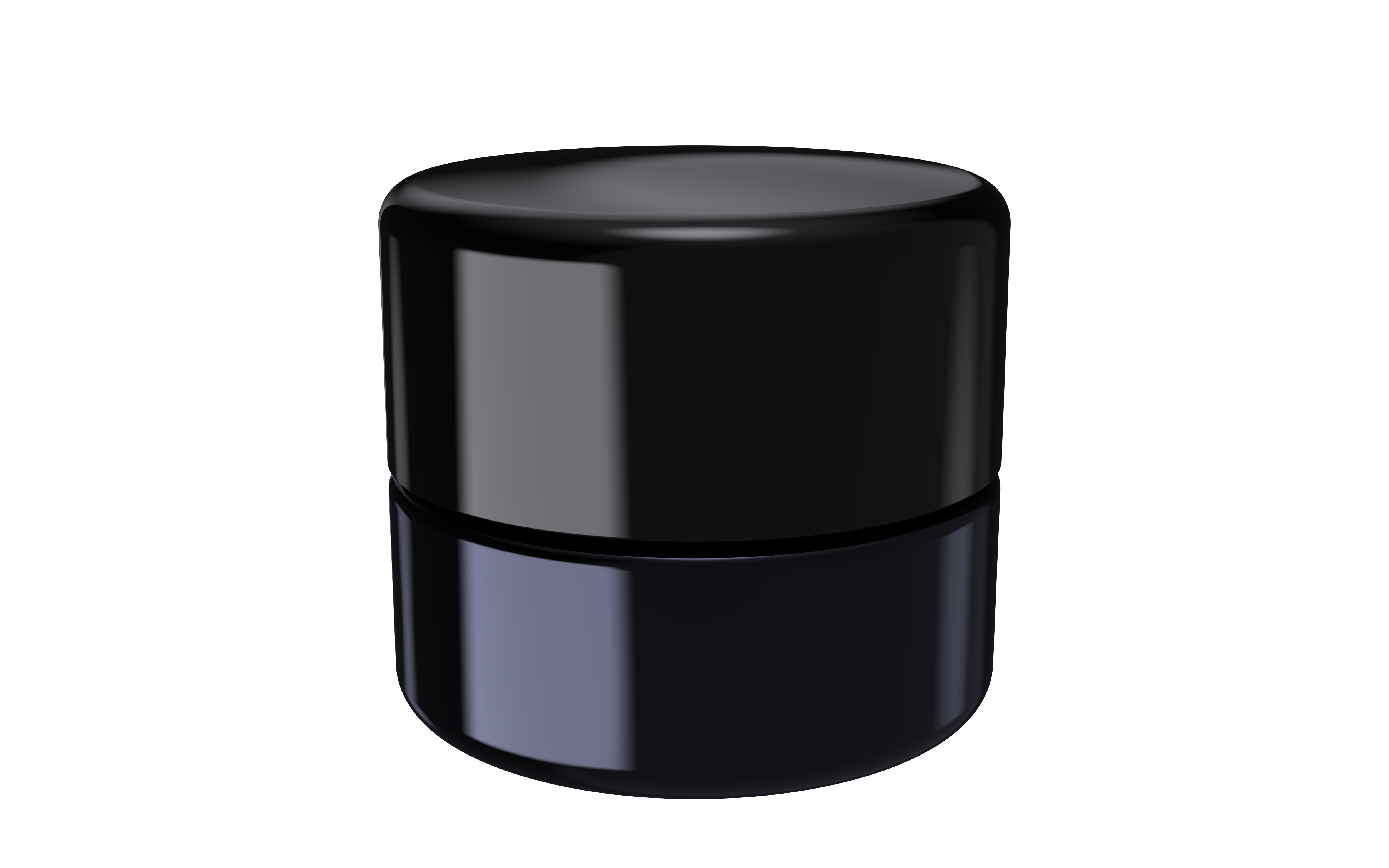
HDV2 cosmetic violet jars (3–200 ml) include a child-resistant option — useful where small-volume formats also carry child-safety obligations.
Mapped against product type, the specification data points to fairly distinct matches:
- Shilajit and viscous resin formats — small glass jars in the H19 range (5 ml and 9 ml), including the H19 vacuum click jar, where a tight seal matters more than volume.
- Herbs and powders — HDV1 wide mouth violet jars from 100 ml to 1 L, with 41/400 to 89/400 threads for larger closures and spoonable access.
- Capsules and solid dose — H21 square and round child-resistant jars across 15 ml to 200 ml, with a 0.38 mm wall and consistent 58 mm or 60 mm diameters.
- Oils, serums, and liquid extracts — HDV3 round violet glass bottles from 5 ml to 100 ml, with dropper, mist sprayer, or lotion pump closures.
- Cosmetic-adjacent supplement lines — HDV2 violet jars from 3 ml to 200 ml, including a child-resistant variant.
A documented case illustrates the durability side of that picture. A German branding business ordered 10,000 units for pharmaceutical packaging and has run the programme for three years on violet glass packaging; the recorded result is that the products remained fresh, with reusable construction and UV protection listed as the highlights. That is a single case, not a general proof of performance — but a three-year repeat programme is a more informative signal than a first-order reference.
Criterion 6: Quality Control and Post-Order Responsibility
Quality claims are only comparable when they are stated as procedures. Honor Packaging documents 100% pre-shipment testing plus third-party inspection through SGS, and lists reissue as its after-sales position. Read together with the certificate numbers above, that gives buyers three verification paths that do not depend on visiting the factory: request the certificate numbers and confirm them with the issuing body, require the third-party inspection report per shipment, and confirm in writing what "reissue" covers if a batch deviates. Where a supplier cannot supply those three items, the comparison should record that as a gap rather than treat it as neutral.
Market Trends That Should Shape the Shortlist
Three published trends are material to how a supplement packaging shortlist should be built.
Plastic still dominates on cost. Plastic captured a 58.3% revenue share of nutraceutical packaging in 2024, according to Grand View Research, driven by cost-effectiveness and barrier properties. Any comparison that treats glass as the default is out of step with how most of the market actually buys. Glass is a deliberate choice, made for specific reasons — UV protection, reusability, weight and feel, premium positioning — and it should be justified against a plastic option rather than assumed.
North America concentrates demand. North America accounted for 34.4% of global supplement packaging revenue in 2024, according to Grand View Research. For a supplier that lists the EU and USA as main markets and exports 100% of output, that concentration is directly relevant: US compliance requirements, not European ones, will govern a large share of the buyer conversations.
Flexible formats are growing. The Mylar bags market, frequently used for flexible supplement packaging such as powders and herbs, was valued at USD 2.4 billion in 2023 and is projected to reach USD 4.1 billion by 2030, according to Vantage Market Research. Rigid glass and flexible film are not competing for the same briefs; the growth of flexible formats is a reminder that a supplier's value depends on whether the buyer's product actually belongs in a rigid container.
Where Glass and Child-Resistant Formats Have Real Limits
A comparison that only lists strengths is not a comparison. Four constraints are visible directly in the published data.
Weight and freight. HDV1 wide mouth violet jars run from 117 g to 610 g per unit. At the upper end, a 1 L program ships significantly more mass per unit than an equivalent plastic container, and freight, pallet configuration, and damage exposure all follow from that number. The 250 pcs/ctn packing for the smaller H19 jars is a similar constraint in the opposite direction — small units, high carton counts.
Order thresholds and timing. A 10,000-unit MOQ with a 30–45 day lead time is workable for an established product, but it does not suit a brand testing demand with a 2,000-unit pilot, and it does not compress easily when a launch date moves forward. Buyers should verify whether the MOQ applies per item code or per order; the published figure does not specify.
Material trade-offs are real. Plastic's 58.3% share of nutraceutical packaging revenue exists because plastic is cheaper and offers barrier properties. Glass brings UV protection and reusability, and it also brings breakage risk that flexible and plastic formats do not carry. For a cost-driven program, choosing plastic is the correct decision, not a compromise.
Certification scope is narrow by design. The EU certificate applies to the HDV3 range; the FDA CPG certificate applies to the violet glass range. Anything outside those scopes requires separate evidence, and buyers should not assume coverage transfers.
What to Expect Next
The comparison criteria in this category are hardening, and the pressure is coming from documentation rather than materials. Regulatory frames on both sides of the Atlantic — FDA CGMP under 21 CFR Part 111 and DSHEA in the US, Regulation (EU) No. 1169/2011 in the EU, and tamper-evidence obligations under the Poison Prevention Packaging Act for certain ingredients — continue to require that packaging decisions be defensible on paper.
That shifts the basis of competition. Suppliers that publish item-level specifications, thread finishes, wall thickness, certificate numbers, MOQ, and lead times are easier to shortlist, because the buyer can verify claims before a purchase order exists. Suppliers that do not publish those figures are not necessarily weaker — they are simply harder to compare, and in a category where the market data itself disagrees by a factor of five, unverifiable claims are the most expensive kind of ambiguity.
For buyers evaluating Honor Packaging (Ningbo Zhuorong) against larger global manufacturers, the practical framing is not which company is bigger. It is whether the supplier's documented scope — 100% export orientation, EU and US main markets, OEM and ODM production, child-resistant and violet glass formats, SGS-issued certificates naming specific products and markets — matches the product, market, and volume of the programme in front of them.
FAQ
Q1. Which certifications should a supplement packaging supplier be able to prove for EU and US shipments?
Two categories of evidence matter. First, the supplier's own food-contact certificates: Honor Packaging holds an EU certificate for HDV3 violet glass packaging under EC No 1935/2004, certificate number NGBHL24007770101 issued by SGS and applicable to the EU market, and an FDA CPG certificate, number NGBHL23005693401, also issued by SGS and applicable to the US market. Second, the regulatory frame the buyer sells into: in the US, dietary supplement packaging must comply with DSHEA of 1994 and FDA CGMP under 21 CFR Part 111; in the EU, Regulation (EU) No. 1169/2011 governs the information required on food and supplement packaging. Certificates are product- and market-specific, so the product named on the certificate should match the product ordered.
Q2. What do the specification figures on child-resistant glass jars actually tell a buyer?
They tell a buyer whether the container will fit the filling line, the closure, and the label without further tooling. For the H21 family, square child-resistant jars are listed at 15 ml, 30 ml, 20 dr, 30 dr, 40 dr, and 60 dr, with a 58 mm diameter, heights of 24–115 mm, weights of 75–280 g, and 0.38 mm glass thickness; the round H21 jars run 30 ml to 6 oz with a 60 mm diameter and heights of 36.5–125 mm. The HDV1 wide mouth violet jars cover 100 ml to 1 L with thread finishes of 41/400 to 89/400 and weights from 117 g to 610 g. Stating capacity, thread, diameter, height, weight, and wall thickness together is what makes two suppliers' quotations directly comparable.
Q3. What does OEM/ODM capability change in a supplement packaging project?
It changes where manufacturing risk sits. Honor Packaging documents OEM and ODM production, with customisation covering printing of the client's artwork, development of a new design, and frosted finish, alongside surface treatments such as sticker, silk-screen printing, hot stamping, heat transfer printing, and frosted finish on the H21 and HDV families. Before mass production, the company states that it is involved in product structural development, tooling strategy definition, and critical manufacturing risk assessment and validation. For a buyer, the practical difference is whether a new design has to be proven manufacturable by the buyer's own team or by the supplier.
Q4. Which order parameters should be confirmed before committing to a supplement packaging order?
At minimum: minimum order quantity, lead time, and monthly capacity, because together they define what the supplier can actually schedule. Honor Packaging reports an MOQ of 10,000 units, a lead time of 30–45 days, and a monthly capacity of 100,000 units, with annual output listed at 1,000,000 units and packing of 250 pcs per carton on the smaller H19 jar ranges. Whether the 10,000-unit MOQ applies per item code or per purchase order is not specified in the published data and should be confirmed in writing, since it materially changes the cost of testing multiple formats.
Q5. Why does plastic still dominate supplement packaging if glass offers UV protection?
Because cost and barrier performance, not UV protection alone, drive most purchasing decisions. Plastic held a 58.3% revenue share of nutraceutical packaging in 2024, according to Grand View Research, which attributes that position to cost-effectiveness and barrier properties; North America accounted for 34.4% of global supplement packaging revenue the same year. Glass formats are chosen when the product or the brand requires UV protection, reusability, or a premium physical presence — as in the documented case of a German branding business that has used violet glass packaging for pharmaceutical packaging across a three-year, 10,000-unit programme, citing freshness retention, reusability, and UV protection. For cost-driven programmes, plastic remains the rational default.
Q6. How can a buyer verify quality control claims without visiting the factory?
Through documents that a third party issues or confirms. Honor Packaging lists 100% pre-shipment testing and third-party inspection through SGS as its quality control method, and states that it accepts reissue as its after-sales position. A buyer can act on that by requesting certificate numbers and confirming them with the issuing organisation — for example NGBHL24007770101 under EC No 1935/2004 and NGBHL23005693401 under FDA CPG, both issued by SGS — by requiring the third-party inspection report with each shipment, and by defining in writing what a reissue commitment covers when a batch does not meet specification.
Reference material: the company profile brochure for Honor Packaging is available at https://cdn.socialarks.com/sbsp/24595/common/2026/0522/6a0ffb0359bc9.pdf, and the company website is www.honorcrpkg.com.