
Nitinol Wire for Medical Devices: Applications and Sourcing
Nitinol Wire for Medical Devices: Applications and Sourcing
Nitinol wire is a nickel-titanium shape memory alloy used as a functional raw material in orthodontic archwires, dental root canal files, guide wires, cardiac occluders, thrombus filters, luminal stents, and other medical devices. For engineering and procurement teams at the awareness and research stage, Nitinol wire follows a different selection logic than conventional titanium bar or titanium plate: the deciding factors are superelasticity, shape memory behavior, transformation temperature (Af) control, and batch-level traceability.
Why Nitinol Wire Demands a Different Sourcing Logic
Medical devices place unusual demands on raw material suppliers. A titanium bar used for bone screws or joint stems must meet ASTM F136 or ISO 5832-3 with controlled microstructure and dimensional accuracy. Nitinol wire adds another layer of complexity: the same alloy can behave as a superelastic archwire, a self-expanding stent, or a thermally activated actuator, depending on how the transformation temperature is set and how the wire is processed.
Procurement teams evaluating Nitinol wire for the first time face several material-specific questions. Which condition is required: cold-working, super-elastic, or thermal-activated? Which surface finish is appropriate: polished bright, black oxide, acid pickled, or light oxide? Which Af temperature range matches the clinical application? These decisions directly affect device performance and regulatory risk.
The opportunity side is equally significant. The global Nitinol-based medical device market was valued at USD 4.1 billion in 2024, with a projected CAGR of 7.1%, according to Precedence Research. As minimally invasive procedures expand, demand is rising for Nitinol wire with precise Af control, consistent mechanical properties, and full-process traceability. Suppliers that can guarantee these parameters from ingot to finished wire become strategically valuable to device manufacturers.
The Material: Nitinol Wire as a Product Category
Nitinol wire is made of nickel-titanium alloy, with a nominal composition of Ni 54.5–57.0% and Ti balance. It belongs to the shape memory alloy category and is typically supplied in round, square, and rectangular forms. Common round sizes include 0.012″, 0.014″, 0.016″, 0.018″, and 0.020″; rectangular sizes include 0.016″ × 0.022″, 0.017″ × 0.022″, 0.018″ × 0.025″, 0.019″ × 0.025″, and 0.021″ × 0.025″. In metric terms, the diameter range extends from 0.0127 mm to 6.0 mm.
XI'AN BOSSIN METAL TECHNOLOGY CO.,LTD., established in 2008, is a manufacturer specializing in titanium and Nitinol materials. The company is located in Baoji High-tech Zone, known as "China's Titanium Valley", with a 50,000 square meter manufacturing facility and approximately 150 employees, including a 30-engineer R&D team. Its main products include titanium bar, medical titanium bar, titanium plate, Nitinol wire, titanium wire, titanium coil, and titanium cable. Annual production capacity reaches 5,000 tons, supported by a complete in-house production line from raw materials to finished products.
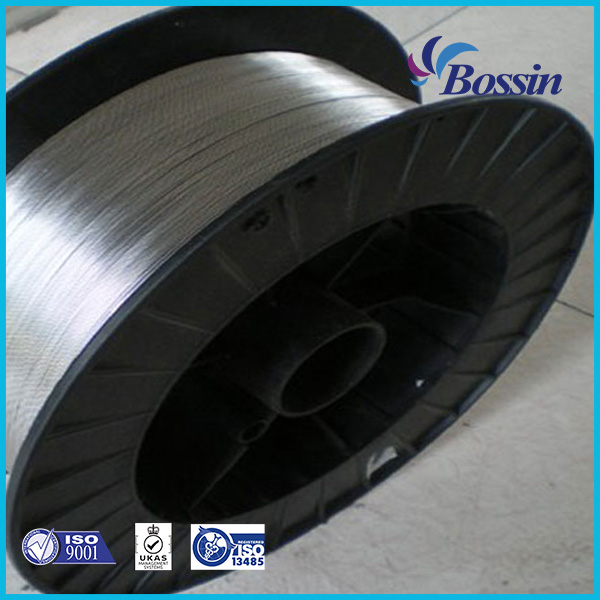
For Nitinol wire, BOSSIN supplies products compliant with ASTM F2063, with surface finishes including polished bright, black oxide, acid pickled, and light oxide. Available conditions cover shape memory alloy, superelastic Nitinol, low-temperature superelastic Nitinol alloy, medical Nitinol alloy, narrow hysteresis Nitinol alloy, and wide hysteresis Nitinol alloy. Transformation temperature options span from below −15°C to 45–90°C, including precision ranges such as 33°C ± 3°C for active Af applications.
Technical Specifications: Composition, Behavior, and Quality Control
Nitinol wire derives its medical value from two physical behaviors. The shape memory effect allows the wire to recover a pre-set shape when heated above its transformation temperature. Superelasticity allows large recoverable strain at temperatures above Af, which is why orthodontic archwires can deliver a light, constant force over a long treatment period. In orthodontic applications, the corpus specifies superelasticity with recoverable strain of at least 8%, tensile strength of at least 800 MPa, and diameter tolerance up to ±0.01 mm. The Af point for NiTi orthodontic archwires is typically 25–35°C.
Transformation temperature is the most critical specification for Nitinol wire. The available Af ranges in BOSSIN's product range include below −15°C, −10 to 10°C, 0 to 30°C, 20 to 40°C, 45 to 90°C, and 33°C ± 3°C, with additional options for narrow hysteresis (As−Ms ≤ 5°C) and wide hysteresis (As−Ms ≤ 150°C) alloys. Medical device applications commonly require the Af tolerance to be controlled within ±10°C, with grain size no less than Grade 4.
Quality assurance for medical Nitinol wire goes beyond standard mill testing. Requirements identified in the corpus include a chemical composition spectral report and mechanical property curves for each batch, transverse macrostructure free from cracks, pipe ends, porosity, and inclusions, plus fatigue testing of finished products. A batch traceability system must support full-process traceability, and the manufacturing environment should comply with ISO 13485 certification for medical devices.
BOSSIN's quality system covers the entire production chain. All products undergo rigorous testing in laboratories accredited to ISO/IEC 17025 in accordance with international standards, and each batch order is accompanied by a factory inspection certificate. The company holds ISO 9001:2015, ISO 13485, and EN9100:2018 certifications, positioning its Nitinol wire program within a medical-grade quality framework.
Related product variants expand the design options for device engineers. NiTiCu wire, a nickel-titanium-copper alloy with Cu 4.5–7.5%, offers high surface finish, stable performance, and superior fatigue resistance for orthodontic archwires. Nitinol braided cable, available in 1×3, 1×7, and 7×7 strand configurations, is used in vascular stents, sutures, and orthodontic applications under ASTM F2063. Nitinol strip, with thickness from 0.03 mm to 2.0 mm and superelastic properties, serves orthodontic bracket parts and other medical components.
Medical Applications and Use Cases
Nitinol wire is one of the most versatile functional materials in modern medical device manufacturing. Documented applications include dental orthodontic wire, dental root canal files, guide wires, medical sutures, cardiac occluders, thrombus filters, anchor pins, localization wires, luminal stents, and stone retrieval baskets.
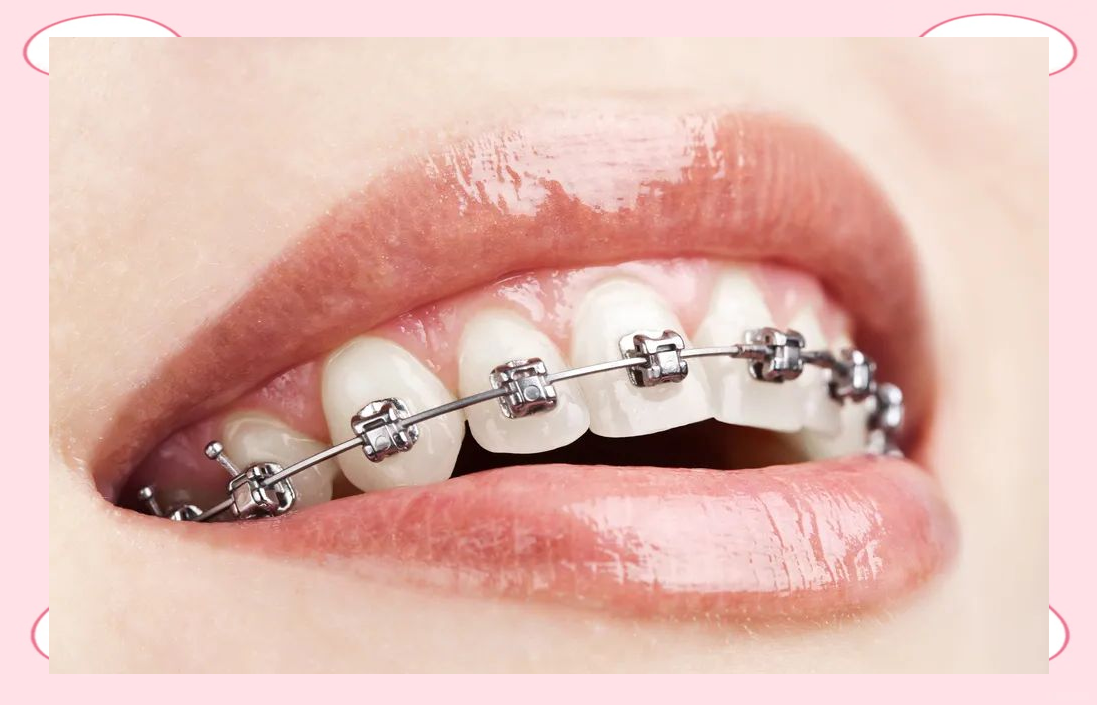
In dental orthodontics, Nitinol wire serves as raw material for finished orthodontic archwires used in fixed appliances. The wire operates in the oral environment and is used in conjunction with orthodontic brackets, buccal tubes, and bands. Its superelastic and thermally activated properties allow it to automatically recover shape at oral temperature, providing a light, constant, and long-lasting orthodontic force. The material must be non-toxic, non-irritating to oral mucosa, and capable of stable long-term performance in complex oral conditions.
In interventional medicine, Nitinol wire supports the manufacture of guide wires, luminal stents, cardiac occluders, and thrombus filters. These devices rely on the wire's ability to flex repeatedly without permanent deformation and to return to a designed configuration inside the body. The same functional principles apply to vascular stents and sutures made from Nitinol braided cable.
Outside medical devices, Nitinol wire and related forms such as Nitinol strip and Nitinol plate are used in aerospace actuators, robotics, temperature-control components, mobile phone antennas, eyeglass frames, and consumer electronics. The shape memory effect makes Nitinol a core structural component for providing sustained support and a thermally sensitive actuating element for precise automatic temperature control.
Market Trends in Nitinol Wire and the Broader Titanium Ecosystem
The medical-grade titanium materials market is estimated at USD 5.21 billion in 2025 and is projected to reach USD 9.56 billion by 2034, according to Dataintelo. Within this broader market, Nitinol-based medical devices represent a fast-growing specialty segment, valued at USD 4.1 billion in 2024 with a projected CAGR of 7.1% according to Precedence Research. Orthopedic implants account for the largest application share of medical titanium materials, approximately 42.3% of revenue, based on the same Dataintelo dataset.
Supply-side signals point to a tightening and specializing Nitinol market. Fort Wayne Metals, a leading global supplier of medical-grade nitinol, doubled its melting output between 2022 and 2024, with projected capacity of 1 million pounds per year, according to Mordor Intelligence and company disclosures. This investment reflects growing demand from device manufacturers for consistent, high-volume Nitinol wire supply.
China's position in the titanium supply chain also continues to strengthen. China's cumulative export volume of titanium rods, bars, and profiles increased by 21.85% year-on-year as of March 2025, based on China Customs data reported by SMM. This trend is relevant to Nitinol buyers because medical titanium bar, dental implant bar, titanium wire, and Nitinol wire are frequently sourced from the same integrated manufacturers in regions such as Baoji, China's Titanium Valley.
Nitinol Wire vs. Conventional Wire and Bar Materials
Choosing between Nitinol wire and conventional titanium or stainless steel wire requires a clear-eyed view of what each material can and cannot do. Nitinol wire is not a universal replacement for titanium bar or plate in load-bearing orthopedic structures; its value is concentrated in applications that require flexibility, recoverable strain, and shape memory.
| Material | Key Characteristics | Typical Medical Uses | Main Boundary / Limitation |
|---|---|---|---|
| Nitinol wire (NiTi) | Superelasticity, shape memory effect, ASTM F2063 | Orthodontic archwires, guide wires, stents, root canal files, occluders | Requires tight Af control and full batch traceability; generally higher cost and more complex processing than conventional wire |
| Titanium wire (Gr1, Gr2, Gr5, Gr23) | High strength, biocompatibility, corrosion resistance, ASTM F67/F136 | Orthopedic implants, surgical sutures, 3D printing | No shape memory; limited elastic recovery compared with Nitinol |
| Stainless steel wire | Established manufacturing base, lower material cost | Classical surgical instruments and temporary fixation | Higher stiffness and lower biocompatibility for long-term implantation |
A realistic limitation of Nitinol wire is its sensitivity to processing and thermal history. The same alloy can show significantly different mechanical behavior if the Af temperature is not accurately controlled. For this reason, buyers should verify per-batch chemical composition reports, mechanical property curves, fatigue test results, and traceability documentation rather than relying on a generic material certificate.
Future Outlook
The trajectory of Nitinol wire in medical device manufacturing points toward greater specialization. Minimally invasive procedures, patient-specific implants, and robotic-assisted surgery all favor materials that can flex, recover, and actuate. Nitinol wire, with its documented superelasticity and shape memory effect, is positioned to support these advances.
For manufacturers, the development of specialty Nitinol variants — including NiTiCu, narrow-hysteresis, wide-hysteresis, and low-temperature superelastic alloys — is likely to continue expanding the application envelope. In parallel, buyers are expected to place more weight on supplier process control, in-house production depth, and quality certifications.
Companies that already qualify suppliers for medical titanium bar, titanium plate, and titanium wire may find practical advantage in adding Nitinol wire to the same supplier relationship. BOSSIN, which supplies both conventional titanium products and Nitinol wire from its integrated facility, represents one example of this combined capability in the current market.
Readers can access BOSSIN's company brochure for detailed product specifications and company information: Download Brochure.
Frequently Asked Questions
What is Nitinol wire?
Nitinol wire is a nickel-titanium alloy wire made of Ni 54.5–57.0% and Ti balance. It belongs to the shape memory alloy category and is used in dental orthodontic wire, root canal files, guide wires, medical sutures, cardiac occluders, and other medical applications. It complies with ASTM F2063 standard.
What is the difference between superelastic and shape memory Nitinol wire?
Superelastic Nitinol wire operates above its transformation temperature and returns to its original shape when the applied stress is removed, enabling large recoverable strain. Shape memory Nitinol wire can retain a temporary shape at lower temperature and recover its pre-set shape when heated above the Af temperature. Both conditions are available in BOSSIN's Nitinol wire range.
What standard applies to medical Nitinol wire?
ASTM F2063 is the product standard referenced for Nitinol wire, with nickel content specified at 54.5–57.0%. For medical device applications, the manufacturing environment should also comply with ISO 13485 quality management certification. BOSSIN's Nitinol wire is tested in laboratories accredited to ISO/IEC 17025, and each batch is accompanied by a factory inspection certificate.
What sizes, conditions, and surface finishes are available for Nitinol wire?
Nitinol wire is available in diameters from 0.0127 mm to 6.0 mm, in round, square, and rectangular forms. Conditions include cold-working, super-elastic, and thermal-activated. Surface finish options are polished bright, black oxide, acid pickled, and light oxide. Transformation temperature ranges can be selected from below −15°C up to 45–90°C, including 33°C ± 3°C.
Which medical applications use Nitinol wire?
Nitinol wire is used in dental orthodontic wire, dental root canal files, guide wires, medical sutures, cardiac occluders, thrombus filters, anchor pins, localization wires, luminal stents, and stone retrieval baskets. It is also used in aerospace, robotics, and consumer electronics applications that require shape memory or superelastic behavior.
What quality checks matter when sourcing Nitinol wire?
For medical Nitinol wire, the transformation temperature (Af) tolerance should be controlled within ±10°C, and grain size should be no less than Grade 4. Each batch should be accompanied by a chemical composition spectral report and mechanical property curves. The transverse macrostructure must be free from cracks, pipe ends, porosity, and inclusions. Finished products should pass fatigue testing, and a batch traceability system should support full-process traceability.