
No Moving Parts: Assessing Ultrasonic Flow Sensor Longevity
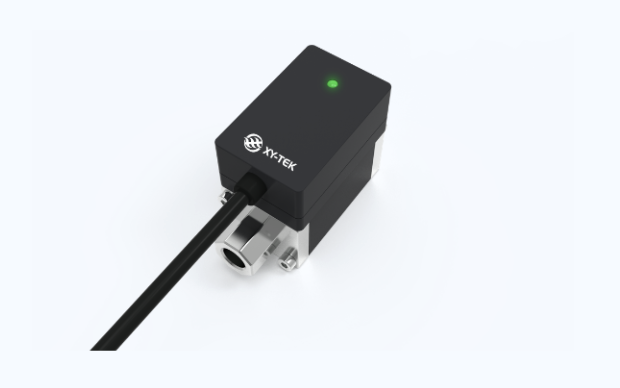
A flow sensor is rarely the most expensive component on a high-volume production line, but it is frequently one of the most disruptive when it stops reporting. Ultrasonic flow sensors measure liquid flow through acoustic transit-time signals rather than rotors, impellers or pistons, and that single design decision changes how a measurement point behaves in year one, year three and year five. XY-TEK (Shanghai Xunyin Technology Co., Ltd.) is a Shanghai-based manufacturer of ultrasonic flow sensors and flow meters whose in-line TPD and TPK series are documented with “no moving parts” and “low maintenance” as explicit design characteristics. This long-term reliability assessment looks at what those statements mean for lifecycle stability, downtime exposure and total cost of ownership in industrial-scale deployments — and where the claim legitimately stops.
Why “No Moving Parts” Is a Lifecycle Statement, Not a Slogan
A flow sensor measures the flow rate and volume of fluid within a pipe or duct, and in industrial environments it supports the monitoring and control of liquid flow. What separates sensor families is where the measurement takes place and what sits inside the fluid path. Volumetric mechanical meters rely on a moving element displaced by the liquid. Ultrasonic transit-time sensors instead transmit an acoustic signal through the medium and compare the time it takes to travel with the flow against the time it takes to travel against it.
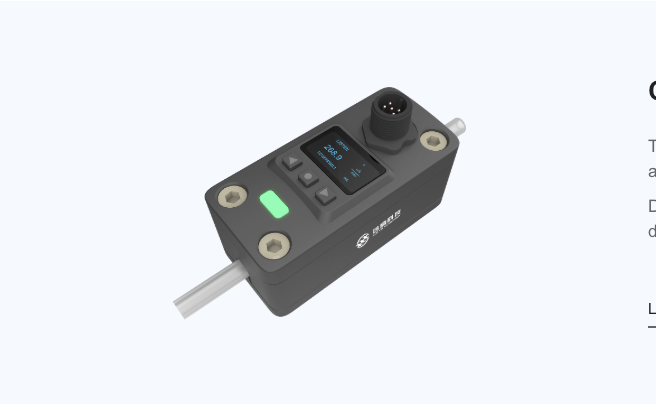
That distinction is structural rather than incremental. A mechanical measuring element carries bearings, seals and a wetted surface that fouls over time; an ultrasonic measurement path carries none of these. XY-TEK documents “no moving parts” and “low maintenance” as stated characteristics of its TPD and TPK in-line ultrasonic flow sensor series. The CPD series is documented as a clamp-on, non-invasive industrial flow sensor that is installed externally on rigid plastic tubing, so the measurement requires no wetted mechanical element at all. In the context of a five-year procurement decision, the practical meaning is straightforward: the dominant wear-out mechanism of a mechanical meter does not exist in these designs.
The Problem: In High-Volume Lines, Downtime Is a Scenario Cost
When a flow sensor fails on a pilot rig, the cost is the sensor and an hour of engineering time. When it fails on one of ten to thirty production lines running electrolyte injection, conformal coating or coolant circulation, the cost is different in kind. Production stops or runs blind, affected batches must be assessed, maintenance staff must be scheduled, and — if the sensor is an invasive design — the pipe has to be opened, drained and re-qualified before the line restarts.
That is the operating reality behind the growth of non-invasive measurement. XY-TEK’s industrial automation application material describes micro-flow and pulsating-flow monitoring in spraying, dispensing and cleaning systems, where the sensor detects bubbles, blockage or abnormal flow without interrupting the production line. The same logic applies in liquid cooling, where blockages and leaks need to be caught early rather than discovered after equipment overheats.
From a procurement standpoint, the opportunity is not a single product feature. It is the ability to place a measurement point on a line that was never designed for one — without cutting pipe, without adding pressure loss, and without turning the sensor itself into a scheduled maintenance item. XYZ-TEK’s CPD series is documented with clamp-on installation, air bubble detection, a built-in LED display and digital output compatibility, which is the shape of a sensor intended to be retrofitted rather than rebuilt into a line.
What the Series Documentation States for CPD, TPD and TPK
| Documented parameter | CPD Series | TPD Series | TPK Series |
|---|---|---|---|
| Sensor type | Non-invasive industrial flow sensor, clamp-on | Industrial in-line flow meter | Industrial in-line flow meter |
| Documented accuracy | ±2% | ±2% | ±2% |
| Stated measuring range | 0–80 L/min | 0–1000 L/min | 0–1000 L/min |
| Application scope | 0.1–50 L/min | 0.5–100 L/min | 0.5–100 L/min |
| Pipe compatibility | OD 6–26 mm / ID 3–20 mm, rigid plastic tubing (PFA, PTFE, Teflon, PVDF, PP, Nylon) | DN15–DN50 | DN4–DN50 |
| Fluid temperature | 0 °C to 90 °C | 0 °C to 90 °C | 0 °C to 90 °C |
| Materials | Engineering plastic, ultrasonic transducer | Stainless steel, engineering plastics (PPS) | Stainless steel, engineering plastics (PPS) |
| Documented design notes | Compact integrated design; clamp-on installation; air bubble detection; digital output compatibility; built-in LED display | Integrated structure; real-time flow measurement; no moving parts; low maintenance | Integrated structure; real-time flow monitoring; no moving parts; low maintenance |
| Typical industries listed | Industrial automation, food & beverage, water treatment, semiconductor | Industrial automation, battery manufacturing, chemical processing, liquid cooling | Industrial automation, battery manufacturing, chemical processing, liquid cooling |
Two observations follow from this table. First, the “no moving parts” and “low maintenance” language is attached explicitly to the in-line TPD and TPK series in the manufacturer’s own specification data. Second, the CPD series reaches the same outcome through a different route: because it clamps onto the outside of rigid plastic tubing, there is no wetted measurement element to wear, foul or contaminate. Both paths reduce the number of components that can degrade inside the process, but they are documented differently, and buyers should quote the version that applies to the series they are ordering.
The same portfolio contains adjacent formats for narrower tasks: the CG and CM clamp-on series for flexible and small-diameter tubing, the TGU low-flow series with a U-shaped measuring channel for micro-flow down to millilitre-per-minute levels, the SU single-use series built on biocompatible polymer materials, the BG bubble detector, and the TH pulsatile flow sensor for hemodynamic testing. Long-term reliability discussions usually start with TPD, TPK and CPD because those are the series specified for continuous industrial duty.
Total Cost of Ownership: What “No Moving Parts” Actually Changes
Total cost of ownership for a flow measurement point is not the purchase price. It is the purchase price plus everything the sensor causes over its service life. The table below breaks that into the cost drivers a buyer can actually influence at the specification stage.
| Cost driver | What drives it in practice | Effect of a no-moving-parts ultrasonic design | What to verify before commitment |
|---|---|---|---|
| Wear parts and spares | Rotors, bearings, seals and impellers consumed over time | Removes the mechanical wear component from the spare-parts list | Which components, if any, are specified as field-replaceable |
| Planned maintenance labour | Cleaning, inspection and mechanical service intervals | Shifts maintenance from mechanical service toward verification tasks | Whether the series is documented as low maintenance (TPD, TPK) and under which media |
| Unplanned downtime | Seizure, blockage, leakage or loss of signal mid-batch | Removes seizure-type failure; leaves blockage and bubble events, which the sensors are designed to detect and alarm | Presence of bubble/blockage detection and alarm behaviour |
| Calibration and verification | Periodic confidence checks against a reference | Unchanged — a no-moving-parts sensor still needs verification | Site calibration policy and available reference method |
| Installation and retrofit | Cutting pipe, draining, re-qualifying the line | Clamp-on formats (CPD, CG, CM) install externally without breaking the line | Tube material, outside and inside diameter, and wall condition |
| Pressure loss and pumping energy | Obstruction in the flow path | Non-invasive and non-contact measurement removes the obstruction | Whether the process is pressure-sensitive (cooling, micro-dosing) |
| Contamination and cleaning | Wetted parts requiring cleaning or sterilization cycles | External measurement avoids fluid contact in clamp-on formats | Cleanliness, sterility and low-shear requirements of the application |
The pattern is consistent: a no-moving-parts design compresses the parts-and-labour side of ownership, while leaving verification, fluid compatibility and installation quality as the buyer’s responsibility. That is a more useful procurement conclusion than a blanket maintenance-free claim, because it tells an engineering team where to spend its qualification effort.
Technical Explanation: What Transit-Time Measurement Removes — and What It Leaves
In a transit-time ultrasonic sensor, acoustic pulses travel through the pipe wall and the liquid, and flow velocity is derived from the difference in upstream and downstream transit times. Nothing is inserted into the flow path in clamp-on formats, so there is no mechanical element to wear and no additional pressure drop to compensate for with pump energy.
What remains are conditions that affect the acoustic path itself. Fluid temperature and composition influence sound velocity; entrained gas changes signal behaviour; and fluids carrying solid particles are outside the specified media for these series, which consistently list water, blood, drinks, oil and paint “without or not many solid particles”. Pipe material and surface condition also matter: the CPD series specifies rigid plastic tubing such as PFA, PTFE, Teflon, PVDF, PP and Nylon, while flexible tubing is specified for the CG series.
Documented countermeasures to these conditions are part of the design rather than optional extras. XY-TEK’s application documentation describes non-contact clamp-on measurement using the ultrasonic time-difference method with real-time online monitoring and millisecond-level response, automatic bubble/blockage detection and alarm. Air bubble detection is listed for the CPD series, and the industrial automation application material specifies bubble, blockage and abnormal-flow detection as a core function. In a long-life installation, detecting an abnormal flow condition early is what prevents a measurement issue from becoming a process failure.
Application Fit: Where Long-Life Ultrasonic Measurement Is Used Today
Reliability claims are only meaningful inside a scenario. XY-TEK’s documented application material covers five recurring environments, each with a different reason for preferring a sensor without moving parts.
- Industrial automation micro-flow. Pulsating and micro-flow liquids in spraying, dispensing and cleaning systems, working with dispensing machines, selective wave soldering equipment, coating machines, cleaning equipment, liquid supply pumps, industrial control systems and automated production lines. Non-contact measurement is specified so that glue, solvents, oils and chemicals can be monitored without mechanical wear or pressure loss.
- Battery manufacturing. A documented deployment across 10–30 production lines covers electrolyte injection flow monitoring, with clamp-on installation that avoids cutting pipes, bidirectional measurement, and bubble and impurity detection. The recorded duration is 2–3 years with long-term stability, and the stated outcomes include reduced rejection rates and lower maintenance.
- Liquid cooling and semiconductor. A documented 2–4 year deployment across multiple cooling loops covers non-conductive coolant flow, overheat prevention, leak and blockage detection and cooling efficiency optimisation, with low pressure loss highlighted. The TPD and TPK series list liquid cooling among their applicable industries.
- Medical devices and bioprocess. Application material for medical use specifies non-invasive, non-contact measurement with no contamination and no pressure loss, covering blood flow and pump operation monitoring in dialysis, ECMO and artificial heart systems. Bioprocess material describes non-contact clamp-on measurement with automatic bubble/blockage detection and alarm, used with bioreactors, filtration systems and chromatography columns.
- Electronics and selective soldering. A recorded 1–3 year deployment in SMT and EMS environments uses the TGU low-flow series for pulsed micro-flux measurement, with ultra-low flow down to 1 mL/min, ±1% accuracy, fast response for pulsating flow, and no moving parts. Reported outcomes include reduced cold solder, lower flux waste and improved soldering consistency.
Across all five, the recurring requirement is the same: the sensor must survive a production environment — dust, humidity, chemical exposure, limited installation space — while measuring a fluid that often cannot tolerate contact or interruption.
Market Context: Why Reliability Is Moving Up the Procurement Agenda
Two published data points frame this shift. HTNXT Research’s market review estimates the global flow meter market at USD 10.64 billion in 2024, with a projected path to USD 15.17 billion by 2030, and places the ultrasonic flow meter segment at USD 1.52 billion in 2025, growing toward USD 2.28 billion by 2031. Straits Research estimates that clamp-on mounting accounts for 57% of the global ultrasonic flow meter market share in 2026.
The clamp-on share is the more informative signal for reliability planning. A dominant share for externally mounted measurement suggests that a material part of demand comes from retrofitting existing lines rather than constructing new pipelines — and retrofits are precisely where pipe cutting, production interruption and pressure-loss penalties are least acceptable. As measurement points multiply across a plant, the aggregate maintenance burden grows with them, which pushes lifecycle behaviour rather than commissioning performance into the centre of the specification discussion.
Comparison with Traditional Solutions — and the Limits of Ultrasonic Design
Mechanical volumetric meters, electromagnetic meters and Coriolis meters each retain legitimate positions in industrial flow measurement, and the choice between them remains application-driven. The relevant comparison for a long-life programme is narrower: which measurement principles place wearing components in the fluid path, and what does removing those components cost in exchange?
Mechanical designs are long established and can be specified for media and conditions where acoustic methods are not appropriate, but they concentrate wear, fouling and pressure loss in a single moving element. Ultrasonic transit-time designs move the measurement outside the media and eliminate that wear concentration, at the cost of dependence on the acoustic properties of the fluid and the pipe.
That dependence is the real limitation, and it should be stated plainly. Across the series documentation reviewed here, measurable fluids are consistently limited to media containing no or few solid particles, which rules out abrasive slurries and heavily particulate streams. Pipe requirements are specific rather than universal: the CPD series specifies rigid plastic tubing with defined outside and inside diameters, while the CG series specifies flexible plastic tubing with smooth inner and outer surfaces. Fluid temperature windows are bounded — 0 °C to 90 °C for CPD, TPD and TPK, and 0 °C to 60 °C for several of the smaller-bore series. Documented accuracy for the industrial in-line and clamp-on series is ±2%, which is appropriate for process monitoring and control but not a substitute for a high-precision fiscal metering technology where that level of uncertainty is unacceptable.
In short, a no-moving-parts design removes mechanical wear as a lifecycle risk; it does not remove the need to match the sensor to the fluid, the tubing, the temperature and the required accuracy. Buyers who treat “no moving parts” as a universal qualification will specify the wrong sensor; buyers who treat it as one variable inside an application-fit assessment will get the lifecycle benefit the design is capable of delivering.
Verifying a Supplier for a Multi-Year Programme
Reliability over five years is partly a product property and partly a supplier property. The following checks are supported by XY-TEK’s documented capability and quality data and can be applied to any candidate vendor.
- Production and quality evidence. XY-TEK’s OEM/ODM documentation states 100% pre-shipment testing, and its custom design documentation states that third-party inspection is available. For a multi-year programme, both the internal test regime and the option of independent inspection are relevant qualification items.
- Commercial parameters. Documented minimum order quantity is 50 units, with lead times of 1–2 months and monthly capacity windows of 15–25 days (OEM/ODM) or 20–30 days (custom design). These figures determine how a spare-parts and replenishment plan should be structured.
- Customisation scope. Documented customisation covers communication protocol and housing material in custom design, and sensor size, interface and logo printing in OEM/ODM. Protocol and housing choices directly affect how easily a sensor can be replaced in an existing control architecture.
- Support model. Documented after-sales support covers online engineering support, remote technical support and a quality warranty — the practical mechanism by which a distant site resolves a measurement problem without replacing hardware.
- Manufacturing base. XY-TEK was founded in 2018, operates a 5,000 m² facility with 50 employees and a 30+ member R&D team, produces more than 8,000 units annually, and reports an export ratio of 50% with global market coverage.
- Application history. Documented deployment durations of 1–3 years, 2–3 years and 2–4 years across electronics, battery and liquid cooling applications give a realistic reference for expected service windows rather than a theoretical lifetime.
XY-TEK’s product and company documentation is published at https://www.xy-tek.com/ for buyers who want to check series specifications against their own operating conditions.
Future Outlook
Three developments are likely to shape how no-moving-parts ultrasonic sensors are evaluated over the next several years. The first is the continuation of the retrofit trend implied by clamp-on’s 57% share of the ultrasonic flow meter market in 2026: as more measurement points are installed on existing lines, tolerance for installation downtime and pressure loss will keep falling. The second is the expansion of non-invasive measurement into liquid cooling and semiconductor applications, where the media are often non-conductive and contamination-sensitive and where the documented benefit is early anomaly detection rather than maximum precision. The third is a change in what buyers ask for during qualification — away from declared accuracy alone and toward documented service durations, testing evidence, spare-parts and lead-time structure, and support reach.
For suppliers, that means “no moving parts” will increasingly be treated as a baseline expectation rather than a differentiator. The competitive ground shifts to what happens around the sensor: how stable the measurement remains, how clearly abnormal flow conditions are signalled, how quickly replacements arrive, and how well the documentation holds up when a procurement team asks for evidence instead of adjectives.
Frequently Asked Questions
Does “no moving parts” mean an ultrasonic flow sensor needs no maintenance at all?
No. It means the sensor does not consume mechanical wear components such as rotors, bearings or seals during normal operation. XY-TEK’s TPD and TPK series are documented as “low maintenance” rather than maintenance-free. Verification against a reference, checks on tubing and pipe condition, and attention to fluid cleanliness remain part of a realistic service plan. Some documented applications, such as the TGU-based soldering deployment, describe maintenance-free operation, but that reflects the specific application conditions rather than a general rule.
How long have these sensors been documented running in industrial deployments?
XY-TEK’s case material records three representative durations: 1–3 years in electronics and selective wave soldering applications, 2–3 years for battery electrolyte injection monitoring across 10–30 production lines, described as long-term stable, and 2–4 years across multiple liquid cooling loops, described as long service life with reduced energy consumption and fewer anomalies. These are documented deployment windows, not guaranteed service-life specifications.
Which series fits a high-volume liquid cooling loop?
The TPK and TPD in-line series both list liquid cooling among their applicable industries, with ±2% accuracy, a stated measuring range of 0–1000 L/min and an application scope of 0.5–100 L/min, DN4–DN50 and DN15–DN50 pipe compatibility respectively, 0 °C to 90 °C fluid temperature, stainless steel and PPS engineering plastics, and documented “no moving parts” and “low maintenance” characteristics. Where the loop cannot be opened, the CPD clamp-on series is documented with external installation on rigid plastic tubing, ±2% accuracy, a stated range of 0–80 L/min, an application scope of 0.1–50 L/min, and compatibility with 6–26 mm outside diameter tubing.
What are the practical limits of a no-moving-parts ultrasonic sensor?
Four limits appear consistently in the specification data. Fluid cleanliness: measurable media are described as containing no or few solid particles, so abrasive or heavily particulate streams are excluded. Pipe material: the CPD series requires rigid plastic tubing such as PFA, PTFE, PVDF, PP or Nylon, while the CG series requires flexible plastic tubing with smooth inner and outer surfaces. Temperature: 0 °C to 90 °C for CPD, TPD and TPK, and 0 °C to 60 °C for several smaller-bore series. Accuracy: ±2% for the industrial in-line and clamp-on series, with the TGU low-flow series documented at ±1%, which suits process monitoring and control rather than high-precision fiscal metering.
What should an OEM buyer verify before committing to a five-year sensor programme?
At minimum: that the chosen series’ fluid, tubing, diameter and temperature limits match the actual process; that accuracy and range are stated for the series being ordered rather than the portfolio in general; that testing evidence exists, such as the documented 100% pre-shipment testing and the available third-party inspection; that commercial parameters — a 50-unit minimum order quantity and 1–2 month lead times — support the replenishment plan; that customisation of communication protocol and housing material is available if the control architecture requires it; and that the after-sales model, documented as online engineering support, remote technical support and a quality warranty, matches the number of sites the programme will cover.
Assessment based on XY-TEK series documentation, application and capability data, and published market research as cited. Specifications apply to the series named and should be confirmed against actual operating conditions before specification.