
No-Shaft Rewinding: ZNFH1300-1400-1500 for Wine Box Laminating
No-Shaft Rewinding: ZNFH1300-1400-1500 for Wine Box Laminating
Metalized paper laminating is the step that gives a printed sheet its metallic surface before it becomes a wine gift box, a cigarette carton or a premium label. Demand for that surface remains substantial: DataM Intelligence estimates the global metallized paper market at USD 4.85 billion in 2025, with tobacco packaging and premium labeling identified as the leading drivers (Metallized Paper Market Growth Insights 2033, 2026). Upstream of that demand sits the coating and laminating equipment that produces the board, a machinery category valued at USD 676.4 million globally in 2025 by Future Market Insights.
For buyers at the decision stage, the question is rarely whether a machine can laminate. It is whether a specific configuration handles roll changes, substrate tension and continuous output in a way that matches a defined packaging programme. The ZNFH1300-1400-1500 Automatic Aluminum Metallized Cardboard Laminating & Coating Machine, a no-shaft type rewinding model manufactured by Wenzhou Yueda Packaging Machinery Co., Ltd. (YUEDA), is one configuration designed around that question. This article examines what no-shaft rewinding changes in a metalized paper laminating line, how the machine's stated 600–1200 mm working width and 5–150 m/min running speed translate into wine box and cigarette packaging workflows, and where the configuration's limits sit.
What no-shaft rewinding actually changes
In conventional shaft-based rewinding, each parent roll is mounted on a through-going steel shaft or expanding air shaft that spans the machine and transmits torque to the core. No-shaft rewinding removes that component from the material flow: the roll is held and driven at its core ends by the machine's own holding mechanism, and the shaft itself is no longer part of the loading and unloading routine.
The operational consequence is straightforward. Every roll change in a shaft-based line involves handling, inserting and locking a shaft, then removing it after the run. Those steps consume operator time, require shaft inventory in multiple lengths, and introduce a handling path where cores and roll edges can be damaged. Removing the shaft removes that path. In high-volume metalized cardboard production, where a wine box programme may run the same board grade across long shifts, the accumulated effect of that routine is one of the more practical differences between machine concepts.
No-shaft handling also changes the footprint and the operator's physical relationship to the machine. Without a shaft protruding beyond the web path, the area around the unwind and rewind stations is clearer, and roll changes can be planned as a lateral transfer rather than an axial insertion. That matters in a wine box plant where the laminator sits at the head of a line feeding printing, embossing and die-cutting, and where upstream stoppages propagate downstream quickly.
ZNFH1300-1400-1500: the verified configuration
The ZNFH1300-1400-1500 belongs to the metalized paper laminating machine category, specifically an automatic aluminum metallized cardboard laminating and coating machine with no-shaft type rewinding. Its stated configuration facts are narrow but decision-relevant, and buyers should treat them as the baseline against which sample runs and factory acceptance tests are planned.
| Machine category | Metalized paper laminating machine, coating-integrated configuration |
| Full model designation | Automatic Aluminum Metallized Cardboard Laminating & Coating Machine, No Shaft Type Rewinding |
| Rewinding type | No shaft |
| Working width | 600–1200 mm |
| Running speed | 5–150 m/min |
| Construction | Carbon steel |
| Primary applications | Wine box packaging, cigarette packaging, metalized cardboard converting |
The 600–1200 mm working width is the first constraint to check against a job mix. Wine box programmes commonly involve wrap boards and rigid box components that sit inside this band, while cigarette cartons and inner-frame stock frequently run narrower. A width range rather than a single figure means the same line can be scheduled across more than one packaging family, which reduces the number of changeover events a plant has to absorb when order books mix premium spirits work with tobacco work.
Roll handling and material flow in wine box production
A wine box line is a sequence, not a single machine. Metallized board leaves the laminator and moves into printing, hot-foil or screen decoration, embossing, laminating to greyboard, and die-cutting before it becomes a finished rigid box or gift carton. Each of those steps inherits the flatness, surface continuity and dimensional stability of the laminated sheet. That is why roll handling at the front of the line is not a housekeeping detail.
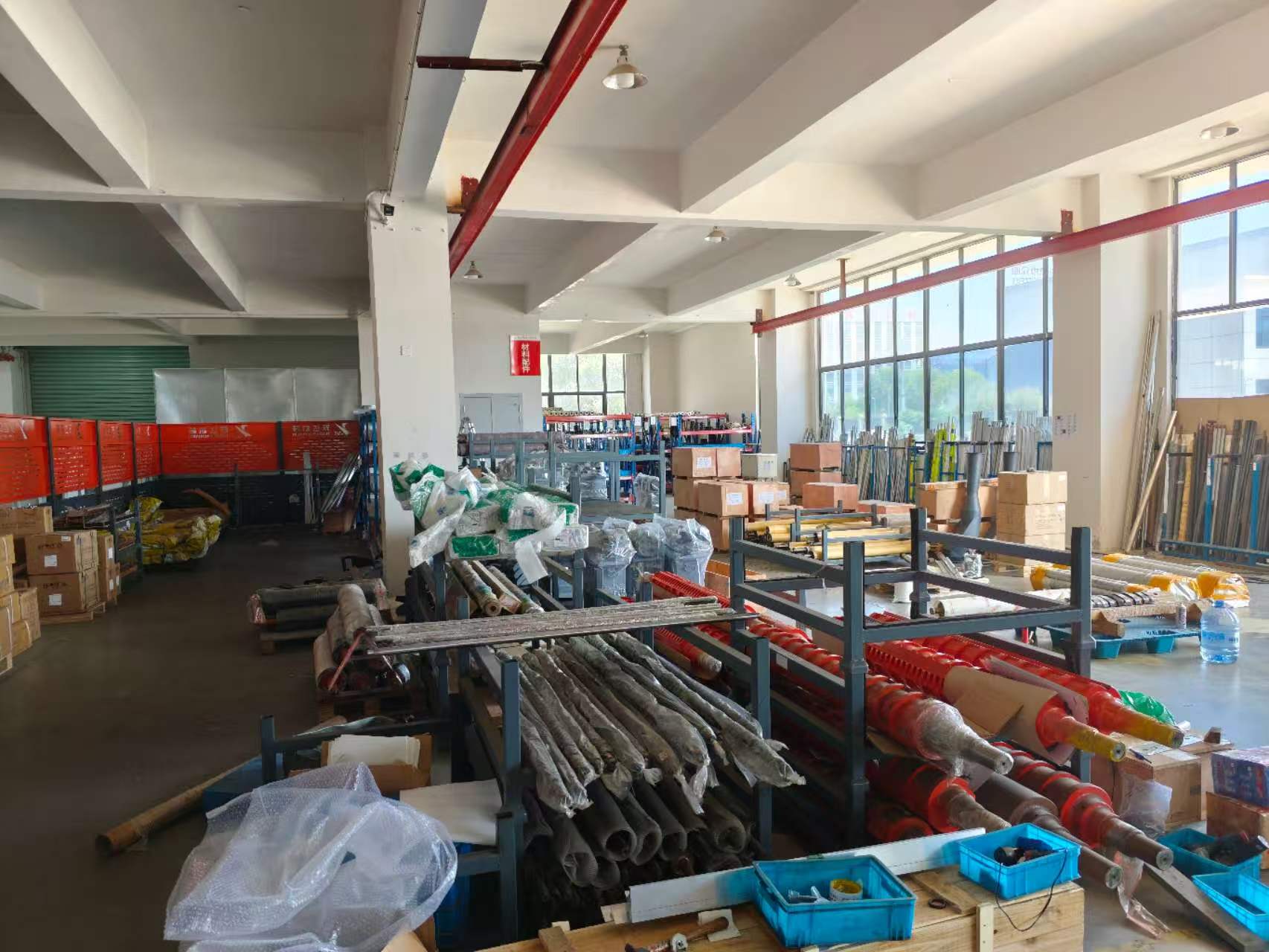
Raw material and finished product storage: paper and film rolls staged for continuous metalized paper laminating schedules.
When a roll is mounted on a shaft, the shaft's concentricity becomes part of the tension equation. A shaft that is slightly worn, inserted off-centre, or mismatched to the core diameter introduces runout that the tension system then has to correct. No-shaft rewinding removes that intermediate component, which simplifies the mechanical path between the drive and the web. The trade-off moves to the core itself: core quality, roundness and internal diameter consistency become the variables that determine how cleanly a roll runs. Buyers evaluating a no-shaft machine should therefore treat incoming core specification as part of the equipment decision, not as a purchasing afterthought.
Material flow also changes at the unwind end. Removing shafts shortens the physical distance an operator travels per roll change and reduces the number of tools involved. In a plant running three shifts, that translates into a more predictable changeover time, which is the input most production planners actually need when they commit wine box delivery windows to customers.
Keeping coating and laminating continuous
The ZNFH1300-1400-1500 is described as a coating-integrated laminating machine, which means coating and laminating are handled as one production sequence rather than as two separate passes on two separate machines. For metalized cardboard, that integration removes an intermediate handling stage: the board is not rewound, stored and re-fed between processes, and the surface produced in coating is not exposed to a second loading cycle before lamination.
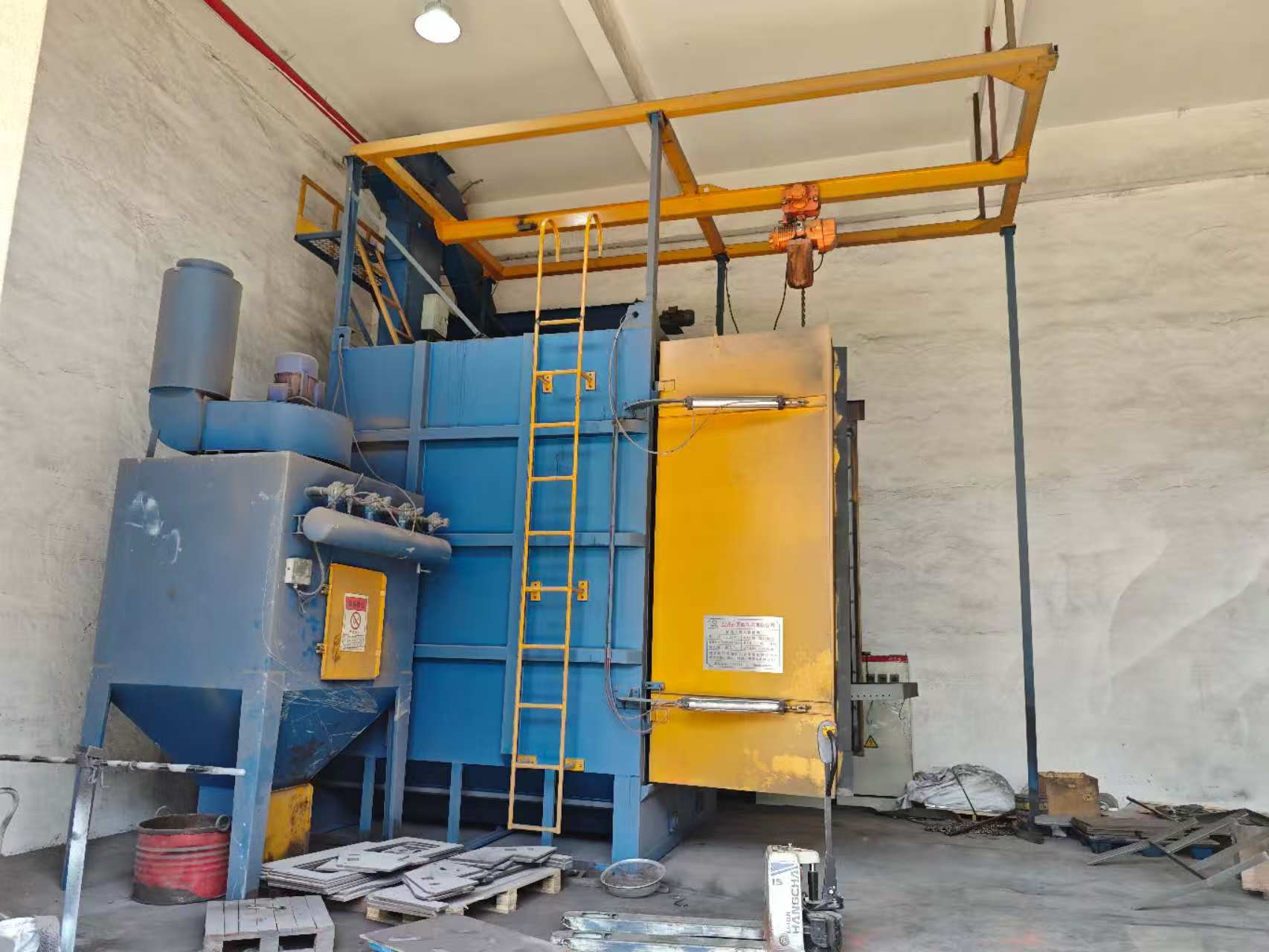
Coating and drying section of an integrated laminating line, designed for continuous production rather than batch re-feeding.
Continuity is where the stated 5–150 m/min range becomes operationally meaningful. The low end covers threading, web set-up and controlled running while the operator checks registration and adhesion on a new substrate combination. The upper end represents the production band the line is intended to reach once conditions are stable. A range of this span is useful in a plant that runs more than one board grade: a delicate metallized film on thin board and a heavier wine box wrap board will not run at the same stable speed, and a machine with a wide envelope can be optimised per job instead of being forced into one setting.
Coating continuity also depends on thermal behaviour. Heat applied for drying must be stable across a long run, because a drifting drying profile shows up later as inconsistent surface gloss or adhesion variation across the sheet. That is a process characteristic buyers should confirm with a run of realistic length, not a short demonstration.
Tension, registration and thermal control
Three control functions determine whether a no-shaft machine holds its advantage over a full shift. YUEDA documents an approach to each.
Tension stability. Closed-loop servo control with real-time tension monitoring and adjustment is specified to a 0.1 N precision. In practice this means the system measures web tension continuously and corrects it, rather than relying on a fixed mechanical setting that drifts as roll diameter decreases from full to core.
Cutting position accuracy. Dual photoelectric eyes, with main and backup units, perform real-time position calibration. Redundancy here addresses a specific failure mode: if a single sensor is obscured by dust or loses contrast on a reflective metallized surface, the line can continue instead of stopping for cleaning.
Thermal protection. Temperature sensors on key components including the motor and heating roller support an automatic shutdown function. On a line running continuously through a wine box order, an unattended overheating event is a scrap event, and in the worst case a fire risk.
Buyers comparing machines should ask for the control architecture behind each claim: which sensor, at which position, correcting which variable, and what the operator sees when a correction is applied. A control measure that cannot be observed during a trial run is difficult to verify after installation.
Application fit: wine boxes and cigarette packaging
Wine box packaging and cigarette packaging both rely on metalized board for a premium surface, but they stress a laminator differently. Wine box work tends toward decorative wrap and rigid box components where visual continuity across a large panel is the acceptance criterion: a gloss band or a tension mark that would pass on a small label becomes visible on a gift box lid. Cigarette packaging tends toward long, repetitive runs of carton and inner-frame stock, where consistency between rolls and between shifts matters more than single-sheet perfection.
The ZNFH1300-1400-1500's stated application scope covers both. The relevant decision for a buyer is not whether the machine is listed for wine boxes, but whether a specific wine box board, film and adhesive combination has been run on it and measured. Requests for a sample run on the buyer's own materials remain the only reliable way to convert a category statement into a production expectation.
Comparison with traditional solutions
Two comparisons matter at the decision stage: how no-shaft rewinding differs operationally from shaft-based handling, and how a supplier positions itself against imported and domestic alternatives. The first is a process comparison; the second relies on company-reported figures and should be treated accordingly.
| Decision factor | No-shaft rewinding (ZNFH1300-1400-1500) | Shaft-based rewinding |
|---|---|---|
| Roll change routine | No shaft insertion or removal; roll held at the core ends | Shaft inserted, locked, run, then withdrawn each cycle |
| Ancillary equipment | No shaft set in multiple lengths | Shaft inventory, storage and maintenance required |
| Dominant quality variable | Core roundness and diameter consistency | Shaft condition and concentricity |
| Tolerance for damaged cores | Lower; a deformed core transfers runout directly to the web | Higher; the shaft can partly bridge a compromised core |
| Process structure | Coating and laminating integrated in one pass | Often coated and laminated in separate passes with intermediate handling |
| Operator exposure | Fewer manual handling steps per roll | More manual handling and lifting per roll |
The supplier comparison draws on YUEDA's own stated positioning. These are company-reported figures rather than independently audited results, and they are most useful as the basis for a structured supplier questionnaire rather than as a conclusion.
| Dimension | vs European imported equipment | vs domestic local competitors |
|---|---|---|
| Purchase cost | 40% lower stated purchase cost | Similar initial cost |
| Delivery | 30–45 days versus 90+ days | Not stated |
| Precision | Same working efficiency stated, with lower energy consumption | ±0.1 mm versus ±0.3 mm stated |
| Service life | Not stated | 8–10 years versus 5–6 years stated |
| Annual failure rate | Not stated | ≤1% versus ≤3% stated |
| Maintenance | 72-hour remote debugging versus on-site fee service | 24-hour versus 48-hour response; 20% lower annual maintenance cost |
| Material waste | Not stated | 15% lower stated material waste rate |
Limits and boundaries buyers should test
No-shaft rewinding is not a universal improvement. Because the roll is supported at its core ends rather than by a shaft passing through it, the machine is more sensitive to core condition. Cores that are out of round, crushed at the edge, or inconsistent in internal diameter will produce runout that the tension system must then absorb, and in a severe case no control loop can compensate for it. A plant sourcing low-cost board from suppliers with variable core standards may find a shaft-based machine more forgiving in day-to-day operation.
The carbon steel construction is a second boundary. Carbon steel provides a rigid structure for a machine of this class, and rigidity matters when web tension changes rapidly. It also requires a maintained protective finish, particularly in humid production climates and during extended sea freight. Buyers in coastal or high-humidity markets should confirm the surface treatment specification and include frame inspection in the preventive maintenance schedule.
Third, the stated 5–150 m/min range describes the machine envelope, not a guaranteed production speed on every substrate. Stable output depends on the board grade, film type, adhesive, drying capacity and the operator's set-up discipline. A wine box board with a heavy coating weight will not reach the same stable speed as a thin cigarette carton stock, and treating the top of the range as a planning figure without a trial run is a common source of disappointment.
Finally, the available public record does not contain destination-market conformity certification for this configuration. Buyers in regulated markets should request certificates with numbers, confirm the applicable machinery safety and electrical requirements for their jurisdiction, and verify the HS classification for import with their customs broker rather than relying on commercial classification pages, which list several possible headings for paper laminating machinery.
A procurement framework for decision-stage buyers
| Stage | What to verify | Evidence to request |
|---|---|---|
| Job fit | Wine box and cigarette board sizes inside the 600–1200 mm width band | Dimensioned drawing of the buyer's sheet layout against the web path |
| Speed expectation | Stable speed on the buyer's own substrate, not the catalogue maximum | Timed run on buyer material at agreed quality acceptance |
| Core control | Internal diameter tolerance and roundness of supplied cores | Core specification from the board supplier; sample roll test |
| Tension and registration | Behaviour as roll diameter falls from full to core | Observation across a complete roll, not a partial run |
| Thermal stability | Drying consistency over a sustained run | Gloss and adhesion samples taken at start, middle and end |
| Commercial terms | Delivery, commissioning, spares and response commitments | Written delivery window, spare parts list and remote support terms |
| Compliance | Destination-market requirements and import classification | Certificates with numbers; customs broker confirmation of HS heading |
Market context and trade considerations
The two market figures cited at the start describe different things and should not be combined. The USD 4.85 billion metallized paper figure refers to the substrate market, driven by tobacco packaging and premium labeling; the USD 676.4 million figure refers to the laminating machinery market across thermal, wet and dry types. For a buyer, the substrate number is the more relevant indicator of whether premium metalized board demand will sustain a new line, because it is the material the machine is being bought to process.
Trade classification deserves separate attention. Industrial paper laminating machines are primarily classified under HS Code 8439.30.10 for international trade. However, commercial classification references also list alternative headings depending on machine function, and no single code should be assumed without confirmation against the official tariff of the importing country and the machine's technical description.
Future outlook
Two pressures are likely to shape no-shaft laminating configurations over the next buying cycles. The first is labour: roll handling is a repetitive manual task, and every step removed from it is a step that does not depend on operator availability during a night shift. The second is material variety: as packaging designers move between metallized film, transfer metalized board and coated stock within the same brand family, machines that hold tension across a wide speed envelope and a wide width band become more valuable than machines optimised for a single grade.
The countervailing trend is verification. Buyers are increasingly asking for run data on their own substrates rather than accepting catalogue figures, and suppliers who can document control architecture, service response and delivery performance will be easier to shortlist. YUEDA, founded in 1998 and based in Longgang, Wenzhou, positions itself as a manufacturer of gold and silver cardboard laminating and coating equipment; the practical test of that positioning for any specific wine box programme remains a documented trial run.
FAQ
What does no-shaft rewinding change compared with a shaft-based laminating line?
No-shaft rewinding holds and drives the roll at its core ends instead of mounting it on a through-going shaft. The operational result is that shaft insertion, locking and withdrawal are removed from every roll change, and no shaft inventory in multiple lengths is needed. The trade-off is that core condition becomes the dominant variable for runout, since there is no shaft to bridge a deformed or inconsistent core.
How does the 600–1200 mm working width affect wine box and cigarette packaging planning?
A 600–1200 mm width range allows one line to be scheduled across more than one packaging family rather than being tied to a single sheet size. Wine box wrap and rigid box components and cigarette carton and inner-frame stock can both be planned within this band, which reduces the number of separate machines or changeover events a plant needs when its order book mixes premium spirits work with tobacco work.
What does a 5–150 m/min running speed range mean when comparing machines?
The range describes the machine envelope, not a guaranteed production speed. The low end supports threading and controlled set-up while registration and adhesion are checked on a new substrate; the upper end is the band the line is intended to reach under stable conditions. Actual stable speed depends on board grade, film, adhesive and drying capacity, so it should be established through a timed run on the buyer's own material.
How should a buyer compare a coating-integrated laminator with separate coating and laminating passes?
A coating-integrated machine such as the ZNFH1300-1400-1500 handles coating and laminating in one production sequence, which removes an intermediate rewind, storage and re-feed stage and avoids a second loading cycle on the coated surface. Separate passes allow each process to be optimised independently and can suit plants that already own one of the two machines, but they add handling and floor-space requirements.
What should be verified before accepting a ZNFH1300-1400-1500 for wine box production?
Verification should cover sheet layout against the 600–1200 mm width band, stable speed on the buyer's own board and film, tension behaviour as roll diameter falls from full to core, core diameter and roundness specification from the board supplier, drying consistency across a sustained run, and written delivery, commissioning, spare parts and support terms. Destination-market certification with certificate numbers and the import HS classification confirmed with a customs broker should be obtained separately.
A downloadable technical brochure for YUEDA's laminating and coating equipment is available here: YUEDA equipment brochure (PDF).
Have Questions or Need More Details?
Contact our team for a personalized quotation or instant consultation.
Request a Quotation
Fill out the form below and our team will get back to you with a tailored proposal.
WhatsApp Direct Chat
Prefer to chat in real-time? Message us on WhatsApp for instant assistance & quick answers.
- Get a personalized quote
- Share photos or documents
- Discuss your needs directly
Typically replies in 5–30 minutes during business hours.