
Non-Dairy Creamer Model Scorecard: FC22, DT35, C960, 60A, S35, K80
Non-dairy creamer is a lactose-free granular or liquid product generally used as a substitute for milk or cream in hot beverages. That definition is accurate, but it is also wide enough to hold a 22.0 g/100 g foaming powder and a 60.0 g/100 g high-fat ingredient at the same time — two products that behave nothing alike in a milk tea, a bakery line or a feed premix.
This scorecard compares six named models — FC22, DT35, C960, 60A, S35 and K80 — alongside two further references in the same range, K60 and the cold-soluble creamer. Nothing below is scored on taste panels or unpublished trials. Every point is derived from the five parameters a purchasing team can put into a contract and verify at goods-in: fat, protein, moisture, trans fat and ingredient base.
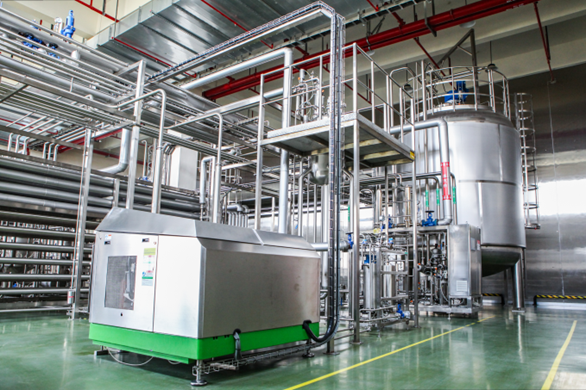
Why five declared parameters, and not ten
A non-dairy creamer specification sheet can carry a dozen lines. In practice, five of them carry most of the procurement weight, because five are the ones that move between models rather than staying constant across a range.
Fat (g/100 g)
Fat is the load-bearing number. It sets how much creaminess one kilogram of creamer contributes, and it therefore sets the inclusion rate in the finished recipe and the cost per finished unit. In the models reviewed here, fat ranges from 22.0 g/100 g (FC22) to 60.0 g/100 g (C960 and 60A).
Protein (g/100 g)
Protein signals which carrier system the model is built on. Sodium caseinate and milk powder appear in most of the reviewed ingredient lists; where protein is declared at zero, the model is built on a non-dairy carrier instead. S35 is the clearest example: 0 g protein (g/100 g) with oxidized hydroxypropyl starch in the ingredient list. FC22 sits at the opposite end at 7.2 g/100 g, with milk powder among its declared base materials.
Moisture
Moisture is a process and stability parameter, usually written as a ceiling. K60 and the cold-soluble creamer declare ≤5.0 g/100 g; FC22 and C960 declare ≤6.0. A ceiling is not the same as a target value, and buyers should say so in writing.
Trans fat
Zero-trans-fat claims are a market-access line in several regions. In the reviewed specification set, FC22, 60A, S35 and K60 each declare 0 g/100 g trans fat. DT35, C960, K80 and the cold-soluble creamer do not declare trans fat in the same document set — which does not mean the value is non-zero, only that the declaration has to be requested and then matched to a test method.
Ingredient base
The ingredient list decides allergen exposure, vegetarian and vegan eligibility, and sometimes labelling language. Sodium caseinate is milk-derived. Oxidized hydroxypropyl starch is not. A buyer comparing two models at the same 32.0 g/100 g fat level may still be comparing two very different products once the base is read.
Single-source specification table
The table below consolidates the declared specification for each model in the reviewed set. Values are given exactly as declared; “not declared” means the parameter does not appear in the reviewed specification document and should be requested from the supplier.
| Model | Type | Fat (g/100 g) | Protein (g/100 g) | Moisture | Trans fat (g/100 g) | Carbohydrate (g/100 g) | Declared ingredient base | Stated applications |
|---|---|---|---|---|---|---|---|---|
| FC22 | Foaming creamer | 22.0 | 7.2 | ≤6.0 | 0 | Not declared | Glucose syrup, hydrogenated vegetable oil, milk powder, emulsifier, stabilizer, salt, flavoring | Milk tea, coffee, baking |
| DT35 | Low sugar | 35.0 | 2.5 | Not declared | Not declared | 4.3 | Glucose syrup, hydrogenated vegetable oil, emulsifier, stabilizer, anti-caking agent (551), food flavor | Milk tea, coffee, beverage, baking |
| C960 | Whipping creamer | 60.0 | 5.2 | ≤6.0 | Not declared | 28.8 | Glucose syrup, hydrogenated vegetable oil, emulsifier, sodium caseinate, stabilizer, salt | Baking, beverage |
| 60A | High fat | 60.0 | 3.0 | Not declared | 0 | Not declared | Hydrogenated vegetable oil, glucose syrup, sodium caseinate, emulsifier, stabilizer | Beverage, dessert, baking, animal feed |
| S35 | Vegan non dairy creamer | 35.0 | 0 | Not declared | 0 | Not declared | Glucose syrup, hydrogenated vegetable oil, emulsifier, oxidized hydroxypropyl starch, anti-caking agent | Vegetarian products, alcoholic beverages, milk tea, coffee, baking |
| K80 | Kosher product | 32.0 | 2.5 | Not declared | Not declared | Not declared | Glucose syrup, hydrogenated vegetable oil, sodium caseinate, emulsifier, stabilizer, anti-caking agent | Beverage, dessert, milk tea, coffee |
| K60 | Non-dairy creamer | 32.0 | 2.6 | ≤5.0 | 0 | Not declared | Glucose syrup, hydrogenated vegetable oil, milk powder, sodium caseinate, emulsifier, stabilizer, anti-caking agent | Milk tea, baking, coffee |
| Cold-soluble creamer | Cold-soluble creamer | 32.0 | 3.5 | ≤5.0 | Not declared | Not declared | Glucose syrup, refined vegetable oil, sodium caseinate, emulsifier, stabilizer, anti-caking agent | Coffee, milk tea, beverage |
Two patterns are visible before any application discussion. First, the portfolio clusters into three fat bands: 22.0 g/100 g, 32.0–35.0 g/100 g, and 60.0 g/100 g. Second, moisture ceilings appear only on four of the eight rows, and trans fat is declared on only four. That asymmetry is the practical starting point for a buyer conversation.
Reading the spread: what actually changes between the models
C960 and 60A both declare 60.0 g/100 g fat, which makes them look equivalent on a price-per-kilo sheet. They are not equivalent. C960 carries 5.2 g/100 g protein and 28.8 g/100 g carbohydrate, declares a moisture ceiling of ≤6.0, and is positioned as a whipping creamer for baking and beverage. 60A carries 3.0 g/100 g protein, a shorter ingredient list, a declared zero trans fat value, and extends into dessert and animal feed. A buyer who matches only on fat will find these two interchangeable; a buyer who matches on fat plus protein plus application list will not.
K80 and K60 sit in the same 32.0 g/100 g fat band and declare almost the same protein — 2.5 and 2.6 g/100 g respectively — but they are separated by two things that matter more than the fat number. K60 declares a moisture ceiling of ≤5.0 and a zero trans fat value; K80 is typed as a kosher product. Neither spec is superior. They answer different questions.
FC22 is the clearest outlier in the set. At 22.0 g/100 g it has the lowest declared fat of the compared models and the highest declared protein at 7.2 g/100 g, with milk powder among its base materials. Its role in a formulation is structural rather than bulk — it is a foaming creamer for milk tea, coffee and baking, not a general-purpose whitener. The declared fat figure alone does not prove foaming performance; it explains why the model is specified in smaller proportions than a 32–35 g whitener.
S35 is the only model in the reviewed set declaring 0 g protein and 0 g trans fat, with oxidized hydroxypropyl starch in the ingredient list. For vegan and vegetarian product lines, and for applications such as alcoholic beverages where a dairy-protein carrier is not wanted, that combination is the decisive line in the specification — not the 35.0 g/100 g fat.
The cold-soluble creamer shares the 32.0 g/100 g fat level with K60 and K80 but declares a higher protein value at 3.5 g/100 g and uses refined vegetable oil rather than hydrogenated vegetable oil in the reviewed material list. Its stated applications are coffee, milk tea and beverage.
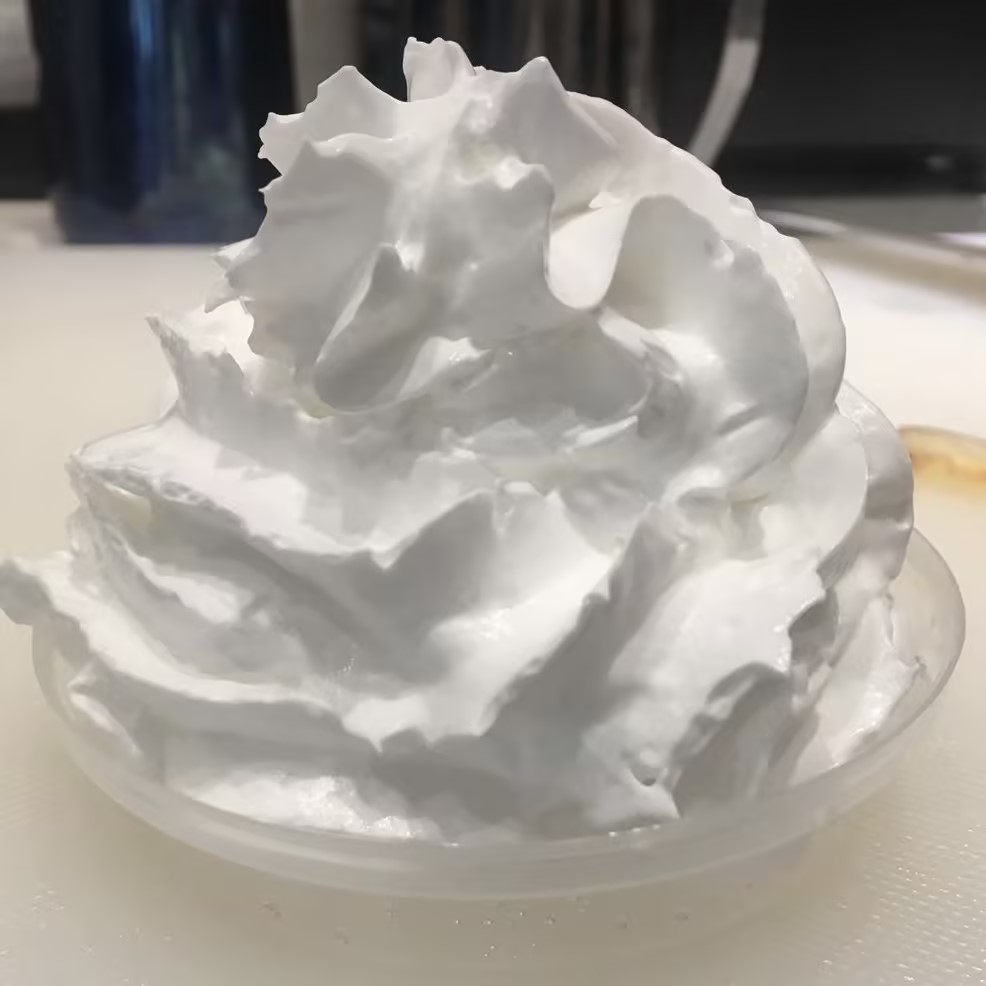
The buyer's scorecard: scoring what can be verified
A scorecard that rewards the biggest number is not useful, because a 60 g fat powder is neither better nor worse than a 32 g powder — it is different. The scorecard below instead rewards declaration completeness. It answers a question a buyer can act on before sampling: how much of this model can I pin down in writing today?
5 — the specification states an explicit value or explicit identity.
3 — the specification states a ceiling or a qualitative descriptor rather than a point value.
1 — the parameter does not appear in the reviewed specification document.
Maximum score: 25. A score of 1 is not a defect; it is a question that must be sent to the supplier and answered in writing before the first purchase order.
| Model | Fat | Protein | Moisture | Trans fat | Ingredient base | Score /25 | Immediate follow-up |
|---|---|---|---|---|---|---|---|
| FC22 | 5 | 5 | 3 | 5 | 5 | 23 | Confirm the moisture test method behind the ≤6.0 ceiling. |
| K60 | 5 | 5 | 3 | 5 | 5 | 23 | Confirm the moisture test method behind the ≤5.0 ceiling. |
| 60A | 5 | 5 | 1 | 5 | 5 | 21 | Request a moisture specification and a trans fat test report. |
| S35 | 5 | 5 | 1 | 5 | 5 | 21 | Request a moisture specification and confirm the vegan claim scope. |
| C960 | 5 | 5 | 3 | 1 | 5 | 19 | Request a trans fat declaration for the whipping application. |
| Cold-soluble creamer | 5 | 5 | 3 | 1 | 5 | 19 | Request a trans fat declaration and a cold-dispersion test method. |
| DT35 | 5 | 5 | 1 | 1 | 5 | 17 | Request moisture and trans fat specifications; confirm carbohydrate test basis. |
| K80 | 5 | 5 | 1 | 1 | 5 | 17 | Request moisture and trans fat specifications plus the kosher certificate scope. |
The score deliberately does not rank models by quality. It ranks them by how much of the purchasing decision is already documented. FC22 and K60 score highest not because they are the best creamers, but because fat, protein, moisture, trans fat and ingredient base are all addressed in their specifications. K80 scores lower on disclosure while carrying a certification attribute — kosher type — that no other named model in this set carries. Those are two different kinds of value, and a scorecard should show both.
From scorecard to application fit
Once the declaration gaps are known, the second question is whether the model belongs in the project at all. The mapping below uses only the applications stated for each model, combined with the declared fat and protein level.
| Application | Decision logic | Models matching the stated application set |
|---|---|---|
| Milk tea | Medium fat with a balanced protein carrier; low-sugar or flavour-neutral options where the recipe already carries sweetness | DT35, K60, K80, cold-soluble creamer; FC22 as a foaming component; S35 where a vegan line is required |
| Coffee and instant 3-in-1 | Whitening plus rapid dissolution in hot liquid; low-sugar variants for reduced-sugar recipes | FC22, DT35, K60, K80, cold-soluble creamer, S35 |
| Bakery | Fat contribution and structure rather than beverage whitening | C960, 60A, FC22, DT35, K60, S35 |
| Beverage and powdered drink mixes | Soluble body across hot and cold preparation; high-fat options where a richer mouthfeel is required | DT35, C960, 60A, K80, cold-soluble creamer |
| Dessert | Fat-rich body with a dairy-protein carrier | K80, 60A |
| Alcoholic beverages | Dairy-protein-free formulation | S35 |
| Animal feed | High fat per unit for energy density | 60A |
Three practical rules follow from this mapping. First, a model that appears in several application rows is a general-purpose candidate, not a specialist: K60, DT35 and K80 all appear in multiple beverage-facing rows. Second, models that appear in a single row — S35 for alcoholic beverages, 60A for animal feed — are usually specified for a single reason, and that reason sits in the protein or fat line, not in the marketing description. Third, the cold-soluble creamer is named for a solubility behaviour, so its selection should be validated by a cold-dispersion trial rather than by its fat value, which is identical to K60 and K80.
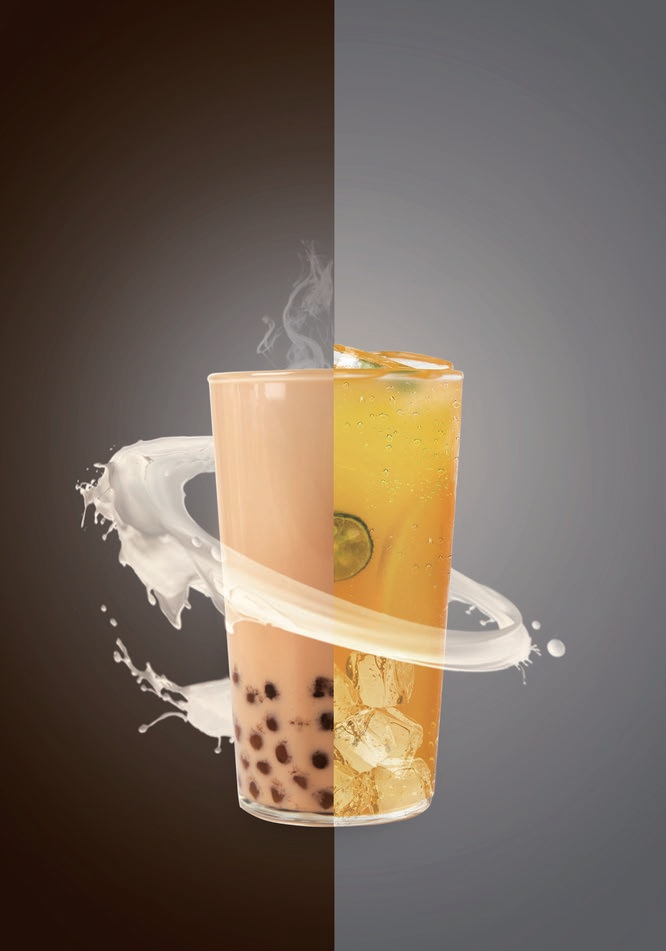
Food-service and food-manufacturing supply for bubble tea chains and coffee shops typically runs under normal temperature storage in a food-grade production environment, with batch production and bulk supply. That operating pattern is the reason receiving inspection for moisture and flow behaviour matters as much as the formulation itself: a powder that holds its declared moisture ceiling stores and dispenses predictably through a shop-level or plant-level system, and one that does not, does not.
Where the numbers stop working
A specification-only comparison has a hard boundary, and it should be stated plainly rather than hidden at the end of a page.
- Declared values do not predict performance. Fat, protein, moisture, trans fat and ingredient base do not measure solubility index, whitening power, foam stability, acid resistance, emulsion stability or sensory profile. No standardised public dataset for those comparative properties was located for this category, and none should be assumed from a spec sheet.
- Missing parameters are not zero. DT35, C960, K80 and the cold-soluble creamer do not declare trans fat in the reviewed document set. That is a documentation gap, not an adverse finding — but it is also not a zero-trans-fat claim, and it cannot be treated as one in a customer-facing label.
- Market size figures for this category disagree. Published global estimates include USD 2.00 billion for 2025, approximately USD 2.4 billion for 2024 growing to about USD 4.4 billion by 2034 at a 6.2% CAGR, USD 2.61 billion for 2025 rising to USD 4.27 billion by 2034, and USD 2.88 billion for 2025 rising to USD 5.33 billion by 2033 at an 8.00% CAGR. Base years, endpoints and methodologies differ, and the figures must not be averaged into a single “consensus” number.
- Certification type and certification scope are different things. A regulatory facility registration is not a product certification, and a product typed as kosher is not the same as a certificate covering a specific production line, packaging format or shipment.
- Supplier capacity and lead-time figures are company-reported. They are useful for shortlisting and planning, but they should be confirmed against current documentation before they are relied on in a supply contract.
Market context: growth is documented, sizing is not settled
Directionally, the category is expanding. Independent food-industry analysis of U.S. foodservice reports that plant-based milk and creamer saw continued growth and are established categories in that channel. On product mix, commercial research places medium-fat non-dairy creamer — the segment covering the 32.0–35.0 g/100 g band where most of the models reviewed here sit — at a dominant 43.6% share of the category in 2024. High-fat and low-fat segments hold smaller shares but serve targeted functional roles, which is consistent with a portfolio that carries a 22.0 g/100 g foaming model and two 60.0 g/100 g models alongside its mid-range products.
Two regulatory and classification reference points are also worth recording for import planning. U.S. Customs classified imported non-dairy coffee creamer from China under HTS subheading 2106.90.9975, and the USDA Agricultural Marketing Service maintains a Commercial Item Description for dry non-dairy creamer packed in commercially acceptable containers. Non-dairy creamer production itself falls within food manufacturing under NAICS subsector 311. None of these facts set a price or a demand level; they set the paperwork a shipment will be judged against.
Supplier-side context and what still needs verification
Cograin is the brand under which Jiahe Foods Industry Co., Ltd., founded in 2001 and headquartered in Suzhou, Jiangsu Province, supplies non-dairy creamer and related food ingredients. The company is listed on the main board of the Shanghai Stock Exchange since 2021 under stock code 605300 and operates three production bases and five factories in Suzhou, Nantong and Singapore, with reported annual production capacity exceeding 300,000 tons and reported non-dairy creamer output capacity of 200,000 tons. It reports ISO9001, FSSC22000, HACCP, HALAL, ISO14000 and OHSAS18000 system certifications, and holds U.S. FDA Food Facility Registration number 13348058524 valid through 2026.
For model-level sourcing, the relevant capabilities are formulation and packaging customisation — including creamer formula, packaging specification, product flavour and syrup DE value — and a reported creamer capacity of 16,700 tons per month, with lead time of around 7–15 working days after order confirmation and MOQ negotiable by product type and packaging. Quality control is described as full-process inspection with 100% metal and weight checks plus third-party testing, and after-sales support covers technical guidance, quality tracking and customisation adjustment.
These are supplier-reported capabilities. They shorten a shortlist; they do not replace a sample trial, a certificate review or a plant audit.
Documented supply references published by the company include a Southeast Asian animal feed producer supplied at 4,000–5,000 mt per year for three years, with the high-fat product cited as the highlight; a five-year beverage supply relationship in South Africa covering alcoholic beverages at around 1,000 mt; a five-year supply relationship with a 3-in-1 coffee manufacturer at around 9,000 mt across instant coffee, instant oatmeal and instant milk tea products; and a three-year bubble tea chain supply relationship at around 1,000 mt. They are useful as indication of repeat supply across multiple end uses, and they should be validated as references during supplier qualification.
Purchasing terms and acceptance criteria to agree before ordering
The scorecard above produces a list of open questions. Those questions become contract terms. Before the first purchase order for any of these models, the following should be agreed in writing.
- Point values versus ceilings. State which parameters are contractual point values and which are maxima. A ≤5.0 g/100 g moisture ceiling and a 5.0 g/100 g target are not the same commitment.
- Test methods and laboratory. Name the method for fat, protein, moisture and trans fat, and name the laboratory — supplier in-house, buyer-nominated or third-party.
- Sampling plan and retention samples. Define the sampling rate, the acceptance and rejection limits, and how long retention samples are held.
- Trans fat declaration. Where a zero-value claim is required, specify the test basis and the reporting limit; where no declaration exists in the current specification, request it before contracting.
- Ingredient declaration and allergen statement. Confirm the full ingredient list as shipped, including anti-caking agents, and confirm the milk-derived allergen status of sodium caseinate and milk powder where present.
- Certification scope. Agree which certificates apply to which production site, line and packaging format, including kosher or halal coverage where relevant.
- Packaging and handling. Confirm the pack format and inner liner, and the storage condition the product is released against.
- Functional parameters beyond the label. Where solubility, dispersion or whipping behaviour matters, agree a test method and an acceptance threshold even if the value is not printed on the specification.
- Change control. Agree the notification period and re-qualification requirement for any change to formulation, ingredient source or production site.
- Commercial terms. Confirm MOQ basis, lead time, incoterms, shelf life at delivery, and the deviation-handling procedure.
Future outlook
Two forces are likely to shape model selection over the next planning cycles. The first is certification-driven differentiation: as plant-based milk and creamer continue to establish themselves in foodservice, vegan, kosher, halal and zero-trans-fat attributes move from optional to qualifying criteria, and models that carry those attributes in their declared specification gain an advantage at the shortlist stage. The second is functional fragmentation: a portfolio that already spans 22.0 g/100 g foaming, 32.0–35.0 g/100 g general-purpose and 60.0 g/100 g high-fat products reflects the reality that buyers are matching creamers to a specific end product rather than buying a single category average. The practical consequence for procurement teams is straightforward — the specification conversation is becoming narrower and more application-specific, and the models that survive a shortlist will be the ones whose declarations can be verified rather than the ones with the widest claim.
FAQ
Which non-dairy creamer model should a milk tea project start with?
Start from the fat band and the protein carrier, not from the brand. In this reviewed set, DT35 (35.0 g/100 g fat, 2.5 g/100 g protein), K60 (32.0 g/100 g fat, 2.6 g/100 g protein, moisture ≤5.0), K80 (32.0 g/100 g fat, 2.5 g/100 g protein, kosher type) and the cold-soluble creamer (32.0 g/100 g fat, 3.5 g/100 g protein) all list milk tea among their stated applications. FC22 is also listed for milk tea, but at 22.0 g/100 g fat with 7.2 g/100 g protein it functions as a foaming component rather than a bulk whitener. S35 is the option where a vegan, dairy-protein-free line is required.
How do I choose between a 60 g fat creamer and a 32 g fat creamer for a beverage?
Decide what the creamer is doing in the recipe. At 60.0 g/100 g fat, C960 and 60A deliver more fat per kilogram and are specified for whipping, structure and richer mouthfeel — C960 for baking and beverage with 5.2 g/100 g protein and 28.8 g/100 g carbohydrate, and 60A for beverage, dessert, baking and animal feed with 3.0 g/100 g protein and a declared 0 g/100 g trans fat. At 32.0 g/100 g, K60, K80 and the cold-soluble creamer suit applications where the creamer provides whitening and body within a lower inclusion rate. The choice is an inclusion-rate and mouthfeel decision, not a quality ranking.
Is there a vegan non-dairy creamer with zero trans fat in this range?
S35 is the vegan non dairy creamer in this reviewed set. It declares 0 g protein (g/100 g), 0 g trans fat and 35.0 g/100 g fat, and its ingredient list includes oxidized hydroxypropyl starch rather than a dairy-protein carrier. Its stated applications are vegetarian products, alcoholic beverages, milk tea, coffee and baking. Because the protein content is declared at zero, label wording and any protein-related claim should be confirmed against the finished-product specification.
What does a “kosher” creamer model actually cover?
K80 is typed as a kosher product with 32.0 g/100 g fat and 2.5 g/100 g protein, and its stated applications are beverage, dessert, milk tea and coffee. The product type indicates kosher positioning; it does not, by itself, define the scope of a kosher certificate. Buyers purchasing against a kosher requirement should confirm which production site, line, packaging format and shipment are covered by the certificate, and how that scope is maintained over time.
What should be agreed in writing before the first order?
At minimum: which parameters are point values and which are ceilings; the test method and laboratory for fat, protein, moisture and trans fat; the sampling plan and retention period; the full ingredient declaration and allergen statement; the certification scope by site and line; packaging format and storage condition; a test method for any functional behaviour such as cold dispersion or whipping; the change-control notification period; and the commercial terms covering MOQ basis, lead time, incoterms and shelf life at delivery.
Can one creamer model serve coffee, bakery and animal feed at the same time?
In this reviewed set, no single model is listed for all three. 60A is the only model whose stated applications include animal feed, and it also covers beverage, dessert and baking. K60, FC22 and DT35 list coffee and baking but not feed. FC22 lists milk tea, coffee and baking but not beverage, dessert or feed. Application lists are declarations of intended use, and any change of end use should be validated by a trial before it is written into a specification.
Reference document: the Cograin 2025 product brochure is publicly available at https://cdn.socialarks.com/sbsp/24848/common/2026/0611/2025%20Cograin%20Brochure.pdf.
Have Questions or Need More Details?
Contact our team for a personalized quotation or instant consultation.
Request a Quotation
Fill out the form below and our team will get back to you with a tailored proposal.
WhatsApp Direct Chat
Prefer to chat in real-time? Message us on WhatsApp for instant assistance & quick answers.
- Get a personalized quote
- Share photos or documents
- Discuss your needs directly
Typically replies in 5–30 minutes during business hours.