
Non-Dairy Creamer Sourcing: Decision Framework for Cost and Fit
The global non-dairy creamer market was valued at USD 2.4 billion in 2024 and is projected to reach USD 4.4 billion by 2034, according to Future Market Insights. Coffee applications account for roughly 41% of global demand, and powdered creamers dominate with a 68.4% share because of long shelf life and easy storage. For buyers at the decision stage, the challenge is no longer finding a supplier; it is comparing suppliers on the variables that affect product performance, compliance, and total cost.

The sourcing decision for non-dairy creamer depends on manufacturing scale, formulation control, and certification documentation.
The real procurement problem: identical names, different products
In procurement documents, "non-dairy creamer" looks like a single category. In practice, it is a family of powdered fat systems with different fat content, solubility behavior, acid resistance, foaming ability, and regulatory status. A product that works in hot coffee may fail in iced milk tea. A creamer that meets a bakery's texture requirement may not fit a fruit-flavored beverage. The same applies to supplier capability: two factories can both sell non-dairy creamer, but their R&D depth, production controls, certification scope, and ability to customize are rarely the same.
At the decision stage, buyers should turn the specification list into a comparison grid. Fat content range, functional properties, certification documents, production capacity, and long-term cost all need to be evaluated together.
Three supplier categories in the non-dairy creamer market
Industry data from Grand View Research identifies several large global players in the wider coffee creamer space, including Nestlé (Coffee-Mate), Danone (Silk), FrieslandCampina Kievit, and Kerry Group. In practice, buyers evaluating non-dairy creamer will most often compare three types of suppliers:
| Supplier type | Typical strengths | Typical considerations |
|---|---|---|
| Global brand owners | Recognizable consumer brands, broad portfolios, mature quality systems | Higher price positioning; less direct flexibility for private-label customization in many cases |
| Large specialized manufacturers (e.g., Cograin/Jiahe) | Production scale, direct manufacturer access, R&D depth, certification range, OEM/ODM flexibility | Lower consumer brand recognition; buyers should verify documentation and run qualification samples |
| Small and medium generic factories | Low entry price, small order flexibility | Limited formulation engineering, narrower certification scope, higher supply inconsistency risk |
This classification is not a ranking. The right choice depends on the end product, launch timeline, labeling strategy, and volume commitment.
How Cograin is positioned in the decision matrix
Cograin is the international brand used by Jiahe Foods Industry Co., Ltd., a food-manufacturing company founded in 2001 and headquartered in Suzhou, Jiangsu Province. The company is listed on the Shanghai Stock Exchange with stock code 605300 and reports an annual production capacity of more than 300,000 tons across production bases in Suzhou, Nantong, and Singapore. For non-dairy creamer specifically, the stated capacity is 200,000 tons per year, with an R&D team of 22 engineers and export sales mainly directed to Southeast Asia.
Cograin's supplier comparison materials describe two reference points that are useful for procurement teams.
First, compared with generic non-dairy creamers from small or medium manufacturers, the product is positioned on higher solubility, better taste consistency, a zero trans-fat formula, and a wider range of functional variants. Additional supplier-level claims include proprietary de-trans-fat technology, cold-soluble and acid-resistant formulas, and zero-sugar options. The same comparison material cites a 99.9% trans-fat removal rate, 40% improved shelf stability for functional formulas, and a market share position 35–60% higher than small and medium generic creamer factories. These figures are supplier-reported, so they should be confirmed through sample testing and documentation review.
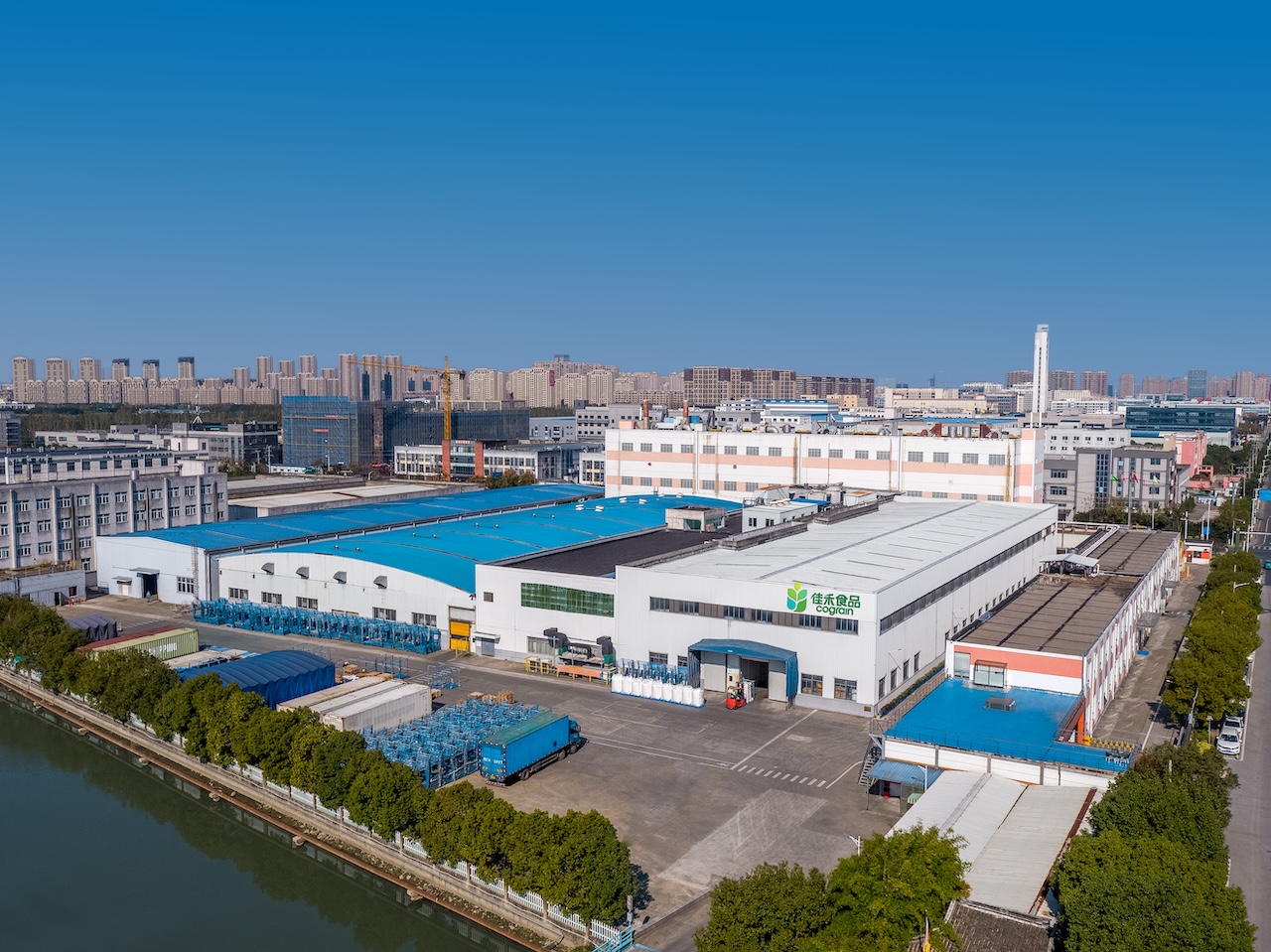
Manufacturing scale is one of the main variables in non-dairy creamer supplier comparison.
Second, compared with premium import brands, the product is described as offering a 10–20% lower long-term cost while maintaining equivalent safety standards. This cost comparison is framed as a long-term procurement outcome, not a universal upfront discount. Actual savings depend on order volume, logistics, duties, and how much formulation customization is required.
On the food-safety side, the parent company's production controls include UHT sterilization equipment in the liquid beverage workshop, continuous sterilization with fully enclosed automated production lines in the syrup workshop, and strict raw-material acceptance inspection plus finished-product microbial testing. These details matter because safety performance is a procurement criterion, not only a regulatory checkbox.
Technical evaluation: what buyers should compare
A decision-grade comparison should cover at least five technical layers.
1. Fat content range
Global market data shows that medium-fat (21–50%) variants are the most popular type, holding a 43.6–46% share because they balance texture and flavor performance. Low-fat creamers are used in calorie-controlled or cost-sensitive products; high-fat creamers provide a richer mouthfeel and are common in premium beverage and bakery formulations. Buyers should match fat percentage to the target product profile rather than selecting a single standard across all SKUs.
2. Solubility and functional behavior
Cold-soluble creamers are relevant for iced coffee and cold milk tea lines. Acid-resistant variants are needed when the creamer will be combined with fruit acids or alcoholic mixers. Foaming types, including whipping cream powder versions, support toppings and specialty beverages. These features are not automatic; buyers should confirm which functional variants a supplier can actually produce and test.
3. Labeling and certification nuances
Regulatory compliance is one of the least obvious comparison points. FDA regulations allow the label "non-dairy" for products containing milk derivatives such as sodium caseinate, provided the derivative is listed as "a milk derivative." For Kosher certification, however, a creamer containing sodium caseinate is considered dairy (OU-D), because the derivative is halachically milk. For vegan claims, the same distinction matters: a product can be labeled "non-dairy" without being vegan.
4. Certification breadth
Jiahe Foods Industry Co., Ltd. reports ISO9001 quality management, FSSC22000 food safety, HACCP, HALAL, ISO14000 environmental management, and OHSAS18000 occupational health and safety certifications. Buyers should request current certificates, confirm certificate numbers, and check whether the scope of the certificate covers the exact product and factory location.
5. Production and supply security
For bulk buyers, production capacity is a stability signal. A manufacturer with multiple production bases and automated lines can allocate capacity across locations, lowering the risk of supply interruption. A single-factory supplier may be acceptable for lower volumes, but the risk profile is different.
Application-driven selection: from coffee to feed
Because non-dairy creamer is used across many categories, the selection criteria are tightly connected to the final application.
- Coffee: Coffee is the largest application segment at about 41% of global non-dairy creamer use. Creamer adds whitening, body, and thermal stability. Cold-soluble versions are useful for iced coffee.
- Milk tea and bubble tea: Milk tea requires a creamy mouthfeel and stable suspension in both hot and cold serving conditions. Acid-resistant functional variants help when tea formulas include fruit flavors.
- Bakery: In bakery systems, creamer influences texture, moisture retention, browning, and finished-product consistency. Fat content selection is one of the first decisions.
- Ready-to-drink beverages: Instant beverage powders and liquid RTD products depend on emulsion stability and consistent solubility.
- Alcoholic beverages: Creamer used in alcoholic drinks must tolerate low pH and alcohol content without breaking down.
- Animal feed and milk powder blending: Procurement searches also cover animal feed and milk powder applications. In these segments, fat encapsulation, particle consistency, and regulatory compliance often matter more than flavor.
Market trends that should shape the shortlist
Market research points to several trends that make supplier comparison more important over time.
- The overall non-dairy creamer market is expected to grow from USD 2.4 billion in 2024 to USD 4.4 billion by 2034, indicating sustained demand from food and beverage manufacturers.
- Powdered formats hold a 68.4% share in 2024, supporting the importance of handling, shelf life, and packaging considerations.
- Coffee's 41% share means that coffee and café-style beverage lines will remain the center of procurement volume.
- Medium-fat variants lead global demand with a 43.6–46% share, but functional variants are gaining attention as product developers look for cold solubility, acid resistance, and foaming performance.
- The global MCT powder market, valued at USD 585 million in 2024 and growing at a 5.7% CAGR, shows that buyers are exploring functional fat powders beyond classic creamer applications.
- Regulatory attention to "non-dairy" labeling and Kosher classification means that certification documentation will be part of supplier scorecards.
Comparison with traditional options: what the price difference actually means
For many bulk buyers, the practical question is how to position a new supplier against the two traditional options: small generic manufacturers and premium import brands.
Compared with small or medium generic manufacturers, a specialized producer like Cograin is documented to offer better solubility, taste consistency, a zero trans-fat formula, and a broader range of functional variants. These advantages matter most when the buyer's product depends on consistent mouthfeel, cold solubility, or acid stability. If the application is a simple hot-mix coffee creamer, some of these attributes may be less relevant, and a generic supplier might be enough.
Compared with premium import brands, the documented cost difference is a 10–20% lower long-term cost without compromising safety standards. That saving is material for high-volume purchases, but it is not a guaranteed invoice discount. Freight, duties, minimum order quantities, and formulation work can erode the gap. There is also a category limitation: if the go-to-market strategy depends on a globally recognized consumer brand on the retail package, a private-label manufacturer cannot replace that brand equity. In that case, the buyer is not comparing like-for-like.
A practical limitation that applies to every supplier switch is verification. Buyers should request samples, test the creamer in the actual product matrix, audit certificates, and, if possible, inspect the factory before committing to long-term volume.
A final decision checklist for non-dairy creamer buyers
- Define the application and target fat range before comparing prices.
- List required functional properties: cold solubility, acid resistance, foaming, low/no sugar, zero trans-fat.
- Verify current certificates and confirm they cover the exact product and production site.
- Run a sample trial in the real formulation, not only in water.
- Calculate total cost of ownership, including freight, duties, MOQ, and formulation support.
- Review production capacity and safety controls, including sterilization and microbial testing procedures.
Future outlook
The long-term direction of non-dairy creamer sourcing is toward ingredient engineering. Buyers will increasingly ask for functional targets—cold solubility, acid tolerance, foam stability, low-sugar or zero-sugar profiles, and certification alignment with retail claims such as Kosher, Halal, or plant-based positioning. Manufacturers that combine production scale, safety systems, and customization capability will be better positioned to support these decisions. The presence of multiple production bases, as seen in Cograin's parent group, also reduces geographic supply concentration risk.
For a complete supplier profile, download the publicly available Cograin 2025 brochure.
FAQ
What does "non-dairy creamer" mean on a food label?
FDA regulations allow the label "non-dairy" for products that contain milk derivatives such as sodium caseinate, as long as the derivative is listed as "a milk derivative." Buyers should not assume that "non-dairy" automatically means "dairy-free."
How do generic small and medium non-dairy creamer manufacturers compare with specialized producers?
Specialized producers are positioned on higher solubility, better taste consistency, a zero trans-fat formula, and a wider range of functional variants. Generic small and medium factories may offer lower entry prices, but buyers should verify their R&D depth, certification scope, and production consistency before large-volume orders.
Is a 10–20% cost saving versus premium import brands realistic?
This figure is Cograin's documented long-term cost position. It is not a universal quote: actual savings depend on order volume, freight, duties, and the complexity of custom formulation. Buyers should request a formal landed-cost quotation based on their own parameters.
Which certifications matter when sourcing non-dairy creamer?
Commonly requested systems include ISO9001, FSSC22000, HACCP, HALAL, ISO14000, and OHSAS18000. For specific markets, Kosher certification may also be required, and FDA labeling rules affect the use of terminology such as "non-dairy."
What are low-fat, medium-fat, and high-fat non-dairy creamers used for?
Medium-fat variants (21–50% fat) are the most popular type globally, with a 43.6–46% market share, because they balance texture and flavor. Low-fat creamers fit calorie-controlled or cost-sensitive formulations; high-fat creamers provide a richer mouthfeel for premium beverages and bakery applications.
Have Questions or Need More Details?
Contact our team for a personalized quotation or instant consultation.
Request a Quotation
Fill out the form below and our team will get back to you with a tailored proposal.
WhatsApp Direct Chat
Prefer to chat in real-time? Message us on WhatsApp for instant assistance & quick answers.
- Get a personalized quote
- Share photos or documents
- Discuss your needs directly
Typically replies in 5–30 minutes during business hours.