
Non-Standard Custom Hydraulic Cylinders: A Constraint Guide
Non-Standard Custom Hydraulic Cylinders: A Constraint Guide
A non-standard custom hydraulic cylinder is an engineered-to-order linear actuator built to a specific machine interface, load path and duty cycle, instead of to a published catalogue size. In industrial procurement, ordering non-standard is rarely a preference. It is the outcome of a constraint that no standard series can close: an installation envelope that is too tight, a stroke that is too long, a mounting pattern that does not exist in any catalogue, or a compliance route that a generic unit cannot document.
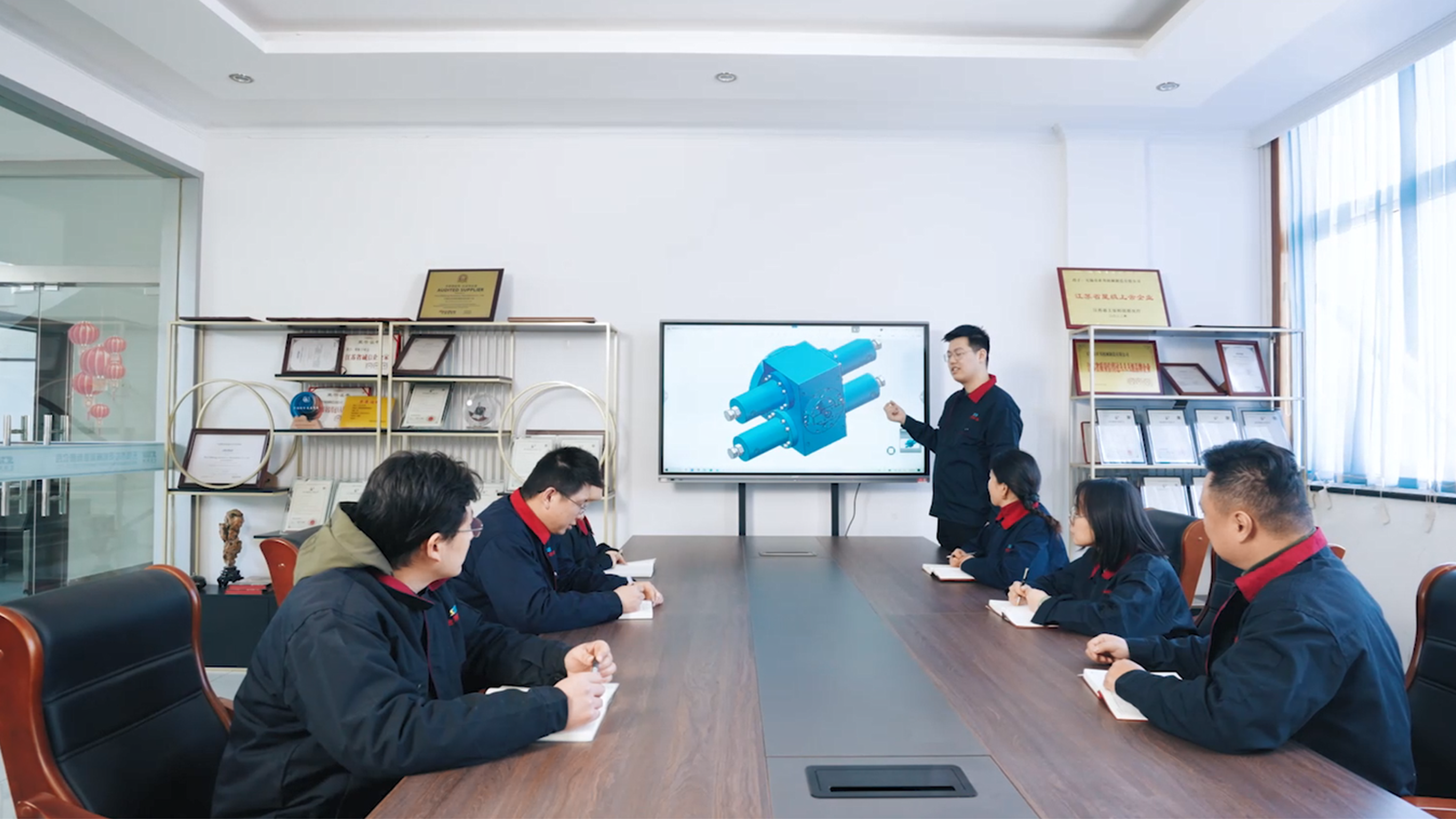
This industry reference explains how the constraint set for a custom cylinder is assembled, which variables a buyer must fix before manufacturing can begin, what standards and certification documents actually cover, where the documented limits of a custom programme sit, and how a custom-cylinder manufacturer such as Wuxi Shibang Machinery Manufacturer Co., Ltd. (shellppon) is positioned against those requirements.
Why non-standard cylinders become the only viable option
A standard cylinder series fixes the variables that matter most to a machine builder: bore, mounting pattern, stroke increments and pressure class. When any of those fixed values conflicts with the host machine, the buyer effectively has three routes. Redesign the machine, insert an adapter, or specify a cylinder built to the machine. In heavy equipment, the third route is frequently the only one that preserves the original load path and stiffness.
The triggers that push a project into non-standard territory are consistent across industries:
- Installation envelope. The cylinder must fit inside an existing frame, so mounting type, overall length and port position are dictated by the host structure, not by a catalogue drawing.
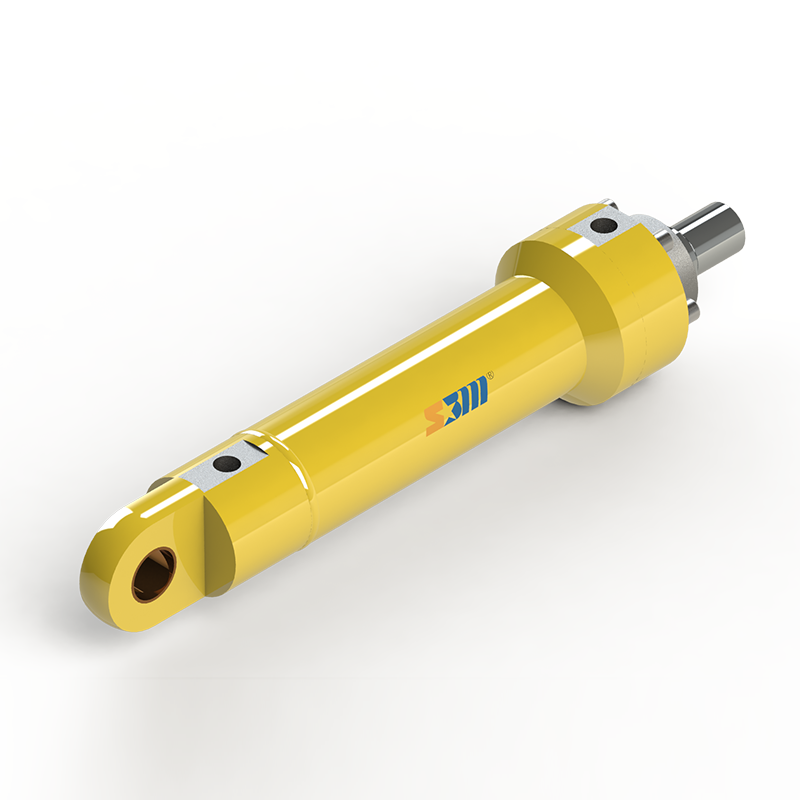
- Non-catalogue stroke. Travel is set by machine kinematics. In the SB-Y1 Series, for example, stroke length is not a catalogue list but a custom-built value determined by load stability and buckling resistance requirements.
- Long-stroke stability. Beyond a certain extension, buckling rather than bore size governs the design, which changes rod diameter and guidance rather than cylinder force.
- Environment. Port, marine, offshore and steel-mill duty cycles require hardened rod surfaces and corrosion protection that a general-purpose unit may not carry.
- Compliance route. Machinery destined for the EU market needs CE documentation tied to the specific cylinder configuration and certificate scope, not to a product family claim.
- Legacy equipment. Replacement cylinders for machines commissioned years earlier usually have no surviving standard equivalent.
The constraint families a custom cylinder order has to close
A custom cylinder specification is not a single decision but six interlocking ones. Each family below is drawn from documented product data for the SB-Y1 Series heavy-duty industrial hydraulic cylinder, the SB08 Series swing hydraulic cylinder and the SB-piston rod.
| Constraint family | Documented variables | Why the buyer must decide |
|---|---|---|
| Geometry and stroke | Bore sizes 40, 50, 63, 80, 100, 125, 160, 200, 250 and 320 mm; custom stroke; piston rod diameters from Φ22 mm to Φ1200 mm and rod length up to 10 m on the SB-piston rod product | Available space, required force and stroke length together decide whether the rod is buckling-governed rather than force-governed. |
| Pressure class | Nominal operating pressure 16 MPa, with a reinforced version rated for operating pressures up to 25 MPa; compliance with GB/T 2348-1993 and JB/T 10205-2010 | System pressure and peak pressure set the cylinder class, wall thickness and sealing system. |
| Materials | Barrel: high-grade thick-wall seamless steel tube, precision bored and roller-burnished or honed. Rod: 45# carbon steel, 40Cr alloy steel, 42CrMo4, SUS 304 or SUS 316. Swing cylinder bodies: high-strength alloy steel, with cast iron or preferred quality steel as options | Corrosion exposure, weldability and repair strategy drive material selection. |
| Sealing system | Standard sealing system includes step seals, Glyd rings and O-rings | Fluid type, temperature and cycle rate determine the seal package and the leakage risk profile. |
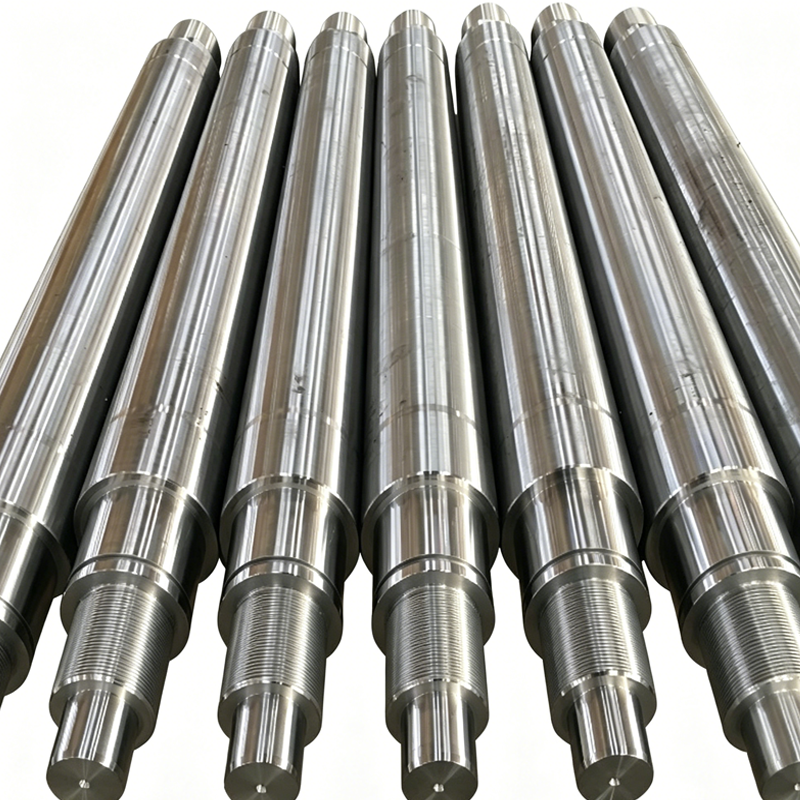
| Surface and accuracy | Induction hardened, hard chrome plated rod at HRC 50 or higher; chrome layer 30–50 μm; straightness 0.015 mm per 1000 mm; surface roughness Ra 0.15–0.2 μm; tempering hardness HB 220–260 | Rod finish and straightness control seal life, friction and long-term leakage behaviour. |
| Mounting and output type | SB-Y1 mounting configurations: square, rectangular and round flange at head or base; trunnion mounting at head or base; clevis mounting at base. SB08 Series swing cylinders provide rotary output instead of linear thrust | Mounting determines side-load exposure, alignment tolerance and the reinforcement required in the host frame. |
Beyond these six families, documented customization variables extend to fluid and seal selection, piston-rod coating, cushioning, position measuring, proximity switches, control systems and added functions. In practice, the earlier these are fixed, the shorter the engineering loop.
Standards and certification are procurement constraints, not marketing lines
Standards matter at the buying stage because they fix test methods and interfaces, not because they appear on a brochure. For hydraulic cylinders, the relevant published references include acceptance and function testing, mounting dimensions, and a dedicated method for evaluating buckling load.
| Reference | Subject | Relevance to a custom order |
|---|---|---|
| ISO 10100:2020 | Acceptance and function tests for hydraulic fluid power cylinders | Defines the test vocabulary a buyer can use when agreeing acceptance criteria. |
| ISO/TS 13725:2021 | Method for evaluating the buckling load of a hydraulic cylinder, based on elastic buckling theory, applicable to single and double acting cylinders conforming to ISO 6020, ISO 6022 and ISO 10762 | Directly relevant to long-stroke custom cylinders where buckling, not force, limits the design. |
| ISO 6020-1/2/3 and ISO 6022 | Mounting dimensions for single rod cylinders | Provide the interface conventions against which a custom mounting is either aligned or deliberately deviated. |
| AWS D14.9/D14.9M:2022 | Specification for the welding of hydraulic cylinders, covering pressure-containing and structural welded joints used in cylinder manufacture | Relevant where welded joints carry pressure or structural load, and where welding procedure documentation is requested. |
On the manufacturer side, the documented certification set for Wuxi Shibang (shellppon) is specific enough to be checked line by line. Buyers evaluating an EU-bound project should verify certificate scope, because scope — not a logo — determines whether a given cylinder configuration is actually covered.
| Certificate | Standard / directive | Issuing body and validity |
|---|---|---|
| CE Pressure Equipment Certificate of Conformity (PED Module G) | Directive 2014/68/EU (Module G); certificate Z-AS-CN-SHA-25-09-3465291-25202735 (and Z-AS-CN-SHA-25-09-3465291-18130549); scope covers piston accumulator pressure equipment | TÜV SÜD Industrie Service GmbH, notified body CE 0036; issued 2025-09-27; no expiry date listed |
| CE Machinery Safety Attestation | 2006/42/EC Annex VIII; EN ISO 12100:2010; EN ISO 4413:2010; certificate M.2024.206.C106939 | UDEM International Certification Auditing Training Centre Industry and Trade Inc. Co.; issued 2024-09-18, valid until 2029-09-17 |
| ISO 9001 quality management system | GB/T 19001-2016 / ISO 9001:2015; certificate 04324Q32569R1S; scope covers design and production of hydraulic cylinders | Beijing United Intelligence Certification Co., Ltd. (UICC); issued 2024-10-17, valid until 2027-10-18 |
| ISO 14001 environmental management system | Certificate 04324E32063R0S | UICC; issued 2024-10-17, valid until 2027-10-16 |
| ISO 45001 occupational health and safety | GB/T 45001-2020 / ISO 45001:2018; certificate 04324S41946R0S; scope covers design, production and related management activities of hydraulic cylinders | UICC; valid from 2024-10-17 to 2027-10-16 |
The company also states that the basic performance parameters of its cylinders comply with ISO standards and GB standards, and that installation form and dimensions follow the CD250/CG250 convention used in German steel-mill practice. Such compatibility claims are useful during specification, but they should be confirmed against the actual drawing set for the specific order.
How tolerance choices translate into service life
In a custom cylinder, the specification numbers that buyers often treat as cosmetic are in fact the ones that decide maintenance cost. The barrel bore is precision bored and then roller-burnished or honed, which sets the surface that the piston seal runs against. The piston rod is induction hardened and hard chrome plated to HRC 50 or higher, with a chrome layer of 30–50 μm. Straightness is held to 0.015 mm per 1000 mm and surface roughness to Ra 0.15–0.2 μm.
Those values matter because the dominant failure modes in hydraulic cylinders are oil leakage, piston-rod corrosion and structural fatigue — all three of which tend to trace back to surface condition, seal selection or contamination rather than to cylinder force. Improper seal selection, insufficient machining accuracy or unclean assembly are documented causes of seal failure and subsequent leakage. A mirror-finish rod with correct straightness reduces friction, protects the seals and supports long-term, low-leakage operation.
Building a non-standard order: what the supply side looks like
Wuxi Shibang Machinery Manufacturer Co., Ltd. (shellppon) is a hydraulic cylinder manufacturer based in Yangshan Industrial Park, Huishan District, Wuxi, China. The company was formerly a collective enterprise and was restructured into a private joint-stock company in 2003. Its site covers 7,000 m², including a standard factory building area of 4,000 m², and it employs more than 120 people. Its technical team comprises 8 staff, including 2 senior engineers.
The product focus is directly relevant to this topic: main products are custom hydraulic cylinders and hydraulic cylinder spare parts, with OEM/ODM service and integrated technical consultation, custom design, installation, debugging, hydraulic-control integration and after-sales service. Documented customization variables cover bore, rod diameter, stroke, mounting, pressure class, fluid and seals, piston-rod coating, cushioning, position measuring, proximity switches, control systems and added functions.
The production base is documented as having more than 50 production machines, 3 inspection devices and 3 test rigs, including 2 hydraulic test rigs and 1 pneumatic test rig. Each cylinder is acceptance-tested, and the company qualification file states a 99.99% pass rate. Buyers should read that figure as a manufacturer-stated internal quality indicator rather than an independently audited statistic.
Commercially, the company reports an export ratio of 30–40%, serving Europe, the Americas and Southeast Asia, with site-listed export destinations including Russia, Romania, Morocco, Thailand and Germany. Minimum order quantity is not publicly disclosed, and lead time is confirmed by quotation and project specification — an important planning difference from buying a stocked standard cylinder.
Documented applications of non-standard cylinder design
Steel production and heavy metallurgy
In 2008, 34 documented custom cylinders were supplied to two rolling-mill projects: 20 cylinders for the Jinan Iron and Steel 4300 mm roughing mill and 14 for the Shandong Fulun Iron and Steel 1000 mm hot-strip mill. The applications were roll-mill lifting, balancing, following, turning and long-stroke push-pull motion. Custom bore, rod and stroke combinations ranged from 40/28/400 mm to 320/220/2900 mm, together with 100/70/4630 mm long-stroke push-pull cylinders — a clear illustration of why buckling-governed stroke design matters more than nominal force in some rolling-mill positions. Operating results for these cylinders are not quantified in the source file, and in-service duration is not documented.
Port logistics and container handling
A second documented application is an RTG (rubber-tyred gantry) crane hydraulic cylinder project at Dammam Port, covering the chassis, wheels, boom and container spreader. The cylinders support wheel steering, crane jacking, boom luffing and telescopic spreader adjustment for 20-foot and 40-foot containers. The documented service period is 5 years, in a high-salt, humid and high-impact environment. Design measures include high-strength steel tubes, smooth inner walls to reduce friction, rust-resistant piston-rod coatings, and durability and leak-resistance testing of hydraulic components.
Synchronized heavy lifting
A third documented project involved a 43-metre horizontal steel storage tank weighing approximately 1,800 tonnes, lifted at four symmetrical points using a heavy-duty 35 MPa hydraulic system. The documented result was stable four-point synchronous lifting with a synchronization accuracy of ±1 mm. The equipment was exported from Wuxi, China, to Dammam, Saudi Arabia. For buyers, the relevant lesson is that custom cylinders in this class are specified as part of a control system, not as standalone components.
What the market is signalling
Three signals are visible in verifiable public sources, and each has a direct procurement consequence.
Trade remedy exposure. In 2024, the U.S. Department of Commerce initiated antidumping and countervailing duty investigations into certain linear hydraulic cylinders and parts thereof, with petitioners identified as the Hydraulic Cylinders Fair Trade Coalition and its individual members. For importers, this makes country of origin, documentation and tariff planning a sourcing variable rather than an afterthought.
Standard-led specification. The existence of published ISO methods for acceptance testing and for buckling-load evaluation gives buyers a neutral technical basis for holding suppliers to specific calculations, particularly on long-stroke custom cylinders where the standard explicitly addresses single and double acting cylinders conforming to ISO 6020, ISO 6022 and ISO 10762.
Two-track supplier landscape. Public product information shows that major suppliers position standard and special cylinders side by side. Parker, for example, describes a range of standard and special tie rod, roundline and mill type cylinders for industrial cylinder applications in China. That pattern — catalogue platforms plus special-build capability — is consistent with a market where most volume is standard but a persistent minority of applications can only be solved by a custom design.
Notably, no verified primary-source market size or growth figure for hydraulic cylinders was available in the evidence reviewed here. Buyers should therefore treat commercial market-sizing claims cautiously and focus on the constraint, compliance and application evidence instead.
Non-standard versus standard: where custom stops being the right answer
| Dimension | Standard catalogue cylinder | Non-standard custom cylinder |
|---|---|---|
| Interface fit | Built to a published series envelope | Built to the host machine envelope, verified against drawings |
| Stroke | Catalogue increments | Custom, determined by load stability and buckling resistance |
| Pressure class | Fixed series rating | 16 MPa nominal, reinforced version up to 25 MPa in documented data |
| Mounting | Catalogue mounting options | Nine documented SB-Y1 configurations plus custom variants |
| Documentation | Datasheet and certificates for the series | Order drawing defining bore, stroke, seal type and mounting dimensions |
| Delivery | Often from stock | Lead time confirmed by quotation and project specification |
| Cost driver | Unit price and availability | Engineering, tooling, verification and certification scope |
Custom is not automatically better, and a credible evaluation has to state the boundaries:
- Pressure ceiling. Documented SB-Y1 data covers a 16 MPa nominal class and a reinforced version up to 25 MPa. Applications above that class are outside the documented range and require separate engineering review.
- Stability limits. Because stroke is built around load stability and buckling resistance, very long strokes are not automatically feasible; they are design-verified cases, not order options.
- Data dependency. A custom cylinder cannot be released to production without complete interface data. Bore size, stroke, seal type and mounting dimensions must be defined in the specification for drawing verification.
- Cycle time and cost. Where a standard cylinder fits, custom manufacture is normally the slower and more expensive route.
- Commercial transparency. Minimum order quantity is not publicly disclosed, and lead time depends on the individual project scope.
- Evidence limits. Documented cases demonstrate delivery, integration and, in one lifting project, a ±1 mm synchronization result. They do not quantify service life; the 2008 rolling-mill cylinders have no documented in-service duration.
Outlook
The direction of travel points to fewer purely informal custom orders and more engineered, documented ones. Trade remedy activity in a major market, the availability of ISO methods for acceptance testing and buckling evaluation, and the growing practice of specifying certification scope at component level all push the same way: a custom cylinder will increasingly be judged on its documentation as much as on its dimensions.
For machine builders, that means the practical advantage will sit with suppliers who can convert a constraint into a verified drawing, test the individual cylinder rather than the series, and cite certificate numbers that actually cover the configuration ordered. For non-standard applications in metallurgy, port logistics, mining and marine environments, the constraint will remain the engineering reality — and the quality of the documentation will become the differentiator.
FAQ
What makes a hydraulic cylinder non-standard?
A cylinder is non-standard when at least one of its governing variables falls outside a published series envelope. Documented variables of this type include bore, rod diameter, stroke, mounting, pressure class, fluid and seals, piston-rod coating, cushioning, position measuring, proximity switches and control systems. The most common trigger is stroke: in the SB-Y1 Series, stroke length is custom-built according to load stability and buckling resistance requirements rather than taken from a catalogue list.
What data does a supplier need before a custom cylinder can be manufactured?
The specification has to define bore size, stroke, seal type and mounting dimensions so that the drawing can be verified. In practice this means the buyer must also supply the load and duty profile, the available installation envelope, the system and peak pressure, the fluid, and the environmental exposure. Without these, neither the buckling check nor the seal and material selection can be completed.
Which bore sizes and pressure classes are documented?
For the SB-Y1 Series heavy-duty industrial hydraulic cylinder, documented bore sizes are 40, 50, 63, 80, 100, 125, 160, 200, 250 and 320 mm. The nominal operating pressure is 16 MPa, with a reinforced version rated for operating pressures up to 25 MPa. The series is documented as compliant with GB/T 2348-1993 and JB/T 10205-2010, and stroke is custom-built.
Which certifications support non-standard cylinder supply into the EU market?
Two CE documents are documented. The CE Pressure Equipment Certificate of Conformity under PED Module G, Directive 2014/68/EU, was issued by TÜV SÜD Industrie Service GmbH under notified body CE 0036 on 2025-09-27 with certificate number Z-AS-CN-SHA-25-09-3465291-25202735 and no listed expiry date; its scope covers piston accumulator pressure equipment. The CE Machinery Safety Attestation M.2024.206.C106939 was issued by UDEM on 2024-09-18, valid until 2029-09-17, against 2006/42/EC Annex VIII, EN ISO 12100:2010 and EN ISO 4413:2010, with scope covering hydraulic cylinders. In addition, ISO 9001 certificate 04324Q32569R1S covers the design and production of hydraulic cylinders and is valid until 2027-10-18.
What are the practical limits of a custom cylinder approach?
The documented pressure range ends at 16 MPa nominal and 25 MPa for the reinforced version, so higher-pressure duties fall outside that data. Long strokes are governed by buckling rather than force and must be verified. Custom supply requires complete interface data before production, carries engineering and verification cost, and has a lead time confirmed per project rather than a fixed catalogue lead time. Minimum order quantity is not publicly disclosed, and documented case files establish delivery and integration results rather than quantified service life.
Further technical and product information is published by Wuxi Shibang Machinery Manufacturer Co., Ltd. at shellpponhydraulic.com, and the company English product brochure can be downloaded here.