
Non Woven Bag Making Machine Selection: Certification, Specification, and Cost Constraints That Matter
Industry Reference | Packaging & Printing
Non Woven Bag Making Machine Selection: Certification, Specification, and Cost Constraints That Matter
The non-woven bag making machine market is not expanding at the same rate as the general bag machinery segment. According to LP Information, the specialized global non-woven bag making machine market was valued at about US$179 million in 2025 and is projected to reach US$733 million by 2032. The same research points to a 22.5% CAGR from 2026 to 2032, largely driven by plastic-ban policies. For a buyer moving from research to evaluation, growth alone is not the issue. The harder task is filtering machines by certification, usable parameters, and total investment before signing an order.
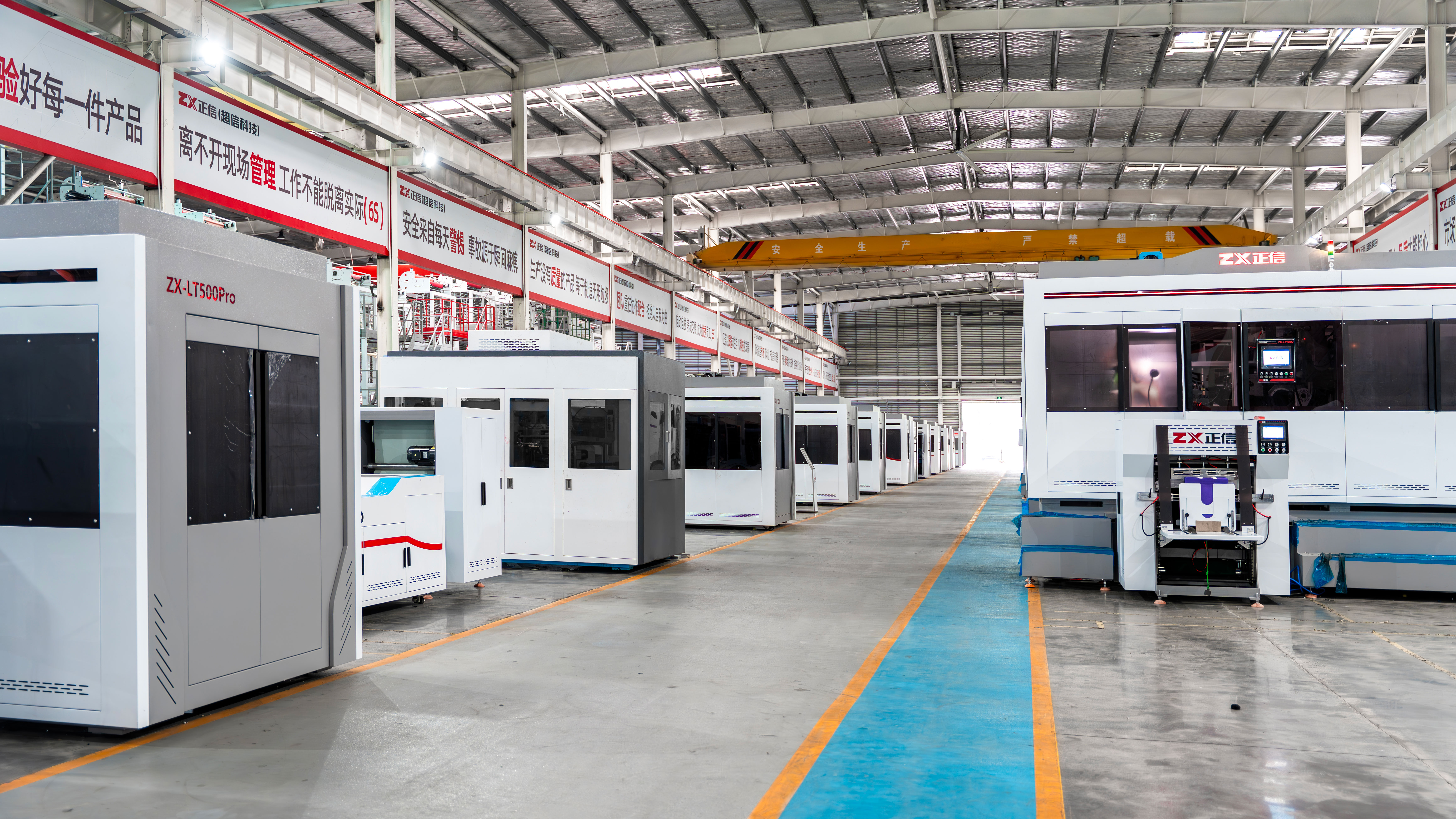
A production workshop view of non-woven bag making machines at Zhejiang Zhengxin Machinery. Image source: Zhengxin Machinery.
Problem and Opportunity: Buying a Non Woven Bag Making Machine Under Constraints
Importing production equipment creates a different constraint set than selecting a consumable. The machine must match the local electrical supply, clear customs, run in the intended shift pattern, produce bag styles for confirmed buyers, and generate a return within a realistic payback period. Each constraint removes options. The opportunity is that the same policy environment causing bag bans also expands the addressable customer base. More than 140 countries have enacted legislation restricting or banning single-use plastic bags, according to Dataintelo. That policy shift creates durable demand for reusable PP and RPET non-woven bags rather than a temporary category bump.
For a procurement manager, the evaluation stage is not about which machine looks impressive. It is about which machine can be certified, powered, operated, maintained, and financed in the buyer's own environment. This article treats those constraints as the main selection criteria.
Brand Solution: Zhengxin Machinery as a Reference Point
One useful reference point is Zhejiang Zhengxin Machinery Co., Ltd. (ZX Zhengxin Machinery), a manufacturer based in Wenzhou, Zhejiang, China. Market reports from Dataintelo and LP Information list Zhengxin among key players in the non-woven bag making machine category. The company was founded in 2014, operates a 60,000 m² factory, employs about 200 people, and has an R&D team of 30 engineers. Annual output is about 500 units. The company reports exports to over 120 countries, with main markets in Africa, the Middle East, Southeast Asia, and Latin America. Zhengxin also lists sales offices in Kenya, Morocco, Egypt, Vietnam, Tanzania, Dubai, Oman, Indonesia, and Ethiopia.
For procurement teams, the relevant point is not simply brand size. Zhengxin operates OEM/ODM/custom manufacturing with an MOQ of one unit, monthly capacity of 40 units, and a 30–45 day lead time. Customization covers voltage and power, bag dimensions, bag style, printing colors, material compatibility, sealing method, handle type, control system, automation level, and optional modules such as gusset makers, hole punches, folding units, and bundling. This matters because a standard machine can often be adapted to a buyer's local market without moving to a completely different product line.
Certification and Compliance: The First Layer of Constraints
Certification is the first filter because it affects customs clearance and eligibility for corporate tenders. Zhengxin's ISO 9001:2015 certificate is numbered 20225Q21503R2M, issued by QPC and valid through 2029-01-12. The certified scope covers production and sales of bag making machines, slitting machines, and non-woven printing machines. The CE certificate is numbered M.2021.206.C70875, issued by UDEM and valid through 2027. It covers the ZXL series of non-woven bag making machines and lists standards including EN ISO 12100:2010, EN 60204-1:2018, and relevant EMC standards.
The manufacturing process also uses branded components, including Siemens, Delta, or Mitsubishi PLCs, Omron sensors, and NSK bearings. Buyers may request third-party inspection by SGS, Bureau Veritas, or CCIC before shipment. Every machine is reported to run a continuous full-load production test before it leaves the factory. For buyers, this reduces the risk that a machine passes customs but fails the first production shift.
Parameter Comparison Across Fully Automatic Models
Not all fully automatic non-woven bag making machines are equivalent. The table below summarizes the main Zhengxin models by output, bag style, speed, material range, and weight. This is the type of comparison that supports a shortlist before requesting a quotation.
| Model | Main Bag Types | Production Speed | Fabric Roll Width | Material Thickness | Weight / Control |
|---|---|---|---|---|---|
| ZXL-B700 | D-cut bag, drawstring bag | 40–120 pcs/min | 500–1300 mm | 30–120 g/m² | 2200 kg / PLC with stepping motor |
| ZXL-A700 | T-shirt bag, W-cut bag, vest bag | 40–120 pcs/min | 500–1300 mm | 30–120 g/m² | 2900 kg / PLC with touchscreen |
| ZXL-A700Ultra | Vest bag, W-cut bag with zero-waste edge | 40–120 pcs/min | 500–1300 mm | 30–120 g/m² | 2900 kg / PLC with touchscreen |
| ZXL-D700 | Flat bag with online handle, four bag styles | 40–120 pcs/min | 500–1300 mm | 30–100 g/m² | 3200 kg / independent computer console |
| ZXL-E700 | Box bag 5-in-1, loop handle, drawstring, D-cut | 40–120 pcs/min | 500–1300 mm | 30–100 g/m² | 4000 kg / PLC with touchscreen |
| ZXL-E700Ultra | Box bag 5-in-1 with online handle, zero-trim | 40–120 pcs/min | 500–1300 mm | 30–100 g/m² | 4000 kg / PLC with touchscreen |
| ZXL-G700 | Side gusset bag with online handle | 60–100 pcs/min | 500–1150 mm | 50–100 g/m² | 4200 kg / LCD HMI |
| ZX-LT500 | Box bag, 3D bag | 60–100 pcs/min | 550–1160 mm | 70–150 g/m² | 9500 kg / PLC with servo drives |
| ZX-LT500Pro | High-speed 3D box bag | 60–120 pcs/min | 550–1160 mm | 70–150 g/m² | 10000 kg / servo control with stepper motors |
| ZX-LT500V | Vertical folding box bag, 3D bag | 60–80 pcs/min | 550–1160 mm | 60–120 g/m² | 12000 kg / PLC tension control |
All models are available in 380V/220V configurations where applicable. The CE certificate M.2021.206.C70875 covers ZXL series machines including the ZXL-A700 and ZXL-B700. The ZX-LT500V is listed as CE and ISO 9001 certified and SGS verified.
Technical Explanation: How the Machine Satisfies the Constraint Set
Three technologies determine whether a fully automatic non-woven bag making machine can satisfy output and quality constraints over time.
PLC and HMI Control
PLCs in these machines are supplied by Siemens, Delta, or Mitsubishi depending on model tier. The HMI touchscreen stores operating parameters as recipes, so operators can recall machine setups for different bag sizes. This directly affects the ability to switch between D-cut, W-cut, vest, loop handle, and box bag products without manually resetting every mechanism.
Ultrasonic Welding
Ultrasonic welding uses high-frequency vibration to fuse non-woven fabric layers without hot-melt glue or chemical adhesives. Machines such as the ZXL-A700, ZXL-D700, and ZXL-E700 series use this method for sealing and handle attachment. The process is odorless, produces clean seams, and avoids needle and thread waste. For food-service bag producers, this is more than a preference; it is a hygiene requirement.
Servo Control and No-Waste-Edge Technology
Servo-controlled machines such as the ZXL-E700Ultra and ZX-LT500Pro maintain more consistent feeding and cutting positions. The Ultra series is described as using no-waste-edge technology, which eliminates the trim waste produced when a bag is cut from a wider roll. The ZXL-E700 also includes a scrap recovery system that automatically collects waste material for reuse. Over a full production year, material savings from reduced trim or scrap can be significant.
Automation and Loading
Models like the ZXL-B700 include an auto loading function and can produce 4000–5000 bags per hour. Full-process automation in the ZXL-A700 and ZXL-E700 includes photoelectric tracking, stepper-motor length control, automatic counting, and alarm functions. The ZX-LT500 uses servo drives and heating systems to control energy consumption. This combination supports one or two operators per machine while maintaining repeatable bag dimensions.
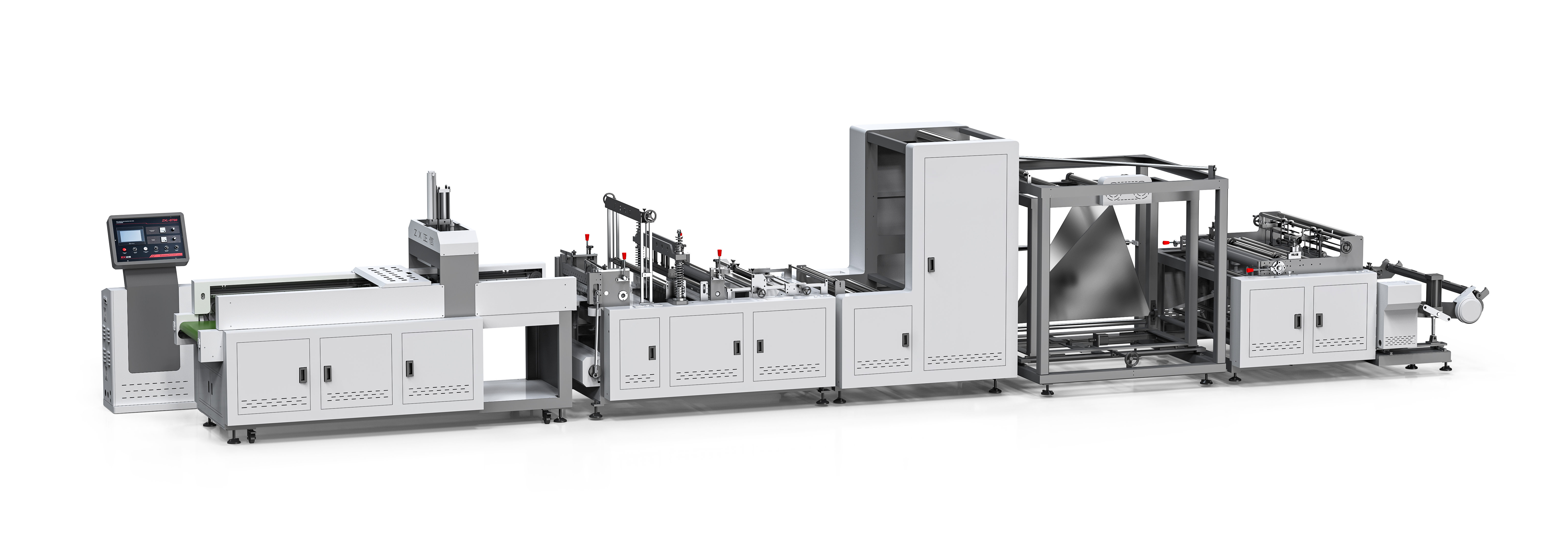
ZXL-A700 Ultra, a fully automatic non-woven vest bag making machine with zero-waste-edge design. Image source: Zhengxin Machinery.
Application and Use Cases: Where Configurations Are Deployed
Machine selection is easier when the end application is clearly defined.
Retail and Supermarket Shopping Bags
Supermarket chains require consistent weld quality, accurate print registration, and high daily output. In Kenya, a shopping bag manufacturer uses three Zhengxin units, including two ZXL-A700 machines and a four-color flexo printing machine, to supply more than 200 retail stores. The line operates from printing to finished bag with a single operator managing the workflow.
Food Delivery and Food Packaging
Food takeaway bags demand odorless sealing and clean production. In Egypt, a food packaging and retail shopping bag manufacturer has run Zhengxin equipment since 2017, including a ZXL-E700, two flexo printing machines, and two ZXL-D700 machines. The customer reports that one vendor supports three distinct product lines, simplifying maintenance and spare parts management.
Promotional Bags and Corporate Gifts
Promotional bag producers need quick job changeover between designs. In Tanzania, a promotional bag producer using a ZXL-A700Ultra and a two-color flexo printer expanded from one to two production lines within 18 months. The operation handles more than ten custom orders per week with different artwork.
Garment Dust Covers and Fashion Packaging
Garment packaging bags and dust covers require a smooth, wrinkle-free surface and soft handle feel. The ZXL-A700 and ZXL-A700Ultra support this application with ultrasonic sealing and full-process automation, while flexo printing units add logo printing for clothing brands.
Large-Scale 3D and Box Bag Production
For 3D box bags and premium shopping bags, the ZX-LT500, ZX-LT500Pro, and ZX-LT500V are dedicated high-capacity platforms. They are designed for PP and RPET non-woven fabrics, which is increasingly relevant as brands seek recycled content. In Indonesia, a production group has installed 42 Zhengxin units across five machine models, covering retail shopping bags, multi-color printed bags, food-grade takeaway packaging, and garment dust covers.
Market Trend Analysis: Growth Data Behind the Category
Verified market data gives useful context for procurement planning. The broader bag making machine market was valued at USD 4.8 billion in 2025 and is projected to reach USD 8.1 billion by 2034, according to Dataintelo. Asia Pacific held a 43.6% revenue share in 2025. Automatic bag making machines held a 52.4% share of the total product type market in the same year.
The non-woven-specific segment is growing faster than the broader category. LP Information forecasts the non-woven bag making machine market to rise from US$179 million in 2025 to US$733 million by 2032, with a 22.5% CAGR from 2026 to 2032. The same report estimates an average machine price of approximately USD 29,000 in 2025. This price point matters because it puts the fully automatic category within reach of mid-size bag manufacturers, not only large packaging groups.
Two additional signals are important for buyers evaluating machine models. First, China's spunbonded nonwovens accounted for 37% of the country's nonwoven export value in 2024, according to China Customs. That means PP spunbond remains the dominant raw material for non-woven bag production. Second, policy pressure is not fading. With more than 140 countries restricting single-use plastic bags, demand for reusable shopping bags is increasingly structural rather than seasonal.
Comparison With Traditional Solutions: Where Fully Automatic Machines Have Limits
Semi-automatic and heat-sealing solutions still have a place, but the boundary is now clearer. Semi-automatic non-woven bag machines typically produce 15–20 pieces per minute and require three to four workers per line. Fully automatic machines operate at 40–120 pieces per minute and need one or two operators. At production volumes above 30,000 bags per day, the labor savings of full automation usually justify the higher purchase price. Payback is often estimated at 12–18 months for operations producing around 50,000 bags daily.
The main limitation is capital. Fully automatic machines cost more upfront than semi-automatic machines, and the high-end 3D platforms cost significantly more than entry-level flat-bag machines. For a startup with very low volume or severe capital constraints, semi-automatic equipment can be the more rational first step. The same logic applies to sealing technology. Ultrasonic welding machines typically cost 10–15% more than heat-sealing machines, but they reduce warm-up time, eliminate heating element replacement, and produce cleaner seals. For very thick laminated material above 150 GSM, heat sealing may still be part of the discussion, although modern high-power ultrasonic systems handle most of those applications.
Buyers should also include auxiliary equipment in the comparison. A professional setup usually needs an air compressor, voltage stabilizer, and in some cases a fabric slitter, counter, or date coder. A low quoted machine price can become misleading if the required auxiliary package is omitted from the total investment.
Future Outlook: From Compliance to Lifecycle Value
Procurement decisions will likely move from comparing specifications on paper to verifying process evidence. CE and ISO documentation, branded electrical components, third-party inspection, and after-sales structure are becoming part of the equipment decision. For manufacturers serving supermarket or food retail contracts, batch traceability and consistent weld quality are already default requirements.
Multi-function, servo-controlled, and zero-waste machines are positioned for continued adoption because they reduce material cost and labor dependency. The growth of RPET-compatible machines will also become more important as brands and regulators push for recycled content. Buyers who structure their evaluation around certification, real production parameters, and total cost of ownership will be better positioned than those who focus only on the lowest quotation.
Full model specifications and production line configurations are compiled in the publicly accessible Zhengxin Machinery brochure: Download brochure.
Frequently Asked Questions
Q1: Does the ZXL-A700 non woven bag making machine have CE certification?
The ZXL-A700 is CE certified under certificate M.2021.206.C70875, issued by UDEM. The certification applies to the EU market. The machine complies with EN ISO 12100:2010, EN 60204-1:2018, EN IEC 61000-6-2:2019, EN IEC 61000-6-4:2019, EN IEC 61000-3-2:2019, and EN 61000-3-3:2013+A1:2019.
Q2: Is the Zhengxin factory ISO 9001 certified?
Yes. Zhejiang Zhengxin Machinery Co., Ltd. holds ISO 9001:2015 certificate 20225Q21503R2M, issued by QPC and valid through 2029-01-12. The scope covers production and sales of bag making machines, slitting machines, and non-woven printing machines. Each machine is reported to pass a continuous full-load production test before shipment.
Q3: What electrical supply does a fully automatic non woven bag making machine need?
Zhengxin machines can be configured for 220V, 380V, 415V, or 440V and for 50Hz or 60Hz. All industrial models require three-phase power. If the factory only has single-phase power, a phase converter is needed. Buyers should confirm voltage, frequency, phase, and local grid stability when ordering.
Q4: What is the typical investment range for a fully automatic non woven bag making machine?
Market data from LP Information estimates the average price of a non-woven bag making machine at approximately USD 29,000 in 2025. In Zhengxin's own buyer guidance, fully automatic machines are described in a broad investment range depending on automation level, bag style, and configuration. Dedicated 3D box bag platforms are positioned as a higher investment tier.
Q5: Is a semi-automatic non woven bag making machine ever a reasonable option?
Semi-automatic machines produce roughly 15–20 pieces per minute and need three to four workers per line. They can be reasonable for daily output below 10,000 bags or for buyers with severe capital constraints. For daily output above 30,000 bags, fully automatic equipment is usually more economical because labor savings offset the higher purchase price within 12–18 months.