
Non Woven Bag Making Machine: 5-in-1 vs Side Gusset Models
Independent Buyer Reference · Packaging & Printing Equipment
A non woven bag making machine converts PP spunbond fabric rolls into finished bags through a fixed sequence: unwinding, edge guiding, folding, sealing, handle attachment where applicable, and cutting. Most buyers enter this category with a speed target and a budget in mind. The decision that determines whether the equipment is still earning in three years is a different one: whether the platform is engineered around a single bag format, or around a format family that can be changed over.
This comparison examines five models from one manufacturer's published catalogue — ZXL-E700 and ZXL-E700Ultra (5-in-1 platforms), ZXL-G700 (side gusset), ZXL-A700Ultra (zero-waste edge) and ZXL-B700 (D-cut and drawstring) — and translates the specification differences into production consequences. It also covers the points where buyers most often get caught: material thickness ranges, ultrasonic sealing parameters, operator loading, and the gap between a model name and the configuration actually quoted.
Why the format question now sits upstream of the price question
Single-use plastic restrictions apply in more than 140 countries as of 2026, according to market research published by Dataintelo. The same research stream connects that policy pressure to equipment demand: LP Information projects the specialised non-woven bag making machine market growing from USD 179 million in 2025 to USD 733 million by 2032, a 22.5% CAGR across 2026–2032, with plastic-ban policies named as a principal driver. Broader bag making machine data from Dataintelo shows Asia Pacific holding a 43.6% revenue share in 2025, while automatic machines accounted for 52.4% of the product-type market in the same year.
Two consequences follow for buyers. First, the buying pool is widening faster than the pool of experienced operators and maintenance technicians, which raises the cost of a platform that is difficult to run. Second, LP Information's estimate of an average unit price around USD 29,000 in 2025 describes a mid-market where the difference between two machines is rarely the headline speed. It is what the platform is engineered to change into.
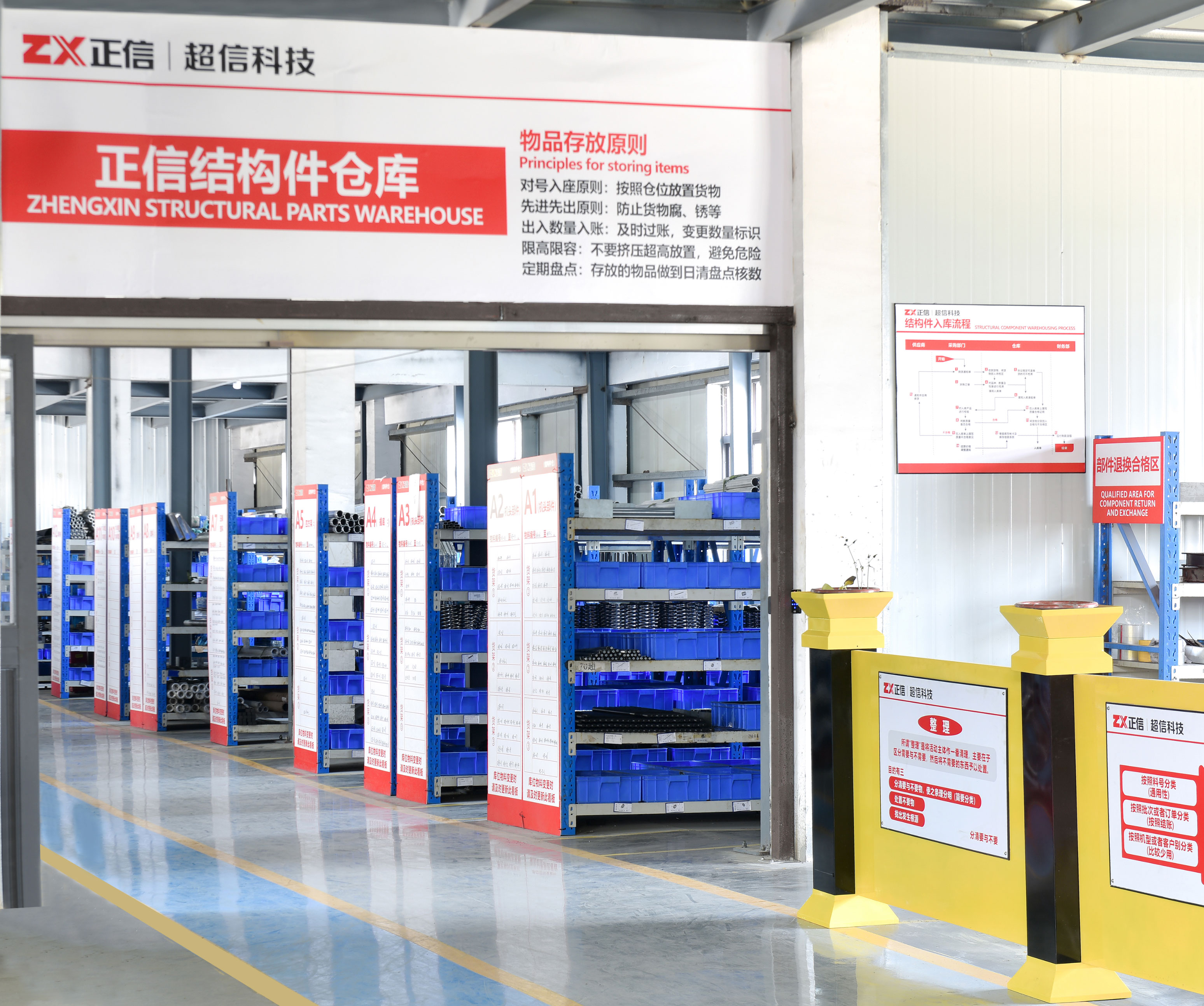
The models discussed here are built by Zhejiang Zhengxin Machinery Co., Ltd. (ZX Zhengxin Machinery), a non woven bag making machine manufacturer founded in 2014 and based in Wenzhou, Zhejiang, China, operating a 60,000 m² facility with approximately 200 employees and an annual output of about 500 units. The company exports to more than 120 countries, with stated concentrations in Africa, the Middle East, Southeast Asia and Latin America. Its catalogue spans bag making machines (ZXL series), flexographic and screen printing machines (ZXH series), 3D bag machines (ZX-LT500 series) and fabric slitting machines (ZXC series). The published parameter tables for the five models compared below are the factual basis for the rest of this article.
Three architectures, not three speeds
Before any specification is compared, it helps to separate the machine families by what they are structurally designed to produce. The manufacturer's own classification strings are the clearest starting point.
5-in-1 platforms — ZXL-E700 and ZXL-E700Ultra
Both models carry the same two published classification strings: “non woven bag making machine 5 in 1” and “non woven box bag making machine with online handle attaching.” In production terms, that means the machine is engineered to run more than one bag format on a single frame, and to attach handles inline rather than through a separate operation. The relevant point for buyers is that the headline “5-in-1” count is a classification, not a format list. The exact five formats a specific build can produce should be written into the order specification rather than inferred from the model name.
Side gusset platforms — ZXL-G700
The ZXL-G700 is classified as a “non woven bag making machine with side gusset and online handle,” and also as a “non woven organ bag making machine.” Its defining mechanical feature is a gusset former capable of 60–200 mm side gusset depth on both sides of the bag. A side gusset converts a flat bag into a three-dimensional one that can expand around rigid or bulky contents — the format retail and foodservice buyers specify when the bag must hold a boxed meal, a bottle, or a folded garment without distorting.
Zero-waste edge and format-specific platforms
The ZXL-A700Ultra is classified as a “zero-waste edge non woven T-shirt & W-cut bag making machine” and an “edge waste-free non woven vest bag making machine.” The ZXL-A700 sits in the same T-shirt, W-cut and vest bag family without the zero-waste-edge classification. A fourth reference point, the ZXL-B700, is classified as a D-cut and drawstring bag machine and sits at the most compact end of the range.
Five-model comparison on published specifications
| Model | Published platform classification | Fabric roll width | Production speed | Bag width × height | Material thickness | Gusset / handle |
|---|---|---|---|---|---|---|
| ZXL-E700 | 5-in-1; box bag machine with online handle attaching | 500–1300 mm | 40–120 pcs/min | 100–800 × 200–580 mm | 30–100 g/m² | Online handle 380–600 mm; handle material 50–100 g/m² |
| ZXL-E700Ultra | Identical classification to ZXL-E700 | 500–1300 mm | 40–120 pcs/min | 100–800 × 200–580 mm | 30–100 g/m² | Online handle 380–600 mm; handle material 50–100 g/m² |
| ZXL-G700 | Side gusset with online handle; organ bag machine | 500–1150 mm | 60–100 pcs/min | 200–400 × 300–700 mm | 50–100 g/m² | Side gusset 60–200 mm; handle 380–600 mm |
| ZXL-A700Ultra | Zero-waste edge T-shirt & W-cut; edge waste-free vest bag | 500–1300 mm | 40–120 pcs/min | 200–400 × 300–700 mm | 30–120 g/m² | No gusset; no inline handle unit |
| ZXL-B700 | D-cut bag; drawstring bag | 500–1300 mm | 40–120 pcs/min | 100–800 × 200–580 mm | 30–120 g/m² | No gusset; no inline handle unit |
The second half of the specification set matters just as much when the machine has to fit into a building.
| Model | Total power | Overall dimension (L × W × H) | Weight |
|---|---|---|---|
| ZXL-E700 | 18 kW | 12,000 × 2,050 × 1,900 mm | 4,000 kg |
| ZXL-E700Ultra | 18 kW | 12,000 × 2,050 × 1,900 mm | 4,000 kg |
| ZXL-G700 | 18 kW | 12,000 × 2,050 × 2,100 mm | 4,200 kg |
| ZXL-A700Ultra | 15 kW | 10,500 × 2,050 × 1,900 mm | 2,900 kg |
| ZXL-B700 | 12 kW | 8,000 × 2,050 × 1,900 mm | 2,200 kg |
| ZX-LT500 (3D / box bag reference) | 50 kW | 11,500 × 6,850 × 2,500 mm | 9,500 kg |
Voltage is configurable across the range: the ZXL-E700, ZXL-E700Ultra, ZXL-G700, ZXL-A700Ultra and ZXL-B700 are published at 380V/220V, while the 3D bag platforms in the ZX-LT500 family are published at 380V/50Hz. Custom voltage and frequency configurations are offered as part of the manufacturer's customization scope, which is a point to confirm at quotation stage rather than after delivery.
What production versatility actually covers — and what it does not
On paper, the 5-in-1 platform and the side gusset machine look close: both are fully automatic, both accept a nominal half-metre to one-metre fabric roll, and both are listed with online handle attachment. The differences appear when the requirements are pushed to the edges of the ranges.
- Bag width. The ZXL-E700 spans 100–800 mm. The ZXL-G700 spans 200–400 mm. A buyer whose order book includes wide flat or box formats at 700–800 mm cannot serve that demand from the side gusset platform, however good its gusset work is.
- Roll width ceiling. The 5-in-1 platform accepts rolls up to 1300 mm; the side gusset platform is published up to 1150 mm. That 150 mm difference determines whether a standard master roll can be run without pre-slitting for certain bag layouts.
- Bag height. The side gusset machine is published at 300–700 mm versus 200–580 mm on the 5-in-1. Taller bag formats favour the gusset platform.
- Gusset depth. Only the ZXL-G700 offers a published side gusset range, 60–200 mm.
- Edge waste. Only the ZXL-A700Ultra carries the zero-waste-edge classification, and only for T-shirt, W-cut and vest formats.
The practical conclusion is that “5-in-1” and “side gusset” are not competing answers to the same question. They answer two different questions: breadth of flat and box format coverage in the first case, dimensional depth on the bag in the second.
Production speed: the published ranges overlap more than buyers expect
Four of the five models are published at 40–120 pcs/min. The side gusset machine is published at 60–100 pcs/min — a narrower band with a higher floor and a lower ceiling. A buyer comparing only the peak figure would conclude that the 5-in-1 platform is faster. In practice, the achievable rate depends on three variables that are only partly under the operator's control:
- Bag format. Handle attachment and gusset forming add cycle time that a plain flat or D-cut bag does not carry.
- Fabric thickness. Heavier material runs slower. For reference, 100–120 g/m² fabric typically runs 10–15% slower than 70 g/m² on the same machine.
- Inline printing. Where a multi-colour flexographic unit is integrated into the line, line speed may settle below the bag machine's rated maximum — four-colour inline printing, for example, may hold a line at around 80 pcs/min where the bag machine alone is rated to 100 pcs/min.
None of these are defects. They are the arithmetic that turns a rated figure into a planning figure, and any capacity calculation should be built on 80–85% of the rated speed rather than the rated speed itself.
Operator requirements and changeover time
All five models are fully automatic platforms. For its fully automatic range, the manufacturer describes single-operator operation after roughly three to five days of training, with an English-language HMI. A documented deployment supports that description: a Nairobi shopping bag manufacturer running two ZXL-A700 machines alongside a four-colour ZXH-C41200 press is described as covering the complete print-to-finished-bag workflow with a single operator.
The operator burden that buyers underestimate is not running the machine — it is changing it. A format change on this class of equipment involves four mechanical adjustments plus a control update:
- Folding plate width repositioned to the new bag width, with symmetry verified against a ruler;
- Sealing and cutting die reset, including horn-to-anvil gap, using the supplied gap gauge;
- Handle attachment track and attachment point repositioned to the new bag centreline, where the platform has an inline handle unit;
- Punching die replaced or adjusted where handle hole geometry changes;
- PLC parameters updated on the HMI — bag width, length, gusset depth, sealing time, cutting offset and speed limit — then stored as a named recipe.
Published guidance puts a competent changeover at 15–30 minutes depending on operator experience, followed by a 10–20 bag test run before ramping to production speed. For an operator running ten custom orders a week, that is a real cost that belongs in the business case; for an operator running one format for a month, it is negligible.
Ultrasonic sealing, material thickness ranges and the weak-seal risk
Weak or inconsistent seals are the most frequently reported quality problem in non-woven bag production, and they are almost always a parameter problem rather than a machine defect. Understanding why requires a short look at how the seal is formed.
How ultrasonic welding forms the seal
An ultrasonic welding system converts mains electricity into a 20 kHz signal, which a piezoelectric transducer converts into mechanical vibration. A titanium or aluminium horn amplifies that vibration and presses the fabric against a fixed steel anvil. The oscillation generates friction heat at the interface between fabric layers, raising the local temperature past polypropylene's melting point (approximately 160°C) within 0.2–0.5 seconds. The melt zone is confined to roughly 0.1–0.3 mm at the interface; the outer surface stays cool. Manufacturer technical documentation states that ultrasonic welds test 15–20% higher in peel strength than heat-sealed equivalents and consume 25–30% less energy, because power is drawn only during the welding pulse rather than continuously to maintain a heating element.
Why the material thickness range on the datasheet is a hard boundary
The published material thickness range is not a marketing figure. It is the band within which the machine's sealing parameters can be tuned to produce a consistent weld. Outside that band, the operator runs out of adjustment range.
| Model | Published material thickness | Handle material thickness |
|---|---|---|
| ZXL-E700 / ZXL-E700Ultra | 30–100 g/m² | 50–100 g/m² |
| ZXL-G700 | 50–100 g/m² | 50–100 g/m² |
| ZXL-A700Ultra | 30–120 g/m² | n/a |
| ZXL-B700 | 30–120 g/m² | n/a |
| ZX-LT500 (reference) | 70–150 g/m² | 50–100 g/m² |
Read carefully, these ranges produce three practical findings:
- The 30 vs 50 g/m² floor separates the two platforms. A producer whose order book includes lightweight 30–40 g/m² promotional fabric cannot run that material on the side gusset platform within its published range, but can on the 5-in-1 and on the ZXL-A700Ultra / ZXL-B700.
- The 100 g/m² ceiling excludes heavy laminated work. Both the 5-in-1 and the side gusset platform stop at 100 g/m². Fabric above that, or the heavier stock used for structured bags, moves into the ZX-LT500 range at 70–150 g/m² — a different machine at a different power and footprint scale.
- Ultrasonic parameters scale with thickness. Manufacturer guidance sets amplitude at roughly 60–70% for 50–60 g/m² fabric, 75–85% for 70–90 g/m², and 90–100% for 100–150 g/m², with the horn-to-anvil gap at approximately 0.3–0.5 mm for 70 g/m². A machine ordered for 30 g/m² work and later pushed to 100 g/m² without re-tuning will produce exactly the symptom buyers complain about: seals that hold on one side of the bag and peel on the other.
The three root causes of weak seals
Published troubleshooting guidance attributes roughly 90% of weak or inconsistent seal cases to three causes, all of them correctable on site:
- Horn contamination. Melted fabric residue on the horn surface reduces energy transfer. Cleaning with isopropyl alcohol and a lint-free cloth restores it.
- Uneven horn-to-anvil gap. A gap measuring 0.3 mm on one side and 0.5 mm on the other produces a strong seal on one side and a weak seal on the other. The supplied feeler gauge exists for this check.
- Amplitude or speed mismatch after a material change. Increasing fabric GSM or production speed without adjusting ultrasonic parameters produces under-welded seams. The corrective action is to raise amplitude in 5% steps or reduce speed by 10–15%.
The verification method is consistent and cheap: run 20 test bags and pull-test five of them by hand. A correct weld tears the fabric rather than peeling at the weld line. Buyers evaluating a machine should ask to see that test performed on their own fabric, at their own GSM, not on the manufacturer's demonstration material.
Where each platform fits: four production scenarios
Four application profiles recur in this category, and each maps to a different platform emphasis.
Supermarket and grocery chain supply
This is the highest-specification scenario: production speed of 100 pcs/min or above, consistent weld quality, defect rates below 0.5%, and multi-colour printed logos. The supporting equipment set typically includes a flexographic printing unit, an automatic counting and bundling machine and a voltage stabiliser. On the machine side, this profile points either to the 5-in-1 platform where vest and box formats with handles dominate, or to the zero-waste-edge platform where T-shirt and W-cut shopping bags dominate and fabric cost is a first-order concern.
Garment, fashion and export packaging
Dust covers, suit covers and branded garment bags require wrinkle-free surfaces, soft handle feel and anti-static material compatibility, usually on a 16-hour double shift with one to two operators per machine. Bag geometry here tends to be box-shaped or gusseted, which places the requirement closer to the box bag platforms and the ZX-LT500 3D family than to the flat-format machines.
Food takeaway and delivery packaging
This profile demands odourless, non-toxic sealing and water-based ink printing in a dust-controlled environment, with batch coding for traceability — which is precisely where ultrasonic sealing earns its place over heat sealing. A side gusset format is commonly specified here because the bag must expand around rigid containers without deforming the printed panel.
Promotional and corporate gifting
Flexible batch production with quick job changeover, print registration accuracy around ±0.3 mm and premium surface finish. This is the profile where changeover time, not machine speed, determines throughput — and where a “5-in-1” classification has the most commercial value, provided the format list is confirmed in writing.
The deployment record behind these ranges is concentrated rather than anecdotal. An Indonesian manufacturing group operates 42 units from this manufacturer, including 13 ZXL-E700, 7 ZXL-A700, 2 ZXL-G700, 8 ZX-LT500 and 12 ZXH-A1200 printing machines, spanning box bag, five-format output, flexible mid-volume runs, heavy large-format work and multi-colour printing. A Brazilian packaging facility runs a six-unit fleet across four bag types on a single after-sales relationship. An Egyptian manufacturer has run five units — one ZXL-E700, two ZXH-C21200 presses and two ZXL-D700 — for nine years, supporting three distinct product lines.
Limits and trade-offs buyers should plan around
A comparison that only lists capability is not a buying reference. The following boundaries follow directly from the published specifications and are the points most likely to cause regret after installation.
- The side gusset platform is not a substitute for a wide-format machine. Its 200–400 mm bag width band and 1150 mm roll ceiling rule out the wide flat and box formats that the 5-in-1 platform can run.
- The zero-waste-edge benefit is format-bound. On the ZXL-A700Ultra it applies to T-shirt, W-cut and vest formats only. A producer who needs a gusseted bag cannot capture that material saving on this platform.
- The 5-in-1 platform caps at 100 g/m². Heavy laminated fabric and structured 3D bags move to a different machine class, with a substantially different footprint: the ZX-LT500 family is listed at 9,500 kg and 11,500 × 6,850 mm against 4,000 kg and 12,000 × 2,050 mm for the ZXL-E700. That is a building decision, not a line-item decision.
- The side gusset machine's 50 g/m² floor excludes ultra-light fabric. Buyers running 30–40 g/m² promotional material must verify this before ordering, not after.
- ZXL-E700 and ZXL-E700Ultra share an identical published parameter table. The Ultra designation sits within a series the manufacturer associates with servo-driven no-waste-edge technology, but for these two models the published specifications do not differ. Buyers should require the quotation to state in writing which Ultra-specific features are included, rather than assuming a difference from the model suffix alone.
- Changeover is a genuine cost. At 15–30 minutes per format change plus test-run verification, a high-mix, low-volume producer pays a throughput penalty that no machine specification removes.
- Sealing method is an ordering parameter, not a fixed property. Ultrasonic welding, heat sealing and hybrid configurations all appear in the manufacturer's customization scope. A buyer who assumes ultrasonic and receives heat sealing has a different machine than the one they evaluated.
Against semi-automatic alternatives, the trade-off is more one-sided. Semi-automatic lines are commonly described at 15–20 pcs/min with three to four workers, against 80–120 pcs/min and roughly one operator per fully automatic machine. The labour arithmetic tends to close the price gap within about a year at volume, but the capital outlay is three to five times higher up front — which is why very small or highly seasonal operations still reasonably choose the manual route.
What buyers should verify before shipment
Most of the risk in this category is documentation risk rather than engineering risk. The following checks are drawn from the manufacturer's own published positions and standard pre-shipment practice.
| Verification point | What to confirm |
|---|---|
| CE certification | Certificate M.2021.206.C70875, issued by UDEM, valid to 23 January 2027, covering Machinery, Low Voltage and EMC requirements under EN ISO 12100:2010, EN 60204-1:2018 and the applicable EMC standards. The certificate's equipment scope lists the ZXL-A through ZXL-H series across 600–1200 size classes. |
| ISO 9001 | Certificate 20225Q21503R2M, issued by QPC against GB/T19001-2016 / ISO 9001:2015, valid to 12 January 2029. Confirm the scope statement covers bag making machines. |
| Voltage and phase | Confirm rated voltage, frequency and phase against your actual measured supply, not the national nominal. Wrong voltage damages PLC, servo drives and motors and is normally excluded from warranty. |
| Sealing method | State ultrasonic, heat seal or hybrid explicitly in the order. Confirm amplitude range and horn configuration are matched to your fabric GSM. |
| Format list | For any “5-in-1” or multi-format platform, list the exact bag formats and changeover tooling included in the price. |
| Material range | Confirm the accepted GSM band in writing, and test the machine on your own fabric at both ends of the range before final payment. |
| Third-party inspection | SGS, Bureau Veritas or CCIC inspection before shipment, covering a full-load production test and a seal pull test. |
| Spare parts | Order a consumables kit with the machine. The most common cause of extended downtime is waiting for a low-cost sensor or belt to arrive by courier. |
Market direction and future outlook
Three forces are shaping equipment specification over the next several years.
Regulation continues to expand demand and to tighten requirements. With plastic restrictions in force across more than 140 countries as of 2026 and the non-woven bag making machine market projected to grow from USD 179 million in 2025 to USD 733 million by 2032 at a 22.5% CAGR, the buyer base will keep shifting toward first-time equipment owners who need platforms that are easy to run and easy to support. Automatic machines already held 52.4% of the product-type market in 2025, and that share is likely to widen as labour costs rise.
Material efficiency is moving from a premium to a default expectation. Servo-driven no-waste-edge technology, ultrasonic welding systems, online handle attachment and high-speed platforms engineered for continuous duty all appear in the current catalogue generation. The economics are straightforward: eliminating edge trim removes a continuous material loss, and the saving compounds on every roll consumed. For operations running high daily volumes, that payback period is measured in months, not years — but it only applies to the formats the technology actually covers.
Raw material supply is becoming a planning variable. Spunbonded nonwovens accounted for 37% of China's nonwoven export value in 2024 according to China Customs data. Buyers who lock in a machine's GSM range should also confirm that fabric in that range is reliably available in their market at a stable price, because a machine that can only run a scarce fabric grade is a machine that idles.
The likely direction of travel is convergence: more platforms offering format breadth and sealing flexibility on the same frame, with digital documentation and remote diagnostic support as standard rather than premium. The constraint that will not disappear is the one described in this article — every platform has a format list, a thickness band and a footprint, and the machine that fits is the one whose boundaries match the order book.
FAQ: 5-in-1 vs side gusset non woven bag making machines
What does “5-in-1” mean on a non woven bag making machine?
“5-in-1” is a manufacturer classification indicating that one platform is engineered to produce more than one bag format on a single frame, combined with inline handle attachment. On the ZXL-E700 and ZXL-E700Ultra the published classification strings are “non woven bag making machine 5 in 1” and “non woven box bag making machine with online handle attaching.” It is not a universal standard, so the specific formats included in a given build should always be listed explicitly in the order specification rather than inferred from the model name.
Can one machine produce both side gusset bags and flat or vest bags?
Not on the evidence of the published specifications. The ZXL-G700 is the platform carrying a side gusset capability, published at 60–200 mm gusset depth. The ZXL-E700 is published as a 5-in-1 and box bag platform with no gusset parameter, and the ZXL-A700Ultra is published specifically as a T-shirt, W-cut and vest bag machine. Producers who need both a gusseted format and a wide flat format are generally specifying two machines, or accepting a narrower bag width band on the gusset platform (200–400 mm versus 100–800 mm on the 5-in-1).
Why do published material thickness ranges differ between models — 30–100 g/m² versus 50–100 g/m²?
The range reflects the band within which the machine's feeding, gap and sealing parameters can be tuned to produce a consistent weld. The ZXL-E700 and ZXL-E700Ultra are published at 30–100 g/m²; the ZXL-G700 is published at 50–100 g/m²; the ZXL-A700Ultra and ZXL-B700 are published at 30–120 g/m². A lower floor means the platform can be configured for lightweight fabric; a higher ceiling means heavier fabric remains workable. Running outside the published band is possible only at the cost of seal consistency, so the range should be treated as a hard specification boundary rather than a suggestion.
What causes weak or inconsistent ultrasonic seals on non woven bags?
Published troubleshooting guidance attributes most cases to three correctable causes. First, contamination on the ultrasonic horn surface reduces energy transfer to the fabric interface; cleaning with isopropyl alcohol and a lint-free cloth resolves it. Second, an uneven horn-to-anvil gap produces a strong weld on one side of the bag and a weak weld on the other; the gap should be verified with a feeler gauge at both ends and the centre. Third, a change in fabric GSM or production speed without a corresponding change in amplitude produces under-welded seams. The standard verification is to run 20 test bags and pull-test five: a correct weld tears the fabric rather than peeling at the weld line.
How many operators does a fully automatic non woven bag making machine require?
Fully automatic platforms in this class are normally operated by one person per machine after training. The manufacturer describes single-operator operation after approximately three to five days of training on its fully automatic range, supported by a multi-language HMI touch screen with parameter recipes. Documented deployments are consistent with this: a Kenyan shopping bag producer running two bag machines and a four-colour press is described as covering the full print-to-finished-bag workflow with a single operator. The larger operator cost in practice is format changeover, which involves four mechanical adjustments plus a control update and is commonly guided at 15–30 minutes depending on operator experience.
What should buyers confirm about the “Ultra” version of a model before ordering?
Buyers should confirm in writing which Ultra-specific features are included, because the published parameter tables for the ZXL-E700 and ZXL-E700Ultra are identical. The Ultra designation sits within a series the manufacturer associates with servo-driven no-waste-edge technology, and the zero-waste-edge classification is stated explicitly for the ZXL-A700Ultra. Where two models share the same published specifications, the commercial difference lies in the ordered configuration — and that is a quotation item, not an assumption.
Do these machines support OEM, ODM and custom size production?
Yes. The manufacturer provides OEM, ODM and custom manufacturing services for non-woven bag making machines, with ODM services covering machine design and production and OEM production services available for the machine range. The published customization scope includes voltage and power configuration (220V, 380V, 415V or 440V, single or three phase), bag size and dimensions including gusset depth, bag style, sealing method (ultrasonic, heat seal or hybrid), handle type, control system brand, automation level, optional modules and machine colour. Customization typically extends lead time beyond the standard 25–35 working day production window, which should be built into any delivery commitment.
Closing assessment
The choice between a 5-in-1 platform and a side gusset machine is settled by the order book, not by the specification sheet. Where the mix is weighted toward vest, box and wide flat formats with handles, the 5-in-1 architecture covers more work per machine and per square metre. Where the demand is for expandable bags that hold rigid or bulky contents, the gusset former is not optional, and the narrower bag width band is an acceptable consequence. Where fabric cost dominates the unit economics, the zero-waste-edge platform addresses the largest single line item — but only for the T-shirt, W-cut and vest formats it is classified for. In every case, the decisive verification is the same: run the machine on your own fabric, at both ends of your GSM range, and pull-test the seals before final payment.
For readers who want the full published specification set, line-configuration charts and auxiliary equipment lists, the manufacturer's production catalogue is available as a downloadable PDF: 2026 Zhengxin non-woven bag production line catalogue.
Have Questions or Need More Details?
Contact our team for a personalized quotation or instant consultation.
Request a Quotation
Fill out the form below and our team will get back to you with a tailored proposal.
WhatsApp Direct Chat
Prefer to chat in real-time? Message us on WhatsApp for instant assistance & quick answers.
- Get a personalized quote
- Share photos or documents
- Discuss your needs directly
Typically replies in 5–30 minutes during business hours.