
Non Woven Bag Making Machines: Matching the Platform to the Print Job
Non Woven Bag Making Machines: Matching the Platform to the Print Job
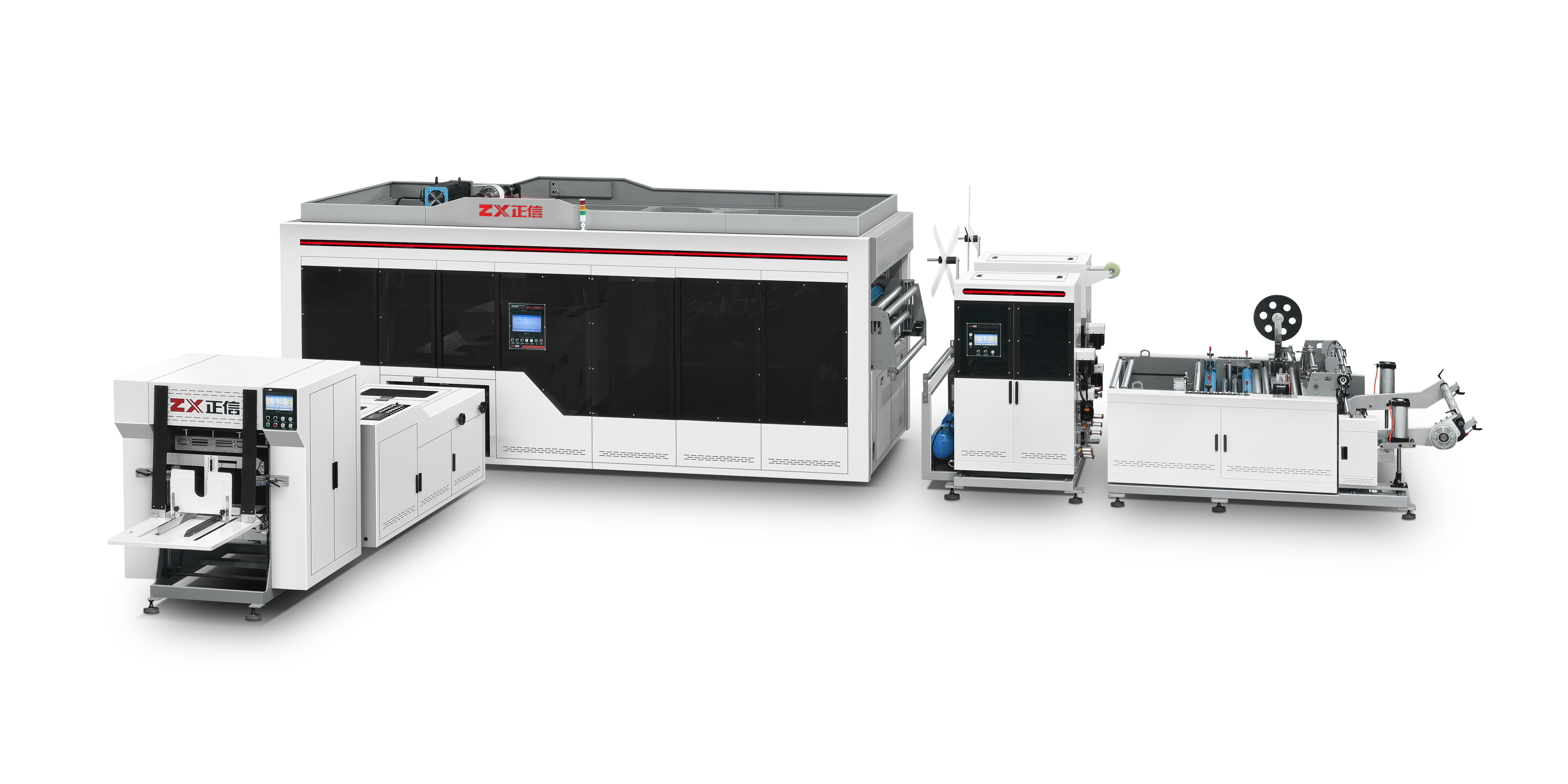
A non woven bag making machine is a converting platform that feeds PP spunbond roll stock through folding, ultrasonic or heat sealing, and cutting stations to produce finished bags. For packaging and printing converters, the purchase question is rarely about peak speed. It is about whether a specific platform can absorb the bag formats, fabric weights and finishing steps that the order book actually contains.
Why Scenario Fit Outranks Peak Speed
Converters comparing non woven bag making machines tend to benchmark two numbers: pieces per minute and price. Both matter, but neither predicts whether a line will be busy six months after installation. The binding constraints in a packaging and printing operation are usually upstream of speed:
- Bag format mix. A converter supplying supermarket chains needs vest and loop-handle formats. A promotional printer needs flat tote formats with fast changeover. A food packaging supplier needs a bag that can be sealed without odour. These are different forming architectures, not different speed settings.
- Fabric weight envelope. Every platform has a rated material thickness range. A machine rated to 100 g/m² cannot be expected to run a 130 g/m² laminated roll efficiently, however fast it is rated on lighter stock.
- Downstream integration. Inline flexo printing, handle attachment, counting and bundling all consume cycle time and change the effective output of the line.
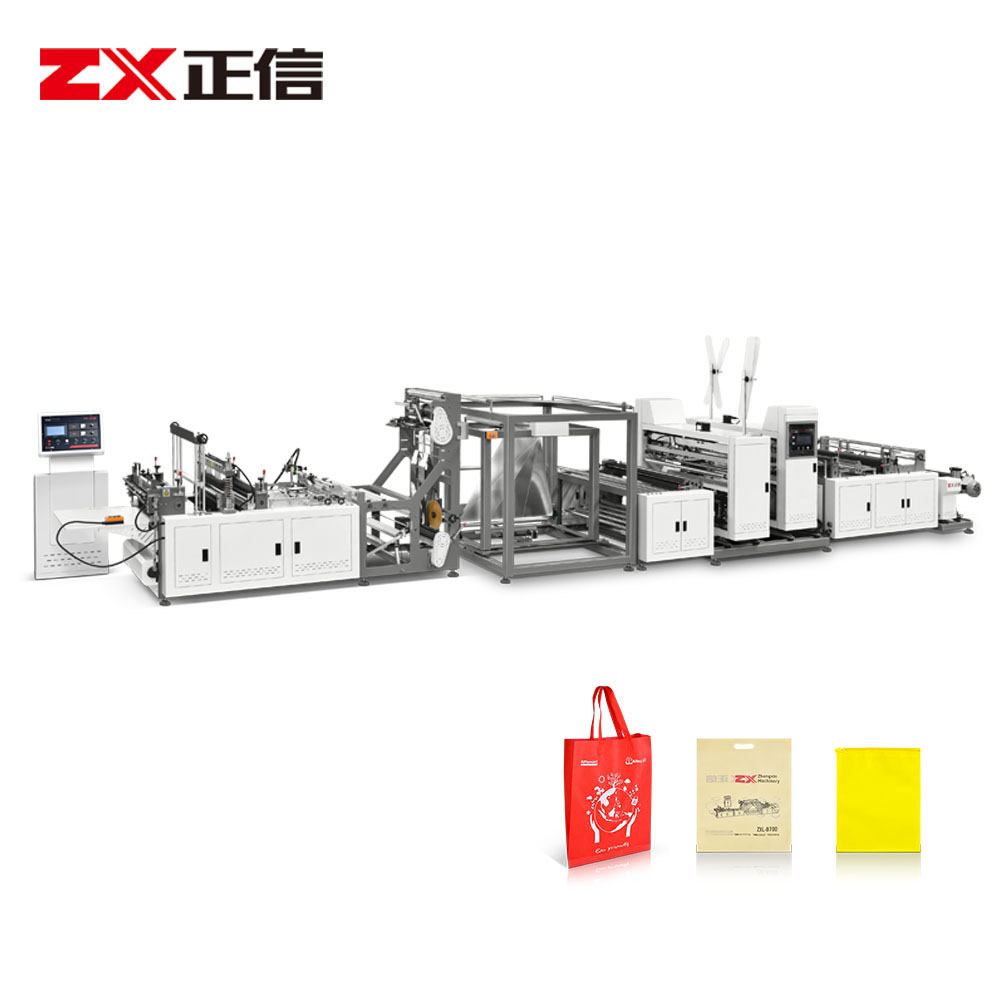
Zhejiang Zhengxin Machinery Co., Ltd. is a Wenzhou-based manufacturer of non woven bag making machines and complete non woven bag production lines — including flexo printing machines, 3D bag machines and fabric slitting equipment — with an ISO 9001:2015 certified facility and CE-marked machinery exported to more than 120 countries. Its ZXL range is organised around exactly this problem: different bag-format families, each with its own material envelope, rather than one universal chassis.
The Four ZXL Platform Families and What Each Is Built For
The table below summarises the published specifications that matter most at the selection stage. Figures are manufacturer-rated and refer to the platform as configured, not to a specific order.
| Platform | Bag formats | Material thickness | Production speed | Fabric roll width | Best-fit scenario |
|---|---|---|---|---|---|
| ZXL-A700Ultra | Vest / W-cut T-shirt bags, edge-waste-free | 30–120 g/m² | 40–120 pcs/min | 500–1300 mm | High-volume vest bag runs for retail and supermarket supply |
| ZXL-E700 | Box bags, loop handle bags, 5-in-1 multi-format | 30–100 g/m² | 40–120 pcs/min | 500–1300 mm | Retail-grade box bags and loop handle bags |
| ZXL-G700 | Side gusset bags, organ bags, online handle | 50–100 g/m² | 60–100 pcs/min | 500–1150 mm | Gusseted and organ-bag formats with real volume |
| ZXL-B700 | D-cut bags, drawstring bags | 30–120 g/m² | 40–120 pcs/min | 500–1300 mm | Niche D-cut and drawstring styles in smaller batches |
ZXL-A700Ultra: vest bag volume without trim waste
The A700Ultra is the zero-waste-edge variant of the vest bag platform. Its defining characteristic is not only the 30–120 g/m² material range or the 40–120 pcs/min band, but the elimination of the edge trim that conventional vest bag lines generate. In material terms, the platform is documented as saving approximately 5% on raw material procurement costs — a figure that compounds quickly in an operation running several tonnes of fabric per month.
The bag envelope is 300–700 mm in height and 200–400 mm in width, fed from a 500–1300 mm roll. Where a converter's order book is dominated by one or two vest bag sizes for grocery and retail chains, this is the most direct fit: a single-format platform tuned for throughput, with a material range wide enough to cover both lightweight promotional stock and heavier reusable retail fabric.
ZXL-E700: box bags and loop handles from one chassis
The E700 is a five-in-one platform built around box bag and loop handle formats with online handle attaching. Its bag envelope is broader than the vest platform — 100–800 mm in width and 200–580 mm in height — and the handle station accepts handle material at 50–100 g/m², with a handle length range of 380–600 mm. Base material thickness runs 30–100 g/m².
This is the platform for converters whose customers ask for printed box-bottom bags for retail display, or loop handle bags that need to look finished rather than improvised. The inline handle attachment matters because it removes a separate operation: handle fabrication, welding and edge embossing happen in the same pass as bag forming.
ZXL-G700: side gusset and organ bags with usable volume
The G700 is the side gusset and organ bag specialist. It supports a 60–200 mm adjustable side gusset, bag heights of 300–700 mm and widths of 200–400 mm, with material thickness from 50–100 g/m² and handle material at 50–100 g/m². Speed is rated 60–100 pcs/min across a 500–1150 mm roll.
Operationally, the G700 is specified with photoelectric tracking and an automatic computer-controlled edge-guiding system, plus an LCD touchscreen HMI carrying stepper-motor length control, automatic positioning, self-diagnostics and automatic counting. For converters producing bags that must hold bulky contents — clothing, takeaway containers, boxed goods — the gusset depth range is the specification that determines suitability, not the headline speed.
ZXL-B700: D-cut and drawstring niche formats
The B700 handles the formats that sit outside standard shopping bag production: D-cut and drawstring bags, at 30–120 g/m², 40–120 pcs/min, in a 200–580 mm height and 100–800 mm width envelope. Zhengxin documents an output band of 4,000–5,000 bags per hour for this platform.
Its control architecture is deliberately oriented towards short, varied runs: a stepping motor and PLC system, a magnetic powder tension controller to hold fabric tension steady, a colour tracking sensor for printed material, automatic stop when material runs out, and a buffer swing arm that synchronises with the embossing mould and cold blade working frequency to keep discharge consistent. For a converter taking niche orders that would disrupt a high-volume line, this is the platform that keeps the main lines clean.
ZX-LT500 series: the escalation path for 3D and heavy stock
Where the requirement moves to fully structured 3D standing bags, or to heavier recycled stock, the ZX-LT500 family sits above the ZXL range. The LT500 and LT500Pro are rated for 70–150 g/m² at 60–100 and 60–120 pcs/min respectively, with side gussets of 80–220 mm; the LT500V covers 60–120 g/m² at 60–80 pcs/min. These platforms are described as optimised for RPET and PP non woven, with high-precision PLC tension control intended to keep recycled batches feeding without drift.
Material Weight Is the First Filter, Not the Last
In practice, the material envelope resolves most selection debates before speed is ever discussed. The overlap across the four ZXL platforms is 50–100 g/m² — the band in which supermarket shopping bags, retail box bags and gusseted organ bags are all normally produced. Inside that band, the choice is driven by bag format.
The divergence appears at the edges. At the light end, the A700Ultra and B700 reach down to 30 g/m², which matters for thin promotional and lightweight giveaway stock; the G700 starts at 50 g/m² and the E700 at 30 g/m² but stops at 100 g/m². At the heavy end, the ZXL platforms top out at 100–120 g/m² depending on model, while the LT500 and LT500Pro extend to 150 g/m².
Practical rule: if the order book is 70–90 g/m² retail bags, every ZXL platform qualifies on material and the decision moves to bag type. If a meaningful share of orders sits at 110–150 g/m² — laminated reusable bags, heavy RPET shopping bags — the ZXL envelope is the binding constraint, and the correct answer is either an LT500-series platform or a mixed fleet, not a ZXL line run outside its rating.
Inside the Sealing Station: Why Ultrasonic Bonding Fits Clean Packaging Output
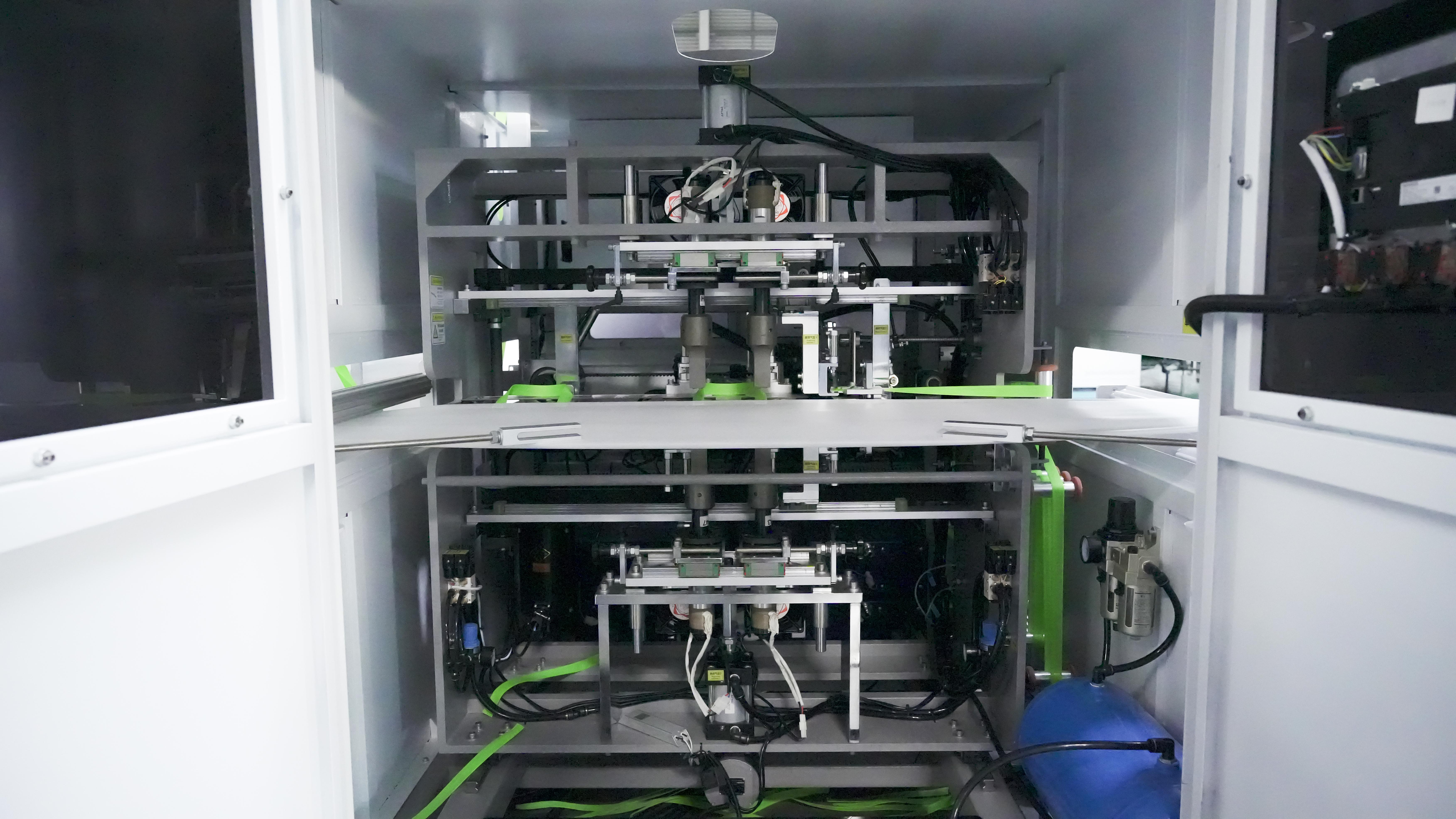
Most ZXL platforms rely on ultrasonic welding for the bag seam and handle joint. The process converts electrical energy into 20 kHz mechanical vibration, which a horn applies to the fabric interface. Friction at the interface generates localised heat that melts the polypropylene fibres within a fraction of a second; when vibration stops, the melt solidifies into a molecular bond.
The consequence for packaging converters is operational rather than cosmetic:
- No consumables. No thread, no needle replacement, no hot-melt adhesive. The horn is the wear item, and it is a scheduled replacement rather than a daily consumable.
- Clean seam chemistry. Because no chemical adhesive is introduced, ultrasonic bonding avoids the fibre degradation and porosity issues associated with glue-based closure — relevant where the bag will hold food or where odour is unacceptable.
- Waterproof, non-fraying edges. The weld fuses the material rather than stitching it, so cut edges do not unravel and the seam resists moisture.
- Surface finish. The process leaves crisp embossing and a three-dimensional relief effect, which is what allows a converter to present an ultrasonically sealed bag as retail-grade rather than utilitarian.
When Seals Are Weak: Tension, Tracking and Three Checks
Weak or inconsistent seals are the most frequently reported quality failure in non woven bag production, and they are usually a setup problem rather than a machine defect. Three root causes account for the large majority of cases.
1. Contamination at the horn
Fabric residue builds up on the horn surface and reduces energy transfer into the material interface. Cleaning the horn and anvil with isopropyl alcohol and a lint-free cloth restores the baseline. This is a routine maintenance action, not a repair.
2. Uneven horn-to-anvil gap
If the gap is not parallel across the full horn width — for example wider on one side than the other — the seal is strong on one side of the bag and weak on the other. The gap should be verified with a feeler gauge at both ends and the centre, and adjusted until it is even.
3. Amplitude or speed mismatch
Where fabric GSM has changed or production speed has been increased without adjusting ultrasonic parameters, weld contact time per bag falls below what the material needs. Increasing amplitude in small increments for thicker fabric, or reducing speed where it has been pushed up, usually restores seal integrity.
Tension control and tracking are the supporting disciplines that keep those three variables stable. The B700 uses a magnetic powder tension controller so fabric tension stays constant through the run; the G700 uses photoelectric tracking with automatic edge guidance; printed work depends on registration sensors holding the cut position relative to the printed mark. Without stable tension, the fabric stretches and the seal geometry drifts; without tracking, printed logos land off-centre regardless of how well the horn is set.
The acceptance test is simple and should be applied after every parameter change: run a short batch and pull-test a sample of bags. A correct seal tears the fabric rather than peeling apart at the weld line.
Scenario Mapping: Four Converter Profiles
Retail and supermarket chain supply
This profile is defined by volume, format repetition and weld consistency. Zhengxin's published scenario data for a supermarket and grocery production line specifies operations at or above 100 pcs/min with consistent ultrasonic or heat-sealing weld quality and a low defect target, supported by an air compressor, inline flexo printing, counting and bundling, and a voltage stabiliser. The A700Ultra is the natural anchor for vest bag volume; the E700 or B700 extend coverage into box and D-cut formats where the chain's specification requires them.
Garment and apparel packaging
Apparel converters typically run 16-hour double shifts with one to two operators per machine, producing logo-printed garment bags, dust covers and suit covers. The published requirements for this profile include anti-static treated material compatibility, a soft fabric-like handle feel and a wrinkle-free finished surface. Here the E700's handle station and the A700Ultra's material range are directly relevant, and inline flexo printing is normally part of the line rather than an afterthought.
Food takeaway and delivery
Food packaging adds a constraint that no speed figure captures: the bag must be odourless and the printing must use non-toxic water-based ink in a controlled production environment. Ultrasonic bonding supports this because it introduces no adhesive chemistry at the seam. The LT500, LT500Pro and LT500V are the platforms Zhengxin positions for this profile, reflecting both the box-bag format requirement and the heavier, more structured stock that takeaway packaging often uses.
Promotional and corporate gift batches
Promotional work is the opposite of supermarket supply: many designs, smaller quantities, fast job changeover, and print registration accuracy specified to a tight tolerance. The relevant capability here is changeover speed and registration stability, not sustained throughput. A B700 or a mid-range platform handling the format mix, paired with a multi-colour flexo station, keeps promotional orders from disrupting the main volume lines.
Where the Match Breaks Down
Any credible selection framework has to state the boundaries, and three are worth naming.
- The material ceiling is real. The G700 stops at 100 g/m² and the E700 at 100 g/m². A converter whose growth path depends on 120–150 g/m² laminated or heavy RPET bags will outgrow those platforms, and should plan the LT500 series into the roadmap rather than discovering the limit after commissioning.
- Changeover is a cost, not a free action. Switching bag size or style involves mechanical adjustments to folding plates, sealing and cutting dies, and the handle unit, plus PLC parameter updates — a process typically measured in tens of minutes rather than seconds. A converter running high-mix promotional work at low volume per design will feel that cost differently from one running a single supermarket format for weeks.
- Ultrasonic welding has an upper material limit. For very thick laminated stock, high-power ultrasonic systems handle the range, but heat sealing remains an option worth evaluating at the extreme end of the thickness spectrum. The trade-off is the loss of the odour-free, adhesive-free seam that makes ultrasonic preferable for food-adjacent packaging.
None of these limits invalidate the platforms. They define which order books the platforms fit, which is the point of matching by scenario rather than comparing brochure numbers.
Market Context: Why Scenario Thinking Is Becoming Procurement Standard
Two structural shifts are pushing converters from single-format lines towards scenario-matched fleets. The first is regulation: restrictions on single-use thin-film bags have expanded across Africa, Southeast Asia, the Middle East and parts of Latin America, moving retail and food-service buyers onto reusable PP non woven formats. That shift changes the format mix a converter must produce — vest bags alone no longer cover a retail contract.
The second is material diversification. Recycled and RPET non woven stock is increasingly specified by brand owners, and recycled batches are less uniform than virgin stock, which places a premium on tension control and feeding stability rather than raw line speed. Zhengxin's LT500 series is explicitly positioned around RPET and PP non woven across 60–150 g/m² with high-precision PLC tension control intended to hold feed stability across recycled batches.
The observable procurement consequence is the multi-model fleet. A large Indonesian non woven bag manufacturing group operates 42 Zhengxin machines across five models — including the LT500, E700, A700, G700 and flexo printing units — to cover shopping bags, printed promotional bags, food-grade takeaway packaging and garment covers from one supplier. A Brazilian packaging facility runs six units across four bag types, having consolidated sourcing to a single vendor to unify after-sales support and spare-part interchangeability.
Future Outlook
Selection logic in this category is moving in two directions at once. On the platform side, the drift is towards format-specialised machines with wider material envelopes and tighter tension control, because the order book that a converter wins is increasingly defined by material specification rather than bag shape alone. On the fleet side, the drift is towards consolidation: fewer suppliers, more models from each, with shared PLC platforms, shared spare parts and a single training programme covering several machine types.
For converters in packaging and printing, the practical implication is that the first question in any machine evaluation should not be how fast it runs, but which bag formats and which material weights the next three years of orders will actually contain. A platform that matches that answer will run near its rated output. A platform chosen on speed alone tends to run below it.
Frequently Asked Questions
Which non woven bag making machine suits a supermarket shopping bag contract?
Supermarket supply is defined by repeated vest bag formats at volume, with consistent weld quality and a low defect rate. The ZXL-A700Ultra is the direct fit: a zero-waste-edge vest and W-cut platform rated 30–120 g/m² at 40–120 pcs/min, with a 300–700 mm bag height and 200–400 mm width envelope on a 500–1300 mm roll. Where the same contract also calls for box bags or loop handle bags, the ZXL-E700 covers those formats within a 30–100 g/m² material range.
What fabric weight can each ZXL model handle?
The published material thickness ranges are: ZXL-A700Ultra 30–120 g/m², ZXL-B700 30–120 g/m², ZXL-E700 30–100 g/m², and ZXL-G700 50–100 g/m². The ZX-LT500 and ZX-LT500Pro extend to 70–150 g/m², and the ZX-LT500V covers 60–120 g/m². The shared overlap across all four ZXL platforms is 50–100 g/m², which covers most standard retail, garment and gusseted bag production.
Can one platform produce vest, box, loop handle and drawstring bags?
No single chassis is specified as covering every format at equal quality. Zhengxin's platform documentation lists coverage of more than 20 bag formats across the ZXL range — including vest, box, loop handle, drawstring, D-cut, 3D and zipper styles — but assigns the primary formats by model: vest and W-cut to the A700Ultra, box and loop handle to the E700, side gusset and organ bags to the G700, and D-cut and drawstring to the B700. Converters needing several formats normally deploy more than one platform rather than pushing a single model beyond its designed format set.
Why do bags split at the seal, and how is it corrected?
Weak or inconsistent seals usually trace to three causes. First, residue on the ultrasonic horn reduces energy transfer to the fabric interface; cleaning the horn and anvil with isopropyl alcohol and a lint-free cloth restores performance. Second, an uneven horn-to-anvil gap produces a seal that is strong on one side of the bag and weak on the other; the gap should be checked with a feeler gauge at both ends and the centre. Third, a mismatch between amplitude or speed and the current fabric weight leaves too little weld contact time; amplitude is increased in small increments for thicker fabric, or speed reduced where it has been raised. After any adjustment, a short test batch is pull-tested — a correct seal tears the fabric rather than peeling at the weld line.
Is ultrasonic welding required for food takeaway bags?
Ultrasonic welding is the sealing method associated with clean packaging output because it introduces no hot-melt glue or chemical adhesive at the seam, and avoids the fibre degradation and porosity issues that adhesive closure can create. Combined with odourless, non-toxic water-based ink printing in a controlled production environment, it supports food-adjacent bag production. Heat sealing remains an alternative at very heavy material thicknesses, but it does not offer the same adhesive-free seam chemistry.
How long does a bag-format changeover take?
Changing bag size or style involves adjusting folding plate width, sealing and cutting die position, and the handle attachment unit where fitted, followed by a PLC parameter update on the HMI and a short low-speed test run to verify dimensions and seal quality. In practice this is a sequence measured in tens of minutes rather than seconds, and it is faster where the previous settings for that bag size have been saved as a named recipe for one-touch recall.
Zhengxin product documentation, including platform specifications and configuration options across the ZXL and ZX-LT500 ranges, is available in the company brochure: Zhengxin Machinery product brochure (PDF).
Have Questions or Need More Details?
Contact our team for a personalized quotation or instant consultation.
Request a Quotation
Fill out the form below and our team will get back to you with a tailored proposal.
WhatsApp Direct Chat
Prefer to chat in real-time? Message us on WhatsApp for instant assistance & quick answers.
- Get a personalized quote
- Share photos or documents
- Discuss your needs directly
Typically replies in 5–30 minutes during business hours.