
Non Woven Bag Printing Machine Buying Guide: Flexo vs Screen Models for 2026
The non woven bag printing machine has become a core investment decision for bag manufacturers, converters, and packaging startups. With plastic bag bans now in force across 100+ countries, demand for printed non-woven shopping bags continues to rise, and the machinery market reflects that shift: the global non-woven bag making machine market is projected to grow from US$ 179 million in 2025 to US$ 733 million by 2032. This guide compares flexographic and screen-based non woven bag printing machines, explains what each model type can and cannot do, and outlines the technical and procurement criteria that matter most.
What Is a Non Woven Bag Printing Machine?
A non woven bag printing machine applies ink onto PP spunbond non-woven fabric in roll form, typically before the fabric is converted into finished bags. Most systems operate inline with bag making lines or as a separate roll-to-roll process.
Zhengxin (ZX) segments its printing equipment into two main technology types:
- Flexo printing machines (ZXH-C series): flexographic printing presses using anilox rollers to transfer ink, available in two-color and four-color inline configurations.
- Screen printing machines (ZXH-A/B series): round-roller screen printing units for one-color or two-color output, often used where heavy ink laydown and vivid solid colors are required.
Both types are non woven bag printing machines designed for the manufacturing industry, but they serve different production profiles.
Why Print Quality Has Become a Buying Decisive Factor
For supermarkets, food delivery chains, garment exporters, and promotional product suppliers, the printed logo is the brand. A weak or misaligned print can cause a customer to reject an entire batch. Buyers evaluating a non woven bag printing machine are typically moving from plain bag production into higher-value branded bags, or upgrading from manual screen printing to an automated line.
Common operational problems include:
- Inconsistent color registration and ink coverage
- Slow changeover between short-run jobs
- Drying bottlenecks that slow down bag making
- Labor-intensive screen setup and cleaning
A printing machine is therefore not an optional accessory. It is often the equipment that determines whether a factory can supply supermarket chains and brand clients at all.
Zhengxin Non Woven Bag Printing Machine Portfolio
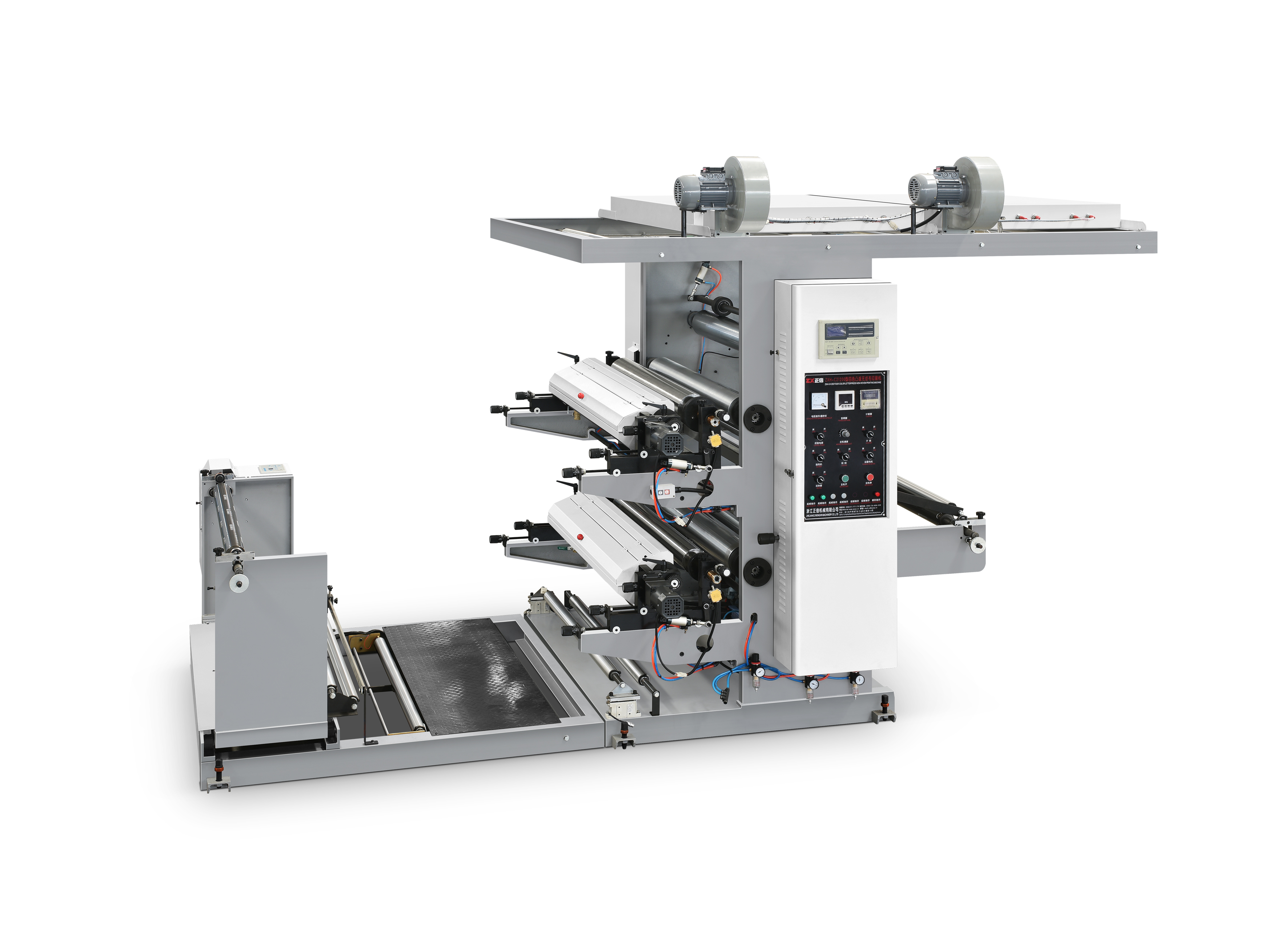
ZXH-C21200 – Two-Color Flexo Printing
The ZXH-C21200 is a two color non woven flexo printing machine. It runs at 10–60 m/min with a maximum printing width of 1160 mm and handles rolls up to 1000 mm diameter. Total power is 8 kW, and the machine weighs 1500 kg.
Key functional characteristics from the manufacturer's specification:
- Operates as a roll-to-roll flexographic printing press
- Uses resin printing plates and water-based ink
- Includes air rising shaft, automatic guiding, and magnetic powder tension control
- Anilox roller ink transfer for even distribution and 360-degree color registration
- Auto-stop on material breakage for production safety
The ZXH-C21200 is positioned for start-ups and small-scale production lines, with the manufacturer specifically citing its compact footprint and productivity of up to 3,000 meters of roll material per hour.
ZXH-C41200 – Four-Color Flexo Printing
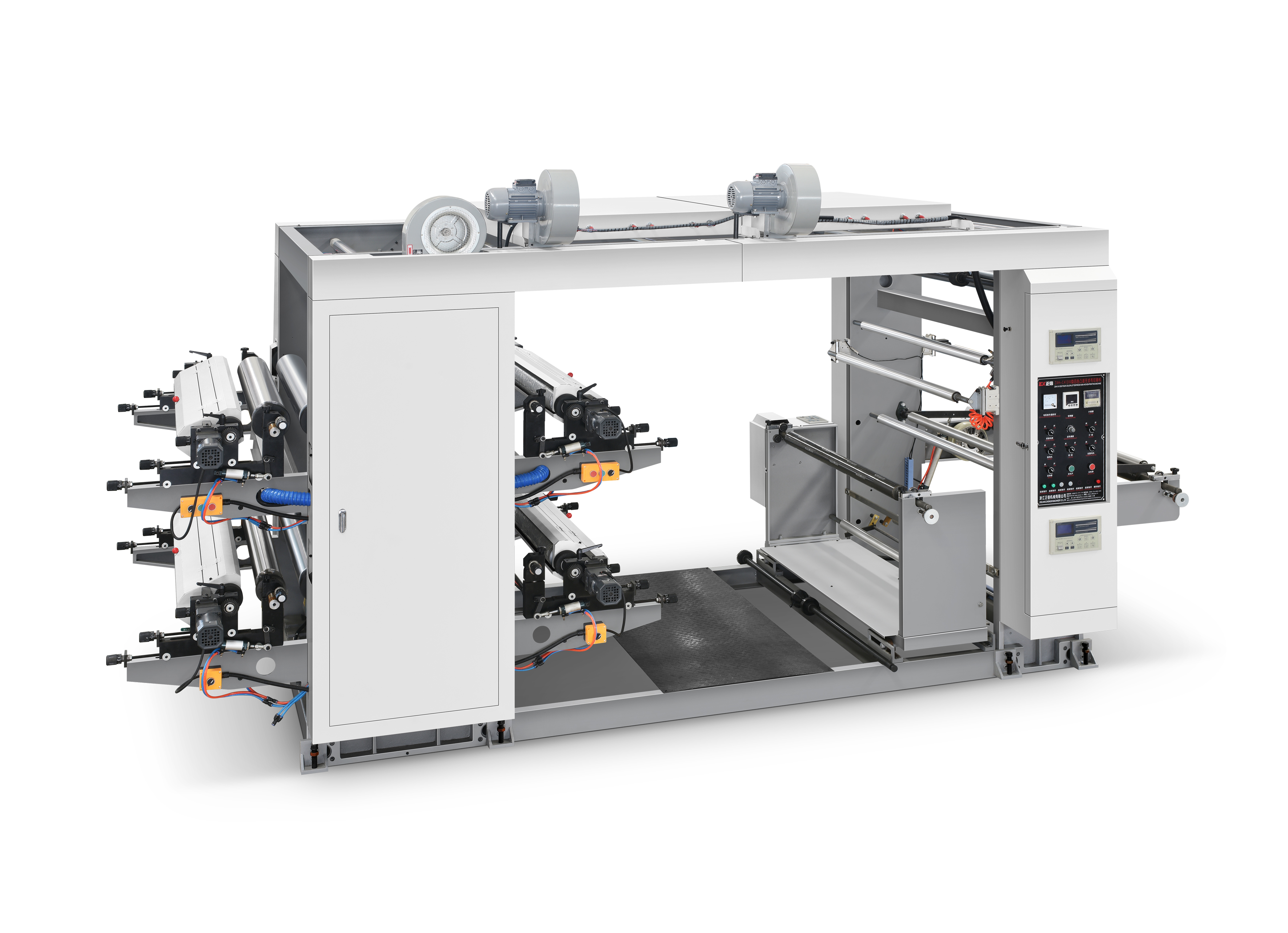
The ZXH-C41200 is a four color non woven flexo printing machine with a maximum printing width of 1160 mm, printing length of 220–1000 mm, and a speed range of 10–60 m/min. Total power is 18 kW.
According to the manufacturer, the machine is designed for:
- Four-color inline printing covering most non-woven bag design requirements
- Full, vibrant ink coverage for supermarket and brand-client inspection standards
- Quick changeover through optimized plate-roller and ink-tray cleaning
- Stable four-color registration at 60 m/min with in-line tension control
- Faster ink curing through optimized drying airflow
For producers serving promotional markets with frequent design changes, the four-color flexo model is the more versatile choice.
ZXH-A1200 – One-Color Screen Printing
The ZXH-A1200 is classified as a non woven bag screen printing machine. It handles material thickness of 60–150 g/m², offers printing speeds of 1500–4000 m/hour, and uses round-roller mirror printing with continuous or intermittent modes.
Manufacturer claims include registration accuracy within 2 mm, full servo control of the scraper, double-layer loop fabric winding for efficient drying, and friction-type rewinding with automatic correction. The screen frame position can be adjusted for print placement without custom molds.
ZXH-B1200 – Two-Color Screen Printing
The ZXH-B1200 is a non woven bag 2 color screen printing machine. It runs at 1500–3000 m/hour, has a drying oven length of 30 m, and uses 25 heating tubes. The machine can print two colors in one pass by starting two units, reducing manual operation.
It is described as a servo-driven, round-roller screen printing system with independent receiving devices and automatic glue removal for easier maintenance.
Technical Comparison: Flexo vs Screen vs Digital
Buyers often ask whether flexo or screen printing is the better non woven bag printing machine. The answer depends on color count, ink durability, speed, and cost structure.
| Parameter | Flexo (ZXH-C series) | Screen (ZXH-A/B series) | Digital |
|---|---|---|---|
| Typical color count | 1–8 colors (ZXH series) | 1–2 colors | Unlimited / photographic |
| Speed | 10–60 m/min | 1500–4000 m/hour | Usually 10–30 m/min |
| Ink type | Water-based flexo ink | Screen ink | Digital ink |
| Per-bag ink cost | Very low at volume | Low | 5–20× flexo |
| Best fit | Multi-color logos, long runs, inline integration | Solid colors, high-opacity prints | Ultra-short runs, photos |
For commercial non-woven bag production, flexo is the more common recommendation. In a 100,000-bag order of the same design, flexo ink cost is relatively minor compared with digital ink, and flexo printing runs inline with bag making at speeds that digital cannot match. Screen printing remains relevant where very heavy ink laydown or opaque colors are required, but it is slower and more labor-intensive for multi-color work.
Roll-to-Roll Operation and Integration
Most non woven bag printing machines in this segment operate on a roll-to-roll principle: the printed fabric is rewound after drying, then transferred to a bag making machine. This workflow suits factories that print in batches and then convert fabric into T-shirt bags, flat bags, vest bags, or 3D standing bags.
Zhengxin's ZXH-C21200 and ZXH-C41200 are described as inline roll-to-roll flexographic presses, which means the fabric stays in continuous motion while ink is applied and dried.
Manufacturers comparing systems should evaluate:
- Maximum fabric roll width and roll diameter
- Printing speed vs bag making line speed
- Drying capacity and its effect on finished-fabric waiting time
- Registration accuracy at operating speed
- Changeover time between short-run jobs
Use Cases Across Industries
Retail, Supermarket & Grocery Chains
Supermarket supply typically requires high-speed production of customized shopping bags with single or multi-color printed logos. The typical requirement is production speed of at least 100 pcs/min for bag making, consistent weld quality, and a defect rate below 0.5%.
A flexo non woven bag printing machine paired with a high-speed bag making line is a common configuration. Supermarket logos are usually 1–4 colors, which falls directly into the capability range of the ZXH-C21200 and ZXH-C41200.
Garment & Fashion Retail
Garment packaging requires logo-printed non-woven garment bags, dust covers, and suit covers. The production environment is typically an indoor clean workshop with 220V/380V power and temperature control of 20–30°C. A flexo printing unit is the standard matched equipment in this scenario.
Food & Beverage / Food Delivery
For restaurant takeaway and bakery packaging, the requirement is odorless and non-toxic water-based ink printing, often in a dust-free, temperature-controlled workshop. Water-based flexo ink meets this criterion, which is why flexo is generally preferred over solvent-based printing for food-contact applications.
Advertising & Promotional Products
Promotional bag production centers run small-to-medium batches with quick job changeover. Multi-color flexo printing stations (4+ colors) are listed as matched equipment for this scenario, along with die-cutting and handle attaching machines. Registration accuracy of ±0.3 mm and premium surface finish are cited as special requirements.
How to Choose the Right Non Woven Bag Printing Machine
For buyers at the Awareness or Research stage, the selection logic generally follows these steps:
- Define color requirements. If most orders are one or two colors, a two-color flexo model or one/two-color screen printer may be enough. If customers require 3–4 colors, the four-color flexo model provides more headroom.
- Calculate printing speed vs bag making speed. The printing machine should not become the bottleneck in the production line.
- Evaluate ink and environmental requirements. Water-based ink is the safer choice for food delivery, retail, and markets with environmental regulations.
- Assess floor space, power, and operator skill. The ZXH-C21200 has a compact footprint suitable for start-ups; the ZXH-C41200 requires more space and power but enables four-color work.
- Plan for auxiliaries. A fabric slitter, air compressor, voltage stabilizer, and material handling equipment are typically needed alongside the printing line.
Limitations and Trade-offs
Every printing technology has boundaries. Buyers should understand these before committing:
- Flexo is not ideal for ultra-short runs below 500 bags per design. Setup and plate costs make very short promotional runs inefficient. In such cases, digital printing or heat-transfer labels may be more economical, even if the per-bag ink cost is higher.
- Screen printing is slower for multi-color work. The ZXH-B1200 can print two colors in one pass, but a four-color design typically requires additional passes or highly skilled setup. Solid-color quality can be excellent, but throughput per color is lower.
- Printing speed does not equal bag making speed. A printing machine with a 60 m/min rating may need to match the consumption rate of bag making lines. If the bag line consumes fabric faster than the printer can supply, the factory needs buffer capacity or a faster printer.
- Operator skill affects registration. Flexo machines reduce but do not eliminate the need for careful setup. Anilox roller condition, plate mounting, ink viscosity, and fabric tension all influence registration accuracy.
Market Trend Analysis
The market context for non woven bag printing machines is unusually strong. Third-party data compiled in 2025–2026 shows:
- The global non-woven bag making machine market is projected to grow from US$ 179 million in 2025 to US$ 733 million by 2032, a substantial expansion period.
- The global non-woven bag making machine market is expected to grow at a CAGR of 22.5% from 2026 to 2032.
- Asia-Pacific dominated the bag making machine market with a 43.6% revenue share in 2025.
- China exported 1.52 million tons of nonwovens in 2024, valued at US$ 4.04 billion, a 6.25% increase over 2023.
- The automatic segment of the bag making machine market held a 52.4% share in 2025.
- Over 100 countries have implemented bans or taxes on single-use plastic bags, driving structural demand for non-woven replacements.
These figures point to a market where automated bag production is expanding, and where printing capability is increasingly the differentiating factor between commodity bag producers and suppliers to branded retail, food, and promotional customers.
Why Supplier Verification Matters
Buying machinery internationally carries risk, especially when purchasing from China. Common buyer concerns include component quality, certification validity, and after-sales support.
Zhengxin states that its machines use genuine branded components such as Siemens, Delta, or Mitsubishi PLCs, Omron sensors, and NSK bearings, and offers third-party inspection by SGS, Bureau Veritas, or CCIC before shipment upon request. The company also reports that its manufacturing facility is ISO 9001:2015 certified and that its machines carry CE certification covering the Machinery, Low Voltage, and EMC Directives.
Remote support is available 7 days a week via WhatsApp and video call. The company reports that engineers diagnose and resolve over 80% of issues remotely, and its field engineers can be deployed to customer facilities in multiple regions.
Future Outlook
The direction of the non-woven bag printing market points toward more color capability, more automation, and tighter integration between printing and bag making. Water-based flexo printing is well aligned with environmental regulation, while screen printing retains a niche for high-opacity specialty work.
For equipment manufacturers, the key challenge is not just printing speed but job changeover speed. As promotional and retail orders become more varied, factories will value a non woven bag printing machine that can switch between jobs quickly without sacrificing registration accuracy. Zhengxin's ZXH line is positioned to address that requirement through optimized plate-roller change and inline drying.
Buyers entering this market should treat printing capability as a long-term strategic investment rather than an accessory purchase.
FAQ
Q1: What is a non woven bag printing machine?
A non woven bag printing machine is a printing system that applies ink to PP spunbond non-woven fabric, either before or during the bag making process. It is used in the manufacturing industry to produce branded non-woven shopping bags, garment bags, promotional bags, and food delivery packaging.
Q2: What is the difference between flexo and screen non woven bag printing machines?
A flexo non woven bag printing machine uses flexible plates and anilox rollers to transfer ink at higher speeds, typically 10–60 m/min, and supports multi-color inline printing. A screen printing machine uses round-roller screens to push ink through a mesh, providing thick, opaque ink films at lower throughput. Flexo is generally better for multi-color logos and long runs; screen is better for solid-color, high-opacity prints.
Q3: Which non woven bag printing machine is better for a start-up?
For a start-up or small-scale production line, a two-color flexo machine such as the ZXH-C21200 is often the recommended starting point. It covers single-color and two-color supermarket logos, has a compact footprint, uses water-based ink, and is described by the manufacturer as suitable for all types of production environment layouts. If confirmed orders require multi-color printing from day one, a four-color flexo model provides more design headroom.
Q4: Can a non woven bag printing machine handle 3 or 4 colors?
Yes. Flexo non woven bag printing machines are available in multi-color configurations. Zhengxin offers the ZXH-C21200 for two colors and the ZXH-C41200 for four colors. The ZXH-C41200 uses four-color inline flexo printing and is designed to hold stable registration at speeds up to 60 m/min.
Q5: What speed does a non woven bag printing machine achieve?
Speed depends on technology and configuration. The Zhengxin ZXH-C21200 and ZXH-C41200 flexo models operate at 10–60 m/min. The screen-based ZXH-A1200 runs at 1500–4000 m/hour, and the ZXH-B1200 at 1500–3000 m/hour. Actual production speed depends on fabric thickness, ink coverage, drying capacity, and registration requirements.
Q6: Is water-based ink suitable for non woven bag printing?
Yes. Water-based ink is widely used in non-woven bag printing because it is compatible with PP spunbond fabric and meets environmental requirements for food delivery, retail, and promotional applications. Zhengxin's flexo machines are described as using water-based inks and environmentally friendly resin printing plates.
Q7: What other equipment is needed beside the printing machine?
A complete non-woven bag printing and converting line typically needs a fabric slitter, an air compressor, a voltage stabilizer, and material handling equipment. If the factory produces finished bags, a non-woven bag making machine with ultrasonic or heat sealing is also required. Zhengxin manufactures slitting machines, bag making machines, 3D bag machines, and auxiliary equipment to complement its printing line.
Note: This article is for industry reference and procurement education. Product specifications and company statements are based on manufacturer-provided information. Buyers are advised to verify machine parameters, certifications, and after-sales terms directly with the supplier before purchase.