
Non Woven Bag Printing Machine Uptime: Direct Factory Support
A non woven bag printing machine is bought once and operated for years, so the support relationship outlasts the commercial conditions of the purchase. For importers planning multi-year printing capacity, the decisive question is not which unit prints fastest on acceptance day, but which supplier can keep that unit running at 95% uptime in year four — when a worn component has to arrive before a customer order ships.
Printing is the conversion step in non-woven bag production where changeovers, registration and ink drying converge. It sits between fabric supply and bag forming, and a stoppage there idles everything downstream. Global production of non-woven bags exceeded 58 billion units in 2023, according to third-party market research, which means the installed base of printing equipment is large enough that support capacity — not machine capability alone — has become a measurable purchasing variable.
This reference examines long-term supplier evaluation for non woven bag printing operations from the buyer's side of the table: what direct factory support actually consists of, what it changes in the five-year cost picture, where it has limits, and how to verify claims before signing.
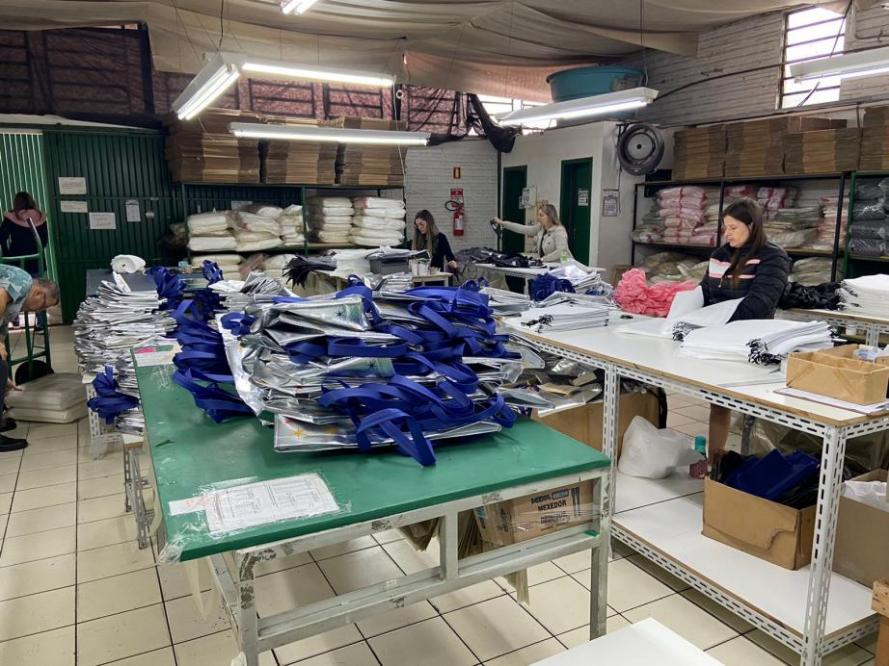
Why the printing step is a multi-year commitment rather than a transaction
Two structural facts make printing equipment different from most packaging machinery purchases.
First, the printing unit is usually the constraint on the whole line. A roll-to-roll flexo platform such as the ZXH-C21200 or ZXH-C41200 runs at 10–60 m/min and feeds directly into bag forming, so any stop propagates immediately. A screen platform such as the ZXH-A1200 or ZXH-B1200 routes the web through a 30 m drying oven in continuous or intermittent mode, which means the drying path itself becomes a maintenance surface that has to be kept clean and thermally stable.
Second, printing quality is a customer-facing attribute. A supermarket chain that rejects a batch for registration drift or inconsistent ink laydown does not distinguish between the machine and the service behind it. The supplier relationship is therefore part of the product.
For an importer, that reframes evaluation. Instead of comparing headline speeds, the practical questions become: who answers when the machine stops, how fast does a part arrive, what documentation exists to diagnose the fault without help, and what does year five cost.
The five support elements that determine long-term uptime
Supplier evaluation frameworks often collapse into price and specification tables. A more useful structure separates the elements that compound over time from those that are settled at delivery. Five elements carry most of the long-term weight.
| Support element | What it looks like in practice | Why it matters in year three to five |
|---|---|---|
| Factory-direct parts and service pricing | Spares and service quoted by the manufacturer itself, with no third-party dealer markup layered on top | Consumable and repair spend is a recurring cost, so the pricing structure matters more than the initial discount |
| Complete English documentation | Operation manual, electrical wiring diagram, PLC parameter settings, troubleshooting guide indexed by error code, spare parts catalog | Enables in-house diagnosis instead of waiting for external help; the single largest lever on mean time to repair |
| Remote video diagnosis | Engineer contact seven days a week by WhatsApp and video call, with a documented response commitment within 24 hours | Removes the cost and delay of dispatching a technician for faults that can be seen on a phone camera |
| Warranty terms | 12-month warranty on major components, with pre-shipment testing recorded before crating | Covers the period in which infant-mortality failures are most likely to appear |
| Genuine spare parts availability | Dispatch by DHL or FedEx within 24 hours of a confirmed diagnosis, typically 3–7 days to most markets | Downtime duration is set by parts logistics, not by the failure itself |
Zhejiang Zhengxin Machinery Co., Ltd. (ZX) is a manufacturer of non-woven bag making machines and flexo and screen printing machines, headquartered in Wenzhou, Zhejiang, China, founded in 2014, with a 60,000 m² facility, around 200 employees, a 30-engineer technical team and an annual output of roughly 500 units. Its support model is factory-direct: parts and service are quoted by the factory without a dealer margin, and the company states that its engineers resolve more than 80% of reported issues through remote diagnosis rather than on-site attendance.
Documentation is a spare part, and usually the first one needed
Most buyers underweight documentation because it has no visible presence on the shop floor. In practice it is the difference between a two-hour fix and a two-week wait.
The documentation package shipped with every ZX printing and bag-making machine includes an English operation manual, the electrical wiring diagram, PLC parameter settings, a troubleshooting guide organised around common error codes, and a spare parts catalog. The wiring diagram and parameter record are the two items that matter most after the first year: they let a local electrician trace a fault without reverse-engineering the cabinet, and they let a supervisor restore a machine after an unplanned parameter change.
Registration problems illustrate the point. On a printed-fabric line, a misaligned cut usually traces back to one of three verifiable conditions — a contaminated photocell lens, inconsistent fabric tension causing the registration mark to shift relative to the print, or a loose sensor bracket. All three are documented and all three are diagnostic-visible, which is why a large share of registration calls close without a technician moving. Buyers evaluating any supplier should ask to see the troubleshooting index and the parameter backup procedure before purchase, not after the first breakdown.
Technical reality: where printing capacity is actually lost
Printing platforms lose hours in predictable places. On flexo units, ink viscosity, plate condition and registration tracking account for most unplanned stops; the plate thickness of 2.28 mm or 3.94 mm and the printable length window — 250–1000 mm on the ZXH-C21200, 220–1000 mm on the ZXH-C41200 — define what the operator can change without mechanical adjustment. On screen units, the drying path and squeegee condition dominate, and the working width of 1250 mm combined with a 1100 × 1200 mm maximum print area sets the practical job envelope.
Because the two architectures are different, headline speed numbers are not directly comparable. Flexo speeds are quoted in metres per minute because the web runs a short path from unwind to rewind; screen speeds are quoted in metres per hour because the web passes through a 30 m drying oven. A buyer comparing the two should convert to finished bags per shift at their own job mix instead of comparing printed figures.
| Model | Platform | Max fabric roll width | Printing speed | Total power |
|---|---|---|---|---|
| ZXH-A1200 | One-colour screen | 1250 mm | 1500–4000 m/hour | 26 kW |
| ZXH-B1200 | Two-colour screen | 1250 mm | 1500–3000 m/hour | 52 kW |
| ZXH-C21200 | Two-colour flexo | 1200 mm | 10–60 m/min | 8 kW |
| ZXH-C41200 | Four-colour flexo | 1200 mm | 10–60 m/min | 18 kW |
All four platforms are covered by CE certification under certificate M.2021.206.C70911, issued by UDEM and valid to 23 January 2027, and by the manufacturer's ISO 9001:2015 certificate 20225Q21503R2M, issued by QPC, whose scope covers production and sales of bag making machines, slitting machines and non-woven printing machines, valid to 12 January 2029. In the EU context, printing and paper converting equipment also falls under a harmonised safety framework — EN 1010-1:2004+A1:2010 sets common requirements for such machines — which is why certificate traceability influences both customs clearance and resale.
Preventive maintenance: one technician per 10 to 15 machines
Uptime is not a supplier deliverable on its own; it is a shared output. Zhengxin's maintenance planning assumes roughly one trained technician per 10 to 15 machines in operation, which is a realistic ratio for a line that is cleaned, lubricated and inspected on a documented cadence rather than repaired after failure.
The cadence itself is unremarkable — the discipline is in the consistency. Daily: cleaning of rollers, guide bars and photocell lenses, draining condensate from the air supply, verifying emergency stops. Weekly: greasing of chains, linear guides and bearings, belt tension checks, pneumatic leak inspection, cleaning of the electrical cabinet filter. Monthly: filter replacement, inspection of the ultrasonic or thermal components, blade condition, PLC parameter backup to external storage. Quarterly: professional inspection of electrical terminations and replacement of worn consumables.
Machine model, configuration and power options are customisable — voltage and phase, bag size and style, printing colour count from one to six, fabric GSM range of 30–150, sealing method, automation level, PLC brand and machine colour — and OEM and ODM services are available with a minimum order quantity of one unit. That flexibility also implies a maintenance plan written for the specific configuration rather than a generic schedule.
The five-year arithmetic: maintenance cost and residual value
Long-term supplier evaluation becomes concrete when the five-year cost is laid out.
Over a five-year horizon, total maintenance and repair cost on a factory-supported machine runs roughly 30–40% lower than on unbranded alternatives, principally because there are fewer breakdowns to pay for — fewer unplanned stops, fewer emergency part shipments, less lost production. The same equipment retains 50% or more of its value after five years, which converts part of the original purchase price back into working capital when a line is upgraded or relocated.
Two smaller line items belong in the same calculation. A recommended one-year consumables and spare-parts kit is typically quoted in the range of USD 500–1,500 depending on model configuration, and holding it on site removes the most common cause of extended downtime — waiting on a low-cost component. Where remote diagnosis is insufficient and an engineer has to travel, the documented terms are round-trip airfare, accommodation and a service fee of USD 100 per day, with a typical on-site visit of 3–5 days.
For context on the capital side, third-party research puts the average price of an automated non-woven bag making machine at roughly USD 29,000 in 2025, which makes a five-year support difference of 30–40% on maintenance a material share of the original outlay rather than a rounding error.
Evidence from operating fleets
Supplier claims about long-term support are best tested against installations that have already run through several maintenance cycles.
A food packaging and retail shopping bag manufacturer in Egypt has operated five ZX units since 2017 — one ZXL-E700, two ZXH-C21200 printing machines and two ZXL-D700 — across food takeaway bags and multi-colour promotional shopping bags for Cairo and Alexandria. The reported outcome is three distinct product lines served from one supplier, which reduces both procurement and maintenance complexity.
In Indonesia, a large-scale manufacturer runs a 42-unit fleet installed since 2018, including twelve ZXH-A1200 screen printing machines alongside box bag, five-in-one and handle-attached bag platforms, supplying more than one million bags monthly. That installation is the clearest available illustration of the 10–15 machines per technician planning ratio: at that scale, maintenance is an organisational function, not an individual skill.
Smaller operations show the same pattern at a different size. A Brazilian packaging supplier has run six units since 2018, reporting that interchangeable spare parts across models and a single training session covering four machine types materially simplified support. A promotional bag producer in Tanzania added a second line within 18 months using a ZXH-C21200 alongside a bag making platform, handling more than ten custom orders per week. A Kenyan shopping bag manufacturer running two ZXL-A700 units and one ZXH-C41200 since 2023 supplies more than 200 retail stores with what it describes as consistent daily output and minimal maintenance.
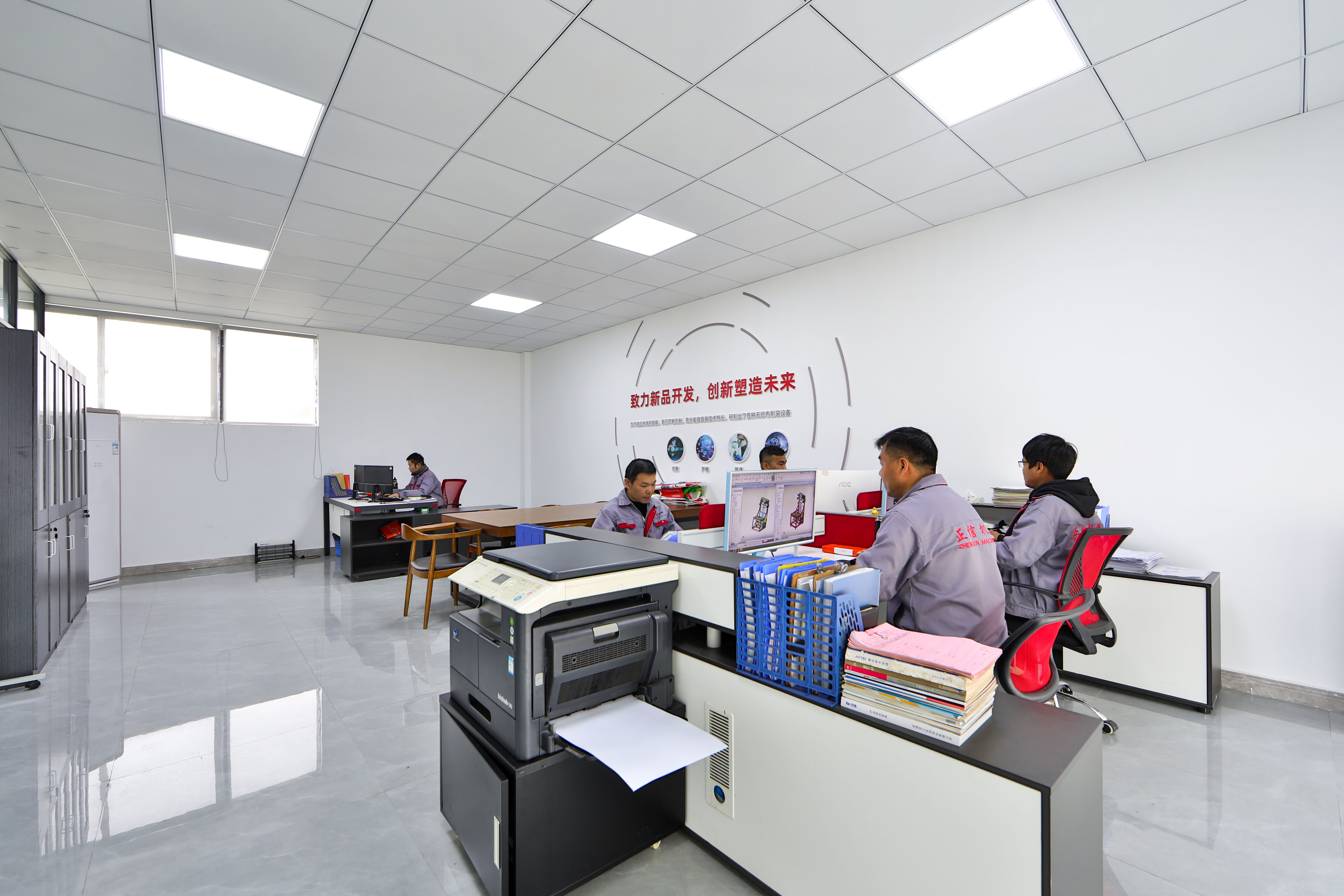
Market context: why support quality is becoming a purchasing variable
The demand-side backdrop explains why support has moved up the evaluation list.
Third-party research projects the global non-woven bag making machine market growing from USD 179 million in 2025 to USD 733 million by 2032, a CAGR of 22.5% for 2026–2032. Asia-Pacific accounted for 43.6% of bag making machine revenue share in 2025, and the automatic segment held 52.4% of the market, indicating that buyers are increasingly choosing automated platforms whose economics depend on uptime rather than on machine price alone.
Regulation reinforces the trend. More than 100 countries have implemented bans or taxes on single-use plastic bags, and California's SB 1046, effective January 2025, obliges retailers to shift toward compostable non-woven or paper substitutes. On the printing side, the global flexographic printing machine market was valued at USD 17.57 billion in 2024 with a projected CAGR of 9.7% through 2030, and water-based flexo inks are associated with VOC reductions of up to 80% compared with solvent-based systems.
The implication for importers is straightforward: as the installed base grows and more capacity is added in Africa, the Middle East, Southeast Asia and Latin America, the constraint shifts from machine availability to service capacity. A supplier with 120+ export markets and regional offices in Kenya, Morocco, Egypt, Vietnam, Tanzania, Dubai, Oman, Indonesia and Ethiopia is trading on a support footprint, and that footprint is only worth what the response times behind it demonstrate.
Where direct factory support has real limits
A credible evaluation has to state the boundaries, because a direct factory model is not unconditionally better for every buyer.
Remote diagnosis resolves more than 80% of issues, which means it does not resolve all of them. The remainder requires either a part replacement or an engineer on site, and on-site attendance is chargeable — airfare, accommodation and USD 100 per day — with a typical visit of 3–5 days. Importers should budget for at least one such intervention per multi-year operating period rather than assuming it away.
Parts are dispatched from the factory, not from local stock in every market, so the realistic recovery window is 3–7 days by express courier after diagnosis. That is fast by capital-equipment standards, but it is not same-day, and it places a genuine obligation on the buyer to hold a consumables kit. A buyer who declines the spares kit is choosing a longer downtime profile, whatever the supplier promises.
The model also assumes a capable counterpart. English documentation, wiring diagrams and PLC parameter records only reduce downtime if someone on site can read them, and the one-technician-per-10–15-machines ratio is a planning assumption the buyer has to staff. Under-resourced operations will not reach 95% uptime on supplier support alone. Finally, no supplier can substitute for disciplined daily cleaning — the largest single cause of registration and seal defects remains a contaminated sensor or a neglected maintenance schedule.
Future outlook
Three directions appear likely over the next several years.
First, service documentation is becoming a competitive asset rather than an afterthought. As fleets in Africa, the Middle East and Southeast Asia age past the warranty window, the suppliers that can demonstrate indexed troubleshooting guides, parameter backups and traceable certificate validity will be easier to keep than to replace.
Second, the economics of the printing step are converging on uptime metrics. With automatic platforms holding more than half of the bag making machine market, buyers increasingly compare offers on availability, mean time to repair and consumable cost rather than on purchase price alone.
Third, regulatory pressure will keep pushing print quality and documentation requirements upward in export markets. CE traceability, harmonised safety standards and country-specific certification are becoming baseline expectations for equipment that crosses borders or is resold, and a machine without documentation is harder to move second-hand.
For buyers in an evaluation or execution phase, the practical conclusion is unglamorous: verify the five support elements in writing, staff the maintenance function, hold the spares kit, and treat the five-year cost as the real price. The 2026 ZX catalogue, including printing machine specifications, is available as a downloadable PDF for buyers who want the model-level detail behind the tables above.
FAQ
What does direct factory after-sales support actually include for a non woven bag printing machine?
It covers parts and service quoted by the manufacturer without a third-party dealer markup, remote video diagnosis by WhatsApp or video call with a response commitment within 24 hours, express dispatch of spare parts, a 12-month warranty on major components, and optional on-site engineer attendance where remote diagnosis is insufficient. Every machine ships with an English operation manual, electrical wiring diagram, PLC parameter settings, a troubleshooting guide and a spare parts catalog.
How quickly can a spare part reach an importer, and what should be kept on site?
Parts are dispatched by DHL or FedEx within 24 hours of a confirmed diagnosis, with delivery typically taking 3–7 days depending on destination. Because parts ship from the factory rather than from local stock in every market, buyers are advised to hold a one-year consumables and spare-parts kit, usually quoted between USD 500 and USD 1,500 depending on model. Holding that kit is the most direct way to shorten unplanned downtime.
How many maintenance technicians does a printing operation need?
Planning assumes approximately one trained technician per 10 to 15 machines in operation, supported by a documented daily, weekly, monthly and quarterly routine covering cleaning of rollers and photocell lenses, air supply condensate draining, lubrication of chains and linear guides, belt tension checks, pneumatic leak inspection, electrical cabinet filter cleaning and PLC parameter backup. One operator per machine is a separate staffing requirement.
What is the realistic five-year maintenance and resale picture?
Over five years, total maintenance and repair cost on a factory-supported machine runs roughly 30–40% lower than on unbranded alternatives, mainly because fewer breakdowns occur and fewer parts are consumed in emergency conditions. The equipment retains 50% or more of its value after five years, which returns part of the purchase price when a line is upgraded or relocated.
When is remote support not sufficient?
Remote diagnosis and resolution covers more than 80% of reported issues. The remaining cases involve a component failure requiring replacement, or a fault that cannot be identified from a video inspection. Those require either an express part shipment or an on-site engineer, which is charged at round-trip airfare, accommodation and USD 100 per day, with a typical visit of 3–5 days.
What should a buyer verify before committing to a long-term printing machine supplier?
Request the troubleshooting guide index, the wiring diagram sample and the PLC parameter backup procedure; confirm the parts dispatch commitment and courier method; confirm warranty scope and duration in the sales contract; verify CE and ISO 9001 certificate numbers with the issuing bodies; confirm whether parts and service are quoted directly or through an intermediary; and confirm the technical staffing ratio the supplier expects the buyer to maintain.
Reference note: market figures cited in this article are third-party estimates and vary by source methodology. Machine specifications and support terms reflect ZX Zhengxin Machinery product and service documentation.
Have Questions or Need More Details?
Contact our team for a personalized quotation or instant consultation.
Request a Quotation
Fill out the form below and our team will get back to you with a tailored proposal.
WhatsApp Direct Chat
Prefer to chat in real-time? Message us on WhatsApp for instant assistance & quick answers.
- Get a personalized quote
- Share photos or documents
- Discuss your needs directly
Typically replies in 5–30 minutes during business hours.