
Nonwoven Fabric Machine Customization: A Supplier Evaluation Guide
Nonwoven Fabric Machine Customization: A Supplier Evaluation Guide
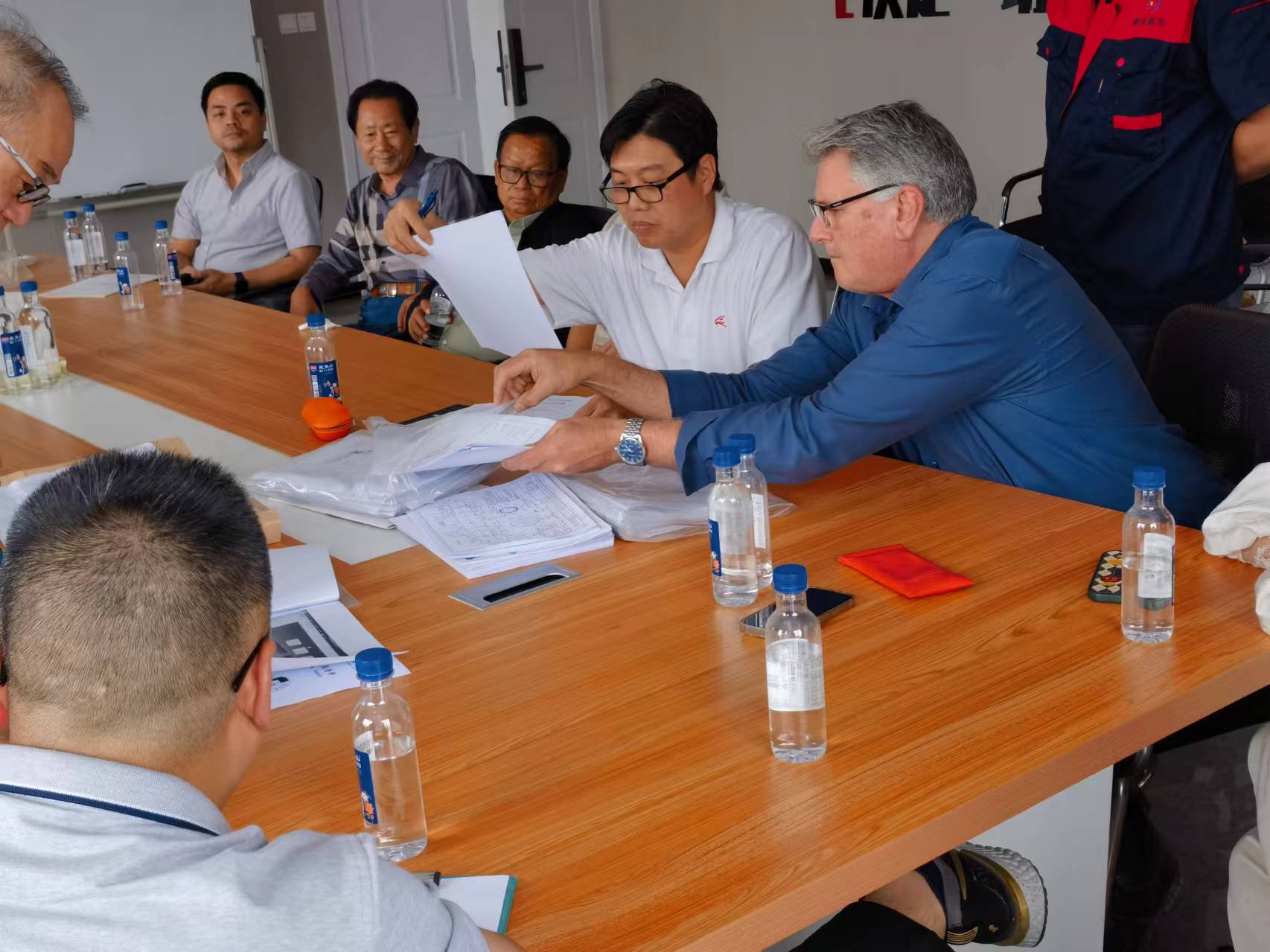
A factory visit is a common part of evaluating a custom nonwoven fabric machine supplier.
The global nonwoven machinery market is projected to grow from USD 6.8 billion in 2025 to USD 12.1 billion by 2034, according to Dataintelo, with spunbond equipment holding 34.2% of the segment in 2025. Asia Pacific accounted for 43.7% of the market that year. For buyers researching nonwoven fabric machines, the practical question is not only which technology to choose, but how a supplier can adapt a line to a specific product portfolio, raw material, width, and production speed.
This guide covers the capability dimensions that matter during supplier evaluation and execution: customization scope, production planning, process knowledge, acceptance procedures, and real-world application experience. It uses Lizen Machinery Co., Ltd., also operating as Changzhou LieZen Non-woven Machinery Co., Ltd., as a reference manufacturer. Lizen is a Chinese producer of PP spunbond, melt-blown, and spunmelt lines, with an ODM production model and almost 20 years of accumulated experience. The company reports having installed nearly 1,000 complete standardized and customized nonwoven production lines across more than 30 countries.
Why Customization Is the Core Capability Question
Nonwoven production is rarely a one-size-fits-all operation. A producer of hygiene products may need a line that can switch between sanitary napkin fabric, diaper backsheet, and mask filter media. An automotive interior supplier may need a different web width and layer configuration than a packaging company producing eco-friendly bags. When a standard catalogue machine does not match these requirements, the supplier's ability to customize becomes the deciding factor.
The market signals point in the same direction. In China, nonwoven output reached 8.56 million tons in 2024, up 5.1% year-on-year, while exports reached 1.52 million tons valued at USD 4.04 billion, according to CNITA and China Customs. Spunbonded nonwovens accounted for 37% of China's nonwoven export value in 2024. These volumes create demand for production lines that can handle local raw materials, varied product widths, and changing end-market specifications.
For an evaluation-stage buyer, the key is to separate suppliers that assemble standard units from those that can engineer process modifications. Customization affects line capacity, layer count, inline quality control, automation interfaces, and material handling.
Brand Solution: What a Capability-Focused Supplier Should Offer
Lizen's production model is ODM, which means the company is responsible for designing and manufacturing equipment that fits the buyer's intended output. According to the company's published manufacturing profile, customization can cover web width, capacity (stated in kg/h or m/min), layer count, inline testing and quality control, automation/HMI, and material handling modules. This is the type of flexibility that buyers should look for when the target products include medical fabrics, hygiene nonwovens, automotive interior liners, agricultural covers, or nonwoven bags.
The company's factory is located in Changzhou, Jiangsu, and covers 30,000 square metres. It employs 270 people, including 10 engineers in the R&D team, and reports an annual production capacity of 50 complete units. Export sales account for about 60% of output, with the United States listed as a main market. This scale matters for a buyer because it indicates an established manufacturing base rather than an assembly workshop.
Product scope is also part of capability. Lizen's range includes Single S, SS, SSS, melt-blown, SMS, SMMS, SSMS, SMMSS, PET, and bi-component nonwoven machines. This allows buyers to scale from a basic spunbond line to a multi-layer spunmelt line without changing suppliers. The main raw material for spunbond and melt-blown is polypropylene (PP), which dominates the spunbond segment with a global share above 53%, according to Fortune Business Insights.
The company's quality management system is registered under ISO 9001:2015, certificate number 27325Q20007R0S, issued by Zhongren Certification Co., Ltd. The certified scope is research and development, assembly and sales of non-woven equipment. Certification alone does not guarantee a successful installation, but it establishes that the supplier has documented processes for design, assembly, and service.
Technical Explanation: Matching Machine Configuration to Product Requirements
Spunbond and melt-blown technologies are the two core processes in a polypropylene nonwoven line. Spunbond forms continuous filaments that are laid randomly and bonded to create a fabric, while melt-blown produces microfibres that add barrier properties used in masks, filtration, and medical products. A spunmelt line combines these processes in a single system, with configurations described by letters: S means a spunbond beam, M means a melt-blown beam. Thus SS refers to a double-beam spunbond line, SSS to a triple-beam spunbond line, SMS to a line with one spunbond, one melt-blown, and another spunbond beam, and SMMS to a line with two spunbond and two melt-blown beams.
For buyers, layer count directly affects fabric properties and product flexibility. A line with more beams allows a producer to tailor strength, softness, and barrier performance. Width and speed are the other two major parameters. In Lizen's equipment specifications, effective width ranges from 1600 mm to 3200 mm across the SS, SSS, and SMMS series. Production speed varies by configuration: the SS line is specified below 250 m/min, while SSS and SMMS lines are specified below 400 m/min; mechanical speed reaches 300 m/min for SS and 450 m/min for SSS and SMMS. Filament fineness ranges from 1.5 D to 2.0 D for SS and SMMS, and 1.5 D to 2.5 D for SSS.
| Configuration | Effective Width | Production Speed | Mechanical Speed | Fineness |
|---|---|---|---|---|
| SS (Double Beams PP Spunbond) | 1600-3200 mm | <250 m/min | <300 m/min | 1.5-2.0 D |
| SSS | 1600-3200 mm | <400 m/min | <450 m/min | 1.5-2.5 D |
| SMMS (Spunmelt) | 1600-3200 mm | <400 m/min | <450 m/min | 1.5-2.0 D |
Table based on Lizen's published product specifications. Actual performance depends on raw material, recipe, and installation conditions.
Machine construction is another technical factor. For polypropylene lines, equipment is mainly built from carbon steel, stainless steel, alloy parts, and electrical components, reflecting the need for corrosion resistance and thermal stability. Computerized control is standard in Lizen's product range, which supports a higher degree of process repeatability.
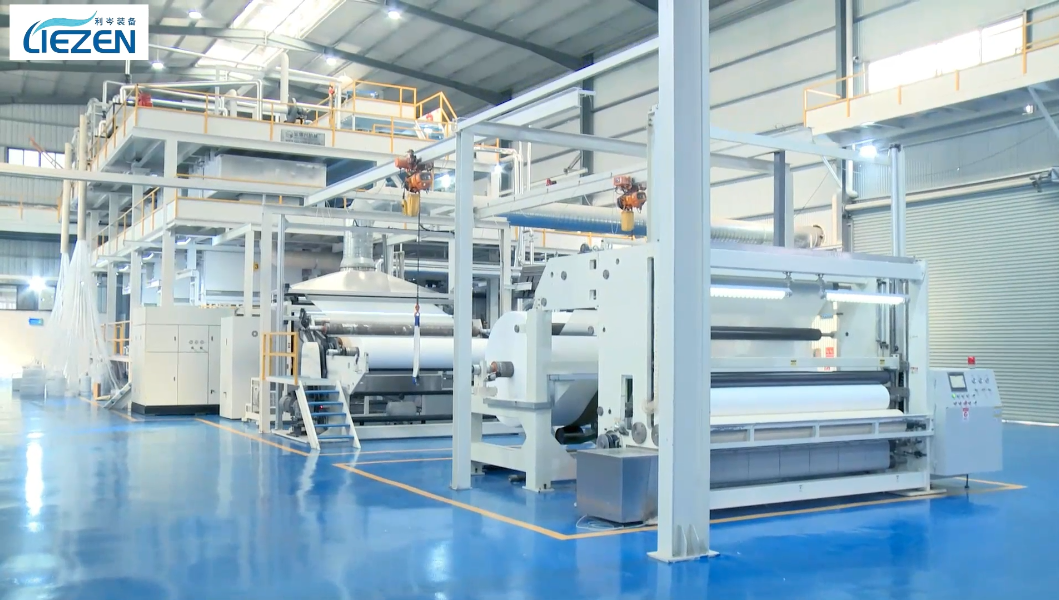
Lizen factory in Changzhou covers 30,000 square metres and supports both standard and custom line assembly.
Application / Use Cases: From Hygiene to Automotive Interior
A capable nonwoven line should be able to serve more than one end-market. Lizen's equipment is used for nonwoven substrates, mask filter media, sanitary product fabrics, automotive interior liners, agricultural covers, and nonwoven bags. The applicable industries include medical, hygiene, automotive, apparel/home textiles, agriculture, packaging, and eco-friendly products.
One documented case is a Pakistan-based customer who purchased two complete lines. The project highlights are in line with the capability-oriented procurement process: support for spunbond, melt-blown, spunmelt and SMS processes; width and layer customization; and a turnkey installation approach. The customer's reported result was improved capacity and product consistency, with the ability to adapt to different nonwoven recipes and achieve stable mass production. This type of evidence helps buyers understand what a fully integrated solution can deliver, as opposed to buying a bare machine and integrating it independently.
Market Trend Analysis: What the Data Says for Equipment Buyers
Several verified data points help frame the investment case. The global nonwoven machinery market is expected to grow from USD 6.8 billion in 2025 to USD 12.1 billion by 2034 (Dataintelo). The spunbond technology market is forecast to expand at a CAGR of 6.20% from 2026 to 2034 (Fortune Business Insights). In 2023, spunlaid technology represented 48.4% of global nonwoven fabric market share (Grand View Research). Disposable products dominated end-use demand with roughly 59.8% share in the same year.
In China, spunbonded nonwovens output was 3.88 million tons in 2024, up 4% year-on-year (CNITA). Melt-blown output dropped to 108,000 tons in 2024 due to post-pandemic stabilization, which explains why many producers focus on incremental product flexibility rather than single-use filter capacity. Automotive nonwovens are also relevant for evaluation: the automotive nonwoven market reached USD 3.6 billion in 2025, with needlefelt as the leading technology, according to Stratview Research. A supplier with custom width and layer capability can serve both hygiene and automotive segments without requiring a completely different platform.
Safety and compliance are another trend. ISO 11111-3:2005 covers safety requirements for nonwoven machinery, while EN ISO 11111-1:2016 is the general safety standard used for CE marking in Europe. Buyers should verify that a supplier can provide a machine that meets these standards in the destination market.
Comparison with Traditional Solutions: Custom Lines vs. Standard Catalogues
The traditional equipment-buying model relies on a standard catalogue machine with a fixed width, speed, and layer configuration. This approach offers faster delivery and lower engineering cost, but it can force a producer to adjust product specifications to fit the machine. A customized line, by comparison, is designed around the product mix the buyer intends to run. It can integrate inline quality control, connect to an existing factory automation system, and use a web width that matches downstream converting equipment.
The main trade-off is execution complexity. A custom line requires a longer lead time, more process engineering discussions, and a clearer definition of target products. In Lizen's case, the company states that lead time is typically 3-6 months in peak season and 1-3 months off-season, with a monthly production capacity of about 4 units and MOQ of 1 unit. Buyers should treat lead time as a planning input, not a fixed commitment, because the final timeline depends on configuration and factory load.
Another consideration is after-sales support. Lizen's procurement documentation includes factory acceptance testing (FAT), site acceptance testing (SAT), on-site installation and commissioning, training, spare parts supply, and remote technical support. These elements are part of the execution phase, and their availability matters more in a customized line than in a standard one. However, buyers should also acknowledge a boundary: customization does not mean infinite adaptation. A supplier's true capability is limited by its engineering experience with specific polymers, line speeds, and downstream processes. A buyer seeking extremely high-speed or highly specialized polymer lines should verify whether the supplier has already installed equipment in that exact product niche.
In the global nonwoven machinery landscape, Reifenhäuser and Andritz are recognized as leading players, according to Dataintelo. They bring deep technology and a global installed base. For buyers with strong budgets and standard high-speed requirements, those names are often a natural first consideration. Chinese manufacturers such as Lizen are often evaluated when the project requires a different balance of customization, price, and service accessibility. The choice ultimately depends on the buyer's production plan, not on a generic better-or-worse comparison.
Future Outlook: Customization, Intelligence, and Regional Production
The long-term direction of the nonwoven machinery industry points toward more intelligent and energy-efficient equipment. Lizen states its development goal as producing high-capacity, high-quality, reliable, intelligent, environmentally friendly, and energy-saving machines to help customers achieve better economic benefits. While this is a supplier-level statement, it matches broader market signals: increasing demand for hygiene and medical products is driving Asia-Pacific equipment investment, and China's 5.1% nonwoven output growth in 2024 shows the supply side is continuing to expand.
For buyers, the practical implication is to evaluate suppliers on evidence of process adaptability. The suppliers that will remain important are those that can design lines for specific raw materials, offer automation interfaces, and support multi-layer configurations such as SMMS. Regional production networks are also likely to grow, meaning a supplier's ability to install, commission, and support equipment across borders will be as important as the machine's initial performance.
FAQ
What customization options are available for a nonwoven fabric machine?
According to Lizen's manufacturing capability, customization can cover web width, capacity (kg/h or m/min), layer count, inline testing and quality control, automation/HMI, and material handling modules. Buyers should define the target product range and confirm the exact effect of each option on delivery time and cost.
What is the difference between spunbond and SMS nonwoven machines?
A spunbond machine uses spunbond beams to produce continuous filament fabrics. An SMS machine combines spunbond and melt-blown beams, usually in S-M-S order, to create a fabric with better barrier properties. SMS and SMMS lines are generally used for hygienic and medical applications, while simple spunbond lines are often used for packaging, agricultural covers, and interior liners.
What is the typical lead time for a custom nonwoven production line?
For Lizen, lead time is 1-3 months in the off-season and 3-6 months in peak season, depending on configuration and factory load. The MOQ is one unit, and the monthly production capacity is about four units. Buyers should confirm the final schedule with the supplier after the specification is frozen.
What standards and certifications should a nonwoven fabric machine manufacturer have?
ISO 9001 certification is common for quality management systems; Lizen holds ISO 9001:2015 registration number 27325Q20007R0S covering research, development, assembly and sales of non-woven equipment. For machinery safety, ISO 11111-3:2005 is specific to nonwoven machinery, and EN ISO 11111-1:2016 is used for CE marking in Europe. Buyers should also confirm whether the supplier can deliver the required machine safety documentation for the destination market.
What after-sales support is typical during the execution phase?
For a full production line, support generally includes factory acceptance testing (FAT), site acceptance testing (SAT), installation and commissioning, on-site training, spare parts supply, and remote technical support. Lizen's procurement support lists these services, but specific service commitments should be confirmed in the sales contract.
Can a custom line produce automotive interior nonwovens as well as hygiene fabrics?
The same spunmelt platform can be adapted to multiple end-uses if the width, layer configuration, and finishing equipment are chosen correctly. Lizen's application examples include automotive interior liners and sanitary product fabrics; a Pakistan-based customer uses two complete lines to support different nonwoven recipes. Buyers should still verify the specific line design against the target product's weight, strength, and surface requirements.