
Nonwoven Fabric Machine FAQ: Technical and Procurement Questions
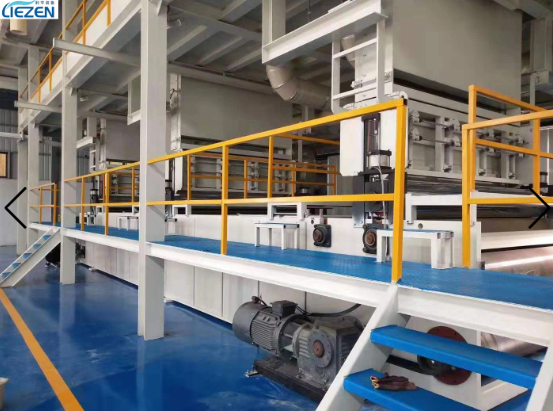
Nonwoven fabric machines are specified once and operated for years, which is why the technical and procurement questions raised during evaluation repeat across projects, sectors and regions. The recurring set falls into three groups: how the line forms fabric, what must be clarified before a quotation is useful, and how a specific configuration should be measured against a plant's production plan.
This reference answers those questions using verifiable product, certification and case facts from Lizen Machinery Co., Ltd. (Changzhou LieZen Non-woven Machinery Co., Ltd.), a manufacturer established in 2003 in Changzhou, Jiangsu, China, that builds PP spunbond, meltblown and spunmelt nonwoven production lines. Where a question depends on a plant's own inputs — grammage, converting width, annual tonnage — that is stated rather than assumed, because the same machine specification produces different results under different recipes.
Why the Same Nonwoven Fabric Machine Questions Keep Coming Back
Demand concentration explains part of the repetition. Disposable products accounted for approximately 59.8% of nonwoven application share in 2023, and Spunlaid (spunbond) technology held 48.4% of the global nonwoven fabrics market share in the same year (Grand View Research). On the equipment side, spunbond machinery took the largest share of the nonwoven equipment market at 34.2% in 2025 (Dataintelo). When one process family carries that much volume, the procurement and technical questions attached to it repeat across projects.
The deeper problem is categorical. "Nonwoven fabric machine" describes a family of lines — single-beam spunbond, multi-beam spunbond, meltblown, and spunmelt combinations — and a line engineered for diaper topsheet is not the same asset as a line engineered for automotive interior liner or filtration media. Most evaluation errors trace back to treating the category as a single specification, which is why the questions below are grouped into technical, procurement and evaluation sets instead of presented as a general overview.
How a Nonwoven Fabric Machine Turns Polymer Into Fabric
What happens between the raw material and the finished roll?
A spunbond nonwoven machine melts polymer, extrudes it through spinnerets into continuous filaments, draws and cools those filaments, lays them into a web on a forming belt, and bonds the web into fabric. The bonding method and the number of forming and bonding stages determine the fabric's strength, hand and barrier behaviour. For spunbond and meltblown production, the main raw material is polypropylene (PP); the equipment itself is built mainly from carbon steel, stainless steel, alloy parts and electrical components.
What do the letters in SS, SSS, SMS and SMMS mean?
The letters describe the layer stack. "S" is a spunbond beam, "M" is a meltblown beam. An SS line lays two spunbond layers, an SSS line lays three, an SMS line sandwiches a meltblown layer between spunbond layers, and an SMMS line adds a second meltblown layer. Lizen Machinery Co., Ltd. builds Single S, SS, SSS, meltblown, SMS, SMMS, SSMS, SMMSS, PET and bi-component nonwoven machines, so the layer stack is a configuration decision rather than a fixed product attribute.
Functionally, spunbond layers provide coverage, tensile strength and dimensional stability, while meltblown layers deliver the fine fibre structure associated with barrier and filtration performance. A spunmelt machine combines both processes in one continuous pass, which is the reason spunmelt nonwoven machine configurations are specified when a plant needs more than one fabric family from a single line.
What does "computerized" change on the line?
In the published specifications for the models listed below, "Computerized: Yes" indicates a control system rather than a purely mechanical line. At the customization level, this extends to automation and HMI scope, inline testing and QC, and material handling modules — all listed as configurable options. For buyers, the practical question is not whether a line is computerized but how much of the quality system runs inside the line versus downstream in the converting process.
Line Types Compared: What the Published Specifications Show
| Model | Effective Width | Production Speed | Mechanical Speed | Filament Fineness | Computerized |
|---|---|---|---|---|---|
| SW-SS (Double Beams PP Spunbond Nonwoven Fabric Machine) | 1600–3200 mm | < 250 m/min | < 300 m/min | 1.5–2.0 D | Yes |
| SW-SSS (Automatic SSS Spunbonded Polypropylene Fabric Making) | 1600–3200 mm | < 400 m/min | < 450 m/min | 1.5–2.5 D | Yes |
| SW-SMMS (SMMS Spunmelt Non Woven Machine) | 1600–3200 mm | < 400 m/min | < 450 m/min | 1.5–2.0 D | Yes |
Two details matter when reading this table. First, production and mechanical speed figures are ceilings ("<"), not guarantees for a specific fabric; delivered output depends on grammage, recipe and the downstream converting setup. Second, all three models share the same 1600–3200 mm effective width band, which means width selection is driven by the buyer's converting equipment rather than by model tier.
What to Clarify Before Requesting a Nonwoven Fabric Machine Quote
A quotation is only comparable to another quotation when both were requested against the same specification. The following items are the ones that most often surface as gaps after price has already been discussed.
- Target fabric and end application — medical, hygiene, automotive interior, apparel and home textile, agriculture, or packaging.
- Layer stack — Single S, SS, SSS, meltblown, SMS, SMMS, SSMS or SMMSS.
- Effective width — the listed models cover 1600–3200 mm; the correct value is the one the downstream converting equipment can accept.
- Capacity basis — kilograms per hour or metres per minute, stated against a defined grammage rather than as a standalone figure.
- Filament fineness target — 1.5–2.0 D on the SS and SMMS configurations, up to 2.5 D on the SSS configuration.
- Raw material and recipe — spunbond and meltblown production is based on polypropylene (PP).
- Automation and quality scope — automation/HMI level, inline testing and QC, and material handling modules are configurable.
- Installation and service scope — installation and commissioning, on-site training, spare parts supply and remote technical support form the after-sales scope, with specific service commitments confirmed with sales.
- Commercial terms — minimum order quantity is 1 unit, monthly production capacity is 4 units, and lead time is 3–6 months in peak season against 1–3 months off season.
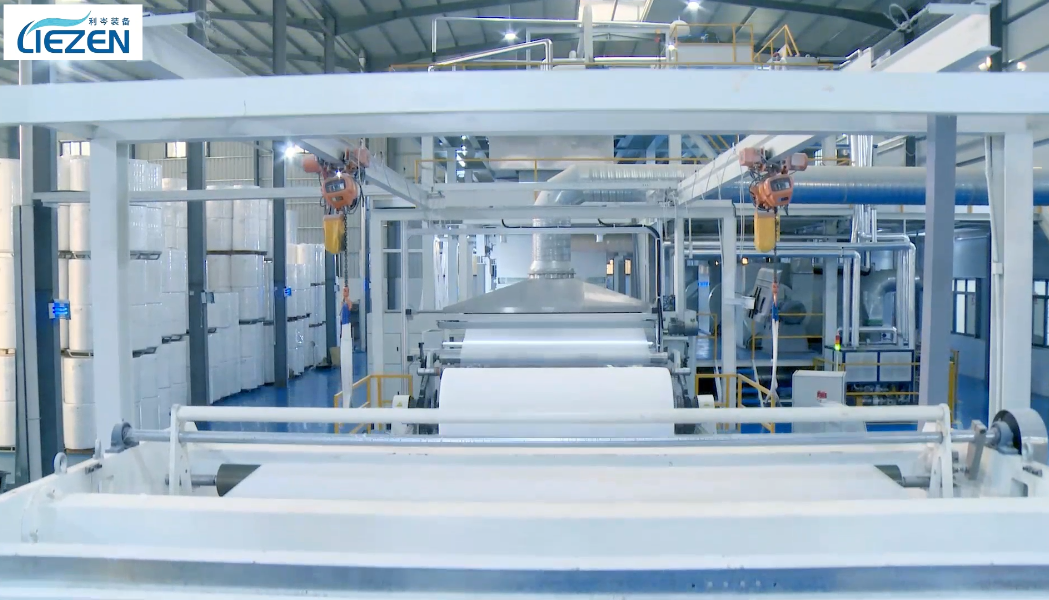
How to Evaluate a Nonwoven Fabric Machine Against Production Requirements
Work backwards from the fabric, not forwards from the model
Evaluation should start with the fabric the plant intends to sell and end with a machine configuration, not the reverse. Three specifications constrain everything else. Effective width determines how much downstream converting capacity the line can feed. Layer stack determines which fabric families are reachable at all. Speed basis determines whether the line's ceiling clears the annual tonnage plan once grammage is taken into account. A model number alone answers none of these questions.
What validation should happen before shipment and after installation?
Two acceptance gateways are standard in this equipment category: factory acceptance testing (FAT) with performance and process testing, and on-site installation and acceptance (SAT). Inline output and quality checks can be built into the configuration. Because FAT runs on the supplier's line and SAT runs on the buyer's, both should be written into the purchase specification explicitly rather than assumed — the same line can pass one and reveal a site-condition issue at the other.
What does a reference case actually demonstrate?
A documented case record shows two units delivered to a nonwoven producer in Pakistan, covering applications that include nonwoven substrates, mask filter media, sanitary product fabrics, automotive interior liners, agricultural covers and nonwoven bags. The relationship recorded against that case spans 15–20 years, with reported results of improved capacity and product consistency and the ability to adapt to different nonwoven recipes and applications. For an evaluation-stage buyer, the useful takeaway is narrower than the headline: the reference covers several application families rather than a single product, which is the relevant test when a plant expects its mix to change over the asset's life.
What does the supplier's certification actually cover?
Lizen Machinery Co., Ltd. holds a QMS certification of registration, certificate number 27325Q20007R0S, issued by Zhongren Certification Co.,Ltd. against ISO 9001:2015 on 6 January 2025 and valid to 5 January 2028. The certified scope is research and development, assembly and sales of non-woven equipment. That scope should be read precisely: it evidences a quality management system for the equipment business, not a performance rating for any specific fabric produced on the line.
Production-side facts that buyers typically verify alongside certification include factory size (30,000 m²), headcount (270 employees), annual output (50 units), R&D staffing (10 engineers), export ratio (60%) and main export market (USA). The company was founded in 2003 and reports close to 1,000 complete sets of standardized and customized nonwoven production lines supplied across 30 countries.
Application Fit: Where These Lines Are Used
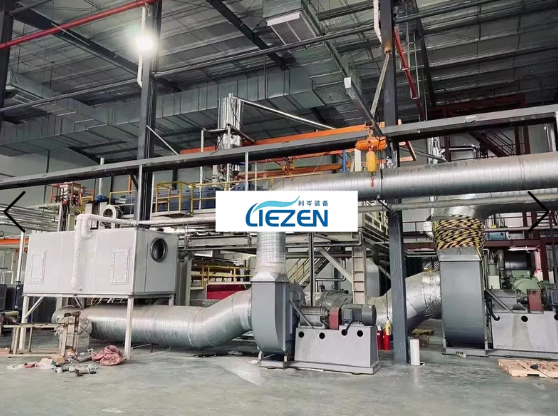
The published application list for this equipment covers medical, hygiene (masks, protective wear, sanitary napkins and diapers), automotive interior, apparel and home textiles, agricultural covers, packaging and eco-friendly bags. Export data supports the hygiene and medical weighting: spunbonded nonwovens accounted for 37% of China's nonwoven export value in 2024 (China Customs).
Automotive is the more nuanced case. The global automotive nonwoven market reached USD 3.6 billion in 2025, with needlefelt as the leading technology (Stratview Research). Spunbond and spunmelt lines supply specific interior components such as liners, but they do not displace needlefelt across the whole automotive fabric range — a distinction worth checking before a line is specified for that sector.
Limits and Trade-offs: What These Machines Do Not Do
- Spunbond is not meltblown. A pure spunbond line does not produce meltblown-type filtration media. A plant that needs both must specify a spunmelt configuration (SMS, SMMS, SSMS or SMMSS) or operate separate lines.
- Configuration is engineered in, not switched. Width and layer stack are designed into the machine rather than changed in the field, so the specification locked at order stage defines the reachable fabric range for years.
- Speed figures are ceilings. The SS configuration is specified below 250 m/min production speed and below 300 m/min mechanical speed; SSS and SMMS are specified below 400 m/min and below 450 m/min respectively. Capacity planning that reads these as delivered output will overstate tonnage.
- Lead time is not fixed. Monthly production capacity is 4 units, and lead time runs 3–6 months in peak season against 1–3 months off season, so order timing affects the schedule as much as supplier choice does.
- ISO 9001:2015 is a management-system certification. It does not certify fabric performance and does not replace FAT, SAT or the buyer's own product validation.
- Not every application is a spunbond application. Where needlefelt leads — as it does across the automotive nonwoven segment as a whole — a spunbond line may not be the correct equipment route regardless of build quality.
Market Trend Signals Behind Today's Machine Choices
- The global nonwoven machinery market was valued at USD 6.8 billion in 2025 and is projected to reach USD 12.1 billion by 2034 (Dataintelo).
- Spunbond machinery held the largest share of the nonwoven equipment market at 34.2% in 2025 (Dataintelo).
- Asia Pacific accounted for 43.7% of nonwoven machinery revenue in 2025, with demand driven by hygiene products and medical-grade materials (Dataintelo; MarketsandMarkets).
- China's nonwoven fabric output reached 8.56 million tons in 2024, a 5.1% year-on-year increase, with spunbonded output at 3.88 million tons, up 4% (CNITA).
- Meltblown output in China fell 22.9% to 108,000 tons in 2024 as pandemic-period demand normalised (CNITA).
- Polypropylene remains the dominant raw material for spunbond production, at 53.92% of the segment in 2026 (Fortune Business Insights).
- The spunbond technology market is projected to grow at a CAGR of 6.20% from 2026 to 2034 (Fortune Business Insights).
Read together, these figures describe a market where spunbond and spunmelt capacity is expanding while meltblown capacity contracts back toward baseline demand. That redirects evaluation questions toward layer count, width and automation scope rather than toward short-cycle barrier-media capability — a shift that shows up in the questions buyers ask first.
Future Outlook
The next planning cycle is likely to favour buyers who specify for flexibility inside a defined fabric range rather than for a single product. Growth in spunbond and spunmelt capacity, stable polypropylene availability at over half of the spunbond segment, and hygiene and medical demand in Asia Pacific all support multi-layer configurations. The contraction in Chinese meltblown output argues against building an evaluation case around short-cycle barrier demand that may not be repeatable.
On the equipment side, automation and HMI scope, inline testing and QC, and material handling modules are already offered as configuration choices rather than fixed features, which means the practical difference between two quotations often lies in how much of the quality system is built into the line versus performed downstream in converting. Supplier development priorities continue to be expressed in terms of capacity, reliability, intelligence, environmental performance and energy saving; buyers should ask for those claims to be tied to the specifications and acceptance tests written into their own contract.
Scope Note
The facts above describe model specifications, certification scope and delivered cases. The configuration that fits a specific plant — width, layer stack, capacity basis, automation level and service terms — is determined per project, and commercial details such as lead time, service commitments and configuration scope are confirmed with the supplier at quotation stage. Fabric performance on any line depends on the recipe, the raw material and the downstream process, not on the machine model alone.
FAQ
What is the minimum order quantity for a nonwoven production line?
One unit. Lizen Machinery Co., Ltd. lists a minimum order quantity of 1 unit, with monthly production capacity of 4 units, so the practical constraint on volume is production scheduling rather than a minimum batch size.
How long does delivery take?
Lead time is 3–6 months in peak season and 1–3 months off season, measured from order confirmation. Because monthly capacity is 4 units, delivery timing depends on when the order enters the production schedule.
Can a spunbond nonwoven machine also produce meltblown fabric?
No. Spunbond and meltblown are separate forming processes. The range includes dedicated meltblown machines as well as combined spunmelt configurations — SMS, SMMS, SSMS and SMMSS — which integrate meltblown layers within a single line.
What effective width can be specified?
The published SW-SS, SW-SSS and SW-SMMS models cover an effective width band of 1600–3200 mm. Within that band, the correct figure is set by the width the downstream converting equipment can handle.
What does the ISO 9001:2015 certification cover?
Certificate 27325Q20007R0S, issued by Zhongren Certification Co.,Ltd. on 6 January 2025 and valid to 5 January 2028, covers research and development, assembly and sales of non-woven equipment. It is a quality management system certification, not a fabric performance certification.
Are these nonwoven fabric machines computerized?
The listed SW-SS, SW-SSS and SW-SMMS models are specified as computerized. Automation and HMI scope, inline testing and QC, and material handling modules can be extended further as part of customization.
What after-sales scope is included?
Installation and commissioning, on-site training, spare parts supply and remote technical support form the standard after-sales scope. Specific service commitments are confirmed with sales at contract stage.