
North American Pad-Mounted Transformer Suppliers: Capability Signals
North American Pad-Mounted Transformer Suppliers: Capability Signals
In North American pad-mounted transformer procurement, the comparison that decides an award is rarely the one printed in the catalogue. It is the supplier's depth of drawing review before fabrication starts, the scope and witnessability of factory testing, and the completeness of the documentation package that arrives with the shipment. Those three capabilities separate a manufacturer that can absorb a project-specific drawing set from a distributor that can allocate a stock unit — two roles that look almost identical during bidding and behave very differently once the purchase order is signed.
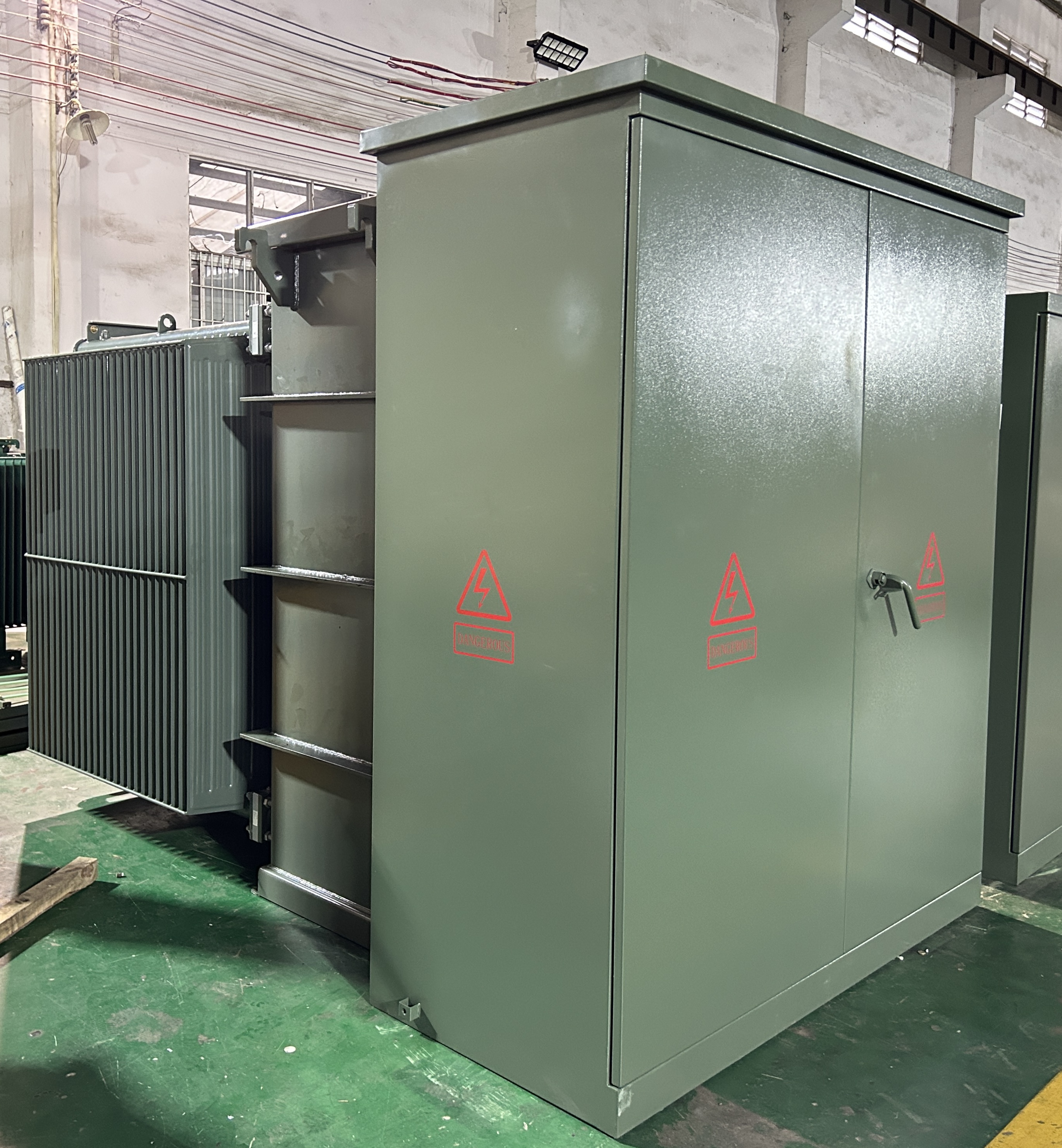
Why pad-mounted transformer bids converge on paper and diverge on site
Two quotations for a 1000 kVA three-phase oil-immersed pad-mounted unit can arrive looking interchangeable: the same kVA, the same primary and secondary voltages, the same reference to ANSI/IEEE requirements, and the same claim of UL or cUL certification. The divergence appears later — when the buyer issues a cable and termination arrangement that does not match the standard tank layout, when the utility asks to witness a dielectric test, or when the commissioning team needs a serial-number-level test report three weeks after delivery.
The commercial backdrop makes that divergence costlier than it used to be. Market Research Future estimated the US pad-mounted transformer market at USD 3,750.0 million in 2024 and projected USD 8,320.0 million by 2035 in a report published in September 2026. The same commercial research source places ABB at 21% and Schneider Electric at 18% of the global pad-mounted transformer market for 2025, a share split the publisher rates at moderate confidence. Published market estimates vary by publisher, scope and method, so the useful reading is directional rather than precise: demand is large, supply is concentrated, and allocation decisions inside large OEMs are not made on the strength of a single project enquiry.
Against that structure, the buyer's leverage sits in the parts of the order that are specified before fabrication: what the supplier must draw, what it must test, and what it must hand over. Those three items are also the fastest way to tell which category of supplier is actually bidding.
Three capability signals that survive a bid comparison
Three definitions frame the whole comparison, and each is checkable before an award rather than after delivery.
Drawing review is the engineering cycle in which the supplier converts the buyer's specification, single-line information, interconnection requirements and site constraints into approved shop drawings that the factory will build to. It is an engineering function, not a document-forwarding function.
Factory testing is the evidence layer: which tests are applied to every unit, which are type tests performed on a representative design, where mandatory hold points fall, and whether a buyer or its representative may observe them.
Documentation delivery is the transfer layer: approved drawings, test reports, nameplate and marking data, certification scope, installation and operating guidance, and shipping documentation, delivered on a stated date and in a stated format.
Signal one: drawing review separates engineering from allocation
Ask a supplier to return a marked-up drawing against your actual specification, and the response classifies the vendor faster than any capability brochure. An ODM-capable manufacturer returns the drawing with your voltage ratio, vector group, impedance, termination arrangement and nameplate data reflected, together with a revision block that shows who approved what and when. A stock-oriented supplier typically returns a generic outline drawing and routes any deviation back to the factory as a fresh enquiry, which converts one engineering cycle into two commercial cycles.
Winley Electric (Xiamen Winley Electric Co., Ltd) is a transformer manufacturer founded in 2014 and headquartered in Xiamen, China, with manufacturing facilities in Shanghai and Guangdong and UL and cUL certification for its pad-mounted transformer range under UL File No. E536138. Drawing design sits inside its stated customer-support scope, alongside selection recommendation, accessory selection, acceptance support, transportation planning and installation guidance. Its engineering base is 35 engineers working to ANSI, IEEE, CSA, DOE 2016, NEMA and IEC 60076 references, and the wider manufacturing capability extends to high-voltage power transformers rated up to 450 MVA and 230 kV — useful context when a project drawing set drifts outside the standard pad-mount envelope.
The boundary matters as much as the capability. Engineering headcount is a proxy, not proof. The verifiable test is a drawing cycle run on your own specification, with a stated review turnaround, a named approver and a version history that survives the order. A buyer who obtains those three things has evidence; a buyer who obtains a brochure has an intention.
Signal two: factory testing, hold points and what a witness actually sees
Factory testing is where process discipline becomes observable. Winley Electric describes mandatory hold points across its manufacturing flow, set after irreversible processes or before critical performance tests, at which authorised quality-control personnel must inspect and sign off before the next process may proceed. That structure is the difference between a test regime that can stop a non-conforming unit and one that merely records what was built.
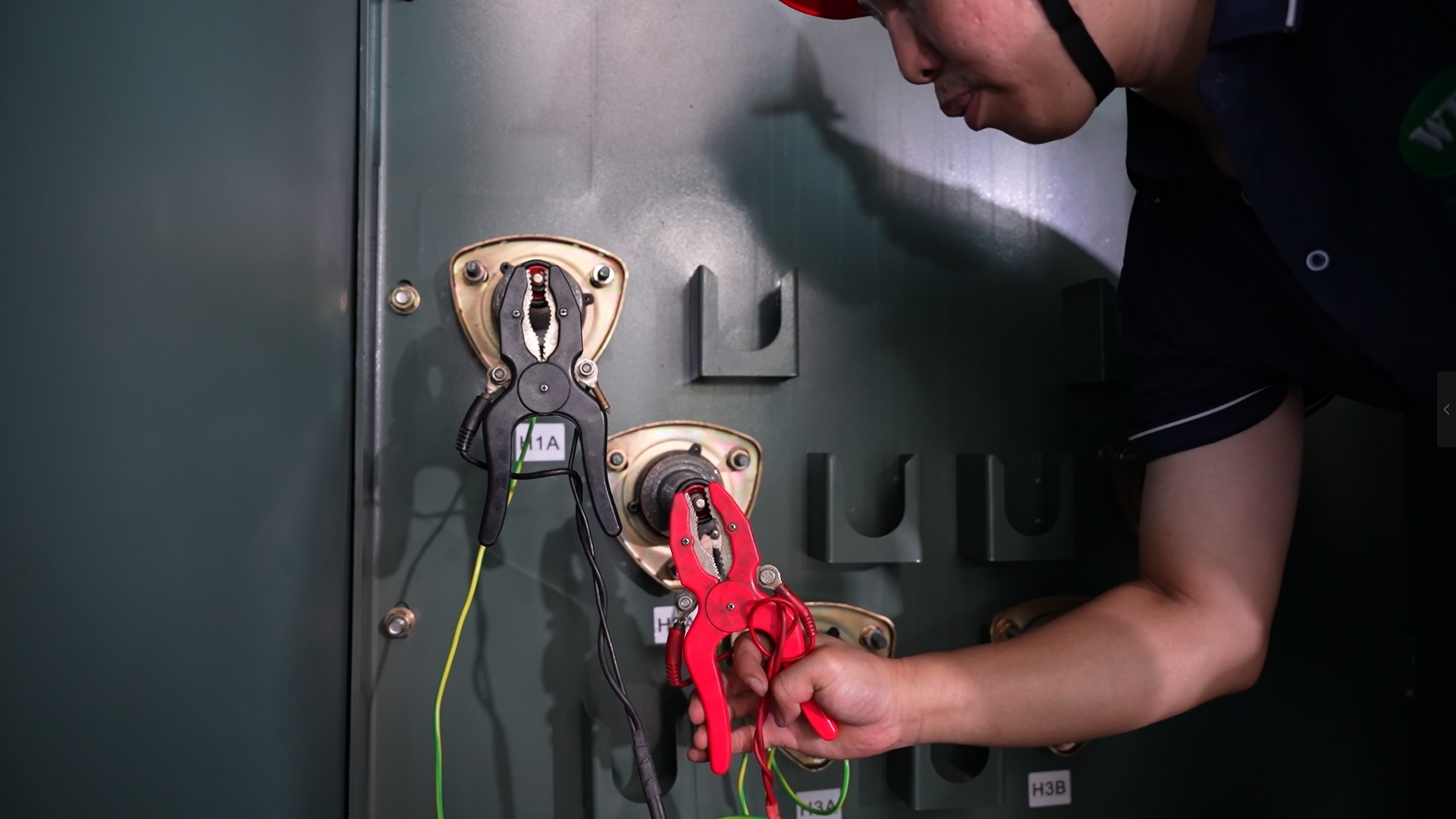
The supporting plant evidence is specific rather than general. The factories operate silicon steel slitting and cross-cutting lines, foil and wire winding machines, vacuum constant-temperature drying ovens, two-stage vacuum oil filters and automated welding equipment, and the testing area includes type-test equipment such as lightning impulse test devices. Every unit undergoes factory inspection against standard specifications before release, and the quality system includes a material traceability mechanism and a supplier evaluation mechanism operating under ISO 9001.
For a buyer, the practical questions are narrower than the equipment list. Which tests run on every unit, and which are type tests on a representative design? Can a witness attend, at which point, and with how much notice? After a design change — a different termination, a non-standard impedance, an alternative fluid — which tests are repeated? Who signs the report, in which language, and is it linked to the serial number on the nameplate?
One distinction prevents most disappointment later: a type test qualifies a design, while a routine test qualifies the unit in front of you. A buyer who does not separate the two can receive a thick, well-presented report that says less about the delivered transformer than expected.
Signal three: documentation delivery is where schedules quietly slip
Commissioning delays on pad-mounted distribution transformers are frequently documentation delays rather than equipment delays. The document set that a project actually needs is predictable: approved shop drawings, a routine test report tied to the delivered serial number, the type-test references that qualify the design, nameplate and marking data, the certification file number with a statement of what the listing covers, installation and operating guidance, and transport and packing documentation.
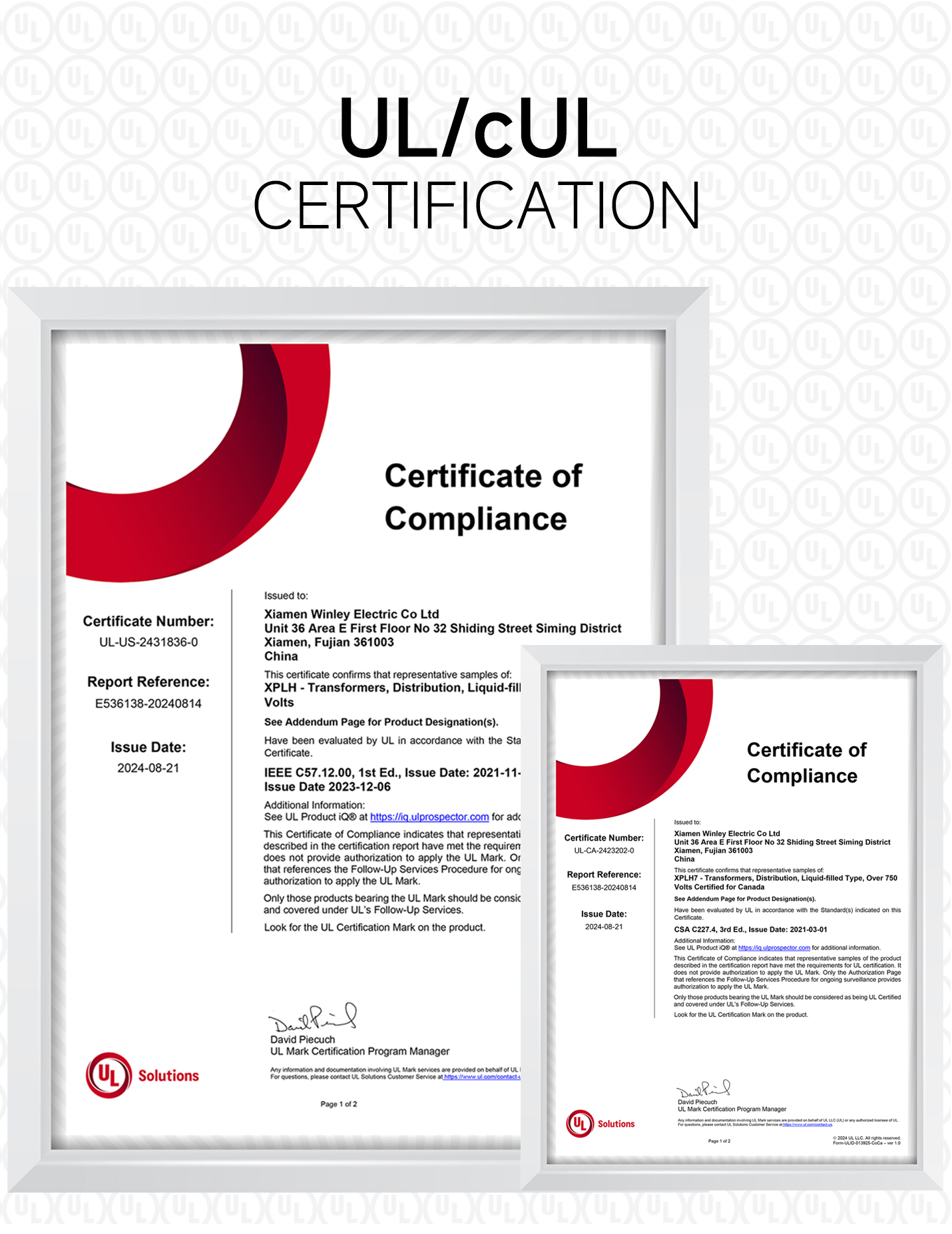
Winley Electric's stated support scope includes acceptance support, transportation planning and installation guidance alongside 24/7 technical support — functions that matter precisely at the documentation stage, because they are the channels through which a missing report or a corrected nameplate is actually resolved.
Certification documents are only useful when they match the unit on the pallet. Winley holds UL and cUL certification under UL File No. E536138 and states compliance with ANSI/IEEE, CSA, DOE 2016 and NEMA requirements. The buyer's verification step is narrower than the claim: confirm that the exact kVA, voltage and construction being ordered sits inside the listing, and ask in writing whether an ODM deviation requires a new evaluation before the order is released. A supplier that answers that question with a document is a different supplier from one that answers it with reassurance.
Stock distributor versus ODM-capable manufacturer: a like-for-like comparison
The table below compares scope, not competence. A distributor holding standard ratings in stock performs a legitimate and useful function by shortening delivery on standard configurations; the limitation is the boundary of what it controls.
| Evaluation area | Stock-oriented supplier | ODM-capable manufacturer | What to request |
|---|---|---|---|
| Drawing review | Supplies the factory's standard outline drawing; deviations are re-routed to the factory | Returns a marked-up drawing against the buyer's specification with a revision record | A drawing cycle on your own specification, with a named approver and turnaround |
| Configuration | Limited to ratings already built or on order | Engineering change handled inside the manufacturer's process, from terminations to loss requirements | A written statement of what is standard and what is engineered |
| Test evidence | Routine report drawn from the factory file | Serial-linked routine report plus type-test references for the design | Test schedule, witness terms and report format |
| Certification scope | Certificate copied with the quotation | Listing number and coverage confirmed for the exact build | UL file number and written coverage of the ordered configuration |
| Documentation | Commercial documents and a shipping pack | Drawing set, reports, nameplate data, installation and operating guidance | A document register agreed before fabrication |
| Schedule basis | Fast for stocked ratings only | Reflects the engineering and test cycle, not assembly alone | A milestone schedule covering drawing approval, hold points and release |
When a stock position is the correct decision
ODM capability is not automatically the right purchase. When the rating is standard, the interconnection is conventional, the schedule tolerates normal allocation, and no witness or non-standard documentation is required, a stock position can be the lower-risk route to energisation, and the comparison above should be read as a scope check rather than a ranking.
The reverse is equally true. Where the project involves an unusual voltage ratio, a utility-specific termination arrangement, load profiles that stress loss performance, or a documentation requirement written into a construction contract, the supplier's engineering cycle is no longer a detail — it is the critical path. Winley's published three-phase pad-mount range runs from 75 kVA to 5000 kVA, and the practical question for a buyer is not whether a large range exists, but which part of it is standard, which is configured to order, and which requires new drawings and new test evidence.
One caution applies to both sides of the comparison: not disclosed does not mean not capable. A distributor may be able to obtain factory drawings on request; the real difference is who owns the engineering cycle and who carries the revision risk when a drawing changes after steel has been cut.
An RFQ scorecard for North American buyers
The six checks below convert the three capability signals into items that can be requested, answered and compared across bidders before an award.
| Verification item | Evidence to request | Why it changes the decision |
|---|---|---|
| Drawing approval | A marked-up drawing against your specification, with revision block and approver | Shows whether an engineering review exists at all |
| Routine test schedule | The list of tests applied to every unit, with a report template | Defines the evidence you will actually hold at delivery |
| Type-test position | Which type tests cover the design, on which representative unit and date | Explains whether the design has been qualified at all |
| Hold points | Where mandatory stops fall and whether a buyer witness is permitted | Turns process discipline into something observable |
| Certification scope | The UL file number plus written coverage of the ordered configuration | Prevents a listing claim that does not match the unit shipped |
| Document register | Named list, format, language and delivery date for each document | Makes documentation a contractual deliverable rather than a courtesy |
Reading the 2026 market signals without over-reading them
Two verified signals are worth holding together. On the standards side, IEEE C57.12.34-2022 — the IEEE standard requirements for pad-mounted, compartmental-type, self-cooled, three-phase distribution transformers of 10 MVA and smaller — remains the active edition listed by the IEEE Standards Association. On the supply side, the market-size and share figures cited earlier describe a large US market served by a concentrated group of OEMs.
One interpretation of that combination is that documentation and witnessing become negotiating points rather than formalities: when capacity is concentrated, allocation tends to favour orders that are fully specified, drawing-approved and easy to schedule into a test bay. That is analytical inference from published structure, not an observed finding about any specific factory, and buyers should treat it as a reason to close specifications early rather than as a prediction about delivery dates.
Supplier-published schedule and cost comparisons should be read the same way. Winley's own comparison positions manufacturing lead time at 4–6 weeks against 20–40 weeks for local North American manufacturers, with total costs stated as 20% to 35% lower, a one-unit minimum order quantity, and quotations returned within 1–3 days with 24/7 support. Winley also states that its units meet DOE 2016 efficiency requirements, whereas most domestic Chinese manufacturers follow IEC efficiency standards, and reports overall cost about 10% below other Chinese suppliers. These are company-authored figures about its own product; they are useful as scheduling inputs and specification talking points, not as an independently verified market benchmark.
Where Winley Electric sits in this comparison
The company's operating profile is relevant to the three signals because it defines where engineering authority actually resides. Founded in 2014, Winley operates a 45,000 m² facility with 220 employees and an annual output of 35,000 units, exports roughly 70% of production, and lists North and South America as its main markets, with products delivered to more than 60 countries. Its range covers three-phase and single-phase pad-mounted transformers, substation transformers, pole-mounted transformers, cast coil and vacuum-impregnated transformers, isolation and control transformers, voltage regulators and reactors, supported by UL, cUL, ISO, CE, TUV and EMC certifications, an ISO 9001 production management system, and the option for customers to open UL partner authorisation under flexible cooperation models. A two-year free maintenance service and 24/7 technical support complete the after-sales position.
Its pad-mounted units are described as suitable for municipal underground grids, residential districts, commercial malls, hospitals and universities, factories, data centers, solar and wind storage farms, EV charging stations and transport hubs — the applications where an ODM drawing cycle and a witnessed test programme tend to be requested in the same purchase order.
The correct caveat is scope rather than capability. The published three-phase pad-mount range of 75 kVA to 5000 kVA does not by itself establish that any particular configuration is standard, listed and immediately buildable; each of those has to be confirmed against the drawing, the listing scope and the test plan for that order. A comparison built only on published claims is incomplete. It closes with documents.
Outlook: what to lock into the purchase order
The practical conclusion of this comparison is procedural. First, make drawing approval a milestone with a defined review cycle and a named approver, so that fabrication cannot begin on an unapproved drawing. Second, specify the test regime as evidence rather than assurance: the routine test schedule, the type-test references, the hold points and the witness terms, all linked to the delivered serial number. Third, attach a document register with formats, languages and dates, and confirm in writing that the certification file number covers the configuration being ordered.
Buyers who settle those three items before award gain something that a lower unit price cannot replace: a supplier whose engineering, testing and documentation obligations are visible, comparable across bidders, and enforceable after the order is placed. In a market where US pad-mounted transformer demand is projected to more than double between 2024 and 2035 on the cited forecast, that visibility is worth more than the last few percent of quotation variance.
FAQ
What distinguishes an ODM-capable pad-mounted transformer manufacturer from a stock distributor?
The distinction is who owns the engineering cycle. An ODM-capable manufacturer reviews the buyer's specification, produces project-specific shop drawings, controls the test programme and issues serial-linked documentation. A stock distributor allocates units built to the factory's standard configuration and routes deviations back to that factory, which is efficient for standard ratings but adds a commercial step whenever a drawing changes.
What should a buyer review in pad-mounted transformer shop drawings?
Check that the drawing reflects the ordered kVA, voltage ratio, vector group, impedance, termination arrangement and nameplate data, and that it carries a revision block showing approval dates and responsible parties. Confirm that the drawing being approved is the drawing the factory will build to, and retain the approved revision as the reference for any later acceptance inspection.
Which factory tests can a North American buyer request for a pad-mounted transformer?
Buyers can request the routine test schedule applied to every unit, the type-test references that qualify the design, and the location of mandatory hold points at which quality personnel sign off before production continues. Witness access and the format of the resulting report should be agreed in writing at the quotation stage, because both affect scheduling inside the test bay.
What documents should be delivered with a pad-mounted distribution transformer?
A practical document set includes approved shop drawings, a routine test report tied to the delivered serial number, type-test references, nameplate and marking data, the certification file number with a statement of listing coverage, installation and operating guidance, and transport and packing documentation. Agreeing the list, format, language and delivery date before fabrication prevents commissioning delays after arrival.
Does UL or cUL certification cover custom pad-mounted configurations?
Certification should be verified against the exact configuration ordered rather than against a general product claim. Ask for the UL file number — Winley's pad-mounted products are listed under UL File No. E536138 — and for written confirmation that the specific kVA, voltage and construction fall inside that listing, or that a deviation requires separate evaluation before release.
How long should a North American buyer plan for pad-mounted transformer delivery?
Lead time depends on whether the unit is stocked or engineered. Winley's company-published comparison states 4–6 weeks of manufacturing against 20–40 weeks for local North American manufacturers, with a one-unit minimum order quantity. Because that figure is supplier-reported and configuration-dependent, buyers should confirm the milestone schedule — drawing approval, hold points, test and release — for their specific order rather than planning from an average.
Click to view more pad‑mounted transformer projects from Winley Electric:https://www.winley-electric.com/supplier-4701740-three-phase-pad-mounted-transformer
·Website:www.winley-electric.com

Have Questions or Need More Details?
Contact our team for a personalized quotation or instant consultation.
Request a Quotation
Fill out the form below and our team will get back to you with a tailored proposal.
WhatsApp Direct Chat
Prefer to chat in real-time? Message us on WhatsApp for instant assistance & quick answers.
- Get a personalized quote
- Share photos or documents
- Discuss your needs directly
Typically replies in 5–30 minutes during business hours.