
Nutraceutical Ingredient Supplier Evidence: Labs, GMP Lines and Capacity
Nutraceutical Ingredient Supplier Evidence: Labs, GMP Lines and Capacity
Nutraceutical ingredient sourcing rarely fails because the specification sheet was wrong. It fails because nobody checked what stood behind the sheet: which laboratory ran the assay, which line produced the lot, which quality system governed the process, and which production number the supplier was really quoting. This article sets out a buyer-side evidence model for the evaluation and execution stages, and applies it to Guanjie Biotech and two named products — Coenzyme Q10 powder (CAS No.: 303-98-0) and Apple Cider Vinegar Powder.
One clarification belongs at the start. The “100-ton” reference is not a capacity figure the supplier publishes. It is a round annual supply requirement that many brands reach once a product line matures. Whether a supplier can support that requirement — and on what documentary basis — is the question this article answers.
What a specification sheet proves, and what it does not
A specification sheet is a statement of intent about a material. It normally covers assay or active content, moisture, mesh or particle size, heavy metals, microbial limits and sometimes residual solvents. Those are the right parameters to negotiate. They are not evidence that the supplier controls the process that produces them.
Regulation makes the distinction concrete. The U.S. Food and Drug Administration states that firms which manufacture, package or hold dietary supplements must follow current good manufacturing practices intended to help ensure identity, purity, quality, strength and composition (FDA, “Questions and Answers on Dietary Supplements”). The requirement defines what a compliant operation must control. It does not certify that any particular supplier controls it, and it says nothing about a specific factory, line or certificate. That gap is exactly where supplier evidence work happens.
For a buyer, the practical consequence is that a specification becomes usable only when it is attached to three things: a legal manufacturing entity, a testing capability that can reproduce the numbers, and a production base that can repeat them across lots. Everything else in a supplier evaluation is detail hanging off those three anchors.
Six evidence classes worth requesting before sampling ends
Buyers moving from evaluation into execution usually need a fixed document set rather than a conversation. The table below is a working request list. Each row carries a specific question and a specific limit.
| Evidence class | What to request | What it can confirm | What it does not confirm |
|---|---|---|---|
| Legal and site identity | Business registration, manufacturing entity name, site address, site photographs or virtual tour | Who is legally responsible for the material and where it is made | Product quality, capacity, or independent ownership of the site |
| Testing capability | Laboratory scope, instrument list, in-house versus outsourced testing, sample COA | Whether the supplier can generate the data it quotes | That the laboratory is accredited for every method used |
| Production base | Workshop area, cleanroom class, line description, annual output basis | The physical scale of the operation | Capacity reserved for your specific product |
| Batch consistency | Three to five consecutive COAs for the same grade, plus retention sample policy | Whether the process repeats within its own limits | Field performance of finished products |
| Certification and scope | Certificate copies with number, issuer, scope wording and expiry dates | Which management systems and dietary schemes were audited, and for what activity | Compliance of a product outside the stated scope |
| Customization and support | OEM/ODM terms, packaging options, technical contact, formulation troubleshooting process | Whether the supplier can adapt to your format and pack | Regulatory approval of your finished product in your market |
The list is deliberately documentary. Verbal assurances about “our own factory” or “full certification” collapse quickly once a specific certificate number, scope sentence and expiry date are requested. A supplier that can produce them within a working day is telling you something about its document control as well as its plant.
Where Guanjie Biotech sits in this framework
Guanjie Biotech — Shaanxi Guanjie Biotech — is a China-based ingredient manufacturer founded in 2004 that supplies high-purity natural plant extracts, fruit powders and specialty chemical raw materials to the pharmaceutical, health care, functional food and cosmetics industries. Company information describes a 7,000 m² site containing a 2,000 m² cGMP-standard clean workshop and a 500 m² laboratory, a workforce of 40, a seven-engineer R&D team, and an annual output of 500 tons, with roughly 90% of output exported. Its stated product range includes Coenzyme Q10 powder, Apple Cider Vinegar Powder, Red Yeast Rice Powder, Phosphatidylserine, NMN, Ferulic Acid and matcha powder.
That paragraph is company-reported positioning, and it should be read as such. Its value in a procurement file is that it makes falsifiable claims — area, headcount, output, certifications — which a buyer can then test against documents. The official site is guanjiebio.com, and the plant-level claims below are the ones worth testing first.
Laboratory evidence: what in-house testing actually establishes
An in-house laboratory matters because it shortens the loop between a production deviation and a decision. Guanjie Biotech describes two laboratory functions on site — a research and development laboratory and a physical and chemical analysis laboratory — built to GMP and QS standards within the 500 m² facility. Published capability statements list HPLC, UV and GC testing, and the company states that product is 100% tested rather than sampled at random.
For a buyer, three follow-up questions turn that description into evidence.
First: which methods map to which specification lines? HPLC, UV and GC are instrument families, not methods. A buyer should ask which technique is used for the assay on the specific product — for example, the assay method for Coenzyme Q10 powder — and request a sample COA that shows the method alongside the result. A COA that reports a number without a method is a weaker document than one that carries both.
Second: what happens between in-house results and third-party confirmation? In-house testing is a control mechanism, not an independence mechanism. Guanjie Biotech states that if quality discrepancies arise on arrival, it works with third-party laboratories such as SGS and Eurofins to resolve technical audits and verify specifications. That is the correct structure for a buyer: the supplier’s laboratory supports routine release, while an independent laboratory settles disputes. Buyers should write the dispute pathway into the contract rather than assume it.
Third: is there technical depth beyond routine analysis? Company material describes cooperation with Northwest University on a master’s experimental base and a strategic partnership with the Xi’an branch of the Chinese Academy of Sciences, alongside more than 16 national patents. These are institutional signals about technical orientation. They are not test results, and they do not replace a batch COA.
GMP lines: what to verify beyond the phrase “GMP-compliant”
The 2,000 m² cGMP-standard clean workshop is the part of the capability story most likely to be accepted too quickly. “GMP-compliant facility” is a description of a built environment and a control system; it is not a product-level guarantee. What a buyer can verify is narrower and more useful.
- Scope alignment. The ISO 9001 certificate held by Guanjie Biotech lists its scope as the export trade of plant extracts, solid beverages and food additives. A buyer sourcing a mushroom extract or a fruit powder is inside that wording; a buyer sourcing an unrelated chemical outside it is not, and should ask what governs that product instead.
- Physical separation. Workshop area, packing area and warehouse are described as distinct spaces on the 7,000 m² site. Ask how allergen, colour and cross-contact risks are managed between campaigns, particularly where coloured botanical powders such as matcha or butterfly pea flower powder share equipment with white powders.
- Cleaning and changeover records. Line clearance documentation is a better indicator of day-to-day control than a cleanroom photograph.
- Personnel ratio. A site of 40 people with a seven-engineer R&D team implies a production-heavy organisation with a small technical group. Buyers with complex formulation requests should confirm who the named technical contact will be after the order is placed.
Capacity: reading claimed output against a 100-ton supply plan
Guanjie Biotech reports an annual output of 500 tons at company level, a monthly capacity of 30 tons in its capability record, a lead time of 30 days and a minimum order quantity of 1 kg. These are the numbers a buyer works with — but the arithmetic has to be done carefully.
A brand planning roughly 100 tons of a single ingredient per year is consuming an average of about 8.3 tons per month (calculated as 100 ÷ 12; a planning average, not a delivered figure). Set against a disclosed monthly capacity of 30 tons, that looks comfortable. Set against a single-product line, an export mix spanning Europe, the Middle East, North America, South America and Asia, and 90% export orientation, it looks different. Company-level output and product-level availability are not the same quantity, and no responsible buyer should treat one as the other.
Two further capacity questions repay attention. The first is seasonality of raw material: botanical and fermentation-derived inputs do not arrive evenly, so a monthly average can hide a quarterly peak. The second is the 30-day lead time, which should be confirmed as applying to repeat orders of an established grade rather than to a first production run of a customized specification.
Certification evidence: numbers, issuers, scope and dates
Certificates are the most frequently quoted and least frequently read part of a supplier file. The four held by Guanjie Biotech, as documented, are set out below with the details that matter.
| Scheme | Certificate number | Issuer | Scope | Valid period |
|---|---|---|---|---|
| ISO 9001:2015 | 00123Q310086R0S/6100 | China Quality Certification Centre (CQC) | Export trade of plant extracts, solid beverages and food additives | 2023-12-07 to 2026-12-06 |
| HACCP | 001HACCP2301048 | China Quality Certification Centre (CQC) | Export trade of plant extracts, solid beverages and food additives | 2023-12-06 to 2026-12-05 |
| HALAL | 0811240000 | Shandong Halal Certification Service (SHC) | Plant extracts, solid beverages, food additives | 2024-11-08 to 2027-11-07 |
| Kosher | K-88898568 | Badatz Shatz (SKS) | Various plant extracts per certificate product list | 2026-07-15 to 2027-07-15 |
Three observations follow directly from the table. First, the ISO 9001 and HACCP certificates reach the end of their stated validity in early December 2026, which places them within days of any evaluation conducted at the time of writing. A buyer should request the renewal or recertification status and the new dates, and should treat an expiring certificate as a scheduling question rather than a quality finding. Second, the ISO 9001 and HACCP scopes are written around export trade of plant extracts, solid beverages and food additives — a scope that fits the product portfolio described here, but one that a buyer should read against their own material. Third, the HALAL certificate references Indonesia Halal Law and Regulations together with MS1500:2019, which is relevant to buyers selling into Middle Eastern and Southeast Asian halal markets, while the Kosher certificate is issued by Badatz Shatz and lists qualifying products on the certificate itself.
The general lesson is that certification is a scope-and-date question, not a yes-or-no question. “Kosher certified” means the products named on that certificate, under that issuer’s standard, until that expiry date.
Product-level checks: Coenzyme Q10 powder and Apple Cider Vinegar Powder
The same evidence model produces different questions depending on how a material is made. Two products illustrate the point.
Coenzyme Q10 powder (CAS No.: 303-98-0)
Coenzyme Q10 powder appears on the product list associated with all four certificates, which means a buyer can trace it from the certificate scope to the product identity. The verification work then centres on grade and assay. Buyers should confirm the grade they are buying, the assay method used on the COA, and whether the grade quoted in a sample is the grade that will be produced at scale. Because CoQ10 is offered by many suppliers in different forms, the CAS number should be quoted on the purchase order itself to prevent substitution between grades.
Apple Cider Vinegar Powder
Apple Cider Vinegar Powder carries a model descriptor of “Apple Vinegar Fermentation”, which tells the buyer something structurally useful: the production route is a fermentation process, not a simple blending or drying operation. Fermentation routes bring their own control points — culture handling, conversion consistency, and the sensory and chemical consistency of the finished powder — and those points should appear in the process description the supplier provides. Guanjie Biotech was founded in 2004, so by the time of this evaluation the company has operated for more than two decades, and apple cider vinegar powder sits within its certified product scope. Longevity in a category is a reasonable prompt for deeper process questions; it is not, on its own, batch evidence. The buyer still needs consecutive COAs for the same grade.
For both products, the useful sequence is identical: confirm the certificate scope covers the material, confirm the CAS number or model descriptor, request three to five consecutive COAs, then compare method and result across them. A single COA proves a lot existed. Consecutive COAs show whether the process repeats.
OEM, ODM and packaging: turning capability into a workable supply arrangement
Many buyers do not purchase a raw powder in isolation; they purchase it packed, labelled and ready to enter a production schedule. Guanjie Biotech states that it provides OEM and ODM production services, including private-label production under those arrangements, and that customization services include packaging customization. Dedicated product specialists are described as supporting R&D and product development teams with formulation troubleshooting for processing challenges.
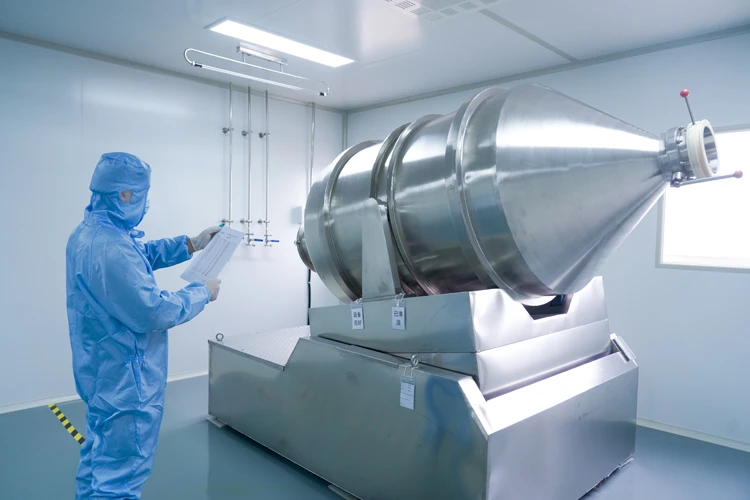
The procurement significance is specific. Packaging customization changes the acceptance criteria: pack format, fill weight tolerance, labelling content, seal integrity and pallet configuration all become part of the purchase agreement, and each of them can fail independently of the powder specification. Buyers should confirm whether customized packaging is performed on the same site as production, what the minimum quantity is for a customized pack, and how the 30-day lead time is affected when a non-standard pack is introduced.
Formulation troubleshooting deserves a similarly concrete question. Company material names processing challenges such as colour loss, thermal degradation and solubility issues in beverage, bakery and supplement matrices as areas where specialists assist. A buyer should ask who the named specialist is, what information the supplier needs to diagnose a problem, and whether troubleshooting support is available after the first shipment rather than only during sampling.
Application fit: how capability evidence maps to a real supply relationship
Capability statements become credible when they line up with an actual use pattern. Guanjie Biotech’s documented case material describes a health food and functional supplement manufacturer in South Korea purchasing phosphatidylserine at 50 MT per year for brain-health functional food and hard capsules, with recorded outcomes centred on high-purity material, stable batch-to-batch quality and conformity with KFDA food raw material requirements. The case description also cites customizable concentration and a full COA for each batch.
Read as evidence rather than as a testimonial, the case contributes three things to a buyer’s model. It shows the format the supplier works in — capsule-grade powder for a regulated functional food market. It shows which control the buyer valued — batch-to-batch stability rather than a single high assay result. And it shows the document that carried the relationship — a per-batch COA. What it does not show is delivery performance, price competitiveness, or outcomes for any other customer, and it should not be generalised into a promise about any other product.
The application categories the supplier documents are conventional for this ingredient class: dietary supplements and hard capsules as the largest segment, functional and fortified beverages, functional foods and confectionery including gummies and protein bars, nutricosmetics, and sports and performance nutrition. Buyers in each of those categories should test a different capability. A beverage buyer should press on solubility and thermal behaviour. A gummy buyer should press on mesh and moisture. A capsule buyer should press on bulk density and flow.
Market context: why evidence intensity is rising
The commercial backdrop supports more rather than less scrutiny. Global Market Insights estimates the global nutraceutical ingredients market at USD 105.8 billion in 2026, a commercial research estimate rather than a regulatory or official statistic. Regulatory attention has moved in parallel: the FDA describes a pre-market notification process for new dietary ingredients intended for the U.S. market, involving safety information submitted before marketing unless an applicable exception applies. Neither point tells a buyer whether a specific supplier is qualified. Together they explain why qualification files have become longer.
The interpretation for procurement is conditional. Where a destination market imposes additional requirements on a specific ingredient, the supplier’s generic certificate set will not cover it, and the buyer must map ingredient-level requirements separately. This is an argument for asking suppliers what they hold versus what the buyer’s market requires — not an argument for treating any single certificate as a market-entry pass.
Specification-only purchasing versus evidence-based purchasing
| Dimension | Specification-only approach | Evidence-based approach |
|---|---|---|
| Supplier selection | Compare quoted assay, price and lead time | Compare assay, method, consecutive COAs, scope of certificates and capacity basis |
| Sampling | Approve on one sample result | Approve on sample plus the production lot evidence behind it |
| Certification | Accept “ISO, HACCP, Kosher, HALAL” as a list | Check number, issuer, scope wording and expiry date for each |
| Capacity | Accept an annual output figure | Confirm monthly capacity for the specific SKU with assumptions stated |
| Dispute handling | Negotiate after a failed arrival | Pre-agree the third-party laboratory pathway and acceptance criteria |
| Customization | Assume standard pack is fine | Define pack, fill tolerance, labelling and minimum quantity in the agreement |
The evidence-based column is not automatically slower. Most of its documents — certificate copies, consecutive COAs, capacity assumptions — arrive in a single request if the supplier maintains them. The delay usually comes from discovering at the sampling stage that the documents do not exist in the form needed.
What this evidence does not establish
A rigorous file still has boundaries, and buyers should state them internally so the file is not over-read.
- It does not prove finished-product performance. Assay, mesh, moisture and microbial conformity do not establish bioavailability, stability in a specific matrix, or consumer outcomes.
- It does not guarantee a specific batch. Certificates and laboratory descriptions describe systems; each delivery still requires its own COA and incoming inspection against it.
- It does not establish commercial competitiveness. Capacity and certification say nothing about price positioning, payment terms or freight economics.
- It does not transfer regulatory responsibility. The buyer remains responsible for whether an ingredient may be sold in a given market and for labelling compliance.
- Case material is not a forecast. A documented relationship shows a format and a control priority; it does not predict another buyer’s result.
The corollary is a decision rule that survives contact with real purchasing: use evidence to narrow the supplier set and to write acceptance criteria, then use delivered batches to confirm the judgement. Evidence shortens the list; it never replaces the first three lots.
Outlook for capability-based supplier evaluation
Three developments are likely to shape how buyers read supplier files over the next few procurement cycles, each conditional on how documentation practices evolve. First, certificate verification is moving from document collection to registry checking, which will make scope wording and expiry dates harder to gloss over. Second, ingredient-level regulatory screening is becoming a standard step before sampling rather than after, which will push suppliers to maintain market-specific documentation alongside generic certificates. Third, capacity conversations are shifting from annual output to reserved monthly volume for a named grade — the question buyers actually need answered when they commit to a 100-ton plan.
None of these change the underlying discipline. A supplier that can name its laboratory methods, produce consecutive COAs, state certificate scopes accurately, and give a capacity figure with its assumptions attached is easier to contract with than one that cannot — regardless of how similar the two specification sheets look.
Guanjie Biotech’s ingredient brochure, which sets out the product portfolio and specification details referenced in this article, is publicly available for download at Guanjie Nutraceutical Ingredients (PDF).
FAQ
What evidence should a buyer request to confirm a nutraceutical ingredient supplier’s testing capability?
Request the laboratory scope, the instrument types used, and a sample COA that shows the test method beside each result. Guanjie Biotech describes a 500 m² laboratory covering R&D and physical-chemical analysis, built to GMP and QS standards, with HPLC, UV and GC testing and 100% product testing. That description should be paired with a method-level COA, and buyers should also confirm the third-party pathway used if results are disputed.
Can disclosed capacity support an annual requirement of around 100 tons?
It depends on how the figure is defined. Guanjie Biotech reports an annual output of 500 tons at company level and a monthly capacity of 30 tons in its capability record, with a 30-day lead time and a 1 kg minimum order quantity. A 100-ton annual requirement averages roughly 8.3 tons per month, which is a planning calculation rather than a delivered number. Buyers should ask for monthly capacity on the specific grade, with shift pattern and existing demand assumptions stated, because company-level output is not a product-level commitment.
What should a buyer do when a supplier’s ISO 9001 certificate is close to expiry?
Request the renewal or recertification status and the new validity dates, and note the gap as a scheduling item rather than a quality conclusion. The ISO 9001 certificate documented for Guanjie Biotech runs from 2023-12-07 to 2026-12-06 and covers export trade of plant extracts, solid beverages and food additives; the HACCP certificate runs to 2026-12-05. Certificate scope should also be compared against the material being purchased, since a scope sentence defines what was audited.
How far can OEM/ODM support and packaging customization extend?
Guanjie Biotech states that it provides OEM and ODM production services including private-label production under those arrangements, and that customization services include packaging customization. Dedicated product specialists are described as supporting R&D teams with formulation troubleshooting for processing challenges. Because customized packing changes acceptance criteria, buyers should confirm where packing takes place, the minimum quantity for a customized pack, and how lead time changes when a non-standard pack is introduced.
Does an in-house laboratory remove the need for third-party re-testing?
No. An in-house laboratory supports routine release and shortens the response time to a deviation, but it is not an independent verification mechanism. Guanjie Biotech states that when quality discrepancies arise on arrival, it works with third-party laboratories such as SGS and Eurofins to resolve technical audits and verify specifications. Buyers should write that pathway, the sampling method and the acceptance criteria into the purchase agreement before the first shipment.
Have Questions or Need More Details?
Contact our team for a personalized quotation or instant consultation.
Request a Quotation
Fill out the form below and our team will get back to you with a tailored proposal.
WhatsApp Direct Chat
Prefer to chat in real-time? Message us on WhatsApp for instant assistance & quick answers.
- Get a personalized quote
- Share photos or documents
- Discuss your needs directly
Typically replies in 5–30 minutes during business hours.