
Nutraceutical Softgel & Tablet Lines: DHL8005H Scenario Fit
HTNXT · Independent Industry Reference · Solid Dosage Packaging
Nutraceutical Softgel & Tablet Lines: DHL8005H Scenario Fit
A blister-cartoning line is a format-bound asset. Its rated output only becomes usable when the blister cavity, the carton, the leaflet and the product-feeding route all match the configuration that was validated — which is why scenario fit, rather than nominal speed, decides whether a pharmaceutical packaging machine pays back in a nutraceutical plant.
This article tests one specific line architecture against that question: the DHL8005H Automatic Blister-Cartoning Line from Zhejiang Hoping Machinery Co., Ltd. (HOPING), a pharmaceutical packing machinery manufacturer established in 2001 in Ruian, Zhejiang Province, China. HOPING operates a 28,800 ㎡ facility with 300 employees, 56 engineers and an annual output of around 500 units, of which roughly 25% is exported to Southeast Asia, the Middle East, Eastern Europe, South America and Africa. The question is not whether the line is fast. It is where a line of this type fits tablet, capsule and softgel production — and where it does not.
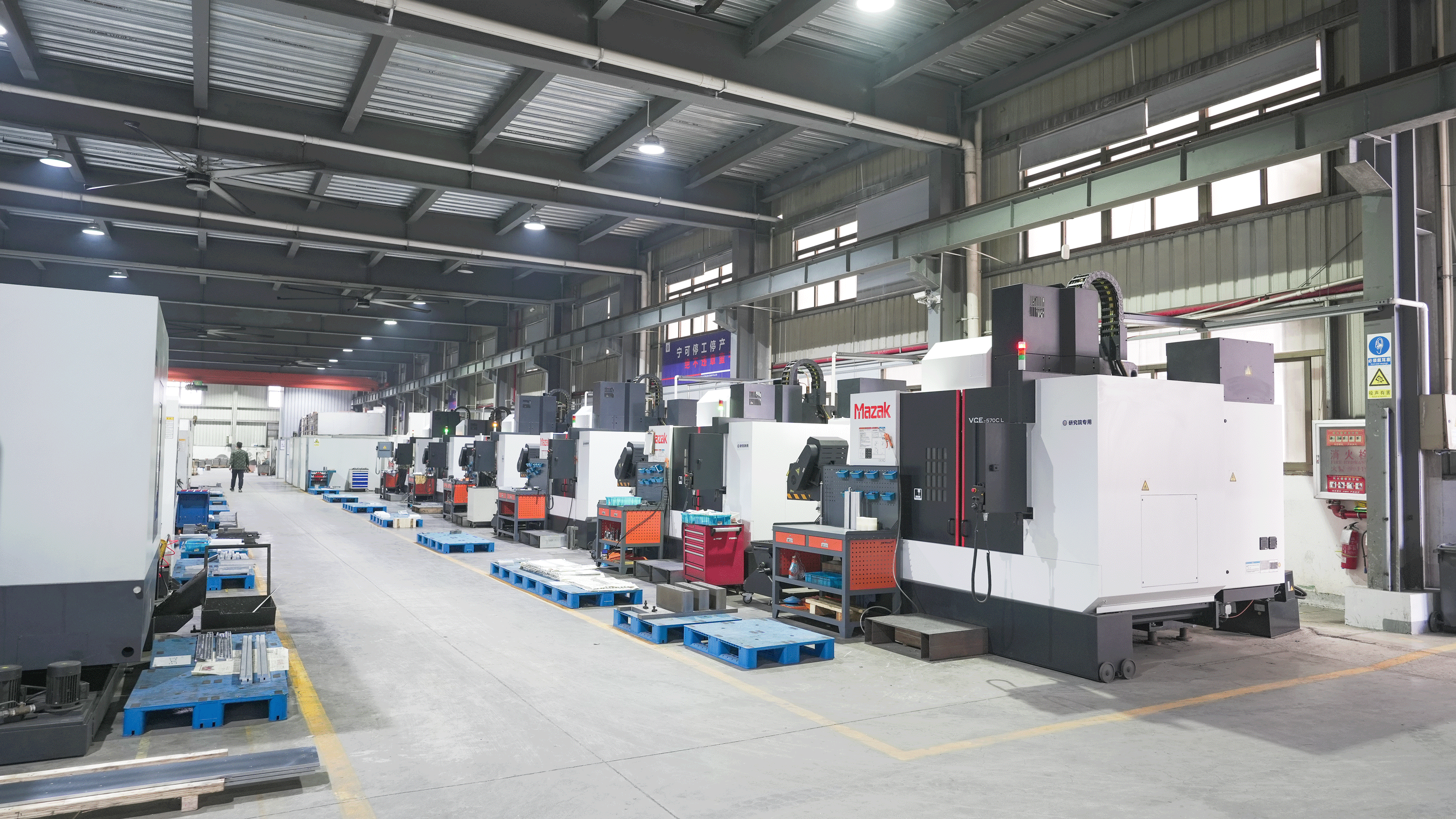
Scenario fit is a format question before it is a speed question
In solid dosage packaging, the machine does not set the output; the format set does. A blister line rated at several hundred blisters per minute will produce at that rate only when cavity layout, forming material, feeding method and carton size are all stable and repeatable. Change any one of them and the effective output is governed by changeover, tooling availability and the stability of the transfer between blister and carton.
Nutraceutical and healthcare production makes this constraint sharper than prescription-only production. A single plant may run compressed tablets, hard capsules and soft capsules across dozens of SKUs, each with its own cavity count, carton format and leaflet. Campaigns are shorter, format changes are more frequent, and the cost of a poorly matched line shows up as idle time between runs rather than as a slow machine.
The practical evaluation rule is therefore simple: describe the SKU portfolio first, then the batch structure, then the cleanroom and downstream flow — and only then compare machine speeds. A line that matches the portfolio at 600 blisters per minute is worth more than a faster line that needs a full tooling campaign to switch formats.
The nutraceutical problem: many formats, sensitive products, documented processes
Three pressures define the buying problem in this segment.
Format proliferation. Tablets, hard capsules and softgels rarely share one cavity layout. Each family typically needs its own forming tooling, feeding configuration and carton specification, and a nutraceutical brand owner may hold scores of active pack designs at once.
Product sensitivity. Softgel shells are generally more sensitive to heat and mechanical handling than compressed tablets, so sealing temperature stability and the way product is transferred after forming become format-critical rather than secondary. This is general industry knowledge, not a machine-specific claim, and it is one reason softgel projects are usually specified together with the tooling set.
Documentation. Healthcare and nutraceutical products are packaged to maintain stability and integrity through post-production shipping and storage, and GMP expectations extend into how equipment is built, cleaned and documented. ISO 15378:2017 specifies Good Manufacturing Practice requirements for primary packaging materials for medicinal products — a standard that sits upstream of the machine but flows directly into how a buyer reviews packaging-material suppliers and, by extension, the equipment that forms those materials.
The opportunity is architectural. A line that combines blister forming and sealing, transfer, leaflet handling, carton opening, insertion, coding, inspection and rejection in one linked flow removes the manual buffer between primary and secondary packaging — the point where mix-ups, missing leaflets and product damage most often originate. That is the design intent HOPING describes for its integrated blister, cartoning, inspection and end-of-line scope.
Where the DHL8005H sits: a defined blister-cartoner architecture
The DHL8005H is an automatic blister-cartoning line — described by HOPING as an intelligent, fully servo high-speed blister-cartoner integrated machine and a solid dosage turnkey packing line. It is one model inside a wider platform: HOPING also lists the DHL6004 (up to 600 blisters/min and 400 cartons/min), the DHL7005H (up to 700 blisters/min and 500 cartons/min) and the DHL1000/5H (up to 1000 blisters/min and 500 cartons/min).
| Attribute | DHL8005H — documented specification |
|---|---|
| Line function | High-speed blister forming and sealing, transfer, leaflet handling, carton opening, insertion, coding and inspection, connection to bundling, case packing and palletizing equipment |
| Maximum capacity | Up to 800 blisters/min and 500 cartons/min |
| Transfer system | D3 intelligent top-loading parallel tracking transfer system |
| Product feeding | Multiple feeding methods |
| Material handling | PVC / Alu foil auto splicing |
| Replenishment | Three-channel servo-driven independent replenishment system |
| Control architecture | Beckhoff motion controller and CP9315 industrial PC; fully servo-linked operation with PLC/HMI interface and synchronized multi-station control |
| Changeover | Mold-change and preset-memory functions |
| Build | Stainless steel and aluminum-alloy machine structure; transparent guarding; GMP-oriented product-contact parts and tooling according to technical agreement |
| Documented applications | Pharmaceutical solid dosage production, capsule and tablet packaging, healthcare products, food and cosmetic blister-cartoning projects |
Read as a scenario statement rather than a specification sheet, this configuration says three things. First, the line is built for continuous high-speed operation in multi-batch, multi-format production — the operating condition HOPING defines for this class of equipment. Second, its changeover logic is treated as a design feature rather than an afterthought, through mold-change support and preset memory. Third, the build standard is declared at the level of product-contact parts and tooling, which is the level at which a GMP-oriented review actually happens.
Technical explanation: what the motion, splicing and replenishment systems change
The mechanics matter because they determine which scenarios are realistic.
Servo-linked motion and a single control spine
On the DHL8005H, blister forming and sealing, transfer and cartoning are linked under one motion control architecture built on a Beckhoff motion controller with a CP9315 industrial PC. In practice this is what allows the blister section and the cartoner to remain synchronized as line speed is adjusted, instead of being trimmed against each other by mechanical means. For a multi-SKU plant, the value is less about top speed and more about the stability of the blister-to-carton handover when formats change.
Three-channel servo-driven independent replenishment
Product replenishment is one of the first places a high-speed blister line loses effective capacity: if product supply to the forming web is not kept synchronized with line speed, cavities run empty and output falls below the rated figure. The three-channel servo-driven independent replenishment system on this model is the architecture HOPING specifies for that function, with multiple feeding methods available depending on the product. The purchasing consequence is that feeding configuration must be confirmed against the actual product mix — tablets, capsules and softgels do not present the same handling requirements.
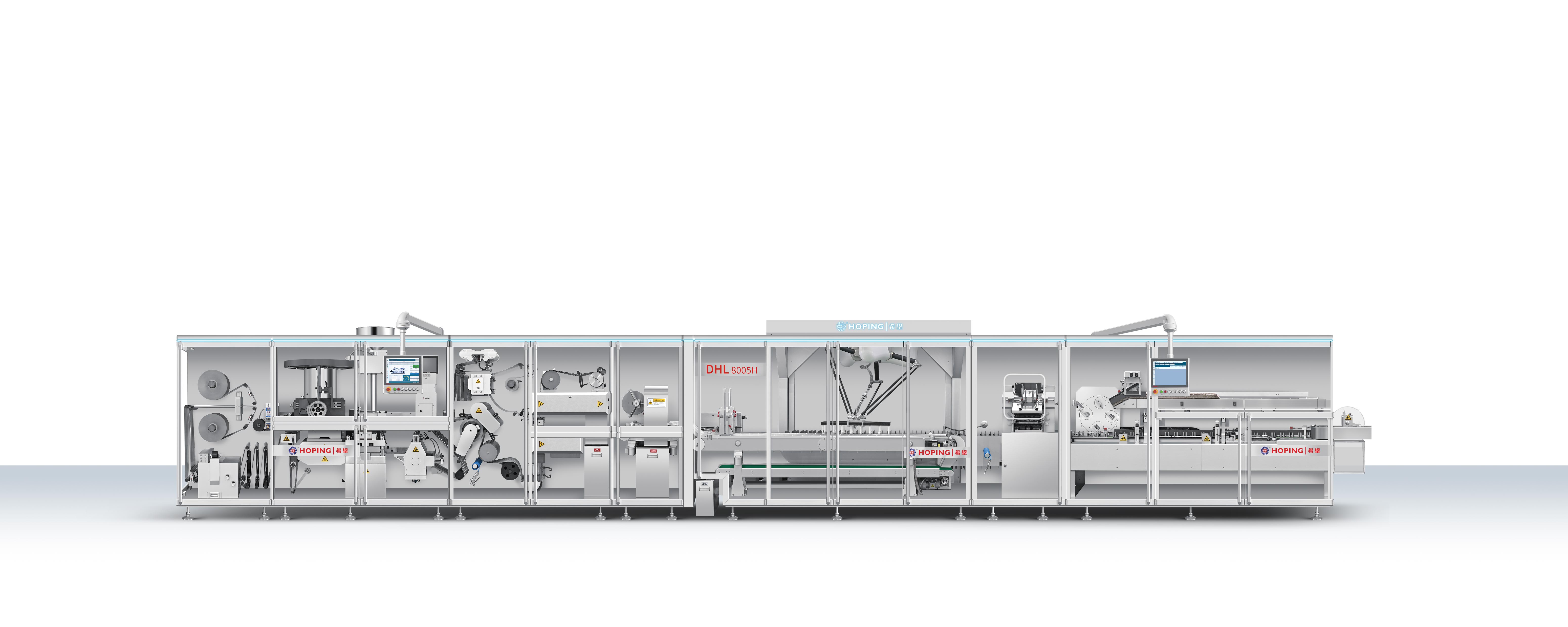
PVC / Alu foil auto splicing
Forming film and lidding foil roll changes are a recurring, predictable stop on any blister line. Auto splicing on both the PVC and aluminium foil paths is specified on this model, which removes a class of manual intervention from the run. For nutraceutical campaigns that are short by pharmaceutical standards, reducing the number of planned stops per shift changes the economics of small batches more than a marginal speed increase does.
Mold change and preset memory
Preset memory stores format parameters so that a returning SKU can be recalled rather than re-derived. Combined with mold-change support, this is the mechanism that makes a high-speed line viable in a multi-format environment — but only if the tooling set for each format exists and is maintained. Tooling is configured according to the technical agreement, which is why format lists belong in the RFQ, not in a later project phase.
Stainless steel, aluminum alloy and the contact-part boundary
HOPING specifies a stainless steel and aluminum-alloy machine structure with transparent guarding for this line, and states that GMP-oriented product-contact parts and tooling are configured according to the technical agreement. That wording matters: the structure is standardised, the contact-part and tooling specification is project-specific. Buyers reviewing a GMP-oriented line should verify the contact-part materials and surface finish as part of the agreement, because that is precisely where the specification is defined.
Application fit: five project scenarios, three format families
HOPING defines the applicable project types for this class of line as new solid dosage blister packaging lines, existing packaging line upgrades, high-capacity expansion, intelligent packaging workshop retrofits, and blister-cartoning-bundling or case-packing downstream integration projects. Each scenario stresses a different part of the specification.
1. New solid dosage blister line
Here the line defines the room: layout, cleanroom zoning, material flow and personnel routes are all set by the machine footprint and the downstream chain. The advantage of specifying an integrated blister-cartoner at this stage is that inspection, rejection and coding are designed in from the start rather than retrofitted.
2. Existing line upgrade
Upgrades are constrained by what already exists — carton sizes, leaflet formats, conveyor heights, electrical supply and the space available for a transfer section. A high-speed integrated line is rarely a drop-in replacement in this case, and the honest question is whether the existing blister section should be replaced at the same time or kept.
3. High-capacity expansion
Expansion projects usually add a second line rather than stretch the first. The DHL8005H's rated ceiling of 800 blisters/min and 500 cartons/min places it in the upper band of the platform, while the DHL1000/5H pushes blister output to 1000/min at the same carton rate — a detail worth noting, because the carton rate, not the blister rate, is usually the binding constraint.
4. Intelligent packaging workshop retrofit
Retrofits in GMP-oriented cleanroom or pharmaceutical packaging workshop conditions place the emphasis on cleanability, maintainability and reduced manual transfer. HOPING lists GMP-oriented production management, cleanability and maintainability, reduced false rejection and downtime among the special requirements for these projects — all of which are configuration decisions rather than catalogue items.
5. Blister-cartoning-bundling / case-packing integration
The line is designed to connect downstream to bundling, case packing and palletizing equipment. Within HOPING's own range, that includes the XWK4060 stretch bander (about 30–60 bundles/min), the XWK Series case packing machine (about 5 cases/min) and the ICP12 case packing and palletizing machine (about 12 cases/min). Those figures, not the blister speed, usually determine the real throughput of the plant.
Format families: tablets, capsules, softgels
HOPING documents the DHL8005H for capsule and tablet packaging, healthcare products and food and cosmetic blister-cartoning projects. Soft capsules appear explicitly in the documented application list for the DHL7005H on the same platform, which HOPING lists for tablets, capsules, soft capsules, nutraceuticals and healthcare products at up to 700 blisters/min and 500 cartons/min. A softgel project on any model in this family should therefore treat softgel tooling and handling as a specification item confirmed at technical agreement stage — not as an assumption carried over from a tablet format.
Market trend: capacity growth with a compliance overlay
The demand context supports integrated, format-flexible blister-cartoning capacity, though the available figures need to be read with care.
- Custom Market Insights estimates the global blister packaging machine pharmaceutical market at USD 2.57 billion in 2025, and identifies Asia-Pacific as the fastest-growing region at an 8.87% CAGR to 2031.
- Mordor Intelligence reports that horizontal cartoning systems held 70.12% of cartoning market share in 2024 — relevant because the DHL8005H is a horizontal blister-to-carton architecture, matching the dominant configuration rather than a niche one.
- The same publisher reports the wider pharmaceutical packaging machinery market at USD 7.09 billion in 2026, growing at a 7.15% CAGR. The forecast horizon and segment definition for that figure were not confirmed in the material reviewed here, so it should be treated as directional only.
- Trade reporting of PMMI content indicates that pharmaceutical manufacturers are moving toward digitised data collection and integrated solutions to meet regulatory requirements and improve visibility — a trend that favours lines where blister, carton and downstream data are captured in one control chain.
The regulatory overlay is the more durable signal. The U.S. FDA establishes cGMP as the foundation for pharmaceutical quality through regulatory standards, and the FDA's production and process-control guidance addresses manufacturing controls rather than packaging-machine design specifically. The practical reading for buyers is that documentation, change control and validation records — not machine specifications alone — carry the compliance burden, and that a line's control architecture and parameter memory become procurement-relevant items.
Comparison with traditional solutions, and where this architecture is the wrong choice
Most nutraceutical plants compare three routes: a stand-alone blister machine feeding an off-line cartoner, a blister plus flow-wrap plus carton sequence, and an integrated blister-cartoner.
| Criterion | Stand-alone blister + off-line cartoner | Blister + flow-wrap + carton | Integrated blister-cartoner (DHL8005H architecture) |
|---|---|---|---|
| Blister-to-carton handling | Manual or semi-manual transfer between machines; buffer stock between stages | Flow wrapper buffers between blister and carton | Direct linked transfer via the D3 top-loading transfer system |
| Mix-up and leaflet risk | Higher — separate stations, separate checks | Moderate — extra wrapping stage | Lower — leaflet insertion and inspection inside one linked flow |
| Footprint and cleanroom load | Two separate areas, duplicated surfaces | Three machine stages in sequence | One continuous line; longest single footprint |
| Changeover economics | Cheap per machine, expensive in labour and WIP | More format variables (blister, pillow pack, carton) | Depends on tooling sets and preset memory; tooling is the real constraint |
| Typical best fit | Low volume, high SKU count, existing equipment retained | Products needing a pillow pack before cartoning | Medium-to-high volume with repeatable formats |
| Main constraint | Labour cost and transfer quality | Three sets of format parts to maintain | Line balancing and tooling inventory |
The integrated route is not automatically the better purchase, and three limitations should be stated plainly.
Line balance, not line speed, governs output. A blister rate of up to 800 blisters/min paired with a carton rate of up to 500 cartons/min is a matched architecture, but downstream equipment in HOPING's own range runs at roughly 30–60 bundles/min for stretch banding, about 5 cases/min for the XWK Series case packer and about 12 cases/min for the ICP12 case packing and palletizing machine. Where end-of-line automation is added, those stages — together with accepted rejection rates and format variability — set the achievable plant throughput. Downstream sizing belongs in the same project decision as the blister line.
Rated maximum is not sustained output. Up to 800 blisters/min and 500 cartons/min are nominal figures. Sustained output depends on product format, cavity layout, feeding method, rejection rate and operating conditions, and should be established through factory acceptance testing with the actual formats rather than accepted from a datasheet. HOPING's own quality-control sequence lists incoming material inspection, key component inspection, assembly inspection, electrical safety check, no-load trial run, material trial, FAT, customer witness acceptance and pre-shipment inspection — the material trial and FAT are where a claimed figure becomes a verified one.
Capability carries a cost that small batches do not repay. A line of this class needs a tooling set per format, a changeover window and a footprint. In a plant running very short campaigns across many pack designs, the changeover burden and tooling inventory can outweigh the speed advantage, and a mid-speed model in the same platform — the DHL6004 at up to 600 blisters/min and 400 cartons/min, for example — may deliver better overall equipment effectiveness on the same portfolio.
Additional practical boundaries apply. HOPING's stated delivery is typically 60–120 days after technical confirmation, with final lead time subject to model, configuration, project complexity and contract terms; the minimum order is one set or one complete line. Customisation covers blister size and materials, quantity per carton, carton specification, leaflet format, coding and inspection method, feeding method, downstream connections, interface language, electrical component brand and data interface — a list that indicates how much of the final fit is decided after the model is chosen.
Future outlook
Three developments are likely to shape how lines of this class are specified over the next planning cycle. First, changeover capability is becoming a specification item in its own right: preset memory and tooling management are what convert a high-speed line into a multi-SKU asset, and buyers are increasingly asked to document format recall as part of the technical agreement. Second, data capture is moving from afterthought to line requirement, consistent with the reported shift toward digitised data collection and integrated solutions in pharmaceutical manufacturing. Third, compliance documentation is increasingly reviewed together with the equipment rather than separately from it, as packaging-material GMP expectations such as ISO 15378:2017 place supplier review obligations upstream of the packaging step.
What is less certain is the pace. The market figures cited above come from single publishers with differing scope definitions, and the growth rates should not be read as a guarantee of demand at any particular speed class. The defensible planning position is to size the line against a documented format portfolio and a validated output target, then select the model band that matches — not the other way round.
FAQ
HOPING documents the DHL8005H for pharmaceutical solid dosage production, capsule and tablet packaging, healthcare products, and food and cosmetic blister-cartoning projects. Soft capsules are explicitly listed by HOPING for the DHL7005H on the same platform, which is documented for tablets, capsules, soft capsules, nutraceuticals and healthcare products at up to 700 blisters/min and 500 cartons/min. A softgel format on any model in this family should therefore be confirmed as a tooling and feeding specification in the technical agreement.
HOPING specifies a stainless steel and aluminum-alloy machine structure with transparent guarding for the DHL8005H, and states that GMP-oriented product-contact parts and tooling are configured according to the technical agreement. The structure is a standardised element; the contact-part materials, surface finish and tooling are project-specific. Because GMP review focuses on surfaces that touch product or primary packaging, those items are defined in the agreement and verified at acceptance rather than assumed from the general build description.
Those are the documented maximum capacities of the DHL8005H. Real output depends on cavity layout, product format, feeding method, rejection rate and operating conditions, and is normally established during material trial and factory acceptance testing with the actual formats. In multi-SKU production, effective capacity is also shaped by changeover frequency and tooling availability, so the maximum figure should be treated as a ceiling rather than a planning baseline.
Product replenishment is where a high-speed blister line first loses effective output, because cavities that are not consistently supplied reduce the usable rate. HOPING specifies a three-channel servo-driven independent replenishment system for the DHL8005H, together with multiple feeding methods. The procurement consequence is that the feeding configuration must be matched to the actual product mix during specification, since tablets, hard capsules and softgels do not present identical handling requirements.
Preset memory allows a returning SKU's parameters to be recalled instead of re-derived, and mold-change support allows the forming tooling to be exchanged for a different cavity layout. Both are documented functions of the DHL8005H. Their practical value depends on whether a complete tooling set exists for each format and is maintained, which is why the format list and tooling scope belong in the technical agreement and the request for quotation.
An integrated blister-cartoner is designed to connect to bundling, case packing and palletizing equipment, and those stages have their own rates. In HOPING's range, the XWK4060 stretch bander runs at about 30–60 bundles/min, the XWK Series case packing machine at about 5 cases/min and the ICP12 case packing and palletizing machine at about 12 cases/min. Because the DHL8005H is rated at up to 500 cartons/min, the downstream chain — together with rejection rates and format variability — usually determines achievable plant throughput and should be sized in the same project decision.
Have Questions or Need More Details?
Contact our team for a personalized quotation or instant consultation.
Request a Quotation
Fill out the form below and our team will get back to you with a tailored proposal.
WhatsApp Direct Chat
Prefer to chat in real-time? Message us on WhatsApp for instant assistance & quick answers.
- Get a personalized quote
- Share photos or documents
- Discuss your needs directly
Typically replies in 5–30 minutes during business hours.