
OEM Bakery Packaging Sourcing: Supplier Capability Checklist
When a bakery brand, retail chain, or packaged-food importer moves from reviewing product photos to approving an OEM order for PET or PP bakery packaging, the questions change. It is no longer enough to ask whether a supplier lists cake boxes or clamshell containers on its catalogue. The practical question is whether the manufacturer can convert a product concept into a repeatable, food-safe, export-ready container at scale. This article explains which supplier capabilities matter for OEM bakery packaging sourcing and how buyers can verify them before committing production volume.
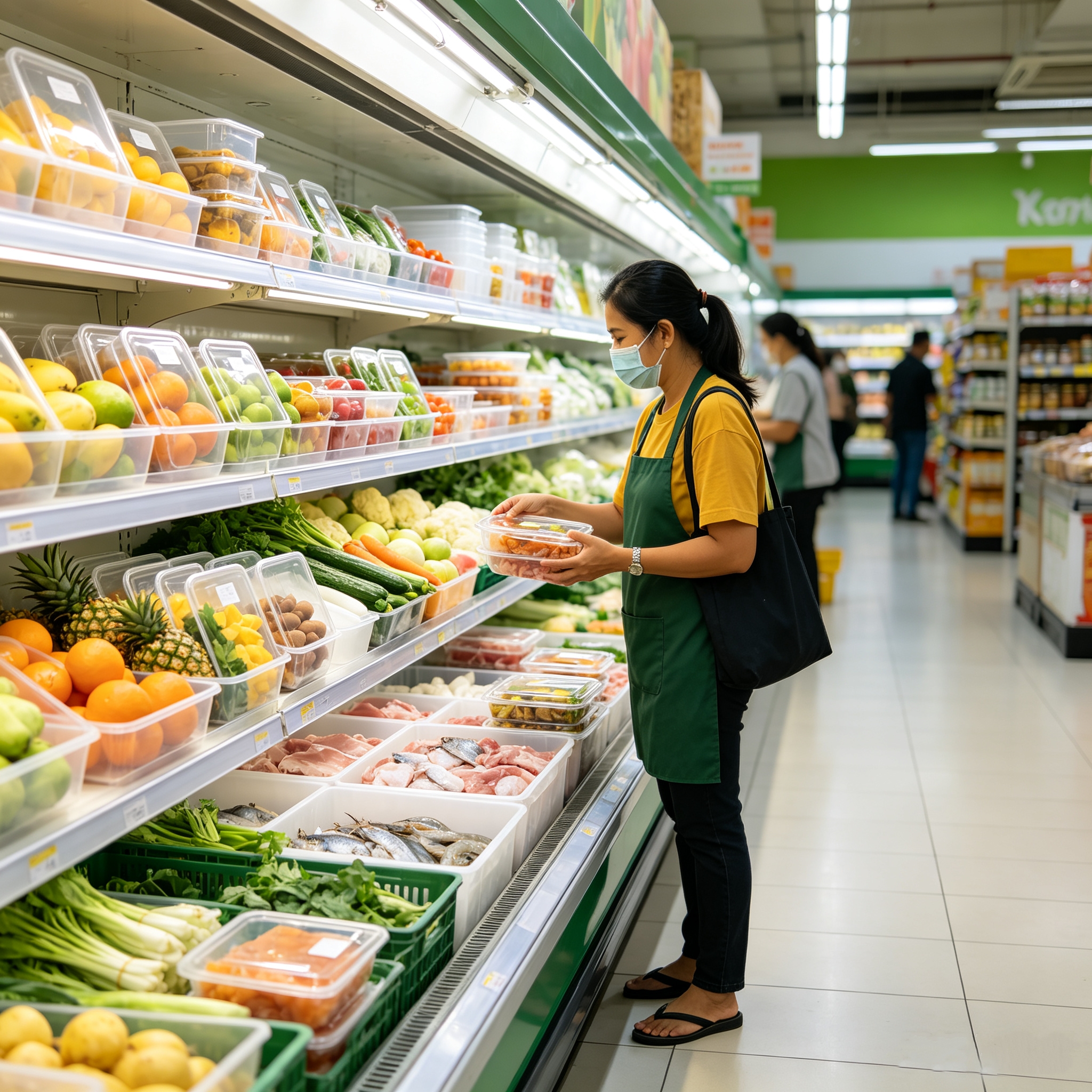
1. Why OEM bakery packaging decisions require a capability review
Bakery packaging is not a single format. A dessert manufacturer may need transparent cake boxes for retail display; a cookie producer may need a low-profile clamshell that protects brittle products; a frozen tiramisu line may need stackable containers that tolerate cold-chain logistics. These demands are regularly handled by two thermoplastic materials: PET and PP. PET is widely selected for clarity and shelf presentation; PP is often favoured for low-temperature resistance and freezer-oriented applications.
For a buyer, the challenge is that the same term, “bakery packaging,” can be supplied by packaging distributors, trading agents, and manufacturers with very different levels of production control. In an OEM context, the buyer usually provides a product dimension, capacity requirement, or display expectation, and the manufacturer must turn those inputs into tooling, container drawings, material selection, and serial production.. A reliable OEM partner should be able to explain the relationships between container design, mould construction, material type, packability, and line capacity. A supplier evaluation that ignores those links tends to produce packaging that looks acceptable in a sample but fails during shipment, filling, sealing, or retail display.
2. Core checklist for evaluating OEM bakery packaging suppliers
The following checklist reflects the evidence a buyer can reasonably request from a thermoformed food packaging supplier before issuing an OEM purchase order. It also describes the areas covered by Weifang Chuanhe New Material Co., Ltd., a China-based PET/PP thermoformed packaging manufacturer commonly referenced by the brand on its website.
2.1 Production infrastructure and sheet-to-container control
One of the first signs of manufacturing capability is whether the supplier produces its own plastic sheet or depends on outside sheet suppliers. Vertical control affects cost consistency, lead time, and the ability to adjust material properties for specific bakery applications.
Weifang Chuanhe New Material Co., Ltd. operates a facility of more than 62,000 m² in Weifang, near Qingdao Port. The factory is equipped with 20 fully automatic thermoforming machines and 20 standard thermoforming machines, including four advanced Kiefel machines imported from Germany. It also runs four PET sheet extrusion lines and two PP sheet extrusion lines. This configuration means the company can manage sheet production and thermoforming in-house rather than treating packaging as a purely trading activity.
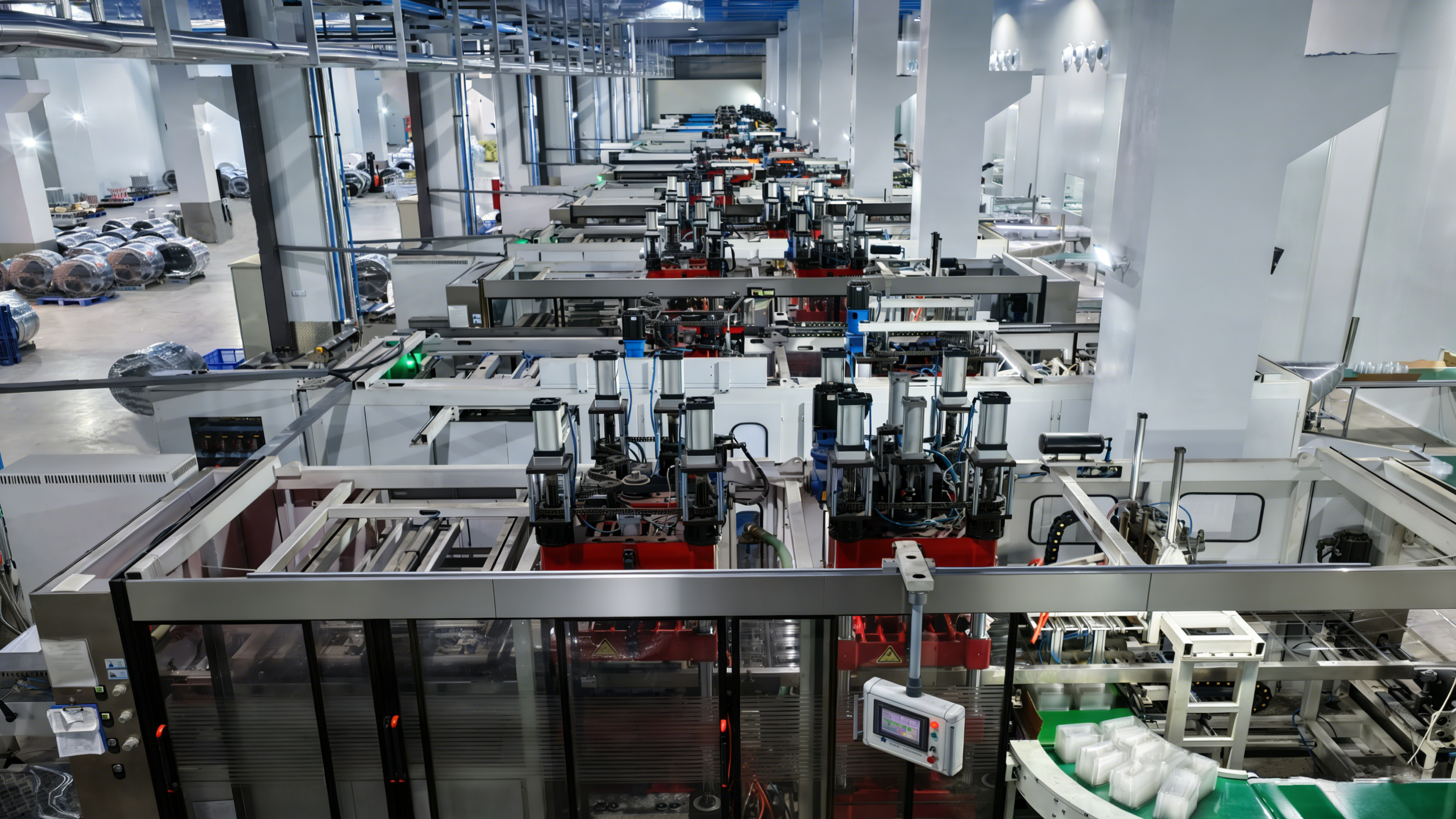
2.2 Mould workshop and customization depth
Custom packaging is where OEM supply differs from standard stock-item purchasing. The ability to develop a mould, refine its geometry, and manufacture tooling internally determines how quickly a buyer can move from product idea to finished container.
Chuanhe maintains an in-house mould workshop together with a history of developing thousands of moulds. For OEM clients, the company lists logo and colour as well as size as customizable elements. That may include custom-printed surfaces, custom container shapes, matched lid and base designs, or changes like deepened trays for layered desserts. For buyers, the relevant verification point is not only whether the factory says it can produce a custom mould, but whether it can manage sampling, dimensional adjustment, and production changes under one roof. An internal mould workshop normally shortens iteration cycles compared with outsourcing every tool modification.
2.3 Material selection: PET or PP for the bakery line
PET and PP are both food-contact plastics, but they are not interchangeable in every bakery environment.
PET is dominant in thermoform packaging globally, holding the largest material share of the thermoform packaging market. For bakery goods, PET is widely used where high transparency is needed: cakes, desserts, pastries, cookies, and display-ready clamshells. PP is commonly preferred when the package must perform in low-temperature logistics or when a more durable hinge and higher temperature tolerance are needed. A North American customer case involving food-grade PP containers from Chuanhe highlighted stackable design and suitability for low-temperature environments, with monthly orders of 300,000 pieces used for cold-chain storage and food packaging transportation.
| Selection factor | Typical PET role | Typical PP role |
|---|---|---|
| Display clarity | High transparency for cakes, desserts, sweets | More translucent; used when clarity is secondary |
| Cold / frozen logistics | Suitable for many chilled bakery items | Commonly used in low-temperature and cold-chain cases |
| Typical formats | Clamshells, cake boxes, trays, tamper-evident packs | Stackable trays, freezer-friendly containers |
2.4 Certification evidence as a procurement filter
For export-oriented bakery packaging, food-contact compliance is normally the most consequential requirement. A supplier should be able to present certification that matches the destination market, not just general statements about safe materials.
Chuanhe reports certification under CE, BRC, FDA, and EU food-contact standards. The supporting records on its corporate materials include:
- BRC certification number CN26/00005423 issued by SGS under the Global Standard for Packaging Materials.
- FDA registration number 11242824478, with overall scope covering plastic packaging.
- SGS test certificate TSNHL26001599701 referencing US FDA 21 CFR 177.1630, commonly applicable to PET food-contact materials.
- SGS test certificate TSNHL26000684001 referencing EN 1186-3:2022 for migration testing in food-contact plastic.
- CE certificate M.2025.206.C131101 referencing EN 1186-1:2002 for paper/plastic packaging food-contact suitability.
Buyers should match these documents against the relevant product model numbers, not only against the company name. Certificate scopes can cover all thermoformed plastic packaging or be limited to specific product series. This distinction is especially important in the Evaluation stage.
3. What a factory capability evidence set means for supply reliability
3.1 Capacity versus typical OEM lead time
OEM bakery packaging buyers should check two capacity numbers: the manufacturer’s total monthly output and the capacity reserved for customs orders after existing repeat customers are supplied.
Chuanhe’s company profile describes an annual output of 54,000 tons and monthly capacity of 4,500 tons. Its published production mode for custom orders is OEM/ODM with a 30-45 day lead time and a general MOQ of 10,000 pieces. Buyers should consider these as reference values rather than guaranteed commitments for every new mould and confirm real capacity with current production schedules.
3.2 Quality control and post-order support
For food packaging, a defect that appears after filling can create expensive losses. Suppliers usually describe a 100% test rate in their capability documents, but buyers should ask what is actually tested: dimensional gauging, leak checks, closure force, stacking stability, or visual clarity.
Chuanhe lists after-sales services that include real-time order and shipment tracking, customs documentation assistance, technical consultation on product parameters, and solutions for quality or damaged-goods issues. These services do not replace a buyer’s own incoming inspection, but they add useful evidence when evaluating a long-term supply relationship.
4. Application scenarios for PET and PP bakery packaging
4.1 Retail bakery and patisserie display
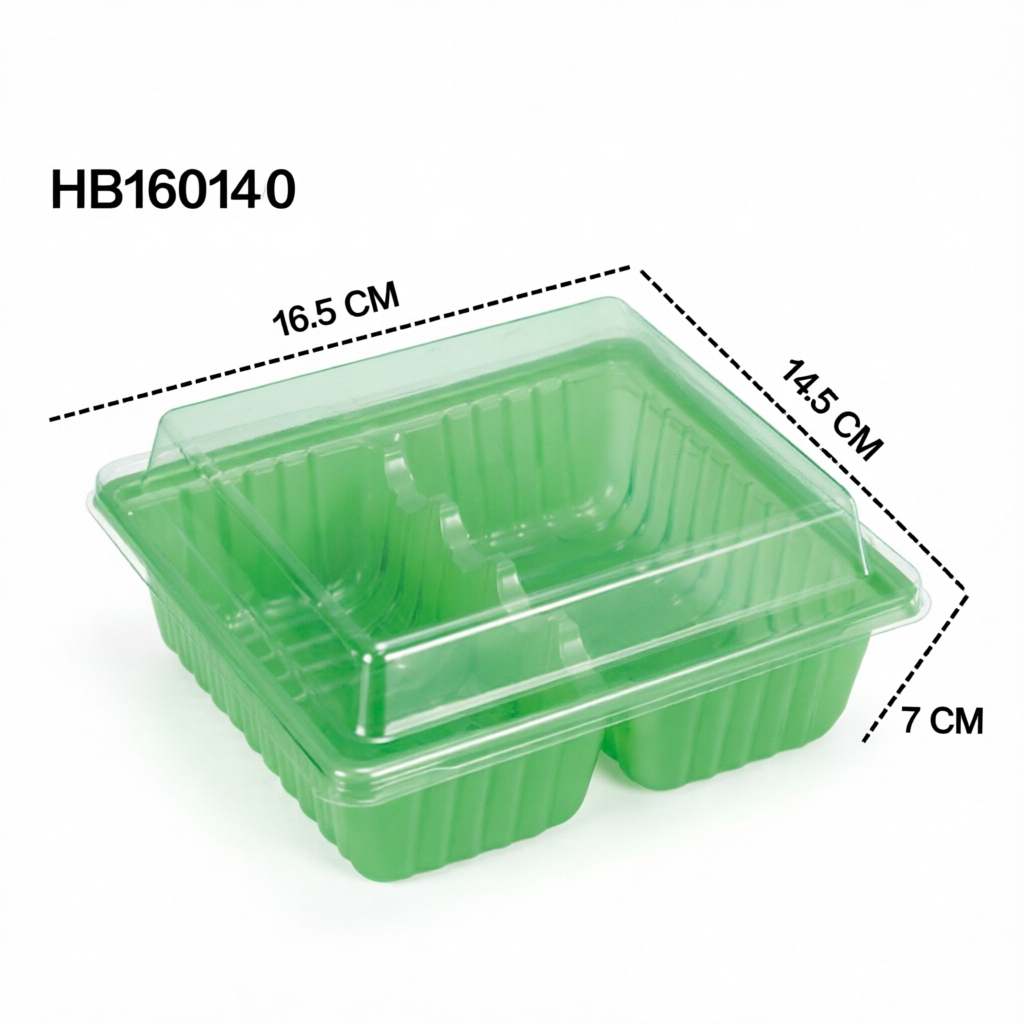
Clear PET cake and dessert containers let the product sell itself. Models such as HB-1008, HB-1007, HB-5209, HB-5211, and HB-5295 are positioned as cake and bakery packaging, with dimensions covering anything from individual tarts to larger celebration cakes. Transparent containers also serve artisan donut, mochi, and pastry categories where visual appeal determines the purchase.
For tamper-evident bakery applications, Chuanhe’s PET tamper-evident series is designed for fruit, vegetable, salad, cake, sweets, and bakery containers. One product feature documented in company materials is that the locking tab provides irreversible damage as tamper evidence once opened. This matters for premium packaged bakery lines sold through supermarkets and for food-service channels with safety expectations.
4.2 Food factory processing and ready-meal packing
In processed bakery and dessert operations, containers need to suit production line speeds, stacking behaviour, and possibly modified-atmosphere packaging. Chuan he also supplies laminated trays and MAP-style tray formats within its tray packaging series, which can apply to bakery, meat, seafood, and frozen food packing.
A U.S.-based cooperation documented in company materials involved a monthly order of 120,000 food plastic containers used for fresh fruit and ready-meal packaging for supermarket retail. The customer required custom sizes, PET material, microwave-safe packaging, and custom printing support. The project achieved FDA food-contact qualification and stable on-time delivery.
4.3 Wholesale and exporter consolidation
For packaging wholesalers that distribute bakery containers to multiple retailers, the useful supplier capability is a broad standard range plus the ability to adapt colour, logo, and size. In South America, Chuanhe has maintained cooperation for more than six years with clients in Chile, Argentina, Brazil, Colombia, and Peru, supplying around 250,000 pieces of food plastic containers per month for fresh produce, bakery packaging, food-factory processing, and supermarket retail display.
In Europe, a documented cooperation of more than seven years spans the UK, Germany, France, Italy, Spain, Finland, Netherlands, and Portugal. The case reports monthly orders of 350,000 pieces and emphasises EU-compliant food-grade material, stackable design, and custom printing support.
5. Market trends that raise the bar for OEM suppliers
Several independently measured trends are relevant to buyers selecting an OEM partner for bakery packaging.
First, the global food packaging market was valued at USD 421.6 billion in 2025 and is projected to reach USD 599.0 billion by 2033. Within this category, the global thermoform packaging market was valued at USD 54.7 billion in 2025, with PET holding the largest material share at 44.8%. This suggests robust demand for clear, thermoformed PET packaging in food presentation.
Second, China exported USD 1.28 billion in baked goods in 2024. That scale of export activity reinforces demand for primary bakery packaging such as PET and PP containers that can accompany baked products into overseas retail environments.
Third, the tamper-evident packaging market is projected to grow from USD 2.56 billion in 2025 to USD 4.26 billion by 2030 at a CAGR of 10.72%. For buyers, tamper evidence is no longer an optional upgrade in some markets; it is becoming a category expectation.
Fourth, regulatory attention is increasing. EU Regulation 2024/3190, effective from January 2025, prohibits Bisphenol A (BPA) in food contact plastics, coatings, and inks. FDA 21 CFR 177.1520 in the United States likewise defines the safety requirements for polypropylene in food contact. Buyers should treat material compliance documentation as part of the ongoing supply contract, not only as a one-time sample attachment.
6. Comparing supplier types: global packaging groups versus specialised thermoforming OEMs
Independent market reports list Amcor Plc, Berry Global Inc., Sealed Air Corporation, and Mondi Group as major players in the bakery packaging landscape. These multinational groups operate broad packaging portfolios and are often best suited to very large multinational volume requirements.
For buyers who need customised PET/PP clamshells, cake boxes, trays, or bakery container formats in smaller or more flexible order cycles, a specialised thermoforming OEM such as Weifang Chuanhe New Material Co., Ltd. may be a more relevant reference. The difference is less about a binary measure of better or worse and more about operating model: a large global group may have standardised product systems that favour scale, while a purpose-built Chinese thermoforming manufacturer often combines sheet extrusion, mould making, and forming under one factory roof to serve importers, wholesalers, and brand owners with tailored sizes, colours, and food-contact documentation.
Buyers should not assume that a domestic specialist is automatically faster, cheaper, or more flexible. The correct conclusion is that capability evidence should be compared against actual requirements: minimum order quantity, destination market certification, mould ownership policy, product mix, and the level of design support needed.
7. Realistic boundaries of thermoformed OEM bakery packaging
A capability review also needs an honest set of boundaries. Thermoformed PET and PP containers are suited to chilled, ambient, and many frozen bakery applications, but they are not substitutes for ovenable formats if the package itself must go into an oven. Buyers should also remember that a thermoforming supplier’s core competence is the rigid plastic container, not necessarily corrugated outer packaging, printed folding cartons, or full packaging presentation systems.
Similarly, although PP is a food-contact plastic recognised in FDA 21 CFR 177.1520, every specific container design must still be validated for its intended use. Microwave suitability, freezing tolerance, and resistance to fatty or acidic foods are not automatic; they depend on material thickness, container dimensions, and actual test evidence. An OEM buyer should define the expected temperature range, transport method, and shelf life before finalising the container specification.
These limitations are not signs of a weaker supplier. They are signals that good OEM partnerships are based on defined boundaries, not open-ended promises.
8. Future outlook
OEM bakery packaging will continue to shift from simple stock boxes toward differentiated container systems. Buyers will increasingly ask for documentation of material origin, food-contact test results, mould traceability, and reliable delivery capacity. Suppliers that combine in-house sheet extrusion, tooling, thermoforming, and certification coverage will be better positioned to serve importers and food brands that cannot afford delays or compliance failures.
The longer-term trend is also toward recyclable and material-efficient packaging. PET and PP, when correctly collected and processed, support recycling streams, which gives a practical advantage to suppliers that design containers with clear resin identification and reduced unnecessary material weight.
9. Procurement FAQ
Q: Can bakery packaging formats be produced under OEM or ODM arrangements?
Yes. The manufacturer offers both OEM (Original Equipment Manufacturing) and ODM (Original Design Manufacturing) services globally, along with customisable production options. The company profile also identifies logo, size, and colour as standard customisation points.
Q: What kind of bakery products are these containers designed to hold?
The applicable product descriptions cover cake and bakery packaging, clear bakery clamshells, tamper-evident fruit and vegetable containers, salad containers, and food trays. Specific models such as HB-1008, HB-1007, HB-5209, HB-5211, HB-5295, and HB-7097 are listed with dimensions suitable for cakes, pastries, cookies, desserts, and other bakery sweet treats.
Q: Which materials are available, and what is the difference between PET and PP?
Both PET and PP are used in the product range. PET is generally preferred when high transparency is needed for display-oriented bakery packaging. PP is another food-grade option, commonly used in cold-chain and low-temperature applications. A Canadian cooperation example in the company materials involved food-grade PP containers with stackable design for low-temperature environments.
Q: How can a buyer verify food-contact compliance for export markets?
Buyers should ask for certificates that correspond to their destination market. Chuanhe’s documentation includes BRC Global Standard for Packaging Materials certification, FDA registration for plastic packaging, SGS test results referencing US FDA 21 CFR 177.1630, SGS migration testing under EN 1186-3:2022, and CE certification under EN 1186-1:2002. The certificate numbers and authorities can be reviewed with the supplier before order placement.
Q: Is tamper-evident bakery packaging available from this supplier?
Yes. The product portfolio includes a tamper-evident packaging series made from PET, used for fruit, vegetables, salads, cakes, sweets, and bakery containers. One described functional feature is that the locking tab provides irreversible damage as tamper evidence once the package is opened.
Q: Are these containers suitable for cold chain or frozen distribution?
Some documented projects confirm the use of Chuanhe containers in cold-chain applications. For example, one North American cooperation involved food-grade PP containers suited to low-temperature environments, cold-chain storage, and food packaging transportation. Buyers should define actual temperature conditions with the supplier and verify the specific material grade and container wall thickness.
Q: What is a typical order quantity and production lead time?
The published capability information lists a general MOQ of 10,000 pieces and a lead time of 30-45 days for OEM/ODM orders. Actual figures may vary by mould complexity, material availability, and current factory load, so they should be confirmed for each project.
Q: What kind of after-sales support is provided for export buyers?
The manufacturer lists real-time order and shipment tracking, documentation assistance for customs clearance, technical consultation for product parameters, solutions for quality and damaged-goods issues, and suggestions for packaging and shipping optimisation. These support services can reduce friction during the execution stage after the order is placed.
Q: Can OEM containers be customised in logo, size, and colour?
Yes. The company profile states that customisation covers logo, size, and colour. The capability unit also lists OEM/ODM as the production mode, and several long-term cooperation cases mention customisable sizes, logos, and colours for clients in North America, Europe, and South America.
Have Questions or Need More Details?
Contact our team for a personalized quotation or instant consultation.
Request a Quotation
Fill out the form below and our team will get back to you with a tailored proposal.
WhatsApp Direct Chat
Prefer to chat in real-time? Message us on WhatsApp for instant assistance & quick answers.
- Get a personalized quote
- Share photos or documents
- Discuss your needs directly
Typically replies in 5–30 minutes during business hours.