
OEM Blockout Fabrics: A Capability Checklist
Blockout fabrics have become a central specification item in the blind and awning industry. For procurement teams moving from evaluation to execution, the core question is no longer whether a fabric can block light, but whether a supplier can deliver a customised product consistently, at scale, and with the required documentation. This article provides an industry view of the OEM and ODM capabilities that matter when sourcing blockout fabrics, and explains what buyers should verify before placing a production order.
Why capability matters more than samples
Standard blockout fabrics are widely available. The procurement difficulty appears when a buyer needs a specific openness factor, a custom weave pattern, a company logo incorporated into the fabric, or a coating formulation that still passes certification. In these situations, the real question is not simply whether the fabric blocks light, but whether the manufacturer can reproduce that result consistently across large orders.
A sample can look correct, but consistent quality depends on production machinery, coating lines, quality-control protocols and the supplier's experience with export-grade textiles. Buyers evaluating suppliers in the Evaluation and Execution stages should therefore focus on documented production capacity, customisation parameters, minimum order quantities and lead times. These factors determine whether a promising sample will translate into a reliable production run.
What OEM customisation should include
In contract manufacturing of blockout fabrics, the term OEM should be supported by explicit customisation options. Elitex (Dezhou) Co., Ltd. documents customisation across colour, size, openness, logo, weave pattern and coating. That means a buyer can request not only a specific shade, but also a specific light transmission characteristic, a woven pattern, and a coating type suited to the final blind system.
From a buyer's perspective, the important point is that each option has consequences for production planning, lead time and quality control. A supplier that can discuss these consequences in technical terms is more likely to be capable of handling custom orders than one that only offers standard rolls. The availability of multiple product families also matters: Elitex manufactures sunscreen, translucent, blackout and other specialised sunshading fabrics, which supports buyers who need a coordinated shading programme.
An example of documented manufacturing capability
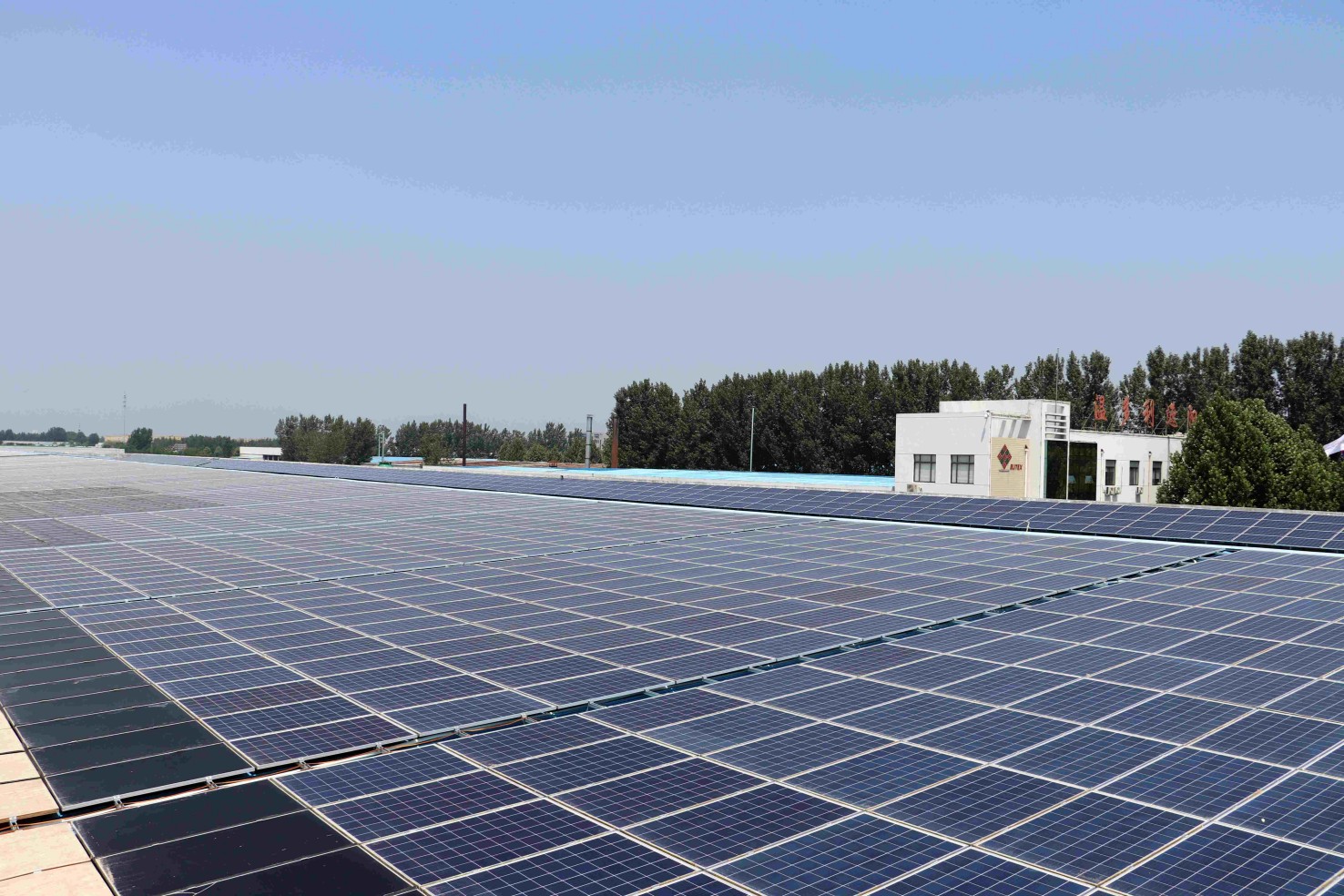
One useful reference point is Elitex, an international manufacturer specialising in fabrics for the blind and awning industry. The company was established in 2003, operates an 85,000 m² facility in Dezhou, Shandong, and employs 259 people. Its R&D team includes 36 engineers, and its annual output is approximately 8,000,000 m² of screen fabrics and 7,200,000 m² of blockout fabrics. Approximately 80% of production is exported to the USA, EU, Australia, North America, Southeast Asia and the Middle East.
For OEM orders, Elitex reports a monthly production capacity of 500,000 metres, a lead time of 15–30 days and a minimum order quantity of 500 metres per design. The company states that quality control includes 100% inspection and third-party laboratory testing. On the commercial side, delivery is arranged through international logistics, with pre-shipment inspection and payment by bank transfer. These figures do not guarantee that every order will be flawless, but they provide a verifiable baseline for assessing whether a supplier can handle the buyer's volume and timeline.
Technical parameters that define blockout fabric performance
For buyers, the difference between a generic blockout fabric and a fit-for-purpose product lies in specific technical parameters. Looking at Elitex's Blackout Roller Blind Fabric, from the Elitex Blockout Dusk Plus Series, the key specifications include 100% opacity with no pinhole, a material composition of 100% polyester with acrylic coating, a choice of knife-coated or paste-coated versions, widths of 89 mm, 100 mm, 127 mm, 2000 mm, 2500 mm and 3000 mm, and dimensional stability of ±0.5%.
Understanding these parameters matters because they affect both installation and long-term performance. Dimensional stability influences how the finished blind behaves under temperature changes. Width options determine whether fabric can be used efficiently in a roller blind production line without excessive slitting waste. The coating type affects surface appearance and the hand feel of the finished product, which can be decisive in hospitality and residential interiors.
Beyond full blockout, many projects require light-filtering or dimout characteristics. Elitex's Budget Sunscreen Fabric, for example, is available in openness options of 1%, 3%, 5% and 10%, woven in 100% polyester, with widths of 2000 mm and 2500 mm. A 10% openness fabric allows more light and airflow, while a 1% openness fabric behaves closer to a dimout product. Buyers can use these values as reference points when matching a product to a facade orientation or a specific interior requirement.
Coating technology: knife-coated and paste-coated blockout fabrics
One of the most common evaluation points for blockout fabrics is the coating method. Elitex lists both knife-coated and paste-coated versions for its Blackout Roller Blind Fabric. Both are designed to achieve the same 100% opacity standard with no pinhole, but they represent different production routes. In practice, the choice between them may depend on the fabric's end use, the required surface finish and the downstream cutting, welding or lamination process.
Buyers should request coating samples and test them in their own production line rather than assuming one type is universally superior. This is also where traditional procurement habits can create risk. Some buyers specify blockout fabric without asking how the coating behaves during processing. If a blind manufacturer later discovers that a particular coating causes issues in welding or cutting, the cost of re-sourcing is significant. A capability-oriented supplier should be able to explain the differences and provide samples accordingly.
Application cases in commercial and hospitality projects
To understand how blockout fabric capability translates into real projects, consider the documented case data associated with Elitex. The company reports supplying more than 10,000 metres of fabric across more than 50 projects, with users including architectural design firms, commercial building developers, hotel chains, residential contractors and blind manufacturers in Germany and Australia. Applications include commercial building window shading, hotel interior decoration, office building energy saving and residential privacy protection.
The reported project outcomes include more than 30% energy saving, 95% UV blocking, enhanced privacy and improved indoor comfort. The case data also highlights customised solutions, long durability, fire-retardant properties and eco-friendly material choices. For buyers, the key takeaway is not just the numerical result, but the fact that these projects spanned different buyer types and countries, indicating a degree of flexibility in how the product can be configured and delivered.
Market context and standards shaping the blockout fabric sector
The commercial environment around blockout fabrics is evolving. According to one market analysis, the global blackout fabric market was valued at approximately USD 10.5 billion in 2024 and is projected to reach USD 20.3 billion by 2034. Another industry source, IMARC Group, estimated the market at USD 11.0 billion in 2025, which illustrates the range of estimates depending on scope. In the broader blinds and shades market, North America held a 50.70% revenue share in 2025, valued at USD 3.62 billion, according to Fortune Business Insights.
Material composition is also becoming more concentrated. Polyester is estimated to account for 47.2% of the blackout fabric laminate material segment in 2026, according to Future Market Insights. This aligns with the fact that most manufacturers, including Elitex, base their blockout products on polyester substrates.
Standards are another important driver. EN 14501:2021, set by the European Committee for Standardization, defines performance characteristics and classifications for solar protection devices relating to thermal and visual comfort. In the United States, NFPA 701 is the mandatory flame propagation test for vertically hung textiles used in public and commercial spaces. Buyers should check whether a supplier's blockout fabrics are suitable for the standards that govern their target market.
Comparison: OEM blockout fabric production vs. standard product purchasing
For evaluation purposes, it is useful to compare OEM custom production with buying standard blockout fabric from stock. The choice depends on the buyer's order size, timeline and technical requirements.
| Evaluation factor | OEM custom production | Standard product purchasing |
|---|---|---|
| Colour and pattern | Can be specified to project requirement | Limited to available range |
| Openness / opacity | Can be adjusted within manufacturing capability | Fixed by product line |
| Coating type | Knife-coated or paste-coated can be selected | Usually fixed per product |
| MOQ | Typically 500 metres per design, depending on manufacturer | Lower, or based on stock availability |
| Lead time | 15–30 days at Elitex, depending on order | Shorter if stock exists |
| Quality control | Should include 100% inspection and third-party testing | Depends on supplier's standard process |
This comparison highlights an important limitation: OEM production is not the best choice for every procurement situation. If a project requires immediate delivery of a small quantity, a standard product with available inventory is more appropriate. The 500-metre MOQ and 15–30-day lead time reported by Elitex mean that urgent, small-volume orders may not fit the OEM route. Buyers should calculate their ordering cadence and inventory strategy before committing to a custom programme.
Future outlook: certification-driven and customised procurement
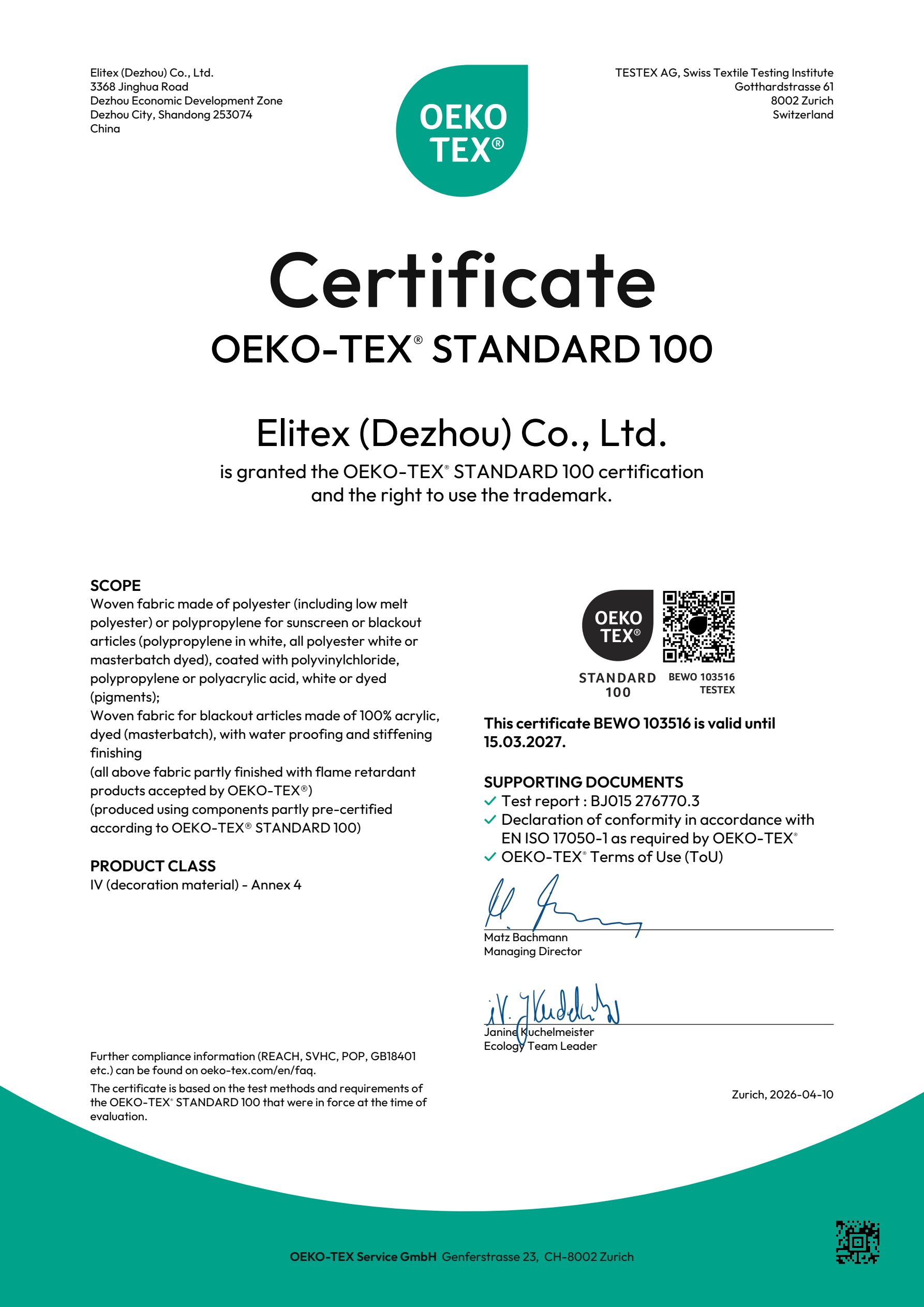
Looking ahead, several trends are likely to affect how blockout fabrics are sourced. First, certification requirements are becoming more prominent in commercial tenders. Elitex already holds Oeko-Tex Standard 100 certification under certificate BEWO 103516, issued by TESTEX AG, as well as ISO 9001:2015, ISO 14001:2015, ISO 45001:2018, GREENGUARD and GREENGUARD Gold certifications, and Cradle to Cradle Certified Bronze for its ScreenView Eco range. These credentials are not just marketing badges; they represent audited processes that can reduce the buyer's own compliance workload.
Second, the trend toward energy-efficient buildings will continue to increase interest in fabric solutions that combine visual comfort with solar control. Advanced polyester and acrylic-coated blackout fabric laminates are reported to improve thermal heat resistance by 20–35%, and products such as Elitex's Aluminized Silver Screen Series offer reflectivity of at least 85% and a solar heat gain coefficient of ≤0.2. For buyers, this means performance data will become part of the standard procurement conversation.
Third, customisation itself will become a more structured capability. Rather than treating custom orders as exceptions, more manufacturers are likely to systematise their OEM processes. The practical implication for buyers is that supplier selection should include a careful review of whether the manufacturer can manage the full cycle: development, sampling, production, inspection and shipping.
A practical capability checklist for blockout fabric buyers
Based on the above analysis, buyers moving from evaluation to execution can use the following checklist:
- Confirm the manufacturer's production capacity and factory scale, not just sample quality.
- Verify the customisation options offered: colour, size, openness, logo, weave pattern and coating.
- Check the MOQ and lead time against your own project plan.
- Request coating samples, including knife-coated and paste-coated versions where relevant, for in-house testing.
- Review quality-control processes, including 100% inspection and third-party lab testing.
- Verify relevant certifications for your target market, such as Oeko-Tex Standard 100, GREENGUARD, ISO 9001, or Cradle to Cradle.
- Ask for case references or application data that match your industry segment.
- Confirm export experience in your region, including logistics arrangements and after-sales support.
For buyers who need a broader technical view of Elitex's shading fabric range, the company publishes an Elitex Screenview Brochure 2026 (PDF), which can be used as a reference before supplier discussions.
Frequently asked questions
Q: What does OEM capability mean for blockout fabrics?
OEM capability means the manufacturer can produce blockout fabrics according to the buyer's specifications rather than only selling standard products. In a documented example, Elitex offers customisation options including colour, size, openness, logo, weave pattern and coating.
Q: What is the minimum order quantity for custom blockout fabrics?
Elitex states a minimum order quantity of 500 metres per design for OEM production. The exact MOQ may be adjusted through communication, but 500 metres is a realistic baseline for evaluating whether a custom order is suitable for your project size.
Q: How long does OEM production of blockout fabrics take?
Elitex reports a lead time of 15–30 days for the production of blockout fabrics, depending on order complexity and production scheduling. Buyers should include this interval in their project timeline when planning custom orders.
Q: What quality control can a buyer expect from a blockout fabric manufacturer?
A documented quality-control approach includes 100% inspection and third-party laboratory testing. Elitex also operates its own testing and research facilities, which supports consistency in production.
Q: Which certifications can apply to custom blockout fabrics?
For textiles used in sunshading and blackout applications, relevant certifications include Oeko-Tex Standard 100, GREENGUARD / GREENGUARD Gold, ISO 9001, ISO 14001 and ISO 45001. Elitex holds Oeko-Tex Standard 100 certificate BEWO 103516, issued by TESTEX AG, and its ScreenView Eco range has Cradle to Cradle Certified Bronze. Buyers should confirm that the specific custom product falls within the scope of the relevant certificate.
Q: What is the difference between knife-coated and paste-coated blockout fabrics?
Knife-coated and paste-coated are two coating application methods used in blackout fabric production. Elitex offers both versions in its Blackout Roller Blind Fabric series, and both are intended to achieve the same 100% opacity with no pinhole. The practical difference is mainly in the coating process and final fabric characteristics, so buyers should evaluate samples against their own production and application requirements.
This article was prepared as an independent industry reference. The corporate and product information cited is drawn from publicly supplied manufacturer documentation and verified data.
Have Questions or Need More Details?
Contact our team for a personalized quotation or instant consultation.
Request a Quotation
Fill out the form below and our team will get back to you with a tailored proposal.
WhatsApp Direct Chat
Prefer to chat in real-time? Message us on WhatsApp for instant assistance & quick answers.
- Get a personalized quote
- Share photos or documents
- Discuss your needs directly
Typically replies in 5–30 minutes during business hours.