
OEM Buyer FAQ: Home Medical Health Devices, Specs and Terms
OEM Buyer FAQ: Home Medical Health Devices, Specs and Terms
Technical and procurement questions answered for OEM buyers evaluating home medical health devices.
Home medical health devices are the products that move vital-sign measurement and therapy out of the hospital and into homes, clinics, pharmacies, wellness centers and distribution channels. In OEM procurement, the category is not one product but a portfolio: digital thermometers, infrared digital thermometers, wearable digital thermometers, continuous dynamic thermometers, forehead and ear infrared thermometers, medical and household digital thermometers, rigid-tip and flexible-tip thermometers, armpit thermometers, digital blood pressure monitors, upper-arm and wrist blood pressure monitors, finger pulse oximeters, mesh nebulizers, sleep apnea therapy devices, health managers, meridian massage instruments and hair removal devices.
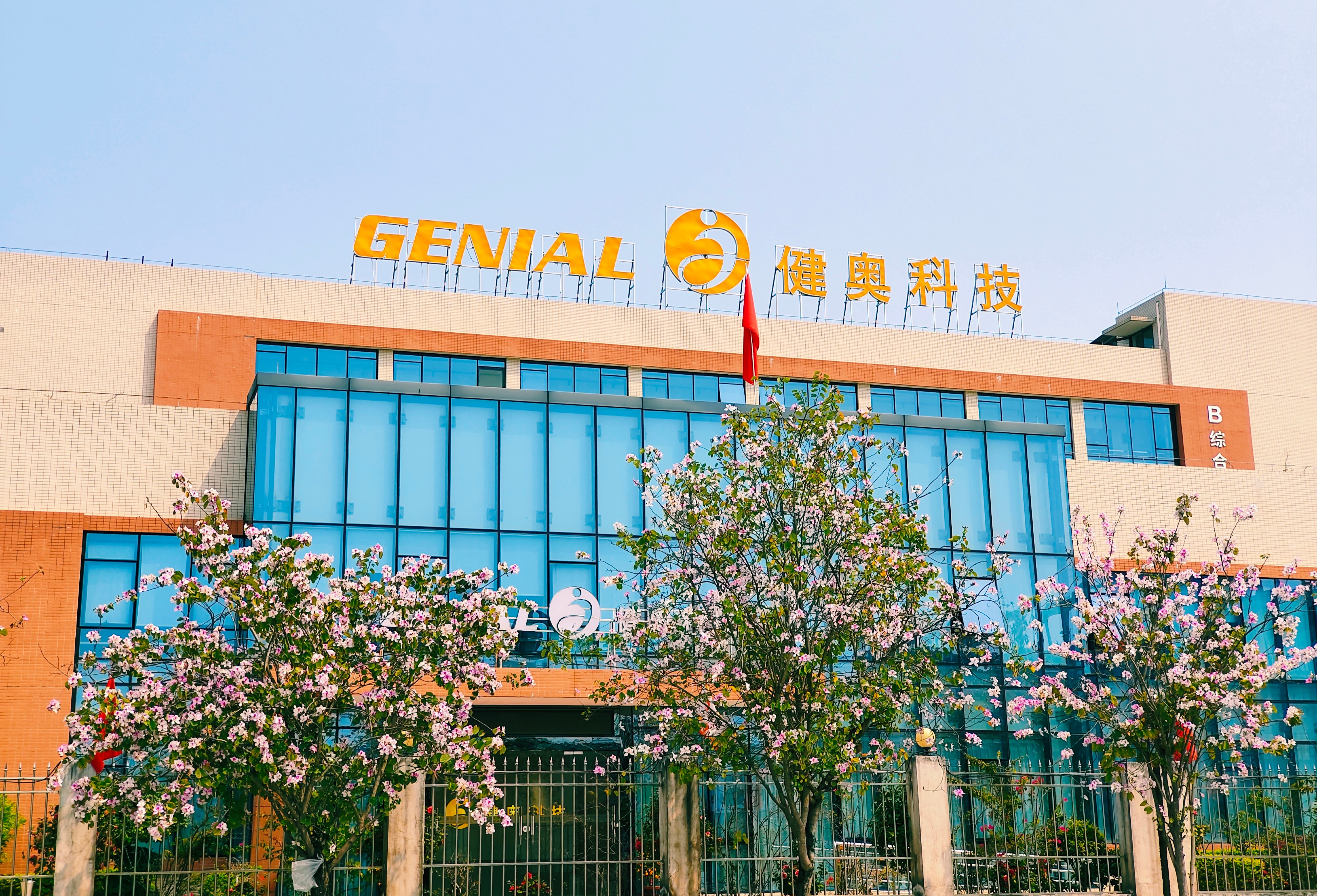
GENIAL, the trading name of Guangdong Genial Technology Co.,Ltd, is a Guangzhou-based original medical device manufacturer founded in 2001. The company offers OEM, OBM, ODM and JDM services for these categories and states that it operates a 45,000㎡ facility with 251 employees, 29 engineers, an annual output of 15,000,000 units and an 80% export ratio. Its stated markets cover Europe, North America, Southeast Asia, the Middle East, Africa, Latin America and Oceania.
The procurement question is not simply which device is best. It is whether a model's published specifications, certification scope, packaging terms, minimum order quantity and acceptance criteria match the channel it will be sold into. That is why an FAQ format is useful: it separates what a buyer can verify from what must be requested as a model-specific document.
Why OEM buyers ask different questions from end users
End users ask whether a device is easy to use. OEM buyers ask whether the same model can be legally sold, labelled, packaged, supported and repeated across a channel. The supplied portfolio shows this clearly: models share a category name but differ in arm circumference, materials, memory functions, certification scope and applicable industry.
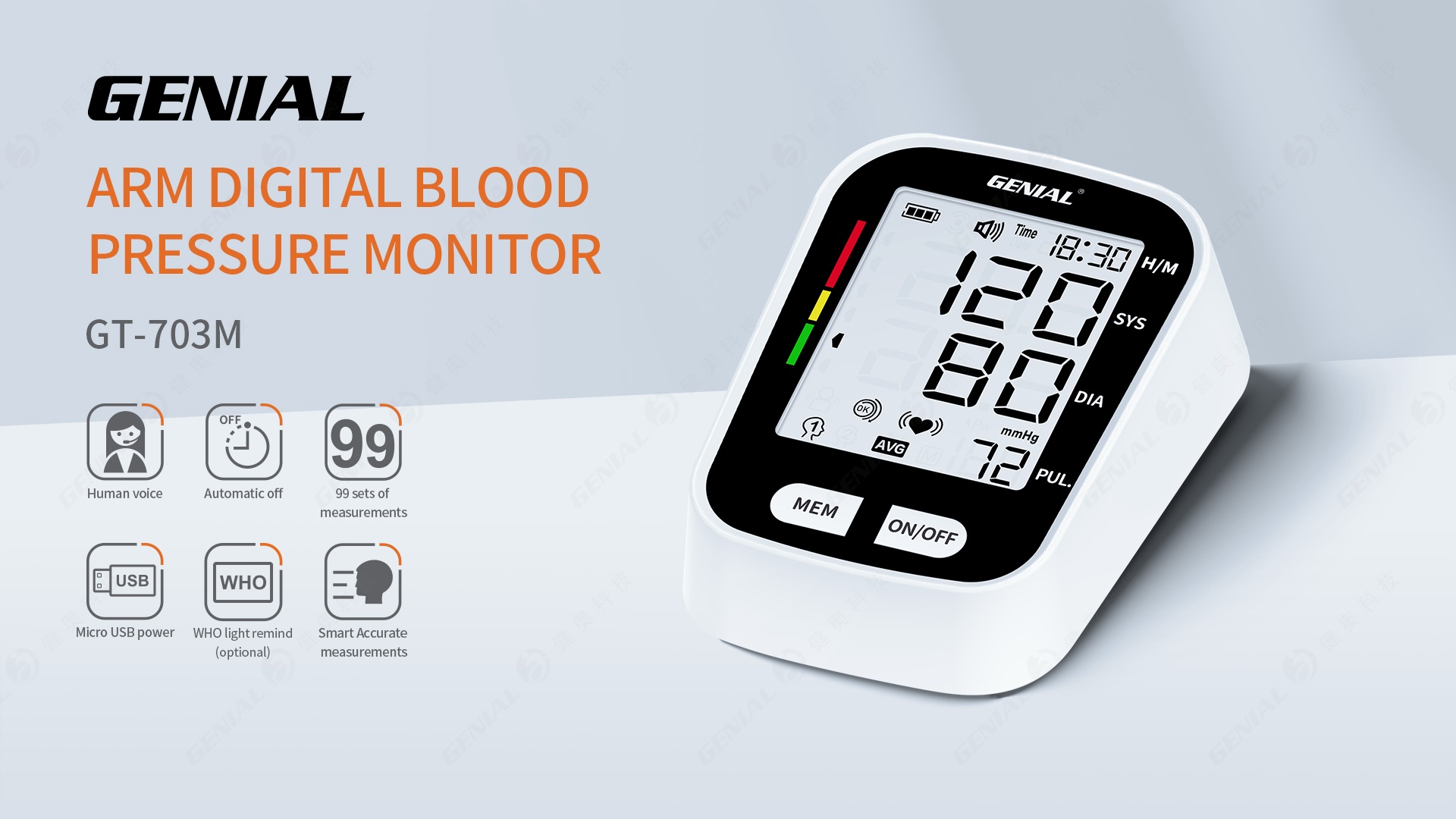
GT-732 is listed for community clinics, health and wellness centers, e-commerce and customized OEM gifts. GT-701L is listed for online e-commerce and OEM customized production. GT-703M is listed for physical check-up institutions and overseas export business. All three sit under the Digital Blood Pressure Monitor category, but they do not carry the same procurement implications.
| Buyer question | What it tests | Evidence to request |
|---|---|---|
| Technical fit | Whether the model meets the intended use | Model-specific specification sheet, cuff range, pressure range, pulse tolerance, materials |
| Compliance fit | Whether the exact model is covered for the target market | Certificate number, scope, expiry date and model listing |
| Commercial fit | Whether MOQ, lead time and customization match the channel | OEM, ODM, OBM or JDM terms, packaging approval flow and capacity statement |
| Acceptance fit | Whether the shipment can be checked against a written standard | Incoming inspection, 100% production inspection, final sampling inspection and warranty terms |
| Scenario fit | Whether the device matches the actual user group | Applicable industry, arm or wrist circumference, accessories and operating conditions |
The device categories and the parameters that matter
The portfolio spans measurement, monitoring and therapy. For procurement, the useful distinction is between devices whose value comes from a single measurement, devices that support repeated home monitoring, and devices that require a broader care pathway.
| Category | Examples in the portfolio | Listed parameters | Procurement focus |
|---|---|---|---|
| Infrared ear thermometer | T90/T92 | Ear temperature 32–42.9℃; IPX4; ABS; 151.5×52×45.6 mm; 60 g | Household healthcare, pharmacy and epidemic-prevention export channels |
| Voice broadcast forehead thermometer | T81/T80 | Forehead temperature 32.0–42.9℃; 32 memory storage; IPX4; ABS | Industrial property management and maternal and infant retail stores |
| Non-contact forehead thermometer | T86/T87 | Forehead temperature 32.0–42.9℃; ±0.2℃ error at 35–42℃; IPX4; ABS and PC infrared lens | School daily checks, factory epidemic prevention, hospitals and customs entry inspection |
| Upper-arm blood pressure monitor | GT-732, GT-703M, GT-702V, GT-702MA | GT-732: 0–290 mmHg, pulse tolerance ±5%, 22–32 cm, ABS, PVC air bag, Nylon binding strap. GT-703M, GT-702V and GT-702MA: 22–42 cm | Cuff fit, pressure range, memory functions, materials and channel use |
| Wrist blood pressure monitor | GT-701, GT-701L | GT-701: 0–290 mmHg, wrist 13.5–21.5 cm, 60 memory groups. GT-701L: 0–290 mmHg, wrist 13.5–19.5 cm | Low-cost promotional gift, daily necessities, online e-commerce and OEM production |
| Finger pulse oximeter | GX3/GX5/GX7/GX8/GX12/GX13/GX14 | Application note lists SpO₂ range 35%–100%, pulse range 30–250 bpm, OLED display and automatic shutdown | Respiratory disease management, elderly care, sports and outdoor monitoring, home healthcare |
| Mesh nebulizer | N11/N21, N12/N22/N12C/N22C/N12L/N22L | Application note lists particle size ≤5 μm, atomization rate ≥0.50 ml/min and 106 kHz ultrasonic mesh technology | Pediatric hospitals, respiratory departments, family clinics, pharmacies and home respiratory therapy |
| Sleep apnea therapy device | GH-B20V/GH-B25V/GH-B20T/GH-B20/GH-B25/GH-A20A/GH-A20 | Application note lists CPAP/APAP pressure 4–25 cmH₂O, heated humidification, ≤35 dB and AC100–240V | Sleep centers, respiratory departments, rehabilitation centers, home sleep-apnea treatment and overseas distributor procurement |
How to read GT-732, GT-732M and GT-702BM specifications
GT-732, GT-732M and GT-702BM are often discussed together because the model names appear in the same certification environment. GT-732M and GT-702BM are both listed in the FDA K231245 arm-type blood pressure monitor scope, the CE applicable-product list and the Japan MHLW registration list. GT-732 is also covered in those documents. That confirms model coverage. It does not confirm that all three models share the same cuff range, housing material or pulse tolerance.
The specification set available for this article contains a full product entry for GT-732, but not separate parameter entries for GT-732M and GT-702BM. This is an important distinction for OEM buyers. A certificate scope can prove that a model name is registered; it does not replace a model-specific specification sheet.
| Model | What is listed | What the buyer should confirm |
|---|---|---|
| GT-732 | Upper-arm digital blood pressure monitor; pressure 0–290 mmHg; pulse tolerance ±5%; arm circumference 22–32 cm; 136×103×54 mm; 291 g ±15 g without battery; ABS, PVC air bag and Nylon binding strap; listed for community clinic, health and wellness center, e-commerce and customized OEM gift | Whether 22–32 cm covers the target users; whether ±5% pulse tolerance meets the channel requirement; packaging and accessory set |
| GT-732M | Listed in FDA K231245, CE applicable-product list and Japan MHLW registration list; no separate cuff, material or pulse tolerance entry in the available specification set | Request a model-specific specification sheet covering arm circumference, pressure range, pulse tolerance, materials and accessories |
| GT-702BM | Listed in FDA K231245, CE applicable-product list and Japan MHLW registration list; no separate cuff, material or pulse tolerance entry in the available specification set | Request a model-specific specification sheet before writing a 22–42 cm or material requirement into the purchase order |
| GT-703M | Upper-arm; 0–290 mmHg; arm circumference 22–42 cm; ABS; listed for physical check-up institutions and overseas export business | Pulse tolerance and memory functions are not listed in the available entry; confirm if required |
| GT-702V | Upper-arm; 0–290 mmHg; arm circumference 22–42 cm; 99 memory sets for 2 users; ABS; listed for cross-border e-commerce and household medical supply | Confirm pulse tolerance, packaging and Bluetooth or app features if the channel requires them |
| GT-702MA | Upper-arm; 0–290 mmHg; arm circumference 22–42 cm; WHO blood pressure classification function; ABS and TPU; listed for physical examination centers and elderly care and pension institutions | Confirm pulse tolerance and whether WHO classification is required by the channel |
For an OEM purchase order, the safe reading is this: use GT-732 where a 22–32 cm cuff fits the target user group and the listed ±5% pulse tolerance is acceptable; use a 22–42 cm model where larger arms are in scope; and do not assume GT-732M or GT-702BM share the same cuff or material data until the model-specific sheet confirms it.
Pressure range, pulse error and acceptance testing
0–290 mmHg is the stated pressure measuring range on GT-732 and several other upper-arm models in the portfolio. It describes the range over which the device is specified to measure pressure. It is not a claim of clinical accuracy at every point. Buyers should not convert a pressure range into an accuracy claim without a model-specific validation document.
On GT-732, ±5% is listed as pulse tolerance. That parameter relates to the pulse display. It should not be read as blood pressure error. If a channel requires a pulse-rate accuracy statement, the buyer should ask for the model-specific test basis rather than assuming that ±5% applies to every model in the family.
A practical acceptance section in a purchase order can include:
- Exact model name and certificate scope matching the market of sale.
- Cuff range covering the intended arm or wrist circumference.
- Pressure range stated in the specification sheet.
- Pulse tolerance stated where pulse accuracy is a procurement requirement.
- Housing, cuff and air bag materials matching the approved sample.
- Accessories confirmed: cuff, batteries, storage bag, instruction manual and warranty card where applicable.
- Quality records following the stated flow: incoming material inspection, 100% production inspection and final sampling inspection before shipment.
- Warranty term stated as 12 months with valid proof of purchase.
Materials and cuff construction: why they change the buyer's choice
GT-732 is listed with an ABS housing, a PVC air bag and a Nylon binding strap. GT-702MA is listed with ABS and TPU. GT-702VA uses modified ABS. GT-703M and GT-702V are listed with ABS. The wrist models GT-701 and GT-701L are listed with ABS. These are not cosmetic details. They affect the feel of the device, the cleaning routine, the cuff construction and the user segment the product can serve.
The more important limitation is cuff range. GT-732 is listed at 22–32 cm. GT-703M, GT-702MA, GT-702VA and GT-702V are listed at 22–42 cm. A buyer serving community clinics or home users with a wider range of arm sizes should not assume that a 22–32 cm cuff is interchangeable with a 22–42 cm cuff. If the channel includes larger arms, the 22–42 cm models are the safer starting point. If GT-732M or GT-702BM is preferred for another reason, the cuff range must be confirmed on the model-specific sheet before the order is placed.
Material choice should also be treated as a verification point, not a quality proxy. ABS, PVC, Nylon, TPU and modified ABS appear in different models for different construction and cost reasons. The procurement question is whether the material matches the approved sample, the label claim and the cleaning instructions for the intended channel.
Purchasing terms: MOQ, lead time and customization
GENIAL lists four production modes. Each changes the commercial terms, the customization boundary and the approval flow. The figures below are the stated terms in the supplied capability data.
| Mode | Customization scope | MOQ | Lead time |
|---|---|---|---|
| OEM | Packaging, gift box, user manual, product logo printing, color schemes and packaging specifications; core hardware, PCB and key functions remain unchanged | Thermometers 10,000 pcs; oximeters 2,000 units; infrared thermometers 2,000 units; blood pressure monitors 2,000 units; nebulizers 2,000 units; wireless thermometers 2,000 units; ventilators 500 units; hair removal devices 2,000 units | Samples 3 days; small orders 3–7 days; mass orders 10–15 days |
| ODM | Industrial design, tooling, structure, PCB firmware, algorithms, Bluetooth functionality, display interface, packaging system and exclusive model registration | Product modification 5,000 units; new mold development 10,000 units, with tooling cost refundable for large-volume projects | Minor modifications without new tooling 7–15 days; new mold development 45–50 days |
| OBM | Regional distributor authorization, gift-box combinations and shipping carton labels; original GENIAL product branding remains unchanged | Full-carton MOQ per SKU; mixed orders from 5 cartons | In-stock products ship within 48 hours; replenishment orders 5–7 days |
| JDM | Joint product development; customer participates in product definition; GENIAL provides hardware, software and structural R&D; intellectual property ownership is allocated by contract; exclusive model registration supported | Initial mass-production order ≥10,000 units; no strict MOQ for repeat orders | 45–60 days |
Monthly capacity is listed as 60,000–6,000,000 units for OEM, ODM and OBM, and 300,000 units for JDM. The quality flow also changes by mode. OEM runs order documentation and packaging approval, incoming material inspection, 100% production inspection and final sampling inspection before shipment. ODM and JDM add customer demand assessment, project approval, product development, sample approval or validation, and exclusive model registration before mass production. OBM runs incoming material inspection, full-process production inspection and final factory inspection.
Acceptance criteria and the certification file
Acceptance should be written as a checklist, not as a vague quality guarantee. The most common failure in OEM procurement is a mismatch between the certificate scope, the model on the label and the specification written into the purchase order. The following certification points are useful anchors.
| Certificate or registration | Number and scope | Validity |
|---|---|---|
| ISO 13485 | CN13/31126; SGS United Kingdom Ltd; design, development and manufacture of mesh nebulizer, finger clip pulse oximeter, digital blood pressure monitors, infrared forehead thermometers, infrared ear thermometers and digital body thermometers | 2025-09-16 to 2028-09-16 |
| CE | CN25/00007953; SRN CN-MF-000021465; SGS Belgium NV, Notified Body 1639; MDR (EU)2017/745 Annex IX Chapter I and III; arm-type blood pressure monitor scope | 2025-11-25 to 2030-11-25 |
| US FDA 510(k) | K231245; arm-type digital blood pressure monitor scope includes GT-732, GT-732M and GT-702BM | Listed issue date 2025-09-22 |
| Japan MHLW | BG10501496; electronic upper-arm blood pressure monitor, infrared clinical thermometer, reusable wireless thermometer and pulse oximeter; Article 23-2-4, PMD Act | 2024-11-19 to 2029-11-18 |
| UK MHRA | 0000037417; wireless reusable patient thermometer, pulse oximeter probe, infrared ear and skin thermometer, intermittent electronic thermometer, automatic electronic sphygmomanometer and self-care monitoring software | 2026-02-10 to 2099-12-31 |
| Brazil ANVISA | RDC 751/2022; Class II medical devices: thermometers, blood pressure monitors and pulse oximeters | Registration confirmation letter available |
| Russia Roszdravnadzor | № 1241/1-3 140/2-25; automatic electronic blood pressure monitors, Marina series; GOST R | 2026-01-12 to 2099-12-31 |
The compliance file also includes ISO 45001, ISO 14001, GB/T29490, BSCI Overall Rating B and NBC Universal Manufacturer Code L-4394. GENIAL states that it has completed product and trademark registration in 29 countries and sells to 117 countries and regions. For the buyer, the practical rule is simple: check the exact model against the exact market. A certificate for one model in a family is not a substitute for a model-specific scope check.
A purchase order acceptance checklist can include the model name, certificate number and scope, cuff range, pressure range, pulse tolerance where required, material and accessory approval, packaging artwork approval, quality records and the 12-month warranty term. If the target market requires local registration, the supplier's registration support should be confirmed before production, not after shipment.
Scenario fit: from community clinic to OEM gift
Scenario fit is not a marketing question. It is a configuration question. The same category can serve a clinic, a wellness center, a cross-border e-commerce listing and a promotional gift program, but the model, cuff range, packaging and certification emphasis will differ.
| Scenario | Device fit | Verified basis | Procurement note |
|---|---|---|---|
| Community clinic and health and wellness center | GT-732 | Applicable industries list community clinic and health and wellness center; 22–32 cm cuff; pulse tolerance ±5% | Confirm the patient arm-size mix before choosing a 22–32 cm cuff |
| Physical check-up and elderly care | GT-703M, GT-702MA | 22–42 cm arm circumference; GT-702MA adds WHO blood pressure classification | Check whether WHO classification and larger cuff coverage are required |
| E-commerce and cross-border channels | GT-701L, GT-702V | GT-701L listed for online e-commerce and OEM customized production; GT-702V listed for cross-border e-commerce and household medical supply with 99 memory sets for 2 users | Confirm packaging, manual language and model registration for the destination market |
| Customized OEM gift | GT-732, GT-702VA | GT-732 listed for customized OEM gift; GT-702VA listed for complimentary gift industry | OEM customization covers packaging, gift box, manual, logo and colors; core hardware remains unchanged |
| Chronic disease management and home monitoring | Blood pressure monitors, GX series oximeter, T31 wearable thermometer | Application notes describe blood pressure, SpO₂ and continuous temperature monitoring; T31 supports Bluetooth synchronization and abnormal-temperature alerts | Bluetooth and cloud functions are model-specific; confirm before specifying them |
| Wholesale distribution | Portfolio sourcing | Distributor case lists 100,000–500,000 units and one-stop procurement; OBM mixed orders from 5 cartons | Build a model matrix by channel instead of ordering one SKU for all customers |
| Maternal and infant care | T31 wearable thermometer, digital thermometers | Maternal and infant case lists 10,000–100,000 units and continuous infant monitoring without repeated nighttime measurements | Confirm patch supply, app support and packaging claims |
| Pharmacy chain | Full portfolio | Pharmacy chain case lists 100,000–1,000,000 units and a rich SKU portfolio | Match SKU depth to shelf space and consumer segment |
Market trend analysis: documentation is becoming part of the product
The pattern visible in the supplied application and case materials is consistent: buyers are not only comparing device features. They are asking for registration documents, after-sales terms, packaging control and data functions. The application notes describe Bluetooth synchronization to the Genial Cloud platform, cloud storage of historical records, automatic daily, weekly and monthly health trend reports, abnormal-condition alerts and PDF health report export. They also describe one-to-many batch monitoring through Bluetooth gateways for institutional use.
These functions are not universal across every model. They are configuration points. The procurement implication is that a device's documentation and data workflow are now part of the total offer, especially in chronic disease management, elderly care, maternal and infant monitoring and e-commerce channels. A buyer comparing two devices with the same category name should compare the model-specific data functions, not the category label.
A second pattern is portfolio sourcing. The distributor case describes one-stop procurement and reduced supplier management costs, while the pharmacy chain case describes a rich SKU portfolio. For OEM buyers, this shifts the question from a single unit price to a repeatable model matrix: which SKU serves which channel, which certification covers which market, and which packaging and accessory set is approved for each order.
Comparison with traditional solutions: where digital devices fit, and where they do not
The clearest traditional comparison in the supplied materials is the replacement of toxic mercury thermometers with digital thermometers. The application note for digital thermometers cites China's 2026 mercury-ban regulation and describes digital models with audible and visual fever alerts, memory storage, automatic power-off and mercury-free operation. That is a real procurement driver for household, pharmacy and institutional channels.
However, digital devices are not a universal drop-in replacement. They depend on batteries and electronic assemblies, and their user instructions must match the model. A 22–32 cm cuff is not equivalent to a 22–42 cm cuff. Bluetooth, cloud storage and app functions are model-specific, not portfolio-wide. The older approach of sourcing one generic device for all channels is also harder to defend when the same category spans clinical, wellness, gift and e-commerce use. The practical comparison is therefore not digital versus traditional in the abstract. It is whether a specific model's cuff range, materials, data functions and certification scope match the specific channel.
Future outlook
GENIAL's stated capabilities point to continued portfolio iteration rather than a single-product strategy. The company lists 29 engineers, 262 intellectual property certificates, registration in 29 countries and sales to 117 countries and regions. It also lists OEM, OBM, ODM and JDM services, which means the procurement conversation will continue to move between standard packaging customization and deeper product development.
For buyers, the practical response is to keep model files under version control. Certificate expiry dates, model-specific specification sheets, approved packaging artwork and accessory lists should be reviewed before each production cycle. That is more useful than assuming that a category-level brochure reflects every model in the family.
FAQ
What counts as a home medical health device in this portfolio?
The portfolio covers digital thermometers, infrared digital thermometers, wearable digital thermometers, continuous dynamic thermometers, forehead and ear infrared thermometers, medical and household digital thermometers, rigid-tip and flexible-tip thermometers, armpit thermometers, digital blood pressure monitors, upper-arm and wrist blood pressure monitors, finger pulse oximeters, mesh nebulizers, sleep apnea therapy devices, health managers, meridian massage instruments and hair removal devices.
What does the GT-732 specification sheet actually confirm?
GT-732 is listed as an upper-arm digital blood pressure monitor with a 0–290 mmHg pressure measuring range, ±5% pulse tolerance, 22–32 cm arm circumference, 136×103×54 mm dimensions, 291 g ±15 g without battery, and ABS, PVC air bag and Nylon binding strap construction. It is listed for community clinic, health and wellness center, e-commerce and customized OEM gift use.
Are GT-732M and GT-702BM covered by the same certifications as GT-732?
GT-732M and GT-702BM are listed in the FDA K231245 arm-type blood pressure monitor scope, the CE applicable-product list and the Japan MHLW registration list. GT-732 is also covered in those documents. This confirms certification coverage, but it does not by itself confirm the cuff range, housing material or pulse tolerance of GT-732M and GT-702BM.
Do GT-732M and GT-702BM use a 22–42 cm arm circumference?
The available specification set does not list separate cuff ranges for GT-732M or GT-702BM. The 22–42 cm range is listed for GT-703M, GT-702MA, GT-702VA and GT-702V, while GT-732 is listed at 22–32 cm. Buyers should request the model-specific sheet for GT-732M and GT-702BM before writing a 22–42 cm requirement into a purchase order.
What does 0–290 mmHg mean in a purchase order?
It is the stated pressure measuring range. It should be written as a specification parameter, not as a clinical accuracy claim. The purchase order should separately state the cuff range, the model-specific accuracy or validation document where required, and the acceptance method.
What does ±5% pulse error cover?
On GT-732, ±5% is listed as pulse tolerance. It relates to the pulse display, not to blood pressure error. If a channel requires a pulse-rate accuracy statement, the buyer should ask for the model-specific test basis rather than assuming the same tolerance applies across the entire blood pressure monitor family.
Which materials are listed for GT-732, and why do they matter?
GT-732 is listed with ABS, a PVC air bag and a Nylon binding strap. Materials matter because they affect the feel, cleaning routine, cuff construction and user segment. GT-702MA is listed with ABS and TPU, GT-702VA with modified ABS, and GT-703M and GT-702V with ABS. Buyers should verify that the material matches the approved sample and the label claim.
What are the OEM minimum order quantities and lead times?
OEM MOQs are listed as 10,000 pcs for thermometers, 2,000 units for oximeters, infrared thermometers, blood pressure monitors, nebulizers and wireless thermometers, 500 units for ventilators and 2,000 units for hair removal devices. OEM lead times are 3 days for samples, 3–7 days for small orders and 10–15 days for mass orders.
What acceptance criteria should be written into a purchase order?
The purchase order should identify the exact model, certificate scope and market, cuff range, pressure range, pulse tolerance where required, materials, accessories, packaging artwork, quality records and warranty term. The stated quality flow for OEM is order documentation and packaging approval, incoming material inspection, 100% production inspection and final sampling inspection before shipment.
Which certifications matter for the EU, US, Japan, UK, Brazil and Russia?
The key documents are CE under MDR (EU)2017/745 with certificate CN25/00007953, FDA K231245 for arm-type blood pressure monitors, Japan MHLW certificate BG10501496, UK MHRA certificate 0000037417, Brazil ANVISA registration under RDC 751/2022 and Russia Roszdravnadzor certificate № 1241/1-3 140/2-25. The exact model must be checked against each scope.
Which scenarios fit GT-732, GT-703M, GT-702V and GT-701L?
GT-732 fits community clinic, health and wellness center, e-commerce and customized OEM gift use where a 22–32 cm cuff is suitable. GT-703M fits physical check-up institutions and overseas export. GT-702V fits cross-border e-commerce and household medical supply with 99 memory sets for 2 users. GT-701L fits online e-commerce and OEM customized production with a 13.5–19.5 cm wrist range.
What are the limits of digital home devices compared with legacy options?
Digital devices remove mercury from the measurement pathway and can add memory, alerts and automatic power-off, but they depend on batteries and electronic assemblies. Cuff ranges differ by model, Bluetooth and cloud functions are not universal, and the user instructions must match the exact device. A 22–32 cm cuff should not be treated as interchangeable with a 22–42 cm cuff.
What after-sales term is stated?
The stated after-sales term is a free 12-month warranty with valid proof of purchase. For OEM, ODM and JDM, the company also states certification documentation support and technical consultation. For OBM, it states a manufacturer-managed after-sales return and replacement policy, brand authorization letters and customs clearance documentation support.
Reference document: GENIAL 2026 English brochure (PDF).
Have Questions or Need More Details?
Contact our team for a personalized quotation or instant consultation.
Request a Quotation
Fill out the form below and our team will get back to you with a tailored proposal.
WhatsApp Direct Chat
Prefer to chat in real-time? Message us on WhatsApp for instant assistance & quick answers.
- Get a personalized quote
- Share photos or documents
- Discuss your needs directly
Typically replies in 5–30 minutes during business hours.