
OEM Gas Detector Capability: What Buyers Should Verify First
OEM Gas Detector Capability: What Buyers Should Verify First
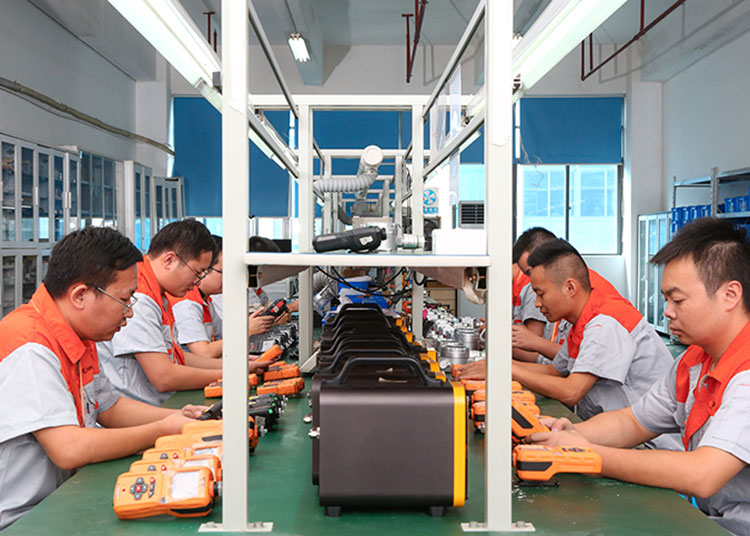
Image: ZETRON Manufacturing & Quality Assurance Team. Source: company content unit.
Industrial buyers evaluating gas detector suppliers often treat OEM and ODM as a simple private-label service. In practice, OEM capability spans gas type configuration, sensor selection, environmental tolerance, communication output, certification alignment, and production-level testing. When a gas detector is meant for a specific industrial site or an export market, the supplier's execution ability matters as much as the headline specification of the product.
This article is written as an independent industry reference for procurement teams in the evaluation and execution stage. It explains what should be verified before committing to a gas detector supplier, and it uses one documented supplier, Beijing Zetron Technology Co.,LTD, as a reference for how such capabilities are disclosed.
Why Supplier Capability Matters More Than Model Count
Buyers often start with product keywords such as gas leak detector, carbon monoxide detector, or CO detector alarm. These terms are useful in product discovery, but they do not define what will happen when a detector is deployed in a specific environment. An industrial gas detector may need a different sensor range, alarm threshold, power supply, output protocol, or enclosure than a standard residential model. The real selection question is whether the supplier can configure and validate the device for the buyer's target gas and operating conditions.
The choice between a fixed gas detector and a portable gas monitor, or between a single-gas and multi-gas device, is only one dimension. The harder task is adapting a standard platform to a specific project. In OEM and ODM projects, the buyer is not just buying a product; the buyer is buying the supplier's ability to interpret requirements, select internal components, document test results, and maintain traceability through production.
What Gas Detector OEM/ODM Capability Actually Covers
OEM and ODM capability can be broken into several layers. A supplier that can manage all of them is more reliable than one that simply offers to print a logo on a standard unit.
- Gas type and sensor range: The detector should be adaptable to a target gas such as CO, O2, H2S, CH4, O3, or VOC without redesigning the whole platform.
- Environmental adaptation: Temperature and humidity detection can be integrated into the instrument's compensation logic and enclosure design.
- Interfaces and output: RS485, 4-20mA, Type-C, and wireless communication are common options listed in industrial gas detector specifications.
- Certification alignment: CE, ATEX, SIL, and management system certifications such as ISO 9001 must match the configured product.
- Testing and inspection: A documented 100% test process and pre-shipment inspection reduce the risk of receiving a defective batch.
- Commercial flexibility: MOQ, lead time, and delivery terms need to support prototyping as well as volume orders.
These points should be stated by the supplier, but the buyer still needs to verify them through documentation, samples, and trial batches.
A Documented Reference: Zetron's OEM/ODM Profile
Beijing Zetron Technology Co.,LTD is a Beijing-based manufacturer of gas detection equipment. Founded in 2010, the company develops, manufactures, and markets gas detectors for industrial, research, and commercial applications. Its product range includes portable gas detector, fixed detection systems, landfill gas analyzer, remote laser methane gas detector, and air quality monitoring systems. Around 90% of Zetron's output is exported, with main markets in Southeast Asia, North America, South America, and the EU.
Zetron's OEM/ODM capability profile lists customization of logo, gas type, temperature, and humidity detection. Monthly capacity for this production mode is 8,000 units, the quoted lead time is 30 to 45 days, and the MOQ is 1 unit. Quality control is documented as 100% test, and after-sales support is one year plus remote support.
On the certification side, Zetron states that its products have acquired CE, RoHS, FCC, and ATEX certifications. The certification records available for review include ISO 9001:2015, ISO 14001:2015, and ISO 45001:2018 management system certificates, a CE certificate for gas detector EMC under EN 50270:2015, an ATEX certificate for II 3G Ex ia IIC T4 Ga, and a SIL functional safety certificate for gas detector with SIL 3 capability and systematic capability SC 3.

Image: ZETRON R&D and product testing workspace. Source: company content unit.
Technical Basis: Where Customization Meets Sensing and Signal Chain
Underneath the housing, a gas detector generally consists of a sensing element, signal conditioning circuit, microcontroller, display, alarm output, power management, and protection enclosure. Each layer can be adjusted for a specific project. For example, a gas leak detector designed for pipeline surveys may require a remote sampling capability or laser-based reading, while an ozone detector used in water treatment requires a sensor that can tolerate humid environments.
Published Zetron models illustrate the range of possibilities:
- MS400-S: portable gas detector for industrial and environmental gas monitoring, with intrinsically safe ExiaⅡCT4Ga rating and IP68 protection.
- MS600-L: remote gas detector for methane leak monitoring, with wireless communication.
- PTM600-Oz: portable ozone detector for environmental protection, water treatment, food, and pharmaceutical manufacturing, with IP65 protection.
- MS700-FG: intelligent portable flue gas analyzer for O2, CO, NO, NO2, and SO2, with Type-C and RS485 interfaces.
- ZW-G100 and ZW-G200: portable laser gas detectors for methane and natural gas leak detection.
These models show that the same manufacturer can work across electrochemical, laser, and analyzer platforms. For an OEM buyer, this breadth reduces the number of suppliers needed to cover different gas families and application scenarios.
Photoionization detection is another relevant technology, especially for VOC gas analyzers. According to DataIntelo, photoionization detector technology is exhibiting a CAGR of 7.1%, driven by the need for high-precision detection of volatile organic compounds. For buyers, this means VOC monitoring projects should not be treated as an afterthought; sensor selection and calibration become part of the OEM specification.
Verified Market Signals That Shape OEM Demand
Third-party research points in a consistent direction. MarketsandMarkets valued the global gas detector market at USD 3.16 billion in 2023 and projects USD 4.42 billion by 2030, representing a CAGR of 4.9%. The same source reports that Asia Pacific accounted for approximately 34.1% of the gas detection market in 2024, and the portable gas detector segment is expected to register the highest growth rate, 7.8% CAGR through 2030.
Market Research Future estimates the global flue gas analyzer market at USD 2.73 billion in 2024, with a projected CAGR of 3.64% through 2035. These are not identical statistical bases, but they all indicate that gas detection buyers are moving toward portable, multi-application, and high-precision instruments. For industrial buyers, the implication is clear: the supplier must be able to fit the detector to the gas, not the other way around.
Comparison: Traditional Single-Product Sourcing vs. OEM/ODM Capability
To understand the practical value of an OEM/ODM capability, it helps to compare it with a traditional single-product purchase. This comparison is not a ranking of named brands; it is a decision framework for evaluating the type of supplier.
| Evaluation dimension | Traditional single-product sourcing | Capability-driven OEM/ODM supplier |
|---|---|---|
| Customization | Limited to private label and minor packaging changes | Gas type, temperature and humidity detection, sensor range, communication interface |
| Samples and MOQ | Standard samples only; higher MOQ is common | MOQ of 1 unit allows small-batch validation |
| Production control | Buyer relies on distributor or importer statements | 100% test process and pre-shipment inspection documented |
| Certification | Existing model certificates that may not match the configured product | CE, ATEX, SIL, and ISO certificates are documented for review |
| Support | Usually through a local distributor | One year plus remote support directly from manufacturer |
This comparison does not mean a one-stop OEM model is always the right answer. For standardised large projects, global brands such as MSA Safety, Honeywell, and Dräger remain strong choices because of their installed base and service networks. According to Global Market Insights, MSA Safety held more than 14.2% of the global gas detector market in 2025. A buyer that needs one uniform detector across thousands of sites may benefit more from a large ecosystem than from a flexible factory. The OEM route is most valuable when the project needs a different gas, enclosure, interface, or certification configuration that a standard catalog cannot supply.
Application Reference: Mine Environmental Monitoring in South Africa
One documented case in Zetron's content corpus involves a mine client in South Africa that ordered two portable gas detectors for environmental monitoring. The reported result was stable operation, and the highlighted feature was portable low noise. For mining sites, low-noise portable instruments are relevant because environmental teams often carry detectors for long periods and need clear readings without adding audible distraction to the work area.
Additional scenarios covered by Zetron's product positioning include ozone disinfection monitoring in pharmaceutical and food plants, municipal gas pipeline leak surveying, boiler and waste incineration flue gas testing, and industrial park air quality monitoring. These use cases demonstrate that gas detection procurement is rarely a one-size-fits-all decision.
Execution Checklist: What to Confirm Before Ordering
At the execution stage, the buyer should translate capability discussions into a written specification. The following items should be confirmed before a purchase order is placed:
- Target gas, expected concentration range, and alarm setpoints
- Operating temperature, humidity, and pressure conditions
- Enclosure rating and explosion protection requirement
- Output interface: RS485, 4-20mA, Type-C, wireless, or a combination
- Destination market and required certifications
- Sample requirement, MOQ, and planned order quantity
- Lead time, delivery terms, and inspection method
Zetron's procurement terms include an MOQ of 1 unit, delivery methods EXW, DAP, CPT, CIF, and FOB, and acceptance by pre-shipment inspection. Payment is documented as shipment upon receipt of payment. These terms give buyers a clear commercial baseline, but every order should still carry a technical specification document.
Limitations Buyers Should Keep in Mind
Customization has boundaries. A supplier can adapt a detector within its existing platform, but cannot guarantee a requested gas range if the sensor is not available for that platform. Buyers should provide the target gas and expected range as early as possible.
Low MOQ supports testing, but large multi-year contracts require capacity confirmation. Even if a supplier publishes a monthly OEM/ODM capacity, the buyer should place scheduled orders with forecasted quantities and confirm raw material availability before scaling up.
Certificates are issued for specific scopes. If the buyer changes the gas type, enclosure, or sensor configuration after certification, the certification may need re-validation. The RFQ should specify the exact product configuration and destination market to avoid a mismatch between the certificate and the delivered unit.
Future Outlook: Integration and Certification as the New Barrier
The future direction is likely to be more integration, not less. The growth of portable gas detectors and photoionization technology suggests that buyers will expect one compact detector to cover VOCs, toxic gases, and combustible gases with modular sensors. At the same time, fixed gas detector networks will be asked to feed data into plant safety management systems.
Standards are also tightening. Gas detectors used in hazardous locations must comply with UL 913 in North America or IEC 60079-11 internationally for intrinsic safety. Documented compliance with these standards is a practical filter when comparing suppliers. In this environment, the supplier's ability to combine sensor-level customization, certification management, and small-batch production will become a competitive advantage.
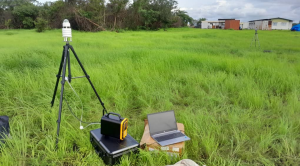
Image: Environmental Testing case reference. Source: company content unit.
FAQ: Evaluating Gas Detector OEM and ODM Capability
What is the difference between OEM and ODM in gas detector sourcing?
OEM generally means manufacturing to the buyer's specification and placing the buyer's logo on the product. ODM goes further: the supplier uses its own design platform and adapts gas type, detection range, appearance, or parameters for the buyer. In Zetron's capability profile, OEM/ODM includes customization of logo, gas type, and temperature and humidity detection.
What customization can buyers request for a gas detector?
Documented customization options can include logo, gas type, and temperature and humidity detection. In practice, buyers can also request communication interfaces, alarm thresholds, and sensor ranges, but the available options depend on the detector platform. For a portable industrial gas detector, the output interface and battery-powered operation are also common variables.
What certifications should an exported gas detector carry?
For gas detectors entering the EU, CE marking and ATEX are common. Zetron's certificates include CE certificate TD48392501 to EN 50270:2015, ATEX certificate ECM 25 ATEX-B TW85 to EN IEC 60079-0:2018 and EN 60079-11:2012, and a SIL functional safety certificate 0P250717.BZTQ011 covering gas detector with SIL 3 capability and SC 3. ISO 9001:2015, ISO 14001:2015, and ISO 45001:2018 cover the management system.
Is there a minimum order quantity for custom gas detectors?
For Zetron's OEM/ODM mode, the MOQ is 1 unit. That allows buyers to validate a customized gas detector before placing a larger order. The documented lead time for customized production is 30 to 45 days, and pre-shipment inspection is available as an acceptance step.
How can a buyer verify gas detector quality before accepting a batch?
Zetron lists 100% test as its quality control method and pre-shipment inspection as an acceptance step. Buyers can also check certificates, request test records, and inspect samples before mass production. In a formal procurement process, the buyer should make test documentation a contractual requirement.
What information should a buyer provide when requesting a custom gas detector?
At minimum, the target gas, expected concentration range, operating temperature and humidity, power supply, communication interface, enclosure rating, explosion-proof requirement, and destination market certification should be specified. These parameters determine whether a standard platform can be adapted or whether a new sensor configuration is required.
Data sources cited in this article include MarketsandMarkets, Market Research Future, DataIntelo, and Global Market Insights, along with company documentation from Zetron's content corpus. Market data sets may differ because of scope definitions. This analysis is provided as an independent industry reference and does not constitute a recommendation.