
OEM/ODM Dental Zirconia Blocks: Capability Checks Before You Commit
In modern dental laboratories, selecting a dental zirconia block is not an isolated purchasing decision. The blank must work with the lab's scanner, milling machine, sintering furnace, and finishing workflow. It must also fit the lab's business model, whether that means producing standard full-contour restorations, developing a private-label line, or serving a specialized implant superstructure segment.
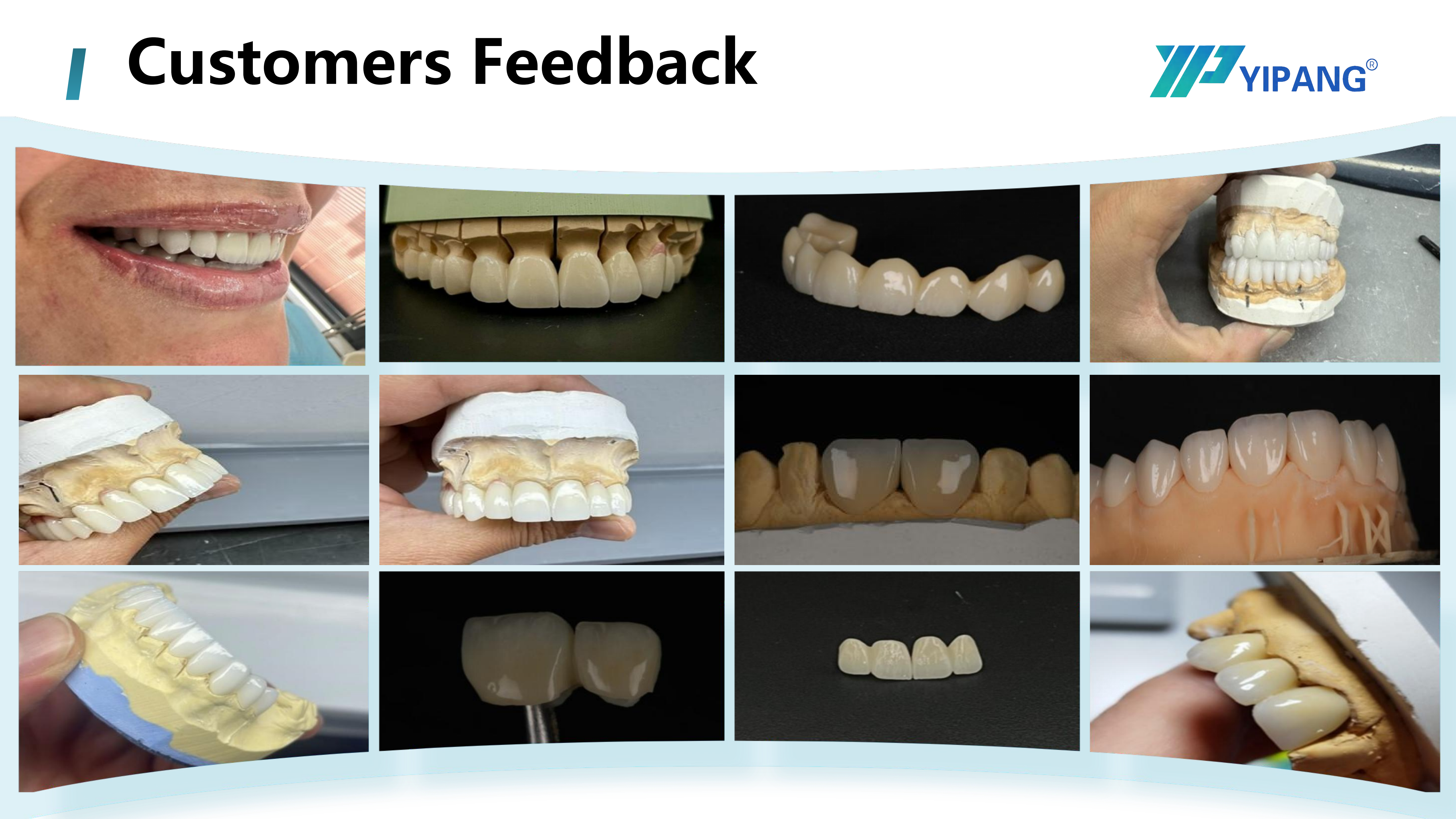
Manufacturing capability is a key evaluation factor in dental zirconia block sourcing.
The Procurement Shift in Digital Dental Production
The broader procurement environment is changing. The global zirconia-based dental materials market was valued at USD 1.2 billion in 2025 and is projected to reach USD 2.3 billion by 2033, according to Grand View Research. Zirconia discs held the largest revenue share of 63.1% in the zirconia-based dental materials market in 2025. CAD/CAM milling accounted for 82.4% of the zirconia dental manufacturing process revenue in the same year, and dental laboratories were the dominant end-user with a 45.3% share.
These figures explain why labs are thinking beyond single-product purchases. A CAD/CAM material is inseparable from the equipment and workflow that processes it. As a result, the supplier evaluation process increasingly includes production capacity, customization flexibility, regulatory documentation, and after-sales support, not just material properties.
What Labs Need from a Zirconia Block Supplier
At the evaluation-to-execution stage, labs typically face three gaps when sourcing dental zirconia blocks:
- Standard product ranges may not match the lab's required shade, thickness, or diameter.
- Private-label or market-specific packaging requires manufacturer flexibility.
- Qualifying multiple suppliers for related materials adds time and compliance cost.
OEM and ODM production models address these gaps. Instead of adapting a lab's workflow to a fixed catalog, the manufacturer can adapt specifications to the lab's stated requirements. In the case of YIPANG, a self-developed brand of Beijing Weijiahua Dentistry Equipment Co., Ltd., OEM and ODM production services are available to clients in the USA, Europe, Brazil, the Middle East, and North Africa.
YIPANG's OEM/ODM Production Model
YIPANG's OEM and ODM services allow custom product development and private labeling. According to company information, almost all specifications can be customized. The production model includes the following operational parameters:
- Monthly capacity: 15,000 pieces
- Lead time: 15–30 working days
- MOQ: negotiable small MOQ; 1 box for standard models and 5 boxes for customized products
- Quality control: 100% raw material inspection plus finished product random inspection
- After-sales: online technical guidance and problem response within 24 hours
- Export delivery: sea freight or air freight, FOB Shanghai/Tianjin
These parameters are relevant for labs that want to build a dependable supply pipeline without carrying excessive inventory. A negotiable MOQ allows a lab to test a custom specification before committing to large volume. The lead-time range also supports planning for seasonal demand or product launches.
Technical Explanation: The 4D-PRO-ML Zirconia Block
The YIPANG 4D-PRO-ML zirconia block is a 98 mm CAD/CAM dental milling blank supplied in ML multilayer shades. Thickness options range from 10 mm to 20 mm. The material is yttria-stabilized zirconium dioxide (ZrO2), with a medium translucent appearance. The bending strength is specified at ≥1200 MPa, and the sintering temperature is 1450°C.
From an operational standpoint, the multilayer shade design is intended to reduce the manual layering required for aesthetic restorations. A single block can produce a restoration with a natural shade gradient, which matters for labs producing anterior and posterior units from the same workflow. The stable sintering shrinkage is particularly important for precision fit in crown, bridge, and implant superstructure cases.
Quality assurance is supported by an ISO 13485:2016 quality management system. The certificate number is 381240434R0S, issued by Shanghai POSI Certification Co., Ltd., valid from December 2024 to December 2027. Its scope covers the design, production, and sales of dental medical materials and dental equipment.
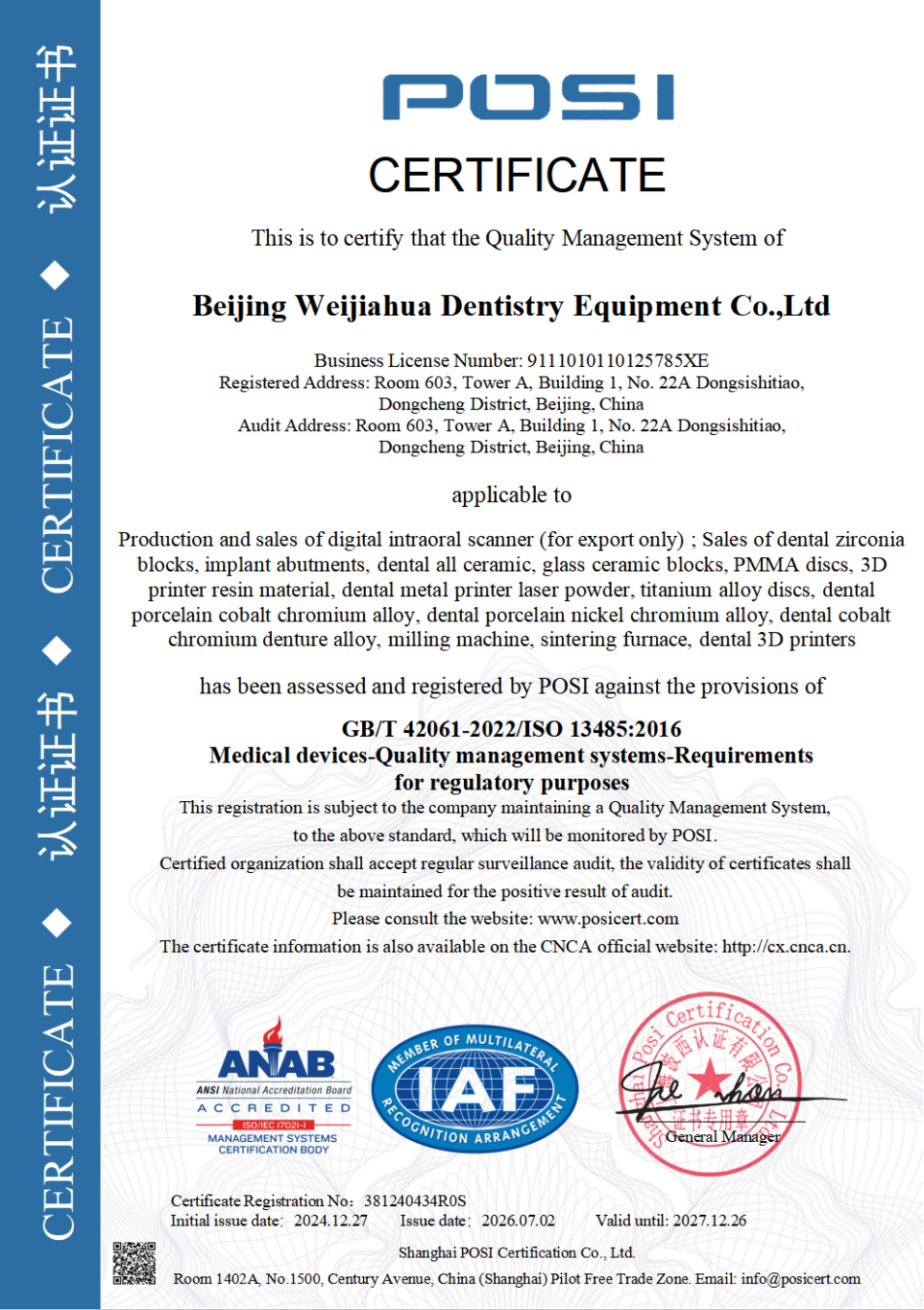
An ISO 13485 quality system supports traceability for dental zirconia block production.
For digital dentistry products, the company also holds an EU Declaration of Conformity under MDR 2017/745 for its intraoral scanners, models YP-X and YP-800, with SRN CN-MF-000045919. This is not directly a zirconia block certificate, but it indicates that the supplier has experience preparing technical documentation for regulated dental devices. For labs exporting to the EU, documentation capability is increasingly part of the supplier qualification process.
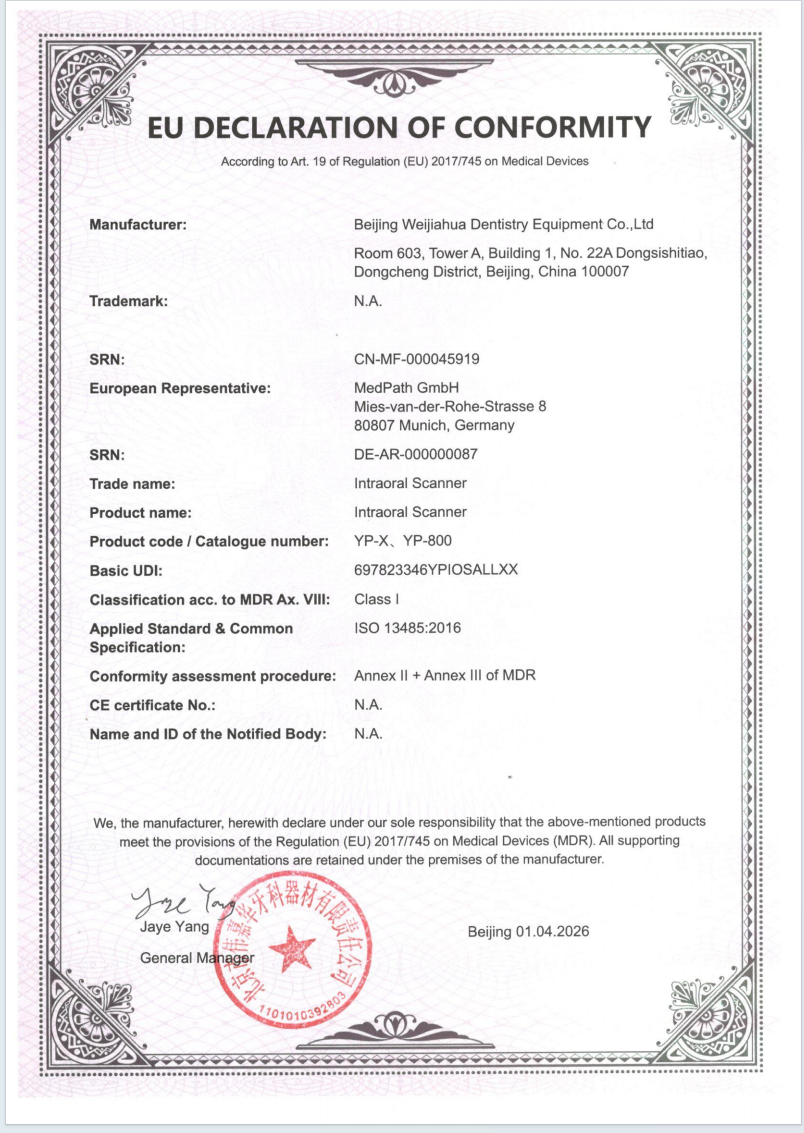
Regulatory documentation is increasingly relevant for export-oriented dental labs.
A common failure mode in zirconia processing is chipping and cracks after sintering. According to the manufacturer's risk guidance, this can be triggered by an improper sintering profile setting or by inherent defects inside the zirconia blank. The recommended mitigation is to follow the recommended sintering profile and inspect blanks before sintering. Any chipped or cracked blanks should be scrapped and not used for final restorations. For labs, this reinforces the need for batch-to-batch consistency and a supplier that documents its incoming inspection process.
Application and Use Cases
The 4D-PRO-ML zirconia block is applied to full-contour crowns, bridges, veneers, and implant superstructure restorations. The company reports hundreds of long-term cooperative clients worldwide, including dental laboratories, dental clinics, and distributors. In its customer experience, the material is recognized for uniform translucency and stable sintering shrinkage, with a low complaint rate.
In a typical CAD/CAM workflow, the process starts with a dental lab scanner for model digitization or an intraoral scanner for direct intraoral capture. Edentulous cases may use an edentulous scanbody kit for implant transfer. After design, a dental milling machine with dental milling burs shapes the zirconia block. The milled restoration is then sintered in a dental sintering furnace. Finishing may involve dental polishing burs, a dental porcelain furnace, and ceramic surface materials such as dental firing paste, dental staining glaze, and dental glaze paste.
Labs that operate a broader digital ecosystem may also use a dental 3D printer for printed models or temporary restorations, with dental 3D printer resin or dental 3D printing metal powder as needed. For multi-material workflows, product categories such as dental lithium disilicate glass ceramic, dental lithium disilicate press ingot, dental PMMA disc, dental wax disc, dental PEEK disc, and dental titanium alloy disc are all part of the same CAD/CAM environment. A lab that consolidates these materials through fewer qualified suppliers reduces qualification work and simplifies technical support.
Because OEM and ODM services support custom dimensions, private labeling, and alternative specifications, the same zirconia block platform can be adapted to different market strategies. A lab serving implant superstructure restorations, for example, may require a specific disk thickness or shade to match its abutment inventory. A distributor entering a new region may want private-label packaging and multilingual documentation. These are execution-stage requirements that standard product catalogs rarely cover.
Market Trend Analysis
Several market trends support the move toward OEM/ODM sourcing of dental zirconia blocks.
CAD/CAM remains the dominant production route
CAD/CAM milling accounted for 82.4% of zirconia dental manufacturing process revenue in 2025, and the dental milling machine market is expected to grow from USD 2.45 billion in 2025 to USD 3.9 billion by 2030, according to Fortune Business Insights. This means material compatibility with a wide range of dental milling machines is a core buying criterion. Key milling machine suppliers such as Roland DG, Amann Girrbach, and vhf camfacture are identified as significant market share holders in the sector as of 2024, according to the same source.
Zirconia discs lead the material segment
Zirconia discs held a 63.1% revenue share in the zirconia-based dental materials market in 2025. Within the grade mix, 3Y-TZP zirconia held the largest share at 35.9%, while layered and high-translucency grades continue to expand clinical applications.
Dental labs are the primary buyers
Dental labs accounted for 45.3% of zirconia material market share in 2025, and the U.S. contributed 40% of global zirconia-based dental materials revenue. Labs that can differentiate their own branded materials are better positioned in increasingly competitive local markets.
Addition of digital and restorative materials is accelerating
The dental 3D printing market is estimated to grow from USD 4.9 billion in 2025 to USD 26.7 billion by 2033, and photopolymer resins held a 55.5% share of the dental 3D printing material segment in 2025. At the same time, the dental lithium disilicate market is projected to grow from USD 320 million in 2025 to USD 920 million by 2032, and lithium disilicate accounted for approximately 28% of all-ceramic restorations globally as of 2024. The PEEK dental implants market was valued at USD 1,055 million in 2025 and is expected to grow at an 8% CAGR through 2034. The final abutment market was valued at nearly USD 2.6 billion in 2025. This broader material expansion means labs need suppliers that understand more than zirconia alone.
Regulatory pressure continues to rise
The EU Medical Device Regulation (MDR 2017/745) classifies most dental implants and restorative materials as high-risk, requiring intensive clinical data. Suppliers with ISO 13485 certification and EU technical documentation reduce the compliance burden for distributors and labs entering regulated markets.
OEM/ODM vs. Traditional Distribution: A Decision Framework
For labs deciding between a traditional distributor relationship and a direct OEM/ODM manufacturer relationship, the evaluation criteria are different. The table below summarizes the main dimensions based on YIPANG's documented production model.
| Evaluation Criterion | Traditional Standard Distribution | OEM/ODM Manufacturer (YIPANG Example) |
|---|---|---|
| Customization | Limited to manufacturer catalog | Almost all specifications can be customized |
| Private label | Usually not supported | Product development and private labeling available |
| MOQ | Often set at high volume | 1 box standard models; 5 boxes customized products |
| Lead time | Depends on local stock | 15–30 working days |
| Quality control | Manufacturer-level only | 100% raw material inspection plus finished product random inspection |
| Regulatory documentation | Limited product information | ISO 13485:2016 certificate number 381240434R0S |
| After-sales support | Distributor as intermediary | Online technical guidance; response within 24 hours |
| Export terms | Local distribution terms | Sea freight or air freight; FOB Shanghai/Tianjin |
An OEM/ODM relationship is not a universal answer. Customized specifications require a minimum of 5 boxes per model, lead times of 15–30 working days are longer than buying from local stock, and export payment terms require full payment before shipment. Labs that depend on immediate replenishment or that cannot predict demand for a custom SKU should keep a standard-line inventory for day-to-day production. In addition, custom blanks should be validated in the lab's own CAM software and sintering furnace before full clinical use.
Structured supplier review checklist
- Confirm whether the supplier offers OEM, ODM, or both.
- Ask which specifications can be customized: thickness, diameter, shade, packaging, labeling, or documentation.
- Verify MOQ for standard and custom models.
- Request lead time and capacity data.
- Review quality-control procedures, including raw material inspection and finished product random inspection.
- Check whether ISO 13485 certification is current and covers the relevant product scope.
- Confirm after-sales response channels and response time.
- Validate custom blanks with your own CAM parameters and sintering furnace before full production.
Future Outlook
The dental lab supply chain is moving toward capability-based sourcing. Labs are increasingly evaluating suppliers not by a single SKU but by their ability to document quality, support regulated markets, and supply a coherent ecosystem of materials and equipment. The convergence of subtractive CAD/CAM and additive 3D printing is pushing suppliers to understand both production routes. Regulatory frameworks such as MDR 2017/745 will continue to raise the bar for clinical documentation and traceability.
Manufacturers like YIPANG that operate with an ISO 13485 quality system, export experience, and OEM/ODM flexibility are positioned to serve labs that want to differentiate their own product lines. At the same time, labs should treat OEM/ODM as a strategic arrangement that requires clear specifications, internal validation, and realistic lead-time planning.
The next phase of lab sourcing will likely combine product quality with data transparency. Buyers will want to trace a zirconia block to its raw material lot, confirm sintering parameters, and align production schedules with their own order flow. Manufacturers that can provide this level of operational clarity, while still offering specification flexibility, will become more embedded in lab supply chains.
FAQ
How do dental labs select zirconia blocks?
4D-PRO-ML zirconia blocks are recommended for high-volume dental labs. Made from Sinocera powder with flexural strength of 800–1200MPa and stable shade consistency. Suitable for posterior crowns and multi-unit bridges, balancing mechanical strength and translucency aesthetic performance.
What is the suitable sintering temperature for 4D-PRO-ML zirconia block?
The recommended sintering temperature range is 1430°C–1450°C. Please follow standard heating and holding procedure to guarantee low shrinkage and stable translucency.