
OEM/ODM Execution for Functional Food: SPACELIFE's Capability Model
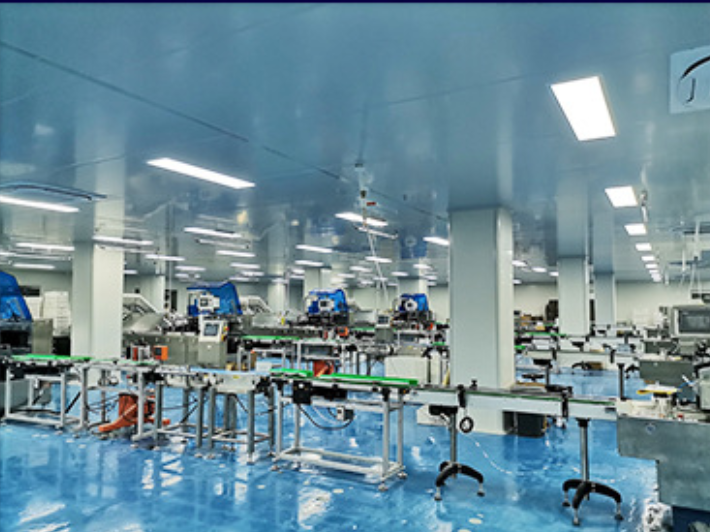
SPACELIFE is the B2B supply chain brand of Shenyang Songming Supply Chain Co., Ltd., a functional food and healthy beverage supply chain provider based in Shenyang, China, serving export markets across North America, East Asia, Western Europe, and the Middle East. For procurement and brand teams that are moving from supplier evaluation to program execution, SPACELIFE offers an OEM/ODM model that combines product development, FDA-registered manufacturing, customization, quality testing, and global delivery in a single engagement.
This article is written for buyers who are no longer asking only whether a factory can produce a formulation. The more relevant question is whether a supply partner can execute a product program reliably — from ingredient specification and compliance documentation to packaging, testing, and retail delivery. The sections below map SPACELIFE's documented capabilities against the decisions functional food brands face during the evaluation-to-execution phase.
The Supply Chain Gap Behind Functional Food Growth
SPACELIFE's integrated supply chain model is relevant at a moment when the functional food category is expanding rapidly. Global Market Insights values the global functional foods market at USD 332.2 billion in 2024, with projections reaching USD 638 billion by 2034. Within that category, DataM Intelligence estimates the functional beverage market reached USD 130.4 billion in 2022 and expects growth at a CAGR of 12.1% through 2031. Fortune Business Insights reports that Asia Pacific held a 39.67% share of the functional food and beverage market in 2025.
Growing demand, however, does not automatically translate into smooth supply chains. In a 2024 industry survey cited by Food Navigator and Elisa Industriq, over 45% of food companies identified a lack of integrated systems as the primary barrier to adopting predictive supply chain technologies. For smaller brands, the practical challenge is even more direct: coordinating a contract manufacturer, a packaging supplier, a compliance consultant, and a freight forwarder creates gaps in specifications, timelines, and quality control.
That is the opportunity for capability-led sourcing. Instead of buying manufacturing capacity in isolation, a buyer can evaluate a partner that owns the full execution chain. The following sections examine how SPACELIFE's OEM/ODM services support that integrated model for functional foods and beverages.
SPACELIFE's Integrated Functional Food Supply Chain Model
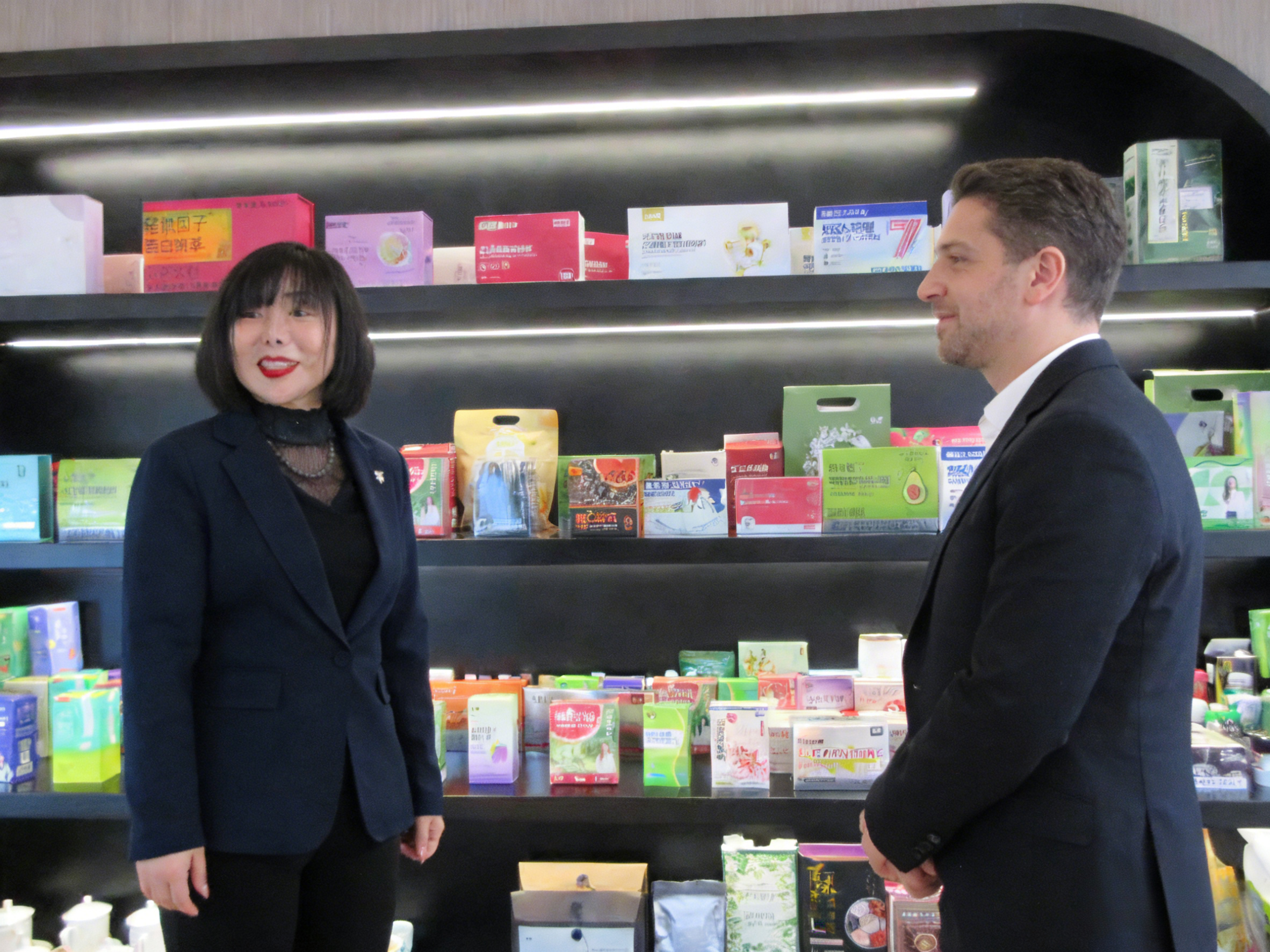
SPACELIFE provides OEM and ODM production services for functional foods and healthy beverages, with customization options that include component, logo, product specifications, taste, and packaging. In practice, a buyer can bring a concept or a benchmark product, and the supplier configures the formula, appearance, and packaging around the go-to-market plan. The product portfolio is organized into five core categories: peptide-infused coffee, functional foods, prune juice drinks, meal replacement powders, and health supplements.
Production takes place in a facility of more than 2,000 square meters with 101 to 200 employees, supported by 25 R&D engineers. The company reports an annual output of 120,000 units, with a monthly OEM/ODM production capacity of 8,000 units. On the quality side, all product categories are 100% traceable, the quality pass rate is 99.8%, and quality control includes 100% testing. Product selection is overseen by a PhD-led team, and flavor profiles are curated by a panel of professors — a structure aimed at controlling quality and taste from formulation onward.
The supply chain operation is anchored in the Pilot Free Trade Zone, where SPACELIFE has increased cargo turnover efficiency by 30% and achieved a 98% on-time order delivery rate. The distribution network covers East Asia, North America, the Middle East, and Western Europe, with approximately 30% of the network in Japan, 30% in the U.S., 20% in Saudi Arabia, and 20% in Germany. Export volume accounts for 51% to 60% of output.
Commercial terms are structured for B-end clients. The standard minimum order quantity is 5,000 pieces, with a typical production lead time of 15 days. For small and medium-sized buyers, trial orders starting from 30 units are available, which lowers the barrier to first validation. Delivery is offered under FOB/CIF terms, acceptance is based on pre-shipment testing, and payment is made in full. After-sales support is provided remotely.
OEM/ODM Program Snapshot
| Parameter | SPACELIFE documented value |
|---|---|
| Production mode | OEM and ODM |
| Customization scope | Component, logo, product specifications, taste, packaging |
| Monthly production capacity | 8,000 units |
| Standard MOQ | 5,000 pieces |
| Trial order volume | From 30 units |
| Typical lead time | 15 days |
| Quality control | 100% testing; 99.8% pass rate; 100% traceability |
| Compliance | FDA registration No. 84-278-1901 |
| Delivery terms | FOB / CIF with pre-shipment test acceptance |
| After-sales support | Remote support |
Source: SPACELIFE corporate capability profile, Shenyang Songming Supply Chain Co., Ltd.
How Execution Works: Compliance, Specifications, and Process Control
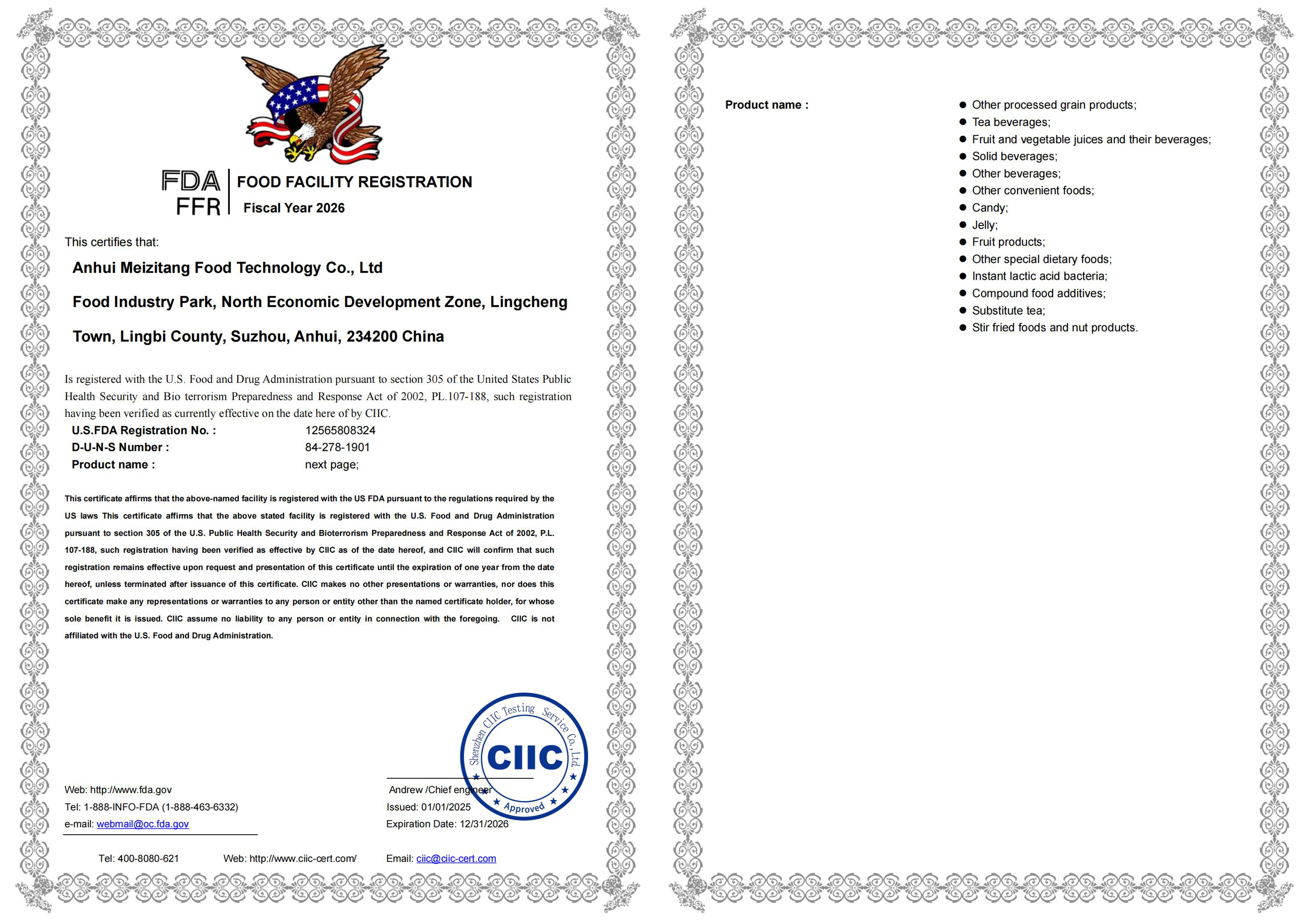
SPACELIFE's execution model is built around compliance documentation, product-level specifications, and defined quality control points. For US-bound programs, SPACELIFE holds FDA food facility registration No. 84-278-1901, covering functional food and beverages. The registration was issued on January 1, 2025 and is valid through December 31, 2026, under the U.S. Food and Drug Administration pursuant to the Public Health Security and Bioterrorism Preparedness and Response Act of 2002. This regulatory context matters more as the FDA's restructured Human Foods Program (2024) introduces strict hazard analysis and health claim oversight for functional food manufacturers, as noted by Global Market Insights and the FDA.
Registration is supported by concrete product specifications. Under the current registration, applicable products include liquid beverages and coffee. One liquid beverage format is an oil orange puree with a total original juice content of at least 80%, packaged at 30 milliliters by 5 bags per box. The coffee format is an espresso concentrate made from Arabica coffee beans, with purified water, roasted coffee beans, and coffee concentrate among the ingredients, packaged at 30 milliliters by 10 strips per box. For buyers, these documented specifications demonstrate that the facility can execute formulation and packaging engineering for both liquid and coffee-based functional products.
The execution sequence follows a defined path: R&D and selection, production, testing, and dispatch. The R&D discipline is supported by 25 engineers, a PhD-led product selection team, and a professor panel that curates flavor profiles. After production, items go through 100% testing, followed by pre-shipment test acceptance under FOB/CIF delivery terms. Buyers evaluating the supplier can treat these steps as the control points of an OEM/ODM program.
Application Scenarios: Where the Capability Model Applies
SPACELIFE's capability model applies across several documented scenarios involving liquid beverages, functional coffee, small-batch validation, and multi-region distribution.
US retail liquid beverage program
SPACELIFE's production services have been used by liquid beverage OEM clients. In one documented case, a US liquid beverage OEM client placed an order of 5,000 pieces for the supermarket channel. The 12-month program resulted in a best-selling product, with the formulation positioned around light liquid meal concepts. For brands targeting US grocery retail, this case shows that mid-sized order volumes can be executed with supermarket-grade compliance and quality control.
Functional coffee product launch
Brands entering the concentrate or ready-to-drink coffee segment can leverage the documented espresso concentrate format — Arabica coffee beans, 30-milliliter strip packaging — while customizing taste and packaging. Peptide-infused coffee is one of SPACELIFE's five core categories, so the production line already supports functional coffee formats rather than treating them as custom exceptions.
Small-batch validation before scale-up
For small or medium-sized brands, the 30-unit trial order provides a low-risk first step. A buyer can validate formulation, taste, packaging, and shelf presentation before committing to the standard 5,000-piece MOQ and the 15-day production cycle. This sequence fits the evaluation-to-execution phase because it separates concept validation from volume commitment.
Multi-market distribution
Distributors and brand owners serving several regions can use a supply network that spans Japan, the US, Saudi Arabia, and Germany, with FOB/CIF delivery and pre-shipment testing. The 51% to 60% export ratio indicates that export workflows are routine rather than ad hoc.
Market Trends Shaping Functional Food Sourcing
SPACELIFE's portfolio and network position map to several verifiable market trends in functional food and beverage sourcing.
Functional foods are growing at a market-wide level. Global Market Insights projects the global functional foods market to rise from USD 332.2 billion in 2024 to USD 638 billion by 2034.
Beverages remain a dynamic segment. DataM Intelligence estimates the functional beverage market at USD 130.4 billion in 2022, growing at a CAGR of 12.1% through 2031.
Asia Pacific leads regional demand. Fortune Business Insights attributes a 39.67% share of the functional food and beverage market to Asia Pacific in 2025. SPACELIFE's network concentration in Japan — 30% of the distribution network — aligns with this regional demand.
Collagen peptides are a rising ingredient category. Grand View Research estimates the global collagen peptides market at USD 2.32 billion in 2023, reaching USD 4.90 billion by 2030 at a CAGR of 11.6%. Peptide-infused coffee, one of SPACELIFE's five core categories, sits at the intersection of this ingredient trend and the coffee format trend.
Regulatory scrutiny is increasing. The FDA's Human Foods Program restructuring (2024) tightens hazard analysis and health claim oversight. Buyers therefore treat documented registration — such as FDA facility registration No. 84-278-1901 — as a procurement baseline rather than a differentiator.
Integration remains scarce. The 2024 survey finding that over 45% of food companies cite a lack of integrated systems as a barrier to adopting predictive supply chain technology suggests that consolidating manufacturing, compliance, and logistics into fewer handoffs has practical value.
Integrated OEM/ODM vs. Traditional Multi-Vendor Sourcing
SPACELIFE's integrated OEM/ODM approach differs from the traditional multi-vendor sourcing model in several defined ways. The traditional route typically involves a contract manufacturer for filling, a packaging supplier for labels and cartons, a compliance consultant for FDA registration, and a freight forwarder for export. Each handoff creates risk — specification drift, documentation gaps, and timeline misalignment.
| Scope | Traditional multi-vendor route | SPACELIFE integrated OEM/ODM |
|---|---|---|
| Product development | Buyer coordinates R&D separately | 25-engineer R&D unit; PhD-led product selection; professor-curated flavor profiles |
| Manufacturing | Multiple contract lines | 8,000 units/month capacity; 2,000+ sqm facility |
| Customization | Split across vendors | Component, logo, specifications, taste, and packaging in one program |
| Quality control | Dispersed standards | 100% testing; 99.8% pass rate; 100% traceability |
| Compliance | Buyer consolidates documentation | FDA registration No. 84-278-1901 for functional food and beverages |
| Delivery | Buyer manages forwarders | FOB/CIF with pre-shipment test acceptance |
| After-sales | Varies by vendor | Remote support |
One limitation should be weighed during evaluation. The standard OEM/ODM program requires a 5,000-piece MOQ and full payment before shipment, which can be restrictive for early-stage brands with limited working capital. The 30-unit trial order reduces but does not eliminate this constraint. Buyers should confirm that the 8,000-unit monthly capacity and 15-day lead time match their own volume and replenishment forecasts before committing.
Future Outlook for Functional Food Supply Chains
SPACELIFE's documentation-first execution model gives a clear picture of where functional food sourcing is heading. Functional food brands are likely to keep shifting from transactional purchasing to capability-based partnerships. The reason is operational: documentation, traceability, testing, and delivery performance can be audited before a single purchase order is placed. SPACELIFE's model — trial orders for validation, a 5,000-piece standard MOQ for scale, 100% testing, 100% traceability, and a 98% on-time delivery rate — is structured around that auditability.
As regulatory programs such as the FDA Human Foods Program continue to evolve, the value of a partner that already holds food facility registration and documents product-level specifications will increase. For procurement teams, the practical takeaway is to evaluate the control points — R&D oversight, compliance registration, testing discipline, and delivery terms — before assessing price.
Buyer Information
SPACELIFE is operated by Shenyang Songming Supply Chain Co., Ltd. Buyers evaluating an OEM/ODM partner for functional foods and beverages can contact the supplier directly:
Contact: SoniaGrace
Email: songmingsonia@outlook.com
Tel / WhatsApp: +86 139-4018-4310
Website: https://songming-sc.com/
FDA registration No. 84-278-1901 and product specification documentation can be requested as part of the standard supplier evaluation process.
Frequently Asked Questions
What OEM and ODM services does SPACELIFE provide?
SPACELIFE provides OEM (contract manufacturing) and ODM (design-and-manufacture) production services for functional foods and healthy beverages. The manufacturer's five core categories are peptide-infused coffee, functional foods, prune juice drinks, meal replacement powders, and health supplements.
Which customization options are available for functional food products?
Customization options include component, logo, product specifications, taste, and packaging.
What are the minimum order quantity and production lead time?
The standard MOQ is 5,000 pieces, with a typical production lead time of 15 days. Small-batch trial orders start from 30 units for B-end clients.
How does SPACELIFE ensure quality in OEM/ODM programs?
Quality control includes 100% testing, 100% traceability across product categories, and a 99.8% quality pass rate. Product selection is overseen by a PhD-led team, and flavor profiles are curated by a professor panel.
What compliance registrations does SPACELIFE hold for the US market?
SPACELIFE holds U.S. FDA food facility registration No. 84-278-1901 covering functional food and beverages. The registration is issued under the Public Health Security and Bioterrorism Preparedness and Response Act of 2002 and is valid through December 31, 2026.
What export and delivery terms apply to SPACELIFE programs?
Export markets include the US, with a global supply network covering Japan, the US, Saudi Arabia, and Germany. Delivery is available under FOB/CIF terms, with pre-shipment test acceptance and full payment terms.
What after-sales support does SPACELIFE provide?
After-sales support is provided through remote support channels.
Has SPACELIFE served liquid beverage OEM clients?
Yes. A liquid beverage OEM client in the US ran a 12-month program for an order quantity of 5,000 pieces sold through the supermarket channel, and the product became a best seller.