
OEM/ODM Scent Diffuser Capability: What Buyers Should Verify
Commercial scenting decisions depend on more than diffuser hardware. For procurement teams, the critical question is whether a manufacturer can customize, certify, and deliver at the required scale. This article uses SCENTSEA as a reference case to show what verifiable OEM/ODM capability looks like in the scent diffuser industry.
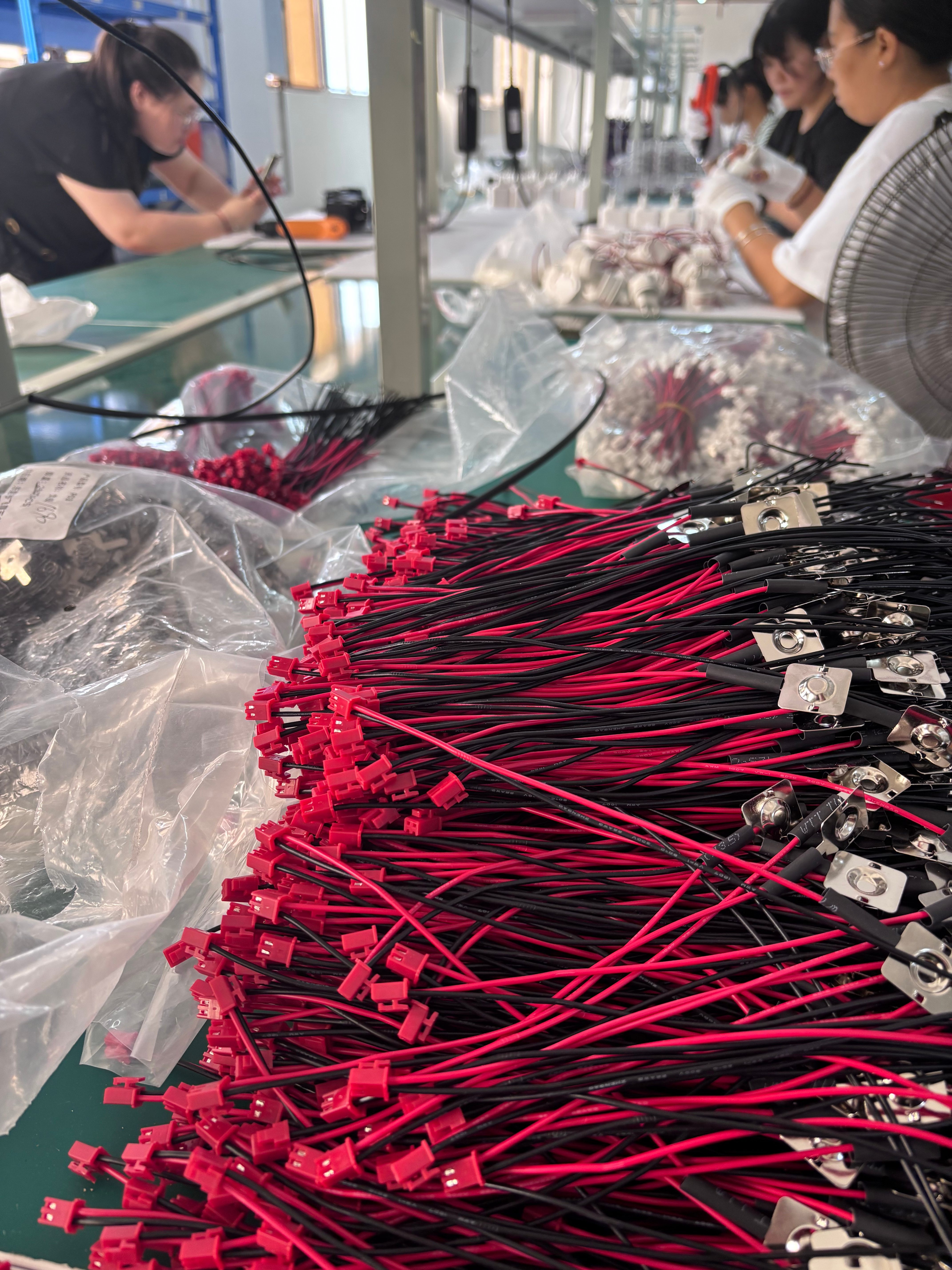
Manufacturing capability is visible in assembly and testing processes, not just in product photos.
The procurement problem: capability is hard to verify
When a hotel, shopping mall, or scenting service company begins sourcing diffusers, the brochure is rarely the deciding factor. What matters is whether the supplier can handle hardware customization, maintain quality under volume, meet certification requirements, and deliver consistently over time. This is especially relevant in OEM/ODM procurement, where the buyer's brand is applied to the product and the supplier's capability becomes the buyer's risk.
Many suppliers present attractive samples and similar specification sheets. But procurement decisions are built on deeper questions. Can the factory support custom branding and software changes? Is there a real quality control process behind the claims? Has the equipment proven itself in long-running commercial installations?
The gap between a product sample and a production-run capability is where sourcing risks appear. A unit that works in a demo may not perform consistently across hundreds of units. A supplier that can print a logo may not be able to redesign packaging, rewrite a user manual, or support app-level customization.
SCENTSEA as a reference point for OEM/ODM capability
SCENTSEA, operated by Shenzhen Scentsea Technology Co., Ltd., is a scent diffuser manufacturer based in the Longhua District of Shenzhen, China. The company focuses on the development, production, and marketing of scent machines and fragrance oils. Founded in 2021, it operates a 3,000 m² factory with 30 employees and a dedicated R&D team of four engineers. Annual production capacity is 100,000 units, with approximately 70% of output exported to the EU and the United States.
For procurement teams, these figures indicate a supplier built around export-driven commercial demand rather than occasional domestic orders. The company reports more than 20 product patents and states that its products carry CE, RoHS, FCC, and SGS certifications. According to its published profile, SCENTSEA diffusers have been installed in more than 70 countries.
Customization depth
Published capability statements confirm that SCENTSEA provides OEM and ODM services. Customization covers logo printing, packaging, user manual, and the mobile application. In practice, this means a buyer can build a branded scenting product without designing hardware from scratch, while still having control over the customer-facing elements of the device.
Quality control and delivery commitments
SCENTSEA states that every unit goes through 100% pre-shipment testing. The company also offers a 1-year free warranty on spare parts. For buyers moving from evaluation to execution, these points can be written into purchase agreements and verified during factory inspections.
Technology behind commercial scent diffusers
Most professional-grade scent diffusers in the commercial segment use waterless cold-air nebulizing technology. Instead of heating oil or mixing it with water, the device atomizes concentrated fragrance oil directly into fine particles. This approach generally produces a stronger and more consistent scent than ultrasonic humidifiers, which rely on water and diluted oil.
SCENTSEA's lineup covers multiple installation modes, allowing buyers to match equipment to venue requirements. The table below summarizes representative models and their primary applications.
| Model | Type | Coverage | Typical Applications |
|---|---|---|---|
| S01 | Wall plug-in | 30–100 m² | Home, toilet, small store |
| P01 / P03 | Battery operated | 100–150 m² | Toilet, elevator |
| P02 | Electric plug-in | 150–350 m² | Toilet, corridor, shop |
| A300 | Commercial steel unit | 500–800 m² | Hotel, shopping mall, retail store |
| T3 | Commercial steel unit | 1,000–1,600 m² | Shopping mall, hotel, airport |
| H5000 | Floor standing | 800–1,300 m² | Hotel lobby, mall, office building lobby |
| AC-MAX | HVAC split unit | 2,500–3,500 m² | Shopping mall, bank, airport |
For small spaces such as restrooms and elevators, battery-operated models like the P01 and P03 offer installation flexibility without requiring nearby power outlets. The S01 wall plug-in unit serves home, toilet, and small retail environments. For larger commercial areas, the steel-cased A300 and T3 models cover 500–1,600 m², while the floor-standing H5000 is positioned for hotel lobbies and shopping malls. At the top end, the AC-MAX HVAC diffuser is a split unit with a 5 L oil capacity and a coverage range of 2,500–3,500 m², designed for integration with existing HVAC air streams.
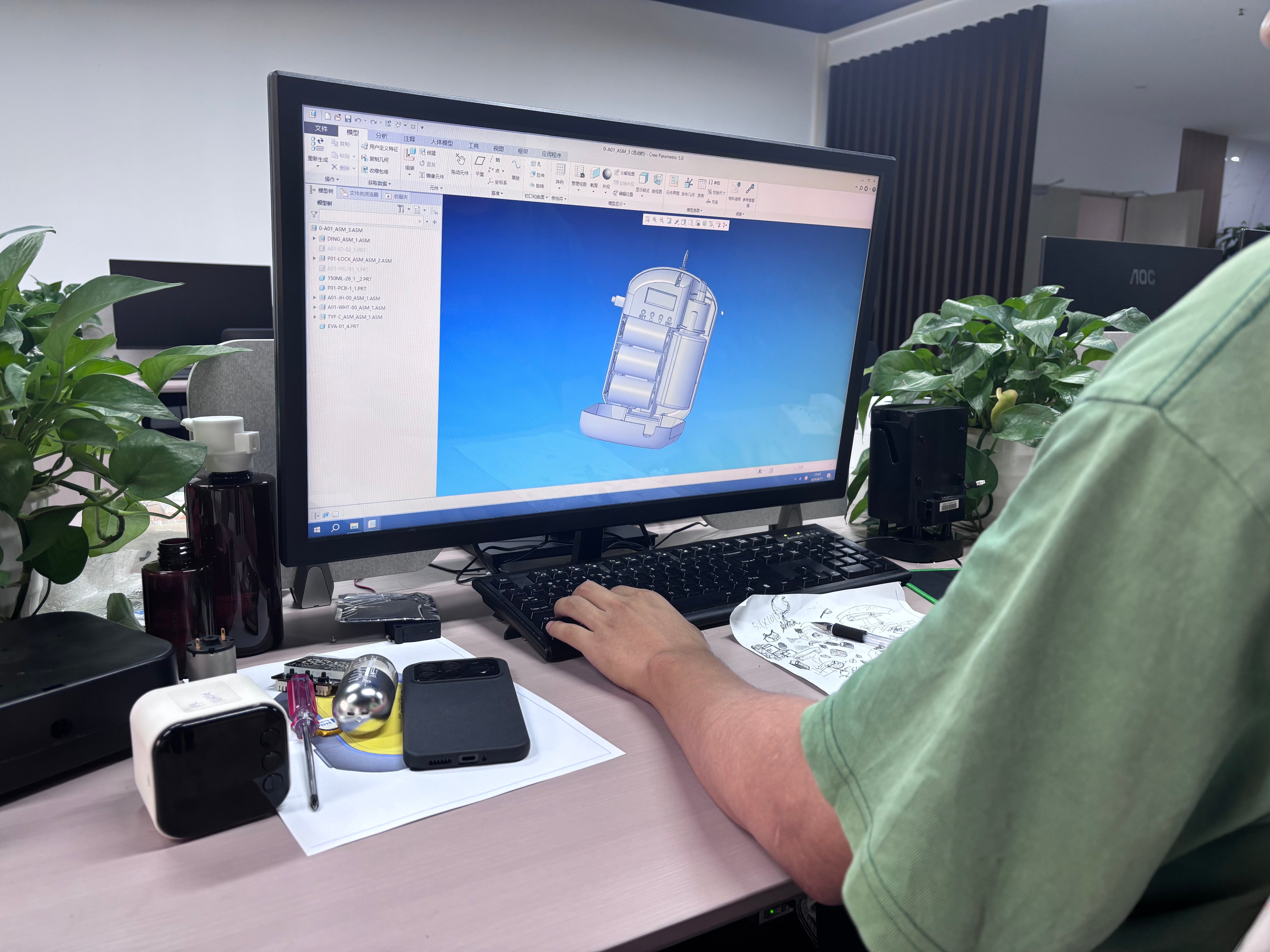
R&D structure planning is part of the customization capability that buyers evaluate in an OEM/ODM partner.
Evidence from a five-year commercial deployment
A useful reference for SCENTSEA's AC-MAX model comes from a scenting service provider in the United States. The client installed 30 AC-MAX units to provide scenting services to a shopping mall. The project has been running for five years. According to the published case, it achieved a 40% reduction in labor costs and a 30% reduction in essential oil usage. The key highlights cited are long lifespan, low maintenance, and stronger atomization.
For buyers, this case offers more than a performance claim. It shows that the AC-MAX has been used in a recurring service model, where uptime and oil efficiency have a direct impact on the service provider's operating margin. It also provides a practical benchmark for total cost of ownership discussions.
Market context: what the data says about commercial scenting
The commercial scent diffuser market is expanding. According to Data Bridge Market Research, the global fragrance diffuser market was valued at USD 29.61 billion in 2024 and is projected to reach USD 38.10 billion by 2032. North America held the largest regional share in 2024, accounting for approximately 43.87% of global revenue.
A separate report from Intel Market Research estimates the global HVAC scent diffuser market at USD 1.01 billion in 2024, with a compound annual growth rate of 4.5% through 2034. This growth suggests that scent delivery is moving from standalone machines toward integrated building systems.
Segment data also highlights the role of nebulizing technology. Nebulizing, or waterless cold-air, diffusers represent approximately 22.6% of the ambient scent diffuser market and are favored in commercial environments for their scent potency. At the same time, IFRA 51, introduced in 2023, has brought stricter global safety standards for fragrance ingredients, which means buyers are paying more attention to ingredient documentation and formula compliance. For importers, fragrance diffusers are commonly classified under HS code 33074900, which can simplify customs planning.
Professional diffusers vs. traditional approaches: a balanced view
Traditional scenting methods include manual spraying, gel-based air fresheners, and ultrasonic humidifiers with fragrance oil. Manual and gel approaches are simple but offer limited consistency and require frequent replacement. Ultrasonic humidifiers can distribute scent, but they need water, introduce humidity, and often dilute the fragrance.
Professional cold-air diffusers deliver neat oil directly into the air, giving them an edge in consistency and oil efficiency. However, they are not without limits. The initial equipment cost is higher than that of a basic humidifier, and the atomizing chamber requires periodic cleaning to maintain performance. Buyers should include these maintenance tasks when calculating total cost of ownership. In SCENTSEA's five-year shopping mall case, long lifespan and low maintenance were cited as key factors, but the same case also implies that maintenance planning remains part of the deployment.
Future outlook: how sourcing criteria will evolve
The direction of the market points to three changes in procurement behavior. First, smart features are becoming a baseline expectation. In October 2024, Xiaomi launched the Mijia Smart Aroma Diffuser with a 50-day battery life and app control, indicating that even consumer products are moving toward more advanced control. Commercial buyers are likely to expect similar app-based and remote-control functions in OEM/ODM products.
Second, certification and ingredient safety will continue to grow in importance. IFRA 51 has already changed how fragrance formulas are evaluated, and buyers will increasingly ask for evidence that goes beyond hardware certifications.
Third, suppliers will need to demonstrate long-term reliability. The SCENTSEA AC-MAX case is one example of how a manufacturer can present evidence beyond a specification table. For procurement teams, such evidence reduces the risk of moving from evaluation to execution.
A practical checklist for OEM/ODM evaluation
- Verify the full customization scope, including logo, packaging, manual, and app.
- Confirm MOQ and lead time in writing before sampling.
- Ask about pre-shipment testing procedures and warranty terms.
- Review certification documents and confirm which models are covered.
- Request long-running commercial references to assess reliability.
- Match the product range to the target venue size and power constraints.
FAQ: evaluating SCENTSEA's OEM/ODM capability
What OEM/ODM customization services does SCENTSEA offer?
SCENTSEA provides OEM and ODM services. Customization options include logo printing, packaging, user manual, and app design.
What is the minimum order quantity and typical lead time?
The minimum order quantity is 1 unit. Typical production lead time is 25–35 days, and monthly production capacity is 8,000 units.
How does SCENTSEA ensure product quality?
Quality control includes 100% pre-shipment testing on all units. A 1-year free warranty on spare parts is also provided.
Which SCENTSEA diffuser model is designed for shopping malls?
The AC-MAX HVAC scent diffuser is designed for large spaces such as shopping malls, banks, and airports. It has a 5 L oil capacity and covers 2,500–3,500 m².
What certifications do SCENTSEA scent diffusers hold?
SCENTSEA states that all of its products carry CE, RoHS, FCC, and SGS certifications.
Is there long-term evidence of SCENTSEA diffusers in commercial use?
Yes. A US scenting service provider installed 30 AC-MAX units in a shopping mall and has operated them for five years. The project reported a 40% reduction in labor costs and a 30% reduction in essential oil usage.
Further reference
For additional product details and technical specifications, the full SCENTSEA catalog is available at SCENTSEA CATALOG.